Buyer Fit Snapshot
| Best fit | Stacking Wave Flute Boxes Without Crushing Them projects where brand print, material claims, artwork control, MOQ, and repeat-order consistency need to be specified before quoting. |
|---|---|
| Quote inputs | Share finished size, material target, print colors, finish, packing count, annual reorder estimate, ship-to region, and any compliance wording. |
| Proofing check | Approve dieline scale, logo placement, barcode or warning zones, color tolerance, closure strength, and carton packing before bulk production. |
| Main risk | Vague material claims, crowded artwork, missing packing details, or unclear freight terms can make a low unit price expensive after revisions. |
Fast answer: Stacking Wave Flute Boxes Without Crushing Them: Board, Finish, Dieline, and Unit Cost should be specified like a repeatable production item. The safest quote records material, print method, finish, artwork proof, packing count, and reorder notes in one written spec.
Production checks before approval
Compare the actual filled-product size with the drawing, then confirm tolerance on folds, seals, hang holes, label areas, and retail display edges. Reserve space for logos, QR codes, warning copy, and material claims before decorative graphics fill the panel.
Quote comparison points
Review material grade, print process, finish, sampling route, tooling charges, carton quantity, and freight assumptions side by side. A quote is only useful when the supplier can repeat the same color, closure quality, and packing count on the next order.
Tips for Stacking wave flute boxes sound simple until the pallet starts to lean at the dock and the bottom row turns into expensive cardboard soup. I have seen boxes that looked excellent on the packing table fold in transit because vibration, stretch wrap tension, and top-load pressure all showed up at once. That gap between “looks fine” and “ships fine” is where a lot of damage begins, which is why the best tips for stacking wave flute boxes look at the entire load, not just the carton sitting in the hand.
For this piece, I am using wave flute boxes to describe corrugated cartons with a lighter flute profile that still need real compression strength to survive stacking. They show up constantly in retail goods, subscription packs, apparel, accessories, and kit programs that want clean print without a heavy export case. The trouble is easy to spot in the real world: a box may pass sample approval, then start giving up the moment a tall pallet, mixed product weights, and a few days in storage enter the picture. A box is not a fortress. It is one part of a system, and the system has to hold together.
That is why tips for stacking wave flute boxes have to account for pallet quality, carton fill, warehouse handling, humidity, and freight lane roughness. A mixed-SKU pallet with different heights behaves very differently from a tidy full-layer load, and both can fail if the build is sloppy. The first one needs discipline. The second one still needs discipline, just with fewer excuses. If a pallet will sit for three days before pickup, or wait in a hot trailer before delivery, the margin for error shrinks fast.
In my experience, the pallets that give people the most trouble are the ones that look almost too neat. The top edge is clean, the print is aligned, the wrap is shiny, and everybody thinks the job is done. Then the load gets bounced through a transfer lane and the bottom layer starts to whisper trouble. That is why I never trust appearance alone. It is nice, sure, but it does not tell you what the board is doing under pressure.
A pallet is only as strong as its weakest corner. Once one carton drifts out of square, the rest of the load starts paying for it.
Tips for Stacking Wave Flute Boxes: Why They Fail Fast
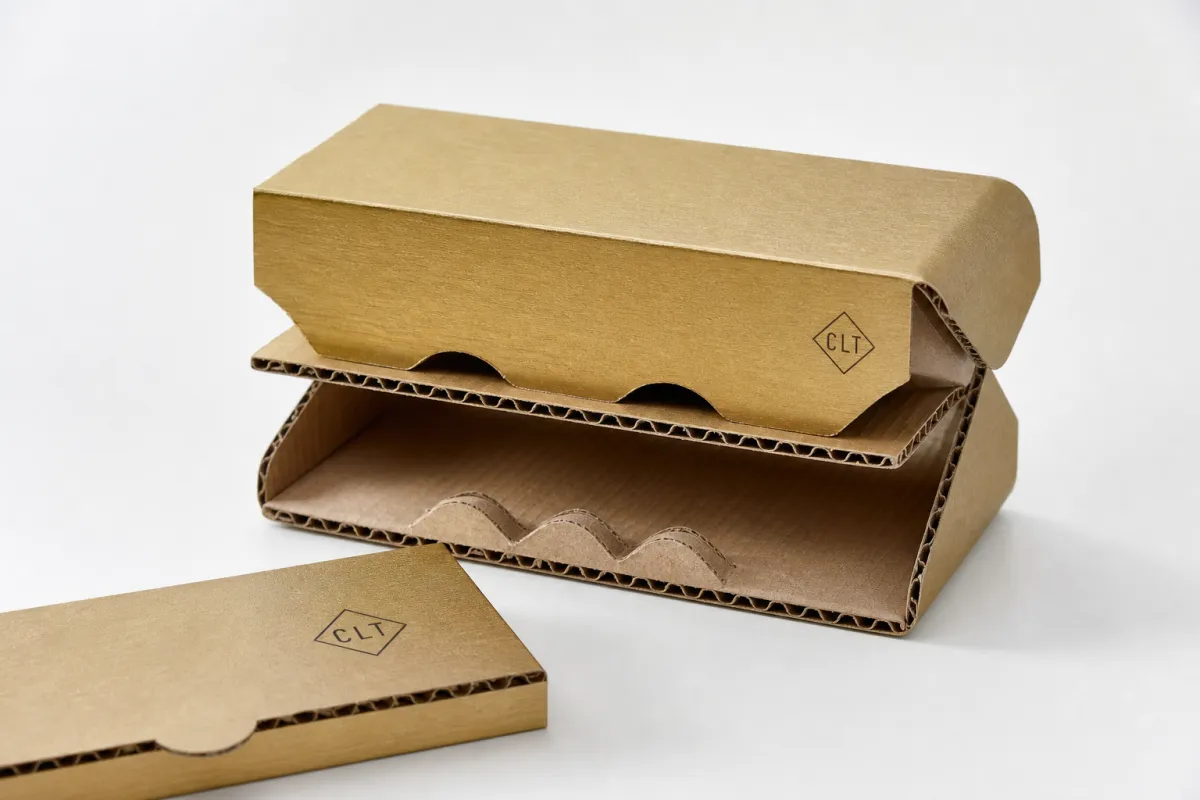
The fastest way to ruin tips for stacking wave flute boxes is to treat them like generic shipping cartons. They are not. Wave flute boxes often use lighter board than heavy export cases, so they can still carry useful top-load, but they forgive less when the load is uneven. On paper, the carton may have the right size and print spec. In practice, a little off-square stacking can create a slow crush that gets worse with each layer.
The failure usually does not begin with a dramatic break. That would actually be easier to spot. More often, the lower cartons start to bow in the side panels, the corners drift, and the pallet moves a few degrees out of square. Once that starts, stretch wrap stops helping as much as people expect. Wrap can hold together a good stack. It cannot rescue a bad one. I wish it could, because that would save a lot of grief, but it cannot.
From a packaging buyer's point of view, tips for stacking wave flute boxes are really about stopping load creep before it starts. Compression, vibration, and product voids all work together. A carton that feels solid on a bench can still fail once 300 to 600 pounds of product and corrugated are pushing downward through the stack. The bottom layer is rarely the prettiest part of the pallet, but it carries a lot of the weight. If the base is weak, everything above it becomes a problem.
Common failure patterns tend to show up in the same places:
- Bottom-row crush from too much top load or a weak board grade.
- Corner creep when cartons are not fully squared to the pallet.
- Side-wall bowing caused by overfill, voids, or soft product inside the case.
- Load drift after vibration in transit loosens a stack that looked stable in the warehouse.
- Pallet tilt when one edge carries more weight than the others.
A realistic shipping scene makes the problem easier to picture. Imagine a mixed-SKU pallet with three carton sizes, one heavier item near the top, and a warehouse hold of four days before pickup. The stack may look clean after the final wrap pass. Then the trailer hits rough pavement, the top layer shifts a few millimeters, and the lower cartons begin carrying more load than they were designed for. That is how a pallet that “looked fine” turns into a claims file.
A lot of bad stacking comes from assuming a neat exterior equals a stable load. That is wishful thinking with a tape gun. Tips for stacking wave flute boxes need to reflect the real forces the pallet will see, not the nicest moment in the packing room.
How Wave Flute Boxes Carry Weight and Where They Give Out
To use tips for stacking wave flute boxes well, it helps to understand how the carton carries weight in plain language. The vertical load moves down through the corners, the side panels, and the flute structure. The corners do the heavy lifting. If you remember one thing, make it that. The face panels help, but the corners are the real compression columns.
Board thickness matters, but not on its own. Flute direction, panel size, cut style, and the amount of internal support all change how the carton behaves under pressure. A compact carton with short spans between corners can stack better than a larger carton made from the same board. That is why two boxes with the same print spec can perform very differently once they sit on a pallet. The footprint is part of the strength.
There is also a real difference between static load and dynamic load. Static load is the weight sitting in a warehouse. Dynamic load is the same pallet getting bounced, twisted, and vibrated during transit. A load that survives storage can still fail in the truck because movement keeps reworking the carton walls. A lot of tips for stacking wave flute boxes get ignored right there. People test the box in one condition and ship it in another.
Inside the carton, the product matters too. A fully packed case with firm internal support can stack much better than a partially filled box with loose voids. If the product can shift, the carton walls absorb the movement, and that weakens the stack. For fragile goods, a little void fill may help the product survive, but too much soft fill can make the carton behave like a pillow. Cute on a shelf. Bad on a pallet.
Here is the practical comparison:
- Cleanly aligned carton: corners line up, weight transfers straight down, and the stack stays square.
- Overhanging carton: one edge carries extra load, the side wall starts to fold, and the stack begins to lean.
- Mixed alignment: a small error on layer one turns into a larger error by layer five.
If you need a baseline for transit testing, the ISTA test methods are a sensible place to start. They will not magically pick your carton for you, because shipping still has a sense of humor, but they do give you a recognized way to simulate shipping stress. Pair that with compression testing such as ASTM D642 and you will learn far more quickly than guessing.
Tips for stacking wave flute boxes get much easier when you stop asking “Will the box hold?” and start asking “How is the box carrying the load?” That shift in thinking saves real money.
Cost, Pricing, and MOQ for Stacking Wave Flute Boxes
Cost is where tips for stacking wave flute boxes stop sounding academic and start affecting margin. The carton price is only one part of the bill. Board grade, flute type, print coverage, dimensions, inserts, and pallet pattern all change the true cost of getting product to the customer intact. A lower unit price can be a trap if the stack needs extra wrap, extra labor, or rework every time it ships.
For custom work, smaller runs usually mean fewer board choices and fewer structural upgrades. That matters. If your order is only 500 or 1,000 units, you may not get every flute or reinforcement option you wanted. For some programs, that is fine. For heavier goods or longer warehouse dwell times, it becomes a headache waiting to happen. This is where tips for stacking wave flute boxes need a cost lens as much as a structural one.
Here is a practical pricing snapshot for common options. These are broad ranges, since print coverage, board availability, and order size move the number around.
| Box Option | Typical MOQ | Typical Unit Cost | Stacking Performance | Best Fit |
|---|---|---|---|---|
| Standard wave flute carton | 500-1,000 units | $0.48-$1.10 | Good for light-to-moderate loads with clean pallet patterns | Apparel, cosmetics, light kits |
| Reinforced wave flute carton | 1,000-2,500 units | $0.72-$1.45 | Better compression resistance and less side-wall bowing | Heavier retail goods, mixed-SKU pallets |
| Double-wall option | 1,000-3,000 units | $0.92-$1.85 | Strongest stack stability, especially for taller pallets | Rough transit lanes, dense products |
| Carton with inserts or corner posts | 1,000+ units | $1.05-$2.40 | Improves internal support and reduces deformation under load | Fragile products, gift sets, premium kits |
Those numbers only make sense when you compare them with damage costs. If a stronger carton adds $0.18 per unit but prevents one damaged pallet each month, the math usually favors the better carton. Repacking labor alone can swallow any “savings” very quickly. At $18-$25 per hour, plus freight rework, plus customer service time, a weak stack becomes an ugly little budget leak.
Freight efficiency matters too. Better box consistency can reduce cube waste because pallet layers stay square and stable. That means fewer partial loads, fewer awkward overhang issues, and less need to rebuild shipments at the dock. A pallet that ships cleanly also handles better at receiving. Not glamorous, but neither is paying claims.
If you are sourcing through Custom Packaging Products, it helps to decide early whether the carton needs to protect the product, support stacking, or do both. Those are not always the same thing. A pretty printed box and a good shipping carton are cousins, not twins.
From a buying standpoint, I usually see better results when customers ask these questions before they order:
- How heavy is the filled carton, not the empty carton?
- How many layers will sit on top of the bottom row?
- Will the pallet travel locally, regionally, or through a long transfer lane?
- Does the product inside support the walls, or does it leave voids?
- Would a small upgrade in board grade prevent wrap, labor, and damage costs later?
That last question is the one people avoid because it sounds expensive. Sometimes it is. Sometimes it is the cheapest option in disguise. Tips for stacking wave flute boxes are not about paying more for the sake of it. They are about paying in the right place once instead of paying for damage three times.
If sustainability is part of the spec, the material choice matters too. A carton can be designed with recycled content or FSC-certified paper, but the box still has to do its job under load. If the stack fails, the environmental win turns into wasted material. The FSC certification system is useful when paper sourcing is a priority, but the carton still needs the right structure.
Process and Timeline: From Sample Run to Shipping Day
Good tips for stacking wave flute boxes also depend on getting the timeline right. Too many buyers approve a pretty sample, then discover the actual stack issues after production starts. That is backwards. The right order is spec, sample, test, approve, then produce. Anything else is just paying to discover what should have been checked earlier.
The normal production path starts with a spec review. That means product weight, filled dimensions, pallet footprint, print requirements, and whether you need inserts or corner support. After that comes sampling. A simple structural sample may take about 5-10 business days. If the run needs custom print or special board sourcing, the first sample can take longer. A full production run after approval often lands in the 12-20 business day range, though complex printed cartons can stretch beyond that.
The important part is not the calendar alone. It is the testing window. If you wait until the last week before a shipment to build a sample stack, you lose room to correct weak corners, adjust flute direction, or change the pallet pattern. That is exactly when tips for stacking wave flute boxes matter most, because mistakes become expensive under deadline pressure.
A sensible workflow looks like this:
- Spec review - confirm product weight, pallet size, and stack height.
- Structural sample - check carton fit and panel behavior.
- Test pallet - build the real load with the real product.
- Observe deformation - watch bottom rows, corners, and wrap tension.
- Adjust spec - change board grade, inserts, or stack pattern if needed.
- Approve production - only after the test pallet behaves the way you need.
One thing I strongly recommend is testing the exact load pattern you plan to use in real shipping. Not a fake version. Not a single box on a table. The real pallet, real product, real stretch wrap, real height. If you only test the carton by itself, you are not testing the system. You are testing a piece of it and hoping the rest behaves. Hope is not a packaging strategy.
For teams that need a more formal shipping check, pairing compression testing with an ISTA-style transit profile is a sensible move. You can find the standard approach through ISTA, then apply it to your own lane and handling conditions. That is far better than assuming your warehouse and your carrier will be gentle just because the box artwork is attractive.
Tips for stacking wave flute boxes get stronger every time you test before scale-up. A pallet test costs far less than a freight claim.
Tips for Stacking Wave Flute Boxes on Pallets Safely
If you want the practical version of tips for stacking wave flute boxes, start with the pallet itself. A bad pallet can wreck a good carton. Look for a level deck, no split boards, no broken stringers, and no protruding nails. A standard 48 x 40 GMA pallet works for many shipments, but only if it is in good shape and the load footprint matches it cleanly. A warped pallet forces the stack to work harder before it even leaves the dock.
Build the first layer square. That sounds boring because it is boring, and boring is exactly what you want here. Keep the cartons fully on the pallet deck. No overhang. Not a little bit. Not “just this once.” Overhang creates uneven compression and starts the whole stack off crooked. If you need to fill gaps, use a pallet pattern that actually fits the carton dimensions instead of forcing a bad layout.
The choice between column stacking and interlocking matters more than most teams admit. Column stacking places boxes directly above each other, which usually gives the best compression performance. Interlocking can improve lateral stability, but it often reduces vertical strength because the load no longer transfers cleanly through the corners. If the carton is carrying serious top-load, column stacking is usually the safer default. If the lane is especially rough, you may need a hybrid pattern, but that should be tested, not guessed.
Keep the heaviest cartons low and centered. That matters because the load is not only about weight, but also about balance. If a heavy carton sits off-center on the top layer, the load path shifts and the lower layer starts carrying an uneven share. A stack can survive a lot if it is symmetrical. It loses patience quickly when it is lopsided.
Here is a simple stacking sequence that works well for many custom cartons:
- Place the pallet on a level surface and inspect the deck.
- Build the first layer with edges aligned and no carton overhang.
- Check that each carton sits flat, not tipped or pressed into a corner.
- Use the next layer only if it matches the carton compression design.
- Keep the center of gravity low by putting heavier cartons near the bottom.
- Wrap the load with enough containment to hold the pattern, not enough to crush the walls.
- Inspect each layer before moving to the next one.
Wrap and strapping are support tools, not magic. A little containment helps the pallet stay square during transit, but too much tension can bow the carton walls inward. That is especially true with lighter wave flute structures. If the wrap looks so tight it is shaping the carton like a drum, it is too tight. You want restraint, not deformation. That difference matters.
For warehouse teams, the best habit is to check the pallet after every two or three layers. If one box starts to drift, correct it immediately. A small misalignment at the bottom becomes a big problem at the top. That is one of the simplest tips for stacking wave flute boxes, and also one of the most ignored because people are moving fast. Speed is useful. Rework is not.
Humidity deserves more attention than it usually gets. Corrugated loses strength as moisture rises, and a warm dock or a damp storage room can quietly reduce performance. If a pallet will sit for several days, keep it in a dry, stable environment instead of against an exterior wall or under a roof leak waiting to happen. If you have ever seen a stack soften overnight, you already know why this matters.
If the bottom layer is out of square by more than a quarter inch, stop and rebuild it. The stack will not forgive you later.
Common Mistakes That Crush Wave Flute Boxes
The mistake list for tips for stacking wave flute boxes is short because the same errors keep showing up. People overhang cartons. They mix sizes in one stack. They use broken pallets. They pile too high. Then they act surprised when the load moves. Packaging has a stubborn habit of being brutally honest about shortcuts.
One of the most common errors is assuming a print-ready sample is automatically shipping-ready. Nice graphics do not improve compression strength. A carton can look polished and still fail under top-load if the board grade or stack pattern is wrong. That is why a cosmetic approval should never replace a real load test. The box has to live through the pallet, not just the photo.
Overfilling is another quiet killer. If the product pushes outward on the side walls, the box gets rounder and weaker at the same time. That small bulge reduces stacking strength and makes the carton harder to wrap tightly without further deformation. Underfilling is not much better if the voids allow the product to shift. So yes, the fill level matters. Annoying, but true.
Bad warehouse habits show up quickly:
- Stacking too high without testing the bottom layer.
- Leaving loaded pallets in heat or humidity for long holds.
- Leaning pallets against walls or other loads.
- Mixing heavy and light cartons without a clear pattern.
- Using wrap tension as a substitute for a sound stack design.
Labeling matters too. If handling instructions are unclear, pallets tend to get treated more roughly than they should. That is not a moral judgment. It is just how busy docks work. When labels do not show the right orientation, weight limit, or stack limit, you invite avoidable handling damage. Clear labels are cheap. Damage claims are not.
Another problem is assuming the board grade alone fixes everything. It helps, sure. But a stronger carton cannot fully compensate for a bad pallet pattern or a sloppy build. If the box is overhanging the deck by an inch, the board grade will not save it. If the load is bouncing around because there is too much empty space inside, the box will still fail. Tips for stacking wave flute boxes work best when product fit, pallet pattern, and carton spec all line up.
If you want better results without immediately increasing board cost, fix the process first. Better carton placement, better pallet condition, and tighter fill consistency often reduce damage more than a bigger spec jump. That is the boring truth. It also happens to be the expensive truth if you ignore it.
Another mistake I see a lot is people trusting wrap to correct a crooked stack. The wrap will only hold the mess together. It will not make the load stronger. If anything, too much tension can hide the problem long enough for the pallet to make it to the truck before it collapses. That is a nasty surprise, and nobody likes those.
Expert Tips and Next Steps for Your Pallet Test
The smartest version of tips for stacking wave flute boxes ends with a test, not a guess. Build one real pallet with the actual box count, product weight, and wrap method. Then watch it. Measure where the stack deforms. Note whether the bottom row bows, whether the corners drift, and whether the wrap keeps the stack square or just squeezes the cartons into uglier shapes.
If the stack starts losing square corners, do not force the problem by adding more wrap. Change the spec or the pattern. That might mean a stronger board grade, a different flute, a better insert, or a revised pallet layout. It might also mean lowering the stack height by one layer and saving more money than a stronger carton would have cost. This is why tips for stacking wave flute boxes should be tested against your real freight lane, not just a theoretical one.
Document the final setup in plain language:
- Carton dimensions and board spec.
- Product weight and fill level.
- Pallet type and stack pattern.
- Wrap tension or number of wrap passes.
- Maximum stack height before deformation starts.
- Any notes about humidity, storage time, or handling risk.
That document helps because warehouse teams change, and memory gets fuzzy. The person who knew the trick is not always the person building the pallet next month. A written standard saves everyone from improvising at 6 a.m., which is where a lot of packaging problems are born.
From a buying perspective, here is the clean decision path I recommend:
- Confirm the product weight and pallet footprint.
- Order a sample that matches the intended stack height.
- Run a full pallet test with real wrap and real handling conditions.
- Compare the cost of a stronger carton against the cost of claims, repacking, and freight waste.
- Lock the approved method before ordering at scale.
If you are ready to build a custom program, browse Custom Packaging Products and start with the box structure first, not just the artwork. If the carton has to ship well and look good, both sides of the job need attention. That is not glamorous, but it is how good packaging survives contact with the supply chain.
One last practical note: tips for stacking wave flute boxes are never universal. A light apparel carton, a dense accessory kit, and a fragile premium set all need different answers. The best result comes from matching the box spec to the product, the pallet, and the lane. That is the part people want to skip, and also the part that decides whether the pallet arrives intact.
If I had to reduce the whole subject to one clear takeaway, it would be this: build the pallet the way it will actually ship, not the way it looks during the first five calm minutes in the warehouse. That one habit catches most problems before they turn into damage.
FAQ
What are the best tips for stacking wave flute boxes on a pallet?
Keep the pallet flat, square, and in good condition before loading anything. Use a clean column stack when compression strength matters most. Avoid overhang, mixed carton sizes, and soft top layers that can start a collapse. In practice, the best tips for stacking wave flute boxes begin with a stable base and end with a documented stack pattern.
How high can I stack wave flute boxes safely?
There is no universal height limit because the answer depends on box grade, product weight, pallet condition, and handling conditions. Use the first test pallet to find the practical limit instead of guessing from the carton size. Stop increasing height when the bottom layer starts bowing, shifting, or losing square corners. That is your warning sign, plain and simple.
Do wave flute boxes need extra wrap or strapping when stacked?
Usually yes, but the amount depends on how tight the stack is and how much transit vibration it will see. Wrap should stabilize the load, not crush the carton walls inward. Use strapping only when the box spec and product can handle the tension without deforming. The goal is containment, not overkill.
How do I reduce damage without increasing unit cost too much?
Improve stack consistency before you upgrade the board grade, because sloppy loading wastes good packaging. Test whether better pallet patterns or stronger corner support solve the problem before adding more material. Compare the cost of a stronger carton against damage claims, repacking labor, and freight waste. That is where the real money disappears.
What should I check before ordering custom wave flute boxes for stacking?
Confirm product weight, fill level, and pallet footprint first. Ask for sample boxes that match the real stack height and shipping method. Review lead time, MOQ, and any structural changes that could affect compression strength. If you start there, the final tips for stacking wave flute boxes become a lot easier to apply.


