Buyer Fit Snapshot
| Best fit | To Negotiate Lower Eco Packaging Fees Without Drama projects where brand print, material claims, artwork control, MOQ, and repeat-order consistency need to be specified before quoting. |
|---|---|
| Quote inputs | Share finished size, material target, print colors, finish, packing count, annual reorder estimate, ship-to region, and any compliance wording. |
| Proofing check | Approve dieline scale, logo placement, barcode or warning zones, color tolerance, closure strength, and carton packing before bulk production. |
| Main risk | Vague material claims, crowded artwork, missing packing details, or unclear freight terms can make a low unit price expensive after revisions. |
Fast answer: To Negotiate Lower Eco Packaging Fees Without Drama: Material, Print, Proofing, and Reorder Risk should be specified like a repeatable production item. The safest quote records material, print method, finish, artwork proof, packing count, and reorder notes in one written spec.
Production checks before approval
Compare the actual filled-product size with the drawing, then confirm tolerance on folds, seals, hang holes, label areas, and retail display edges. Reserve space for logos, QR codes, warning copy, and material claims before decorative graphics fill the panel.
Quote comparison points
Review material grade, print process, finish, sampling route, tooling charges, carton quantity, and freight assumptions side by side. A quote is only useful when the supplier can repeat the same color, closure quality, and packing count on the next order.
Tips to Negotiate Lower Eco Packaging Fees Without Drama
The phrase tips negotiate lower eco packaging fees sounds a little awkward on first read, but the work behind it is very ordinary: know what Drives the Cost, ask the right questions, and do not let the quote hide the real math. I learned that in a Shenzhen packing room, standing over a sample carton while a supplier changed one spec line and watched the price jump from $0.38 to $0.52 per unit on a 5,000-piece order. The product inside was a $12 candle, and the carton was a 350gsm C1S artboard mailer with water-based black print, so the premium felt extra sharp. One millimeter of cardboard should not feel like a plot twist, and yet there we were.
The supplier was not making up charges. Eco packaging fees usually pile up in small pieces: material premium, print setup, tooling, testing, certification, and the catch-all lines that show up as "miscellaneous" or "admin." On a medium run, those extra lines can range from $85 to $240 before freight even enters the room. Anyone looking for tips negotiate lower eco packaging fees has to study the structure of the quote, not just the final number, because a tidy total can hide five separate cost drivers. People skip that part all the time. It feels less exciting than asking for a discount, and less satisfying than venting in Slack, but it is where the money lives.
Buyers often treat sustainable packaging like one purchase, the way they would with a case of paper cups or a pallet of labels. That assumption is expensive. A carton made from recycled board, water-based ink, and a molded fiber insert can behave like a specialty order if the supplier has to source FSC-certified stock from Guangdong, book a different press slot in Dongguan, or pull in third-party test paperwork from a lab in Hong Kong. From the outside, the invoice looks inflated. Inside the factory, the math is blunt and pretty unforgiving.
The upside is simple. Lower fees usually come from a better spec, realistic timing, and cleaner negotiation, not from begging for a random discount. Use tips negotiate lower eco packaging fees the right way and you can protect margin, keep the sustainability story intact, and avoid the awkward finance meeting where someone asks why the invoice landed 18% above the quote on a 10,000-unit run. I have been in that meeting in Austin. Nobody leaves it feeling glamorous.
Tips to Negotiate Lower Eco Packaging Fees: What I Learned in the Factory
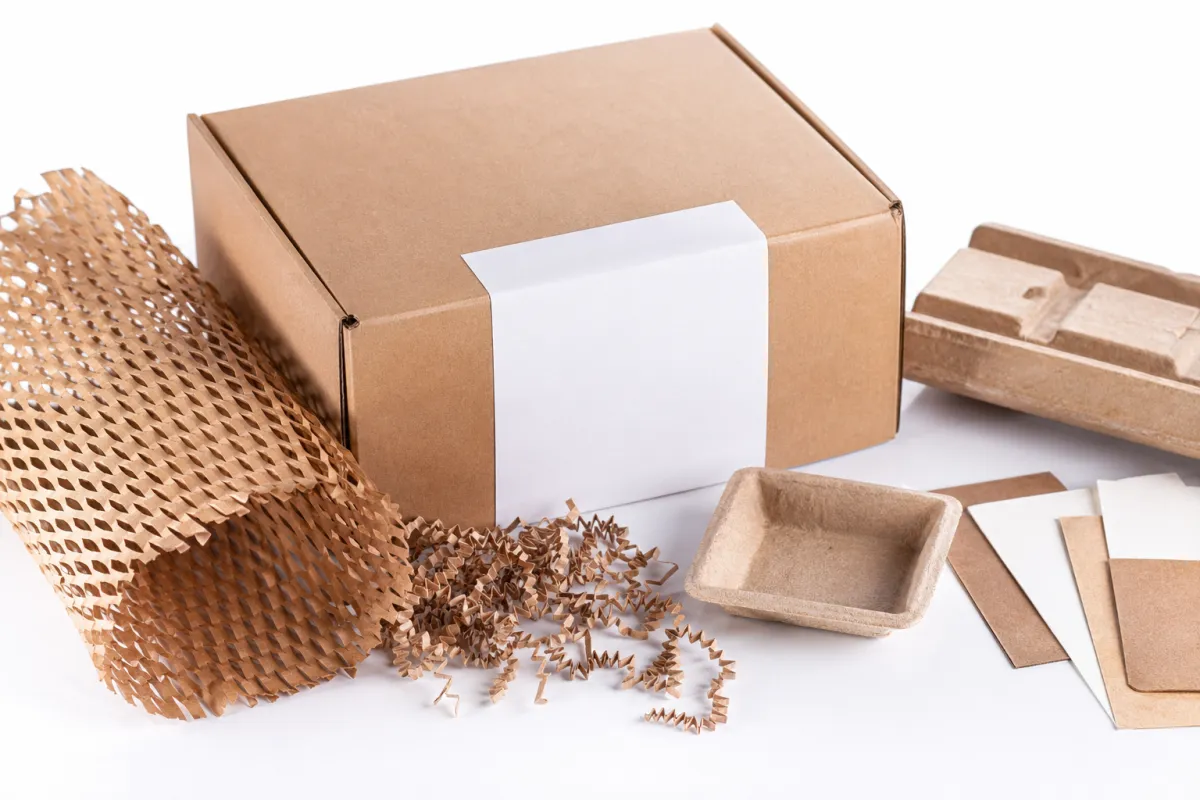
The first time I saw a small change trigger a real fee jump, it was on a two-piece rigid box for a skincare brand in Dongguan. The buyer wanted the insert 2 mm thicker, moving from 1.8 mm to 3.8 mm chipboard, and the factory came back with $0.09 for tooling, $0.04 for extra material, and a $120 setup charge because the insert die had to be revised. On a spreadsheet, that looked absurd. On the production floor, it was Tuesday. The factory manager barely blinked.
That is why tips negotiate lower eco packaging fees begin with understanding factory math. A supplier is not pricing paper alone. They are pricing labor minutes, press calibration, QC checks, machine changeovers, pallet space, and the risk of rework if your artwork lands 1.5 mm off the dieline. Once you can see that stack, the conversation changes. The wrong number stops getting all the attention, and the actual cost driver finally gets named.
Here is the plain-English breakdown. Material premium covers the gap between conventional stock and recycled, FSC-certified, compostable, or molded fiber options. Printing setup pays for plates, screens, and color matching on a press in Shenzhen or Guangzhou. Tooling pays for dies, molds, and insert forms. Testing and certification can include compression checks, drop tests, and chain-of-custody paperwork from a mill in Zhejiang. Then there is the drawer full of weak labels: "miscellaneous," "admin," and "handling." Those deserve a second look every time, especially on orders under 5,000 pieces.
I once sat across from a sales rep who brushed off a $75 line item as "small coordination cost." I asked what had been coordinated. He explained that the FSC board had to come from a different warehouse in Foshan, the water-based ink needed a different curing window, and the carton master case had to be changed to fit the pallet pattern for a 40-foot container. That is not fluff. That is exactly where tips negotiate lower eco packaging fees should focus, because each of those steps carries a real operational cost. The lesson was annoying but useful: vague wording is usually a tiny smoke machine hiding a real process.
Timing creates another trap. Ask for a quote on Monday and demand production by Friday, and every sustainable material starts acting like a luxury product. Eco substrates usually have narrower availability than standard SBS or virgin kraft, especially if you want 350gsm C1S artboard, molded pulp, or FSC kraft with a specific brightness level. If a supplier has to source one pallet of certified board instead of using stock already on hand, the quote gets heavier. I have watched the same box move from $0.41 to $0.63 just because the order window shrank from 18 days to 6. That kind of jump makes people laugh once, then wince for the rest of the week.
For a wider packaging reference, the Sustainable Packaging Coalition offers useful design guidance at packaging.org. I use sources like that when I want to challenge a supplier to explain a charge with something more concrete than "this material is special." Special is not a line item. A spec sheet is, and a spec sheet with board grade, coating, and MOQ beats a slogan every time.
One more thing buyers miss: eco packaging fees are often padded because nobody asked for a line-by-line breakdown. If the quote says $8,400 for 10,000 units and stops there, the supplier has room to bury assumptions about print plates, insert tooling, carton packing, and pallet wrap. Break the quote into board, print, tooling, certification, freight, and packaging design support, and the real pressure points appear. That is a serious move in tips negotiate lower eco packaging fees, and it usually changes the tone of the whole negotiation. I have seen the sales rep straighten up the second the quote got dissected.
"The box was not expensive. The unknowns were expensive." That was the line my client in Austin used after we pulled a six-line quote apart, removed the vague charges, and cut $0.11 from the unit price on a 7,500-piece run.
That client was buying Custom Packaging Products for a seasonal launch, and the supplier had added a wide-carton surcharge because the original dieline would have pushed the pallet over a dimensional weight threshold on a shipment bound for Dallas. One small tweak to the carton depth saved $310 in freight on the first shipment alone. Not glamorous. Very real. The kind of savings nobody posts on Instagram, which is probably for the best.
How do you negotiate lower eco packaging fees?
The short answer is to tighten the spec, ask for a line-item quote, and compare landed cost instead of just unit price. If you want tips negotiate lower eco packaging fees that actually stick, start by removing guesswork. Exact dimensions, exact material, exact finish, and exact quantity give the supplier less room to pad the quote with assumptions. Then ask which line is driving the premium and what tradeoff would move it down.
That approach works because it shifts the conversation from emotion to operations. A cleaner brief helps the factory price the real job, not the missing details. It also makes it easier to compare recycled board, molded fiber, FSC-certified kraft, and other Sustainable Packaging Options on equal footing, which is where the savings usually show up.
How Eco Packaging Fees Work From Quote to Invoice
If you want tips negotiate lower eco packaging fees that hold up later, trace the money from the first spec sheet to the final invoice. A quote is not a promise. It is a snapshot, usually built from a product brief that may be missing dimensions, finish type, or exact quantity. Snapshots miss things when the buyer leaves out details, and packaging teams leave out details more often than they admit, especially when the project moves fast and the sample is still not approved.
The pricing chain usually runs like this: first spec sheet, sample quote, revised quote after art and tooling review, production invoice, then post-shipment add-ons like freight corrections or a reinspection fee. I have seen a $0.46 recycled mailer become a $0.59 landed unit because the final carton count changed the pallet pattern, which changed the truck load, which changed the freight class from a standard lane to a more expensive regional rate. One change. Three price ripples. That is the part that makes people angry, and I get it.
Suppliers can hide margin in a few places that look harmless at first glance. Die-cut tooling shows up with custom inserts or shapes. Color matching may carry a charge if you want a specific Pantone on an uncoated recycled stock. Moisture barriers can raise costs on food, coffee, or cosmetic packaging because the barrier layer changes sourcing and recyclability. Even the jump from a one-cavity insert to a two-cavity insert can force a new mold or knife die, which may add $180 to $450 before the first carton is printed.
Carton dimensional weight causes trouble all the time. A box can be cheap to make and expensive to move. If the carton grows by 12 mm on one side, the shipping cube may jump, and suddenly the freight line becomes the villain. I have seen a retail packaging program lose $0.07 per unit in shipping savings after a slightly wider insert pushed the master case into a pricier freight bracket. It is irritating in a very specific, supply-chain kind of way, especially when the change was made to improve "air feel" rather than performance.
| Material Family | Typical Use | Common Cost Pressure | What Usually Helps |
|---|---|---|---|
| Recycled paperboard | Mailer boxes, folding cartons, sleeves | Print setup, finish upgrades, board grade | Standard sizes, fewer colors, simpler die lines |
| FSC kraft board | Branded packaging for retail and shipping | Certified stock availability, MOQ, freight | Early booking, repeat volume, stock substitution |
| Molded fiber | Protective inserts, trays, electronics | Mold cost, drying time, tooling lead time | Shared tooling, stable annual volume, standard cavity count |
| PLA or compostable film | Pouches, liners, food wrap | Barrier performance, testing, limited suppliers | Relaxed barrier spec, larger MOQ, longer lead time |
That table explains why tips negotiate lower eco packaging fees are never only about squeezing a supplier for a lower quote. The material family has to match the product and the channel. A subscription skincare box, a retail gift set, and a food mailer each behave differently, and a 1,000-piece pilot in Los Angeles will not cost the same as a 20,000-piece reorder from Ningbo. The packaging design that looks elegant on a mood board can turn awkward once it hits a carton line and a freight pallet.
For a quick reality check, I compare the packaging quote against the buyer's own performance requirements instead of just the sustainability wishlist. A box that has to survive three feet of drop height and humidity in a Florida warehouse is doing a different job than a display carton sitting in a boutique in Portland. ASTM and ISTA standards exist for a reason, and they matter when a product has to move from a factory in Shenzhen to a warehouse in New Jersey. If you need a reference point, ISTA has practical shipping test guidance at ista.org.
The sustainability paperwork can add its own cost layer. Some suppliers treat FSC chain-of-custody as a formality; others treat it like a production step with labor attached, and that difference shows up fast on a 6,000-unit order. If the certificate has to be verified, reissued, or matched to a specific mill in Hebei, that may add $25 to $180 depending on volume and region. I am not calling that fake. I am saying you should know exactly what it buys, because a fee that costs $60 and avoids a compliance headache is very different from a fee that only sounds official. If the fee exists, it should at least do something useful.
Tips to Negotiate Lower Eco Packaging Fees Without Cutting Quality
The fastest savings usually come from a cleaner spec, not a cheaper supplier. That is one of the core tips negotiate lower eco packaging fees I repeat until clients can recite it back to me. A box with one fewer panel, one fewer print color, or one standard insert can beat a supplier switch by a wide margin, especially when the project is built around 350gsm C1S artboard and a simple matte aqueous coat.
Start with structure. If the carton can be a regular slotted box instead of a Custom Tuck End with a window patch, the quote may drop by 10% to 18%. If the insert can be a standard paperboard cradle instead of molded fiber, you may save on mold tooling and a 3- to 4-week sample delay. I have seen a brand cut packaging costs by $0.12 per unit by moving from a bespoke two-piece insert to a scored one-piece tray that still protected the product. That fix looks too plain to matter until you see the invoice.
Compare pricing by material family, not only by supplier name. Recycled board, kraft, molded pulp, and compostable film carry different production realities. One supplier may look expensive at $0.61 per unit for FSC board, but if another supplier quotes $0.58 and then adds $0.06 for freight plus $0.03 for a certification refresh, the first quote was better. That is why tips negotiate lower eco packaging fees need landed cost, not just ex-works price. The sticker number is not the whole truth, and packaging budgets prove that the hard way.
Volume math helps too. Ask what changes at 5,000, 10,000, and 25,000 units. A quote that feels stubborn at 5,000 may fall by $0.05 at 10,000 and another $0.03 at 25,000 because the press setup gets spread across more units. Suppliers like efficient runs. They dislike tiny batches that force them to stop and restart the machine. If you are buying custom printed boxes on a recurring basis, this is where repeat-order math begins to matter, especially in factories around Shenzhen and Dongguan where press time is booked in blocks.
Ask for tradeoffs instead of only asking for a discount. These are the swaps I have used in real negotiations on 5,000- to 15,000-unit orders:
- Reduce from four-color print to two-color print and keep the same board grade.
- Replace soft-touch lamination with aqueous coating on retail packaging.
- Standardize one insert size across two SKUs.
- Move a foil stamp from the front panel to the inside flap, where it still feels premium but costs less.
- Accept a slightly larger MOQ in exchange for lower unit pricing and fewer setup fees.
None of those moves is flashy. They work. A founder I worked with in Los Angeles wanted "luxury but responsible" and was ready to accept a $0.94 carton on a 12,000-piece holiday run. We changed the finish from soft-touch to matte aqueous, removed a second white underprint pass, and kept the FSC board. The price landed at $0.71, and the carton still looked intentional on shelf. That is the kind of result tips negotiate lower eco packaging fees should aim for. Not glamorous, just profitable.
If your team is building broader branded packaging systems, keep the product packaging and the retail packaging spec aligned. One off-brand insert or one oversized shipper can wreck the budget, especially if marketing approves a sample in New York and operations tests the master carton in Chicago. A lot of waste happens because marketing, ops, and procurement each approve a different version of the same box. That is not strategy. That is a spreadsheet tax.
I also like to ask one blunt question: "What can we remove without changing function?" That pushes the conversation toward structure, not ego. The answer is often more honest than people expect. I have heard, "We can remove the spot UV and keep the rest," or "We can swap the black insert for natural kraft and keep the same fit." Those answers are worth real money, and they usually come from people who know the factory in Ningbo better than the brand deck does.
For buyers who want a practical shortcut, I suggest checking product packaging options against the actual shipping environment before they lock the print spec. If the box only needs shelf appeal, do not price it like a transit bunker. If it has to survive e-commerce handling, do not pretend a pretty sleeve will save the product. A $0.19 sleeve and a $0.41 shipper solve different problems, and the invoice should reflect that.
Process and Timeline: How Lead Times Affect Eco Packaging Pricing
Rush orders are the quickest way to turn a normal price into a painful one. That is one of the tips negotiate lower eco packaging fees I learned after a beauty client in Seattle called on a Tuesday and needed launch boxes by the following Friday. The supplier quoted a 22% rush surcharge, $180 for overtime, and air freight that cost more than the packaging itself. The boxes arrived. The margin did not. I still think about that one whenever someone says, "Can we just make it happen?"
The timeline matters because each stage has its own cost profile. Briefing takes time to align dimensions, materials, and print count. Sampling takes time to cut, print, cure, and ship. Approval takes time because someone always wants one more proof cycle, usually after the mockup has already been approved in principle. Production takes time because the press room is booked, not waiting around for your brand story, and a 12- to 15-business-day lead time from proof approval is normal for many standard jobs.
Eco materials often need longer sourcing windows. FSC board may require a specific mill run in Shandong. Molded fiber often has a drying and trimming schedule that is less flexible than standard paperboard. Water-based inks can need different cure times, and some compostable films have limited inventory in the region. If you want tips negotiate lower eco packaging fees, giving the supplier two extra weeks can save more than arguing over $0.02 per unit. The savings can feel boring, but boring is excellent when it lives on the margin line.
Here is the timing advice I give clients, especially for retail packaging programs tied to a trade show or seasonal drop in Las Vegas or Orlando:
- Freeze dimensions first, at least 3 weeks before sampling.
- Approve artwork only after the dieline is signed off.
- Hold 5 to 7 business days of buffer for material sourcing.
- Do not change print colors after the first proof unless you want a fresh setup charge.
- Plan freight before production ends so the master carton size does not get optimized too late.
That last point surprises a lot of packaging teams. A carton that looks fine in a rendering can turn expensive once the master case count, pallet height, and warehouse handling rules show up. I watched a brand add 8 mm of headspace to make the unboxing feel "more premium," then lose three cartons per pallet on a 40-foot container out of Shenzhen. The landed cost rose by $0.05 per unit. Attractive, yes. Cheap, no. We all admired the prototype and then quietly paid for the privilege.
If you want sustainability targets and supply chain discipline in the same room, the schedule needs room to breathe. I am not saying plan loosely. I am saying plan honestly. A supplier can source better materials when they are not being pushed into emergency stock from whichever warehouse happens to be closest to the port, whether that is Yantian, Ningbo, or Long Beach.
I also check compliance windows. If the product needs transit validation, shelf-life protection, or food-safe documentation, the schedule affects whether the supplier has time to test properly. ASTM-based testing, internal compression checks, and carton drop verification all take calendar days, and a food-safe line might need 7 to 10 business days just for documentation review. Forcing those tasks into one week is how mistakes become reprints. And reprints, in my experience, are a special kind of tax nobody put in the original budget.
For material traceability, I sometimes point teams to the Forest Stewardship Council at fsc.org. If the supplier says they can provide certified stock, ask for the document number and the matching material reference. That is not being difficult. That is basic due diligence, and it keeps you from paying for a claim that is not attached to the board you are actually receiving, whether the mill is in China, Vietnam, or the Pacific Northwest.
Step-by-Step Guide to Ask for Lower Eco Packaging Fees
If you want a practical script, this is the one I use when I need tips negotiate lower eco packaging fees to turn into an actual quote instead of a polite shrug. Start with a clean brief. Give exact dimensions, board grade, finish, print count, quantity, ship date, and sustainability requirements. Leave out the 2 mm product-height difference, and the supplier will fill the gap with assumptions. Assumptions are where extra cost hides, and they are rarely generous.
Then ask for a line-item quote. Not a summary. A line-item quote. You want the board, print, tooling, insert, certification, freight estimate, and any admin charges separated. If the supplier only gives you one total, ask which part is driving the premium. That question usually gets better answers than "Can you lower it?" because it forces the rep to think in parts, not in one protected number, and a line item for a $120 die cut or $95 certification check is easier to negotiate than a mystery total.
Next, request three versions: target, acceptable, and stripped-down. I do this even on small programs because the differences reveal where the money sits. On a 7,500-unit run of branded packaging, the target version might keep the matte coating and FSC board, the acceptable version might drop the coating, and the stripped-down version might switch to one-color print and standard kraft. Side by side, the savings become obvious, especially when one version comes in at $0.68 and another at $0.82.
Use language that works in real negotiations. I say, "What can we remove without changing function?" and "Which spec is driving the premium?" Those lines work because they invite collaboration instead of confrontation. I learned that in a supplier meeting in Ningbo where the rep had already decided we were "price shopping." Once I asked for the cost driver, he admitted the custom insert was eating more budget than the carton itself. We cut the insert change and saved $0.08 per unit. I almost wanted to clap, but that would have been weird.
If you need a stronger position, anchor the request to repeat business. Suppliers care about annual volume more than one-off drama. If you expect four replenishment orders over 12 months, say that. If you can commit to 15,000 units in three batches, say that too. Predictability has value, and it often shows up as lower fees, better payment terms, or a one-time tooling credit that might be worth $150 to $400.
Do not forget to lock revisions in writing. This is where tip lists get fuzzy and invoices get sharp. If the supplier agrees to a smaller finish charge, a standard insert, or a waived sampling fee, capture it in the revised quote or email confirmation. I have seen a seller "forget" a discount after production started, then claim the factory had changed the workflow. Paper trail beats memory every single time, especially when the goods are already on a truck from Dongguan to Los Angeles.
And yes, you can still get emotional about the quote. I have. Everyone has. But if you want tips negotiate lower eco packaging fees that survive proofing and production, you need calm questions, not a dramatic rant. A clean spec sheet saves more money than a loud email ever will, and it usually gets a faster reply from the factory rep too.
Common Mistakes That Raise Eco Packaging Fees
The biggest mistake is ordering too late and expecting the supplier to absorb the chaos. They will not. They will invoice it. I watched one startup ask for 12,000 units of molded fiber trays with a 9-day turnaround from a factory in Guangzhou. The supplier quoted an emergency line, an overtime line, and a premium freight line. The founder thought the sustainable material was the expensive part. It was not. The schedule was. That one still makes me wince.
Changing specs after sampling is another costly habit. A new dieline can trigger new tooling. A new print area can trigger new proofing. A new insert size can force a partial restart. I have seen a beauty brand move a logo 14 mm to the left after sample approval and spend $430 to rework the plate layout and the board layout. That was a pricey design opinion. The logo was lovely, though. Expensive, but lovely.
Another common problem is assuming all green materials are interchangeable. They are not. Recycled board can differ in brightness, stiffness, and print behavior, and a 300gsm sheet from one mill may behave very differently from a 350gsm C1S artboard from another. Compostable film can differ in barrier performance and shelf life. Molded pulp can differ in density and edge quality. If you ignore those differences, you will end up paying for samples, testing, and rework. Those costs are very real, and they show up on invoices.
Shipping dimensions matter too. A box that saves $0.03 in manufacturing but adds $0.08 in freight is a bad deal. Carton counts, pallet configuration, and dimensional weight can turn a decent unit price into a terrible landed cost. I once helped a client swap the master carton from 24 units to 32 units by changing the pack orientation. The product did not change. The freight math did. That saved nearly $670 over one shipment leaving Shenzhen for Chicago. The client called it "boring magic," which is probably accurate.
Here is the short list I wish every buyer kept on their desk before trying tips negotiate lower eco packaging fees:
- Do not quote from a mood board; quote from a signed dieline.
- Do not approve artwork before you confirm material stock and MOQ.
- Do not change the insert after the sampling round unless you budget for retooling.
- Do not ignore freight, pallet count, and warehouse handling rules.
- Do not accept "miscellaneous" without asking for a better label.
A lot of these problems happen because packaging teams are juggling branding, operations, and finance at the same time. That is messy work. The fix is still simple: decide what matters most. If the goal is shelf appeal, say so. If the goal is damage reduction, say that. If the goal is a lower carbon footprint, define the acceptable material set. Clear priorities reduce waste, and they reduce the back-and-forth that bloats cost, especially on projects moving between New York, Shenzhen, and a Midwest fulfillment center.
Do not let the word "eco" trick you into paying for features that do not help the product. A recycled board with heavy lamination and an oversized insert is not automatically better than a simpler build. Sustainability is not a pass for expensive packaging theater. I say that with love, and with just enough annoyance to keep it honest, because a $0.27 coating upgrade on a mailer that never leaves a warehouse is still a $0.27 coating upgrade.
Expert Tips and Next Steps to Lock In Lower Eco Packaging Fees
If you buy packaging more than once a year, build a supplier scorecard. I keep mine brutally simple: unit price, lead time, sustainability proof, sample accuracy, and responsiveness. A supplier that saves you $0.03 but ignores emails for four days is not really saving you money. They are moving the cost into your calendar, usually at 5:00 p.m. on the day finance wants an answer.
For recurring programs, negotiate on annual volume or repeat orders. Suppliers like predictable demand because it helps them plan press time, buy stock in larger lots, and reduce waste. I have seen a vendor cut tooling amortization by 30% when a brand agreed to a three-order annual schedule instead of one small emergency run. That is real bargaining power, and it is cleaner than fighting over a single line item.
Ask for sample credits, tooling amortization, or freight-sharing if the unit price will not move much. Those concessions are often easier for the supplier to approve than a raw discount. I once got a factory in Guangzhou to waive a $160 sample charge by agreeing to split the first freight bill and keep the same insert cavity for the next order. No drama. Just a practical trade.
Keep the packaging design system consistent too. If one SKU uses a 94 x 94 x 52 mm carton and another uses 96 x 96 x 54 mm for the same product family, you are paying for duplicate setup, duplicate inventory, and a less efficient pallet pattern. Standardizing dimensions is one of the most overlooked tips negotiate lower eco packaging fees, and it usually saves more than a stack of flashy "green" upgrades ever will. Even one common mailer size across three SKUs can simplify buying and shave a few cents per unit.
Here is the action list I give clients who want to move quickly without breaking the budget:
- Audit your current spec and remove one nonessential feature.
- Collect two comparison quotes on the same board grade and print count.
- Ask for a line-item version of the quote, not just a total.
- Compare landed cost, including freight, pallet count, and packaging design changes.
- Reopen negotiation with a cleaner brief and a realistic volume forecast.
If you are shopping through a broader packaging catalog, it helps to review Custom Packaging Products against the actual cost structure, not against wishful thinking. A lot of teams fall in love with a premium finish and then act surprised when the unit price reflects that choice. The factory is not a charity. It is a machine with labor, stock, and timing built into every quote, whether the order is 2,500 units in Portland or 25,000 units in Shenzhen. I say that with a smile, but only because I have seen too many teams learn it the expensive way.
One client I worked with in Chicago kept asking for tips negotiate lower eco packaging fees while insisting on three foil colors, a soft-touch finish, and a custom molded insert. I told them plainly that the spec was the problem. We cut one foil color, moved to matte aqueous, and used a standard pulp tray. The quote dropped from $1.08 to $0.79 per unit on a 14,000-piece run, and the packaging still looked like a proper premium retail package.
My last piece of advice is simple. Protect the story, not every ornament. Buyers sometimes fight to keep a feature because it feels premium, even when the customer will never notice it. The best tips negotiate lower eco packaging fees preserve function, keep the brand visible, and remove only the bits that burn cash for no real gain. Do that, and the invoice gets smaller, the schedule gets calmer, and the sustainability message stays intact.
Frequently Asked Questions
How do I ask for lower eco packaging fees without sounding cheap?
Lead with volume, repeat business, or a cleaner spec instead of just asking for a discount. Ask which part of the package is driving the premium, then invite the supplier to suggest a tradeoff, such as dropping one finish or using a standard insert. A line like "What can we change to bring this closer to target?" usually lands better than "This is too expensive," especially if your order is 8,000 pieces or more.
What changes usually cut eco packaging fees the fastest?
Simplifying the structure and reducing custom inserts usually saves more than shaving a few cents off material. Dropping one print color, one special finish, or one nonessential certification can move the quote quickly. Standard sizes and standard materials are usually cheaper than fully custom builds, especially when the MOQ is under 10,000 units and the supplier is quoting from a plant in Dongguan or Ningbo.
Are recycled and compostable materials always more expensive?
Not always, but they often cost more when demand is tight or the supplier has to source certified stock. Some recycled boards are close to conventional pricing when ordered in volume, especially if the mill is already in the supplier's network. Compostable options can get expensive if the design also requires specialty inks, barrier layers, or testing for food or transit performance, and a 12,000-piece order can still swing by $0.06 to $0.10 per unit.
How do lead times affect eco packaging pricing?
Short timelines can trigger overtime, faster freight, and premium sourcing. Eco materials sometimes need longer procurement windows, so rushing them makes the price jump. A longer planning window gives the supplier room to use more cost-effective stock, book a better production slot, and avoid the kind of emergency charges that turn a decent quote into a bad one, especially if proof approval only happened 5 business days before production.
What if the supplier refuses to lower eco packaging fees?
Ask for a stripped-down version of the quote so you can see the cheapest workable build. Get at least one competing quote for the same spec so you know whether the price is fair. If the supplier still will not move, negotiate on freight, tooling, payment terms, or future volume instead of forcing one price point and losing the relationship. A $160 sample credit or a waived setup fee can be just as useful as a direct discount.
If you want tips negotiate lower eco packaging fees that survive sample approval, production, and invoice day, keep the spec tight, the timing realistic, and the quote broken into pieces you can challenge. That is how I have saved clients $0.05 here, $0.11 there, and occasionally a very satisfying $0.18 per unit without wrecking the packaging or the timeline. The clearest takeaway is this: remove one nonessential feature, force a line-item quote, and compare landed cost before you agree to anything. Do that first, and you will usually cut the real waste instead of just arguing with the total.


