Buyer Fit Snapshot
| Best fit | Custom Tuck End Boxes Price projects where brand print, material claims, artwork control, MOQ, and repeat-order consistency need to be specified before quoting. |
|---|---|
| Quote inputs | Share finished size, material target, print colors, finish, packing count, annual reorder estimate, ship-to region, and any compliance wording. |
| Proofing check | Approve dieline scale, logo placement, barcode or warning zones, color tolerance, closure strength, and carton packing before bulk production. |
| Main risk | Vague material claims, crowded artwork, missing packing details, or unclear freight terms can make a low unit price expensive after revisions. |
Fast answer: Custom Tuck End Boxes Price: What Really Drives Cost should be specified like a repeatable production item. The safest quote records material, print method, finish, artwork proof, packing count, and reorder notes in one written spec.
Production checks before approval
Compare the actual filled-product size with the drawing, then confirm tolerance on folds, seals, hang holes, label areas, and retail display edges. Reserve space for logos, QR codes, warning copy, and material claims before decorative graphics fill the panel.
Quote comparison points
Review material grade, print process, finish, sampling route, tooling charges, carton quantity, and freight assumptions side by side. A quote is only useful when the supplier can repeat the same color, closure quality, and packing count on the next order.
Custom Tuck End Boxes price sounds straightforward until the first quote lands and the numbers are carrying board grade, ink coverage, finish, freight origin, and a dozen production choices nobody mentioned in the first email. I still remember one skincare carton project where a 3 mm footprint adjustment cut waste by 11 percent, let us fit more units per pallet layer, and lowered the landed cost by $0.04 per box on a 10,000-piece order. That is the kind of detail that makes pricing feel slippery at first, especially when the boxes are being made in Dongguan, Guangdong, or Suzhou, Jiangsu, where a small sheet change can alter the whole job from the press side onward.
I treat custom tuck end boxes price as a packaging decision, not a line item. The carton ships flat, converts quickly, and fits naturally into retail packaging and protective product packaging, yet the final number still shifts with size, board grade, print coverage, finish, and quantity. A 500-unit run may price at $1.22 per box, while 5,000 units can fall to $0.15 per unit on the same 18pt SBS structure with one-color print, and that spread is where brands either save real money or pay for features they never needed in the first place. Honestly, the biggest mistake I see is asking for a price before the team has settled whether the box needs to protect a 4 oz serum, a 9 oz candle, or a 12 oz supplement bottle.
I have watched more than one buyer focus on the unit price and miss the larger picture. A carton that costs $0.12 less can still cost more overall if it adds 2 percent damage, 8 percent extra shipping weight, or an hour of hand assembly on the packing line in Dallas, Texas, or Los Angeles, California. I have had that conversation in a warehouse office with fluorescent lights buzzing overhead, a stack of samples on the table, and one frustrated brand manager tapping a calculator like it had personally offended her. That is the lens I use when I talk through Custom Printed Boxes, branded packaging, and package branding with clients who need the carton to do more than simply hold a product.
Why Does Custom Tuck End Boxes Price Surprise Buyers?
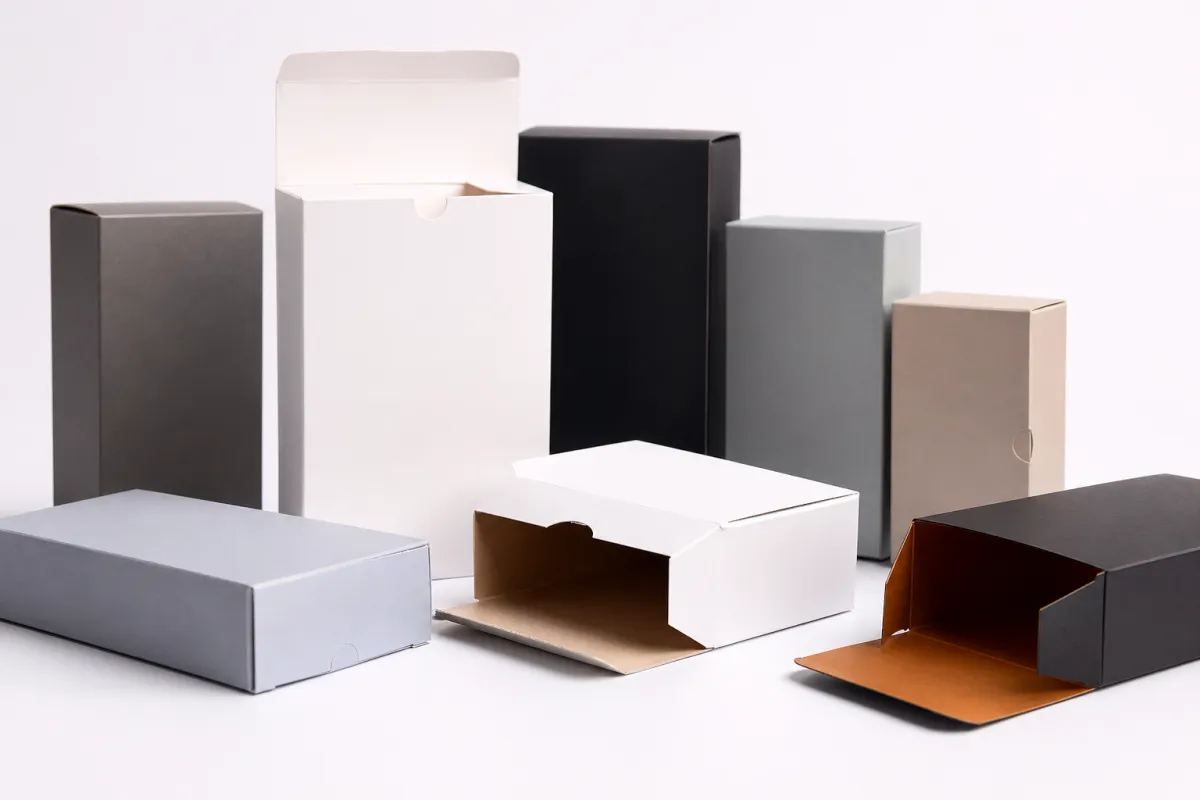
The first surprise is that custom tuck end boxes price rarely behaves like a fixed commodity. A buyer may ask for "the same box, just with our logo," then find out that a 4-color CMYK build on 18pt SBS sits in a very different bracket from a 1-color kraft box on 24pt CCNB. I watched that exact conversation unfold in a client meeting where the team expected a $0.30 change and ended up with a $0.78 swing because the carton footprint was 0.2 inches wider and the artwork bled across all six panels. Somebody stared at the sample like it had betrayed them, which, to be fair, I understood.
The second surprise is structural. Tuck end boxes stay economical because they ship flat, cut efficiently, and convert quickly on standard folding carton lines, which makes them a practical middle ground between plain corrugated packaging and expensive rigid packaging. During a visit to a converter floor in Dongguan running 240 cartons per minute on a straight tuck job, the operators said the same thing in different words: when the dieline is clean, the press and folder stay happy, and custom tuck end boxes price stays easier to predict. I like that kind of manufacturing logic because it is boring in the best possible way; boring, in packaging, usually means stable and affordable.
"We thought the box was the cheap part," one beauty client told me after we changed a carton by 2.5 mm and saved roughly $6,400 across a 10,000-unit run. "The box was actually the part that kept adding labor."
That line comes up more often than people expect. Buyers usually think in terms of shelf appearance, while the real value sits across the entire job: print quality, fit, damage reduction, and the way the carton supports package branding. A box that displays well on a shelf and protects a glass bottle during freight from Shenzhen to Chicago can justify a higher custom tuck end boxes price than a cheaper design that needs inserts, rework, or a second shipper. I have seen a polished-looking carton blow up the budget because it required too much hand packing in a 65-degree warehouse in New Jersey. Pretty does not excuse chaos.
Timing plays a quiet role too. A carton that looks inexpensive on paper can become expensive if the artwork arrives late, the proof cycles drag, or the die gets redrawn twice. I have seen a 2,000-piece test order move from a simple three-step approval to a seven-step correction loop because the barcode sat too close to the tuck flap. In that case, the final custom tuck end boxes price reflected not just board and ink, but lost days, a revised dieline, and an extra proof shipment. Frankly, nothing tests patience like waiting on a revised proof because somebody placed a UPC where the fold needed room to breathe.
Custom Tuck End Boxes Price Factors: Materials, Size, and Print
If you want a quote that holds up in the real world, start with the material. Board grade is usually the biggest driver behind custom tuck end boxes price, and the difference between SBS, CCNB, and kraft-style stock is not just visual. SBS gives a cleaner white face and stronger image reproduction for premium retail packaging; CCNB can lower cost for larger runs; kraft supports a natural, lower-ink look that works well for artisanal or eco-forward branding. A 350gsm C1S artboard, for example, is a common sweet spot for cosmetics and supplements because it prints sharply and still feels substantial in hand. The right board depends on product weight, shelf position, and whether you need a bright print surface or a more textured presentation. I have a soft spot for kraft when the design is honest about the material instead of fighting it with five layers of glossy graphics.
Size matters more than most buyers expect. A box that is 0.25 inches taller and 0.5 inches wider uses more substrate, more ink coverage, and more freight volume, which pushes the custom tuck end boxes price in three directions at once. I once reviewed a supplement carton where the client wanted an extra 3 mm of headroom for comfort. That one change increased sheet usage enough to lower nesting efficiency by 5 percent, and the carton count per pallet dropped from 18 to 16 layers. Small geometry, real money. I still remember the buyer saying, "It's only three millimeters," and me having to explain that packaging math is annoyingly indifferent to human optimism.
Print coverage is the next lever. A one-color black logo on natural kraft usually costs less than full-coverage CMYK with heavy solids, gradients, and fine reverses. Add spot UV, foil stamping, embossing, or lamination, and the custom tuck end boxes price climbs because each finish introduces setup, curing, or secondary handling. My rule stays simple: if the finish does not help sell the product or protect it, treat it as optional until the numbers prove otherwise. I have seen brands fall in love with a foil accent that looked beautiful in the mockup and then quietly ate the margin like a raccoon in the pantry.
Structural complexity remains modest with tuck end cartons, which is a big part of why they stay more affordable than rigid boxes or display cartons. Still, details matter. A reverse tuck end can behave differently from a straight tuck end depending on carton orientation, machine direction, and how the flaps lock during assembly. On a 500-piece test run, I once saw a supplier quote a premium because the flap direction added 15 seconds of hand packing per unit. That kind of labor line can hide inside custom tuck end boxes price unless you ask for a step-by-step breakdown. And yes, 15 seconds sounds tiny until you multiply it by hundreds or thousands of boxes and suddenly the production floor is muttering under its breath.
| Option | Typical Use | Cost Impact | Practical Note |
|---|---|---|---|
| 18pt SBS, 4-color CMYK, aqueous coat | Premium retail packaging for cosmetics or supplements | Baseline to +10% | Best when print clarity matters more than a natural look |
| 24pt CCNB, 1-2 colors | Mid-range product packaging with solid shelf presence | -5% to +5% | Often a good value for heavier items |
| Kraft-style board, 1-color print | Natural branded packaging with restrained graphics | -10% to -20% | Works well when the design uses texture instead of heavy ink |
| Matte lamination + spot UV | Premium custom printed boxes with contrast | +12% to +25% | Use only if the finish supports the brand story |
| Foil + emboss | High-visibility display cartons | +18% to +35% | Strong visual lift, but rarely the lowest-cost route |
That table is why I push buyers to compare the total effect, not just one line item. A carton can start at a low custom tuck end boxes price on paper and then swell once the finish, board, and artwork complexity are added. For standards, testing, and material handling, I also keep an eye on references from ISTA for transport testing and FSC for responsibly sourced paper claims when a client wants chain-of-custody support. Those details may feel dry in the moment, but they keep the packaging conversation grounded in something more useful than vibes.
The press method matters too. Digital short runs, offset medium runs, and flexo-style production all carry different setup economics, and those economics show up quickly in custom tuck end boxes price. A 250-piece pilot may be perfect for a launch test, but a 5,000-piece repeat order can cut unit cost by more than half if the same die and artwork are reused. That is not marketing talk. That is setup math. I have never met a production manager in Shanghai or Michigan who was moved by slogans, but setup math usually gets a nod and a scribbled note in the margin.
Specifications That Shape Custom Tuck End Boxes Price
Before any real quote, I want four numbers: product dimensions, product weight, print coverage, and target quantity. If those numbers are wrong by even 1/8 inch, the custom tuck end boxes price can shift because the board layout changes, the dieline needs revision, or the carton no longer nests efficiently. I learned that the hard way on a fragrance launch where the bottle neck was 2 mm taller than the spec sheet. The carton fit, but the headspace disappeared, and the team had to revise the insert and reproof the file. That kind of mistake is small on paper and irritating in real life, which is one of packaging's least charming traits.
Board Thickness and Caliper
16pt, 18pt, and 24pt sound like minor differences, yet they affect feel, crush resistance, and cost. A lighter 16pt board can keep custom tuck end boxes price low for items under 6 oz, while a 24pt build can make more sense for heavier product packaging or items that will sit stacked on shelf for 90 days. I usually tell buyers that the cheapest board is only the cheapest if it survives the warehouse in Atlanta, the retailer floor in Austin, and the customer opening the box without a crease. A box that collapses in transit is not a bargain; it is just a future complaint with printed graphics.
Bleed Area and Dieline Accuracy
Bleed is not a design footnote. A 0.125-inch bleed is standard in many print jobs, and if the dieline is off, the print can clip a logo, shift a barcode, or leave a sliver of white on the fold. That kind of error can raise custom tuck end boxes price because a bad file often means a second proof, a replate, or a waste run. In a supplier negotiation last spring, I saw a buyer shave $0.06 off the quote by sending a clean dieline on day one; the mill rep said the file saved more time than a rushed call ever could. I believe that because clean files are boring, and boring files save money.
Printable Area and Color Coverage
Front, back, top, bottom, and tuck flaps all compete for space. If you fill every face with photography, gradients, and legal copy, the custom tuck end boxes price usually rises because the prepress team has to trap, separate, and proof more elements. A simple two-color design can be surprisingly effective if the brand has a strong logo and a disciplined color system. I have seen more sales lift from a clean layout than from a carton loaded with six finishes. There is a certain confidence in restraint, and it often prints better too.
Insert Compatibility and Product Weight
If your product rattles, breaks, or leans, an insert may be worth the added cost. Inserts change labor and material usage, so they affect custom tuck end boxes price. For a 9 oz glass serum, a fitted paperboard insert can be the difference between zero returns and a 3 percent breakage rate. For a dry-good item under 2 oz, it may be unnecessary. That is why I always ask whether the box needs a cradle, a partition, or just a well-tuned cavity. I would rather sound picky for five minutes than help a customer untangle broken product returns for five weeks.
Compliance copy can also change the spec. Barcode placement, ingredient panels, warning text, and retail labeling rules influence the layout, and layout affects print complexity. A carton with a tiny UPC and a dense regulation block may need a cleaner design system than a simple display carton. If a buyer wants FSC claims, recycling icons, or ASTM-related handling notes, I check those details before final approval so the custom tuck end boxes price is not distorted by a last-minute artwork rewrite. I have seen a late legal note add more friction than a whole new design concept, which is saying something.
Custom Tuck End Boxes Price, MOQ, and Volume Breaks
Minimum order quantity changes the whole conversation. A short run has to absorb setup, die cutting, press calibration, and proofing across fewer units, so custom tuck end boxes price is naturally higher at 250 or 500 pieces than at 5,000. I have quoted 500-piece jobs where the per-unit cost was more than double the 5,000-piece price, even though the material spec stayed exactly the same. That is not a penalty; it is the fixed cost of getting the line ready. Printing plants in Shenzhen and Indianapolis are not magical; they still need the same prep whether you want 500 boxes or 50,000.
Here is a practical way to read volume breaks. If a 500-unit run comes in at $1.22 per box and a 1,000-unit run drops to $0.74, that is a 39 percent cut in unit cost. A 5,000-unit run might go to $0.15 if the artwork is stable, the board is sourced efficiently, and the carton is a standard reverse tuck on 18pt SBS with aqueous coating. That spread is why I always ask for tiered quotes when discussing custom tuck end boxes price. The buyer needs to see where the curve bends, not just the first number. Otherwise, people end up making decisions based on the cheapest-looking line instead of the smartest total.
For launches, pilot batches, and seasonal items, MOQ becomes a balancing act. Low inventory risk feels good, yet short-run pricing can quietly crush margin. I remember a candle brand in Portland that wanted 300 boxes for a test market. The quote looked fine until we added three reorder cycles and saw that a single 1,200-unit run would have saved them 22 percent over the same quarter. The custom tuck end boxes price looked higher only until we spread the cost across the full launch window. That was a fun conversation to have after the fact, though in the moment it felt a lot less fun.
There is no single right answer. If your product changes quarterly, a smaller run can protect cash. If the artwork is stable and the SKU has a 9-month shelf life, the larger run often wins. I often recommend asking for 250, 500, 1,000, and 5,000 unit pricing on the same spec sheet. That side-by-side view usually reveals the real custom tuck end boxes price and shows whether a small change in quantity unlocks a better margin.
One tactic I like is splitting the run between prototype and repeat production. You can approve 250 pieces for fit and shelf check, then roll into a larger order once the box proves itself. That approach keeps the first custom tuck end boxes price manageable while preserving the benefit of volume pricing later. If your packaging program includes several SKUs, the same logic can extend across a broader packaging family on our Custom Packaging Products page, where different carton formats can be compared without guessing.
Process and Timeline for Custom Tuck End Boxes
The production sequence is simple on paper and unforgiving in practice: request quote, approve dieline, confirm artwork, review proof, print, cut, finish, pack, and ship. Every step matters to custom tuck end boxes price because each revision creates time, and time creates cost. A clean workflow on a 1,000-piece order can move quickly; a messy file exchange on the same order can add a full week before the first box is even cut. I have watched a tiny file issue turn into a whole afternoon of "just one more correction," which is a phrase no one in production enjoys hearing.
Most delays come from three places. First, missing artwork specs, usually because the logo arrives in a low-resolution PNG instead of a vector file. Second, late proof approvals, which stall the press slot and push the job into the next production window. Third, unclear carton dimensions, which force dieline changes after the design team has already built the layout. I have seen all three raise the effective custom tuck end boxes price by 8 to 15 percent once extra admin time and rework are counted. The irritating part is that each problem is preventable, which makes it feel even more unnecessary.
Timeline depends on complexity. A simple 1-color tuck box with a standard aqueous coat can typically move in 12 to 15 business days from proof approval. Add spot UV, foil, or a custom insert, and the window may stretch to 15 to 20 business days. Freight then adds its own clock. A carton that leaves a plant in Dongguan on Friday may still take 3 to 7 more days to arrive, depending on destination and mode, whether that is air to Los Angeles or ocean freight to Savannah. So when I quote custom tuck end boxes price, I also quote the date that matters: the day the cartons can actually be in your hands. Otherwise, people hear a nice number and forget that shelves do not care about accounting theory.
For buyers who want to move faster, the best habit is to send final artwork in the correct format and answer proof questions within 24 hours. That alone can trim a 2-week project by several days. If the job has compliance copy or a barcode, I ask for the exact text early so the prepress team can lock the layout before the die is cut. That discipline keeps custom tuck end boxes price from creeping up through avoidable revisions. I am not trying to sound like a checklist evangelist here; I just like not paying for the same mistake twice.
One last production detail: transit testing is worth the effort on fragile items. If the carton is protecting glass, powder, or electronics, I like to see the packaging checked against a real transport standard before launch. A simple pass against an ISTA protocol can spare a buyer from a more expensive lesson in returns, and it often reveals whether the custom tuck end boxes price should include a stronger board or a different insert strategy. I have seen a "cheaper" box cost far more once the breakage reports started rolling in, and nobody enjoys that kind of surprise, least of all finance.
Why Choose Us for Custom Tuck End Boxes Pricing
I do not think buyers need more dramatic promises. They need transparent numbers, honest material guidance, and a partner who can explain why one spec costs more than another. That is where a well-run quoting process changes the outcome of custom tuck end boxes price. Instead of padding the estimate with premium options, we review the carton size, board grade, print method, and finish one by one, then show where the savings actually live. That kind of conversation is slower than tossing out a quick quote, but it is a lot more useful.
In my experience, the cheapest quote is rarely the best quote. A good price is the one that fits the product, supports the shelf story, and avoids reprints. When a client in the nutraceutical space was tempted to upgrade to foil and emboss, I walked them through a 3-part comparison and showed that the basic CMYK version would still meet their shelf goals. They kept the simpler spec, reduced the custom tuck end boxes price by 17 percent, and redirected the savings into a better retail display. I was genuinely happy about that one because the packaging did its job without overcomplicating the budget.
That kind of consultative quoting matters because over-specification is expensive. I have seen buyers pay for a luxury finish on a carton that sits inside a shipper 95 percent of the time. I have also seen them choose a heavier board than needed just because the sample felt "premium" in hand. A carton should not be overbuilt by default. The right custom tuck end boxes price comes from matching the structure to the real use case, not the imagined one. Sometimes the most professional thing you can say is, "You do not need that feature."
We also keep the prepress process tight. Clear dieline communication, fast sample feedback, and predictable fulfillment reduce waste at the press and at the packing station. If a buyer wants to explore other carton families, we point them to our Custom Packaging Products selection and show how a tuck end box compares with other formats on size, protection, and shelf impact. That comparison usually makes the pricing story easier, not harder. I like that part because it turns abstract pricing into something people can actually compare with their hands and eyes.
For brands that need repeat production, consistency matters as much as the first quote. A 500-unit launch and a 5,000-unit reorder should not feel like two different suppliers. When the spec is locked and the art is stable, the custom tuck end boxes price should stay steady enough that finance can plan around it. That is the standard I use, and honestly, it is the standard more packaging buyers should demand. If the second order feels like a renegotiation, somebody along the way is probably being sloppy.
Next Steps to Get an Accurate Custom Tuck End Boxes Price
If you want a quote that means something, send the numbers first. I need product dimensions, product weight, quantity, board preference, finish preference, and whether the artwork is ready. With those five details, the custom tuck end boxes price becomes real instead of speculative. If you can add a photo of the product next to a ruler, even better. That one image can prevent a 1/4-inch sizing mistake that would otherwise force a dieline change. I have seen a ruler photo save an hour of back-and-forth, and that is one of the more pleasant victories in this line of work.
The most useful files are simple: a vector logo, any regulatory copy, and one or two reference cartons that show the look you want. If you have a shelf mockup or a retailer spec sheet, include that too. I also recommend asking for at least two pricing scenarios. For example, compare 500 units with a basic aqueous coat against 1,000 units with the same print but a matte finish. That comparison shows whether the custom tuck end boxes price is being driven by quantity or by decoration. It also makes it much easier to spot when a "small upgrade" is really just a fancy way of saying "more money."
Once you receive the quote, read it like a buyer, not a designer. Look at board grade, finish, print method, and lead time as separate levers. If the quote is higher than expected, ask which change would lower it most: a smaller footprint, a simpler coating, or a larger run. I have seen buyers trim 12 to 18 percent off the custom tuck end boxes price with one board adjustment and one artwork simplification. That kind of savings is not glamorous, but it is the kind that actually lands in your budget.
The last step is practical. Request the sample, check the fit, and confirm the box closes cleanly before you place the full order. A carton that fits the product, protects the shipment, and supports the brand is worth more than a price that looks good for five minutes. When the spec is right, custom tuck end boxes price becomes a tool for margin control, not a guessing game. The clearest takeaway is simple: lock the product dimensions, quantity, board grade, and finish before you compare quotes, because that is the only way to see the real price and avoid paying for changes you could have caught on the first proof.
What affects custom tuck end boxes price the most?
Size, board grade, print coverage, finish, and order quantity usually matter most. A 4-color carton on 18pt SBS will price differently than a 1-color kraft box on 24pt CCNB, even if both are the same outer dimensions. Complex artwork and premium coatings can raise the custom tuck end boxes price fast, while larger quantities usually lower the per-box cost because setup is spread across more units. I have seen one extra color turn a quote from "reasonable" to "wait, what?" in a single afternoon.
Are reverse tuck or straight tuck styles cheaper?
Both are economical, but the cheaper option depends on dimensions and assembly requirements. A reverse tuck can work better for one SKU, while a straight tuck can save labor on another, especially if the product is packed at speed in a facility in Juarez, Mexico, or Nashville, Tennessee. I always compare both styles if the product can fit either way, because the right choice is the one that reduces waste and keeps the custom tuck end boxes price aligned with the real packing flow. There is no prize for choosing the prettier structural name if it slows the line down.
What is the minimum order quantity for custom tuck end boxes?
MOQ varies by print method, board, and finish, but short runs are possible. A 250-piece pilot may be ideal for fit testing, while 1,000 or 5,000 units usually bring a better unit price. The smartest move is to ask for tiered pricing so you can see how each quantity changes the custom tuck end boxes price and decide whether the inventory risk is worth the savings. I usually say, "Show me the ladder," because the first rung is rarely the whole story.
How long do custom tuck end boxes take to produce?
Lead time depends on proof approval, material availability, print complexity, and finishing. A simple run can move in about 12 to 15 business days from proof approval, while added finishes like foil or spot UV can stretch that timeline to 15 to 20 business days. Fast artwork approval is one of the best ways to keep the custom tuck end boxes price and the schedule under control. The box cannot print itself while everyone is still debating the barcode placement.
How can I lower my custom tuck end boxes price without hurting quality?
Use the smallest box size that still protects the product, choose a board and finish that match the item instead of adding premium features by default, and increase quantity if storage allows. I have seen brands save 10 percent or more simply by trimming unnecessary headspace and removing a decorative finish that did not improve shelf sales. That is the cleanest route to a better custom tuck end boxes price without sacrificing performance. Honestly, it is also the least dramatic route, which is usually a good sign in packaging.
If you are comparing options now, gather your dimensions, quantity, artwork status, and board preference, then ask for a quote that breaks out the numbers line by line. That is the fastest way to see the real custom tuck end boxes price, avoid waste, and order with confidence. If the job will ship from a plant in Guangdong, Ontario, or northern Mexico, include that too, because freight from those regions can change the landed cost by $0.03 to $0.09 per unit before the first carton even reaches your dock.