Buyer Fit Snapshot
| Best fit | subscription box branding ideas sell for packaging buyers comparing material specs, print proof, MOQ, unit cost, freight, and repeat-order risk where brand print, material, artwork control, and repeat-order consistency matter. |
|---|---|
| Quote inputs | Share finished size, material target, print colors, finish, packing count, annual reorder estimate, and delivery region. |
| Proofing check | Approve dieline scale, logo placement, barcode or warning zones, color tolerance, and any recyclable or compostable wording before bulk production. |
| Main risk | Vague material claims, crowded artwork, or missing packing details can create delays even when the unit price looks attractive. |
Fast answer: Subscription Box Branding Ideas Sell: Dieline, Finish, Proof, and Buyer Review should be specified like a repeatable production item. The safest quote includes material, print method, finish, artwork proof, carton packing, and reorder notes in one written spec.
What to confirm before approving the packaging proof
Check the product dimensions against the actual filled item, not only the sales mockup. Ask for tolerance on folds, seals, hang holes, label areas, and retail display edges. If the package carries a logo, QR code, warning copy, or legal claim, reserve that space before decorative graphics fill the panel.
How to compare quotes without losing quality
Compare board or film grade, print process, finish, sampling route, tooling charges, carton quantity, and freight assumptions side by side. A lower quote is only useful if the supplier can repeat the same color, closure quality, and packing count on the next order.
Top Subscription Box Branding Ideas That Actually Sell
Top subscription box branding ideas are rarely about piling on more graphics or packing every inch with color. The stronger choices shape the first few seconds of perception, because that is usually the moment when a subscriber decides whether the box feels worth opening. The product may still be tucked inside, untouched, yet the packaging has already started doing the selling.
From a packaging buyer's point of view, the best top subscription box branding ideas do three jobs at once: they photograph well, they survive parcel handling, and they stay inside a margin that still works after fulfillment, freight, and reorders. That is the standard I use here. No hype, no inflated promises, no pretending the box itself can fix a weak product. The cleanest packaging is often the one with one memorable detail handled with restraint.
For brands building a subscription program, the practical question is not whether the box looks attractive in a render. It is whether the unboxing experience feels intentional enough to support retention, while still being affordable at scale. The strongest systems usually combine a recognizable outer box, a repeatable insert strategy, and one tactile finish that supports the identity instead of fighting it.
Top Subscription Box Branding Ideas: Quick Answer
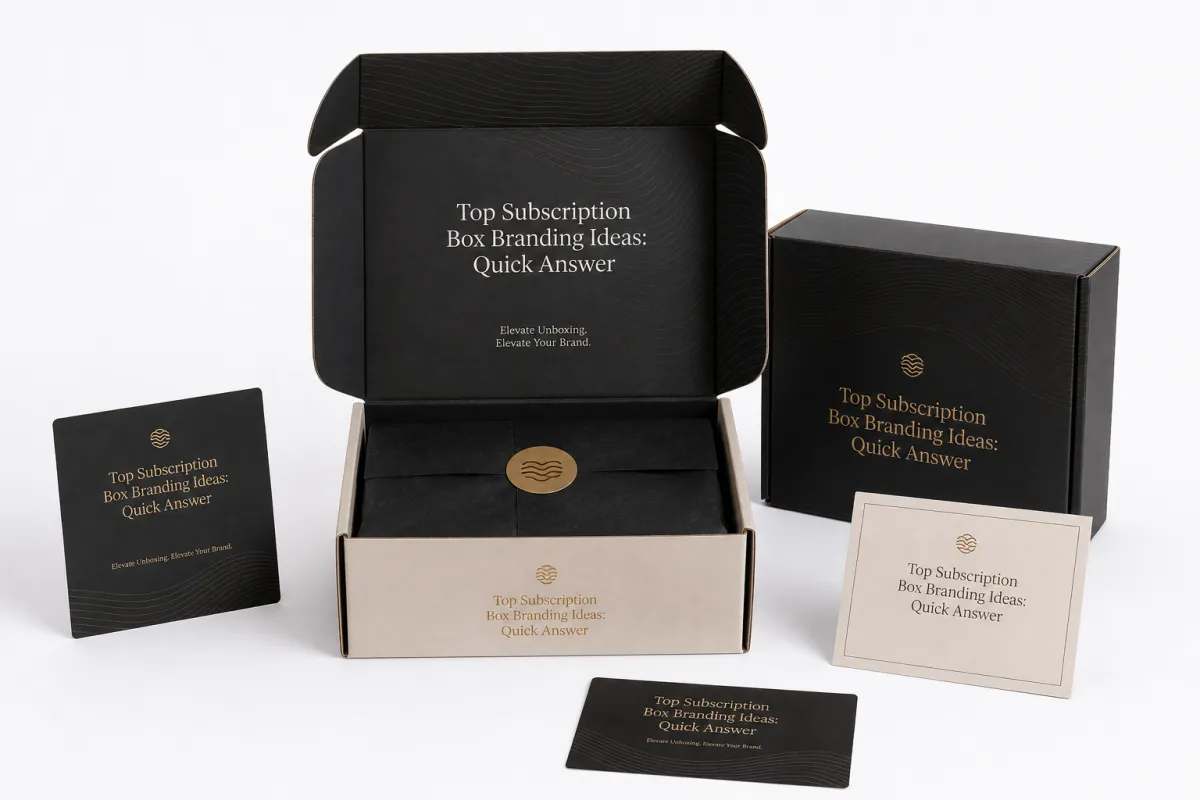
If you want the short version, start with top subscription box branding ideas that anchor the brand on the outside and create a clear reveal on the inside. A custom-printed mailer, a structured insert, and branded tissue or a sticker seal will usually outperform a stack of fancy extras that add cost without adding much clarity.
The box itself often shapes first impression before the product is even touched. That is why top subscription box branding ideas should start with the mailer, the insert, and the opening sequence. The subscriber should recognize the brand before they notice filler paper or packing material. A generic exterior makes the entire package feel smaller in value, even when the product is strong.
Here is the practical ranking I give most brands:
- Best value: custom-printed corrugated mailers with one strong insert.
- Best premium look: rigid presentation boxes with a controlled reveal.
- Best budget storytelling: tissue, stickers, and printed inserts layered over a stock box.
- Best refresh tool: sleeves and belly bands for seasonal or limited editions.
- Best low-risk starting point: label-plus-sticker systems paired with a clean box size.
The reason top subscription box branding ideas matter so much is simple: packaging is a repeat touchpoint. A one-time ad may disappear from memory. A box on a counter, in a kitchen, or on social media gets seen again and again. That is brand consistency in a real setting, not just in a mockup deck.
Practical rule: if a packaging choice looks great online but fails a drop test, it is not a branding idea; it is a damage claim waiting to happen.
For fragile products, ask suppliers whether the pack-out has been tested against parcel stress using ISTA-style methods. The International Safe Transit Association explains common transit-test frameworks at ISTA, and those checks matter more than most brand decks admit. A box that crushes at the corner or pops open at the seam destroys customer trust quickly, and that kind of mistake is expensive to unwind.
Top Subscription Box Branding Ideas Compared: What Works Best
Top subscription box branding ideas behave differently depending on the category. A beauty brand is selling visual drama. A snack box is selling convenience and surprise. A wellness kit is selling calm and order. A hobby box is often selling discovery and collector value. The same package structure does not win in all four cases.
That is why I prefer to compare top subscription box branding ideas by use case instead of by trend. The strongest option is not always the most expensive one. In practice, the best all-around approach for most brands is a custom-printed mailer with an insert system, then selective upgrades such as foil, soft-touch coating, or interior print where they actually change perception.
| Packaging format | Typical unit cost at 5,000 units | Visual impact | Shipping durability | Best fit |
|---|---|---|---|---|
| Stock box + label | $0.35-$0.85 | Low to moderate | Good | Starter brands, thin-margin consumables, rapid SKU changes |
| Custom-printed corrugated mailer | $0.85-$1.80 | High | Very good | Most subscription brands, repeat shipments, mid-range pricing |
| Mailer plus tissue, sticker, and insert | $1.10-$2.40 | High | Very good | Brands that want a layered unboxing experience without a full rebuild |
| Sleeve or belly band over stock packaging | $0.70-$1.50 | Moderate to high | Good | Seasonal refreshes and campaign-led subscription box branding ideas |
| Rigid presentation box | $2.75-$6.50 | Very high | Moderate | Giftable boxes, luxury beauty, collector editions, higher AOV |
Look closely at the tradeoff. Every added layer improves the reveal, but it also adds weight, assembly time, storage space, and the chance of a fulfillment error. That is the part many founders miss. A beautiful system that slows packing by 20 seconds per order can erase more value than a slightly less dramatic reveal ever creates. I have seen teams get excited about a new insert structure, then discover that the added handwork makes the line crawl. That is not a branding win.
For most brands, top subscription box branding ideas should be judged on four metrics: perceived value, damage rate, pack-out speed, and total landed cost per box. If the packaging wins on Instagram but loses on the warehouse floor, it is the wrong system.
There is also a sustainability angle. FSC-certified paperboard gives a cleaner story for brands that want to make responsible claims without sounding vague. The certification standard is documented by FSC, and that matters because buyers are increasingly skeptical of loose eco language. If you say the box is recyclable or responsibly sourced, you should be able to back it up.
One more point. Top subscription box branding ideas usually work best when the outside and inside tell the same story. A playful outer print with a sterile interior feels disconnected. A minimal exterior with a warm interior reveal can feel more sophisticated. The right version depends on customer perception, not on the designer's favorite mockup.
Detailed Reviews of Subscription Box Branding Ideas
Custom-printed mailers are the place I would start for most brands testing top subscription box branding ideas. They balance cost, brand visibility, and operational simplicity better than fully rigid packaging. A corrugated mailer with a 2-color or full-color print can usually be produced in E-flute or B-flute board, depending on weight and protection needs, and that gives you real structure without unnecessary bulk.
For many subscription programs, custom-printed mailers cost far less than a rigid box while still giving enough surface area for visual branding. That is the reason they sit near the top of top subscription box branding ideas for practical use. They are also easier to store, easier to pack, and easier to standardize across multiple SKUs. If you want brand consistency without turning fulfillment into a puzzle, this is a strong starting point.
Rigid boxes are the premium option. They create the strongest shelf presence, the cleanest camera presence, and the most giftable feel. They also create the largest cost jump. In my experience, rigid presentation boxes make sense when average order value is high enough that a $2.75-$6.50 packaging cost still fits comfortably, or when the subscription is sold as a gift. For lower-margin consumables, that spend is usually hard to defend.
Tissue paper, stickers, and inserts are the quiet workhorses of top subscription box branding ideas. They can carry color, copy, and surprise without forcing a full structure change. A branded tissue wrap with a single seal sticker can transform the opening sequence for a few cents. An insert card can explain the product, cross-sell the next box, or reinforce the brand story. That is why many brands see more value in insert design than in another expensive print finish.
Sleeves and belly bands are the flexible middle ground. They let brands refresh the look for a launch, holiday cycle, or influencer drop while keeping the base packaging stable. If your subscription changes monthly, this option can protect budget and reduce obsolescence. It also supports visual branding when you need to signal a new theme without redesigning the entire box.
For fast-moving SKUs, labels and tags can do more than people expect. A well-placed label system can handle variant color coding, promotional messaging, and batch-specific information without changing the box itself. If you want a clean way to test top subscription box branding ideas without reprinting every component, pair the box with Custom Labels & Tags and use the label to carry the campaign. That is often a smarter move than overcommitting to a one-off structural redesign.
Here is the honest review from a packaging buyer's point of view:
- Best for fragile products: printed corrugated mailers or rigid boxes with inserts that lock the product in place.
- Best for beauty and wellness: mailer plus soft-touch print, interior copy, and a controlled reveal.
- Best for snacks and consumables: simple branded mailers, clear labels, and a low-waste insert system.
- Best for frequent theme changes: sleeves, bands, and sticker-led campaigns.
- Best for high social sharing: rigid box, inside lid message, and one tactile finish such as foil or emboss.
Most people get the hierarchy backwards. They spend on the outer shell and then leave the interior blank. Yet the opening sequence is where top subscription box branding ideas usually earn their keep. A subscriber sees the inside lid, the tissue fold, the insert, and the product nesting. Those details add up to the feeling that someone planned the box carefully.
If you want proof that structure and print changes can alter response, look at your own retention data or compare examples in our Case Studies. The packaging often changes not because the product changed, but because the brand needed a clearer signal. That is a useful reminder: packaging is not decoration. It is a decision-making tool.
For compliance-heavy sectors or shipping-heavy programs, I also recommend checking whether your pack-out has been evaluated against ASTM D4169 or similar transit protocols. You do not need to mention the standard to subscribers, but you do need to know whether the box can take compression, vibration, and drop stress before the carrier does. Good top subscription box branding ideas respect reality.
Subscription Box Branding Ideas and Price Comparison
Price matters, but not in the simplistic way people often assume. The cheapest top subscription box branding ideas are not always the least expensive once you account for damage, storage, and labor. A $0.90 box that takes longer to pack or creates a higher return rate can cost more than a $1.40 box that ships cleanly and stacks well.
Here is a practical way to think about pricing. Budget systems are usually stock boxes with labels, stickers, or a single printed insert. Mid-range systems are custom-printed mailers with decent print coverage and one tactile detail. Premium systems are rigid boxes, multi-step reveals, and specialty finishes such as foil, emboss, or soft-touch lamination. Each tier has a different effect on customer perception, and each tier suits a different margin structure.
| Tier | Approx. spend per box | Common finish choices | What you are really buying | Risk level |
|---|---|---|---|---|
| Budget | $0.35-$1.00 | Labels, stickers, one-color insert, stock mailer | Basic brand recognition and clear labeling | Low, if the box size is stable |
| Mid-range | $1.00-$2.75 | Full-color printing, interior print, tissue, stickers | Better unboxing experience and stronger visual branding | Moderate, depending on SKU variation |
| Premium | $2.75-$6.50+ | Rigid structure, foil, emboss, soft-touch, custom inserts | Giftability, collector feel, and higher customer perception | Higher, because of cost and operational complexity |
The hidden costs are the ones that usually bite. Setup fees, die charges, proofing rounds, and minimum order quantities can matter as much as print finish. Storage also matters. A rigid box takes more room than a corrugated mailer, and that can change the economics of the entire program. If the warehouse is already tight, top subscription box branding ideas should favor simple structures that stack efficiently.
There is one place where spending almost always pays off: interior messaging. A printed inside lid, a short welcome message, or a product-use card can improve perceived value without a huge cost jump. The same is true for a single premium tactile finish. Soft-touch on the outer panel or foil on the logo often does more for customer perception than over-customizing every surface.
There is also a smarter way to save money without looking cheap. Standardize the box size. Use one or two sizes, not five. Keep the structure simple. Then vary the campaign using inserts, belly bands, or Custom Labels & Tags. That strategy protects brand consistency while keeping waste lower and inventory easier to manage.
Honestly, the most expensive mistake I see is overdesigning a box that subscribers will only handle for thirty seconds. The box needs to photograph well, ship well, and unpack well. It does not need every square inch dressed up. The best top subscription box branding ideas know where to stop.
How to Choose the Right Subscription Box Branding Idea
Choose the packaging system from the product outward, not from the mood board inward. That is the clearest way to evaluate top subscription box branding ideas. Start with fragility, then audience expectations, then gross margin, then reorder frequency. If the product breaks in transit, the prettiest design in the room is irrelevant.
For higher-ticket subscriptions, premium branding is often worth it. Giftable products, beauty kits, boutique wellness boxes, and collector categories usually benefit from stronger presentation because the buyer is paying partly for the reveal. In those cases, top subscription box branding ideas should include a more deliberate opening sequence, better print coverage, and at least one tactile upgrade.
For consumables with thin margins, restraint usually wins. A clean mailer, strong typography, a useful insert, and consistent color can do more for brand identity than a heavy structural overhaul. Here, customer perception is shaped by clarity rather than luxury. If the box feels organized, subscribers trust the brand more easily.
Use this checklist before you choose:
- Shipping test: confirm the box survives transit with the product inside and the pack-out fully closed.
- Print proof: review color, logo placement, and any interior copy before release.
- Fulfillment test: time the pack-out so you know whether the design slows the line.
- Inventory check: match the box size to actual product dimensions, not idealized renderings.
- Brand message check: make sure the packaging, website, and insert copy tell the same story.
That last point matters more than many founders expect. If the website says the brand is playful but the box looks clinical, the customer feels a disconnect. If the site looks refined and the box is loud for no reason, the same disconnect appears. Top subscription box branding ideas work best when visual branding stays aligned across touchpoints.
One more practical filter: ask whether the packaging can scale. A design that looks excellent at 500 units may become a problem at 5,000 if it requires too much hand assembly. If you plan to grow, choose the format that can grow with you. The package should support the business model, not force the model to shrink.
For brands with recurring campaigns or many product variants, the safest path is often a stable base box with campaign-specific layers. That may be a sleeve, a sticker system, or a printed insert that changes monthly. It keeps recognition high while giving you flexibility. In other words, top subscription box branding ideas should be modular whenever possible.
Process and Timeline for Launching Your Brand System
The process starts with a brief that says what the box needs to do, not just how it should look. That is a big difference. A useful brief for top subscription box branding ideas should cover product size, shipping method, target retail value, opening sequence, and whether the packaging needs to support giftability, eco claims, or seasonal refreshes.
From there, the workflow is usually straightforward. Define the message. Pick the structure. Build the dieline. Review artwork. Order samples. Adjust dimensions if needed. Approve production. Then move into manufacturing and freight. The timeline varies, but simple printed mailers can sometimes move in a few weeks after final artwork, while rigid boxes with special finishes often need more sampling and more approval cycles.
Typical timing looks like this:
- Concept and dieline alignment: 2-5 business days if the size is known.
- Artwork and proofing: 3-7 business days, longer if copy or structure changes.
- Sampling: 5-10 business days for many printed formats, longer for rigid structures.
- Production: often 10-20 business days depending on quantity, finish complexity, and season.
- Freight and inbound receiving: variable, but build a buffer if fulfillment starts soon after delivery.
Where do delays usually happen? Not in printing itself. Delays usually come from dieline changes, late artwork revisions, and uncertainty around insert sizing. That is why top subscription box branding ideas should be tested with physical samples early. A digital mockup can hide a fit issue that becomes obvious only when the products are packed together.
A packaging spec also needs enough detail to prevent assumptions. Specify board grade, print coverage, finish, insert style, and whether the packaging must be FSC-certified. If you are using a coated or laminated surface, ask how that changes recyclability claims. Vague specs are expensive because they create rework. Clear specs protect brand consistency and keep the launch moving.
One practical tip: pack out the final box before approving final art. Measure the real stack height, the real nesting depth, and the real product shift. That is how you avoid the common mismatch between a lovely rendering and an impossible physical build. The best top subscription box branding ideas are the ones that survive contact with actual product.
If you need a deeper benchmark for how packaging decisions show up in real programs, our Case Studies are a useful place to compare structure, print choices, and customer response. A good package is rarely an isolated design choice. It is usually the result of several small decisions that happen in the correct order.
Our Recommendation: Top Subscription Box Branding Ideas to Test First
If I were prioritizing top subscription box branding ideas for a brand that wants results without overbuilding, I would stage the rollout. Start with a custom-printed mailer. Add one premium upgrade if the economics justify it. Then test the response with real subscribers before committing to a full redesign. That sequence keeps risk lower and tells you what customers actually notice.
My preferred test order is simple. First, compare three packaging concepts with different levels of visual branding. Second, order a small sample run and inspect the box under real light, not just on a screen. Third, ship the samples to a test group or use them in a live small batch. Fourth, measure damage rate, social sharing, and repeat purchase behavior. That is a much stronger signal than asking people which mockup they like best.
The most useful metrics are not always the prettiest ones. Track total landed cost per box, breakage rate, pack-out time, and subscriber retention after the first or second shipment. If the packaging creates a lift in perception but also slows the line by a measurable amount, that tradeoff needs to be visible. Good top subscription box branding ideas make the business easier to run, not harder.
My honest opinion? Most brands should not start with rigid boxes unless the product is giftable, expensive, or heavily visual. For everyone else, the strongest middle path is a custom mailer with thoughtful inserts, a disciplined print scheme, and one premium surface treatment. That combination usually delivers the best balance of cost and customer perception.
Use a staged approach, and keep the core consistent. Then refresh with sleeves, labels, or inserts as the campaign changes. That is how top subscription box branding ideas support growth instead of creating a packaging burden. If the box can scale, the brand can scale.
In practical terms, the smartest next move is to choose one base structure, one insert format, and one premium detail, then test them against real shipping conditions before you spend on a larger run. That is the cleanest way to find out which top subscription box branding ideas actually earn their keep.
What are the best top subscription box branding ideas for a small budget?
Start with a strong custom mailer or a clean stock box paired with labels, stickers, and a printed insert. That gives you most of the brand recognition benefit without forcing a full rigid structure. If you want to keep costs tight, spend on one visible area instead of trying to customize every surface.
How do I make subscription box branding feel premium without raising costs too much?
Pick one memorable detail and repeat it consistently. Soft-touch coating, foil on the logo, or a printed inside lid can lift customer perception without adding a huge amount to the build. Keep the structure simple, because clarity often reads as more premium than clutter. A box that feels organized is doing a lot of the work for you.
Which packaging element matters most in subscription box branding?
The outer box usually sets the first impression, but the opening sequence matters almost as much. Tissue, seals, and inserts shape the unboxing experience and tell subscribers whether the brand is organized. A damaged box can undo all of that, so durability is part of branding, not separate from it.
How long does it take to create subscription box branding and packaging?
Simple printed packaging can move quickly if the artwork is ready and the dieline is standard. Custom structures, special finishes, and new insert systems need more sampling and approval time. Most delays come from revisions, so lock the concept early and leave room for freight and fulfillment testing.
How often should a brand refresh subscription box branding ideas?
Refresh when the customer starts to feel repetition, not just when the calendar changes. Small updates like seasonal sleeves or new inserts are usually safer than redesigning the full box every cycle. The strongest top subscription box branding ideas stay recognizable even when the campaign changes.

