Subscription ribbed winter Beanies Material Thickness guide decisions tend to look simple on paper. They are not. Two beanies can share the same fiber content and still feel completely different once the rib gauge, cuff depth, and finishing change the density. One wears close and structured. The other slouches, sheds warmth faster, and starts looking tired after a few washes. Buyers usually notice the difference after the first delivery, which is a bad time to realize the “same spec” was never actually the same spec.
For recurring programs, thickness affects more than warmth. It changes fit consistency, embroidery behavior, packing efficiency, and reorder reliability. A style that feels right in a single sample run can drift if the mill tweaks the knit tension or the finishing step. That is why thickness should be treated like a production spec, not a vague preference. The goal is not just a warmer hat. The goal is a hat that ships the same way every time.
Why subscription ribbed winter beanies material thickness changes fit fast
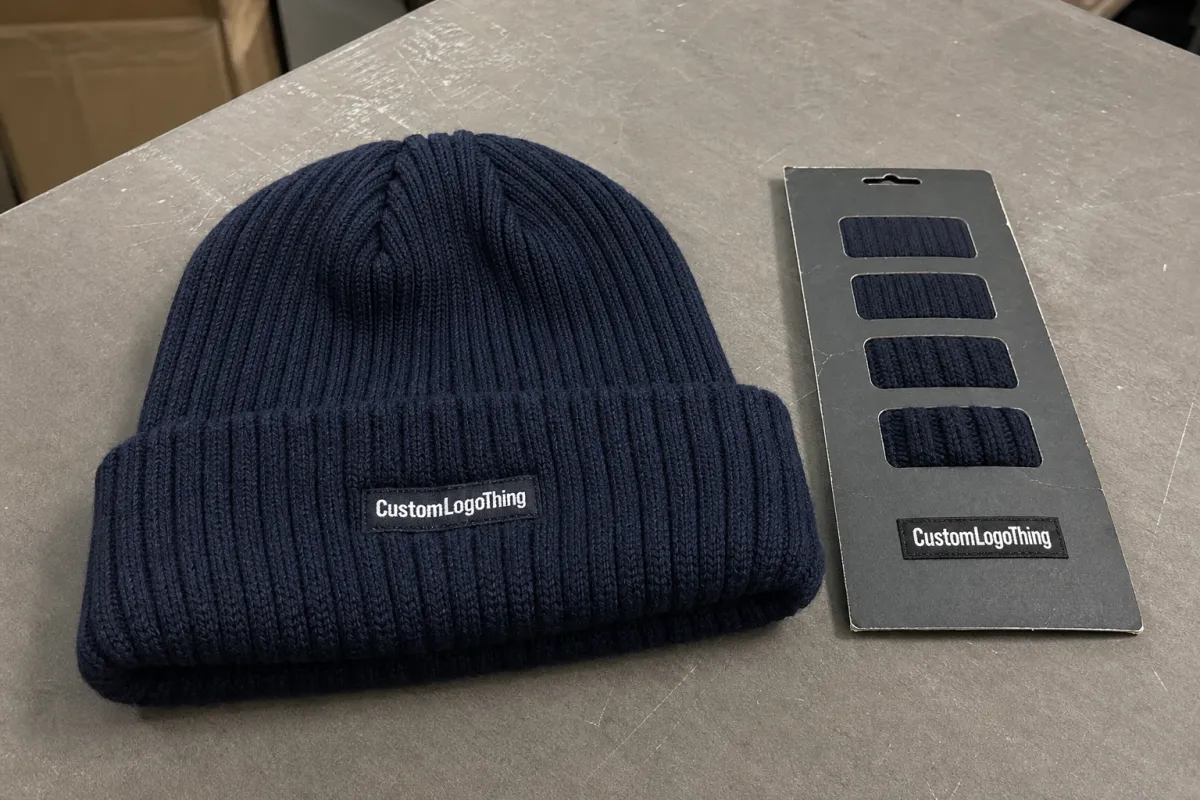
A ribbed beanie works because the knit stretches and rebounds. The ribs open under pressure, close again, and create a fit that can cover a range of head sizes without collapsing into a limp tube. Add more density and the hat often feels more secure, traps air better, and holds its shape longer. Add bulk without improving structure, and you just get a heavier hat that behaves badly.
That distinction matters in subscription programs. Reorders rarely happen in a vacuum. The first batch lands, people wear it, and then feedback starts to surface: this one feels thinner, this one sits higher, this one wrinkles around the logo. Those complaints usually trace back to a change in finished weight, stitch density, or post-knit finishing. The label might be identical. The hat is not.
Thickness also changes the speed at which a beanie settles on the head. A lighter rib may feel softer at first, then stretch out more quickly during a full day of wear. A denser rib often feels firmer on day one but keeps its shape better over time. Neither is automatically better. The right choice depends on whether the program is built for cold-weather utility, casual retail use, or promotional volume where comfort has to survive rough handling.
Decoration is part of this too. Embroidery needs a stable surface. If the knit is too loose, stitching can pucker the fabric and create tiny ridges around the logo. If the knit is too rigid, the needle can fight the surface and leave a stiff patch that never really lays flat. That is why a useful subscription ribbed winter Beanies Material Thickness guide starts with structure, not just warmth.
Practical rule: judge thickness by finished weight, rib density, and stretch recovery together. Any single number on its own is incomplete, and usually misleading.
How rib knit construction controls warmth and stretch
Rib construction does most of the work here. The alternating columns create elasticity, which is why a ribbed beanie can fit several head sizes without turning into an oversized beanie costume. The channels also trap air. That trapped air is the actual insulation layer, not the marketing copy. A tight, efficient rib can feel warmer than a puffier knit that looks thicker but lets cold air move through it.
Single-layer and double-layer builds behave differently. A single-layer rib beanie is lighter, faster to knit, and easier to pack. It also tends to show more surface variation and less insulation. A double-layer style adds body and warmth, and a folded cuff can make the beanie feel more substantial without dramatically changing the base yarn weight. That works well for cold-weather programs, but it also reduces flexibility around logo placement and can add time at both knitting and finishing stages.
Gauge sits at the center of this. A tighter gauge usually gives better shape retention and cleaner decoration support. A looser gauge can feel softer at first, but it is more likely to sag and recover poorly after repeated wear. If the sample feels good only because it is fresh off the line, that is not a good sign. It just means the sample is still young and optimistic.
Finishing changes the result again. Washing can soften the hand. Steaming can settle the dimensions. Brushing can add loft, but too much brushing raises the pilling risk later. That is why a raw knit spec and a finished spec both matter. The difference between them usually explains why a sample approved in the room does not match the reorder that lands three months later.
- Tighter gauge usually means better warmth retention and cleaner embroidery support.
- Looser gauge can feel soft early, but it often sags sooner and recovers less cleanly.
- Double-layer construction adds warmth and structure for colder programs.
- Folded cuffs can create the look of a heavier beanie without changing the base knit as much.
If the program has repeat shipments, this is where consistency earns its keep. The first carton and the fiftieth carton should feel like the same product, not a lucky match that only happened once.
Key spec factors that shape hand feel, durability, and fit
Material blend is the first lever buyers usually examine. Acrylic is common because it holds color well, feels soft enough for most retail programs, and stays inside a budget that does not require a finance meeting with a sad spreadsheet. Wool and wool-mix options feel warmer and often recover better, but they cost more and may need more careful care labeling. Polyester is often blended in to improve recovery or reduce shrinkage. In a mixed yarn, the point is not purity. The point is balance.
Gauge and density are the real thickness controls. Gauge tells you how many stitches fit into a given space. Density tells you how much fiber actually sits there. A heavy yarn in a loose structure is not the same as a moderate yarn in a tight structure. That is why finished weight alone never tells the whole story. I would rather see yarn blend, gauge, finished weight, cuff depth, and folded height on one spec sheet than one impressive-looking number that says very little.
Sizing changes the experience more than many buyers expect. A beanie that is too shallow rides up. A crown that is too tall bunches in an awkward way and can make the logo look off-center. For recurring programs, head circumference range matters because one market may prefer a closer fit while another wants more slouch. “One size fits most” is a placeholder, not a measurement plan.
Decoration should be planned alongside thickness, not after it. Heavier ribbing usually supports denser embroidery and larger woven patches. Very loose rib can distort under stitch tension and make clean logo placement harder. If the art direction calls for a patch, check whether the cuff will curl under it after packing. If the logo is embroidered, test whether the base knit holds flat after a stretch cycle and a wash cycle. Pretty on the table is not the same as durable in use.
Quality-control checks are where a decent spec turns into a dependable one. The useful ones are boring, which is probably why people skip them and then act surprised later.
- Measure after relaxation so the sample is not judged while still under knit stress.
- Check recovery after stretching the cuff and body several times.
- Inspect the logo area for puckering, distortion, and surface ripples.
- Wash one sample to see shrinkage, edge roll, and color behavior before approval.
Packaging sits in the same conversation if the program ships in boxes or mailers. Kraft paper wraps, FSC-certified corrugated cartons, and clear recycled-content claims are all reasonable choices when the brand wants that story. If biodegradable packaging is requested, test it for compression and humidity before relying on it in real transit. For shipping performance reference, the ISTA framework is a useful benchmark, and FSC is the right place to verify certification language.
Cost, pricing, and MOQ tradeoffs for thicker beanies
Thicker construction costs more because it uses more yarn, takes longer to knit, and often adds finishing work. None of that is mysterious, even if the quote still manages to surprise people. A heavier ribbed beanie can easily come back 15 to 30 percent above a lighter version once the yarn, labor, and decoration are all included. If the design adds a folded cuff, woven label, or a larger embroidery zone, the price climbs again.
MOQ has a real effect too. On lower runs, setup and labor are spread across fewer units, so a 300-piece order will usually carry a much higher unit cost than a 5,000-piece order. Standard custom ribbed beanies often live in the 500 to 1,000 unit range for better economics, though smaller runs are possible if the buyer accepts a higher per-piece price. Multiple colors, woven labels, special packaging, and extra sample rounds push the number up. That is not supplier greed. That is math.
| Thickness tier | Typical finished weight | Feel and fit | Decoration behavior | Ballpark bulk price impact | Best use |
|---|---|---|---|---|---|
| Light rib | 55g-75g | Closer fit, less bulk, easier to pack | Good for small embroidery, less support for large patches | Lowest of the three tiers | Mild climates, promo programs, indoor-outdoor wear |
| Midweight rib | 80g-110g | Balanced warmth and stretch, most versatile | Usually the safest zone for logo placement | Middle of the range | Core subscription programs and broad retail use |
| Heavy rib | 115g-150g | More structure, warmer hand, deeper cuff feel | Supports larger decoration, but can feel stiff if overbuilt | Highest of the three tiers | Cold-weather buyers, premium packs, outdoor launches |
Sample pricing and bulk pricing rarely line up neatly. A sample can cost $25 to $90 or more depending on artwork revisions, yarn sourcing, and whether the factory is making one piece or a full development run. Bulk pricing for standard production can land anywhere from roughly $1.40 to $4.80 per piece before freight, depending on volume, thickness, decoration, and packaging. That range is wide because the product is wide.
Budget tip: compare sample cost, bulk quote, packaging, and freight together. A thicker beanie packed in a FSC-certified corrugated carton with kraft paper inserts may cost a little more to ship, but it can also cut crushed goods and avoid the awkward phone call that starts with “some items arrived flat in a way we did not intend.”
Process and timeline for approving thicker ribbed beanies
The approval process should start with the use case. Is the beanie meant for commuters, outdoor crews, retail shelves, or gift boxes? Once that is clear, the thickness range stops being arbitrary. Then the buyer can lock yarn blend, gauge, cuff depth, logo method, and packaging before the first sample is made. That sequence saves time because a lot of “fit problems” are really spec problems wearing a disguise.
Typical timelines are manageable if the program is organized. Standard yarn sourcing can take a few days when materials are in stock. Sample knitting often takes 5 to 10 business days. Revision rounds add another 3 to 5 days. Bulk production is often 12 to 18 business days after sample approval, though complex labels, custom packaging, or peak-season line load can stretch that. Freight is its own step and should never be treated like an afterthought if the beanies need to land on a set delivery date.
There are a few repeat delay points. Dye lot matching is one. Thickness confirmation is another. A buyer may like the look of the sample, then ask for “a touch more body” without realizing that a denser knit changes stretch, recovery, and even the logo footprint. Care labels and packaging can also slow things down, especially if the order needs region-specific language or barcode placement. If the beanie ships inside branded packaging, lock the carton spec early so the packed dimensions do not surprise the warehouse team.
For a subscription program, the timeline issue is repeatability. A reorder that lands on a slightly different gauge is not a reorder in the useful sense. It is a new product pretending to be the old one. That is why the subscription ribbed winter Beanies Material Thickness guide should be documented like a production standard, not handled as a casual note in an email thread.
A practical approval sequence looks like this:
- Define use case and target climate before choosing thickness.
- Request a knit spec sheet with yarn blend, gauge, finished weight, and cuff depth.
- Approve one reference sample only after stretch, wash, and logo checks.
- Lock packaging and labels before bulk production starts.
Common mistakes when judging ribbed beanie samples
The first mistake is trusting touch alone. A sample can feel plush in the hand and still lose shape after a few wears if the rib recovery is weak. The reverse happens too. A firmer sample may soften into a better fit after use. One quick squeeze in a showroom tells you very little about real performance. Nice though, if the goal is to admire yarn like a museum object.
The second mistake is mixing up gauge, yarn thickness, and finished bulk. Two samples can look similar on a table and behave very differently in use. One may rely on a tighter stitch with thinner yarn. The other may use heavier yarn in a looser structure. Those are not equivalent products, and they will not age the same way.
Another common miss is skipping shrinkage and edge-roll checks. A cuff that rolls after washing can expose the inside seam or change the logo zone. A crown that shrinks unevenly can pull embroidery out of line. I would rather see a sample washed once, stretched lightly, and worn for an hour than approve something based only on neat surface appearance. That small test usually tells the truth faster than a dozen polished photos.
And then there is the classic showroom trap: approving under perfect conditions. Warm room. Soft lighting. No wind. No actual use. A beanie can look ideal under those circumstances and still fail the first cold commute. Compare samples under the same conditions, or the comparison is fake.
Useful checks before approval:
- Stretch and release the cuff several times and watch recovery.
- Check the logo zone after the beanie rests for 24 hours.
- Wash one sample and compare shape, hand feel, and edge roll.
- Inspect the seam and crown for twisting, puckering, or uneven tension.
A disciplined sampling method keeps the decision tied to measurable behavior instead of first impressions. That is the difference between a product that photographs well and a product that survives repeat orders.
Expert tips and next steps for choosing the right thickness
If I had to reduce the decision to one working method, it would be this: build a simple matrix around audience, climate, and budget. Cold-weather commuters, outdoor crews, and premium gift programs usually need a different thickness than a casual promo audience. Once those buckets are clear, choose one standard thickness and, if necessary, one colder-weather option. That keeps the program from turning every reorder into a debate about whether the hat should feel “a little more substantial.”
Ask for a knit spec sheet before approval. It should list yarn blend, gauge, finished weight, cuff depth, and decoration area at minimum. If a supplier cannot give those details, reorder consistency gets shaky fast. I also like to keep one approved reference sample in storage, labeled with date, artwork version, packaging setup, and any relevant measurement notes. Photos help, but they do not tell you how the ribs recover or how the cuff sits after packing.
Test the sample twice: once with a light wear test and once with a wash test. The checks are simple. Does it rebound after stretch? Does the logo area stay flat? Does the cuff keep its shape after washing? If the answer is yes across those points, the spec is probably safe. If the answer is no, more styling polish will not fix it. It just hides the problem longer.
For recurring orders, document the approved sample, pricing, timeline, packaging note, and reorder tolerance in one place. If the program uses kraft paper wrap, FSC-certified corrugated cardboard, or recycled-content mailers, record that too so the next production run matches the brand presentation. That kind of recordkeeping is not glamorous. It is just what keeps a subscription ribbed winter Beanies Material Thickness guide useful after the first shipment ships and everyone has moved on to something else.
How thick should subscription ribbed winter beanies be for cold-weather buyers?
Start with climate and wear time. Commuting, outdoor events, and long periods outside usually need more insulation than short promotional wear. A midweight or heavy rib is often the safer starting point for winter use, but the final pick still depends on fit, stretch recovery, and how much bulk the wearer will accept.
Does a thicker rib knit always mean a warmer beanie?
Not always. Warmth comes from knit density, layer construction, and fiber blend as much as from visible bulk. A tight rib can trap air efficiently even when the beanie looks moderate in thickness, while a loose knit can feel big but let cold air move through it more easily.
What material blend is best for controlling beanie thickness?
Acrylic blends are common when buyers want soft hand feel, steady color, and a budget-friendly build. Wool or wool-mix options usually add warmth and resilience, but they also raise price and can change care expectations. Ask for the blend, gauge, and finished weight together so you can judge the full thickness spec correctly.
How do thickness choices affect pricing and MOQ?
Thicker beanies often cost more because they use more yarn and may take longer to knit and finish. MOQ can push unit cost up on smaller runs, especially when custom labels, patches, or packaging are included. Comparing sample cost and bulk quote side by side helps buyers avoid surprises before approval.
What should I ask for before approving a beanie sample?
Request the exact yarn blend, knit gauge, finished weight, cuff depth, and decoration area so the sample can be reproduced later. Check stretch recovery, logo placement, and wash behavior before you sign off on the final spec. Keep one approved reference sample on file for every reorder and seasonal refresh.
How do I measure thickness in a way suppliers can repeat?
Use finished weight, laid-flat measurements, rib density, and cuff depth together. If possible, ask for the measurement method on the spec sheet, not just the number. A repeatable method matters more than a dramatic description like “super thick,” which tells you almost nothing.


