subscription frosted zipper Bags Unit Cost Review sounds narrow. It is not. Once a subscription program repeats every month, tiny packaging differences start acting like budget leaks. A quote that looks cheap on day one can get expensive after freight, setup, reprints, and avoidable packing errors are added back in.
That is why Frosted Zipper Bags deserve a closer look instead of a quick price check. They sit in a practical middle ground. They are more presentable than a plain utility pouch, less elaborate than a rigid box, and usually easier to standardize across recurring shipments. That middle ground is useful only if the spec stays stable. If it keeps shifting, the savings disappear fast.
For subscription brands, the bag is part of the operating system. It affects pack speed, shelf appearance, handling damage, and how often the team has to explain a weird issue to customers. Fancy packaging that fails in fulfillment is just a more expensive problem.
Why recurring orders change zipper bag economics
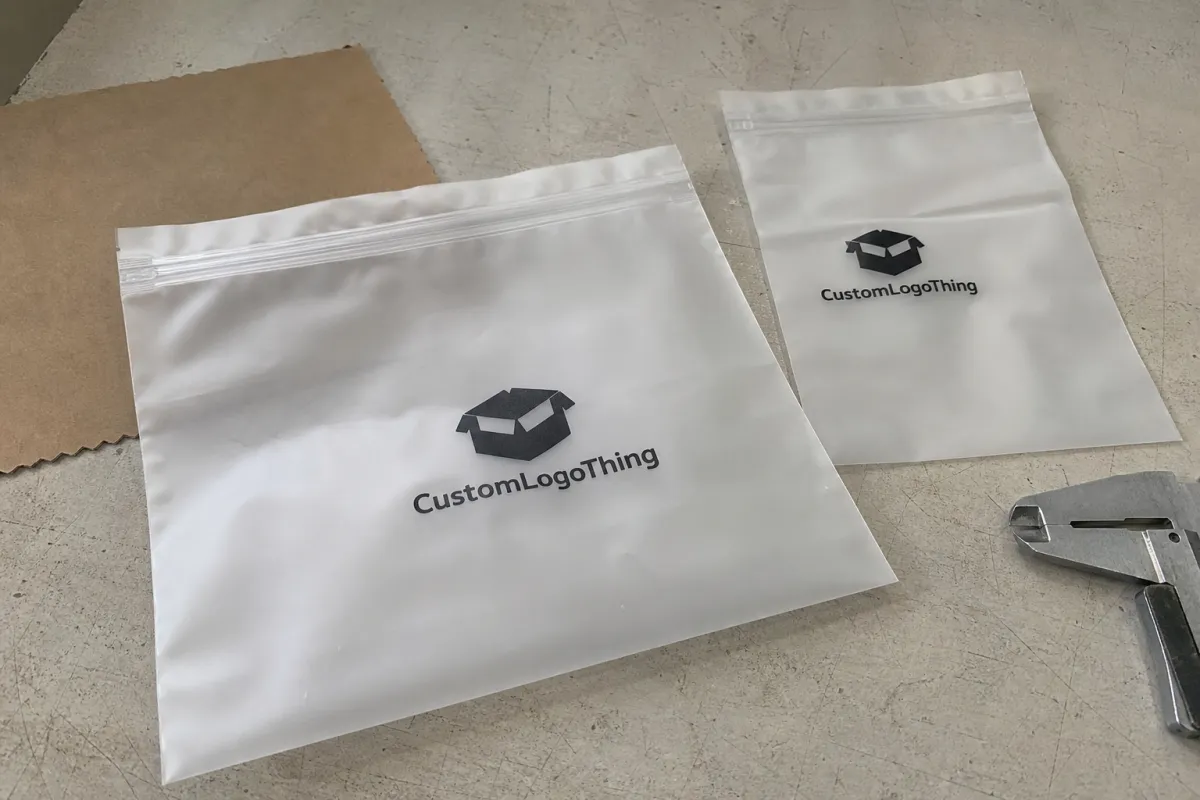
Recurring orders change the cost logic because the buyer is not shopping for a one-time run. The real question is whether the same bag can be bought again next month at roughly the same landed cost, without special pleading, new artwork headaches, or last-minute substitutions. In a subscription model, the first order and the sixth order should feel like the same program.
That is where small unit differences become material. A one-cent swing does not sound like much until it is multiplied across 50,000 pieces. Now it is $500 a month. Add freight volatility, sample rework, and a rush replacement, and the gap stops being theoretical. Procurement teams do not get graded on the quote alone. They get graded on the program cost that actually lands.
Frosted zipper bags are especially sensitive to this because buyers often compare them with plain clear bags or generic poly pouches. The lower-priced option can look fine on paper. Then the team discovers the pouch scuffs easily, the opacity looks uneven, or the zipper feels weak after a few packing cycles. Those are not cosmetic issues. They become rework, waste, and customer complaints.
There is another reason recurring programs are different: packaging decisions stick around. A bad choice is not a one-off headache. It repeats twelve times a year, sometimes more if the brand ships replacements or seasonal add-ons. That makes a disciplined Unit Cost Review more useful than chasing the cheapest headline price.
Buyer reality: landed cost is not a single number. It is bag price, freight, carton density, setup fees, and the cost of keeping the spec stable. If one of those pieces changes, the unit cost changes too. Usually in the wrong direction.
Industry groups such as packaging.org keep making the same point for a reason: packaging should be judged on performance and supply chain fit, not appearance alone. That advice lands even harder in subscription work, where the packaging has to look decent, pack fast, and survive repeat handling.
Frosted zipper bag formats that fit subscription kits
Frosted zipper bags are not a single format. Size, film thickness, zipper style, and finish all move the price and the fit. For subscription kits, the useful range tends to be small to medium pouches that hold samples, accessories, flat inserts, and mixed item sets without wasting film or carton space.
The frosted finish earns its keep in a few practical ways. It softens the visual look, hides scuffs better than glossy clear film, and gives the kit a cleaner presentation in transit and on arrival. That sounds minor. It is not. Customers notice packaging that looks considered, even if they never say so out loud.
Here is a clean way to think about the common formats:
| Bag format | Common size range | Best use case | Cost impact |
|---|---|---|---|
| Small frosted zipper pouch | 3 x 4 in. to 5 x 7 in. | Samples, jewelry, small accessories | Lower film use and lower unit cost |
| Medium frosted zipper bag | 6 x 8 in. to 8 x 10 in. | Skincare sets, apparel inserts, subscription kits | Balanced cost and presentation |
| Larger kit pouch | 9 x 12 in. and above | Multi-item bundles, heavier packouts | Higher material use and freight sensitivity |
Oversizing is one of the easiest ways to waste money. A bag that is too large burns extra film, adds carton cube, and can increase freight if the packing density drops. A bag that is too small creates its own mess: slower packing, split seams, bad presentation, and damage to the contents. There is no prize for being wrong in either direction.
For repeated shipments, closure behavior matters more than buyers often expect. A zipper that opens too easily can feel cheap. One that seals poorly can frustrate users and cause failures during fulfillment. The right balance depends on how often the pouch will be opened, closed, and handled before it reaches the customer.
Many teams also compare frosted zipper bags with paperboard sleeves or mailers. Those can be stronger brand statements, but they are not always the better fit for small monthly kits. A frosted pouch is usually the more practical choice when the job is to protect a few items, keep the packout tidy, and avoid unnecessary assembly time.
Simple rule: size the pouch for the contents first. Brand embellishment comes second. Reversing that order is how teams end up paying for features that do nothing useful.
Material, seal, and finish specs buyers should compare
Specs are where quotes become slippery. Two bags can look nearly identical in a product photo and behave very differently in production. Buyers should compare film thickness, zipper profile, seal quality, frosted opacity, and print method before deciding that one supplier is cheaper than another.
Thickness matters because it affects durability and handling. Thinner film can reduce cost, but it may not survive rough fulfillment conditions, automated packing, or repeated friction inside cartons. Heavier film raises the unit price a bit, but it often lowers the real cost by reducing damage and rework. That trade-off is usually better than replacing weak bags after launch.
Seal quality is another area where assumptions cause problems. A zipper that closes too loosely can feel flimsy. A zipper that resists too much can slow the line and frustrate the user. In a subscription environment, that is not just a customer experience issue. It is a throughput issue.
Frosted finish also needs to be specified carefully. Some buyers want a soft matte look with moderate translucency. Others want stronger opacity to hide product contents more fully. Those are different outcomes, and they should not be priced as if they were the same thing. Ask for samples that show the actual finish, not just a generic stock photo.
Print is another place where cost creeps in. A no-print stock bag, a one-color logo, and a full multi-color layout do not have the same production burden. More coverage can mean more setup, longer approval cycles, and a greater chance of proof corrections. Ask what method is being used, because screen print, gravure, and other processes affect both lead time and price.
Buyers should also ask for the boring stuff. Boring is useful. A proper spec sheet should include dimensions, tolerance, closure type, packaging count per carton, carton dimensions, and compliance notes if they matter. That gives procurement, operations, and fulfillment one baseline instead of three different guesses.
For programs that care about transport testing, ista.org has the kind of guidance that helps separate marketing language from actual shipment performance. If adjacent materials need sustainability documentation, request that early too. The point is not to overbuild the package. It is to stop discovering weak spots after production starts.
Subscription frosted zipper bags unit cost review: pricing and MOQ
This is the part most buyers care about, and rightly so. A solid subscription frosted zipper Bags Unit Cost Review should separate the visible bag price from the full cost structure. Raw material, print complexity, size, freight route, cartonization, and order quantity all move the number.
MOQ is often treated like a barrier. It is really a pricing lever. Stable volumes usually unlock better pricing because the supplier can run longer, reduce changeovers, and plan material more efficiently. The catch is that the spec has to stay put. If every reorder changes the size, artwork, or film, the pricing advantage shrinks or disappears.
Here is a cleaner way to break down what should be quoted:
- Base bag price - the unit cost before shipping and extras
- Setup charges - prepress, plate, and production preparation
- Sampling fees - proof, prototype, or test lot costs
- Freight - ocean, air, domestic, or consolidated transport
- Packaging - carton count, palletization, and special packing requirements
Typical pricing usually moves in bands rather than fixed numbers. For planning purposes, these ranges are a reasonable starting point:
| Order profile | Typical unit cost range | MOQ tendency | Best fit |
|---|---|---|---|
| Stock frosted zipper bag, no print | $0.07-$0.15 | Lower MOQ | Fast launch, simple recurring insert |
| Custom logo, one-color print | $0.11-$0.23 | Moderate MOQ | Branded subscription kits with stable demand |
| Custom size, multi-color print | $0.17-$0.34+ | Higher MOQ | Premium programs with stricter presentation requirements |
Those numbers are not the full story. Freight can widen the gap quickly, especially if the order ships in small batches, crosses long lanes, or requires special handling. A factory quote that looks attractive can lose its edge once inland delivery, customs processing, or split shipments are added. The landed number is the one that matters.
Cost per thousand units is a better comparison metric than a loose per-piece figure. A two-cent difference adds $20 per 1,000 bags. At 40,000 units per month, that is $800 monthly. Over a year, it is $9,600. No one wants to discover that after the subscription program is already running.
"The first quote is rarely the final cost. The real question is whether the supplier can hold the same spec, the same color, and the same landed price profile on the next order."
Setup charges deserve real attention. Some suppliers spread them across the first run. Others itemize them hard. Neither approach is automatically wrong. What matters is whether the buyer can forecast total spend with confidence. If the answer is no, the quote needs more work.
Process and lead time from sample approval to shipment
The process is usually straightforward: inquiry, spec confirmation, artwork review, sample or proof approval, production, inspection, and shipment. The part that delays most projects is not the machine time. It is approval drift. One slow sign-off can move the whole schedule.
Stock formats usually move faster because the bag body already exists. Custom runs take longer because film sourcing, printing, and final packing all need to line up. In practice, a stock reorder can often move in about 7 to 14 business days after approval, while a custom order may take roughly 20 to 35 business days before shipment, depending on complexity and queue. Shipping time is separate, and it can be longer than people expect if the lane is crowded.
Lead time is usually driven by three things. First, how quickly the artwork is approved. Second, whether the supplier already has the right film or size in stock. Third, whether the order needs unusual cartonization, export paperwork, or a special packing count. The press run itself is only part of the schedule.
The fastest way to slow a project down is to send an incomplete brief. Have the dimensions, target monthly volume, destination, print requirement, and preferred pack format ready before asking for pricing. Clean inputs make cleaner quotes. That is not mystical. It is just how production quoting works.
If the bag is new to the program, ask for a sample pack or production proof before the first run. The sample should be checked for feel, zipper function, opacity, seam quality, and dimension accuracy. A mockup that looks good on a desk is not the same as a bag that survives an actual packing line.
What a reliable supplier should prove before you reorder
If the program repeats every month, the supplier has to prove repeatability, not just a decent first quote. Can they hold size tolerance? Can they keep color consistent across batches? Can they answer technical questions without vanishing for three days? If not, the lower unit price is probably fake savings.
Reliable suppliers should be able to show quality checks and explain how they control variation from run to run. That matters because packaging failures often start small. A slight dimension drift may not look dramatic in a sample. Put that same bag on a fulfillment line and it can slow packing, affect zipper closure, or throw off carton counts.
There is also a difference between a seller and a long-term packaging supplier. A seller quotes the current order. A stronger partner thinks about the next replenishment cycle, stock continuity, and what happens if a material is delayed. If the supplier cannot communicate early about shortages or substitutions, the buyer ends up managing the risk alone.
Good questions to ask are basic, which is exactly why people skip them:
- What tolerance do you hold on dimensions and zipper fit?
- How do you verify print color consistency across reorders?
- What is your standard carton count?
- Do you keep repeat-order specs on file?
- How do you handle substitutions if material availability changes?
That last one matters more than most teams admit. A delayed order is annoying. An unannounced material substitution is worse because it changes the look or performance of the bag without warning. Cheap is not useful if it arrives as a surprise.
If the program has compliance requirements, ask for the documentation early. Food-contact, transport testing, and sustainability claims should be clarified before approval, not after. Packaging teams should not need to reverse-engineer a spec after production has already started.
Next steps for getting a quote that matches your monthly volume
The cleanest quote request is also the least dramatic. Send exact dimensions, material preference, closure style, print details, monthly volume, and ship-to destination. That removes most of the guesswork and keeps the supplier from pricing a bag that is technically close but operationally wrong.
Ask for two scenarios. One should reflect your target MOQ. The other should reflect a higher reorder volume. That gives you the unit cost curve instead of a single number that may not mean much by itself. If the savings flatten out quickly, you may not need to carry more inventory just to chase a small break.
It also helps to ask for a sample or proof before the first run. Feel, seal strength, opacity, and zipper behavior are not things to assume. Once the bag is shipping every month, small spec changes become expensive and disruptive. A little extra caution up front is cheaper than fixing a recurring mistake later.
A serious supplier should be able to explain bulk pricing, setup charges, and any tooling fees in plain language. They should also give a lead-time estimate that sounds like a schedule, not a mood. A useful quote reads like a plan. A bad one reads like optimism with a spreadsheet attached.
Here is the shortest version of the buyer checklist:
- Send exact dimensions and expected monthly usage.
- Confirm print, finish, and zipper style.
- Request MOQ, setup charges, and landed cost.
- Ask for a sample or proof before production.
For recurring programs, the best result is not the lowest sticker price. It is the most stable total program cost with the fewest surprises. That is the real payoff of a subscription frosted zipper bags Unit Cost Review. Get the spec right, compare landed costs, and use the reorder to your advantage instead of letting it quietly drain margin.
What affects subscription frosted zipper bag unit cost the most?
Material thickness, print complexity, and bag size usually move the price fastest. Freight, setup, and MOQ can change the landed cost more than the bag itself on recurring orders.
What MOQ should I expect for frosted zipper bags in a subscription program?
MOQ varies by size, print, and material, but recurring programs usually price best once volumes are stable. If the spec stays fixed across reorders, suppliers usually have more room to improve unit cost.
How do frosted zipper bags compare with clear bags on pricing?
Frosted bags often cost a bit more than basic clear stock because of the finish and the presentation value. That premium makes sense when the pouch has to protect the contents, hold up to handling, and look more polished in the box.
How long does production usually take after artwork approval?
Stock formats can move in about 7 to 14 business days, while custom print and special sizing often take about 20 to 35 business days before shipment. Shipping time is separate and depends on the lane.
What should I send for the fastest quote on frosted zipper bags?
Send dimensions, material preference, closure type, print details, monthly volume, and ship-to destination. Include whether you need samples, a trial order, or a repeat monthly supply so the supplier can price it correctly.

