A belly band that drifts by two millimeters can cover a barcode, clip a warning, or make a toy box look a little crooked on shelf, and that is exactly why toy retailer belly bands proofing deserves a careful eye before anyone signs off. The proof stage is where layout, copy, dieline fit, color expectations, and finishing details either settle into place or reveal the problems that would cost real money once production starts. Toy packaging carries extra pressure because age marks, safety text, SKU data, and brand graphics all need to stay readable at a small size, on a wrapped panel, and under the harsh light of a retail aisle.
Proofing is not a mystery, and it does not need to feel like one. It is a practical checkpoint, part design review and part print planning, and it is usually the least expensive place to catch a mistake. A disciplined proofing process helps a team verify the correct dieline, substrate, finish, and approval path before the job is locked for press. That is the value of toy retailer belly bands proofing: fewer surprises, fewer reprints, and a cleaner handoff into manufacturing.
What Toy Retailer Belly Bands Proofing Catches First
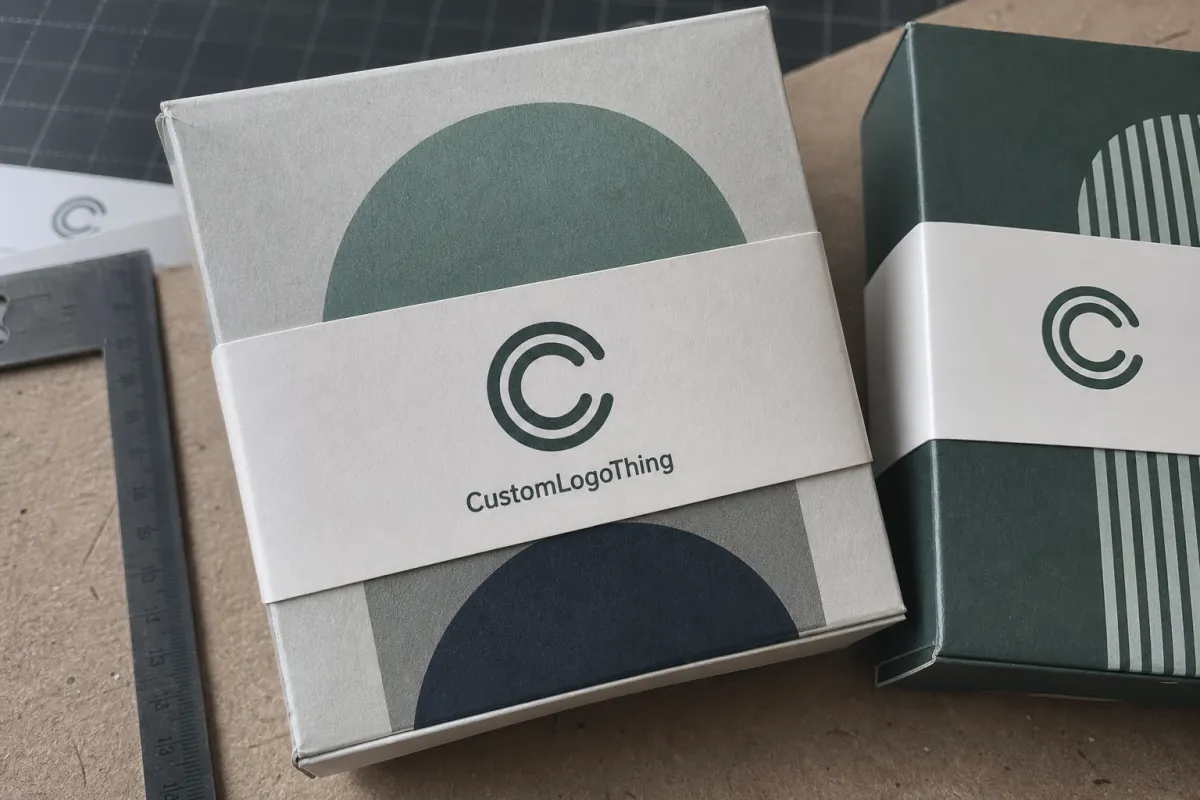
Color gets the attention, yet the first problems toy retailer belly bands proofing catches are often structural. A tiny artwork shift can hide a barcode, push a safety statement into the fold, or make a shelf band look crooked once it wraps around a carton. A design can feel perfectly centered on screen and still look off-balance on the actual box after just a few millimeters of movement.
That is why the review starts with the basics. The proof should confirm that the copy stays inside the safe area, the bleed is sufficient for trim, the panel order matches the fold pattern, and the dieline matches the toy box size going through the line. For most paper belly bands, a safe area of 3-5 mm and bleed of 3 mm is the minimum practical starting point, while premium jobs often use 5 mm bleed and tighter control on fold margins. It is also the right moment to verify the details that matter most in toy packaging: age grading, warning text, barcode placement, website links, SKU identifiers, and any CE, ASTM F963, CPSIA, or EN 71-related copy that the retailer or importer requires.
From a packaging buyer's point of view, toy retailer belly bands proofing is less about polishing art and more about avoiding expensive mistakes. A hidden safety mark or a barcode that scans poorly can trigger a reprint that costs far more than a careful review on a monitor or a printed sample. That risk grows fast for toy packaging, where launches are seasonal, promotions move quickly, and retailer planograms leave little room for delay.
The proof also shows how the band behaves in the real world. Does it sit straight when wrapped? Does the overlap zone cover important artwork? Will the adhesive seam break up a busy illustration in an obvious way? Those questions sound small until the first finished sample arrives, which is why toy retailer belly bands proofing is really a cost-saving step rather than a decorative one. On a typical 300 gsm SBS or 250 gsm C2S band, a 12-15 mm overlap is common for glued wraps, while pressure-sensitive closures may need 18-25 mm depending on carton stiffness and opening force.
“The cheapest mistake to fix is the one you catch before press.”
That idea carries real weight in toy retail packaging. A proof can reveal whether a band needs stronger contrast, a wider barcode quiet zone, a clearer warning hierarchy, or a cleaner panel break. It also sets the tone for the rest of the job, since the team can confirm whether the project needs a layout check, a color-sensitive match, or a more detailed compliance review. For fluorescent or high-saturation artwork, a calibrated proofing workflow with ISO 12647-style color targets helps keep expectations realistic before ink ever reaches paper.
In my own review work, the first thing I check is usually not the headline graphic. It is the tiny stuff: the quiet zone around the barcode, the way the warning copy clears the fold, and whether the seam is going to land in a place that makes the art look awkward.
Common items checked in toy retailer belly bands proofing include:
- Barcode placement and quiet zone spacing, so the code remains scannable after folding and wrapping. A typical quiet zone is at least 3.6 mm on each side for retail barcodes, with larger margins preferred when the band is likely to shift.
- Safety and age copy, especially any warning that must stay legible at small size. Many buyers request 6-7 pt minimum type for dense legal text, with 8 pt or larger preferred where the fold can distort readability.
- Artwork balance, so logos and icons do not drift toward a seam or trim edge. A 1-2 mm shift can become visually obvious once the band is wrapped around a box.
- Retail readability, since the band has to work from a few feet away on a shelf. Proofs should be reviewed at both close reading distance and 1.5-2 meters away.
- Finish impact, including gloss, matte, foil, varnish, or a glued overlap area. Spot UV, soft-touch lamination, and foil stamping each change contrast and edge clarity in different ways.
That first pass is where the job either gets simpler or gets expensive. Once the team understands what the proof is meant to catch, the rest of toy retailer belly bands proofing becomes much easier to manage.
How Toy Retailer Belly Bands Proofing Works
The workflow for toy retailer belly bands proofing follows a familiar path. Artwork is submitted, prepress checks the file, a digital proof or printed sample is produced, the customer marks feedback, revisions are applied, and final signoff is issued before production starts. The sequence sounds simple, though each step exists for a specific reason: one catches file problems, another checks visual fit, and another locks the job for press.
There is a real difference between a layout proof, a color proof, and a production approval. A layout proof confirms that the dieline, panel order, bleed, and copy placement are correct. A color-accurate proof aims to show how inks, coatings, and contrast will appear in print. A production-ready approval says the file is complete and the customer accepts it for manufacturing. In toy retailer belly bands proofing, those are not interchangeable.
A PDF proof can tell you whether the barcode sits inside the safe zone, yet it cannot fully predict how a matte laminate will mute a bright red or how a gloss varnish will change the feel in hand. A printed sample does a better job of showing those physical details, and a press proof can move even closer to the finished result. That is why the proof type should match the risk level of the project.
toy retailer belly bands proofing also needs to confirm which SKU or dieline version is being approved. Many toy programs use multiple box sizes, bundle options, or assortment variations, and it is easy for a team to review a band that looks right for one product but wrong for another. The proof should name the exact product, carton size, and version number so nobody has to guess later. A good approval package also includes the artwork revision, export date, spot color callouts, and any special finishing notes such as matte AQ, gloss AQ, soft-touch lamination, or gold foil.
The material and finish matter too. A band printed on coated stock behaves differently from one on uncoated board. A soft-touch laminate will soften contrast and make fingerprints less visible. Foil changes the way a logo reads under store lights. A pressure-sensitive adhesive strip may need a wider overlap area than a tuck-style wrap. Those details belong in toy retailer belly bands proofing, not in the press room after approval is already done.
| Proof Option | Best For | Typical Cost Range | Typical Turnaround | What It Verifies |
|---|---|---|---|---|
| Digital PDF proof | Copy, dieline, panel order, basic layout | Often included or $25-$75 | Same day to 1 business day | Placement, text, bleed, safe area |
| Printed digital sample | Color feel, wrapping position, basic finish check | $40-$120 per version | 2-4 business days | Visual fit, contrast, seam behavior |
| Press proof | Critical color matching, launch-sensitive jobs | $150-$400+ depending on setup | 3-7 business days | Closest match to live production |
That table is only a working range, not a fixed price list, because toy retailer belly bands proofing cost depends on artwork complexity, finishing, and how many versions are involved. A simple one-color band on standard board is easier to proof than a multi-SKU program with foil, coating, and heavy copy review. Even so, the table gives buyers a realistic sense of why a digital proof is faster and cheaper, while a physical sample is better for judging the true look and feel.
For teams that want a reference point on handling and transit expectations, industry groups such as ISTA publish packaging test frameworks that can be useful when a belly band ships flat, is stored in stacks, or must survive distribution without curl, scuffing, or moisture damage. In practical terms, that means checking caliper, fold memory, edge crush, and carton compatibility before final approval. For many paper belly bands, a 250-350 gsm board is a common starting point, with coated one-side (C1S) or coated two-side (C2S) stock chosen based on print coverage and reverse-side visibility.
Toy Retailer Belly Bands Proofing Cost and Pricing Factors
Pricing for toy retailer belly bands proofing is usually driven by five things: file complexity, number of versions, proof type, finishing requirements, and how quickly the work needs to move. A clean single-SKU PDF check may cost almost nothing, while a launch-critical physical proof with a tight deadline can move into the low hundreds. The good news is that proofing is still much cheaper than a production reprint.
For actual production planning, buyers often compare proof costs to the full run. A common range for toy belly bands is about $2.50-$4.00 per unit at 500 MOQ for highly finished or small-format custom jobs, while larger volumes can drop far lower, often into the $0.25-$0.80 per unit range at 5,000+ units depending on material, print coverage, and finishing. Short runs can be higher if the job includes foil stamping, lamination, die cutting, or multiple setup passes. The proof cost is small next to that, which is why catching an error early matters so much.
MOQ also shapes the proofing process. A supplier may quote 300-500 pieces as the minimum for a simple paper belly band, 1,000 pieces for a fully custom printed wrap, or 3,000-5,000 pieces when specialty finishes, recycled board, or multiple SKUs are involved. If the order includes a backer card, insert card, or retail-ready outer sleeve, the MOQ can rise because each component adds setup and inspection time.
Materials are a big pricing lever. A standard 250 gsm C2S paper band is usually more affordable than 300 gsm SBS with soft-touch lamination, foil, and spot UV. Recycled paper can also affect price if the run needs GRS documentation for recycled content verification. If the application includes textile-based toy packaging or a wrapped plush accessory label, OEKO-TEX Standard 100 or GOTS may be relevant for the fabric component, while WRAP or BSCI can matter for factory social compliance documentation. Those certifications do not automatically change the proof itself, but they affect supplier qualification and file approval expectations.
Typical factors that push toy retailer belly bands proofing cost upward include:
- Multiple versions, such as language variants, regional safety text, or different barcodes.
- Special finishes, including foil stamping, embossing, debossing, spot UV, and soft-touch lamination.
- Color-critical graphics, especially brand reds, skin tones, metallic effects, and gradients.
- Short deadlines, which may require priority prepress or same-day proofing.
- Extra inspection steps, such as line proofing, carton-fit checks, or third-party compliance review.
Once buyers understand these variables, the price conversation becomes much easier. The aim is not to get the cheapest proof possible; it is to get the right proof level for the risk of the job.
Toy Retailer Belly Bands Proofing Process and Timeline
A realistic timeline for toy retailer belly bands proofing depends on whether the team is reviewing a file-only proof or a physical sample. File-only proofs are often turned around in 24 hours or less. Printed digital samples usually take 2-4 business days. Press proofs, because they involve press setup and operator time, can take 3-7 business days, and more if the job uses specialty inks or a multi-step finishing line.
A typical proofing sequence looks like this:
- File intake - The vendor receives the artwork, dieline, version notes, and finishing specs.
- Prepress review - The file is checked for bleed, safe area, resolution, overprint settings, font outlines, and barcode integrity.
- Proof generation - A PDF, printed sample, or press proof is created for review.
- Customer markup - The buyer checks wording, placement, color notes, fold behavior, and retail readability.
- Revision round - Corrections are applied, and a second proof is issued if needed.
- Final approval - The approved proof is archived, and the job is released to production.
For many teams, the first sample is enough to catch 80 percent of the issues. Still, a second round is common when the pack includes legal copy, multiple languages, or a tight brand color match. A good supplier should make the approval path obvious, with version control, dated proofs, and a clear signoff trail. That is especially important in toy retailer belly bands proofing, where one missed wording change can affect safety compliance or retail acceptance.
The inspection checkpoints during proofing should be specific and repeatable. In practical terms, that means checking barcode readability, fold-to-fold alignment, seam placement, die line accuracy, type size, color contrast, and finish location. If the band will be wrapped by machine, it is also worth checking whether the overlap width and paper stiffness are compatible with the wrapping equipment. A band that is too flimsy can wrinkle, while one that is too rigid can pop open or crack at the fold.
To keep the process moving, most teams should allow at least 48-72 hours for the first review cycle and another 24-48 hours for any revised proof. If the project is tied to a retail launch, it is safer to build in an extra 3-5 business days for correction and signoff rather than assuming the first proof will be perfect.
Common Mistakes in Toy Retailer Belly Bands Proofing
The most common mistakes in toy retailer belly bands proofing are usually not dramatic. They are small, easy-to-miss issues that become expensive when multiplied across a production run. One of the biggest is approving artwork without testing the actual wrap direction. A band that looks fine flat can hide a logo or barcode once it closes around the carton.
Another frequent issue is ignoring the finishing effect. A glossy proof on screen can look very different after matte lamination, and a metallic foil can become dull if the artwork underneath is too dark or too crowded. Buyers also get tripped up by version control, especially when one region needs different legal text or another SKU uses a different box size. In a multi-SKU toy program, it is easy to proof the right design on the wrong dieline if file naming is loose.
Other common mistakes include:
- Barcode errors, such as low contrast, poor quiet zones, or placement too close to a fold.
- Legal copy problems, especially truncated age warnings or missing importer details.
- Wrong substrate assumptions, like approving a bright white render that will print differently on natural kraft or recycled board.
- Insufficient bleed, which can leave white slivers at trim.
- Overlooking overlap areas, where a seam cuts through faces, logos, or critical text.
There is also a habit of treating the proof as a design-only exercise. In reality, toy retailer belly bands proofing should include a manufacturing lens: how the paper folds, whether the wrap thickness creates bulging, whether the adhesive holds cleanly, and whether the finish survives distribution. That is why a proof should be checked under different light sources, including cool white office light and warmer retail-style lighting if possible.
One simple way to reduce mistakes is to create a checklist before review begins. That list should include the exact SKU, carton dimensions, barcode number, copy block, finish specification, and approval contact. When that information is locked before the proof goes out, the chance of confusion drops fast.
Expert Tips for Cleaner Toy Retailer Belly Bands Proofing
The best toy retailer belly bands proofing work is usually boring in the right way: it is controlled, consistent, and repeatable. The first tip is to print or view the proof at actual size whenever possible. A band scaled down on screen can hide alignment errors that become obvious at full size. The second tip is to mark no more than one revision round at a time. Too many simultaneous changes create version confusion and make it harder to know what was actually approved.
It also helps to separate layout review from color review. Layout should be checked first, because there is no point debating shade values if the text is in the wrong place or the barcode crosses a fold. After that, review the finish and material. If the product uses recycled stock, confirm whether the supplier is using GRS-supported recycled content documentation. If a fabric accessory wrap or label is part of the package, ask whether OEKO-TEX Standard 100 or GOTS applies to that textile component. For broader social compliance, WRAP and BSCI are common supplier documentation points.
A few practical habits make a big difference:
- Use a master checklist for barcode, warnings, dieline, bleed, and finish.
- Confirm the wrap direction with a flat mockup and, if possible, a folded sample.
- Review under multiple lights so color shifts are easier to spot.
- Ask for one annotated proof rather than a chain of vague comments.
- Archive the approved version with date, SKU, and revision code.
If you are comparing suppliers, ask how they handle prepress checks. A good vendor will usually confirm resolution, spot color definitions, overprint settings, font outlines, image embedding, and die line layers before the proof is released. Many will also note whether the sample is produced on a digital press, inkjet proofing device, or offset press, because each path gives slightly different results. For toy packaging, that level of clarity is worth more than a generic promise that the proof is "close enough."
In short, the cleaner the process, the cleaner the approval. That is what keeps toy retailer belly bands proofing from becoming a guessing game.
Next Steps After Toy Retailer Belly Bands Proofing
Once the proof is approved, the next step is not production immediately; it is confirming that the approved proof matches the final purchase order, carton spec, and packaging schedule. That means re-checking the SKU list, quantity, finish, material, and shipping instructions one last time. For a launch-sensitive toy program, a final pre-production signoff should also confirm the approved barcode number, retail pack quantity, and any multilingual copy blocks.
From there, the supplier should lock the job for manufacturing. On a typical belly band run, production may begin with paper conversion and printing, followed by coating or lamination, die cutting, folding or slitting, adhesive application if needed, and final inspection. If the band is simple, the line may only need printing and die cutting. If it includes foil, embossing, or spot UV, each finish adds an inspection checkpoint and can extend the timeline by 1-3 business days.
A practical post-proof checklist includes:
- Confirm final artwork matches the signed proof, including version number.
- Reconfirm quantities and any overrun allowance, commonly 3-5 percent on print orders.
- Verify inspection points such as barcode readability, color consistency, adhesive placement, and trim quality.
- Check packing format so flat-packed bands do not curl or crease in transit.
- Lock delivery dates against launch, retailer set, or warehouse receiving deadlines.
If the program uses multiple vendors, this is the point where you make sure everyone is working from the same approved file. One clean handoff saves far more time than a rushed fix later. That is the real payoff of toy retailer belly bands proofing: fewer surprises at press, fewer delays in receiving, and a much better chance that the finished packaging looks exactly like what the team approved.
FAQ
How long does toy retailer belly bands proofing usually take?
A PDF proof can be same day or next day, a printed sample often takes 2-4 business days, and a press proof commonly takes 3-7 business days.
What is a realistic MOQ for toy belly bands?
Many suppliers start around 300-500 units for simple paper bands, with 1,000 units or more for custom finishes, multiple versions, or tighter production economics.
What should be checked first in the proof?
Start with barcode placement, warning copy, dieline fit, bleed, panel order, and overlap placement before reviewing color details.
Which materials are most common?
Common options include 250 gsm C2S, 300 gsm SBS, coated paper, recycled paper stock, soft-touch laminated paper, and specialty papers for premium retail packaging.
Which certifications matter?
For recycled content, GRS can be relevant. For textile-related packaging components, OEKO-TEX Standard 100 or GOTS may apply. For factory compliance, WRAP and BSCI are common checks.