Apparel Logo Patch Beanies Unit Cost: What Actually Drives the Price
A beanie can look like a throwaway promo item or a store-ready retail piece without changing the logo at all. The gap usually starts with apparel logo patch Beanies Unit Cost, then widens through details that buyers often treat as minor: patch material, decoration method, sizing, placement, packaging, and freight. The blank hat matters, but it rarely controls the whole number.
That is why quotes for “logo beanies” are often useless on first pass. One supplier is pricing a stock acrylic cuffed beanie with a woven patch and simple polybag. Another is pricing a ribbed knit, a faux leather badge, custom color matching, and retail labeling. Those are not close cousins. They are different products wearing the same sentence.
For buyers, the real question is not whether the unit price is low. It is whether the price matches the role the beanie has to play. A giveaway can survive a plain patch and standard packaging. Retail merchandise needs cleaner finishing and stronger visual hierarchy. Staff uniforms sit in the middle: practical, repeatable, and hard to mess up if the spec is controlled early.
Why patch beanies look cheap or premium at the same factory
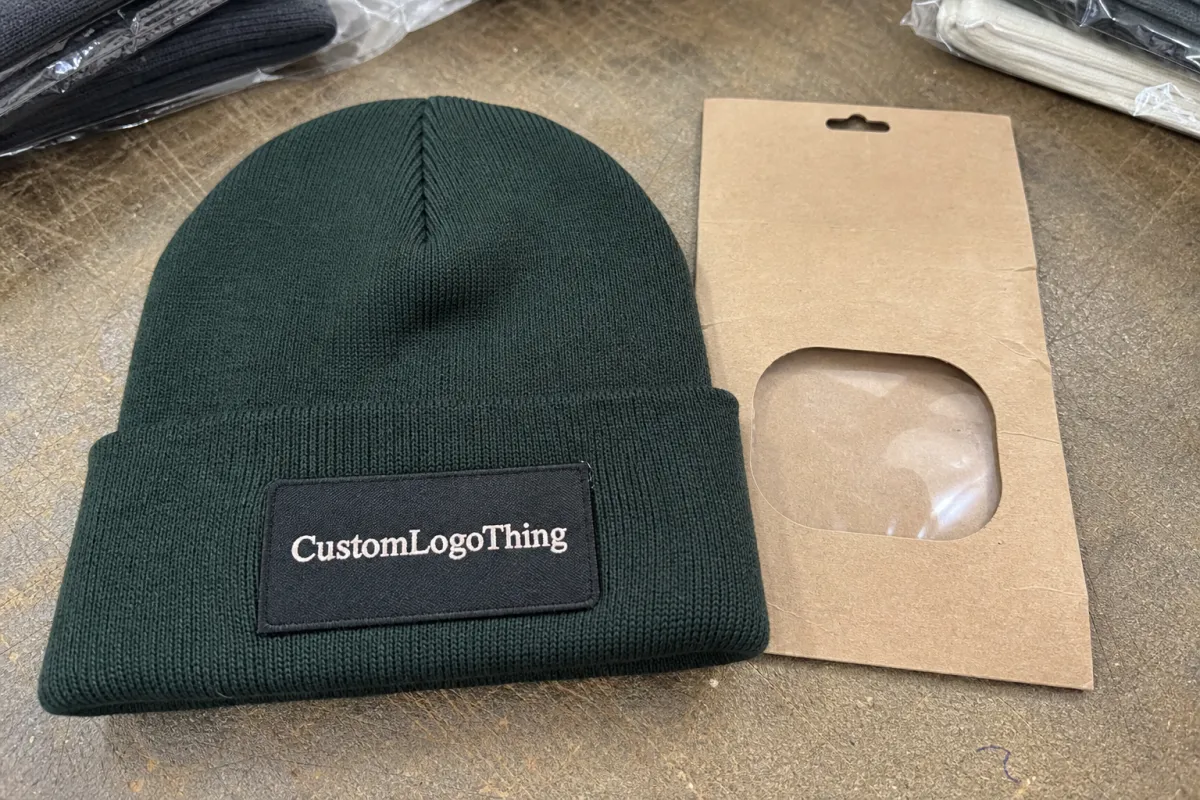
The factory is only one variable. The same production line can turn out a beanie that feels generic and another that looks deliberately designed. The difference is usually the patch build. A small woven patch with limited colors and a standard sew-on finish is quick to produce. A thicker faux leather badge with debossing, tight edge control, and custom backing takes more handling. Same machine floor. Different labor profile. Different unit cost.
For apparel logo patch Beanies Unit Cost, buyers should think in terms of brand signal. A promo bundle needs a price that survives volume. A retail line needs enough visual quality to justify shelf space. Uniform orders need durability and consistency more than flair. Once the use case is clear, the spec choices get easier.
Three features tend to shift price more than people expect:
- Patch construction - woven, embroidered, faux leather, and PVC all have different tooling and labor requirements.
- Patch complexity - small type, multiple colors, tight borders, and dense stitch coverage all add time.
- Attachment method - center-cuff sewing is straightforward; curved placement or multi-point stitching is slower and more finicky.
That is why the cheapest quote can become expensive later. A low number may assume thinner yarn, smaller patch size, fewer color changes, or less careful finishing. None of those are obvious on a spreadsheet. They show up in handfeel, visibility, and wear. If the order needs to look good across hundreds or thousands of units, the buyer has to compare the actual build, not just the headline price.
Beanie styles, patch materials, and placement options
Beanie style changes more than appearance. It changes how the patch sits, how much flat space is available, and how likely the decoration is to stay legible after the hat stretches on a head. A cuffed beanie gives the most reliable patch area because the cuff creates a flatter surface. Slouch beanies read softer and more fashion-driven, but the decoration zone is less predictable. Ribbed knits stretch well, yet the texture can interfere with small details. Pom styles add personality and movement, though the top construction can crowd the logo if the placement is not planned carefully.
Patch material should follow the brand position, not the mood board. Woven patches are usually the strongest option for text-heavy logos because they preserve detail without adding much thickness. Embroidered patches feel more tactile and traditional, but very small lettering can blur. Faux leather is popular when a buyer wants a cleaner, more elevated look without moving into custom knit territory. PVC offers dimension and a stronger visual pop, although it is not always the fastest or cheapest route.
Placement matters just as much. Center cuff is the safest choice because it is visible, repeatable, and simple to sew. Off-center placement can feel more intentional and less generic, especially for fashion accounts. Side-panel patches work when the design is meant to stand apart, but they demand tighter alignment control. A small woven label on the cuff is the quiet option. It often costs less than a larger badge and can be the right answer when the hat needs to stay understated.
There is a practical tradeoff underneath all of it. The more premium the finish, the more steps the order usually needs. More steps mean more chances to catch an issue before shipment, which is good, but they also mean more time and more cost. When the logo is simple, a clean woven patch is often the best balance. When the brand needs a richer, more giftable presentation, faux leather or embroidery may justify the increase. The right answer depends on the product channel, not on what looks dramatic in a catalog.
Specs that control fit, feel, and decoration quality
Accurate quoting starts with a spec sheet that leaves less room for interpretation. For beanies, the first details to lock are knit gauge, yarn blend, cuff height, crown depth, and stretch recovery. Those five items say a lot about the finished hat. A 100% acrylic body is common because it is cost-efficient and predictable. A wool blend usually improves handfeel and thermal value, but it pushes the unit price up. Heavier gauge construction can make a beanie feel more substantial even when the silhouette stays simple.
The patch spec deserves equal discipline. Ask about edge finish, thread density, backing type, and how the patch behaves after repeated handling. Merrowed edges work well on woven and embroidered patches. Heat-seal backing can speed application in some runs, but sewn-on patches generally stay put better through wear and washing. If a patch lies flat instead of curling at the corners, that usually signals better construction control.
Color is one of the easiest places for a good order to drift. If both the beanie and the patch involve brand colors, send clear references from the beginning: Pantone, PMS, or a physical standard if one exists. A digital mockup is not enough. Screen color shifts. Dye lots shift. Thread and ink shift too, usually a little, and that is normal. What is not normal is approving a blurry reference and expecting a perfect match later.
Packaging and labeling should be quoted with the product, not after the fact. If the order needs individual polybags, size stickers, barcodes, hang tags, or mixed carton counts, say so early. A supplier can quote a clean beanie and still miss the warehouse requirements. Then the receiving team ends up fixing problems that should have been priced from the start.
For shipping and test planning, ask whether cartons are built to survive transit rather than simply looking neat on a dock. If the order is retail-bound, packaging discipline matters more than many buyers admit. Organizations like ISTA publish useful guidance on transit and distribution testing. And if paper inserts, tags, or cartons need certified sourcing, FSC is the relevant reference point.
Apparel logo patch beanies unit cost, MOQ, and pricing
Here is the part most buyers want first: the number. Apparel logo patch Beanies Unit Cost is usually built from the blank beanie, patch production, application labor, setup or tooling, packaging, and freight. If a quote does not break those pieces out clearly, ask for a line-by-line view. Procurement teams do not buy vague math.
MOQ changes the economics quickly. Small runs carry a heavier share of setup because the supplier still has to prep artwork, confirm colors, build patch files or dies, and manage production handling. As quantity rises, those fixed costs spread across more pieces, so the cost per piece falls. That is why 100 units can look awkwardly expensive while 1,000 units start to make sense.
| Option | Typical MOQ | Approx. unit cost | Best for |
|---|---|---|---|
| Cuffed acrylic beanie + woven patch | 100-300 pcs | $2.50-$3.90 | Promo kits, employee giveaways |
| Cuffed beanie + embroidered patch | 200-500 pcs | $2.90-$4.40 | Classic branding, tactile finish |
| Ribbed beanie + faux leather patch | 300-500 pcs | $3.20-$5.10 | Retail merch, higher perceived value |
| Slouch or pom style + PVC patch | 500+ pcs | $3.80-$6.00 | Fashion-led drops, more dimensional branding |
Those ranges are not fantasy pricing. They reflect typical stock blanks, standard decoration, and realistic production handling. Add custom packaging, oversized patches, specialty yarn, or rush freight and the number moves. Tighten the patch artwork, add more color changes, or increase stitch density and it moves again. On smaller orders, freight can distort landed cost more than the product itself.
The useful comparison is landed cost, not the first quote that lands in your inbox. A lower unit price with weak packaging or expensive freight can cost more by the time the product reaches the warehouse. The fastest way to make that visible is to request three quote levels: standard, better finish, and premium finish. That forces the differences into the open instead of hiding them in a long email chain.
Packaging deserves the same scrutiny. Folded insert cards, belly bands, barcode stickers, and hang tags all carry setup or handling charges. Sometimes they are worth every cent. Sometimes they are only there because nobody wanted to say no. The right answer depends on the channel. Retail may justify the extra spend. Event swag usually does not.
Production steps, proofing, and lead time
The production path should be boring. Art review, proof, approval, production, inspection, shipment. That is the sequence buyers want because it leaves fewer chances for surprise. If a supplier wants to skip the proof stage on a custom logo order, that is not speed. It is risk being moved downstream.
Lead times vary based on how much is changing. A straightforward stock beanie with a standard patch often lands around 12-18 business days after proof approval. Custom yarn colors, unusual patch shapes, and more involved packaging can extend that to 18-30 business days. If the order is rushed, a surcharge of 10%-20% is common, and tighter schedules can push it higher depending on materials and freight conditions.
The delays that cause the most pain are usually predictable:
- Artwork arrives in the wrong file format or without dimensions.
- Color changes come after proofing has already started.
- The patch shape changes after the quote has been approved.
- Final sign-off takes longer than anyone planned for.
Before deposit, confirm the parts that can quietly affect schedule and cost:
- Exact beanie style and yarn blend.
- Patch size, shape, material, and placement.
- Packaging format, label requirements, and carton count.
- Proof approval deadline and target ship date.
That level of clarity protects apparel logo patch Beanies Unit Cost from drift. A quote can look tidy and still become expensive if the supplier has to keep reworking artwork or rebuilding the production plan. Clean approvals save time, and time is usually where the hidden money leaks out.
What a reliable supplier does when the order gets complicated
A basic supplier can price a straightforward order. A useful supplier can handle the messy ones without becoming defensive. Mixed quantities, color variation, rush requests, packaging changes, and reorder requests all happen. The real test is whether the supplier explains the impact clearly before anything ships.
Quality control should include more than a final glance at a photo. I want to see stitch inspection, patch adhesion checks, carton counts, and shipment photos before release. For retail-facing orders, shortage and overrun policy should also be clear. Small overruns happen in garment production. Hidden shortages should not.
Vague language is usually expensive language. “We’ll sort it out” sounds harmless until the invoice shows up with extra charges nobody discussed. Ask where setup begins, how rush timing is priced, and whether the patch can be reused for reorders. If the answer is yes, the second run often becomes easier and cheaper because the spec already exists.
Show the total landed cost, the exact patch specification, and the approval path. If those three things are fuzzy, the quote is fuzzy too.
That is the difference between a supplier and a guessing machine. Solid communication reduces scrap, saves time, and makes repeat orders far easier to manage. It also exposes whether the price is genuinely good or only looks good because a few necessary items were left out.
What to send before you request a quote or sample
If you want a clean quote, send the right inputs first. Start with the beanie style, patch art, patch size, quantity, target cost, and delivery date. Then add brand guidelines, color references, packaging notes, and any retail labeling requirements. That is enough for most suppliers to stop guessing and start pricing the real job.
For samples, choose the right version for the risk level. A basic reference sample is enough if you only need to confirm shape, feel, and placement. A decorated pre-production sample makes more sense when the patch is complex, the colors are strict, or the order is large enough that a mistake would be costly. For smaller launches, a pilot run of 50-100 units can be smarter than going straight to a full buy, especially if demand is still uncertain.
The fastest way to decide is usually the simplest:
- Compare two or three spec sets, not just three prices.
- Match patch material to the channel and the logo itself.
- Choose the least complicated packaging that still fits the use case.
- Lock the version that gives the best apparel logo patch beanies unit cost for the market you are serving.
For team orders, event runs, and retail drops, that usually clarifies the decision quickly. Keep the logo readable. Keep the build simple where it can be simple. Stop paying for decoration nobody asked for. That is how the cost stays under control without making the beanie look stripped down.
What affects custom logo patch beanie unit cost the most?
Patch size and patch material usually move price faster than the beanie blank. Quantity matters too because setup and handling spread out as the run gets larger. Rush timing, specialty packaging, and detailed color matching can all raise the quote even when the beanie itself looks simple.
What MOQ should I expect for patch beanies?
MOQ depends on the patch type, decoration method, and whether the blank is stock or custom. Lower MOQs are possible, but the per-unit cost is usually higher because setup is not spread across many pieces. Ask for tiered pricing at 100, 300, 500, and higher quantities so the breakpoints are visible.
How long does production usually take for custom patch beanies?
Plan for artwork review, proof approval, production, inspection, and shipping. Simple orders move faster; custom colors, complex patches, and reproofing add days or weeks. If you need a rush order, confirm the surcharge and the exact ship date before approving anything.
Can I lower apparel logo patch beanies unit cost without making them look cheap?
Yes. Simplify the patch design, reduce color count, and use one clean decoration location. Choose a standard beanie blank instead of a fully custom knit when the logo is doing most of the visual work. Increase quantity where possible, because the cost drop is often better than trimming one tiny spec.
What should I confirm before approving a patch beanie quote?
Confirm the exact beanie style, patch dimensions, colors, placement, packing method, sample policy, freight terms, and any overrun or shortage rules. Make sure the quote matches the finish you actually want, because the lowest number is not always the right one.


