Toy retailer magnetic boxes Unit Cost: Request a Quote
Toy retailer magnetic Boxes Unit Cost is shaped less by the magnet itself than by the rigid board, the wrap material, the print finish, and the level of presentation the package needs to deliver on the shelf. A toy retailer comparing a basic folding carton with a rigid magnetic box usually sees the difference straight away: a stronger structure, a cleaner opening feel, a firmer closure, and a more gift-ready appearance, all of which affect pricing in a very practical way.
I have spent enough time quoting rigid presentation boxes to know that buyers often start with the magnet because it sounds like the special part. It usually is not. The real cost story lives in the board grade, the wrapper stock, the finishing steps, and how much hand work the box needs before it can leave the line. That is the part that tends to surprise people, kinda every time.
The right quote should do more than hand over a number. It should show what drives that number, which choices can be simplified, and which details are worth keeping when the box needs to support the product in real retail conditions. For buyers planning toy retailer magnetic boxes unit cost against an actual sales target, the goal is clear: understand the cost levers, compare like with like, and avoid paying for features that do not help the product move.
At Custom Logo Things, the useful conversation is not about hype. It is about unit cost, MOQ, bulk pricing, setup charges, and the exact structure that fits the toy. If you already have other packaging programs underway, you can also compare options through our Custom Packaging Products page and keep the build consistent across your line.
Toy retailer magnetic boxes unit cost: what changes the number
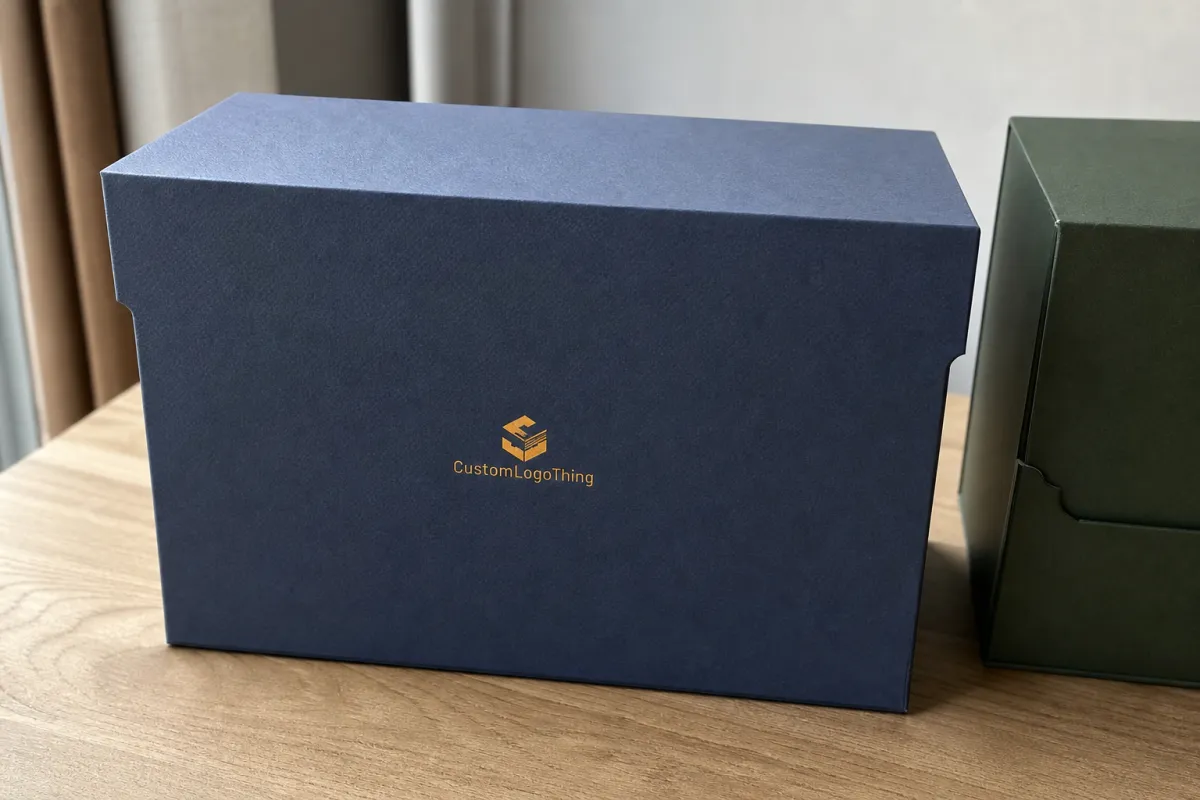
Most toy retailer magnetic boxes unit cost conversations begin with the wrong assumption: that the magnet is the expensive part. In practice, the magnet is usually a small share of the total build. The bigger cost drivers are the thickness of the rigid board, the quality of the wrap paper, the amount of print coverage, and whether the box needs a custom insert. A simple magnetic closure on a cleanly wrapped rigid box can cost far less than a heavily printed box with foil, embossing, and a formed interior tray.
Picture a toy retailer reviewing two versions of the same product. One is a basic folding carton with a tuck flap. The other is a rigid magnetic box with a printed wrap, a fitted insert, and a front panel that looks gift-worthy on the shelf. The rigid option changes toy retailer magnetic boxes unit cost, yes, but it also changes the retail story. The product feels more premium, the closure feels more secure during handling, and the box is less likely to arrive crushed or ragged in a display environment.
That tradeoff matters because packaging is not only a carrier. It is part of the item’s perceived value. For collectible figures, limited-edition dolls, hobby kits, and higher-end board games, toy retailer magnetic boxes unit cost can be justified by the way the package supports display and unboxing. A toy retailer does not always need the most complex build, but there is a point where a stronger structure protects the product and helps the sale.
The practical question is not whether magnetic boxes cost more than cartons. They do. The real question is whether the box earns that difference by reducing in-store damage, improving shelf presence, and supporting a premium price point. For toy retailer magnetic boxes unit cost, that is the right lens. A buyer who only looks at the lowest line item can miss the packaging failure that costs more later in replacements, damaged displays, or lower conversion.
There is also a middle path. A box can be built with economical materials, moderate print coverage, and a simple insert that still feels elevated enough for gift retail. That is often where toy retailer magnetic boxes unit cost lands for mid-market toy programs: enough structure to impress, not so much finish that the pricing moves out of range. Good quoting should make that middle path visible instead of hiding it behind a single price.
From a packaging buyer's point of view, the important thing is control. If the quote shows the exact board grade, the exact wrap stock, and the exact finish, toy retailer magnetic boxes unit cost becomes something you can manage rather than guess at. That kind of clarity helps a buyer approve a spec with confidence instead of accepting an uncertain number.
Product details: magnetic box formats for toy retail
Toy retailer magnetic boxes unit cost depends heavily on the format, because not every magnetic box is built the same way. The most common versions are lift-off rigid boxes, hinged magnetic closure boxes, and two-piece presentation boxes with concealed magnets. Each one brings a slightly different labor pattern, a different opening feel, and a different impact on the final quote.
A lift-off rigid box works well for sets that need a simple reveal and a strong visual presentation. A hinged magnetic closure box is useful when the opening action is part of the appeal, especially for toys sold as gifts or collector items. A two-piece presentation box can be ideal for premium assortments, but it often pushes toy retailer magnetic boxes unit cost higher because the structure has more steps and more wrap edges to finish cleanly. The best choice depends on the toy, the shelf position, and how often the box will be handled before purchase.
Product category changes the build too. Board games usually need more surface durability and flatter storage behavior. Collectible figures often need a tray that holds the item securely without crushing delicate parts. Dolls may need a larger front presentation area and more protection around accessories. Kit-style toys often need dividers or compartment trays so the contents do not shift during shipping. Each of those details changes toy retailer magnetic boxes unit cost because each one adds material, labor, or both.
Inserts are a major factor. EVA foam creates a precise, premium fit, but it raises cost and is not always the most eco-friendly option. Paperboard dividers are more economical and easier to print, though they may not hold irregular shapes as well. Molded pulp supports a stronger sustainability message and can work well for some toys, but it brings its own tooling and forming requirements. Custom compartments can look excellent, but they need careful sizing if the product has multiple parts. For toy retailer magnetic boxes unit cost, insert choice is often one of the fastest ways to move the number up or down.
Function also matters. Some toy retailers need a box that is strictly for shelf display and gifting. Others need the same package to survive e-commerce fulfillment and parcel movement. That second use case deserves a harder look. Magnetic closure is not a substitute for transit design, and the box may need an outer mailer or shipper to hold up under rough handling. Packaging groups such as Packaging.org and transit-testing standards like ISTA are useful references when you want to think beyond the shelf and into the shipping lane.
From a production standpoint, the format also changes how repeatable the box is. A simple rigid magnetic box with a paperboard insert can hold tight tolerances across a run. A more decorative version with specialty paper, foil stamping, embossing, and layered trays takes more attention. That is why toy retailer magnetic boxes unit cost is not a single market number; it is a build decision that reacts to the exact product inside.
Construction and print specifications that shape the quote
Once the format is chosen, the quote becomes a matter of specifications. For toy retailer magnetic boxes unit cost, the first details a buyer should define are dimensions, board grade, wrap paper, magnet count, insert type, and total print coverage. A vague request almost always produces a vague number. A clear brief produces a quote that can actually be compared across suppliers.
Most toy programs start with greyboard in the range of 1200gsm to 1500gsm, wrapped with 157gsm art paper or a specialty paper depending on the look. Heavier products, sharper accessories, or larger presentation boxes may need stronger board or tighter folding tolerances. If the toy has a sharp corner or a heavy internal component, the box may need extra reinforcement so the corners do not crush during storage. That detail can affect toy retailer magnetic boxes unit cost more than a small change in artwork.
Surface finish is another obvious cost lever. Matte lamination is usually the economical premium choice. Gloss lamination gives brighter color pop and can work well for bright toy graphics. Soft-touch coating feels more upscale but adds cost and can slow production. Foil stamping, embossing, and spot UV each add labor and finishing steps, especially if they are used across a large panel. A small foil logo may add modest cost; a heavy coverage pattern or multiple effects can move toy retailer magnetic boxes unit cost noticeably.
Artwork complexity also matters. Full-bleed graphics, tight color matching, and multiple PMS colors can increase setup work. The more the design depends on exact registration, the more attention the press and finishing stages need. If the box uses deep dark solids, metallic accents, or very fine reversed text, the first proof should be checked carefully before production starts. That proof stage is where smart buyers protect toy retailer magnetic boxes unit cost from avoidable rework.
There are also practical decisions around print strategy. A simple one-color logo on specialty paper can feel premium with very little decoration. A dense, all-over print can look energetic for a toy brand, but it raises ink usage, press time, and the risk of visible shifts in alignment. Sometimes the most efficient packaging is the one that uses a strong structure and a focused print treatment instead of trying to cover every surface with effects.
For buyers who want to think in real numbers, the note below is useful: every extra process step adds either direct labor or indirect setup. That includes die lines, print plates, foil dies, insert tooling, sample rounds, and inspection time. Toy retailer magnetic boxes unit cost is not only material cost; it is the total of all the steps needed to turn a flat spec into a finished retail package.
Toy retailer magnetic boxes unit cost, pricing, and MOQ
Here is the part most buyers want first: toy retailer magnetic boxes unit cost by quantity. The honest answer is that pricing moves with size, finish, insert style, and order volume, but you can still build a useful frame. Small runs carry a higher cost per piece because setup charges and sampling are spread across fewer cartons. Larger runs lower the unit price because materials and machine time are used more efficiently.
For a rigid magnetic toy box, a typical pricing pattern might look like this: at 1,000 pieces, a simple build could land around $1.65-$2.60 per unit, while a similar box at 5,000 pieces might move closer to $0.88-$1.40 per unit. A more decorated version with foil, embossing, or a fitted EVA insert may sit around $2.10-$3.40 at 1,000 pieces and $1.18-$1.95 at 5,000 pieces. Premium presentation builds can climb higher still. Those numbers are illustrative, not a firm offer, but they show how toy retailer magnetic boxes unit cost usually behaves across volume.
MOQ matters because it tells you how the factory balances board sourcing, machine time, and the economics of setup. A lower MOQ can be useful for seasonal toys, test launches, or limited editions, but it often means a higher cost per piece. A higher MOQ can bring stronger bulk pricing, yet it only makes sense if the packaging is likely to reorder or the product line has enough sell-through to justify the inventory. That is why toy retailer magnetic boxes unit cost should always be reviewed alongside forecasted demand, not in isolation.
To compare quotes fairly, the spec has to stay identical. A quote for 1200gsm board with a paperboard insert is not comparable to a quote for 1400gsm board with EVA. A matte laminated box is not the same as a soft-touch box with foil and emboss. Even freight terms matter. If one quote is ex-works and another includes delivery, the apparent difference can be misleading. The best comparison for toy retailer magnetic boxes unit cost is always spec-to-spec, quantity-to-quantity, and ship term to ship term.
| Build level | Typical MOQ | Estimated unit cost at 1,000 pcs | Estimated unit cost at 5,000 pcs | What it usually includes |
|---|---|---|---|---|
| Economy presentation box | 500-1,000 pcs | $1.65-$2.60 | $0.88-$1.40 | Standard greyboard, printed wrap, matte lamination, simple paperboard insert |
| Standard retail magnetic box | 1,000 pcs | $2.10-$3.40 | $1.18-$1.95 | Thicker board, stronger closure, cleaner print coverage, optional soft-touch or limited foil |
| Premium gift-style box | 1,000-3,000 pcs | $3.20-$5.80 | $1.75-$3.10 | Specialty wrap, foil, embossing, higher-spec insert, tighter cosmetic control |
The table is not a promise; it is a practical guide for planning. Toy retailer magnetic boxes unit cost will move based on box size, print coverage, insert complexity, and the finish standard you approve. Still, the spread is useful because it shows the tradeoff between presentation and budget. A buyer can ask for three versions in one round: an economy spec, a standard spec, and an upgraded spec. That makes the decision clearer than asking for one mysterious quote and hoping it lands in budget.
Watch the first-run items too. Tooling fees are usually modest for a standard rigid box, but custom insert tooling, foil dies, or unusual structural elements can add extra cost to the opening order. Setup charges may also appear for proofs, plate making, or special finishing work. Those costs often disappear or shrink on repeat orders, so a first run can look more expensive than the reprint. For toy retailer magnetic boxes unit cost, that distinction is important if you plan to reorder after the launch phase.
A good quote is not the cheapest number. It is the number that matches the same spec twice, ships on time, and does not force the buyer to fix the design after production has already started.
One more practical point: bulk pricing is only useful if the box is something you can actually carry through a season. If a toy line is still being tested, a smaller MOQ with a slightly higher cost per piece may be smarter than locking in too many cartons too early. That is why toy retailer magnetic boxes unit cost should be discussed with the sales forecast, storage plan, and launch calendar sitting on the same table.
Process and timeline: quote, sampling, and production steps
The workflow is straightforward, but each step affects toy retailer magnetic boxes unit cost in a different way. A typical project moves from inquiry to quotation, then artwork review, structural confirmation, sample approval, production, inspection, and shipment. If one of those steps changes, the cost or timeline can move with it. That is why a quote should never be treated as a stand-alone number.
The fastest way to get a reliable response is to send exact dimensions, product weight, insert requirements, artwork files, finish preferences, target quantity, and the use case. A box for shelf display does not need the same internal protection as a box for parcel shipping. A toy sold as a gift may justify a higher finish. A toy sold through a value channel may need a simpler build. The more exact the brief, the closer toy retailer magnetic boxes unit cost will be to the final production price.
Lead time depends on the details. A simple magnetic box with straightforward print can move quickly after proof approval. A more complex build with inserts, specialty paper, foil, or multiple samples can take longer. Sample revisions also add time. If the artwork is not finalized, if the die line needs changes, or if the insert fit has to be adjusted, the schedule stretches. In many cases, the box itself is not the bottleneck; the approval cycle is.
For planning purposes, a reasonable lead-time range after final approval is often 12-15 business days for simpler builds and 18-25 business days for more complex rigid boxes, before freight. That range can move if the run is large, if the factory is in a busy period, or if the shipping method changes. Toy retailer magnetic boxes unit cost should therefore be reviewed together with delivery timing, because a lower unit price is not helpful if the boxes arrive too late for the selling season.
Approval checkpoints matter a great deal. Once the structure is locked and the print proof is approved, changes become expensive. A board upgrade, a new insert style, or an added finish after approval can trigger new setup charges and new tooling fees. Buyers who keep the brief tidy at the sample stage usually protect both schedule and budget. In practice, that discipline is often the difference between a controlled order and a frustrating one.
Quality control on this format focuses on a few specific points: magnet alignment, wrap adhesion, corner wrap appearance, insert fit, and carton squareness. These details are not cosmetic fluff. If the magnets sit unevenly, the lid can pull crooked. If the wrap is loose, corners can blister. If the insert is too tight, the toy may be difficult to remove. Good inspection keeps toy retailer magnetic boxes unit cost from being wasted on a package that looks expensive but performs poorly.
Why choose us for toy retailer magnetic boxes
For toy retailers, the value of a packaging partner is simple: clear guidance, predictable quoting, and steady production. That is the kind of support Custom Logo Things aims to provide. Toy retailer magnetic boxes unit cost should not feel mysterious, and it should not take five emails to understand why one quote is higher than another. A good partner explains the spec in plain language and gives you room to choose the version that fits the product.
Consistency matters just as much as the first quote. Many toy programs reorder seasonally or keep evergreen packaging in rotation, which means the next run has to match the first one closely. A reliable manufacturer watches the same details each time: magnet placement, board thickness, wrap adhesion, insert fit, and overall square. That repeatability protects the brand and keeps toy retailer magnetic boxes unit cost stable across later orders.
We also understand the practical side of buying. Sometimes a buyer needs a tight budget option, sometimes a premium shelf version, and sometimes both. That is why it helps to compare a baseline spec against a presentation upgrade and an economy fallback. If you are reviewing other rigid packaging styles too, our Custom Packaging Products page is a useful starting point for broader carton planning.
From a production standpoint, the most useful support is often the simplest: exact material recommendations, realistic MOQ guidance, and straight answers about what will affect unit cost. If a foil panel is going to raise toy retailer magnetic boxes unit cost more than expected, that should be clear early. If a paperboard insert will do the job at a lower cost than EVA, that should be said plainly. Buyers do not need decoration around the answer. They need the answer.
For buyers who care about standards, that same practical mindset applies to shipping and sustainability. FSC paper options are worth considering if the brand wants certified material sourcing, and transit testing should be matched to the shipping route, not guessed at. If you want a packaging partner who treats toy retailer magnetic boxes unit cost as a working spec instead of a vague estimate, that is the standard to look for.
Next steps: build a quote-ready brief
If you want a quote that actually helps with budgeting, send a brief that includes the product dimensions, product weight, target quantity, insert needs, artwork status, finish preferences, and delivery deadline. That is the fastest way to get a real toy retailer magnetic boxes unit cost instead of a placeholder price. The more exact the brief, the fewer surprises there will be later in sampling or production.
It also helps to request two versions at the same time: one baseline build and one upgraded build. That gives you a clean view of toy retailer magnetic boxes unit cost against presentation value. If the upgraded box adds shelf appeal without pushing the product out of range, it may be the better choice. If the simpler version does the job, you save money without weakening the display.
For fragile, high-value, or gift-oriented toys, ask for a sample or prototype before approving the run. A small sample cost is easier to manage than a full production correction. It also helps you confirm insert fit, closure feel, and artwork placement. Those checks are especially useful when toy retailer magnetic boxes unit cost is being balanced against a premium retail position.
- Send the exact outer dimensions and product weight.
- Specify whether the box is for gifting, shelf display, or shipping support.
- List the insert type you want, or ask for two options.
- Share artwork files and note any PMS colors or special finishes.
- Ask for the price at least two quantities so bulk pricing is visible.
That brief makes it much easier to compare quotes from different suppliers. It also helps the factory understand where toy retailer magnetic boxes unit cost can be controlled and where it should not be cut. A box that protects the product, presents well, and fits the sales channel is usually the right answer, even if it is not the lowest number on the page.
If you are ready to move forward, we can turn your dimensions and artwork into a clean quote, show the cost per piece at different volumes, and explain which setup charges are one-time and which parts of the build affect repeat orders. The practical goal is simple: a box that fits the toy, fits the channel, and keeps toy retailer magnetic boxes unit cost where it needs to be.
One last takeaway: if the brief is fuzzy, the quote will be fuzzy too. Nail down the structure, finish, insert, and quantity before you compare suppliers, and you will usually get a cleaner number, fewer revisions, and a package that actually matches the toy instead of fighting it.
How is toy retailer magnetic boxes unit cost calculated?
Toy retailer magnetic boxes unit cost is usually based on box size, board thickness, wrap material, print coverage, finish, insert style, and quantity. Setup work and sampling can affect the first run more than repeat orders, and heavier or more complex toy packaging usually needs a stronger build, which raises the price.
What MOQ should I expect for toy retailer magnetic boxes unit cost quotes?
The MOQ depends on the factory setup, board sourcing, and whether custom inserts or special finishes are included. Higher quantities usually lower the per-unit price because setup costs are spread out, so a good quote should show the price break at multiple quantities, not just one number for toy retailer magnetic boxes unit cost.
What details do I need to get an accurate magnetic box quote for toys?
Provide product dimensions, product weight, insert requirements, artwork files, and target quantity. Include whether the box is for shelf display, gifting, or shipping, since that affects construction. The more exact the spec, the closer the quote will be to final production cost for toy retailer magnetic boxes unit cost.
Do finishes like foil or soft-touch change toy retailer magnetic boxes unit cost a lot?
Yes, premium finishes increase material and labor cost, especially on large coverage areas. Simple matte or gloss lamination is usually more economical than foil, embossing, or spot UV, so the best choice depends on whether the box is meant to feel premium at retail or stay budget-focused while keeping toy retailer magnetic boxes unit cost under control.
How long does production usually take after approval?
Timeline depends on sampling, artwork approval, finish complexity, and order size. Simple builds move faster than custom rigid boxes with inserts or specialty decoration, and once the design is approved, the factory can give a more reliable lead time and shipping estimate for toy retailer magnetic boxes unit cost planning.


