Margin often disappears in packaging long before it disappears in the product itself. I have seen toy lines that looked healthy on paper get squeezed by oversized cartons, extra tape, and freight charges that had no business being attached to a small, lightweight item. That is the practical case for toy retailer poly mailers moq: the right mailer cuts dead air, trims shipping weight, reduces pack-out labor, and keeps a busy fulfillment area from turning into a mess of oversized boxes.
For a packaging buyer, toy retailer poly mailers moq is not just a sourcing keyword. It tells you the lowest quantity you can order before setup costs and inventory commitments start to shape the economics in a serious way. Plush toys, boxed figures, trading cards, accessory packs, and compact kits often ship better in a poly mailer than in a rigid carton. Not every toy belongs there, and forcing the wrong product into film can backfire fast, but plenty of SKUs do fit the format cleanly.
Why Toy Retailer Poly Mailers Beat Bulky Toy Boxes
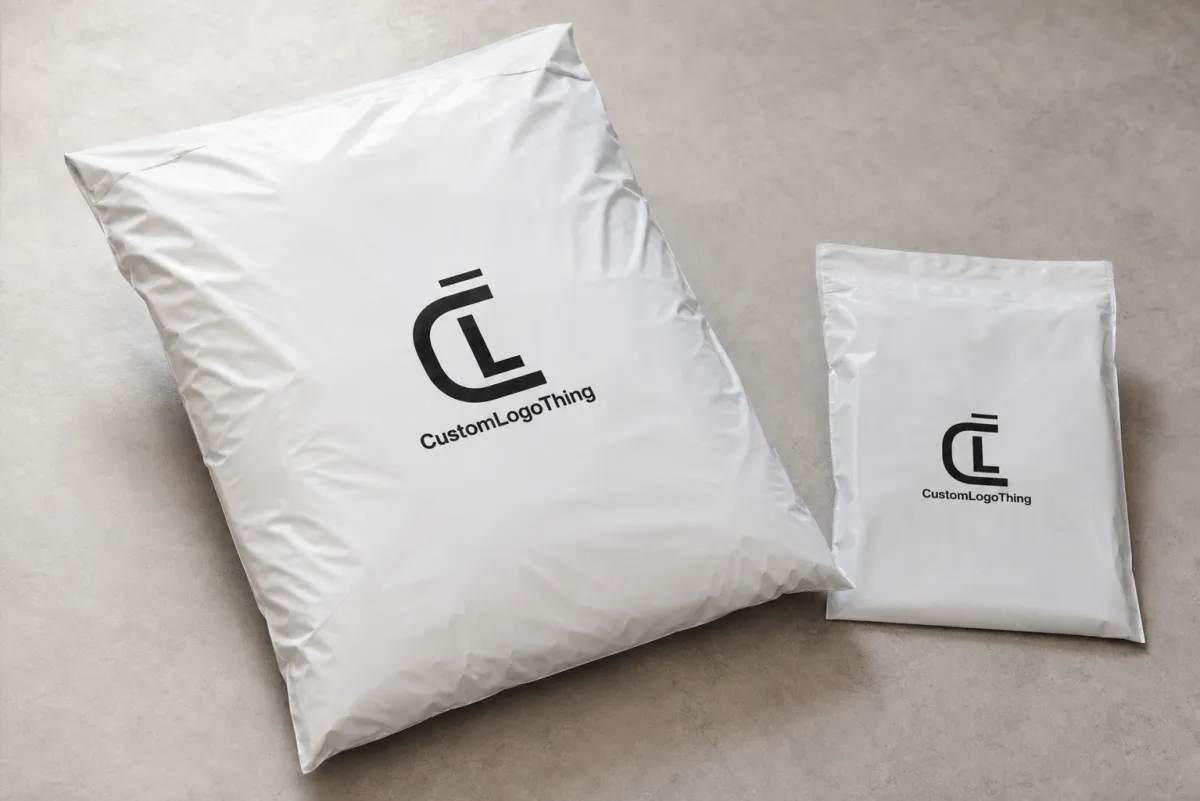
The simplest reason is also the one buyers tend to overlook: most toy products are not fragile electronics or heavy appliances. They are usually light, compact, and only seem awkward because the outer package adds more space than the item actually needs. A box with empty room on every side may look safe, yet it raises dimensional weight, takes more pallet space, and pulls extra labor into every order. toy retailer poly mailers moq becomes the cleaner route when the product flexes a little, stacks flat, or already ships inside a retail carton.
That shift is why so many toy sellers move soft goods, small boxed items, and accessory packs into mailers. Air costs money. A 9 x 12 or 10 x 13 poly mailer can replace a corrugated carton when the shipment does not need crush resistance, and the savings usually show up in three places at once: unit cost, pack-out speed, and freight. A retailer handling hundreds or thousands of orders starts to feel that difference almost immediately. toy retailer poly mailers moq only makes sense when the item and the process support it, and that is often the case for light consumer goods.
Storage is another quiet advantage. Poly mailers arrive flat, stack neatly, and take far less staging room than cartons. That matters during peak periods, when the warehouse seems to shrink just as orders start to rise. A small team can move faster because there is less folding, less taping, and less improvisation at the pack table. A carton is still a carton, even if it is inexpensive. It still asks for tape, labor, and space. toy retailer poly mailers moq gives a retailer room to scale without adding clutter.
A practical test helps separate the good candidates from the bad ones. If the toy can handle mild flex, and if sharp corners are not likely to puncture the film, a mailer is worth trying. Plush toys, blind-bag items, mini sets, slim board-game accessories, and low-risk e-commerce SKUs are common fits. Products that crush easily, have rigid edges, or depend on a premium presentation usually need a closer review first. Saving a few cents is not a win if the result is damage and replacement freight.
A mailer that lowers the packing cost but raises the return rate is not efficiency. It is just a cheaper mistake.
If oversized cartons are still the default for every toy order, start by measuring the actual packed size of the top-selling SKUs rather than the raw product dimensions. Include the retail carton, insert, hang tag, or inner bag if those pieces ship with the item. Compare that real packed footprint against your current box and against a poly mailer option. In many cases, the math favors toy retailer poly mailers moq more than the instinct does. The packaging is often the issue, not the toy.
Reliable references help more than warehouse folklore. ISTA offers distribution test guidance that is useful when you want to understand transit performance instead of guessing. FSC is a clear reference point for recycled-content and chain-of-custody claims. Neither one sells mailers, which is exactly why they are worth checking.
Toy Retailer Poly Mailers MOQ: Material, Print, and Everyday Uses
Mailers are not all built the same, and the material choice changes both price and performance. Most toy retailer poly mailers moq orders use polyethylene film, often in a co-extruded structure so one layer handles print quality while another supports seal strength and tear resistance. Recycled-content versions are common as well, though print clarity and surface feel can shift depending on the blend. The goal is not to chase the most exotic film. The goal is to match the bag to the product and the fulfillment process.
Plain mailers work well for bulk fulfillment, marketplace shipments, and internal distribution where branding is secondary. Branded mailers fit better for direct-to-consumer orders, promotional drops, and subscription-style shipments where the parcel is seen by the customer and sometimes by the carrier too. Dual-layer printed mailers can help when you want a darker exterior, cleaner graphics, or a little more privacy. A toy retailer does not need every shipper to look like a luxury gift box. That kind of thinking usually adds cost without adding real value. toy retailer poly mailers moq should support the actual shipment, not force the shipment to behave like something else.
Pay attention to the features that matter in daily use: a dependable peel-and-seal adhesive, opacity that protects the contents, and film strength that resists punctures from corners or hard edges. A flap that fails in cold weather is not a feature. It is a return problem waiting to happen. For many toy shipments, 2.5 mil to 4 mil film is the realistic range. Thinner film lowers cost, while thicker film usually improves resistance to transit abuse, especially when the item is a little sharp or the handling chain is rough. That is the tradeoff, and it does not need to be dressed up.
Everyday applications are broader than buyers often expect. Plush toys, boxed collectibles, small puzzles, toy parts, promotional giveaways, blind-box items, and compact accessories can all move in the right mailer. The condition is usually how the item is packed before the outer bag closes. A retail carton inside a poly mailer behaves very differently from a loose item dropped straight into film and sealed. Good toy retailer poly mailers moq planning includes the inner pack, not just the outside layer.
Print is another place where buyers can overbuy or underthink the choice. A one-color logo on white film is usually the least expensive branding step. Full-coverage graphics can create a stronger look, but they also increase setup complexity and can raise the cost per piece. PMS matching, safe margins, and logo placement near the seal all affect the finished result. A design that sits too close to the flap can look off even if the artwork was fine on screen. That is why proofing matters more than many teams expect.
The real lens is simple. If the shipment is mostly a logistics tool, a plain bag may be enough. If the shipment also meets the customer, branded toy retailer poly mailers moq can be a low-cost way to reinforce recognition. Low-cost, not premium. Those are different ideas, and buyers who confuse them usually end up disappointed. A poly mailer can support consistency and repeat visibility. It cannot turn itself into a rigid retail box.
Specs to Check Before You Order Toy Retailer Poly Mailers
If there is one thing worth remembering before placing a toy retailer poly mailers moq order, it is this: match the bag to the packed item, not the product listing. Measure the length, width, and thickness after the toy is packed the way it will actually ship. Include the retail carton if the toy ships inside one. Include the hang tag, insert, or inner sleeve if those pieces affect the fit. Guessing is costly.
The main specs are straightforward. You need width, length, any usable gusset, film thickness, adhesive type, and print coverage. You also need to know whether the bag is for one SKU or for several sizes in the same family. A mailer that fits one item perfectly but creates headaches for the rest is not a system. It is a compromise that will annoy the packing team later. toy retailer poly mailers moq works best when the dimensions are chosen around actual usage patterns.
Thickness deserves real attention. A 2.5 mil film can be perfectly acceptable for soft or flat products, especially if the pack line is controlled and the shipment does not travel far. A 3 mil or 4 mil build makes more sense for heavier accessories, rough handling, or products with harder edges. Thicker is not always better, because it can raise cost and make the bag stiffer than needed. Thinner is not automatically smarter either. The aim is fewer failures, not just a lower quote.
Printing comes with its own limits. One-color logos are cheaper and easier to produce. Full-coverage graphics, custom backgrounds, and multi-color artwork cost more and usually require tighter file prep. Clean results come from keeping important elements away from the sealed edge and leaving enough safe space in the layout. A rushed art file can turn an otherwise workable toy retailer poly mailers moq order into a long string of revisions. Nobody wants that, least of all the printer.
Size fit can save real money too. If the item shifts too much, you may need a different mailer or a different internal pack method. If the bag is oversized, you are paying for unused film and likely paying more postage as well. If the bag is too tight, the adhesive or seam may carry too much stress. The most useful rule is practical: if the item flexes, a mailer may work; if the item crushes, test protection first. That one rule removes a lot of weak quotes for toy retailer poly mailers moq.
Retailers selling through multiple channels should also ask whether the bag needs privacy tint, a return space, or a second adhesive strip. Marketplace shipments often call for a simple outer bag with good durability. DTC shipments may benefit from better print. Subscription or bundle shipments may need a wider opening because pack-out speed matters. The spec sheet should reflect real use, not just the look of the package. Many buyers only learn later that a beautiful bag can slow down 1,500 orders.
To make the decision easier, here is a short comparison of common options:
| Option | Typical MOQ | Unit Cost Range | Best For | Tradeoff |
|---|---|---|---|---|
| Plain stock poly mailers | 500-1,000 units | $0.08-$0.18 | Testing demand, internal fulfillment, low-brand-impact orders | Lowest branding value |
| Custom printed single-color mailers | 1,000-3,000 units | $0.12-$0.28 | Retail orders, marketplace packaging, repeat SKUs | Basic setup charges and plate or tooling fees may apply |
| Full-coverage branded mailers | 3,000-5,000 units | $0.22-$0.55 | Seasonal campaigns, premium branding, larger retail runs | Higher tooling fees, longer proof cycle, more print sensitivity |
| Recycled-content custom mailers | 2,000-5,000 units | $0.18-$0.40 | Sustainability-forward brands, FSC-aligned sourcing goals | Material availability and print finish can vary |
The table is a starting point, not a promise. Exact numbers move with size, thickness, print coverage, freight method, and whether custom tooling is needed. Even so, it shows the right way to evaluate toy retailer poly mailers moq: by the real use case, not by the vague assumption that every custom run must be expensive.
Cost, Pricing & Toy Retailer Poly Mailers MOQ
This is the point where disciplined buyers save money and rushed buyers lose it. toy retailer poly mailers moq pricing depends on size, film thickness, number of print colors, total quantity, and freight. A clean budget starts with tiered pricing at 1,000, 3,000, and 5,000 units. A single number does not tell the whole story, and it can hide the real breakpoints in the order.
The largest price drivers are usually plain and predictable. Larger bags consume more film. Thicker film uses more resin. More print colors increase setup and production complexity. Smaller quantities spread setup across fewer units, which pushes unit cost upward. Custom artwork can also bring tooling fees, plate charges, or setup charges depending on the production method. Those fees are common. Surprises are not. Ask about them early and the quote stays useful for toy retailer poly mailers moq.
Bulk pricing often improves more sharply than buyers expect. Moving from 1,000 to 3,000 units can lower unit cost more than a small material change. Moving from 3,000 to 5,000 can do the same if the artwork is repeatable and the size stays fixed. That is why comparing several tiers makes sense. A lower MOQ is not always cheaper once you include freight and cost per piece. The numbers usually tell the truth, even when the first quote does not.
Here is the cleanest way to think about it:
- Lower MOQ helps test demand, but the unit price usually sits higher.
- Mid-volume runs often balance inventory risk and cost per piece better.
- Higher MOQ gives the strongest bulk pricing, but only if the inventory can move and store properly.
For toy retail, the best order size is usually tied to the season you can actually forecast, not the season you hope to invent later. A mailer that sits on a shelf for 18 months is not a bargain just because the quote looked good. The same logic applies to toy retailer poly mailers moq: the right minimum order is the one that matches sell-through, storage space, and cash flow.
Hidden cost lines deserve attention too. Freight can erase savings if the bag ships in a bulky format or needs to arrive quickly. Proof revisions can add days, which can force rush charges. Split deliveries can add handling costs if part of the order goes to a warehouse and part goes to a fulfillment center. A quote that leaves those pieces out is incomplete. That is all there is to it.
Lower MOQ can be a smart path for a new toy line, provided the buyer understands the tradeoff. Small runs reduce risk, but they usually carry a higher unit price. Large runs push the price down, but they tie up cash and storage. That is the whole decision. Good toy retailer poly mailers moq buying is not about chasing the lowest number on the page. It is about choosing the order size that fits sell-through, storage, and operating cash.
For retailers building out a broader packaging stack, our Custom Packaging Products page is a useful place to compare mailers with other formats. If the format is already clear, our Custom Poly Mailers page helps narrow the conversation before you Request a Quote.
Process, Timeline, and Lead Time for Toy Retailer Poly Mailers
A clean production process saves more money than most small spec changes ever will. For toy retailer poly mailers moq, the usual sequence starts with artwork intake, then proof creation, then proof approval, followed by printing, finishing, inspection, and final packing. When files are ready and the size is clear, the order moves quickly. It slows down the moment someone decides the logo should be two inches higher.
Lead time depends on the order type. Stock bags move faster because the material already exists and the print step is either minimal or absent. Custom printed toy retailer poly mailers moq orders take longer because the artwork has to be checked and the production slot has to be scheduled. Full-coverage designs and multi-color layouts usually extend proof time. Orders move quickly when the buyer is organized. They slow down when three versions of a logo arrive and none of them are the right format.
The delays are usually the same ones every time. Missing vector artwork is one. Unclear seal placement is another. A logo too close to the cut edge causes a third. If the buyer sends dimensions, quantities, print files, and delivery deadlines in the first request, the supplier can quote faster and the production plan gets cleaner. That is the difference between a workable schedule and a pile of waiting emails.
Here is the practical timeline I would expect for a normal custom job:
- Quote stage: 1-2 business days if the specs are complete.
- Sample or proof stage: 2-5 business days depending on artwork complexity.
- Approval stage: buyer-controlled, but often the real bottleneck.
- Production stage: often 10-15 business days after approval for standard custom runs.
- Freight stage: varies by destination and service level.
Those ranges are common, not guaranteed. The point is to give buyers a usable frame. A strong toy retailer poly mailers moq order does not need mystery around timing. It needs a clear sequence and responsive communication on both sides.
Sample testing is worth the effort, especially for toy SKUs that vary in shape. A mailer can look fine on paper and still fail once a molded figure corner presses against the film or a plush toy expands more than expected. A sample shipment gives a much better reality check. ISTA test methods are a useful reference, and even a basic drop and abrasion review is better than assuming the first run will be perfect. That is not caution for its own sake. That is buying sense.
From a process standpoint, the best buyers are consistent. They define the size, approve the proof quickly, avoid last-minute artwork edits, and confirm where the cartons should land. That keeps toy retailer poly mailers moq moving and lowers the chance of a slow, expensive rerun. A supplier can only move as fast as the information they receive.
Why Choose Us for Toy Retailer Poly Mailers
We build Packaging for Businesses that actually have to ship product, not for mood boards. That difference matters. A strong toy retailer poly mailers moq supplier should understand retail shipping pressure, not just print a logo on a bag and move on. The film needs to stay consistent. The seal needs to hold. The print needs to land where the proof said it would. That is the baseline, not the bonus.
Most buyers want a simple set of answers: clear pricing, realistic MOQ guidance, and a unit cost that makes sense at the volume they can truly use. Our approach is to keep the tradeoffs plain. If the print is too ambitious for the budget, say so. If the size is too large for the product, say so. If a smaller run is smarter than a bigger one, say that too. Fancy wording does not protect inventory. Honest advice does.
For toy sellers, the real value is packaging that can shift with promotions and seasonal spikes. A smaller run may be the right way to test a new collection, then a larger batch may make sense once the SKU proves itself. A branded outer bag may work for direct orders, while a plainer version may fit marketplace fulfillment better. toy retailer poly mailers moq should give you room to do both without forcing one solution onto every channel.
We also keep an eye on the details that often slow projects down: sample support, proof review, size guidance, and freight planning. If the mailer needs to support recycled-content goals, we can help you think through options that fit FSC-related sourcing preferences. If the buyer wants a cleaner pack-out, we can simplify the design and keep setup charges lower. That is how the process should feel. No drama. Just a useful package.
Experienced buyers ask for multiple tiers because they already know the real decision sits between speed, storage, and cost per piece. They also know that a supplier who explains those tradeoffs is worth more than one who only repeats “best price” like a script. toy retailer poly mailers moq is a commercial decision. It deserves a commercial answer.
If you want a starting point before sending specs, the FAQ page can answer common packaging questions and reduce the back-and-forth that tends to slow a quote. That extra clarity usually saves time.
Next Steps to Order Toy Retailer Poly Mailers
The smartest order begins with real usage data. Measure the most common packed product, confirm the target quantity, decide on print coverage, and choose a finish that matches the job. If the SKU is seasonal, do not order for a fantasy peak. Order for the volume you can realistically move. toy retailer poly mailers moq works best when the buyer knows exactly how the bag will be used.
Next, Request a Quote with the right inputs: dimensions, material preference, thickness target, artwork file, print colors, and whether the order needs stock or custom construction. If possible, ask for two or three size options. That comparison often shows that the cheapest bag is not the best bag. Too much slack can raise damage risk and postage. Too little room can slow packing and make the line less comfortable than it should be.
Before you commit, ask for a sample or pre-production proof. That matters even more for toy retail items with sharp edges, odd geometry, or seasonal urgency. A sample reveals whether the seal sits correctly, whether the print looks clean, and whether the packed item actually behaves inside the bag. It is a small step that can prevent a large headache. Nobody wants to learn about a fit problem after the inventory arrives.
Here is the short checklist I would use:
- Measure the packed item, not just the product.
- Confirm the preferred film thickness and print style.
- Request pricing at 1,000, 3,000, and 5,000 units.
- Ask about tooling fees, setup charges, and freight.
- Approve a proof before production starts.
If you want to move quickly, gather the specs in one clean message and avoid the back-and-forth that slows everything down. That alone can save days in a toy retailer poly mailers moq quote cycle. The fastest path is usually the simplest one: specs, quote, proof, production.
That is the practical goal of buying smarter. Do not pay for package air. Do not order a carton when a mailer will do. Do not treat toy retailer poly mailers moq like an abstract spreadsheet line. It is a real purchasing decision, and the right order can reduce shipping waste, keep fulfillment moving, and give a retail brand a cleaner appearance without pretending the bag is something it is not. If the next step should be easy, start with the specs, get the quote, approve the proof, and let toy retailer poly mailers moq do its work.
What is the usual MOQ for toy retailer poly mailers?
MOQ varies depending on whether you are ordering stock or fully custom printed bags. Stock options often start lower, sometimes around 500 to 1,000 units, while custom jobs usually begin higher because setup charges and print costs need to be spread across the run. For toy retailer poly mailers moq, ask for tiered pricing so you can compare the real difference between a test run and a production order.
Which toy products are best suited for poly mailers?
Soft toys, flat accessory packs, boxed collectibles, blind-bag items, small puzzles, and similar lightweight SKUs are usually the best fit. If the item has rigid corners, delicate surfaces, or a premium retail presentation, I would test the package first. Some products sound mailer-friendly until you actually tape up a sample and realize the fit is kinda touchy.
How do I choose the right film thickness?
For many toy shipments, 2.5 mil to 4 mil is the practical range. Lighter, flatter items can often use thinner film, while heavier or sharper products usually need more resistance to puncture and handling abuse. The right answer depends on the packed product, the route it travels, and how much stress the seam will take during fulfillment.
Can poly mailers replace boxes for retail toys?
Sometimes, yes. If the toy is already protected in a retail carton or inner sleeve and does not need crush protection, a poly mailer can be a smart replacement. If the product can be damaged by flexing, pressure, or impact, a carton may still be the safer choice. The better move is to test one of each and compare damage risk, postage, and pack-out time before switching the full line.
Do custom printed mailers cost much more than plain mailers?
Usually they do cost more, but the jump depends on print coverage, number of colors, total quantity, and whether tooling is required. A simple one-color logo on a standard size bag may stay pretty close to plain stock pricing at higher volumes. Full-coverage graphics, on the other hand, raise the setup burden and usually need a larger MOQ to make sense.
How long does production usually take?
For stock mailers, the timeline can be fairly short. For custom printed toy retailer poly mailers moq orders, a common production window is 10-15 business days after proof approval, though artwork revisions, freight choice, and peak season demand can stretch that out. If timing matters, send the dimensions, quantity, and print file together so the quote and proof stages do not drag.
What details should I send with a quote request?
Send the packed item dimensions, material preference, target thickness, artwork file, print colors, quantity, and delivery deadline. If you already know the product’s sales channel, include that too. Marketplace, subscription, and direct-to-consumer orders can each call for different mailer specs, and that detail helps the supplier steer you toward the right bag instead of guessing.
What is the most practical takeaway for buyers?
Measure the packed item, request multiple pricing tiers, and test a sample before you place the full order. That three-step check catches most of the expensive mistakes. If the bag fits, the seal holds, and the freight math works, then toy retailer poly mailers moq is doing its job for the business instead of just looking good on a quote sheet.