Toy Rigid Boxes Cost: What Actually Moves the Price
Toy rigid boxes cost more for a simple reason: they are built to do more. A folding carton can print well, fold flat, and ship cheaply. A rigid box has to hold its shape, protect what is inside, and make the toy feel worth opening before the customer ever sees the product. That difference shows up in the quote immediately. If you are planning a collector set, a gift-ready launch, or a retail package that has to carry some visual weight, toy rigid boxes cost will depend far more on structure and finishing than on the outer dimensions alone.
From a packaging buyer’s perspective, the useful question is not “why is this higher than a carton?” It is “which choices are actually moving the number?” Board thickness, wrap paper, inserts, closures, print coverage, and finishing all change the unit price in a real way. Miss one of those details and the quote can shift around enough to wreck a budget meeting. I have seen a small change in insert stock add more cost than a larger change in box size. That is why a clean spec sheet saves time, reduces revision cycles, and usually gets you a better toy rigid boxes cost from the start.
Why toy rigid boxes cost more than a plain carton
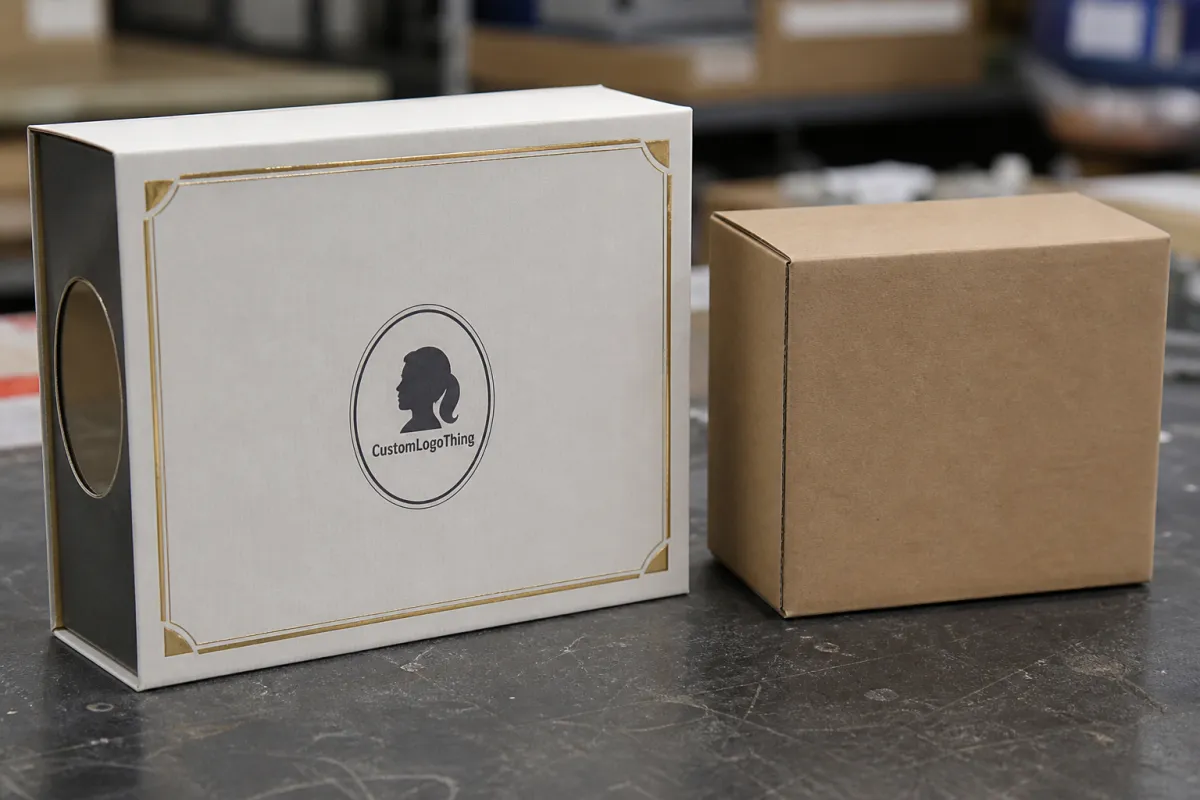
Toy rigid boxes cost more than a plain carton because the two packages are solving different problems. A folding carton is optimized for print speed, flat shipping, and efficient die-cutting. A rigid box is optimized for structure, presentation, and product protection. That extra backbone takes more board, more wrap, more handling, and more inspection. None of that is free, and the quote tells the truth pretty fast.
The biggest mistake buyers make is comparing box footprint alone. Two packages can share the same length and width and still land in different price bands. One might be a basic lift-off lid with printed wrap. The other might use a magnetic closure, foil stamping, an EVA insert, and soft-touch lamination. Same footprint, very different production path. Toy rigid boxes cost reflects that difference immediately.
Rigid packaging also changes the retail story. For toys, especially giftable sets and collector items, the box often carries the first impression of value. Parents, collectors, and gift buyers judge the package before they judge the toy inside it. When the box feels sturdy and polished, the brand feels more deliberate. That is why toy rigid boxes cost should be treated as part of the product experience, not a stray line item tucked into a spreadsheet.
In practice, the cost gap usually comes from three things:
- Structure - chipboard wrapped with printed paper, instead of a single folded sheet.
- Assembly - rigid boxes are often formed by hand or with semi-manual labor.
- Finishing - foil, embossing, matte lamination, and specialty coatings add setup and handling time.
That is the blunt reality. Toy rigid boxes cost more because they are built to look and feel better. If the package needs to survive shipping, hold a toy set in place, and still look good on a shelf, the structure earns its price. If you only need a shipping carton, a rigid box is overkill. If you need protection and presentation together, the numbers start making sense quickly.
For buyers comparing structural options, Custom Packaging Products is a practical place to sort formats before locking specs. Start with the box style, then refine the finish. That sequence usually keeps toy rigid boxes cost under control.
Good packaging is paid for in details. A rigid box that feels expensive usually costs more because the board, wrap, insert, and finishing all had to work together. One weak spec can pull the whole quote up or down.
Toy rigid boxes cost breakdown: materials, print, and inserts
Toy rigid boxes cost starts with the build. The base structure is usually grayboard or chipboard, often in the 1.5 mm to 3 mm range depending on box size and product weight. Thicker board feels more substantial, but it also increases material use and shipping weight. A smaller toy set may be fine with lighter board. A larger collectible or multi-piece kit usually needs a sturdier shell, and toy rigid boxes cost follows that choice.
The outer wrap matters just as much. Most rigid boxes use printed art paper, coated paper, or specialty wrap stock laminated to the board. A simple CMYK wrap is usually the least expensive route. Add metallic stock, textured paper, or soft-touch lamination, and the quote rises. That is not mystery pricing. Toy rigid boxes cost changes because the wrap stock affects both print handling and manual finishing.
Print coverage can also move the number. Full-surface graphics with dense ink coverage take more time to prepare and often require more care in production. If the artwork reaches every panel, including inside lids and sidewalls, the finishing crew has to keep alignment tight. That is where unit cost begins creeping upward. Buyers often focus on the front panel and forget the inside count. The quote never forgets.
Inserts are a major cost driver. For toys, the insert has to do two jobs: hold the item securely and present it cleanly. Here is the short version:
- Paperboard inserts - usually the most economical and easy to recycle.
- EVA foam - strong product hold, higher cost, good for premium sets or fragile items.
- Molded pulp - practical for eco-forward programs and shaped support.
- Thermoformed trays - precise fit, clear visibility, and higher setup complexity.
If you want to keep toy rigid boxes cost from drifting upward, use the lightest insert that still protects the toy. A custom tray that looks beautiful but costs more than the item inside is a bad trade. A practical tray that holds the product neatly is usually enough. From a buyer’s standpoint, the right insert is the one that prevents movement, protects corners, and keeps the box from feeling flimsy.
There are also hidden cost drivers. Tight tolerances can slow assembly. Window cutouts require extra tooling and alignment. Inside printing adds another layer of production checks. Dense artwork that wraps every panel increases waste risk if registration is off. These are not dramatic changes on their own, but they all affect toy rigid boxes cost and the final cost per piece.
On one project, a client asked why the quote jumped after moving from a flat paperboard insert to a two-piece molded tray. The answer was not glamorous: the tray reduced movement, but it also required different tooling and more careful fitting. The toy was safer. The box looked cleaner. The price went up anyway. That is packaging for you, kind of annoying and completely logical at the same time.
For brands comparing options, ask for separate pricing on standard wrap paper, soft-touch lamination, and foil-accented versions. That side-by-side view makes toy rigid boxes cost easier to read and removes a lot of guesswork later.
Box styles and specifications that change toy rigid boxes cost
Box style changes toy rigid boxes cost faster than most people expect. A lift-off lid box is usually simpler than a magnetic closure box. A drawer style adds more parts. A book style creates a premium unboxing feel, but that elegance comes with more assembly effort. Shoulder-neck styles look excellent and feel controlled, yet they often push the quote higher because they use more components and tighter fitting.
Let me keep this practical. If your toy is a single figure or a small kit, a standard lift-off lid may be enough. If the package has to feel like a gift, or if the toy sits in a premium price bracket, a magnetic closure or book style may justify the spend. Toy rigid boxes cost should match the retail position. Spending like a luxury brand for a mass-market toy is how budgets get bruised.
Dimensions matter too. Bigger boxes use more board and more wrap paper, which affects not just material spend but carton density in shipping. A long, shallow box can be cheaper to make than a deep one, but it may ship inefficiently and raise freight cost. Buyers need to think about the full package chain. Toy rigid boxes cost is only one piece of the total landed cost.
Common specifications that change pricing include:
- Wall thickness - heavier toys usually need stronger board.
- Corner style - wrapped corners and clean folds take care and time.
- Finish - matte, gloss, soft-touch, foil, embossing, or spot UV.
- Interior lining - plain white, printed, or specialty paper.
- Nesting efficiency - how many finished boxes fit in a master carton.
That last point sounds dull, but it matters. Better nesting means less wasted space and sometimes lower freight cost. Poor nesting wastes space, and wasted space affects the full cost picture. Toy rigid boxes cost is not only about how the box looks on the shelf. It also depends on how efficiently the finished boxes move through production and distribution.
The more exact the compartment, the higher the price usually climbs. A toy set with multiple parts may need a shaped insert with separate pockets, and each pocket adds precision. A collectible figure with accessories may need a windowed tray or a custom-fit base. That is why toy rigid boxes cost for bundled play kits often ends up higher than for single-item boxes with the same outer size.
If you need to compare styles before making a call, here is a straightforward breakdown.
| Style | Typical use | Relative unit cost | Notes |
|---|---|---|---|
| Lift-off lid | Simple toy gifts, entry-level premium sets | Lowest to moderate | Clean look, fewer parts, easier to price |
| Magnetic closure | Collector toys, retail gifts, branded sets | Moderate to high | Better unboxing feel, more assembly and hardware detail |
| Drawer style | Accessory kits, multi-piece toy bundles | Moderate to high | Good presentation, more components, more labor |
| Book style | Premium launches, display-driven packaging | High | Strong shelf impact, more finishing and structural precision |
| Shoulder-neck | Luxury-style toys, collector releases | High | Elegant, precise, and usually the most expensive option |
That table is not a quote. It is a map. The final toy rigid boxes cost depends on actual size, artwork, insert shape, and quantity. The ranking is still useful because it shows where the money usually goes. A plain lift-off lid is easier on the budget. A magnetic book box with a custom tray is not.
For brands that need a retail-ready finish without overcomplicating production, a simple structure plus one or two premium details is often the sweet spot. That keeps toy rigid boxes cost under control while still giving the package enough presence to do its job.
Toy rigid boxes cost, MOQ, and unit pricing explained
MOQ changes toy rigid boxes cost more than almost any other variable. Setup charges, die-cutting, print calibration, and hand finishing have to be spread across the run. If you only order a small quantity, the fixed costs hit each box harder. That is why low MOQ orders often carry a noticeably higher cost per piece. Same box. Different math. No magic.
There is a simple pattern most buyers see in quotes. At very low volume, the unit cost stays high because the factory still has to prepare the work. At mid-volume, the quote starts to improve because setup fees are diluted. At larger runs, bulk pricing usually becomes much more attractive, especially if the specs stay consistent and there are no odd adjustments halfway through the order.
Here is a practical pricing framework. These are common quote bands, not guarantees:
| Run size | Typical quote behavior | Common cost drivers | Best fit |
|---|---|---|---|
| 100-300 units | Highest unit cost | Setup charges, labor, proofing, short-run waste | Samples, small launches, test markets |
| 500-1,000 units | Moderate unit cost | Better spread of setup, more stable production | Early retail runs, seasonal product drops |
| 2,000-5,000 units | Lower cost per piece | Better material buying, more efficient labor allocation | Established SKUs, broader retail distribution |
| 10,000+ units | Lowest unit cost | Bulk pricing, optimized run efficiency, repeat tooling use | National launches, recurring programs |
That is why asking for multiple tiers is smart. Request pricing at 100, 300, 1,000, and 5,000 units if the product plan is still flexible. The jump from one tier to the next can be bigger than expected. Sometimes the 1,000-piece quote barely beats the 500-piece quote on a per-box basis. Sometimes it drops hard. You do not know until you see the numbers.
Tooling fees are another area people misunderstand. For many rigid box projects, tooling fees are limited compared with more complex packaging formats, but custom inserts, window cutouts, or specialized trays can add their own setup charges. If a supplier does not break these out, ask. A clear quote should show where the money is going. That transparency makes toy rigid boxes cost much easier to compare across vendors.
There is also the cash flow question. The cheapest per-box price is not always the smartest buy. If the order is so large that inventory sits for months, the holding cost can erase the savings. Better toy rigid boxes cost is not just low unit cost. It is the right balance between price, timing, and sell-through. A buyer who ignores that usually ends up with boxes stacked in a warehouse and no product launch to celebrate.
If you want to compare packaging types before settling on rigid construction, review Custom Packaging Products alongside your target run size. Sometimes a small spec change lowers the cost per piece enough to make the whole project healthier.
For teams that want benchmark-style guidance, the Packaging School and related industry resources are useful for understanding structural packaging basics, while ISTA explains transit testing standards that matter when toys have to arrive in one piece. That kind of context helps buyers judge whether a quote is actually fair.
Production process and lead time for toy rigid boxes
Toy rigid boxes cost is easier to control when the production process is orderly. The path should be simple: request quote, confirm specs, review dieline, approve artwork, make sample, then move into production. The more each step is locked before the next one starts, the fewer surprises you get. That sounds basic because it is basic. It is also where a lot of projects drift.
Lead time usually breaks into two parts: sampling and mass production. Sampling often takes longer than buyers expect if the artwork is not final or the structure keeps changing. Once the sample is approved, production can move faster, but only if the scope stays fixed. Change the insert after approval, and toy rigid boxes cost may not be the only thing that rises. The schedule can slip too.
For a straightforward rigid box with a standard insert, a typical schedule might look like this:
- Quote and spec confirmation - 1 to 3 business days if the information is complete.
- Dieline and artwork review - 2 to 5 business days, depending on revisions.
- Sampling - often 5 to 10 business days for standard builds.
- Mass production - commonly 12 to 20 business days after approval, depending on finish complexity and quantity.
- Packing and freight prep - a few additional days before shipment leaves the facility.
That is a realistic framework, not a promise. Complex finishes add days. Custom inserts add days. Full-wrap artwork with inside print adds days. A simple lift-off lid with no unusual finish moves faster. Toy rigid boxes cost and lead time are tied together because every extra step in production affects both labor and calendar.
Artwork is a common delay point. If the files are not print-ready, the prepress team has to fix them or ask for changes. That is normal, but it burns time. Buyers also get stuck when they try to adjust dimensions too late. A one-millimeter change can affect insert fit, board usage, and the way the closure feels. Small revision, big ripple. The quote changes because the production plan changes.
Packaging for toys often needs more than a nice outer box. It needs to survive handling, shipping, and maybe retail display abuse. That is why some buyers ask for drop-test awareness or transit checks before approving the final spec. Not every project needs formal certification, but it is smart to think about shipping stress early. If the toy is fragile, the insert and closure should be chosen with that in mind. It keeps toy rigid boxes cost from being wasted on returns and replacements later.
Speed comes from discipline, not hope. Lock the target quantity, confirm the insert, and approve the structure before final artwork. That is how toy rigid boxes cost stays close to the original quote and the schedule stays believable.
Why choose our custom toy rigid boxes program
A good custom toy rigid boxes program should do more than print a pretty box. It should help you Choose the Right materials, the right structure, and the right level of finish for the job. That is where the value sits. Not in overbuilding the package. Not in making every box look like a luxury watch case. In making the packaging fit the product and the budget without wasting either.
For toy brands, the smartest approach is usually controlled, repeatable quality. The board thickness should stay consistent. The wrap should align cleanly. The insert should hold the product without forcing it. The closure should feel reliable. If those parts behave every run, the box supports the brand instead of becoming a problem. That consistency matters more than fancy language, and it matters a lot more than a random gimmick added to justify toy rigid boxes cost.
Before you place an order, useful support should include dieline guidance, insert planning, and spec suggestions that can lower cost without hurting the look. A supplier that can tell you, honestly, “This finish is nice, but you do not need it,” is useful. A supplier that says yes to everything is expensive in the long run. Good packaging advice can trim toy rigid boxes cost without making the package feel bare.
Quality control should be concrete. Look for board thickness checks, print alignment checks, finish consistency checks, and sample approval before the mass run. For toy packaging, fit matters as much as appearance. If the toy rattles in the box, the customer notices. If the lid bows, the customer notices. If the magnet is weak, the customer absolutely notices. The only people who pretend otherwise are the people not paying the freight bill.
Logistics support matters too. Bulk shipments, export packing, carton labeling, and realistic delivery windows all affect the true toy rigid boxes cost. A late box is not cheap just because the quote was low. For launch-driven brands, the real win is a box that shows up on time and arrives usable. That sounds boring until a sales calendar is waiting on it.
If your project is moving from concept to quote, Custom Packaging Products is a practical place to start comparing structures before you lock the final spec. A few early decisions can save a lot of money. That is usually where the best toy rigid boxes cost starts: before the order is even approved.
How to lock an accurate toy rigid boxes cost quote
The fastest way to get a clean toy rigid boxes cost quote is to send precise information the first time. Not “something around this size.” Not “probably a magnetic box.” Exact dimensions, quantity target, toy type, insert needs, artwork files, and delivery destination. That is what a real quote needs. Vague requests create vague pricing, and vague pricing usually gets expensive later.
Here is the list I would send first:
- Finished box dimensions - length, width, and height in millimeters or inches.
- Quantity target - include the expected MOQ and any future reorder estimate.
- Toy type - single item, multi-piece kit, collector figure, or gift set.
- Insert requirement - paperboard, EVA, molded pulp, thermoformed tray, or none.
- Print and finish - CMYK, foil, embossing, spot UV, matte, gloss, or soft-touch.
- Artwork status - ready, in progress, or needs dieline support.
- Ship-to location - so freight and packing can be estimated correctly.
Then ask for three quote scenarios: standard, upgraded, and premium. That comparison is useful because it shows where toy rigid boxes cost jumps and where it stays flat. A buyer can usually tell very quickly whether a finish is worth it or just decorative spend dressed up as strategy.
A good pricing conversation should also separate structure from decoration. You want to know the cost of the rigid box itself, the insert, the finish, and any tooling or setup charges. That split helps identify the real unit cost. If one option looks cheap because it skipped a tray, it is not actually the same package. If another looks pricey because of special paper and foil, at least you know why. That clarity is worth more than a polished sales pitch.
Once the quote looks right, move in this order:
- Confirm specs - no loose assumptions.
- Approve the quote - lock scope before artwork finalization.
- Review the sample - check fit, finish, and print alignment.
- Release production - only after the sample matches the plan.
That order protects both the schedule and the budget. It also keeps toy rigid boxes cost from getting rewritten by late changes. Buyers who rush the approval stage usually pay for it later through rework, freight delays, or unnecessary upgrades. Buyers who lock the details early usually get cleaner numbers and fewer headaches.
One last thing: do not over-spec the box just because it sounds premium. Toys need good packaging, not a parade of expensive features. The best toy rigid boxes cost comes from a clear brief, a sensible structure, and finish choices that actually support the product. Everything else is noise.
If I had to reduce the whole process to one rule, it would be this: decide what the box must protect, what it must signal, and what it can skip. That one filter keeps the project honest. It also keeps the quote from drifting into territory that looks impressive on paper and wasteful in a warehouse.
FAQ
What drives toy rigid boxes cost the most?
Material thickness, insert type, and finish complexity usually have the biggest impact on toy rigid boxes cost. Magnetic closures, foil stamping, embossing, and custom trays raise unit price faster than a slightly larger box size. Quantity matters too, because setup cost gets spread across the run.
How much do toy rigid boxes cost at low MOQ?
Low MOQ orders usually have the highest per-unit price because setup and hand labor are spread over fewer boxes. Ask for pricing at multiple quantities, such as 100, 300, and 1,000 units, to see where the breakpoints are. On very short runs, setup can account for a large share of the quote. If the budget is tight, reduce finish complexity before cutting the structure.
Do inserts add a lot to toy rigid boxes cost?
Yes, especially if the insert is custom molded or tightly matched to the toy shape. Paperboard inserts are usually the most economical; foam and thermoformed trays cost more. A standard insert shape can save money without making the box look generic. In many projects, the insert is the difference between a tidy package and an expensive one.
How long does it take to produce toy rigid boxes?
Simple jobs move faster, but sampling, artwork approval, and complex finishes add time. Treat lead time as two parts: sample approval time and mass production time. Lock specs early if the packaging has to arrive before a product launch. A small revision late in the process can add days, sometimes longer.
How can I lower toy rigid boxes cost without making them look cheap?
Use a standard box style, simplify the finish, and avoid unnecessary custom tooling. Keep the insert functional rather than decorative when the toy already has strong shelf appeal. Order enough quantity to reduce the unit price, but not so much that inventory becomes dead weight. A clean structure with one well-chosen premium detail usually looks better than a box packed with extras.
If you want the cleanest toy rigid boxes cost quote, send the exact dimensions, quantity, insert plan, and artwork status first. That is the difference between a useful number and a sloppy guess. Clear specs always win, and toy rigid boxes cost gets easier to control the moment the brief stops being vague.

