Custom Five-Panel Caps for Subscription Brands
Custom Five-Panel Caps for subscription brands have a narrow job description, which is exactly why they work. They need to look sharp in a reveal, survive the trip from warehouse to customer, and still fit inside a margin that does not punish the rest of the box. Easy in theory. Less charming once you start sorting fabric, decoration, packaging, and shipping into one budget.
The upside is that a good five-panel cap can do more for package branding than a pile of filler items ever will. It gives the box a real anchor. It feels usable. It also reads as intentional, which is the whole point when a subscriber opens the lid and decides in five seconds whether the product line feels premium or improvised.
There is a reason this format keeps showing up in lifestyle, streetwear, outdoor, coffee, and niche enthusiast subscriptions. The front panel is clean, the profile is easy to style, and the cap can be made to look expensive without requiring expensive decoration. That last part matters more than brands like to admit.
If you are building the rest of the kit around the cap, the broader packaging system matters too. The hat, insert card, box interior, and shipper all need to feel like one decision, not four unrelated purchases. Our Custom Packaging Products page is useful if you are lining up the box side of the order at the same time.
What makes custom five-panel caps a fit for subscription boxes
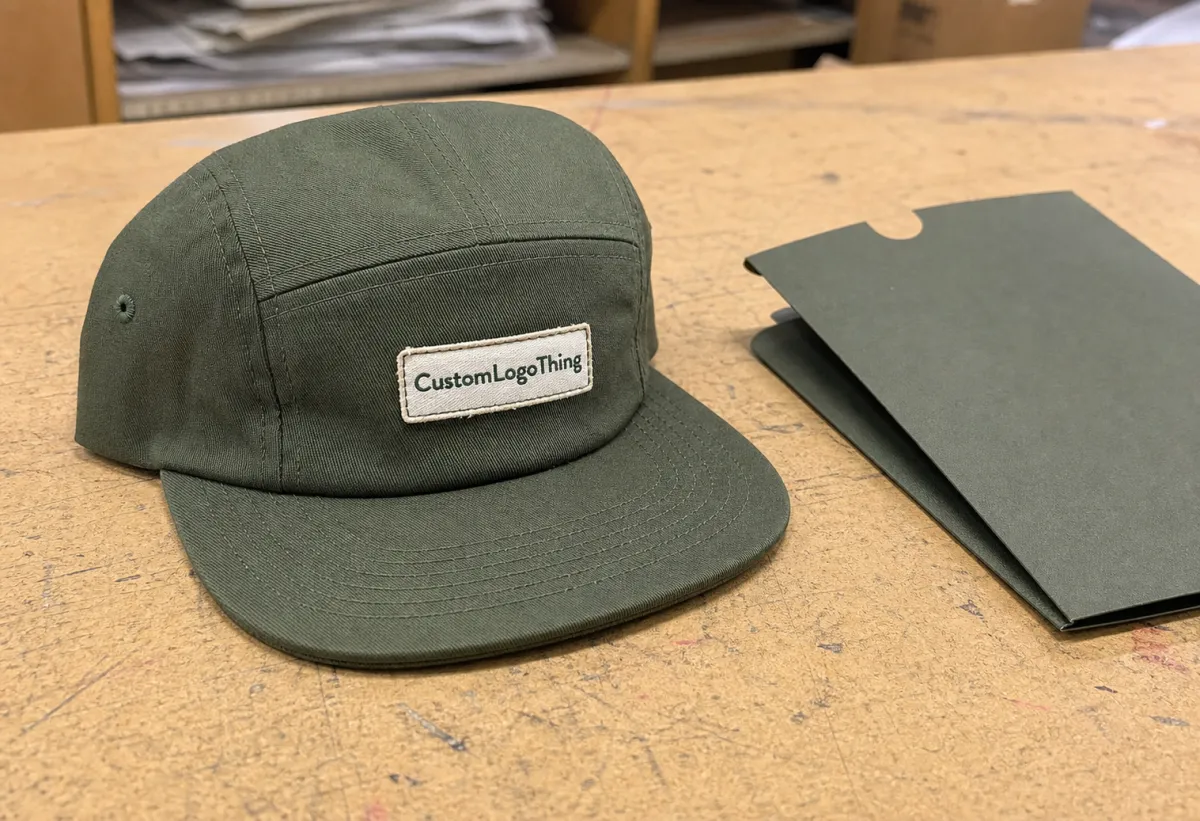
A five-panel cap gives the front logo more room to breathe. Fewer seams cut across the face of the cap, so the decoration area looks cleaner than it does on many six-panel builds. That is a small structural change with a real visual effect. Tight lettering sits better. Simple icons look sharper. The cap stops fighting the artwork.
That cleaner front is especially useful for subscription boxes because the cap often acts as the hero item. The box may include multiple pieces, but the hat is the one that usually gets worn, photographed, and remembered. If the item looks cluttered, it can drag down the whole unboxing even if the other parts are solid.
Five-panel caps also photograph well. Flat or lightly curved brims, low-profile crowns, and a simple logo all tend to show up clearly in social content and customer photos. That is useful because subscription brands do not just sell a product; they sell the feeling that the product belongs in a specific identity. A cap that looks like a generic giveaway does not help.
The silhouette is flexible enough to support different brand positions without changing the core spec. A fashion-led box can keep the front minimal and use a cleaner closure. An outdoor brand can lean into durability and structure. A wellness or lifestyle box can keep the palette restrained and let the logo sit quietly. Same base shape. Different personality.
The other practical reason custom five-panel caps for subscription brands make sense is wear life. A subscriber may open the box in seconds, but the cap can keep circulating for months. It ends up on errands, trips, and weekend bags. That gives it more branding mileage than a one-time novelty item, which is why it usually outperforms anything that looks clever but feels disposable.
How the cap spec actually works from panel to fit
Five panels means five main pieces in the crown instead of six. That reduces seam interruptions across the front and changes the cap shape in a useful way. The front panel usually sits flatter, which helps embroidery, woven patches, or print land more cleanly. If a logo has fine detail, the open space matters. If it is too busy, the cap starts looking cramped very fast.
Fit is still the first thing buyers should care about. Crown depth controls whether the cap sits high, low, or awkwardly in between. Brim shape changes the tone. A flat brim reads more fashion-forward. A gentle curve makes the cap feel easier to wear for broader audiences. Neither is right in every case. They solve different problems.
Closure choice is not decorative fluff. It changes the way the cap feels in hand and the way it lands in fulfillment. Snapbacks are familiar and fast to adjust. Strapbacks feel lighter and a little more refined. Fabric or buckle closures can push the piece toward retail territory, though they can also slow packing if the hardware is fussy. That tradeoff deserves attention before artwork starts getting reviewed.
One-size does not mean one-feel. A deep-crown snapback can wear generously. A strapback may sit closer to the head. A more structured front panel will hold its shape better in a box, while a softer build may feel more relaxed after unpacking. For subscription brands, the right spec depends on who is wearing it and how much polish the brand wants the item to carry.
| Decoration method | Typical look | Best use case | Common price impact |
|---|---|---|---|
| Flat embroidery | Clean, direct, durable | Simple logos, short text, minimal art | Usually the best value |
| 3D puff embroidery | Bold, raised, more streetwear | Short wordmarks and strong icons | Higher stitch cost |
| Woven or PVC patch | Sharper detail, defined edge | Complex logos or small type | Moderate to higher |
| Direct print | Light, graphic, less texture | Flat-color art and simple shapes | Efficient on larger runs |
For buyers comparing custom printed boxes, apparel merch, and retail packaging in the same launch, the cap should not compete with the rest of the kit. If the box is loud, keep the hat quieter. If the box is restrained, the cap can carry more personality. That balance is practical, not academic. It decides whether the subscription feels curated or thrown together.
Cost, pricing, and MOQ: what changes the quote
Most quote swings come from the same handful of choices. Decoration method is the obvious one. Flat embroidery usually costs less than layered patch work or heavy stitch counts. Fabric choice matters too. Standard cotton twill is usually easier on budget than washed specialty fabrics or heavier structured builds. Closure style, woven labels, inside taping, and custom packaging all add small increments that stack up quickly.
MOQ changes the economics more than many teams expect. A lower quantity almost always means a higher unit price, less room to negotiate on finish, and less flexibility if you want multiple colorways. That does not mean small runs are a bad idea. It means the cap should have a clear business reason: subscriber retention, a premium tier, a seasonal drop, or a limited gift with purchase. If none of those apply, the order is probably too small to work cleanly.
Useful benchmark: a simple decorated cap at lower volume often lands somewhere in the rough range of $5 to $10 per unit before freight and packaging, while cleaner bulk pricing can drop below that once quantities rise. Add a woven patch, premium closure, or custom inside labeling, and the number moves up fast. That is normal. The bad version is paying more without knowing which detail drove the jump.
Sample fees also deserve a line item. Many suppliers charge separately for a pre-production sample or proof cap, and that cost may or may not be credited later. On a small run, the sample can feel expensive. On a larger run, it is cheap insurance. It shows whether the logo placement, crown shape, and color response actually work on fabric instead of on a screen.
The other cost trap is packaging. A hat that needs tissue, a printed sleeve, a retail-style hang tag, or extra carton protection is not just a hat anymore. It is a fulfillment system. That extra handling usually looks harmless in a spreadsheet until the warehouse team has to move it line by line. For broader packaging context, the Packaging Association is a useful reference point for terms and materials.
| Spec choice | Effect on cost | Effect on appearance | Buyer tradeoff |
|---|---|---|---|
| Simple embroidery | Lower | Clean and reliable | Best for tight budgets |
| Patch with sewn edge | Medium | More dimensional | Better logo detail |
| Premium closure | Medium to high | More finished in hand | Better for premium boxes |
| Custom labels and inserts | Small to medium | Stronger brand story | Useful for presentation |
If the budget is tight, do not solve it by trimming the sample process or cutting quality checks. Solve it by simplifying the design. One strong mark on the front panel will beat a crowded treatment that needs four revisions and still looks unsure of itself.
Production steps and timeline from artwork to delivery
The cleanest production flow is boring, and that is a good thing. It starts with a brief: logo files, target audience, role of the cap in the box, color direction, and the required delivery date. Then comes artwork conversion for embroidery or patch work. Then sample or proof approval. Then bulk production, inspection, packing, and shipment. Skip a step and the cost usually shows up later as a correction fee or missed launch date.
Artwork is where a lot of timelines slip. Logos that look fine on a laptop may need cleanup before they can be stitched well. Thin lines, tight curves, and tiny text often need adjustment. PMS matching can slow things down too, because fabric, thread, and print do not behave the same way under every light source. A physical proof is the only realistic way to judge the final result.
A reasonable production window for custom five-panel caps for subscription brands is often 7 to 14 days for a sample and roughly 15 to 30 business days for bulk production, depending on decoration, order size, and factory workload. Shipping adds its own timeline. Air freight can move faster but costs more. Ocean freight is cheaper but less useful when a launch date is close. That tradeoff should be decided before production starts, not after the cartons are finished.
Quality control should happen at more than one stage. I would want a pre-production sample, a mid-run check if the order is large enough, and a final inspection before cartons close. The actual checks are straightforward: panel symmetry, embroidery registration, patch placement, brim shape, closure tension, sweatband stitching, thread trimming, and carton crush resistance. A cap can look perfect on a table and still arrive with a bent brim or a warped front if packing is lazy.
If the outer shipper has to survive long transit or warehouse stacking, it is worth asking for a packaging method that reflects actual handling conditions, not ideal ones. That is where transit testing standards such as ISTA guidance are useful. Nobody needs overbuilt drama. They do need cartons that arrive intact.
Materials, closures, and finishing details that travel well
Fabric choice affects both appearance and how well the cap survives shipping. Cotton twill is the safest starting point. It is structured, familiar, and predictable under decoration. A brushed cotton or chino-style twill can feel a little softer without losing shape. Washed cotton gives a more relaxed look, though it usually sacrifices some crispness. Polyester blends can improve durability and are often easier for active or outdoor audiences.
For most subscription boxes, a structured front panel is the better choice. It keeps the cap from collapsing in the carton and helps the logo stay readable after unpacking. A weaker front can look fine in a flat lay and underperform in real use. That is one of those unglamorous details that decides whether the item feels retail-ready or promotional.
Closure choice should match the brand, not just the price. Snapbacks are quick and broad-appeal. Strapbacks can feel more finished. Buckles bring a cleaner visual line but are not always the fastest in fulfillment. Fabric closures can look refined on a lifestyle product, though they are not the answer for every audience. There is no universal best option, which is mildly irritating and completely true.
The small details matter more than they should, but they do. A decent sweatband keeps the cap comfortable. Clean seam taping inside the crown improves the finish. Brim stitching affects how the bill holds its shape. Even the stiffness of the insert inside the visor changes the way the cap lands after shipping. If you are ordering custom five-panel caps for subscription brands, the hidden build quality will be noticed faster than any decorative flourish.
Useful spec checkpoints usually include:
- Fabric weight: roughly 260 to 320 gsm for most structured cotton twills.
- Front support: buckram or another stabilizer if the logo needs a firmer face.
- Brim stitching: clean, even rows with no wavering at the edge.
- Sweatband: smooth hand feel and secure stitching where it meets the crown.
- Labeling: woven or printed interior labels that stay flat and readable.
If you are adding paper pieces like hang tags, welcome cards, or folded inserts, use the same standards you would for the box itself. FSC-certified stock is a sensible choice if sustainability claims matter to your audience, but only if the rest of the pack actually supports that positioning. Vague eco language is easy to spot. Better to be specific or stay quiet.
A step-by-step ordering plan for launch and restock
Start by deciding what the cap is supposed to do. Is it the hero item, a limited bonus, a retention reward, or a premium add-on? That answer changes the spec more than people expect. A hero item can justify a stronger build and more careful finish. A giveaway-style piece should stay simpler so it does not eat the box budget. Mixing those two ideas is how projects go sideways.
Then lock the structure before the decoration. Pick the panel build, crown depth, brim shape, and closure. After that, finalize the logo treatment. That order matters because every choice narrows the next one. If the logo needs a lot of room, the cap should be selected for clarity first. If the audience wants a softer, lower-profile look, the shape should come before the art.
For custom five-panel caps for subscription brands, I prefer a pilot run before committing to a full seasonal order. A small batch exposes the annoying stuff early: fit variance, color drift, stitch quality, and whether the cap actually works in the box. It also tells you whether customers keep wearing it. That is the metric that matters. A cap that looks great in a mockup and gets shoved into a drawer is just expensive decoration.
Restock planning should be based on how quickly the audience moves, not on wishful thinking. If the first run sells through or performs well in retention, duplicate the exact spec if possible. Small changes between runs create extra friction in color matching and production control. If you want to scale, consistency is more valuable than novelty.
This is also where the rest of the packaging system should be checked as a whole. A cap that works in a subscription box may also work as a standalone add-on or part of a later retail packaging roll-out. If the product line is going to expand, keep the branding structure flexible. The Case Studies page can be useful for seeing how merch and packaging choices hold up across different launch formats.
- Define the audience and the cap’s role in the box.
- Choose the structure, fit, and closure.
- Pick one decoration method and keep the logo readable.
- Approve a sample or proof before production.
- Confirm packaging, labeling, and shipper specs before launch.
Common mistakes that make the hat look cheap
The fastest way to cheapen a five-panel cap is to crowd the front panel. The shape wants some restraint. If the artwork is oversized, overcolored, or packed with tiny linework, the logo starts fighting the seams and the crown. The mockup may still look acceptable on screen. The actual cap usually looks busier and less confident.
Another mistake is treating unit price as the only decision point. A lower quote can hide thin fabric, weak stitching, poor color control, or a closure that feels cheap in hand. Saving a small amount per unit does not matter if the cap undercuts the brand inside the box. That trade is backwards.
Bad fit will also sink the perception fast. A cap that rides too high, collapses at the front, or sits oddly on common head sizes is a silent problem. Customers rarely write a dramatic complaint about crown depth. They just stop wearing the thing. That is worse.
Timing matters too. A perfect cap that misses the subscription cycle is not a win. It becomes storage. Subscription brands live on schedule discipline, and product packaging only works if every component is where it should be when fulfillment starts. A late cap creates resequencing, added labor, and a very annoying email chain.
Here are the errors that show up most often in review:
- Too many colors on a small front panel.
- Tiny type that loses readability once stitched or printed.
- Closure hardware that feels flimsy or inconsistent.
- Skipping the sample and trusting the mockup.
- Ignoring carton protection and shipping compression.
There is also a packaging mistake that gets overlooked: overdesigned inside presentation that makes fulfillment slower without making the cap better. A little structure helps. Too much structure turns a simple item into a labor problem.
Next steps: lock the spec, test the sample, and scale smart
The cleanest path is straightforward. Define the use case, choose the cap structure, lock the decoration method, and approve a sample or proof before bulk production starts. That sequence is not glamorous, but it protects margin and reduces surprises. Which is generally the point.
Then check the three things that save the most money later: logo placement, closure choice, and packaging method for shipping or fulfillment. If those three are right, the rest usually behaves. If they are wrong, the fix shows up in freight, rework, or a lower customer opinion of the whole box. None of those are fun.
Subscription brands do best when the cap feels like part of a system. The hat should match the box, the message, and the rest of the branded packaging. If it does, the item feels deliberate. If it does not, even a decent cap can look disconnected. That is the difference between a product that gets worn and one that just takes up shelf space.
For teams planning a first run, a controlled quantity is usually the smartest move. It proves fit, decoration, and presentation before a larger reorder. Once the spec is stable, scaling is much easier. The ugly part is that the first round takes discipline. The good part is that the discipline pays back quickly.
FAQ
Are custom five-panel caps better than six-panel hats for subscription brands?
Usually, yes, if the goal is a cleaner front panel and stronger logo visibility. Five-panel caps reduce seam interruption across the decoration area, so the branding reads more clearly in a box reveal. Six-panel hats still work, but they often create more visual break-up in the front.
What decoration method works best for custom five-panel caps?
Flat embroidery is the safest default for most subscription brands. Woven patches are better when the logo needs more detail or sharper edges. 3D puff works if the brand wants a bolder, more streetwear feel. The right answer depends on the logo, the budget, and how polished the cap should feel in hand.
What MOQ should I expect for custom five-panel caps for a subscription brand?
MOQ varies by supplier, decoration method, and fabric choice. Smaller test runs are often possible, but unit cost usually rises as quantity drops. Once you add special labels, multiple colorways, or a premium closure, the minimum can move up quickly.
How long do custom five-panel caps take to produce?
Sample timing is often about 7 to 14 days. Bulk production commonly runs 15 to 30 business days, depending on complexity and order size. Shipping adds more time, so launch calendars should account for freight, not just factory lead time.
How do I keep custom five-panel caps from looking cheap in a subscription box?
Keep the front panel uncluttered, use a structured fabric, and choose one decoration method that fits the logo instead of forcing the artwork to do too much. Review a sample before bulk production, and make sure the packaging protects the brim and crown in transit. That does more for perceived value than piling on extra graphics.

