Why Trucker Caps Work Better Than Generic Swag
A decent cap survives the event. That practical reality drives interest in trucker caps event giveaway pricing: one useful hat can keep moving through parking lots, job sites, golf outings, brewery patios, and weekend errands long after a booth has been packed into shipping cases.
Trucker caps stand out because they are visible, easy to hand out, and useful right away. At field events, concerts, trade shows, outdoor launches, employee activations, and sponsor tents, people know exactly what to do with a cap. It blocks sun, covers bad hair, and gives the brand a front panel large enough to read from a reasonable distance. Not glamorous. Usually effective.
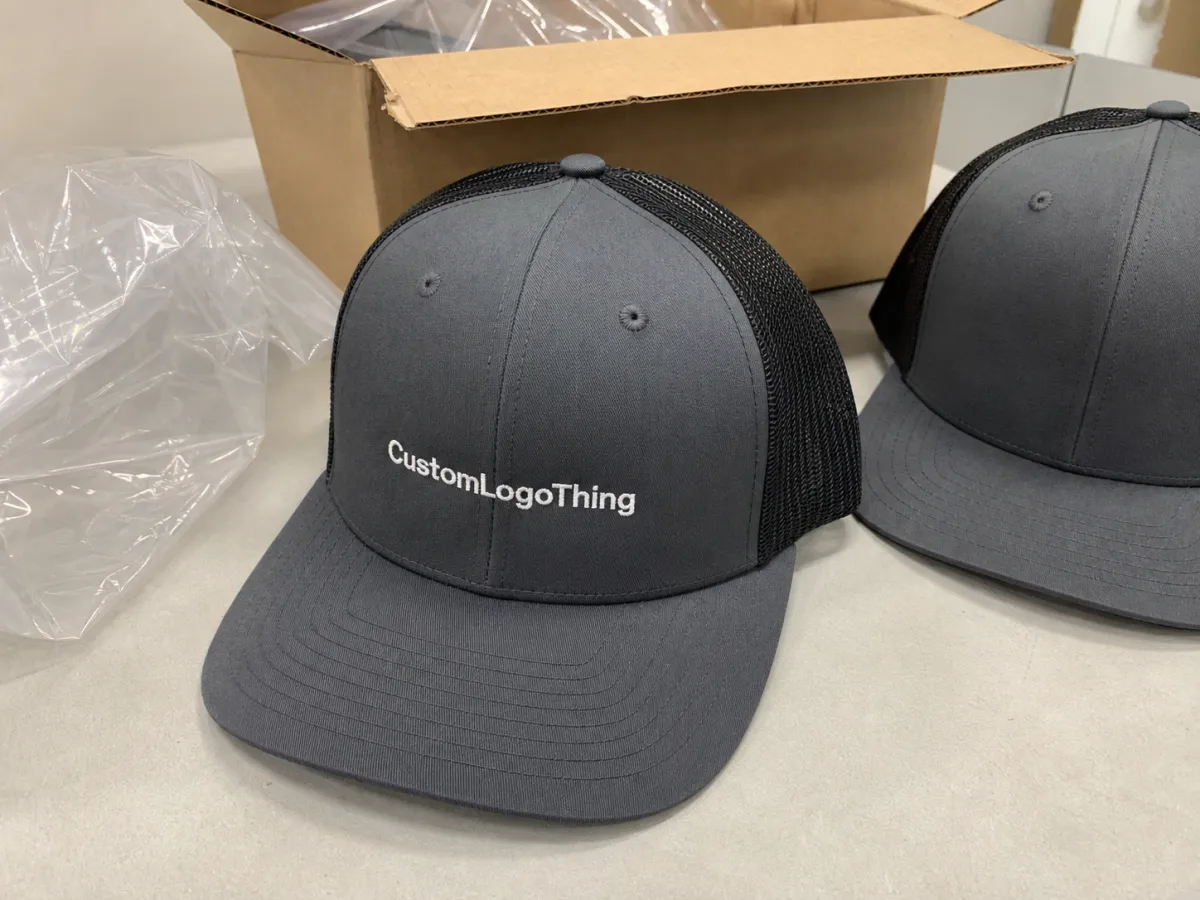
The mesh-back construction also solves a real buying problem. A standard trucker cap often uses a foam, cotton twill, polyester, or blended fabric front with polyester mesh in the back and an adjustable snapback closure. That fit range is much easier to manage than fitted sizing, especially when the audience is mixed and nobody has time to sort small, medium, and large boxes behind a registration table.
Decoration space remains one of the main advantages. A front patch commonly lands around 2.5 to 3.25 inches wide, while embroidery often works best inside a roughly 2.25 to 3-inch wide zone, depending on the cap shape and logo detail. That leaves enough room for a mark to carry some presence. There is not enough room for a sponsor wall, legal line, URL, hashtag, and QR code all fighting for oxygen.
The real question is not whether trucker caps can be good event merchandise. They can. The better question is how to balance cap quality, quantity, decoration method, and deadline without turning a giveaway into a premium retail project or, just as bad, buying a box of hats people only wear while mowing the lawn.
How the Trucker Cap Ordering Process Usually Works
The ordering process stays simple when the specs are settled early. Choose a base cap, select the decoration method, send usable artwork, review a proof, approve production, then allow time for decoration, packing, and freight. Problems usually start when the cap gets treated like a last-minute print item instead of a sewn product with fit, shape, materials, and receiving details attached.
Three common buying paths show up again and again. Stock blank caps are already manufactured and ready for decoration, which makes them the fastest and often the most economical choice. Partially customized caps use a stock cap with custom embroidery, a woven patch, PVC patch, printed patch, leatherette patch, side hit, or label. Fully custom builds can include custom fabric colors, private labels, custom mesh, contrast stitching, sandwich bill trim, inside taping, woven tags, and unique closures. Full custom can look excellent, but minimums and lead times rise quickly.
A good proof should confirm more than “logo on hat.” It should show logo placement, decoration size, cap color, panel style, thread colors or patch colors, border style, closure type, and any trim that changes the final appearance. If the cap includes a rope detail, contrast stitching, undervisor color, side label, or woven tag, ask to see it represented before approval.
Small administrative details deserve the same attention. Confirm the delivery address, receiving hours, dock instructions, event contact, artwork file type, packing preference, and carton labeling before the order moves. Bulk packing may be perfectly fine for a trade show team handing caps out from bins. Individual poly bags or paper bands may make sense for VIP kits, sponsor boxes, pre-packed registration bags, or internal distribution where each piece needs to stay clean.
Trucker Caps Event Giveaway Pricing: What Changes the Unit Cost
Trucker caps event giveaway pricing shifts because the cap itself is only part of the final cost. Quantity, decoration method, cap construction, stitch count, patch type, setup charges, sample needs, packing, and freight all affect the number. A $4.20 blank or lightly decorated cap can become a $7.85 delivered cap once decoration, setup, and shipping are included. That is not suspicious by itself. It is just the full project showing up on the invoice.
For many event orders, a stock trucker cap with one-location embroidery may land around $5.50 to $9.50 per unit at 250 pieces, depending on cap quality, stitch count, and freight distance. At 1,000 pieces, a similar order might fall into the $4.25 to $7.25 range. Premium stock caps with woven patches, PVC patches, upgraded cotton twill, rope trim, or custom labels often sit closer to $7.50 to $14.00 per unit. Fully custom builds can go higher, especially when the order is near the minimum.
Small runs feel expensive because fixed costs have very little room to spread out. Embroidery digitizing commonly runs $35 to $85. Patch setup, screens, dies, or mold fees can range from about $50 to $250 depending on the method and design. A 72-piece order feels every dollar of those charges. A 1,000-piece order barely notices them.
Minimum order quantities matter just as much as the unit price. Stock embroidered caps may start around 48 to 144 pieces. Patch caps often make more sense at 100 to 250 pieces, even when a supplier can technically produce fewer. Fully custom caps may start at 500, 1,000, or more. If you need 60 caps for a staff retreat, the higher unit cost may be the cleanest choice. If you need 2,000 caps for a sponsor activation, quote the project like a volume order, not a small departmental purchase.
| Order Type | Typical Quantity | Common Price Range | Best Use | Watch For |
|---|---|---|---|---|
| Stock cap with embroidery | 72-500 pieces | $5.50-$9.50 per cap | Trade shows, staff events, field teams | Digitizing fee, stitch count, logo complexity |
| Stock cap with woven patch | 100-1,000 pieces | $6.75-$11.50 per cap | Retail-style giveaways and sponsor merch | Patch setup, border style, sew-on fee |
| Stock cap with PVC patch | 100-1,000 pieces | $7.50-$13.00 per cap | Outdoor, sports, automotive, and fitness events | Mold fee, color limits, simplified artwork |
| Fully custom trucker cap | 500+ pieces | $8.50-$16.00+ per cap | Premium launches and branded merch drops | Longer lead time, higher MOQ, sample approval |
Compare all-in pricing every time. Ask for the blank cap cost, decoration cost, setup charges, sample fees, packing fees, freight, and rush charges as separate lines. A quote showing $4.95 per cap but excluding $420 in setup and shipping is not cheaper than a $5.60 delivered quote. It is just less complete.
The best pricing conversations make the tradeoffs visible. A lower quote may use a lighter cap, a smaller front decoration, fewer thread colors, slower transit, no individual bags, or a simpler patch construction. None of those choices are automatically wrong. The risk is approving a number without understanding what changed to reach it.
Production Timeline: From Approval to Delivery
A realistic timeline starts before production. Quote cleanup and spec confirmation may take 1 to 3 business days. Artwork review and proofing often take another 1 to 3 business days, especially if the logo needs simplification. Standard production for decorated stock trucker caps commonly runs 7 to 15 business days after proof approval. Freight may add 2 to 7 business days, depending on distance, shipping method, and receiving rules.
The most common delay is not embroidery, sewing, or patch application. It is approval. A buyer asks for a quote, waits several days to send vector art, circulates the proof through a long email chain, then discovers the event date did not move out far enough to absorb the delay. Tight dates leave little room for revisions, and revisions are where schedules go sideways.
The Spec Choices That Matter Most for Event Giveaways
Cap shape affects how the logo looks on the front panel. A structured front keeps the decoration area flatter. A unstructured or lower-profile cap can feel softer, but the front may not hold a large logo as cleanly. Mid-profile caps strike a common balance for giveaways, while high-profile caps create more vertical space and a more classic trucker look.
Closure choice matters too. Snapback closures are the most familiar option and handle mixed head sizes well. Hook-and-loop closures can be easier for some teams to adjust quickly. Plastic clips, fabric straps, and custom closures each change the look and the cost. If the event is public-facing, a cleaner closure usually gives the cap a more polished feel.
Patch and embroidery methods also change the outcome. Embroidery feels traditional and durable, especially for simple logos with strong lines. Woven patches handle detail more cleanly. PVC patches create a bold, molded look that fits outdoor, sports, and automotive brands. Leatherette works better for some rustic or premium looks, though it is not always the best fit for every logo. Printed patches can preserve gradients and fine detail when the design calls for it.
Color decisions affect more than style. High-contrast combinations improve legibility from a distance. Matching the cap body too closely to the logo can flatten the design. Dark bill, light front panel, and a clean logo often travel better through crowded venues than a busy mix of shades and accents.
A Step-by-Step Buying Plan That Prevents Mistakes
Start with the use case. Decide whether the caps are going to staff, customers, VIPs, sponsors, or general event attendees. That choice influences quality, quantity, and budget from the start.
Pick the target quantity next. A precise count makes supplier quotes much easier to compare. If the event needs 180 pieces, asking for 150, 180, and 200 piece pricing can show where the best break sits without guessing later.
Choose the decoration method after the use case and count are clear. Embroidery often wins for simple logos and faster timelines. Patches make sense when the artwork needs more detail or a more retail-style finish. Full custom only pays off when the order size and deadline can support it.
Send clean artwork before asking for a quote. Vector files are easiest to work with. If the logo only exists as a low-resolution JPG or PNG, expect extra cleanup time and a less predictable proofing process.
Review the proof line by line. Placement, colors, cap style, patch edge, closure, and packaging all deserve a look. Small mistakes on paper tend to turn into expensive mistakes in production.
Common Costly Mistakes Buyers Make With Event Caps
One common mistake is comparing a decoration-only quote to a delivered quote. Freight, setup, and packaging can change the total enough to flip the apparent winner.
Another mistake is approving a complex logo without checking how it scales down. Thin text, tiny icons, and stacked taglines often disappear on a cap front. The result is usually a crowded proof and a weak finished product.
Last-minute orders cause trouble faster than almost anything else. Rush jobs shrink the room for proof revisions, sample approvals, and freight options. The project may still get done, but the choices become narrower and the pricing climbs.
Overlooking the receiving details can create avoidable headaches too. A shipment sent to the wrong dock, the wrong contact, or the wrong event address can sit untouched even when production finishes on time.
Expert Tips Before You Request Quotes
Ask for a cap sample or a digital mockup if the project is unusually important. Seeing the shape in context can prevent a disappointing result.
Keep the logo simple when the cap is meant for mass distribution. Strong marks read better at a distance and survive small decoration areas more reliably.
Check whether the supplier quotes the exact cap style and brand you want. Small changes in blank cap quality can alter both the look and the price.
Leave room for freight. Fast transit can erase a savings difference that looked meaningful at the quote stage.
Request a single final confirmation before production starts. That last pass is often the easiest way to catch a typo, a wrong thread color, or a packaging mismatch.
FAQ
How early should event cap orders be placed?
Three to six weeks is a safer window for most decorated stock orders. Custom builds need more time.
What decoration method is best for simple logos?
Embroidery usually works well when the logo has clean lines and limited detail.
Are woven patches better than embroidery?
Woven patches can preserve finer detail, while embroidery often feels more traditional and textured.
Can small orders still make sense?
Yes. Small orders work when the event is limited, the deadline is tight, or the budget is built around a higher per-unit cost.