Buyer Fit Snapshot
| Best fit | Unboxing Experience Wholesale projects where brand print, material claims, artwork control, MOQ, and repeat-order consistency need to be specified before quoting. |
|---|---|
| Quote inputs | Share finished size, material target, print colors, finish, packing count, annual reorder estimate, ship-to region, and any compliance wording. |
| Proofing check | Approve dieline scale, logo placement, barcode or warning zones, color tolerance, closure strength, and carton packing before bulk production. |
| Main risk | Vague material claims, crowded artwork, missing packing details, or unclear freight terms can make a low unit price expensive after revisions. |
Fast answer: Unboxing Experience Wholesale: Structure, Print Proof, Packing, and Reorder Risk should be specified like a repeatable production item. The safest quote records material, print method, finish, artwork proof, packing count, and reorder notes in one written spec.
Production checks before approval
Compare the actual filled-product size with the drawing, then confirm tolerance on folds, seals, hang holes, label areas, and retail display edges. Reserve space for logos, QR codes, warning copy, and material claims before decorative graphics fill the panel.
Quote comparison points
Review material grade, print process, finish, sampling route, tooling charges, carton quantity, and freight assumptions side by side. A quote is only useful when the supplier can repeat the same color, closure quality, and packing count on the next order.
Unboxing Experience Wholesale: Branding That Drives Sales
I have spent enough time on packing lines in Shenzhen and Dongguan to know a simple truth: unboxing experience wholesale is often the first physical evidence that a brand understands its own value. I remember one factory floor in the Pearl River Delta where a buyer lifted the lid, paused for three seconds, and actually smiled before touching the product. That happens faster than most people think. A buyer opens the box, pulls back tissue, notices a logo on the inside flap, and forms an opinion in under 10 seconds. That opinion shapes customer perception, repeat purchase intent, and whether the package ends up on a desk, a social feed, or in the recycling bin. Packaging is doing more psychology than most spreadsheets would like to admit, especially when the run is 2,000 units or 20,000. That is why unboxing experience wholesale matters long before the carton reaches the warehouse.
In one warehouse in Shenzhen, I watched a cosmetics client move from plain kraft mailers to a two-color print with a matte finish and a simple insert card on 350gsm C1S artboard. The product stayed the same. The margins stayed the same. The freight route from Guangzhou to Los Angeles stayed the same. The brand did not. Returns questions fell because the insert answered usage issues before they became support tickets, and the team told me the branded reveal made the line feel "two steps more expensive" without pushing the kit into luxury-box territory. Honestly, that is the practical value of unboxing experience wholesale: packaging stops being a leftover and starts acting like a sales tool. Also, watching a weak box turn into a strong one is weirdly satisfying, especially when the finished carton leaves the press room in Dongguan looking more like retail than shipping. For ecommerce packaging and Subscription Box Packaging, the effect is even sharper because the box itself becomes part of the product story.
The distinction is easy to miss. A plain shipment delivers a product. A thoughtful unboxing experience wholesale supports brand recognition, cuts friction, and gives customers a reason to remember the name a week later. If the box is the first touchpoint, it should do more than survive transit. It should protect the contents, carry the visual language of the brand, and hold its shape across 500 units or 50,000 without drifting out of spec by more than 1 mm. That is the standard I use when reviewing packaging programs for brands that care about volume, margin control, and launch discipline. I have seen a brand spend three months on ad creative and then send out a package that looked like it had been assembled in a hurry by someone having a bad Monday in a warehouse outside Ningbo. No ad can fully recover from that, which is why a disciplined unboxing experience wholesale program has to sit inside the bigger packaging strategy, not beside it.
I am going to break down what actually goes into unboxing experience wholesale, what it tends to cost, how the timeline works, and how to order it without paying for decorative extras that do not move the needle. I also lay out the details I ask for in supplier meetings in Foshan, Yiwu, and Shenzhen, because a solid quotation depends on the right inputs: product size, target quantity, shipping method, and whether the packaging needs shelf presence or just a strong arrival experience. The difference sounds small. It is not, and a 2 mm error in the insert can change the whole feel of the reveal. The same is true for custom packaging decisions that look minor on a mockup but become very visible at scale.
Why unboxing experience wholesale changes buyer perception
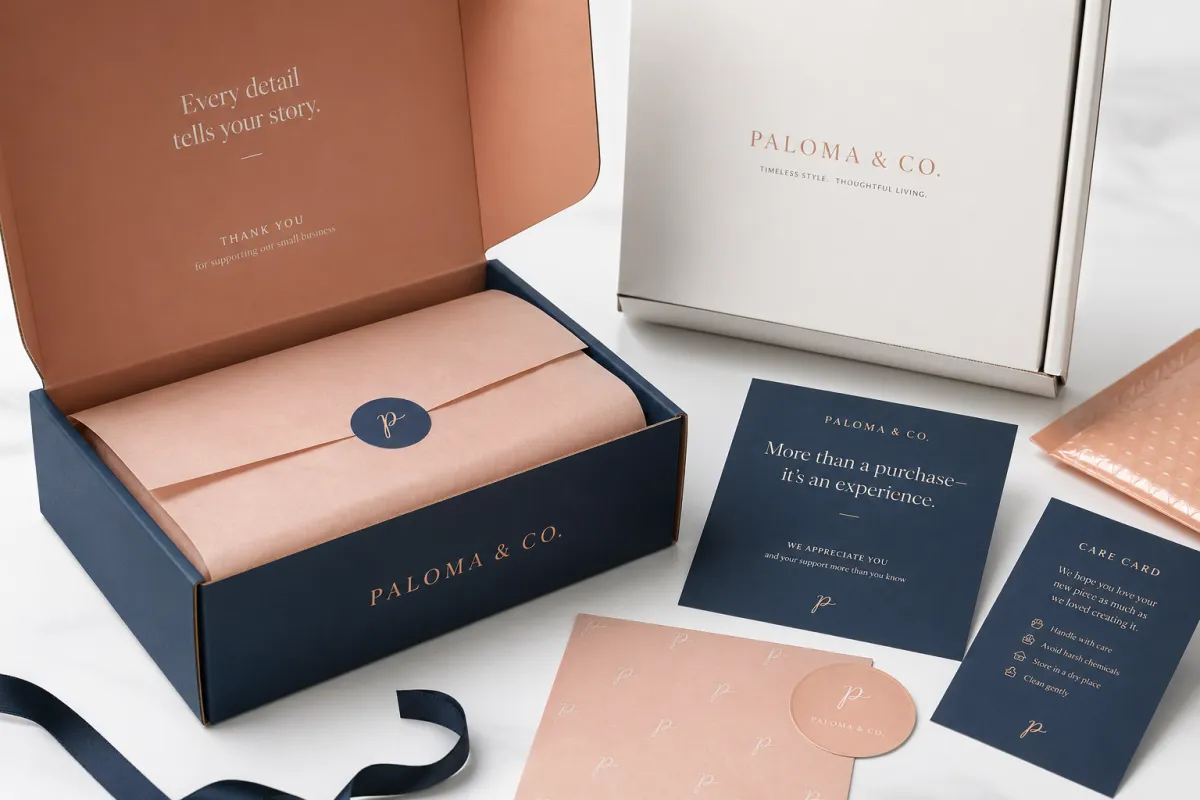
Most brands underestimate how fast a package creates trust. In one client meeting with a subscription tea company in Hangzhou, I watched the founder compare two samples on a conference table. One was a plain brown mailer. The other used a one-color exterior, a branded interior panel, and a paper insert with brewing instructions printed in black ink on 300gsm matte stock. Same tea, same margin structure, same freight lane from Ningbo to the West Coast. The second sample looked more established in an instant, and that is the quiet force behind unboxing experience wholesale: it shifts the product from "shipped" to "considered." In practical terms, it makes custom packaging feel like a sales decision, not a decorative one.
People read packaging as a signal. A cleanly printed mailer suggests process control. A rigid box with a fitted insert suggests planning. A sloppy closure or an oversized cavity suggests a brand still learning its own operations. I have seen retailers pay 8% more for a better package because the presentation helped justify a higher shelf price, especially in beauty and specialty food. That is not hype. It is customer perception translated into revenue, and unboxing experience wholesale is the system that makes that translation repeatable across 1,000-unit test orders and 25,000-unit restocks. For brands managing retail packaging and direct-to-consumer orders at the same time, consistency becomes just as important as cost.
There is another effect that gets overlooked: shareability. A package that opens well is more likely to be shown, posted, or reused. Even if only 1 in 20 customers shares a post, that exposure can outperform a generic paid impression because the package already carries the logo, color cues, and tactile finish. I have seen this especially in beauty, accessories, and limited-run promotional kits made in Dongguan and sold across North America, where brand consistency across every touchpoint matters as much as the product itself. The funny part is that people call it "organic buzz" as if the box just happened to be photogenic by accident. It did not. Somebody made decisions about a 1.5 mm lip, a matte laminate, and a closure seal. That is the difference a careful unboxing experience wholesale program can make.
I think too many buyers still treat unboxing experience wholesale like a one-off premium extra. That approach is backward. Wholesale packaging should behave like a system: a clear spec sheet, a defined print method, and a repeatable QC standard. If the artwork changes every run or the insert fit drifts by 2 mm, the whole program turns into expensive noise. Better to design once, lock the structure, and reuse the core elements across product lines. Reuse is not boring when it keeps margins alive, especially when a reprint in Shenzhen costs $180 in setup alone. For teams comparing product packaging options, that kind of repeatability often matters more than a fancy finish.
"The box is not decoration. It is the first sales conversation," a brand director told me during a sourcing trip in Guangzhou, and she was right. The brands that win treat unboxing experience wholesale as part of product strategy, not just fulfillment, because the difference between a $0.18 mailer and a $1.85 rigid kit can be the difference between commodity and premium.
For a wider view of how larger buying programs are organized, I often send clients to our Wholesale Programs page before sample discussions begin. It keeps the conversation anchored in volume, timing, and packaging goals instead of vague preferences. That makes unboxing experience wholesale operational instead of theoretical, which is much better than having everyone "feel good about the direction" and then discover the carton is 12 mm too short for a bottle sourced in Foshan.
What does unboxing experience wholesale include?
A strong unboxing experience wholesale package usually combines three layers: outer protection, interior presentation, and branded finishing. The outer layer might be a mailer, folding carton, or rigid shipper. The interior can include tissue, inserts, molded pulp trays, paper crinkle, or foam alternatives. The finishing layer is where the brand gets noticed: stickers, belly bands, thank-you cards, printed messages, and closure seals. I like to think of it as choreography, except the dancers are cardboard and nobody gets to improvise on the factory floor in Yiwu. If you are building ecommerce packaging, that structure is usually the fastest path from sample to reorder.
For ecommerce brands, the most common setup is a corrugated mailer with a printed exterior, a folded insert, and a small branded seal. For retail, folding cartons and display-ready boxes are more common because the package has to look right on a shelf at eye level in stores from Shanghai to Chicago. Subscription brands often need a hybrid approach: a sturdy shipper that opens cleanly and an internal presentation layer that makes each monthly reveal feel deliberate. Each version still counts as unboxing experience wholesale, but the mix changes based on channel, product weight, and whether the box must survive a 60 cm drop test. That is why so many Subscription Box Packaging programs start with the opening sequence and work backward from there.
The pieces below show up in most programs I build or review:
- Custom mailers for direct-to-consumer shipping, usually corrugated E-flute or B-flute, with 1-color or 2-color print.
- Folding cartons for retail and display, often 300gsm to 400gsm paperboard, including 350gsm C1S artboard for beauty and wellness SKUs.
- Rigid boxes for premium presentation, gift sets, and launch kits, often built with 1200gsm grayboard wrapped in 157gsm art paper.
- Inserts to hold products in place and reduce movement by 1 to 3 mm, which matters for glass jars and dropper bottles.
- Tissue and wrap to add a branded reveal without major cost increases, especially in runs above 3,000 pieces.
- Stickers, seals, and sleeves to reinforce brand recognition at the moment of opening, often in 1.5-inch to 2-inch formats.
- Protective elements such as molded pulp, paper crinkle, or tailored corrugated partitions, which are standard in Guangzhou and Dongguan production lines.
The visual effect is not the only issue. Protection matters just as much. A beautiful box that fails in transit is a bad purchase, period. I learned that on a line tour in Shenzhen where a fragrance client had ordered a rigid setup without compression testing. After 400 units, the corners showed scuffing because the shipper left too much empty space and the insert allowed 4 mm of vertical bounce. The room went quiet for a second, which is always a bad sign in packaging meetings. We rebuilt the kit with a 32 E-flute outer carton and a tighter insert, and the returns problem eased immediately. That is why the best unboxing experience wholesale programs balance appearance and function from the start, especially when the package has to protect fragile goods over a long freight route.
Customization matters most in four places: the exterior print, the inside panel, the insert design, and the closure detail. A logo on the outside is useful, but the interior is where the brand can surprise the customer with a message, a QR code, or a product care note. In practice, a clean inside print often costs less than a heavier finishing treatment and still improves visual branding. For many buyers, that is the smarter investment. I have watched teams get oddly fixated on a foil logo while ignoring the insert that actually stopped the bottle from rattling around by 6 mm. The bottle, unsurprisingly, did not care about the foil.
To keep the program aligned, I ask suppliers for a single spec sheet that lists dimensions, board grade, print count, finish, and pack-out method. If those details are scattered across emails, the project drifts. If they live on one page, unboxing experience wholesale stays manageable across reorders, seasonal runs, and multi-SKU launches. It also gives everyone fewer excuses, which is healthy for morale and dangerous for sloppy quoting. A clean spec sheet can save 2 rounds of proofing and 5 business days.
Unboxing experience wholesale specifications: materials, print, fit
Specifications are where the conversation gets real. A polished mockup can hide weak structure, but a proper spec sheet pulls every tradeoff into view. For unboxing experience wholesale, I start with three questions: what is the product weight, how far is it shipping, and what feeling should the buyer have at the moment of opening? Those answers guide material choice, print method, and the type of insert that keeps the package from moving around. If those answers are fuzzy, the packaging usually ends up being fuzzy too, and a 900-gram candle set will arrive with the same confidence as a paper napkin. It is also where custom packaging stops sounding creative and starts sounding operational.
Materials that make sense
Paperboard is the easiest place to start for lightweight items. A 350gsm C1S artboard or 400gsm SBS board works well for skincare, accessories, and promotional kits, especially when the run is 5,000 pieces and the target price needs to stay near $0.15 to $0.28 per unit. Corrugated board is the safer option for shipping, especially if the box has to survive drop tests or long parcel routes from Ningbo to Toronto. Rigid board, usually wrapped in printed paper, gives the strongest presentation for premium kits. For brands trying to cut plastic, molded pulp and paper-based inserts are increasingly common, and I have seen them perform well in FDA-adjacent and sustainability-minded categories. I still remember one buyer in Dongguan insisting foam was "the only serious option," then changing their mind the moment they saw how cleanly molded pulp locked the product in place. The foam lobby is not as powerful as it thinks. In a lot of unboxing experience wholesale programs, the right substrate matters more than the flashiest finish.
If sustainability claims matter, ask for FSC-certified board and a clear chain-of-custody statement. The FSC framework gives procurement teams something more concrete than a generic "eco" label. I also tell buyers to compare recyclability against local collection rules in places like Los Angeles, London, and Singapore. The EPA has useful guidance on packaging waste and recycling behavior at epa.gov, and that matters because a package only helps the customer if it can be handled responsibly after opening. "Looks sustainable" is not the same thing as sustainable, which sounds obvious until a sales deck tries to sell a glossy black box as planet-friendly because it used 10% recycled fiber.
Print and finish choices
For print, CMYK is the standard for image-heavy packaging, while PMS spot colors are better when exact brand color control matters. If your logo lives in a very specific blue or red, PMS reduces drift across reorders. Foil stamping, embossing, debossing, spot UV, and soft-touch coating add tactile value, but each one adds cost and may extend lead time by 2 to 5 business days. In a unboxing experience wholesale program, I usually recommend one signature finish rather than three. A strong matte base with one foil accent often looks more disciplined than a crowded surface of effects. I know some teams want every option on the menu. I also know menus can get expensive fast, especially once the supplier in Shenzhen quotes a $260 plate charge for each extra effect. For retail packaging, restraint often reads as quality.
I learned that during a negotiation with a cosmetics supplier who wanted foil, embossing, and a magnetic closure all at once for a 2,000-unit launch. The sample looked expensive, but the landed cost pushed the kit 19% over budget. We trimmed the package down to a soft-touch wrap, one foil logo, and a tighter insert. The final version kept the prestige feel and stayed inside the target margin. That is the kind of tradeoff unboxing experience wholesale should make easier, not harder. Honestly, I respect a package more when it knows when to stop after one good move instead of four expensive ones. A controlled finish stack also keeps custom packaging quotes easier to compare across suppliers.
Fit and tolerance
Fit is not glamorous, but it saves money. If a product has 4 mm of side movement, the package feels loose. If the cavity is too tight, assembly slows and the product scuffs. I ask for product dimensions to the nearest millimeter, then add a tolerance buffer based on the material. Corrugated inserts usually need more room than rigid tray inserts. For glass or fragile goods, I like a 1 to 2 mm cushion inside the cavity and a top closure that prevents vertical bounce. That one adjustment can reduce damage complaints dramatically, particularly on 10,000-unit runs where a 2% failure rate becomes very expensive. It also saves your customer service team from hearing the same sentence 47 times a day, which is a blessing for everyone involved.
For testing, ISTA protocols are the standard reference point. If the shipping profile is serious, I want to know whether the design is being checked against ISTA or a comparable ASTM method. A branded package is still a package, and unboxing experience wholesale loses value if the box breaks before the customer sees the insert. The best teams test the structure first, then approve the artwork. I have seen people do that backward, and it never ends well. It usually ends with someone saying, "Can we just make the logo smaller?" as if the logo is the problem and not the 3 mm of extra headspace.
One more point buyers often ignore: recycled content does not automatically mean lower performance. I have seen 100% recycled corrugated board outperform cheaper virgin board because the flute structure and liner quality were better controlled. That is why I prefer a spec sheet with board grade, caliper, and flute profile listed plainly. It keeps the conversation on facts, not marketing language. A good vendor can explain why one recycled sheet works better than another; a sloppy one just waves the word "eco" around like confetti at a trade-show booth in Guangzhou.
Unboxing experience wholesale pricing and MOQ
Pricing is where good plans are made or abandoned. In unboxing experience wholesale, the biggest drivers are material grade, print count, finish complexity, size, and order volume. A small box with one-color print can cost a fraction of a rigid kit with foil, inserts, and custom wrap. The real mistake is asking for pricing before the spec is locked. That almost always produces quotes that are hard to compare. I have sat through enough "apples to apples" comparisons to know they are rarely apples, and sometimes not even fruit, especially when one supplier is quoting ex-works Shenzhen and another is including inland freight from Foshan. If the order is meant to support ecommerce packaging, the landed cost matters just as much as the unit price.
MOQ affects unit cost in a straightforward way. A run of 1,000 units will usually carry a higher per-unit price than a run of 5,000 because setup, plates, and material prep are spread across fewer boxes. A supplier may quote $0.15 per unit at 5,000 pieces for a simple printed mailer on 350gsm C1S board, while the same structure might be $0.29 at 2,000 pieces. A rigid presentation box with a wrapped finish might sit around $1.75 per unit at 2,000 pieces, depending on insert type and decoration. These are planning numbers, not promises, but they help a buyer judge whether the idea fits the budget. For a launch in Chicago or Sydney, that gap can decide whether the project stays in scope. In other words, unboxing experience wholesale pricing is less about chasing the lowest quote and more about matching the box to the business model.
Here is a practical comparison I use with clients reviewing unboxing experience wholesale options:
| Packaging option | Typical MOQ | Sample unit price | Lead time | Best fit |
|---|---|---|---|---|
| Printed mailer, one-color | 1,000 to 3,000 | $0.15 to $0.29 | 8 to 14 business days | Apparel, accessories, direct shipping |
| Mailer with insert and interior print | 2,000 to 5,000 | $0.31 to $0.56 | 12 to 15 business days from proof approval | Subscription, beauty, gift sets |
| Rigid box with wrap and foil | 1,000 to 2,000 | $1.45 to $2.35 | 15 to 25 business days | Premium launches, corporate gifts |
| Paperboard folding carton | 3,000 to 10,000 | $0.11 to $0.26 | 8 to 12 business days | Retail shelves, lightweight products |
There are four cost levers buyers can control without wrecking the design. First, limit finishes to one hero effect. Second, standardize box sizes across SKUs. Third, avoid custom inserts unless the product truly needs them. Fourth, lock artwork early so the supplier does not have to revise plates or proofs. In a clean unboxing experience wholesale program, those decisions matter more than chasing the cheapest quote by a few cents. That last part is especially true when the budget spreadsheet starts looking smug and then freight, samples, and storage show up like uninvited relatives from another province.
Sample charges, tooling, freight, and storage should also be part of the budget. A structural sample may cost $25 to $80 in Dongguan. A printed prototype can run higher if it requires new plates or special coatings. Freight from Asia to North America can move by sea or air, and that difference can change landed cost by hundreds of dollars per carton load. Storage is often forgotten too. If you are not ready to receive 20 pallets, the cheapest unit price can become the most expensive total project. I have seen a team celebrate a low quote and then panic when the pallets arrived faster than their warehouse space. Logistics has a way of humbling everyone, usually with a dock appointment at 7:30 a.m.
I have seen buyers save 14% simply by changing the box footprint from an oversized square to a more efficient rectangular mailer that used less board and packed tighter on a pallet. That is the kind of operational gain that makes unboxing experience wholesale a planning tool instead of a branding ornament. Price follows structure, and structure follows measurements. If you get the dimensions right, a lot of other problems quietly disappear, especially when a 40-foot container is involved.
Unboxing experience wholesale process and timeline
The process is more predictable than most first-time buyers expect. A clean unboxing experience wholesale order usually moves through discovery, dieline review, artwork setup, proofing, sampling, production, and delivery. If the team knows the product dimensions and branding files before quoting starts, the project can move in a straight line. If those basics are missing, the timeline starts to wobble by week two. And yes, the wobble usually begins with someone saying they "just need one small change," which is the packaging equivalent of a tiny leak in a boat headed out of Ningbo. For teams building custom packaging, the sequence matters as much as the creative choices.
- Discovery: confirm product size, quantity, target budget, and shipping method, usually in a 20-minute call.
- Dieline review: check structural layout, panel sizes, and closure method, often against a sample in Shenzhen or Dongguan.
- Artwork setup: place logos, colors, copy, and finish callouts on the template, then send a PDF proof the same day if assets are ready.
- Proofing: approve digital proofs or printed proofs before mass production, ideally within 24 to 48 hours.
- Sampling: review a structural sample or a printed prototype if the design is new, which can add 3 to 5 business days.
- Production: print, cut, laminate, glue, and inspect the finished cartons, usually in the 12- to 15-business-day window after approval.
- Delivery: ship by pallet, carton, or container depending on volume, with ocean freight adding 18 to 35 days.
The delays usually happen in artwork approval and structural changes. I have seen a launch slip by 9 days because one team revised the insert width after proof approval. That kind of change forces the factory to adjust cutting rules and sometimes rework the entire proof cycle. The fix is simple: approve the die line first, then finalize design elements. For unboxing experience wholesale, sequence is everything. I wish I could say teams always remember this. They do not. Human beings adore rework until the invoice arrives, usually after a 500-piece sample run. In Subscription Box Packaging, that kind of delay can ripple into the entire campaign calendar.
Realistic lead times depend on complexity. A simple paperboard carton with one-color print can move in 8 to 12 business days after proof approval. A mailer with insert and two finishes may need 12 to 15 business days from proof approval, plus 2 to 3 days for sample sign-off. A rigid box with multiple components can require 15 to 25 business days, plus sampling time. If the route includes overseas freight, add another 18 to 35 days depending on sailing schedules and customs. I do not like guessing here. I prefer to quote the whole chain clearly so the launch team can build around facts. If I sound stubborn about timelines, it is because I have watched too many good ideas get held hostage by a late proof from a team in another time zone.
To reduce rework, I ask buyers to prepare three things before requesting pricing: exact product dimensions, final branding files in vector format, and the target ship date. If those are ready, the supplier can quote accurately and the project manager can flag risks before production starts. That approach keeps unboxing experience wholesale aligned with the launch calendar instead of chasing it. It also cuts down on those exhausting email threads where everyone is technically responding and nobody is actually solving the problem. In practice, a clean handoff can save 1 full week.
If your team already has a sourcing process, our custom wholesale packaging program can slot into it without much extra admin. That matters because the best suppliers should remove friction, not create more of it. In my experience, the smoothest projects are the ones with one decision-maker, one spec sheet, and one approval path. The less committee behavior, the better, especially when the factory is already balancing 6 other orders in Dongguan.
Why choose us for unboxing experience wholesale
For brands that want repeatable results, the right partner matters more than a flashy quote. At Custom Logo Things, the goal is not to oversell bells and whistles. It is to build unboxing experience wholesale programs that can be repeated with consistent color, controlled fit, and practical pricing. That means stronger manufacturing discipline, fewer surprises, and a clearer path from sample to full run. I prefer that kind of boring excellence, frankly. Boring is underrated when 8,000 boxes are sitting in a warehouse in Ningbo. It is also the difference between a nice presentation and a dependable brand packaging system.
In one supplier negotiation I sat through, two factories offered nearly identical prices on paper. The difference showed up in the details: one promised "good color," the other could specify target variance, QC checkpoints, and a reprint threshold of 2% of the run. The second option won. Not because it sounded fancier, but because it reduced risk. That is usually how wholesale packaging works in practice. Reliability is worth more than a low headline number that falls apart at production time. If you are comparing product packaging vendors, that is the lens that keeps the project sane.
We also help buyers move from concept to production without burning through extra rounds of mockups. A team can come in with a rough idea and a product sample, then leave with a packaging path that includes board grade, finish, insert style, and a volume-based price structure. That is especially useful for unboxing experience wholesale projects that need to balance launch deadlines with margin targets. Design support matters, but practical design support matters more. I have seen too many beautiful ideas die because nobody bothered to ask if the box could actually be produced on time in Shenzhen before the target ship date.
Quality control is another reason buyers stay with a dependable supplier. We care about registration, glue lines, cut accuracy, and pack-out consistency because those details affect how the customer experiences the brand. A crooked logo may seem minor until it appears on 5,000 boxes. Then it becomes a brand consistency problem, not a printing issue. I have seen that mistake turn a well-funded launch into a reprint discussion, and nobody enjoys that meeting. No one ever says, "Wonderful, I was hoping to spend another week fixing the same file."
We also understand that wholesale buyers need flexibility. Some launches need 1,000 units; others need 20,000. Some need FSC-certified board, some need a high-gloss finish, and some need the lowest landed cost possible. The role of a good packaging partner is to match the spec to the use case, not force every client into the same template. That is why I treat unboxing experience wholesale as a custom commercial decision, not a passing design trend. Trends fade. Freight bills do not, especially when sea freight from Ningbo or Shenzhen enters the spreadsheet.
"We do not want packaging theater. We want boxes that open well, ship well, and re-order cleanly," a procurement lead told me during a review in Guangzhou. That line stuck with me because it captures what serious buyers want from unboxing experience wholesale: a box that performs at 1,000 units, 5,000 units, and the second reorder.
If you want a better sense of the broader packaging category and how suppliers think about material choice and compliance, the industry resources at packaging.org are worth checking. It is a useful cross-check for teams comparing box formats, material families, and production methods. I like having a second reference when the sales pitch starts sounding a little too polished, especially if the quote includes a 3 mm tolerance and no explanation.
Next steps for your unboxing experience wholesale order
Start with an audit. Lay out the current packaging on a table and ask three blunt questions: does it protect the product, does it represent the brand, and does it scale without wasting material? That simple review reveals a lot. In many cases, the outer box is fine, but the interior feels generic or oversized by 10 to 15 mm. In other cases, the product fits well, but the graphics do little for brand recognition. Either way, the answer points to a better unboxing experience wholesale plan. For teams managing retail packaging and shipping packaging together, this is usually where the right path becomes obvious.
Then gather the numbers. You need product dimensions, target quantity, shipping destination, preferred finish, and artwork files before a serious quote can be built. If the team has those details ready, the pricing conversation becomes concrete. If not, the supplier is guessing. I would rather spend 20 minutes assembling the spec than 2 weeks correcting an avoidable mistake. That is how you keep unboxing experience wholesale efficient. It is also how you avoid that awful moment when the proof arrives and everyone realizes the insert was designed for a bottle that is 6 mm taller than the real one.
Next, request a structural sample or prototype before full production. A sample costs money, but it usually costs less than a 2,000-unit reprint. I recommend checking fit, closure strength, print legibility, and how the package feels in the hand. If the product is fragile or premium-priced, also test the opening sequence. A good reveal matters because the package is part of the product story, not a separate layer. I have watched buyers light up when a sample opens with just the right amount of resistance at the 4 cm mark. That tiny detail does more than people expect.
Use this launch checklist:
- Confirm the final product dimensions to the nearest millimeter.
- Lock the box style, board grade, and finish count.
- Approve the dieline before artwork moves forward.
- Review sample photos or a physical prototype.
- Set the budget with sample, freight, and storage included.
- Schedule production around the launch date, not after it.
If you need a starting point for volume tiers and packaging options, the Wholesale Programs page is the fastest way to frame the conversation. From there, you can compare what a lower-MOQ launch looks like against a larger reorder plan. That comparison is the heart of smart unboxing experience wholesale: the package should support the business, not just decorate it. Decorative packaging without business logic is just expensive costume jewelry, and a $2.20 box can still lose money if the reorder plan is vague. A thoughtful custom packaging plan keeps the box tied to margin, fulfillment, and brand goals.
The best packages do not merely look good in a photo. They create confidence in person, inside a real shipping carton, on a real receiving dock, in front of a real buyer who has 30 seconds to decide whether your brand feels trustworthy. If you want that result, build unboxing experience wholesale around fit, print, price, and timing, then lock the spec and move forward with discipline. The most practical next step is simple: audit the current pack-out, set the dimensions, and approve a sample before you place the full order. That is where the real value shows up, and it is where the box stops being packaging and starts doing its job.
What is included in an unboxing experience wholesale package?
Most wholesale setups include the outer shipper or retail box, inserts, tissue, labels, and any branded internal components, often built around 350gsm C1S or 32 E-flute depending on the product weight. Optional extras can include thank-you cards, sleeves, seals, and protective packaging tailored to the product. I usually tell clients to start with the essentials, then add only the pieces that genuinely improve the reveal or the shipping outcome on a 1,000- to 5,000-unit run. That is often the cleanest route for unboxing experience wholesale.
How do I choose the right materials for unboxing experience wholesale?
Match the material to the product weight, shipping conditions, and brand position. Use lighter paperboard or corrugated for ecommerce efficiency, and rigid or specialty finishes when presentation is the priority. If you are torn between two options, ask which one survives handling better before asking which one photographs better. That order matters more than people like to admit, especially when the product is shipping from Dongguan to a warehouse in New Jersey. A material choice that fits the route is usually the best choice for unboxing experience wholesale.
What affects unboxing experience wholesale pricing the most?
The biggest cost drivers are material choice, print complexity, finishing, box size, and order volume. Higher MOQs usually reduce unit cost, while custom inserts, foil, and multi-step finishing increase it. Freight, samples, and storage can also move the total in ways that catch buyers off guard, which is why I always want the whole picture before anyone starts celebrating a $0.15 unit price on a 5,000-piece mailer. The fastest way to control unboxing experience wholesale pricing is to lock the structure early.
How long does a custom unboxing experience wholesale order take?
Timelines depend on proof approvals, sampling, and production capacity. Simple packaging can move faster than multi-component kits, so final artwork and measurements should be ready before ordering. If the design keeps changing after proof approval, the schedule will push back. In practice, a straightforward mailer can ship in 8 to 12 business days after approval, while a rigid box often needs 15 to 25 business days. That is why timing is part of unboxing experience wholesale, not a separate step.
Can I start with a small MOQ for unboxing experience wholesale?
Yes, many suppliers offer lower entry quantities for startups, launches, or seasonal campaigns. Lower MOQs are useful for testing demand, but unit pricing is usually better once the design is locked and volume increases. I often recommend starting small only if it helps you learn something useful, not just because it feels safer on paper. A 1,000-piece test run in Shenzhen can reveal more than a polished deck ever will, and it can still be a smart unboxing experience wholesale starting point.


