Buyer Fit Snapshot
| Best fit | Valentine's Day Custom Packaging Ideas That Stand Out projects where brand print, material claims, artwork control, MOQ, and repeat-order consistency need to be specified before quoting. |
|---|---|
| Quote inputs | Share finished size, material target, print colors, finish, packing count, annual reorder estimate, ship-to region, and any compliance wording. |
| Proofing check | Approve dieline scale, logo placement, barcode or warning zones, color tolerance, closure strength, and carton packing before bulk production. |
| Main risk | Vague material claims, crowded artwork, missing packing details, or unclear freight terms can make a low unit price expensive after revisions. |
Fast answer: Valentine's Day Custom Packaging Ideas That Stand Out should be specified like a repeatable production item. The safest quote records material, print method, finish, artwork proof, packing count, and reorder notes in one written spec.
Production checks before approval
Compare the actual filled-product size with the drawing, then confirm tolerance on folds, seals, hang holes, label areas, and retail display edges. Reserve space for logos, QR codes, warning copy, and material claims before decorative graphics fill the panel.
Quote comparison points
Review material grade, print process, finish, sampling route, tooling charges, carton quantity, and freight assumptions side by side. A quote is only useful when the supplier can repeat the same color, closure quality, and packing count on the next order.
Valentine's packaging gets judged fast. A box lands on a porch, a mailer gets opened at a desk, or a gift bag comes out of a shopping bag, and within seconds the customer has already decided whether the brand feels thoughtful or ordinary. That is why valentine's day Custom Packaging Ideas matter so much: the package is often the first thing people photograph, share, and remember, long before they fully experience the product inside.
Strong valentine's day Custom Packaging Ideas do more than add hearts and pink ink. They shape the full presentation, from box structure and insert layout to closure style, tissue, print finish, and the small sequence that happens as the package opens. That combination can make a modest product feel like a gift worth keeping, while still protecting it through shipping, retail handling, and the chaos of a packing table.
The real challenge sits in the tension. Romantic packaging has to feel intentional without becoming fragile, seasonal without tipping into cliché, and premium without blowing up the unit cost. The best valentine's Day custom packaging ideas treat branding, protection, and production reality as one conversation, not three separate ones. Get that mix right, and the package starts selling before a customer ever reads the product details.
A good Valentine's package makes the customer feel chosen before the box is even opened.
What makes Valentine's Day custom packaging ideas work?
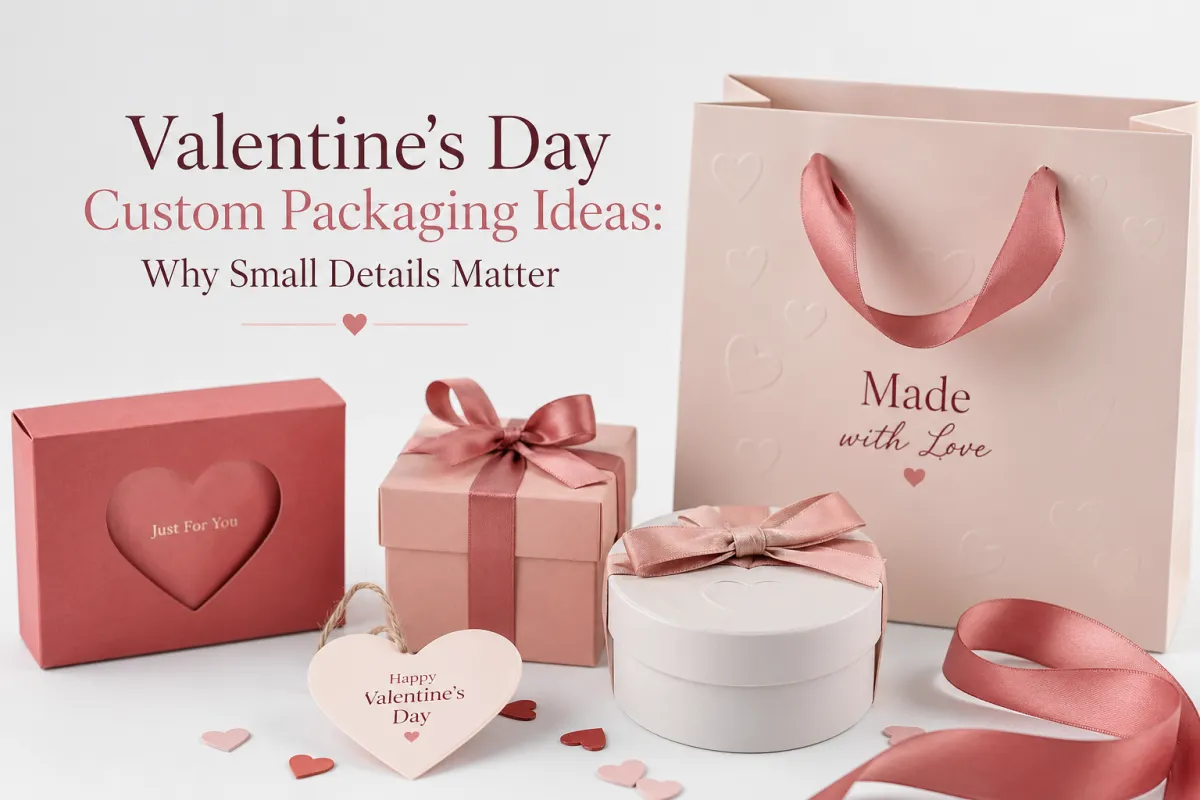
The best versions do three jobs at once: protect the product, signal the gift moment, and keep production within budget. That sounds simple until you compare formats. A rigid box can feel like jewelry packaging; a corrugated mailer can feel more like a dependable raincoat. Both can be right. The choice depends on what the customer is buying, how it will ship, and how much of the experience needs to happen before the lid lifts. The strongest valentine's day custom packaging ideas treat those decisions as connected, not separate.
There is also a timing effect that many brands underestimate. A package that looks ordinary in a warehouse can feel surprisingly rich once the customer opens it, especially if the interior uses a controlled color palette, a clean insert, and one message that sounds human instead of promotional. That is the hidden advantage of valentine's day custom packaging ideas: they can make the same product feel more considered without changing the product itself.
In practice, the winning packages are usually the ones that create a small emotional pause. Not a big theatrical moment. Just enough of one. I saw this while reviewing a candle shipment for a small gift brand last year: the candles themselves were almost identical to a competitor's, but their custom insert held the jar at a slight angle and the lid revealed a short note inside. Same product, different memory. That kind of lift is hard to fake. It comes from structure, not gimmicks.
Valentine's Day Custom Packaging Ideas: Why Small Details Matter
The surprising thing about seasonal packaging is how much weight a small detail can carry. A slightly richer paper stock, a cleaner closure, a foil accent in the right place, or even a better fit between the product and its insert can change how the entire package feels in the hand. That is exactly why valentine's day custom packaging ideas deserve more than a quick decorative pass; they shape perceived value before anyone opens the lid.
Picture the whole moment. A customer sees the outside first, then the edges, then the opening action, then the reveal inside. Each step either reinforces the brand or weakens it. In custom packaging, that sequence is what people remember, and the whole thing can be guided by a few practical choices: a strong color palette, a clear hierarchy of text, a well-sized cavity for the product, and a closure that feels neat instead of fussy. Valentine's day custom packaging ideas work best when they make the entire path feel deliberate.
Custom packaging also includes far more than a printed box. It can include a corrugated mailer, a folding carton, a rigid setup box, inserts, tissue, sleeves, stickers, seals, paper shreds, and interior print. Those elements form a system. If one part is too loose or too cheap-looking, the whole presentation feels weaker. If the pieces work together, even a simple item can feel like a premium gift.
Here is the part many buyers miss: Valentine's packaging is not just about romance, it is about emotional clarity. The design needs to say, without much explanation, that this product was prepared for a gift moment. That could mean a soft-touch coating with a restrained red palette, a cream interior with a short message, or a paper insert that holds the item at a better angle. None of that is decoration for decoration's sake. It is package branding that supports the sale.
In retail packaging, small upgrades often have outsized value because customers read them as proof of care. A better insert reduces movement. A cleaner print line makes the design feel sharper. A limited palette keeps the box from looking noisy. Even a subtle shift like moving from plain white inside to a matching printed interior can lift the presentation noticeably. Those are the kinds of valentine's day custom packaging ideas that feel practical in a factory and emotional on the shelf.
Honestly, the strongest seasonal packaging is usually the kind that understands restraint. A little romance goes a long way when the structure is already doing its job. You do not need every surface covered in symbols to Create a Memorable Unboxing. You need one clear idea, carried consistently through the material, the print, and the opening experience.
Valentine's Day Custom Packaging Ideas: Process and Timeline
The process matters because even the best concept can fall apart if the schedule is too tight. A typical custom packaging workflow starts with a brief, then moves into dimensions, structural planning, dieline development, artwork, proofing, sampling, production, packing, and freight. Each step has its own risk. If you skip a measurement, the insert may not fit. If you rush the proof, color can shift. If you leave freight too late, the finished boxes may arrive after the sales window has already opened.
For valentine's day custom packaging ideas, the timeline needs to be locked early. That is especially true if the project involves custom tooling, specialty paper wraps, embossed logos, foil stamping, or hand assembly. Those details are beautiful, but they add touchpoints. More touchpoints mean more chances for delay. A simple structure can move faster; a premium setup box with a custom insert usually cannot.
A practical calendar often looks like this: concept and sizing first, structural approval next, artwork proofing after that, then sample review, then production. If the project includes multiple SKUs, build time for every version. One product might need a deeper cavity, while another needs a shorter insert or a stronger closure. That is where projects drift if the team does not freeze the decisions early. Good valentine's day custom packaging ideas are not only imaginative; they are scheduled.
Approval checkpoints keep the work from slipping. I like to see size confirmation in writing, die-line review before artwork is finalized, print proof review with clear notes on color expectations, and freight planning before production starts. If a brand expects the package to do double duty for retail and e-commerce, that should also be confirmed up front. There is no value in building a beautiful box that ships badly. For shipping performance, many teams use testing methods aligned with ISTA procedures so the package reflects real distribution stress, not just studio conditions.
Another practical point: the more handwork you add, the more the schedule stretches. Tissue wrapping, ribbon tying, insert assembly, and kitting all take labor. A team can absolutely produce a refined result, but it helps to know whether the package will be machine-assembled, hand-packed, or a mix of both. That choice affects cost, labor planning, and repeatability. For valentine's day custom packaging ideas, timing and finish are tied together.
Most buyers I talk to are surprised by how much time is consumed by proof corrections, not printing. That is why a clean brief matters. If the brand already knows the box size, product weight, shipping method, and target quantity, the whole project moves with fewer surprises. Fewer surprises usually mean fewer expensive late changes.
Choosing Materials, Finishes, and Structure for Valentine's Packaging
Material choice is where the design becomes real. A romantic concept can look lovely on screen, but the final result depends on board grade, caliper, coating, print coverage, and how the package behaves under pressure. For lightweight accessories or cosmetics, a folding carton may be enough. For a gift set or something that needs more presence, a rigid box makes a stronger first impression. For shipping-heavy orders, corrugated packaging is usually the safer starting point. Good valentine's day custom packaging ideas begin with the actual product, not the mood board.
Here is the rule I use: the packaging should follow product weight, shipping method, and emotional tone together. A 3-ounce trinket does not need the same structure as a 2-pound gift set. A retail display piece does not need the same wall strength as an e-commerce mailer. If the goal is a warm, giftable feel, the materials should support that with texture and finish rather than with excess bulk. If the item is fragile, the insert must do real work. That is why strong valentine's day custom packaging ideas are equal parts aesthetic and structural.
Common format choices include corrugated mailers, folding cartons, rigid setup boxes, sleeves, and inserts. Corrugated mailers are excellent for shipping because they can absorb handling better and still give you print space on the exterior. Folding cartons are efficient for retail packaging and lighter products, especially when the line needs scale. Rigid boxes are often chosen for premium gifts because the board thickness and lid fit communicate value immediately. Sleeves can add a seasonal layer without rebuilding the entire package. The right answer is usually the one that protects the product and supports the brand story at the same time.
Finishes matter more than many first-time buyers expect. Soft-touch coating gives a velvety feel that fits romantic packaging well, but it should be used carefully because dark colors and heavy handling can show marks. Foil stamping adds sparkle and can make a logo or message stand out sharply. Embossing and debossing create tactile depth, which is useful when you want the package to feel premium without adding visual clutter. Spot UV can highlight one area, while matte lamination keeps the overall look controlled. Specialty paper wraps can also create warmth through texture alone. If you want to see a broader range of production options, our Custom Packaging Products page is a good starting point.
Sustainability should stay in the conversation too. Recyclable board, FSC-certified paper, reduced plastic, and efficient material use are all sensible choices, especially for seasonal packaging that customers may keep for a while and then dispose of later. The FSC has useful chain-of-custody information for brands that want to source responsibly. In practice, a simpler structure with fewer mixed materials is easier for customers to recycle or sort properly. That does not mean the package has to look plain. It means the design should earn its materials.
Color and texture deserve one more careful thought. Valentine packaging can drift into generic pink overload very quickly. A deeper red, warm ivory, muted blush, soft metallic copper, or even black with a subtle accent can feel more mature and more brand-specific. Texture helps too. A lightly textured cover paper or an uncoated insert can add warmth that a bright gloss finish does not. The best valentine's day custom packaging ideas usually feel intentional because the palette is controlled, not because it is loud.
There is also a difference between exterior presentation and interior reveal. A package can be restrained outside and more expressive inside, which gives you a nice moment of surprise without making the box hard to ship. That is a smart tactic for seasonal launches. The customer sees a clean branded exterior in transit, then opens to a softer inside message, pattern, or color wash. The product remains protected, and the opening sequence feels special.
Valentine's Day Custom Packaging Ideas: Cost and Pricing Factors
Price is usually the first question, and for good reason. Packaging affects margin immediately. The biggest cost drivers are quantity, box size, board grade, print colors, finishing, inserts, assembly labor, and freight. If a project uses custom die-cutting, multi-piece construction, or hand-applied details, the cost rises faster than most buyers expect. That is why valentine's day custom packaging ideas should always be discussed with a budget in mind, not after the design has already been emotionally approved.
Smaller runs almost always cost more per unit because setup work gets spread over fewer pieces. That is true for folding cartons, corrugated mailers, and rigid boxes alike. If you are ordering 500 units, the unit price may look very different from a 5,000-piece run, even if the package design is identical. Premium finishes also add cost, and not just in materials. Foil stamping, embossing, and extra print passes can all increase setup and production time. Many brands discover that a package that looks simple is actually expensive because of the process behind it.
There are ways to keep the budget sane without flattening the experience. Using standard dielines is one of the best. So is limiting the number of print colors, selecting a single focal finish instead of covering every surface, and keeping the insert design simple. A nice logo hit, a strong color system, and a clean closure can carry the package further than a dozen visual effects. With valentine's day custom packaging ideas, the goal is not to spend more everywhere. The goal is to spend better in the places customers notice.
Assembly time also affects total cost. A rigid box with a paper insert, tissue, ribbon, and label takes longer to finish than a simple mailer that folds and seals quickly. If you are kitting multiple products into one gift box, labor becomes a major line item. That does not make the project impossible; it just means the production method has to match the sales price. From a packaging buyer's point of view, a package is only premium if the math still works after freight and fulfillment.
| Format | Best Use | Typical Per-Unit Range | Notes |
|---|---|---|---|
| Folding carton, 16 pt C1S | Light gifts, cosmetics, small retail items | $0.22-$0.45 at 5,000 units | Efficient for print; lower tooling complexity; good for branded packaging with simple finishing |
| Corrugated mailer, E flute | E-commerce orders, shipping protection | $0.85-$1.40 at 5,000 units | Stronger transit performance; larger print area; ideal for product packaging that must ship well |
| Rigid setup box, 2 mm board | Premium gifts, sets, keepsake packaging | $2.20-$5.50 at 5,000 units | Higher labor and material cost; strong perceived value; good for custom printed boxes with inserts |
| Sleeve + tray system | Bundles, multipacks, seasonal gift sets | $0.70-$1.80 at 5,000 units | Flexible branding surface; balance of presentation and efficiency; useful for retail packaging |
The table above is directional, not fixed. Print coverage, coating, board sourcing, insert complexity, and freight can move the numbers in either direction. I always tell buyers to budget for the package as a system, not as a single box. If the package needs a custom insert, a secondary wrap, or final assembly at a fulfillment house, those pieces belong in the cost model too. That is the practical side of valentine's day custom packaging ideas; they only stay attractive if they remain profitable.
One more thing matters: perceived value is part of the price discussion. A better box can help lift the product's shelf price, improve giftability, and reduce the need for extra promotional language. That does not mean every project should chase premium finishes. It means the packaging should support the sale you are trying to make. Sometimes a clean folding carton is the smartest answer. Sometimes a rigid presentation box earns its keep. The right option is the one that fits the product, the channel, and the margin.
Step-by-Step Guide to Planning Your Valentine's Packaging
The cleanest projects start with a simple question: what is the package supposed to do? Protect a fragile item? Feel gift-worthy on arrival? Sell off a shelf? Ship through e-commerce without damage? The answer changes the structure, the materials, and the final decoration. Strong valentine's day custom packaging ideas start here, because product, customer, and unboxing moment all need to be defined before the artwork begins.
Step one is measurement. Confirm the product dimensions, weight, and any insert pieces before anyone draws a box. If the product has odd edges, charging cables, seasonal extras, or a card, those need to be measured too. Step two is structure. Choose the format that protects the item while leaving enough room for branding and seasonal messaging. A box that is too tight creates frustration; a box that is too loose looks sloppy. For brands building out a larger seasonal line, it can help to review the broader custom printed boxes options alongside the individual product specs.
Step three is artwork. The print method should guide the design, not the other way around. Thin type reversed out of a dark background may look elegant on screen, but it can lose clarity if the coating, stock, or press conditions are not right. Red and pink can also shift depending on the substrate. If the package includes romance motifs, keep them disciplined. A small motif repeated well is stronger than a cluttered field of symbols. Package branding becomes real here, because the box has to carry the brand voice without speaking too loudly.
Step four is proofing or sampling. This is where practical problems show up. The insert may need adjustment. The lid may close too tightly. The print may need a color correction. One sample can save an entire run if it catches a mistake early. For critical launches, I like to test the package with the actual product and the same shipping path the customer will experience. If the box has to survive parcel handling, a rougher test is better than a gentle one. That is how valentine's day custom packaging ideas move from concept to something a fulfillment team can trust.
Step five is production planning. Confirm the pack-out sequence, the kitting steps, the carton count per master case, and the pallet plan. This is the unglamorous part, but it is where a lot of seasonal launches either stay calm or turn into a mess. The design team may care about foil and color. The warehouse cares about stackability, seal strength, and how many seconds each unit adds to the line. Both views matter. I have watched a pretty box become a budget problem because it needed two extra hands during fulfillment. Not ideal, obviously.
Step six is launch timing. Valentine's packaging has a hard deadline because the season itself does. If the product arrives after the buying window, the design work doesn't matter much. Build in room for reprints, transit delays, and last-minute retailer requests. A month of buffer sounds generous until you run into a paper shortage or a proof correction that takes three rounds. A calm schedule is often the real competitive edge.
Common Valentine's Day Packaging Mistakes to Avoid
The most common mistake is over-decorating the box. Hearts everywhere, glittery finishes, too many fonts, too many messages. It can slide from festive to frantic pretty quickly. Customers usually read that as less premium, not more. The better move is to pick one or two seasonal signals and use them with discipline. A restrained palette, a focused icon, or one interior message often does more work than a crowded design.
Another frequent error is ignoring fit. If the product rattles, shifts, or disappears into the cavity, the whole presentation loses authority. That is true even if the print is beautiful. Fit is not just a technical detail; it is part of the visual language. The package says, almost instantly, whether the brand cared enough to size it properly. I am kinda ruthless about this in reviews because loose products make the best artwork look amateur.
Some brands also choose finishes that are lovely in a mockup but rough in real life. Heavy matte coatings can scuff. Metallic papers can fingerprint. Soft-touch on dark substrates can pick up marks from transit. None of that means those finishes are off the table. It means they need testing. A sample handled by a real shipping team tells you more than a screen render ever will.
Using the wrong material for the channel is another mistake. A delicate paper box for parcel shipping can arrive dented. An overbuilt rigid box for a low-margin impulse item can swallow profit. A package has to fit the product, yes, but it also has to fit the route it will travel. Retail and e-commerce are not the same animal.
Brands also get burned by late artwork changes. A small wording tweak can trigger a new proof, a new plate, or a delayed press slot. That is especially painful on seasonal runs because there is less room to absorb the delay. Lock the copy early. If the package includes a short message, verify every word, every line break, and every legal line before production. It sounds tedious. It is. It also saves real money.
Finally, some teams forget the post-purchase life of the box. If a customer wants to keep it, the structure should hold up after the gift is opened. If they are likely to recycle it, mixed materials should be limited. If the package is intended to be reused, closures and board strength need to support that. Those are small details, but they shape whether the box feels like part of the gift or just the wrapper around it.
Expert Tips and Next Steps for Better Valentine's Packaging
The best valentine's day custom packaging ideas usually come from subtraction, not addition. Start by deciding what can be removed without losing the message. One color can do the job of three. One interior print line can carry more emotion than a pattern repeated across every panel. One precise insert can make the product feel more expensive than a bunch of decorative extras that only add noise.
If you are choosing between two formats, compare them on three axes: protection, presentation, and fulfillment speed. The box that wins all three is usually the right one. The box that wins only one probably needs more thought. That is the comparison I use when a brand is stuck between a rigid setup box and a high-quality corrugated mailer. The rigid box often wins on presentation. The mailer often wins on shipping. The right answer is the one that fits the channel and the margin, not the one that looks best in a pitch deck.
For brands with multiple SKUs, build a shared system. Use one base structure, one family of finishes, and a controlled set of inserts or sleeves. That keeps production simpler and makes the line feel cohesive. The customer should be able to recognize the family resemblance without feeling like every item is a clone.
I also recommend asking a packaging partner for a sample with the actual product weight inside. A box can look perfect empty and fail the moment the real item goes in. That simple test catches insert movement, lid strain, and closure issues early. It is a small step that saves a lot of backtracking later.
The clearest takeaway is this: start with the product, then shape the box around the experience you want to create. Not the other way around. For Valentine's launches, the most effective packaging is usually the one that feels warm, fits properly, ships safely, and does not pretend to be more than it is. That balance is what makes it memorable.
Frequently Asked Questions
What are the best Valentine's Day custom packaging ideas for e-commerce?
Corrugated mailers with custom inserts usually work best because they protect the product in transit while still giving you room for seasonal graphics, a branded interior, and a gift-ready reveal. If the item is fragile, add a fitted insert instead of relying on loose tissue alone.
How early should Valentine's packaging be planned?
For most custom projects, start at least 8 to 12 weeks ahead of the ship date. If the design uses rigid boxes, specialty finishes, or hand assembly, build in even more time. Tight timelines tend to create rushed proofs, and rushed proofs tend to create expensive mistakes.
Are pink and red required for Valentine's packaging?
No. They are familiar, but not required. Deep burgundy, cream, black, copper, and blush can feel more refined and often fit premium branding better. The important part is emotional clarity, not color cliché.
What packaging format is most cost-effective?
Folding cartons are usually the most affordable for lightweight retail products. Corrugated mailers often offer the best balance for shipping. Rigid boxes cost more, but they can justify the price when the product is positioned as a gift or keepsake.
How can I make packaging feel premium without overspending?
Use one strong finish, a simple structure, and a precise insert. Tight fit, clean print, and a controlled color palette can do more than piling on effects. A package does not need to be flashy to feel considered.
What should be tested before production?
Test the actual product inside the chosen structure, then check fit, closure, print legibility, and shipping performance. If the box will be kitted by hand, run a small pilot so you can see where labor slows down. That part gets skipped a lot, and it always comes back to bite somebody.
For Valentine's packaging, the smartest move is usually the most disciplined one: choose a format that protects the product, use finishes sparingly, confirm the timeline early, and test the package with the real item before committing to production. That is how valentine's day custom packaging ideas turn into packaging customers actually remember.

