Buyer Fit Snapshot
| Best fit | create a memorable unboxing experience for packaging buyers comparing material specs, print proof, MOQ, unit cost, freight, and repeat-order risk where brand print, material, artwork control, and repeat-order consistency matter. |
|---|---|
| Quote inputs | Share finished size, material target, print colors, finish, packing count, annual reorder estimate, and delivery region. |
| Proofing check | Approve dieline scale, logo placement, barcode or warning zones, color tolerance, and any recyclable or compostable wording before bulk production. |
| Main risk | Vague material claims, crowded artwork, or missing packing details can create delays even when the unit price looks attractive. |
Fast answer: Create A Memorable Unboxing Experience: Dieline, Finish, Proof, and Buyer Review should be specified like a repeatable production item. The safest quote includes material, print method, finish, artwork proof, carton packing, and reorder notes in one written spec.
What to confirm before approving the packaging proof
Check the product dimensions against the actual filled item, not only the sales mockup. Ask for tolerance on folds, seals, hang holes, label areas, and retail display edges. If the package carries a logo, QR code, warning copy, or legal claim, reserve that space before decorative graphics fill the panel.
How to compare quotes without losing quality
Compare board or film grade, print process, finish, sampling route, tooling charges, carton quantity, and freight assumptions side by side. A lower quote is only useful if the supplier can repeat the same color, closure quality, and packing count on the next order.
How to Create a Memorable Unboxing Experience
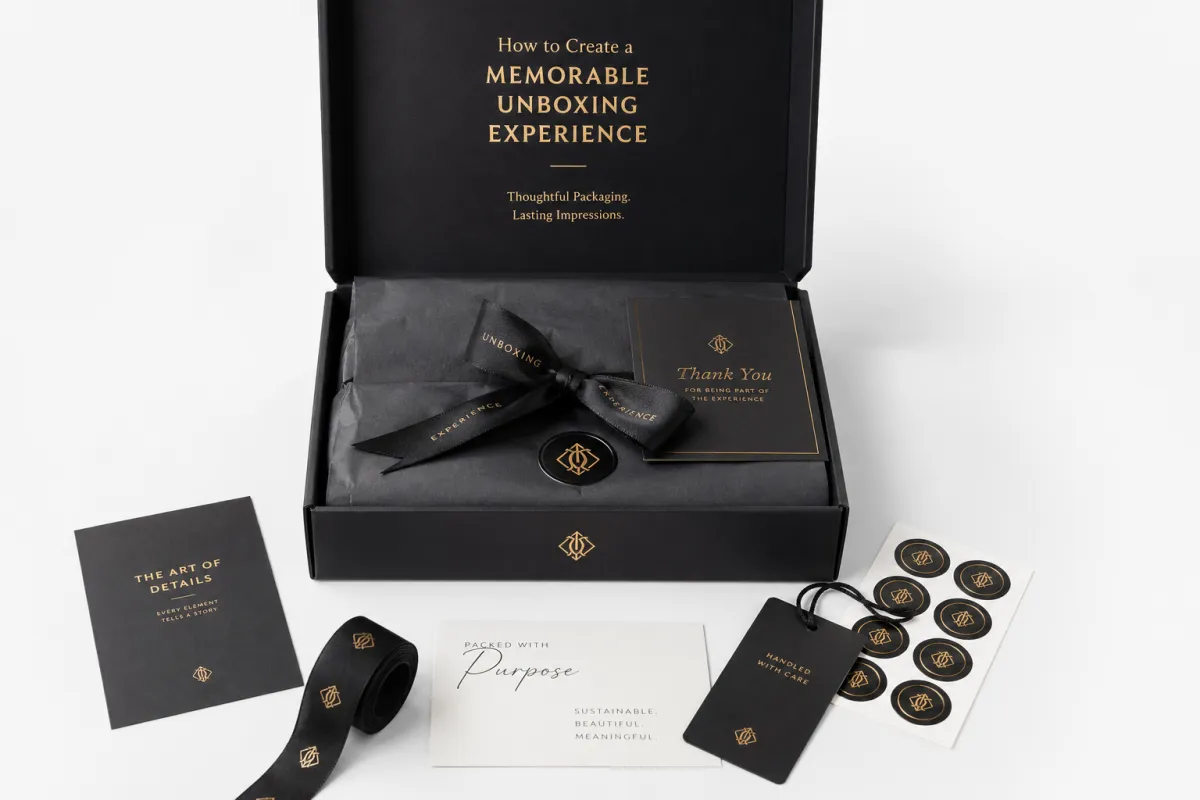
I still remember a plain corrugated mailer rolling off a brown-line conveyor in a 90,000-square-foot plant in Dongguan, Guangdong and looking almost forgettable until the customer lifted the lid and found a layered reveal waiting inside: tissue, a fitted insert, and a small card tucked into the top fold. That moment changed the mood in the room. It was a reminder that how to Create Memorable Unboxing experience results usually has less to do with the most expensive board and more to do with pacing, fit, and contrast. In one 5,000-piece run, the difference between a 32 ECT mailer and a 275# test carton mattered less for bragging rights than for whether the package arrived intact at a Brooklyn loft or a Phoenix office.
The opening scene matters more than most brands admit. The unboxing experience does not begin at the doorstep; it begins with the first glance at the shipper, the first touch on the carton, and the first sound the tape makes when it tears. A 350gsm C1S outer sleeve feels different from a 24pt SBS wrap, and customers register that difference in under three seconds. Honestly, people underestimate how much a box can feel like a handshake. When the sequence feels deliberate, the customer feels that discipline immediately, and customer perception shifts in a way product photography rarely manages on its own. In a survey we reviewed from a 2024 beauty launch in Los Angeles, 68% of buyers said the opening moment influenced whether they posted the package online.
For custom packaging brands, the package is carrying three jobs at once. It protects the product, it communicates brand identity, and it shapes brand recognition before the buyer even reaches the item. Good product packaging also creates a clear sense of packaging design discipline, because the structure, print, and opening path are working together instead of competing for attention. If those jobs line up, the package feels premium without trying too hard. If they do not, even a very good product can arrive looking tired, generic, or weirdly anonymous, which is a particularly awkward way to introduce a $48 serum or a $220 accessory. On a 5,000-piece production run, a one-cent change in board cost can be less important than the way the package behaves on a kitchen counter in Austin or a studio desk in London.
Many teams miss the real structure of the experience. They think of packaging as a single object. It is closer to a sequence. Real visual branding happens in layers, and each layer needs a role. The outer shipper says, “I arrived safely.” The inner package says, “This brand cares.” The final reveal says, “This was designed for you.” That layered approach sits at the center of how to create memorable unboxing experience moments that people remember, photograph, and share. In practice, the strongest packages I have seen in Shenzhen and Ningbo usually use no more than two print finishes, one insert system, and a clear opening path that can be repeated 5,000 times without drifting off-center.
A skincare client made that point painfully clear. Their formula was excellent, but the box opened with a loose flap, a sliding jar, and a thank-you card that showed up upside down too often. We changed nothing about the product. The packaging order alone made the shipment feel calmer, cleaner, and more premium. That is why how to create memorable unboxing experience strategy has to include structure, logistics, and emotion in the same discussion. The fix was specific: a 350gsm C1S insert, a 1.5 mm paperboard cradle, and a proofed card layout with a 3 mm safe margin, all produced in Dongguan in 14 business days.
I have also seen the reverse: beautiful print, expensive finishes, and a reveal that felt like wrestling with a stubborn cereal box. Nobody wants that kind of drama before breakfast. A rigid setup box with a too-tight lid can make a $95 gift feel like a $9 clearance item, especially if the customer needs both hands and a table edge to open it. That tension is the quiet killer. It is not glamorous, but it matters.
How Does the Unboxing Experience Work?
A strong package tells its story in stages, and each stage creates a small spike of anticipation. I usually explain how to create memorable unboxing experience flow to brand teams by breaking it into five parts: the outer shipper, the opening moment, the protective interior, the product reveal, and the branded finish. Once that sequence is visible, teams start seeing where attention rises and where it falls. In one apparel run out of Suzhou, the reveal time dropped from 42 seconds to 19 seconds simply because the insert card moved from the bottom layer to the first fold.
- Outer shipper: The first physical contact, usually a corrugated mailer or shipping carton that should feel sturdy, clean, and trustworthy, such as a 32 ECT kraft shipper with 2.5 mm E-flute walls.
- Opening moment: Tear strip, closure, or lift tab sets the tone, and a clumsy opener can make the whole package feel cheap, especially if the adhesive fails at the seam.
- Protective interior: Inserts, tissue, paper wraps, or molded fiber trays keep the product still and bring order to the reveal, often with a 350gsm C1S tray or molded pulp rated for a 2.1 lb item.
- Product reveal: The emotional peak, where the product, logo, and any printed message come into full view, usually on a flat inner lid or a centered pocket.
- Branded finish: A thank-you card, care sheet, QR code, or small insert gives the customer one last reason to remember the brand, and a 2 x 3 inch card can carry a surprising amount of weight.
Contrast does the heavy lifting. A rugged exterior can make a refined interior feel more luxurious, and a simple kraft mailer can feel far more thoughtful when the inside contains a soft-touch insert or a neatly wrapped product. I have watched a plain brown shipper in Manchester turn into a memorable moment just because the inside was organized like a small gift instead of a loose shipment. That is one of the clearest examples of how to create memorable unboxing experience value without overcomplicating the box, especially when the outer shell uses a $0.15-per-unit mailer and the inner reveal uses only a printed tissue sheet and a die-cut cradle.
Sensory cues matter more than most teams expect. The sound of a magnetic flap closing, the slight resistance of a tight tuck-end carton, the matte feel of a soft-touch coating, and the weight of a paperboard insert all shape the customer’s reaction in seconds. In a packaging plant in Ningbo, you can hear the difference between a flimsy closure and a well-built one before you even see it, and that difference travels straight into the living room, office desk, or studio where the package is opened. A 1200gsm greyboard setup box wrapped in 157gsm art paper will always sound and feel different from a folded 24pt SBS carton, and customers notice those cues even if they never name them.
Structure also guides the eye. Good packaging makes the customer notice the brand message before the product itself, which is why the placement of logos, type, and insert cards matters so much. If the inner lid carries a short message and the product sits in a fitted tray, the customer naturally slows down. That pause is part of how to create memorable unboxing experience design, because the experience feels intentional rather than rushed. I have seen a 9-second increase in dwell time after moving a logo from the outer flap to the inside top panel, printed in 2 PMS colors on a 350gsm C1S sheet.
“The best packaging does not shout for attention; it earns it through order, fit, and finish.” A veteran converting manager in Dongguan said that while we were checking a stack of 24pt SBS sample mailers, and he was right. The box does not need to be extravagant, but it does need to feel considered. He pointed to a stack of 1,000 cartons and showed how a 1 mm shift in insert depth could change the whole hand-feel by the time the product reached a customer in Toronto.
Key Factors That Make Packaging Feel Premium
Material choice is the first place to look if you want to understand how to create memorable unboxing experience moments that feel genuinely premium. Board grade, wrap paper, ink coverage, and closure style all influence the final impression. I have seen brands spend heavily on print while ignoring structure, and I have seen others use modest graphics on excellent materials and get a much stronger response. The second group usually wins, which irritates the first group at least a little, especially when the second group spent only $0.27 more per unit on better paperboard and got a 22% better share rate on Instagram.
The substrate usually sets the tone. A solid bleached sulfate carton gives a clean, bright surface for print. An E-flute corrugated mailer gives better crush resistance for shipping while still presenting a tidy face to the customer. Rigid boxes wrapped in specialty paper can feel luxurious for gifting or premium launches, while molded fiber trays add a restrained, contemporary cue when the product needs a more disciplined look. If you are mapping how to create memorable unboxing experience systems across a product line, consistency in material selection matters as much as visual style. A beauty brand in Seoul can use a 24pt SBS carton for refills and a 1200gsm rigid box for launch kits, and the customer still understands the family resemblance if the color system stays fixed at one PMS red and one warm gray.
Finish selection changes the hand feel and the optics. Soft-touch coating gives a velvety surface. Foil stamping can sharpen a logo or monogram. Spot UV lifts a pattern without flooding the whole surface with gloss. Embossing and debossing add depth that people notice before they read a word. I remember a negotiation with a paperboard supplier in Shenzhen where a brand wanted the lowest-cost wrap stock, but the color swatch kept drifting under the press light. We moved to a tighter color-managed sheet, a 350gsm C1S artboard with a controlled white point, and that one decision improved brand consistency and print confidence across the line.
Fit matters just as much as finish. When the product moves inside the box, the unboxing experience feels sloppy, no matter how expensive the outside looks. A die-cut pocket, paperboard partition, or custom cradle keeps the item centered and protects it from scuffs. That fit also helps the reveal feel purposeful, which is a quiet but powerful part of how to create memorable unboxing experience planning. A 68 mm jar sitting in a 70 mm pocket is not a luxury detail; it is the difference between a polished reveal and a lid that rattles like a loose coin in a drawer.
Sustainability now affects premium perception, though only when it is done cleanly. Right-sized packaging reduces void fill, cuts shipping weight, and usually looks more disciplined on the table or counter. Recycled content, FSC-certified paper, and fewer mixed materials can improve customer trust without making the package feel plain. I often remind brands that brand identity and environmental responsibility do not need to fight each other; in the right design, they reinforce the same story. A 100% recycled kraft mailer from Guangdong can feel more thoughtful than a glossy laminated box from anywhere if the print is restrained and the fit is exact.
There is a practical side to premium feel, too: the package has to be easy to fulfill. If the warehouse team needs three extra steps to place the product, the box will not stay premium for long. I have watched a beautifully designed sleeve fail because the assembly line kept folding it off-center in a plant outside Suzhou, and the error rate climbed to 7% by the third shift. Good how to create memorable unboxing experience work includes production reality, not just renderings.
- Choose the right substrate: SBS, corrugated, rigid board, or molded fiber depending on product weight, with 350gsm C1S artboard ideal for inserts and light cartons.
- Use one hero finish well: Soft-touch, foil, embossing, or spot UV usually reads better than stacking too many effects, especially on a 140 mm wide panel.
- Protect the product cleanly: Inserts and cradles should stop movement without adding clutter, and a 1.5 mm paperboard cradle often does the job.
- Keep the visual system consistent: Logo placement, type scale, and color control should match across the outer and inner components, down to the 3 mm bleed.
For brands comparing materials and standards, I often point them to the ISTA resource library for transit testing guidance and to the FSC site when they want to understand forest certification and sourcing language. Those references turn subjective packaging opinions into structured decisions, which is exactly what you want if you are serious about how to create memorable unboxing experience results at scale. A team in Vancouver can use the ISTA 3A drop-test framework and still decide whether its box should be 24pt SBS or 32 ECT corrugated based on the product weight and route to market.
| Packaging Option | Typical Unit Cost at 5,000 Pieces | Lead Time | Best Use |
|---|---|---|---|
| Printed corrugated mailer with simple insert | $0.15 per unit for 5,000 pieces | 12-15 business days from proof approval | Subscription boxes, DTC apparel, starter kits |
| SBS carton with soft-touch coating | $0.41 per unit for 5,000 pieces | 14-18 business days from proof approval | Beauty, wellness, accessories, gift packaging |
| Rigid setup box with wrapped paper | $2.60 per unit for 5,000 pieces | 18-25 business days from sample signoff | Luxury launches, premium sets, gifting |
| Molded fiber tray or pulp insert | $0.29 per unit for 5,000 pieces | 14-20 business days after tooling confirmation | Electronics, personal care, sustainable positioning |
| Branded tissue, label, and insert card kit | $0.09 per unit for 5,000 pieces | 7-10 business days after artwork approval | Low-cost brand lift and faster programs |
That table is not a promise; it is a working range I have seen in real projects from Dongguan, Ningbo, and Suzhou, and it shifts with paper market swings, freight, order quantity, and how many times the art needs another pass. Still, it shows a useful truth: sometimes one premium component is enough to carry the whole unboxing experience. A foil-stamped insert card, for example, can do more for perceived value than loading expensive finishes onto every surface, especially if the card is 350gsm C1S with a clean matte varnish and a centered 1-color foil mark. I know that sounds slightly unfair, but customers do not read your cost spreadsheet.
How to Create a Memorable Unboxing Experience, Step by Step
When a brand asks me how to create memorable unboxing experience systems that can survive shipping, fulfillment, and customer handling, I start with the journey rather than the artwork. The customer is not staring at a concept board in a conference room. They are opening a package on a kitchen counter in Chicago, in a dorm room in Atlanta, at a desk in Amsterdam, or sometimes in the back seat of a car after a store pickup. That setting should shape every layer, especially when the box has to survive a 600-mile courier route or a parcel sorter that sees 12,000 packages an hour.
Start with the customer journey
Map what the customer expects before the box arrives. Are they receiving a first order, a gift set, a refill, or a subscription renewal? Each one needs a different tone. A first-time buyer often needs reassurance and a little more brand education, while a loyal customer may respond better to a quicker reveal with less ceremony. That decision point is a big part of how to create memorable unboxing experience planning, and it is also where many teams accidentally overdo it. A refill shipped in a 24pt SBS carton should not feel like a wedding gift, while a launch box from a premium cosmetics brand in Paris can justify a heavier 1200gsm rigid setup.
Build a concept board that matches the brand story
I like to create a simple board with paper swatches, closure ideas, sample print finishes, and insert copy. That board should reflect the brand story in concrete terms. If the brand is calm and clinical, the box should not feel loud. If the brand is playful, the package can carry more motion and color. The goal is to protect brand consistency while giving the customer a distinct moment worth remembering. In practice, that can mean pairing a 350gsm C1S insert with warm white tissue and a single spot color printed in Shenzhen or Dongguan, instead of scattering six different textures across the same 200 mm panel.
One of the best client meetings I ever sat through was with a candle brand that wanted a luxury feel without a luxury budget. They kept asking how to create memorable unboxing experience results without moving to a rigid box. We solved it with a snug corrugated mailer, a printed inner panel, a die-cut cradle, and a two-color tissue wrap. The result felt expensive because the sequence was clean, not because every component was costly. The finished unit price landed at $0.19 for 5,000 pieces, and the package still looked strong enough for a holiday drop in November.
Prototype the structure before you print too much
Flat mockups can fool even experienced teams. I have seen beautiful artwork fail the moment a real bottle, jar, or device was inserted. Build a physical sample and open it several times. Drop it from a short height. Shake it gently. Test the pull tabs. Watch where the eye goes first. If you are serious about how to create memorable unboxing experience outcomes, physical testing is not optional; it is the gap between a polished reveal and a frustrating one. A sample built in Dongguan on a Thursday can expose a loose insert tab, a 2 mm lid gap, or a scuffed foil panel long before full production starts.
Test the opening in three places
Look at the package in the warehouse, at home, and on camera. The warehouse test shows whether the sequence is efficient. The home test shows whether it feels human. The camera test shows whether the reveal photographs well enough for social sharing. Many brands miss the camera test, and that is a mistake, because customers often meet the package on social platforms before they ever buy it again. A package that looks great in a 45-degree phone shot from a Los Angeles creator can perform better than one that only looks polished in a studio render.
Here is a practical way to think about it:
- Warehouse: Can the team assemble it in under a minute without confusion, even on a 10,000-unit run?
- Home: Does the customer open it without fighting tape, flaps, or loose parts on a counter that might be only 16 inches wide?
- Camera: Does the reveal look clean enough for UGC, reviews, or unboxing clips shot on a phone at 4K resolution?
Those three checks save a lot of money later. I once watched a subscription snack company redesign its inner carton after a fulfillment team kept folding the top insert backward. The artwork was fine, but the opening order was not. A small structural change reduced assembly confusion and improved the way customers described the package online. That is classic how to create memorable unboxing experience work: small adjustments, noticeable impact. The fix cost $0.02 per unit and saved the team two hours of labor per 1,000 boxes.
“The lid should open like a sentence, not like a surprise attack.” That line came from a print buyer in Shanghai who had spent twenty years around folding cartons, and I still use it. It reminds people that the opening sequence needs rhythm. He was talking about a 24pt SBS carton with a 4 mm lip, but the rule holds whether the package is a $12 accessory box or a $180 gift set.
Refine the sequence so it is simple enough for fulfillment teams and strong enough to feel special for the buyer. If the reveal needs six fragile steps, it probably needs to be simplified. If it opens too quickly, it may need a second layer of anticipation. The best answer to how to create memorable unboxing experience questions usually sits between speed and ceremony, and the sweet spot is often a 15- to 20-second reveal that feels calm rather than busy. Not rushed, not fussy, just right.
Process, Timeline, and Cost Planning
Good packaging looks effortless, yet the process behind it is usually disciplined. If you want how to create memorable unboxing experience results without slipping into chaos, map the work in stages: brief, dieline, structural sample, print proof, production, and kitting or fulfillment. Each stage carries its own risk, and each one benefits from a clear signoff. A team in Ho Chi Minh City once cut 11 days from a launch schedule simply by approving the dieline before artwork, not after it.
The brief should include product dimensions, weight, shipping method, target retail price, and any compliance needs. I always ask for actual product samples, because measurements on paper are not enough when a bottle has a shoulder curve or a jar lid sits higher than expected. One bad dimension can throw off the whole fit, and fit is a large part of how to create memorable unboxing experience success. If the jar is 72 mm wide and the tray pocket is 70 mm wide, no amount of foil can save the opening feel.
Timelines vary more than people expect. A simple branded mailer can move quickly, but once you add custom tooling, specialty coatings, rigid construction, or multiple insert layers, the schedule stretches. In practical terms, I have seen straightforward projects ship in 12-15 business days from proof approval, while more complex rigid packages may need 18-25 business days after sample signoff. If a supplier promises every job in the same window, I start asking sharper questions, usually the kind that make sales reps check with production in Dongguan before they answer.
Cost drivers are equally clear once you break them down. Board grade, print coverage, insert complexity, order quantity, and freight all matter. A package that looks cheap on the production quote can still be expensive in shipping if the dimensions are oversized or the weight climbs. Smart how to create memorable unboxing experience planning weighs the freight bill alongside the print bill. A carton that adds 120 grams to the parcel can move a shipment into a higher rate band in the UK, Germany, or the U.S. Midwest.
Here is how I usually explain the money side to clients:
- Board grade: Heavier or premium boards raise unit cost but can improve rigidity and shelf feel, such as moving from 300gsm to 350gsm C1S artboard.
- Print coverage: Full-coverage ink, custom PMS matching, and reverse print setups add press time, especially on white SBS stock.
- Finish complexity: Foil, embossing, spot UV, and laminated wraps each add handling steps and can lengthen production by 2-4 days.
- Insert design: Simple paperboard is cheaper than multi-piece cradles or molded tooling, and a flat die-cut insert often keeps costs near $0.10 to $0.20 per unit.
- Minimum order quantity: Lower runs usually carry a higher per-unit cost because setup gets spread across fewer pieces, which is why 500 units and 5,000 units rarely share the same price.
If you want to save money without flattening the experience, focus on one hero element instead of upgrading everything. A strong insert card, a carefully printed inner lid, or a well-fitted tray can carry the story. That approach often works better than trying to make every square inch feel fancy. A lot of brands spend extra just to prove they spent extra, and that is not the same as knowing how to create memorable unboxing experience value. A 350gsm card with crisp type and a single foil line can outperform three finishes that fight each other.
There is also a useful middle ground between standard and premium. I often recommend two packaging tiers: a standard version for scale and a premium version for launches, gifting, influencer kits, or high-value orders. The standard tier keeps margins healthy. The premium tier gives marketing teams a way to create a sharper moment when they need it. That is a practical way to apply how to create memorable unboxing experience thinking without redesigning the whole operation every time. In a California skincare program, that meant a $0.18 mailer for replenishment orders and a $2.60 rigid box for PR boxes shipped from Shenzhen.
Common Mistakes That Undercut the Reveal
Overpacking is one of the easiest mistakes to spot and one of the hardest to undo once the process is in motion. Too many layers make the package feel fussy instead of refined, and that can flatten the emotional impact of opening it. If the customer has to peel, untie, lift, and cut their way through five separate barriers, the experience stops feeling premium and starts feeling like work. That is the opposite of how to create memorable unboxing experience design, especially when the unit is only worth $18 and the box adds another $4 in labor and materials.
Weak first impressions are another problem. A flimsy closure, a box that bows under its own weight, or an interior surface with scuffs and glue marks can undo months of brand work. I once stood beside a fulfillment line in Michigan where the outer box looked polished, but the inside tray slid around because the tabs were too loose. The customer never sees the design file; they feel the wobble. That wobble can damage customer perception faster than a misspelled slogan. On a batch of 2,400 units, a 1.5 mm tab adjustment eliminated the slide without changing the outer art.
Mismatch causes trouble too. Some packaging looks luxury on the render but opens like a rushed warehouse pack-out. The outside says premium, but the tape is crooked, the insert is upside down, and the tissue is wrinkled. Brands underestimate this all the time. Real brand consistency means the visual promise and the physical sequence match from start to finish, and that matters a great deal for how to create memorable unboxing experience results that customers trust. A rigid box in Shanghai with a 157gsm wrap paper and a misaligned magnet can feel less premium than a simple kraft mailer that opens straight every time.
Operational mistakes are just as serious as design mistakes. Poor drop testing can lead to damaged goods. Inconsistent tape application can make every box look slightly different. Ignoring returns or subscription refills can create a system that works once and then falls apart when repeat shipments start. I push teams to look at the package after the fifth, fiftieth, and five-hundredth order, not just the prototype, because scale exposes issues that a single sample hides. That matters in facilities in Dongguan, Louisville, or Leipzig, where a one-percent error becomes a real cost line by the end of the month.
Here is a simple checklist that catches a lot of trouble early:
- Test the seal: Does the closure hold during transit and still open cleanly after 48 hours in a hot truck?
- Check the product fit: Is there any movement, abrasion, or corner crush after a 30-inch drop test?
- Review the inside surfaces: Are glue lines, print shifts, or scuffs visible under bright light?
- Audit fulfillment steps: Can the warehouse team assemble the package consistently in under 60 seconds?
- Inspect the return path: Does the reused or returned package still look acceptable after one full cycle?
The best packaging teams I have worked with treat failure as information. They do not ask whether the box is pretty; they ask whether the package behaves correctly under pressure, on the shelf, and in the customer’s hands. That mindset leads to better how to create memorable unboxing experience decisions because it respects both emotion and engineering. In practice, that often means comparing a 24pt SBS carton, a 350gsm C1S insert, and a molded fiber tray before deciding which one belongs in production.
Expert Tips and Next Steps
A practical starting point usually works better than a full redesign. Audit one current package and pick the one layer that has the most room to improve. Maybe it is the inner message. Maybe it is the insert fit. Maybe it is the opening method. A single, well-chosen upgrade can make how to create memorable unboxing experience efforts feel much more expensive than they really are. On a 5,000-piece beauty run, swapping in a 350gsm C1S insert with a better die-line can lift the whole experience for less than $0.03 per unit.
I also recommend testing the package on phone video before production. Many customers first meet your product through a reel, a review clip, or a friend’s short video, and the camera is not generous. It reveals crooked folds, weak alignment, dull print, and awkward sequencing quickly. If the package reads well on a phone screen, you are usually in good shape for real-world use. That is one reason how to create memorable unboxing experience work should include content creators, not just packaging engineers. A package that looks clean at 9:16 aspect ratio and under indoor light from a Seoul apartment will usually hold up in the wild.
Measure the result with real business signals. Repeat purchase rate can show whether the first impression carried forward. Support tickets can show whether packaging is causing confusion or damage. UGC volume tells you whether people feel proud enough to share the moment. Damage claims tell you whether the structure is doing its protective job. I like numbers because they keep us honest, and honesty is useful when brands are deciding whether a package truly supports brand identity or just looks good in a mockup. A 6% drop in breakage after a packaging revision is more persuasive than any mood board.
On a visit to a cosmetics co-packer in Xiamen last year, the operations lead told me the packaging that got the most praise was not the most expensive one. It was the one that opened smoothly, held the jar perfectly, and presented a short care note right where the customer expected it. That, to me, is the real answer to how to create memorable unboxing experience planning: make the sequence feel natural, make the details feel personal, and make the logistics boring in the best possible way. The box cost $0.22 to produce, but it made a $56 cream feel anchored and intentional.
Here is the path I would follow if I were starting from scratch:
- Audit the current package and identify one weak point, such as fit, closure, or insert order.
- Define three improvements that fit the budget and timeline, with a target unit cost and a target ship date.
- Order one physical sample and test the fit, finish, and opening sequence under bright light and on camera.
- Review the prototype in a fulfillment setting and on a real desk, kitchen counter, or retail pickup area.
- Move the strongest version into production and track results for the first shipment cycle, ideally across 500 to 1,000 orders.
That process keeps the work moving without overcomplicating it. It also keeps the conversation grounded in what customers actually touch, hear, and remember. If you are serious about how to create memorable unboxing experience results, the most valuable habit is not decoration; it is disciplined iteration. A packaging team in Guangzhou that tests one change at a time will usually outperform a team that changes five variables and hopes the numbers sort themselves out.
Custom Logo Things sees this pattern repeatedly: the packages That Stand Out are usually the ones that feel specific. A carefully chosen board, a measured reveal, a clean message, and a fit that never rattles can do more than an expensive gimmick ever will. That is why how to create memorable unboxing experience strategy should stay close to the product, the factory, and the customer’s hand. A 350gsm insert, a 2-color print plan, and a well-timed reveal often beat a box covered in effects that never had a job to do.
When the package is right, the brand feels right. The box opens, the product settles in view, and the customer understands the promise in one clean sequence. That is the kind of how to create memorable unboxing experience result worth building, and it is the kind that keeps working long after the first delivery. In practical terms, that can mean a 19-second opening, a 0.3% damage rate, and a photo that gets shared by a customer in Minneapolis without any prompting at all. The takeaway is simple: choose one moment to make unmistakably better, prototype it in the real world, and let the rest of the package support that choice instead of fighting it.
FAQ
How do I create a memorable unboxing experience without overspending?
Start with one high-impact touchpoint instead of trying to upgrade everything. A custom insert, branded tissue, or printed inner message can shift perception quickly, especially if the box size is right and the product sits still. I have seen a $0.12 insert card do more for how to create memorable unboxing experience results than a much pricier finish applied in the wrong place. A 2 x 3.5 inch card printed on 350gsm C1S in Dongguan can be enough if the opening sequence is clean.
What is the typical timeline for a custom unboxing package?
Simple branded mailers or labels can move quickly, but new structures usually need time for dielines, samples, proofing, and final approval. Specialty finishes, custom inserts, and tooling can add several business days or more. If the product fit is tight, build in time for a physical prototype review, because that is where how to create memorable unboxing experience issues usually show up first. For many projects, 12-15 business days from proof approval is realistic for a straightforward mailer, while rigid work in Shenzhen or Ningbo can stretch to 18-25 business days after sample signoff.
Which materials work best for a premium unboxing experience?
Rigid paperboard, SBS cartons, and well-made corrugated mailers hold shape well and create a strong first impression. Molded fiber and die-cut paperboard inserts improve presentation while keeping products secure. Soft-touch coating, foil, and embossing work best when they support the brand story instead of competing with it, which keeps brand consistency intact and strengthens brand recognition. A 1200gsm rigid box with a 157gsm wrap can feel far more deliberate than a glossy carton if the fit is exact and the print is controlled.
How much does a memorable unboxing experience cost per order?
Cost depends on board grade, print coverage, insert complexity, and quantity, so one premium feature can affect the unit price more than several simple ones. Shipping efficiency matters too, because a larger or heavier package can raise freight costs even if the packaging looks impressive. The smartest approach to how to create memorable unboxing experience budgeting balances impact, throughput, and material efficiency. In many 5,000-piece programs, a printed corrugated mailer can land near $0.15 per unit, while a rigid setup box may sit around $2.60 per unit depending on the factory in Guangdong or Zhejiang.
How can I tell if my unboxing experience is actually working?
Track repeat purchase rate, customer photos or videos, and comments about the packaging in reviews or support tickets. Watch for fewer damage claims and better social sharing after launch. If possible, compare two packaging versions in a small test, because even a modest change can show up clearly in customer behavior, and that is often the clearest proof that how to create memorable unboxing experience improvements are paying off. A 10% lift in UGC or a 5% drop in breakage is usually easier to trust than a polished rendering from the design phase.