Buyer Fit Snapshot
| Best fit | Packaging Colors for Brand Better projects where brand print, material claims, artwork control, MOQ, and repeat-order consistency need to be specified before quoting. |
|---|---|
| Quote inputs | Share finished size, material target, print colors, finish, packing count, annual reorder estimate, ship-to region, and any compliance wording. |
| Proofing check | Approve dieline scale, logo placement, barcode or warning zones, color tolerance, closure strength, and carton packing before bulk production. |
| Main risk | Vague material claims, crowded artwork, missing packing details, or unclear freight terms can make a low unit price expensive after revisions. |
Fast answer: Packaging Colors for Brand Better: Material, Print, Proofing, and Reorder Risk should be specified like a repeatable production item. The safest quote records material, print method, finish, artwork proof, packing count, and reorder notes in one written spec.
Production checks before approval
Compare the actual filled-product size with the drawing, then confirm tolerance on folds, seals, hang holes, label areas, and retail display edges. Reserve space for logos, QR codes, warning copy, and material claims before decorative graphics fill the panel.
Quote comparison points
Review material grade, print process, finish, sampling route, tooling charges, carton quantity, and freight assumptions side by side. A quote is only useful when the supplier can repeat the same color, closure quality, and packing count on the next order.
How to Choose Packaging Colors for Brand decisions look simple right up until the proof comes back and the calm blue reads cold, the cream looks muddy under warehouse light, and everyone wants the box to feel premium, natural, and energetic all at once. I have watched that exact argument play out more than once. It never ends with someone saying, "Well, that was easy." The real work of how to choose packaging colors for brand is not picking a favorite shade. It is building a color system that sells, prints, and repeats without creating a fresh headache every time the order runs again.
In practice, how to choose packaging colors for brand sits where identity, visibility, manufacturing limits, and budget meet. The color has to catch the eye, signal category, support the story, and survive real production. That is less glamorous than a mood board, but a lot more useful. A brand can get away with a pretty palette for a few minutes. It cannot get away with a palette that turns inconsistent on press, ships poorly, or becomes expensive to repeat.
The same logic applies whether the work is for branded packaging, Custom Printed Boxes, subscription mailers, or shelf-ready cartons. Color does more than decorate the surface. It changes how shoppers read the product, how quickly they remember it, and how expensive the package becomes to produce. Better package branding starts with color choices that still make sense after the computer screen stops flattering them.
How packaging colors shape brand perception
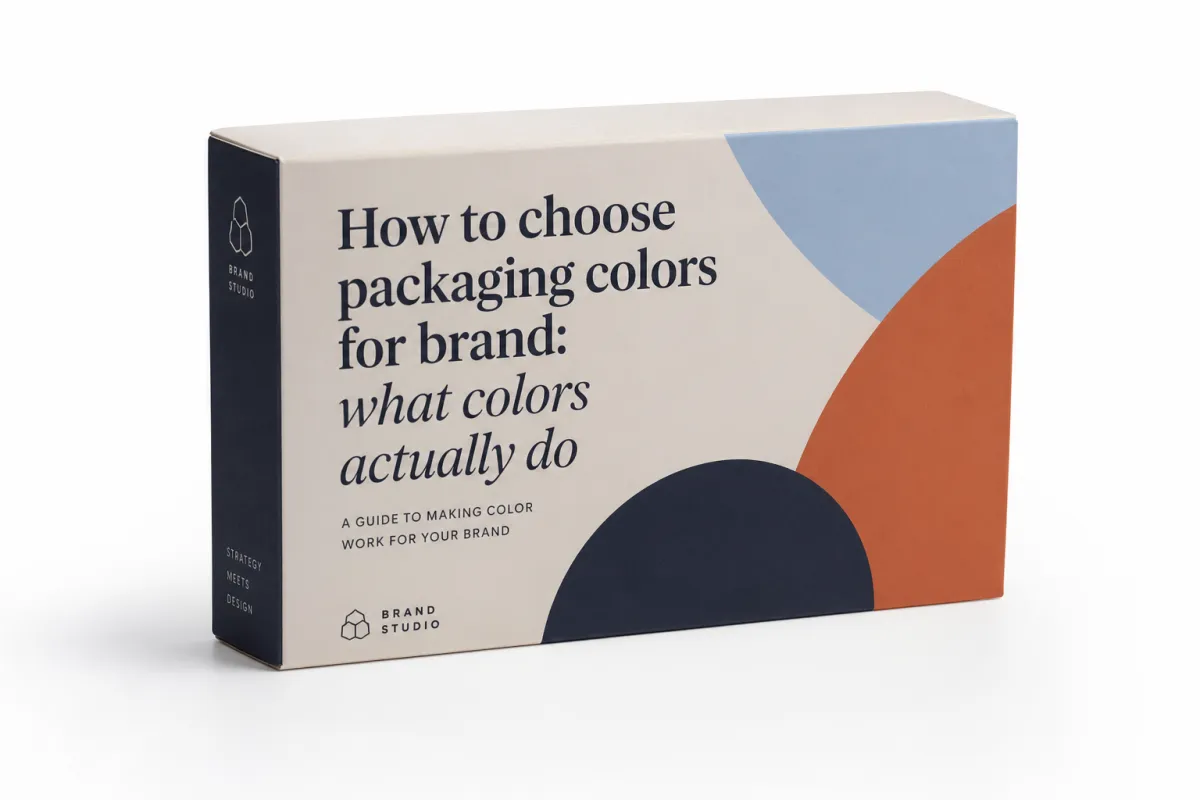
Customers usually notice color before they notice the logo. On a crowded shelf, many never get past that first glance. Color is the quickest signal in product packaging. It tells people whether something feels clean, premium, playful, clinical, earthy, or loud. That signal can be accurate or wildly off, but it rarely gets ignored.
How to choose packaging colors for brand starts with function, not preference. The package has a job. It needs attention, category recognition, price support, and memory. If the color helps with those jobs, it is doing real work. If it only looks pleasant in a presentation, it is probably not doing enough.
The same shade can shift personality depending on finish and material. A deep navy on matte paperboard can feel calm and premium. Put that same navy on a glossy film with sharp reflection and it can read more promotional than refined. A soft beige on kraft stock can feel honest and natural, while the identical beige on coated white board may look weak. That is why color choice cannot be separated from substrate, coating, and print method.
Context changes the result too. A color that feels elegant beside muted competitors may look timid next to a wall of saturated labels. Bright orange can be perfect for an impulse snack and a poor fit for premium skincare. A lot of how to choose packaging colors for brand is really about contrast in the market, not color in isolation. Packaging does not stand alone. It sits inside a noisy retail environment packed with rival claims, shapes, and finishes.
Memory matters more than most teams expect. People remember color faster than copy. That is one reason strong brand identity systems often hold one main color across a product family. The shade becomes a shortcut. A shopper spots it, sorts it, and files it away in less than a second. That kind of recognition turns a package into a repeatable brand asset instead of a one-off decoration.
Color also shapes how expensive a product feels. A cheap-looking palette is not always about the hue itself; the real issue is often contrast, ink coverage, and the number of competing elements on the panel. A package with one strong color, clear typography, and a restrained finish usually reads better than a package with six colors and no hierarchy. Fancy is not the same thing as effective. Sometimes the expensive-looking option is the one that knows when to stop.
"A package gets one quick chance. If the color misses, the customer may never read the rest."
That is why the decision needs to be tied to the product's actual job, not a mood board alone. Premium calls for restraint. Retail pop calls for contrast. Trust calls for clarity and a palette that does not shout over the product. Different jobs, different color systems. There is no universal winner, no matter how often trend decks act like there is.
For a better starting point, compare your palette against real Custom Packaging Products and study finished examples in the Case Studies section. Seeing color in production is a lot more revealing than guessing from a bright screen.
How packaging color works on shelf, screen, and in hand
How to choose packaging colors for brand gets trickier once you realize a package is judged in three places at once: on a screen, on a shelf, and in someone's hand. Digital mockups tend to look clean because the monitor is backlit and forgiving. Retail Packaging on a shelf is harsher. Then the unboxing moment adds touch, reflection, and distance, which changes the reading again.
On screen, saturated colors often look stronger than they print. Whites appear cleaner. Shadows feel richer. That is why this process should never rely on the mockup alone. A design that looks balanced in a presentation deck can arrive in production looking flatter, darker, or more muted because paper stock absorbs ink differently than a screen emits light. Monitors are polite liars.
Under store lighting, matte, gloss, metallic, and soft-touch finishes each behave in their own way. Matte reduces glare and usually makes a package feel calmer and more premium. Gloss can boost brightness and shelf pop, but it can also expose print flaws faster. Metallic inks and foils catch light from strange angles, which is useful for attention and dangerous for brands that want control. If how to choose packaging colors for brand matters to your launch, test under fluorescent light, LED light, and daylight if you can.
Contrast is not optional. Logo against background. Body copy against the panel. Icons against the field. If contrast fails, the package turns into decorative clutter. For retail packaging, readability matters more than cleverness because customers often scan from arm's length or farther. A strong color system should make the brand easy to find, the product easy to understand, and the differences between SKUs easy to spot within seconds.
Category norms can help or hurt. Natural tones often work in organic food, wellness, and eco-friendly goods because they signal restraint and familiarity. High-contrast palettes often work better for impulse categories where speed matters more than nuance. In beauty, muted neutrals and controlled metallic accents often feel more premium than loud primaries. In supplements, color can support trust, but too much playful energy can weaken credibility. That means the answer is often a choice between following the category and breaking from it, and both paths carry risk.
Color also works with structure. A tall tuck box and a wide mailer do not present color the same way. A wraparound label on a cylindrical container behaves differently from a flat carton. That is why questions about packaging color strategy never have a clean one-line answer. Color lives with typography, icons, coatings, shape, and print method. If one piece slips, the whole system feels off.
I learned this the hard way on a wellness project where the brand team loved a pale sage swatch on the monitor. On the shelf, under a harsh strip light, it looked tired and a little green-gray in a way nobody wanted. We fixed it by deepening the value, tightening the contrast, and switching the finish. The final carton was less "nice color" and more "this actually works." That difference matters.
Real-world testing is the only way to know for sure. Print a sample. Hold it in bad light. Place it next to your main competitor. Put it on a shelf beside two louder brands. Then ask a blunt question: does the package still read the way the brand needs it to read? If the answer is shaky, the color system needs another pass.
How do you choose packaging colors for brand?
Start with the brand goal, then move to material, shelf context, and print method. A useful answer to how to choose packaging colors for brand is usually less about personal taste and more about matching the package to the job it has to do. If the product needs trust, the palette should calm the eye. If the product needs speed, the palette should stand out fast. If the product needs a premium signal, the colors should feel controlled rather than crowded.
A practical framework helps: define the feeling, test the palette on the actual stock, compare it against competitors, and check readability under real lighting. That is the shortest route through how to choose packaging colors for brand without guessing your way into a costly reprint. The screen can help you get direction. It cannot make the final decision for you.
Key factors that shape packaging color decisions
How to choose packaging colors for brand gets simpler once the question changes from "What color do we like?" to "What should customers feel?" That shift clears away a lot of noise. Color is a branding choice, but it is also a positioning choice. The package is making an argument before the copy ever has a chance.
Brand personality is the natural place to start. Premium brands usually need control, not chaos. Playful brands can survive brighter combinations and more contrast. Clinical brands need clarity and trust. Earthy brands often do well with muted greens, browns, off-whites, and natural-looking finishes. Disruptive brands may want a color that breaks category expectations outright. In every case, the palette needs to match the personality the company wants to own.
Target audience matters just as much. Age, shopping habits, and price sensitivity all change how color is read. Some buyers trust dark, restrained palettes because they feel premium and mature. Others want bright, readable color because they are shopping fast and do not want to decode anything. If the audience is buying a repeat consumable, recognition should be easy. If the audience is buying a giftable item, the palette may need more polish. That is one reason the same package language rarely works for every market.
Product category sets expectations before the customer even reads the name. Food packaging is judged differently than cosmetics. Supplements are judged differently than toys. A color Choice That Works in one aisle may fail in another because shoppers bring category assumptions with them. Breaking those norms can work when the product has a sharp differentiator. It can also confuse buyers who expect certain cues. That tradeoff sits near the center of the process.
Material and print method change the result more than most people expect. Paperboard, rigid boxes, corrugated mailers, kraft stock, coated paper, and film all handle ink differently. A rich solid on a premium coated board may print beautifully, while the same color on kraft can look dull or uneven. Spot colors, CMYK builds, foil stamping, and specialty coatings each create different visual outcomes. If the brand color is fixed, a Pantone target may make more sense than full-process mixing. If the palette is flexible, CMYK may keep costs under control. That is the less glamorous side of how to choose packaging colors for brand, but it is the side that prevents production headaches.
Consistency across SKUs is another major factor. A brand with five flavors or sizes should not behave like five unrelated labels. A core palette should stay in place while accents shift for variation. One flavor may get a new stripe, another a different icon, but the main brand color should remain recognizable. Otherwise, customers will not connect the line. That matters especially for branded packaging that needs to grow into new product formats without rebuilding the visual system every time.
Budget sits underneath all of it. The more complicated the color system, the harder it is to reproduce consistently across runs, materials, and suppliers. That is why the strategy should include a little humility. A perfect palette on paper is not enough. It has to survive production variation, shipping, and reorders without drifting into "close enough" territory.
How to choose packaging colors for brand: a step-by-step process
There is a practical way to approach how to choose packaging colors for brand without getting lost in endless revisions. Start with a short audit. Gather the logo file, website colors, existing packaging, competitor packages, and customer feedback. If there are complaints like "hard to spot on shelf" or "looks cheaper than expected," write those down. The wording may be blunt. It is still useful.
Step 1: define the brand goal. Write one sentence that describes what the package should say. Premium and restrained? Natural and clean? Bold and high-energy? Trusted and clinical? If the sentence is fuzzy, the color choice will be fuzzy too. A clear target turns the process into a decision instead of a mood exercise.
Step 2: pick a color hierarchy. Most brands should begin with one primary color, one supporting color, and one accent. That is enough. More colors are not automatically better; often they signal indecision. The primary color should own the brand. The supporting color should help with balance or category cues. The accent should handle calls to action, product variation, or small design details. This structure keeps package branding consistent across SKUs.
Step 3: test the palette on a real template. Do not stop at the screen. Put the colors on a dieline, print a proof, and check how they behave on the actual material. A color that looks balanced in a PDF may feel too dark on a kraft carton or too flat on a coated box. If your custom printed boxes need to feel premium, this is the stage where that promise gets confirmed or rejected.
Step 4: check readability at three distances. Close-up, arm's length, and shelf distance. If the logo disappears at any one of those, revise it. Customers do not usually spend extra time decoding packaging. They glance, compare, and move on. That is why usability has to sit beside taste.
Step 5: score the options. Use a simple sheet with four columns: shelf impact, brand fit, print cost, and production risk. Rate each color option from 1 to 5. The point is not mathematical perfection. The point is to make tradeoffs visible. A beautiful color that costs too much or prints unreliably is not a good choice, no matter how nice it looks in a deck.
Step 6: get printed samples before approval. That sounds obvious because it is. Teams still approve colors from screens every week and act surprised when the printed package looks different. That is not a mystery. It is a process failure. If the brand cares about exact colors, insist on physical samples before production. If you are still deciding whether the line needs a stricter system, compare it against the options in Custom Packaging Products and study real finished examples in Case Studies.
The useful part of how to choose packaging colors for brand is that it gives you control before a full run gets locked in. The hard part is that it forces decisions. That is also the point. Good packaging narrows choices so the customer can understand the product faster.
| Color approach | Typical cost impact | Best for | Main tradeoff |
|---|---|---|---|
| Simple 1-2 color print | Lowest; often easiest to control on press | Clean brand systems, price-sensitive lines, high repeat orders | Less shelf drama if the design lacks strong contrast |
| Full-coverage solid backgrounds | Moderate to higher; more ink and more chance of visible variation | Bold retail packaging, strong category presence | Can show print flaws or uneven coverage on some stocks |
| Pantone spot colors | Moderate; extra setup but precise brand matching | Tight brand identity systems, repeat production, strict color control | Less flexible than CMYK for complex imagery |
| Foil, varnish, or specialty coating accents | Higher; premium look comes with premium finishing cost | Giftable product packaging, luxury cues, hero SKUs | Raises unit cost and may require extra production time |
If the line needs room to grow, the smartest version of this process is usually not the loudest one. It is the most repeatable one. That makes it easier to add flavors, sizes, or seasonal versions later without creating a visual mess.
A second small but useful habit: make your approval notes stupidly specific. "Blue" is not enough. "Pantone 2965 C, matte coated board, no metallic shift, approved under 5000K lighting" is much better. That level of detail can feel fussy, but it saves a lot of backtracking later. Color drift likes vague language.
Packaging color cost and pricing: what changes the budget
Color changes more than appearance. It changes price. That is where the process stops being a design discussion and becomes a production decision. A palette with heavy coverage, specialty inks, foil, or extra passes on press costs more than a simple two-color layout. The difference can be small. It can also be the difference between a workable launch and a budget that keeps asking for mercy.
Simple color setups usually keep pricing steadier. A one-color or two-color design can be efficient for large runs, especially when the art is clean and the coverage is controlled. Once the design shifts into multiple spot colors, metallic accents, or full background coverage, the cost picture changes. More setup. More ink. More checks. More room for error. That is why the plan has to account for run size from the start.
For a mid-volume order of 5,000 units, a straightforward printed carton may sit in a lower-cost range, while a design with specialty finishing can push unit cost up by 15% to 40% or more depending on structure and decoration. That is not a fixed rule. It depends on artwork complexity, material, machine setup, and how many finishing steps are involved. Still, it is the kind of gap buyers run into in the real world. Nobody wants to hear that a gold foil accent is "just a small detail" when it adds a meaningful charge to the order.
Large solid backgrounds are another budget variable. They use more ink and can expose inconsistencies in the stock. That does not mean they should never be used. It means the color strategy should include a realistic conversation about print coverage and substrate quality. A white box with restrained accents may be the more economical route if the product is price-sensitive. A black box with dense coverage may make sense for a premium line where visual impact matters more than shaving off a few cents.
Premium effects do what they are supposed to do: they raise perceived value. Foil stamping, spot UV, embossing, soft-touch lamination, and specialty varnishes can make a package feel more deliberate. They also add cost and sometimes stretch production time. That tradeoff is fine if the product margin supports it. It is less fine if the packaging budget is already tight. In that case, the palette should favor clarity and a controlled look, then reserve premium finishes for the hero product or the highest-margin SKU.
For brands trying to stay disciplined, a cleaner palette often wins. Fewer colors usually mean fewer setup issues, easier reorders, and less risk that the final result drifts from the approved sample. That is especially true for branded packaging produced in multiple runs over time. Consistency is cheaper than fixes. Always has been.
Material choice changes ink cost too. Kraft stock can look excellent, but the design has to work with the brown tone instead of fighting it. Coated paper usually reproduces cleaner solids. Corrugated packaging can absorb more ink and behave less predictably than a smooth carton. Again, this is not just about picking a shade. It is about choosing a color that behaves well on the actual material.
If the packaging is meant to sell at a value price point, keep the palette disciplined. If the product is premium, invest where the customer can see it. Just do not spend on flashy effects that do not improve the selling job. Decorative waste is still waste.
One more point: cost is not only the first print run. If a complex color system causes reprints, delays, or rejected samples, the real price rises fast. A cheaper-looking package is not always cheaper overall if it keeps failing approval. That is another reason design and manufacturing need to be in the room together. A good package is not merely attractive. It is repeatable.
For sustainable sourcing and paper-related decisions, the FSC site is a useful reference when you are deciding what materials align with the brand story. For shipping performance and package durability considerations, the ISTA standards are worth reviewing if the package needs to survive distribution without arriving battered.
Packaging color process and timeline: from mockup to production
Good color decisions take time. Not endless time. Just enough time to avoid expensive guessing. How to choose packaging colors for brand works best when the process is staged: brief, concept palette, digital proof, physical sample, revision, prepress, and final production. Skip one of those steps and the odds of a mismatch rise. Not a mystery. A workflow issue.
Step 1: brief the color goal early. Do this before the structure is locked if possible. If the brand wants a soft premium feel, the palette will likely need different contrast than a loud retail line. If the product has to stand out beside competitors, the color strategy should be tested against actual competitor packaging. Early clarity makes the rest faster later.
Step 2: review digital concepts, but do not trust them blindly. Digital mockups are useful for direction, hierarchy, and relative balance. They are not the final answer. The human eye and the printing press do not live in the same system. If the brand uses precise colors, ask for a spot-color reference or printed proof rather than approving from RGB values alone.
Step 3: sample the print. This is where reality shows up. Physical samples reveal whether the background is too dark, whether the logo has enough lift, and whether the finish supports the intended mood. If the design depends on color matching across multiple product sizes, sampling is not optional. It is the core of the process.
Step 4: allow time for revisions. Most color projects need at least one revision round. More if the brand is exacting about tone or the substrate is unusual. That is normal. It is also why rushed timelines make approval riskier. A hurried sign-off can lock in a mistake that becomes expensive once the full run begins.
Step 5: confirm prepress details. Before production, verify the color references, finish callouts, and approved proof notes. If there is a Pantone target, write it down. If the design uses overprint or special coating, confirm how it should be executed. This is the unglamorous part, but it is the part that keeps reorders from drifting.
The timeline depends on the complexity of the color system and the print method. A straightforward palette may move quickly once the design is approved. A strict brand color on a specialty substrate may require extra proofing and longer lead time. For many packaging projects, it is sensible to plan for roughly 10 to 15 business days from proof approval to production completion, but that range changes with order size, finishing, and workload. No two jobs are identical, which is annoying and true at the same time.
Planning early gives you more control. It also reduces the chance that packaging color becomes the thing holding up launch. That happens more often than teams like to admit. Branding wants one thing, operations wants another, and the printer is left trying to make a screen color behave like a physical object. Spoiler: that is workflow, not magic.
When the process is handled properly, the same palette can move from concept to proof to production with fewer surprises, and the final boxes can actually match the promise made in the pitch deck. That alone is worth the planning.
One more production reality: if the brand has seasonal colors, treat them as planned exceptions rather than ad hoc design experiments. Otherwise the line starts to look like a small argument between unrelated products. A disciplined base palette gives you room to improvise later without losing the core signal.
Common mistakes, expert tips, and next steps for packaging color
The biggest mistake in how to choose packaging colors for brand is copying a competitor too closely. It looks efficient. It is not. If the market already owns that color space, your package may disappear into the shelf instead of standing out. Borrowing category cues is fine. Becoming a clone is a fast way to lose your own signal.
Another mistake is following trends without a brand reason. A trendy pastel or an overdone gradient can look current for a short time and then feel dated or disconnected from the product. Trends can help when they support the audience and category. They can also age badly. That is why the process should begin with the brand's own positioning, not a scroll of inspiration images.
A third mistake is ignoring finish and substrate. A color that looks rich on coated board may feel thin on kraft. A soft-touch finish can deepen a tone and change how people read the package. Gloss can make certain colors more energetic, but it can also show handling marks sooner. If the color plan is being taken seriously, test the color on the actual production material, not just a digital placeholder.
Here is a practical expert move: build a color system, not a single color. A system gives the brand room to grow. One main color, one secondary color, and one accent can support line extensions, seasonal runs, and size variations without starting from zero. That is especially useful for product packaging that has to scale across multiple SKUs. Systems age better than one-off design decisions.
Another useful move is choosing one bold decision instead of five weak ones. A package with a clear palette, strong type, and disciplined layout usually beats a package that tries to please everyone. The goal is not to make the box busy. It is to make the box memorable for the right reason.
If you are still deciding, test the final shortlist in real light. Put the sample under store lighting, daylight, and the kind of office lighting that makes everything look a little sad. Place it beside the top competitors. Hold it at arm's length. If it still reads clearly and feels like the brand, you are close. If not, keep editing.
For teams moving from concept to order, the next steps are straightforward:
- Pick one reference package that matches the mood you want.
- Build a shortlist of two or three color directions.
- Request printed samples on the actual material.
- Compare cost scenarios across simple and premium finishes.
- Approve the palette only after you have checked the shelf read, print behavior, and reorder consistency.
That is the cleanest version of how to choose packaging colors for brand. It is not about chasing the prettiest palette. It is about choosing color that helps the package sell, supports brand identity, and can be reproduced without headaches. If that part is right, the packaging starts working before anyone opens the box.
And the answer is usually less dramatic than people expect. Start with the brand goal, test against real materials, keep the palette disciplined, and make sure the colors still hold up when the customer sees them in a messy, real-world setting. That is where good packaging earns its keep.
If you want a simple rule to keep in your back pocket, it is this: choose one dominant color, prove it on the real stock, and compare it under the light where it will actually live. If the color still feels right there, you are probably on the right track. If it falls apart there, it was never the right choice. Kinda harsh, but true.
FAQ
How do I choose packaging colors for brand recognition?
Use one dominant color consistently across the main line, then repeat it across sizes and formats. Keep contrast strong enough that the logo reads at a glance. If customers can spot the package from several feet away, the palette is heading in the right direction. Repetition matters here more than novelty.
What are the best packaging colors for premium brands?
Deep neutrals, muted tones, and restrained metallic accents often feel premium because they create control rather than noise. Matte and soft-touch finishes usually help too. Premium does not mean dark only, but it does mean disciplined. A premium package should feel like it knows exactly what not to say.
How many colors should a packaging design use?
Most brands should start with one primary color, one supporting color, and one accent. More can work, but only if the system stays organized and readable. If every SKU needs its own palette, the strategy has probably drifted too far. The eye likes hierarchy, not chaos.
Does packaging color affect printing cost?
Yes. Heavy ink coverage, special spot colors, foil, and extra finishing steps all raise cost. Simple palettes are usually cheaper and easier to reproduce. The cheapest-looking option is not always the cheapest total cost if it causes reprints, which is exactly why the color plan should include production review.
How long does it take to finalize packaging colors?
A simple palette may move quickly, but custom brand colors usually need proofing and at least one revision round. Timeline depends on the print method, material, and how exact the match needs to be. Starting early helps because the process works best before production is scheduled, not after. If the launch date is tight, the safe move is to leave room for one round of real samples.