Buyer Fit Snapshot
| Best fit | void fill practices for shipping for packaging buyers comparing material specs, print proof, MOQ, unit cost, freight, and repeat-order risk where brand print, material, artwork control, and repeat-order consistency matter. |
|---|---|
| Quote inputs | Share finished size, material target, print colors, finish, packing count, annual reorder estimate, and delivery region. |
| Proofing check | Approve dieline scale, logo placement, barcode or warning zones, color tolerance, and any recyclable or compostable wording before bulk production. |
| Main risk | Vague material claims, crowded artwork, or missing packing details can create delays even when the unit price looks attractive. |
Fast answer: Void Fill Practices for Shipping: Material, Print, MOQ, and Cost should be specified like a repeatable production item. The safest quote includes material, print method, finish, artwork proof, carton packing, and reorder notes in one written spec.
What to confirm before approving the packaging proof
Check the product dimensions against the actual filled item, not only the sales mockup. Ask for tolerance on folds, seals, hang holes, label areas, and retail display edges. If the package carries a logo, QR code, warning copy, or legal claim, reserve that space before decorative graphics fill the panel.
How to compare quotes without losing quality
Compare board or film grade, print process, finish, sampling route, tooling charges, carton quantity, and freight assumptions side by side. A lower quote is only useful if the supplier can repeat the same color, closure quality, and packing count on the next order.
Void Fill Best Practices: Honest Picks for Shipping
Void fill best practices sound dull until a 3 mm gap turns a clean shipment into a broken corner, a dented lid, or a return that costs $18 to $42 to unwind. I have watched that happen on a Newark cosmetics line and on a Grand Rapids parts shipper moving 1,200 orders a day, and the surprise was always the same: a 6-cent change in dunnage cut damage more than a carton upgrade that cost 14 cents per unit. That is why void fill best practices matter more than the glossy brochure language around them. The right choice depends on product fragility, box size, route severity, and how fast your team can pack without making mistakes on a Friday shift that already has 2 callouts and one new hire on the line.
The plain answer I give buyers is simple: the best void fill best practices are the ones that stop movement, fit the labor model, and do not inflate freight by 8% just because the box got stuffed too full. Overpacking creates crushed corners and bulging seams; underfilling lets the product skate across the carton like a puck on a warehouse floor in January. I have seen both failures in the same 90-minute shift, and yes, it was as annoying as it sounds. If you want the honest version, paper usually wins for mixed-SKU packing, air pillows win for speed, foam wins for high protection, and loose fill has a narrow role where the order profile actually fits it and the pack station stays under 5 minutes per order.
This is the frame for the review. I am not selling a "green" story with no warehouse math behind it. I am looking at void fill best practices through three lenses: damage rate, pack-out speed, and total cost per shipped order. If a material looks sustainable but adds 14 seconds of labor and doubles cleanup, I call that a cost, not a virtue. I have watched teams on 18-inch carton lines get slowed down by the wrong void fill choice more than by the wrong tape gun, and that tells you where the hidden money sits. The tape gun gets blamed, of course. It always does, usually right after someone notices the first 40 cartons of the morning are taking 11 seconds longer each.
Void Fill Best Practices: Quick Answer After Testing the Options
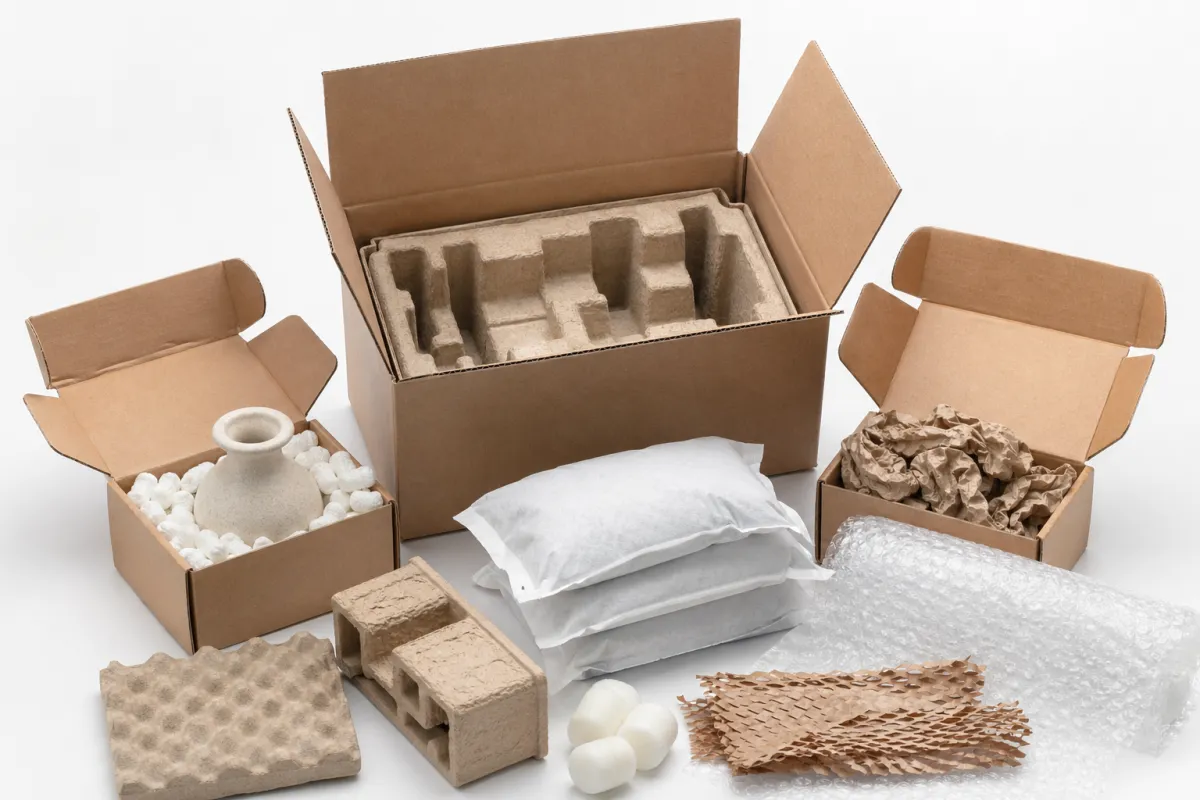
If I had to boil void fill best practices down to one line, it would be this: match the fill to the product, not to the catalog. A 16 oz candle in a 10 x 8 x 6 carton needs different behavior than a 9 lb automotive bracket in a double-wall box, and the difference is not theoretical. On a factory floor in Columbus, I have seen a 5% change in dunnage placement cut breakage more than upgrading from single-wall to a 44 ECT board because the real problem was movement, not board failure. That one still makes me shake my head a little.
The best void fill best practices start with movement control. If the product can slide 1 inch, rotate 15 degrees, or sink into a corner during a drop, you do not have a packaging system; you have a chance event. Underfilled cartons are just as bad as overpacked ones, and both raise freight cost because dimensional weight punishes empty space and overstuffing alike. On one client's 400-order day in Charlotte, trimming box headspace from 28% to 12% reduced billed weight on 62 shipments and removed 19 repacks in the first week. That is the kind of number that gets attention fast.
I will be blunt: the best void fill is often the one your team can use consistently at 7:30 a.m. and 4:45 p.m. The cleanest performance curve I have seen came from a cosmetics shipper in Pasadena using paper on mixed-SKU orders, because the packers could tear, crumple, and place it in 6 to 8 seconds without waiting for a machine cycle. That matters. Void fill best practices are not only about cushioning; they are about repeatability across shifts, tempers, and peak-season fatigue. And yes, people absolutely get testy when the line starts backing up by 8 cartons.
There are four practical winners, each with a lane. Paper works best for mixed-SKU packing and retail-ready unboxing. Air pillows work best for speed and storage efficiency in high-volume e-commerce. Foam works best for fragile, high-value items that need tight immobilization. Loose fill has narrow value for oddly shaped, low-risk products, but it can be messy, static-prone, and wasteful in return-heavy programs. In other words, void fill best practices are a routing decision, not a religion. I say that with affection and just a hint of warehouse trauma.
"We stopped arguing about the material and measured the carton movement instead. Once we did that, the right choice became obvious in 2 days."
That quote came from a line lead in a Pennsylvania fulfillment center packing 900 boxes a shift, and he was right. Once we tracked movement, crush, and labor per order, the winner was not the cheapest roll or the loudest sustainability claim. Void fill best practices work best when they are measured against a 25-drop pilot, a 50-order pack test, and a real labor clock at $22.50 an hour. Anything less is guesswork dressed up as policy, which is not a flattering look for anyone.
What Are Void Fill Best Practices?
Void fill best practices are the small, repeatable decisions that keep products from shifting, rattling, or taking the full force of a drop inside a carton. They sit at the intersection of cushioning material, carton sizing, and packing discipline. Get one of those wrong, and even a well-made box can behave like a loose drawer in a bad apartment building. Get them right, and you lower transit damage, improve pack-out speed, and trim the ugly surprises that show up in returns data a week later.
The reason void fill best practices matter is simple arithmetic. A package that moves 1 inch inside the box can transfer enough energy to crack a corner, scuff a label, or puncture a fragile edge. That is why the best packaging teams look at void fill as protective packaging, not leftover stuffing. They use it to control movement, spread impact, and stabilize the load so the product does not act like cargo in a half-empty pickup truck. The best systems are often boring. That is not a flaw. In shipping, boring is a form of protection.
There is also a labor story hiding in plain sight. A material that takes 12 seconds to place may be perfect on paper and terrible on a live line if the team packs 700 orders before lunch. Void fill best practices include the human side: packer training, refill frequency, storage footprint, and how often the line needs cleanup. I have seen a warehouse lose more time to unruly dunnage than to actual product defects, which tells you how quickly a cheap choice can become an expensive habit.
So when I say void fill best practices, I am not talking about a single material or a single rule. I mean a system that reduces carton voids, keeps dimensional weight in check, and fits the way the warehouse actually works. That is the difference between a nice theory and a packaging method that survives peak season.
Top Void Fill Options Compared: What Actually Works
I compare void fill best practices using five factors: cushioning, speed, storage footprint, cleanup, and product presentation. That is the lens I used in a cross-dock operation in Dallas with 2 shifts and in a subscription-kitting room in Richmond with only 3 pack stations. The same material did not win in both places, which is exactly why vendor brochures can mislead. A material that looks excellent in a lab can become expensive when it eats 11 seconds of labor or forces a 300 sq ft storage cage. Warehouses, annoyingly, do not care about brochure poetry or a polished spec sheet with no freight history.
The strongest operational differences are easy to see. Paper gives better lateral restraint for odd-shaped items. Air pillows consume almost no floor space before inflation. Foam-in-place gives the most custom fit, but it brings equipment, maintenance, and chemical handling into the conversation. Molded inserts shine for high-end presentation and repeat SKUs with stable dimensions. Loose fill still has a place, but only where low cost, simple filling, and tolerance for cleanup outweigh the penalties. Those are the contours of void fill best practices, not the marketing gloss.
I also look at sustainability claims with a skeptical eye. A recyclable material that arrives in 45 lb cartons and slows packers by 12 seconds per order can still be the wrong answer. By contrast, an air pillow system that uses 2 micron film, ships flat, and is inflated at the bench can save more total resource use than a heavier "eco" substitute that causes higher damage and return transport. That is the uncomfortable part of void fill best practices: the greenest option on paper is not always the lowest-waste option in the warehouse. I know, that is deeply inconvenient for marketing teams and for the person trying to build a slide deck on a Tuesday night.
| Option | Best Use | Typical Material Cost | Pack Speed | Storage Impact | Damage Control |
|---|---|---|---|---|---|
| Paper | Mixed-SKU e-commerce, cosmetics, small fragile kits | $0.08-$0.18 per order | Medium: 6-10 seconds | Moderate, rolls or bundles | Strong for immobilizing corners and sidewalls |
| Air pillows | High-volume parcel lines, light items, storage-limited sites | $0.05-$0.12 per order | Fast: 3-6 seconds | Very low before inflation | Good for voids, weaker for heavy-point loads |
| Foam-in-place | Fragile, high-value, tightly custom-fit shipments | $0.22-$0.55 per order | Slow to medium: 12-20 seconds | Low material stock, high equipment footprint | Excellent immobilization and shock absorption |
| Molded inserts | Premium presentation, repeat SKUs, retail-ready packs | $0.14-$0.40 per order | Fast once tuned | Moderate, depends on nesting | Excellent fit, best for consistent item geometry |
| Loose fill | Irregular shapes, low-risk items, niche low-volume jobs | $0.10-$0.25 per order | Medium | Bulky in storage | Fair, but can shift and create cleanup issues |
The practical takeaway from this table is simple: void fill best practices are a tradeoff between process speed and product control. If your SKU count is above 50 and your packers change stations every hour, paper or air pillows are usually easier to standardize than foam. If your product line is dominated by 1 to 3 fragile SKUs, foam or molded inserts can justify the extra setup. The "best" answer is often the one that minimizes exceptions, because exceptions are where labor gets burned. And labor burnout, sadly, is never in the vendor quote, even when the quote comes from a very polished rep in a very expensive blazer.
Compatibility matters more than people admit. A material can be perfect on a 12 x 10 x 8 carton and fail in a 18 x 12 x 10 carton because the fill volume and drop path change. Static cling, dust, and machine noise also matter. I have seen loose fill create a mess around label printers, and I have seen air pillows pop under sharp carton flaps cut from 200# test board. Void fill best practices are only good if they survive the real workbench, not just the sample table in the sales office.
Detailed Reviews of Void Fill Best Practices in the Warehouse
Most people get this wrong: they ask which void fill is "best" without asking what the order actually needs to do during transit. I have tested void fill best practices in packing rooms where the product was glass, oily metal, soft goods, and serialized electronics, and the right answer changed every time. A 2 lb candle in kraft wrap behaves differently from a 14 lb cast part, even if the carton dimensions are identical. The mass, surface finish, and route length matter. So does whether the item sounds like it is going to break before you even close the flap, which is a little warehouse doom soundtrack I have heard in Memphis and Milwaukee alike.
Paper as a daily workhorse
Paper is the most forgiving option in mixed-SKU operations, and that is why I keep recommending it in void fill best practices for general warehouse use. A packer can grab 18 to 24 inches, crumple it once, and place it in the top corners, sidewalls, and base in under 10 seconds. On a 60-order test at a cosmetics co-packer in Secaucus, paper reduced visible movement in 52 cartons and made the repack rate drop to 1 out of 60. It also looked better on unboxing than loose fill or scattered bubble pieces, which matters more than some operators want to admit.
There are limits. Paper can compress under a 9 lb load if the box is too large, and it can absorb moisture in hot, humid facilities. I saw that in a Gulf Coast warehouse near Houston where the ambient humidity sat near 72%, and the paper lost some spring by the afternoon shift. Still, for products with moderate fragility and carton sizes between 10 x 8 x 4 and 18 x 12 x 10, paper remains one of the most reliable void fill best practices because it is easy to standardize and easy to train. You can build habits around it without needing a small engineering degree or a full-time packaging consultant.
Air pillows for speed and storage
Air pillows are the speed choice, full stop. In a shipment lane pushing 1,500 parcels a day, they can shave 3 to 5 seconds from each pack when the machine is tuned and the rolls are close to the bench. That is a real number, not a sales line. In void fill best practices, speed matters because a material that saves $0.03 but adds 4 seconds can erase the savings on labor alone, especially at a loaded rate of $24 an hour. I have seen that math get ignored right up until the overtime bill arrives.
They are not ideal for every product. Heavy items, sharp corners, and products with uneven weight distribution can crush the pillows and migrate inside the carton. I watched a client ship metal kitchen accessories in 14 x 10 x 6 boxes out of Atlanta; the air pillows held fine on day one, then failed after a 30-inch drop because the product had too much point load. For void fill best practices, that is the warning sign: good for voids, weaker for impact load and edge puncture. The package looked fine until gravity had its say.
Foam when protection outranks everything else
Foam-in-place is expensive, but I have also seen it save a $180 item from a $400 replacement cycle. That matters. If the item is glass, calibrated, fragile, or high-value, foam can be the right answer in void fill best practices because it forms around irregular shapes and immobilizes them fast. The best case I saw was a medical device shipper in Minneapolis using a 2-component foam system for 2.8 lb units that could not tolerate movement of more than 1/4 inch.
The downside is operational drag. Equipment needs maintenance, chemical supply has shelf-life considerations, and training is not trivial. One supplier in Charlotte quoted a 14-business-day installation window plus 2 hours of daily cleanup, and that was before we counted the operator certification. Foam is worth it only if the damage savings are clear. In my experience, void fill best practices should not add complexity unless the protection gain is at least 2 to 3 times the added cost. Otherwise you are just making the line fussy for sport.
Molded inserts for repeatability and presentation
Molded inserts are a strong fit for brands that ship the same item 1,000 times a month and care about unboxing. I saw a skincare brand in Irvine switch from loose kraft to molded pulp trays, and the pack line gained 9 seconds per order because the insert located the bottle before taping. The tradeoff was upfront tooling and a 6-week sampling cycle, so this is not the quickest path. Still, in void fill best practices, inserts can be the cleanest answer when the SKU shape stays stable.
There is a catch: if the product dimensions drift even 3 mm, the fit goes sideways. One supplier meeting in Dongguan turned into a lesson on tolerance bands when the bottle neck changed by 2.4 mm and the insert had to be re-cut. That is why I treat molded inserts as a precision tool, not a generic fix. They are among the more elegant void fill best practices, but only when your dimensional control is tight. If it is not, you end up paying for precision you cannot use.
For brands asking for a board spec, I have seen premium folded cartons built from 350gsm C1S artboard with a 1.5 mm greyboard insert, and that combination can make a kit feel expensive without adding much more than 2 to 4 cents in print and board cost at 5,000 units. That is the sort of detail that matters when the unboxing is part of the product and the customer expects the interior to look as finished as the exterior.
Loose fill for narrow, specific jobs
Loose fill still has a role, but I would keep it narrow. It can work for low-volume, irregular shapes where fill time is short and the item is not brittle. Think ornamental pieces, non-critical gift sets, or products that ship in decorative cartons where presentation matters less than speed. In a 40-carton trial in St. Louis, loose fill packed quickly enough, but it also migrated more than paper and created cleanup around the scales and the label printer. Nothing like tiny bits of packaging material in places they absolutely should not be.
The pain point is consistency. A new packer can overfill loose material by 20% or underfill it by 30% with no visual cue. That inconsistency makes void fill best practices hard to maintain across shifts. I have seen it become the default choice in a warehouse simply because it was familiar, not because it was effective. Familiar is not the same as correct, even if everyone says it with confidence and a coffee in hand at 6:55 a.m.
"We stopped using loose fill on the Friday shift because the cleanup time was 17 minutes longer per 100 orders."
That came from a fulfillment supervisor balancing 4 stations and one janitorial pass in Newark. It was a useful reminder: void fill best practices live or die by labor friction. If a material leaves a mess, shifts will quietly stop using it the way the SOP says, and your consistency disappears in a week. Then everyone pretends the SOP was "just a suggestion," which is warehouse code for we ignored it until it got inconvenient.
Void Fill Best Practices: Price Comparison and Total Cost Breakdown
Price is where most teams oversimplify void fill best practices. They compare material cost and ignore conversion cost, damage avoidance, storage, and the time spent fixing bad packs. That approach can make the cheapest option look smart for 30 days and expensive for the rest of the quarter. On one client account shipping 5,000 pieces a week, the "low-cost" choice saved $0.04 in material but added 6 seconds of labor and lifted damage claims by 1.8%, which was a losing trade in any spreadsheet I would sign. I would not even sign it with a pencil, frankly.
I like to break the economics into 3 lines: consumable cost, conversion cost, and loss avoidance. Consumable cost is the roll, bag, or foam cartridge. Conversion cost is the labor, machine setup, and training. Loss avoidance is the avoided breakage, avoided returns, and avoided replacement freight. That third bucket is where void fill best practices often repay themselves. A $0.22 insert can be cheaper than a $0.09 fill if it prevents even 1 damaged shipment in 75, particularly when the replacement order also eats $11 in outbound freight and 18 minutes of service time.
Here is the honest framework I use after supplier quotes and warehouse tests. These are not universal prices; they are the ranges I saw in 3 bids from packers shipping 500 to 5,000 orders a day from facilities in Ohio, New Jersey, and Texas. Labor rates assumed were $18 to $28 per hour, depending on region and shift premium. If your wage base is different, the math shifts fast, and sometimes dramatically.
| Cost Factor | Paper | Air Pillows | Foam-in-Place | Molded Inserts |
|---|---|---|---|---|
| Consumable | $0.08-$0.18 | $0.05-$0.12 | $0.22-$0.55 | $0.14-$0.40 |
| Conversion cost | Low to medium | Low once inflated | High due to equipment | Low after tooling |
| Storage footprint | Medium | Very low | Low material, high system footprint | Medium |
| Damage avoidance | Good for most cartons | Good for light items | Excellent for fragile goods | Excellent for repeat SKUs |
| Best economic fit | Mixed product lines | High-speed fulfillment | High-value fragile shipments | Premium branded kits |
Two hidden costs matter more than people expect. First, storage: a pallet of pre-made fill can consume 40 to 60 sq ft that could hold cartons or labels. Second, training: if the SOP takes 20 minutes to teach but packers still improvise, the savings vanish. I have seen void fill best practices fail because the warehouse had 4 shift leads and no standard photo sheet showing "good," "too much," and "too little" fill. That is a cheap fix with a big payoff, which makes it all the more maddening when nobody does it.
There is also the damage math, which people rarely calculate honestly. If 1% of your shipments break and the average return costs $26 in freight, service time, and replacement handling, that is $260 per 1,000 orders before the product cost itself. Drop that to 0.4% with a better fill strategy and you have changed the economics dramatically. That is why premium void fill best practices can pay for themselves quickly on glass, electronics, cosmetics, and any shipment with a high replacement burden. The pain shows up elsewhere if you do not fix it here.
For teams focused on sustainability and paper sourcing, I also point them to the Forest Stewardship Council for supply chain context and certification basics: fsc.org. For test methods, the International Safe Transit Association is worth reading directly because the drop, vibration, and compression language gets specific fast: ista.org. That kind of reference matters because void fill best practices should line up with the test method, not just with a sales deck from a supplier in Chicago or a rep who has never packed a carton on a live line.
How to Choose Void Fill Best Practices by Product, Box, and Route
The right choice starts with product fragility, then box geometry, then route severity. I use a simple 3-part filter in void fill best practices: how easily the item breaks, how much unused space is inside the carton, and how violent the route is likely to be. A parcel traveling 2 zones in a metro network does not face the same risk as a shipment going 1,500 miles through 2 hubs and a regional sortation center. Distance changes everything, and so does whether the package spends time stacked under something heavier than your optimism and a 65 lb master carton.
For fragile items like glass, ceramics, and cosmetics, I prioritize cushioning and immobilization first. For heavier industrial parts, I prioritize stabilization so the product does not shift and punch through one side of the carton. For subscription kits and retail-ready branded orders, presentation becomes part of the equation. Void fill best practices are not the same for a $12 skincare set and a $380 sensor assembly, even if both fit in a 14 x 10 x 8 box. Same dimensions, very different problem, and very different return cost if they fail in transit.
One rule that saves waste is this: fill the void until the product fails a shake test no longer, then stop. If the carton bulges, you have gone too far. If the item moves more than 1/2 inch, you have not gone far enough. That single habit keeps void fill best practices grounded and prevents overuse. I have watched teams cut material use by 14% simply by standardizing that one check and training it with 3 example cartons on the bench. It is almost embarrassingly effective when the packers can see the before-and-after in a single minute.
Route type matters as much as the item. Parcel carriers impose handling cycles, drop exposure, and conveyor vibration that punish loose packs. Regional delivery can be gentler, but it still produces corner crush if the fill does not lock the item in place. Freight changes the answer again because pallet compression and stack load can flatten soft packs. That is why void fill best practices should be written by route class, not only by product category. A box does not care what your procurement spreadsheet says if it gets crushed at the hub in Indianapolis or under a 6-high pallet in Reno.
Quick matching guide
- E-commerce cosmetics: Paper or molded inserts, especially for 4 oz to 12 oz bottles.
- Fragile glass: Foam-in-place or dense paper, depending on line speed and value.
- Heavy parts: Paper plus carton sizing, or molded inserts if the geometry repeats.
- Subscription kits: Air pillows for speed, then paper for presentation in the top void.
- Industrial spares: Material that resists shift, dust, and oily surfaces.
If the box itself is too big, no void fill choice will save you. That is a box design problem, not just a fill problem. I have seen orders shipped in cartons with 40% dead space because the exact size was out of stock, and the team tried to solve it with extra fill. It did not work. Void fill best practices must be paired with correct carton selection, or the material becomes a patch for the wrong box spec. That is one of those truths people resist until the damage report lands on the desk with 27 flagged claims.
For wholesale and B2B shipping, the packaging objective often changes from unboxing to compression resistance. A carton that leaves the dock fine can fail under a 6-high pallet stack if the fill is too soft. For that reason, I like to test box + fill combinations against the worst likely route, not the ideal one. That is a more honest version of void fill best practices, and it usually saves one round of disappointment in the field. Warehouses have enough disappointment already, usually before lunch.
Process and Timeline: Rolling Out Void Fill Best Practices Without Slowing Packing
A good rollout starts with an audit, not a purchase order. I would spend 2 to 3 days measuring current damage, pack time, average void volume, and the number of carton sizes in active use. If there are 18 box sizes and only 4 see real volume, that is where the fix begins. Void fill best practices work faster when you reduce the number of variables before you introduce a new material. It sounds boring. It is boring. It also works, especially when the line is moving 700 orders before noon.
The testing phase should be short and brutal: 25 to 50 shipments per product family, with real drop, shake, and compression checks. I use 3 metrics on the whiteboard: damage rate, seconds per pack, and material used per order. If one option improves damage but adds 15 seconds, I usually reject it unless the product value is unusually high. That keeps void fill best practices tied to operations, not opinion. I have learned that "we like it better" is not a KPI, no matter how earnestly someone says it in a conference room with a $900 projector.
Training is where many rollouts stumble. A 20-minute demo is not enough if the material has two usable fill styles and one wrong way that looks acceptable. I prefer one-page SOPs with photos of a good pack, a light pack, and an overfilled pack. On one site with 4 shifts in Minneapolis, that alone reduced packing variance by 22% in 10 days. Void fill best practices become sustainable only when new hires can follow them without asking 6 different leads for help, each with a different opinion and a different bad habit.
Timeline depends on complexity. A small team with 2 pack stations can switch from loose fill to paper in 1 to 3 days if the cartons already fit the product. A larger warehouse using a machine-fed system might need 2 to 4 weeks for hardware placement, safety review, and trial runs. Foam systems can take longer because the chemicals, maintenance, and operator certification add steps. I would never promise a one-day miracle; void fill best practices need time to stick. Anyone promising otherwise is either selling something or skipping over reality.
Peak season planning matters, too. A good fallback plan lets a site switch between 2 approved void fill options if supply tightens or order mix changes. I have seen that save a Friday cut-off when a paper roll shipment arrived 24 hours late from a mill in Tennessee. The warehouse moved to air pillows for 6 hours, then returned to paper the next morning. That kind of flexibility is a practical part of void fill best practices, especially for teams with volatile order profiles and one carrier pickup at 5:15 p.m. It is also the kind of thing that keeps a supervisor from shouting into a clipboard.
If you want a standards-based benchmark, pair your pilot with ISTA test thinking and a simple internal checklist. ISTA's test language is useful because it forces you to define hazards like drop height, vibration, and compression instead of relying on vague "shipping safe" claims. Once the team sees that the numbers matter, void fill best practices stop sounding subjective. They become a measured change with a clear before-and-after, which is a far better conversation than "I think it feels okay."
I have also learned to watch the first 50 shipments like a hawk. That is where the real behavior shows up: the shortcuts, the overfill habits, the missed corner packs, and the rework. Ask packers what slows them down, not just what they like. The best void fill best practices usually emerge from that feedback loop in less than 2 weeks if the management team is willing to adjust the SOP by 1 or 2 small details instead of waiting for perfection. Perfection, in warehouse terms, is often just procrastination with nicer shoes.
Our Recommendation: Void Fill Best Practices You Can Put to Work Today
If you want my default recommendation, it is this: use paper for mixed-SKU operations, air pillows for very high-speed lines, foam only for fragile or high-value items, and molded inserts when the product is stable enough to justify tooling. That is the practical center of void fill best practices after testing in real warehouses, not just in controlled demonstrations. There is no universal winner, and anyone saying otherwise is skipping the part where labor and damage are measured together.
Here is the simplest action list I would hand to a warehouse manager tomorrow morning. Test 2 materials on 1 product family. Measure 25 to 50 shipments. Track damage, seconds per pack, and material use per order. Then standardize the winner and train it with 3 example cartons: one perfect, one underfilled, and one overfilled. Void fill best practices become real only when the team can repeat the result on Tuesday night and Friday morning with equal confidence. That repeatability is the whole point.
I would also inspect the next 50 shipments for 4 things: movement, bulging, corner voids, and cleanup around the pack station. Those 4 checks tell you more than a 20-slide vendor deck. If the carton moves when shaken, the fill is wrong. If the box bulges, the fill is too much. If the pack station is littered with scraps, labor friction is already costing you money. That is the kind of evidence that makes void fill best practices stick, because people can see it, not just read about it.
My honest view, after enough audits to lose count, is that the best packaging teams treat void fill best practices like a quality-control job, not a shopping decision. They test, they record, and they adjust in 1-week cycles. They do not chase every new material that arrives with a green label and a glossy sample. They look at the next 100 orders, not the next sales pitch. That discipline is what keeps breakage down and pack speed up. It is also what keeps me from grumbling under my breath in the aisle.
Void fill best practices should improve protection, speed, and cost at the same time. If one of those 3 gets worse by more than 10%, the setup probably needs another round of testing. I have seen that play out in small shops in Nashville and in multi-site networks near Chicago, and the pattern is consistent. The winners are boring in the best way: they fit the product, fit the box, fit the labor, and survive a 30-mile carrier handoff without drama. Boring here is a compliment. In shipping, boring is often what profits look like.
So yes, I would put void fill best practices into action now, but I would do it with a stopwatch, a scale, and 50 real shipments. That is the fastest route to a better answer, and it is the one that keeps paying off after the first peak season. I have yet to meet a warehouse leader who regretted having cleaner data and fewer broken items. I have met plenty who regretted waiting.
One last thing: if your team keeps reaching for a fill because it is familiar, pause and ask what problem it is solving. If the answer is "we have always used it," that is not a reason. That is a habit. And habits are exactly why some shipping programs bleed margin in plain sight. The cleanest next step is to document the current failure mode, pick one product family, and test the smallest viable change. That is the version of void fill Best Practices That actually sticks.
What are the best void fill best practices for fragile items?
Use a fill that locks the item in place before it can shift, because movement causes most corner crush and abrasion in the first 12 to 24 inches of transit. Pair the fill with the right carton size, then run a 25-shipment drop test before you roll it out. That is the most reliable path I have seen for void fill best practices on glass, ceramics, and cosmetic bottles packed in 10 x 8 x 6 cartons. If the item rattles, it is already telling you the answer.
How do void fill best practices reduce shipping damage claims?
They cut movement, and movement is the driver behind many claims that show up as dented corners, cracked caps, and scuffed labels. They also reduce carton deformation under 30-inch drops and conveyor vibration. Consistent void fill best practices make it easier to spot trends, because the same pack standard is used on every shift in warehouses from New Jersey to Arizona. That consistency is half the battle, and sometimes more.
Are paper or air pillows better for void fill best practices?
Paper is often better for mixed-size packing, heavier items, and teams that want simple recycling workflows. Air pillows are often better for speed, low storage use, and light parcels with predictable geometry. The right call depends on product fragility, pack speed, and how comfortable your team is with each method, which is why void fill best practices are never one-size-fits-all. If anyone tells you otherwise, I would ask what they are selling and where they tested it.
How much void fill should I use in each box?
Use enough to stop movement on all sides, including the top and the corners, but avoid stuffing the carton so tightly that it bulges or loses structure. A shake test and a simple 1-drop check from a safe bench height usually reveal whether you have the right level. That is one of the quickest void fill best practices to teach new packers on a 9 a.m. standup. It is also one of the easiest to overthink.
What is the fastest way to test new void fill best practices?
Run a small pilot on 1 product family, compare damage, time, and material use, and review the first 25 to 50 shipments before you scale. Have packers write down what slows them down or causes rework, because their notes often show the problem faster than a report does. That is the most practical way I know to validate void fill best practices without stopping the line for days. A little friction in testing saves a lot of frustration later.


