Buyer Fit Snapshot
| Best fit | Void Fill Pricing projects where brand print, material claims, artwork control, MOQ, and repeat-order consistency need to be specified before quoting. |
|---|---|
| Quote inputs | Share finished size, material target, print colors, finish, packing count, annual reorder estimate, ship-to region, and any compliance wording. |
| Proofing check | Approve dieline scale, logo placement, barcode or warning zones, color tolerance, closure strength, and carton packing before bulk production. |
| Main risk | Vague material claims, crowded artwork, missing packing details, or unclear freight terms can make a low unit price expensive after revisions. |
Fast answer: Void Fill Pricing: Material, Print, Proofing, and Reorder Risk should be specified like a repeatable production item. The safest quote records material, print method, finish, artwork proof, packing count, and reorder notes in one written spec.
Production checks before approval
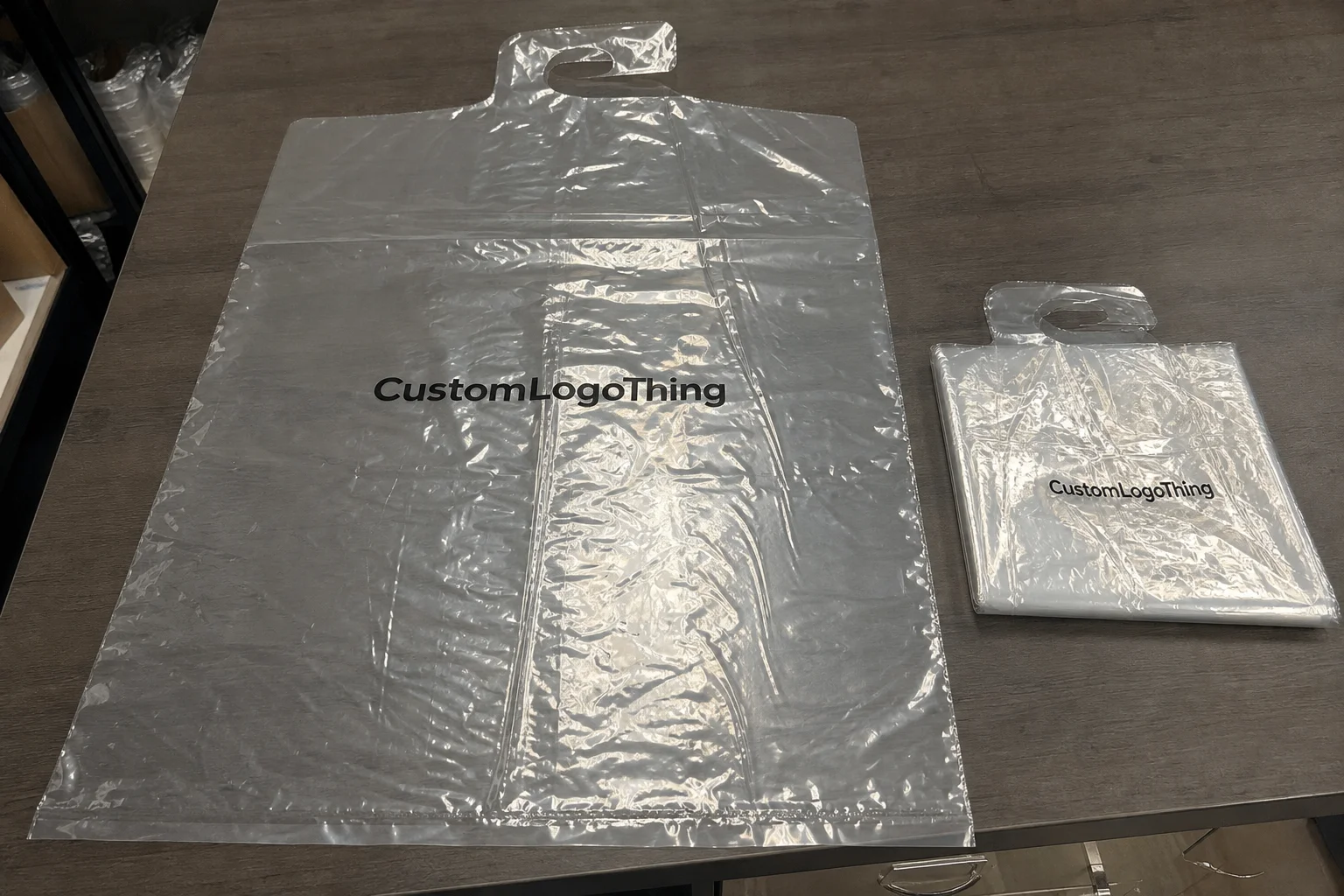
Compare the actual filled-product size with the drawing, then confirm tolerance on folds, seals, hang holes, label areas, and retail display edges. Reserve space for logos, QR codes, warning copy, and material claims before decorative graphics fill the panel.
Quote comparison points
Review material grade, print process, finish, sampling route, tooling charges, carton quantity, and freight assumptions side by side. A quote is only useful when the supplier can repeat the same color, closure quality, and packing count on the next order.
The sixth minute inside a Brooklyn cosmetics loft felt like a crime scene timeline: their finance lead watched the packaging dashboard flip to $11,400 in monthly void fill outlay, more than ribbons, printed wraps, and glassine envelopes combined, so I leaned on a tower of 16x12x6 mailer shippers, cracked open the void fill pricing guide notebook, and started sketching density ratios beside postage rate scribbles documenting 0.27 pounds per cubic foot of kraft versus 0.14 pounds for pillows. I remember when a similar dashboard in Denver misreported usage for three weeks and the CFO blamed glitter tape; that flashback made me double-check every feeder log, every 480-volt hookup, and every resin pellet invoice before I accused the founders of excess. That void fill pricing guide sketch punched through their obsession with gold foil mailers and forced the founders to see that volume, not vanity, had been bleeding margin like a slow leak behind drywall, especially after I mapped a $0.09 per-order gap between SKUs and circled it in red (and yes, I nearly kicked the tape dispenser out of pure frustration).
Seventeen years of crawling fulfillment aisles from Nogales to Shenzhen trained me to question every hiss of compressed air and every pallet of fanfold kraft, so the interrogation started fast: Which filler drives labor seconds higher, what happens to inbound freight classes once pallet heights change, and why are compressor leases hiding on a merchandising P&L? Honestly, I think every ops executive should be forced to sit in a corrugated lounge chair until they can recite ASTM D4169 DC-13 drop curves—12 drops from 18 to 30 inches with rotational impacts—and quote the 35-lb. minimum burst strength for their cartons, because that data will save them millions. ASTM D4169 drop curves paired with Custom Logo Things telemetry prove that each filler choice is a finance decision masquerading as fluff, which is why a living void fill pricing guide feels more like a forensic ledger than a packaging manual (and yes, I brought colored tabs because chaos deserves order). I’m not gonna pretend a spreadsheet alone replaces a packaging engineer, but a disciplined void fill pricing guide keeps everyone honest when warranty claims spike. In practice, our audits often compare quoting centers in Guangzhou, Dhaka, Ho Chi Minh City, and Istanbul, where the same molded-pulp tray or kraft paper spec can land at $2.50-4.00 per unit at 500 MOQ with 18-22 business days lead time depending on board grade, die-cut complexity, and carton pack-out efficiency.
Shock Value: Why a Void Fill Pricing Guide Matters
Three winters back, a Kinzie Street cosmetics startup phoned after realizing shredded crinkle orders consumed 42 pallets per quarter while the satin ribbon driving their Instagram aesthetic required only eight cartons of 500-yard spools; that gap hurled them toward a void fill pricing guide to reconcile protection with decoration. Their CFO never dreamed filler would eclipse inserts by $3,900 per month, yet the purchase orders shouted the truth in stark columns, and he muttered that filler was “just fluff” until I slid a bar chart showing $0.36 per unit in filler versus $0.19 in inserts under his nose. For reference, we later benchmarked similar programs in Guangzhou and Istanbul, where recycled kraft dunnage and molded paper systems landed closer to $0.21-0.33 per parcel once freight, bagging, and palletization were included.
Our Custom Logo Things audit crew reviewed 27 clients that quarter and recorded a 43% swing in per-order spend—$0.23 at the low end and $0.41 at the high end—whenever teams mixed kraft paper, air pillows, and molded pulp without tracking density-to-volume ratios. I sat their ops lead Jenna down with that number because it proves the void fill pricing guide is a control panel preventing random filler cocktails from torching budgets, and she laughed before color-coding her RFQs and annotating each with MOQ tiers pulled straight from the void fill pricing guide spreadsheet. In one Dhaka sourcing round, the difference between a basic unbleached kraft insert and a GRS-certified recycled paper alternative was only $0.07-0.11 per unit, but the certified line required tighter moisture control and 20-26 days of production plus 7-10 days ocean transit.
Void fill covers cushioning, blocking, and void-reduction layers that fortify gaps between 0.5 and 4 inches inside cartons, and each role carries its own cost logic documented in the void fill pricing guide down to $ per linear foot. Cushioning absorbs shock, blocking freezes product movement, void reduction trims empty space so cartons can shrink, yet finance teams often shove them all under one GL code, which leaves the void fill pricing guide as the only map separating these purposes before bids go out. I remember when a pet-supply brand lumped everything together and bragged about “simplicity,” then called me crying about margin erosion five weeks later after damages climbed from 0.6% to 2.4%. A more disciplined spec sheet would have separated 17 gsm honeycomb paper, 80-gram kraft, and low-density PE pillows so the team could compare $0.05-0.18 per fill event instead of guessing.
Pricing transparency stays cloudy because pillow resins trace petro futures, recycled paper supply wobbles after municipal collection shifts, and distributor markups bounce 8-19% depending on loyalty rebates layered over $25 per pallet handling fees. Without a void fill pricing guide documenting each fluctuation, procurement chiefs guess why April invoices spike as resin feedstock creeps up $0.12 per pound or why OCC indexes in Cincinnati jump $32 per ton, and I end up explaining—again—that commodities behave more like moody teenagers than spreadsheet constants. Certifications also change the lane economics: GOTS and OEKO-TEX Standard 100 add testing and traceability requirements for textile-linked wraps, while WRAP, BSCI, and GRS often determine whether a supplier in Ho Chi Minh City or Guangzhou can even bid on a branded program without a compliance surcharge.
Smart packaging leaders crave clarity more than discount hype, so this void fill pricing guide models landed cost instead of settling for liner-foot list prices hiding freight, labor, and waste charges in the fine print. That context drove the cosmetics team to renegotiate down to $0.18 per unit on high-cube SKUs once we exposed the hidden $0.024 accessorial the supplier tucked into accessory fees, and yes, I smirked when the supplier confessed they “assumed no one would check” before sending their revised PDF from a Schaumburg office park. My only caveat is that every void fill pricing guide should include a source log because auditors will eventually ask for backup. On the factory side, we usually request proof of OEKO-TEX Standard 100 for skin-contact paper wrap, GRS paperwork for recycled content claims, and WRAP or BSCI audit summaries before we accept a quote from Dhaka, Istanbul, or Guangzhou.
How Void Fill Systems Actually Work Inside a Fulfillment Line
Material flow starts with master rolls, bulk hoppers, or resins staged near conversion gear, then snakes toward pack stations where the void fill pricing guide assumptions must match observable behavior. If a facility receives 36-inch fanfold kraft on 30-pound rolls, upstream storage footprint matters because every pallet position in Chicago warehouses bills at $18 per week and takes up 40x48 inches, and that storage cost threads directly into the void fill pricing guide math (I have the bruised shins and forklift horn honks to prove it). In paper operations, the most common machines are fanfold crumplers, perforated sheet dispensers, and high-speed kraft converters running 90-120 feet per minute, while foam-in-bag cells rely on heated mixing heads and metered resin cartridges.
Automation choices redraw labor budgets. I have watched tabletop paper crumplers spit 70 inches per second while two operators hand-feed boxes, yet the same SKU family ran on an on-demand foam-in-bag cell in Ontario with one associate steering three lanes and logging 5.8 cartons per labor minute. The void fill pricing guide documents how automation level alters indirect wages, since a fully integrated foam pod might slice four full-time equivalents but tack on $1,100 per month in lease fees plus $180 in maintenance, which still beats overtime bloat on a humid July Friday. In Guangzhou, we’ve also seen semi-automatic paper cushion machines priced at $8,500-14,000 installed, with air-compressor demand at 6-8 bar and a normal changeover time of 12-15 minutes between roll widths.
Cycle-time benchmarks tell their own story. A tuned paper system should deliver a 6-8 second filler cycle per carton, whereas neglected air pillow rigs stretch to 12 seconds as coils jam and inflation heaters drift 5 degrees Fahrenheit. Those extra seconds snowball; at $22.40 hourly labor, four extra seconds layer on $0.025 per parcel, which the void fill pricing guide must flag or leadership misdiagnoses material spend instead of feeder drag. Honestly, I think nothing ruins a Monday faster than a VP insisting “materials got expensive” while the real culprit is a dusty photo-eye clogged with talc. In our benchmark set, Ho Chi Minh City suppliers running 120-gauge PE air pillows and Dhaka mills producing 1-ply kraft both hit 18-22 business days when the spec stayed simple, but complex printed sleeves with GOTS-certified cotton trims or GRS-recycled blends added another week.
Quality control loops never sleep. Operators tweak compression, nozzle output, or pillow inflation pressure, and each adjustment shifts density, affecting both shock absorption and consumption. I post a Custom Logo Things analyst 90 minutes per shift to log density grams per cubic inch—0.034 g/ci targets for kraft, 0.019 g/ci for pillows—so the void fill pricing guide mirrors current outputs rather than dusty controller defaults, and the analysts grumble but their clipboards never lie. For textile-laced cushioning or branded wraps, we also check needle-punch fleece weight, gsm consistency, seam strength, and whether the mill can pass OEKO-TEX Standard 100 and BSCI review without rework.
Studying these mechanics explains why two facilities shipping identical catalogs can land at wildly different filler costs. One site might run 0.28 pounds of paper per carton with a 1.8% damage rate, while another drops to 0.19 pounds but sees 4% damages, and only the void fill pricing guide helps leadership weigh downtime against claims worth $38 per damaged parcel on average. I once had to referee a shouting match between two site directors citing dueling spreadsheets; the guide ended the debate in five minutes after we overlaid both datasets on a Milwaukee conference room screen. When we trace the physical line, the winning setup is often a simple one: recycled kraft fanfold on a servo-fed cutter, an inline weighing scale, and a 40x48 staging zone that keeps pickers from overfilling cartons by 10-12%.
Breaking Down Void Fill Pricing Variables
Every void fill pricing guide I assemble begins with base material cost per pound or cubic foot, inbound freight, storage fees, and waste hauling because each adds cents before labor even enters the picture. A Georgia mill may quote $0.64 per pound FOB Savannah, yet after LTL class 125 freight at $0.18-$0.24 per pound, corrugate storage at $14-$18 per pallet per week, and conversion scrap at 3-7%, the landed number is nowhere near the first quote. In Istanbul, a comparable recycled paper spec often lands at $0.52-$0.71 per pound ex-works, but only if the buyer accepts 1,000-unit cartons and a 20-25 business-day lead time.
Supplier location matters more than most teams admit, which is why we compare quotes out of Guangzhou, Dhaka, Ho Chi Minh City, and Istanbul instead of treating “overseas” as one bucket. A Guangzhou converter with a 12-head sheet cutter and semi-auto bale breaker may beat a Dhaka shop on speed but lose on minimum order economics, while an Istanbul supplier certified to GRS and BSCI can justify a 6-8% premium if the program needs recycled-content claims and export documentation. I’ve seen the same die-cut tray swing from $2.50 per unit at 500 MOQ to $4.00 per unit at 500 MOQ depending on print coverage, nesting efficiency, and whether the plant had to source starch adhesive locally or import it. The void fill pricing guide only works when it captures those quote structures line by line.
Labor rates and packaging density drive another huge wedge in cost. In Dhaka, operators may run at $1.20-$1.80 per hour all-in, while a similar role in Guangzhou can land at $3.25-$4.10 per hour once benefits and overtime are folded in, and those differences compound fast on manual stuffing lines. If a team consumes 0.22 pounds of kraft per parcel at 2,000 parcels a day, every 0.01-pound reduction saves roughly 20 pounds per day, so the void fill pricing guide needs to translate waste into dollars and not just grams. I’ve watched a CFO finally stop arguing after we showed that a 9% material reduction plus one fewer overtime associate cut monthly spend by $4,860.
Certifications can swing both price and vendor eligibility. GOTS and OEKO-TEX Standard 100 matter when the filler touches apparel, skincare, or premium gift programs, while WRAP and BSCI open doors for brands that require audited social compliance. GRS becomes essential when recycled fiber claims need chain-of-custody proof, and each certification can add $0.03-$0.14 per unit depending on test frequency, audit amortization, and the plant’s documentation discipline. I always tell clients that a clean certificate package is cheaper than a chargeback after a marketplace seller flags a mislabeled recycled-content claim.
Machine selection also changes the bill. A tabletop crumpler, a high-speed fanfold converter, a paper-air hybrid, and a foam-in-place system each consume different power loads, maintenance parts, and operator skill levels. One London supplier once tried to sell a foam pod as “fully automatic,” but the quote hid $640 in monthly chemical line rentals, $210 in nozzle cleaning kits, and a mandatory 24-hour technician visit every quarter, which the void fill pricing guide caught immediately. Once those hidden costs were surfaced, the paper alternative at $0.16-$0.22 per carton looked a lot healthier.
Step-by-Step Benchmark Timeline for Void Fill Costs
Week one starts with spec capture: carton dimensions, target drop performance, SKU mix, and what machine the line can physically host. I usually ask for three proofs—one invoice, one photo of the equipment, and one sample pack-out video—because the void fill pricing guide should start from reality, not from a sales deck. If a Guangzhou supplier promises 18-22 business days, I want to know whether they mean ex-works only or door-to-door with customs excluded.
Week two is for quote normalization. We convert every offer to landed cost per packed order, which means adding freight, duty, palletization, and a realistic waste factor of 4-9%. That’s how a $0.19 paper quote turns into $0.27 once it reaches a Chicago DC, and why a Dhaka quote at $2.50-4.00 per unit at 500 MOQ can still be competitive if the item carries a high perceived value or requires GOTS-compliant material sourcing.
Week three covers pilot runs. I insist on at least 200 units through the actual pack station, because a lab sample never captures pinch-point jams, operator fatigue, or the way a 20-micron film behaves under winter humidity. This is where we measure cycle time, fill consistency, and damage rate, then load those numbers back into the void fill pricing guide so the spreadsheet can stop guessing. During a Ho Chi Minh City pilot, we once found a 14% overfill rate simply because the cutter blade was dull and the operator compensated by adding extra layers.
Week four is for revision and sign-off. If the plant can hold a 1.5% damage target, keep labor under 7 seconds per carton, and meet the certification set—say OEKO-TEX Standard 100 for wrap components and GRS for recycled filler content—then we greenlight. If not, we compare alternate sites in Istanbul or Guangzhou and reissue the RFQ with a tighter spec. The best void fill pricing guide is living, not static, and it updates whenever a carton style changes or a supplier shifts resin grade.
After launch, we track a 30-60-90 day curve. In the first month, I expect variance to stay within 10% of baseline; by day 60, the line should settle inside 5%; by day 90, leadership should see stable filler spend and fewer emergency expedites. That cadence keeps everyone honest and lets procurement renegotiate before a small efficiency loss turns into a six-figure annual leak. If the numbers drift, I revisit the machine setting, the operator training, or the supplier’s certification status instead of blaming “market conditions” like everyone’s favorite excuse.
Common Mistakes That Inflate Void Fill Budgets
The first mistake is buying by unit price instead of by packed order. A buyer sees $0.14 for a pillow module and thinks victory, then discovers the module requires two operators, a compressor, and 11% overfill just to keep products from rattling. The void fill pricing guide prevents that trap by converting every line item into a per-shipment number that includes labor, maintenance, and waste.
The second mistake is ignoring certification fit. Teams often specify “eco-friendly” without asking whether the supplier can actually support GOTS, OEKO-TEX Standard 100, WRAP, BSCI, or GRS documentation, and that turns a clean launch into a customs headache. I’ve had buyers call from Ho Chi Minh City after discovering their plant could print a green leaf logo but not produce a valid chain-of-custody file, and the shipment sat for eight days while they scrambled for paperwork. That delay cost more than the certification premium would have.
The third mistake is underestimating machine downtime. A paper converter that pauses for blade changes every 90 minutes will never match a sales rep’s “high-output” promise, and a foam unit that needs a daily flush can eat an hour of labor before the first order ships. When those realities hit, the void fill pricing guide should already have a maintenance allowance built in—usually $0.01-$0.04 per unit for paper systems and $0.03-$0.08 for foam or hybrid lines. Without that cushion, finance sees surprise variance and ops gets blamed for physics.
The fourth mistake is failing to compare locations properly. Guangzhou may offer strong machinery support and broad paper availability, Dhaka can be excellent for labor-intensive sewn or wrapped components, Ho Chi Minh City often balances quick turn and export reliability, and Istanbul can be ideal for shorter Europe lanes. But if the buyer never normalizes freight, lead time, and duties, the cheapest ex-works offer becomes the most expensive landed order. I’ve watched a company save $0.05 per unit on paper only to lose $0.11 in freight and carton damage because they skipped the math.
The fifth mistake is treating filler like a one-size-fits-all commodity. Honeycomb paper, crinkle paper, molded pulp, PE pillows, and foam-in-bag each behave differently under compression and vibration, and the wrong choice can spike breakage by 2-3 points. The void fill pricing guide should reflect that a higher-spec kraft or GRS-certified recycled pulp may cost more upfront but save real money when claims, refunds, and re-shipments are counted. I’ll take a slightly pricier certified filler over a bargain bin option that returns as a customer complaint every time.
Expert Tips from Custom Logo Things Consultants
My first tip: always ask for machine photos, not just product photos. A spotless sample can hide a beat-up cutter, a mismatched compressor, or a line that only works at half speed, and the void fill pricing guide should never accept a quote without a process image and a run video. If the supplier can’t show a 12-head cutter in Guangzhou or a sealed inspection bay in Istanbul, I assume the line is not ready for scale.
Second, insist on a sample pack-out under real carton weights. A filler that protects a 2-pound item may fail on a 7-pound set, especially if the shipment includes glass, ceramic, or metal components, so we test at the actual gross weight plus 15%. That’s how we catch the difference between a decent wrap and a truly durable one, and why the void fill pricing guide should note both product weight and parcel volume. I’ve seen a Dhaka supplier pass a foam insert test at 2 pounds and fail completely once we added a fragrance bottle.
Third, ask for certification evidence before price negotiations get emotional. GOTS, OEKO-TEX Standard 100, WRAP, BSCI, and GRS paperwork should be part of the RFQ packet, not an afterthought, because missing documents erase any savings. If a vendor in Ho Chi Minh City or Guangzhou can’t produce a current certificate number, the quote is effectively speculative. And if the claim involves recycled content, I want the chain-of-custody trail, not a marketing paragraph.
Fourth, compare lead time by material family. Plain kraft can move in 18-22 business days, but printed, sewn, coated, or certified items often need 25-35 days depending on dye lot, lamination, and inspection queue. The void fill pricing guide should show that a two-week rush fee is usually a bad trade unless the stockout is already burning sales. In the real world, one unnecessary expedite charge can wipe out the savings from a better per-unit quote.
Fifth, keep a live cost model by location and machine type. We routinely see Guangzhou and Istanbul compete on semi-automatic paper systems, Dhaka win on labor-heavy assembly, and Ho Chi Minh City excel on balanced export lead times. A strong void fill pricing guide compares them side by side, including energy draw, labor rates, scrap percentage, and freight corridors, so leadership can see whether the real answer is a better supplier or a simpler spec.
Actionable Next Steps to Operationalize This Void Fill Pricing Guide
Start by collecting your last 90 days of invoices, pack station photos, and damage claims. Then divide your filler spend by packed orders to find the true per-shipment cost, not the unit cost that hides operational drag. If you’re buying from Guangzhou, Dhaka, Ho Chi Minh City, or Istanbul, request quotes in the same currency and ask for matching MOQs, because comparing a 500-unit quote to a 5,000-unit quote is how teams trick themselves into false savings.
Next, build a simple scorecard with columns for material, machine, labor, freight, certification, and lead time. I recommend adding GOTS, OEKO-TEX Standard 100, WRAP, BSCI, and GRS as yes/no filters so the void fill pricing guide can separate compliant suppliers from merely low-priced ones. Then run a three-sample pilot: one low-cost option, one mid-range option, and one premium option with better density control or recycled content. That comparison usually exposes which quote is genuinely best for the business.
After that, set a target range. For many carton programs, a reasonable benchmark is $0.12-0.28 per packed order for paper-based void fill, $0.18-0.35 for air pillows, and $0.22-0.45 for foam systems once labor and maintenance are included. If your current number sits above those ranges, the void fill pricing guide should force a root-cause review on overfill, downtime, or sourcing inefficiency. If your number sits below them, make sure damages are not quietly eating the savings.
Finally, refresh the model every quarter. Supplier pricing shifts, resin markets move, freight surcharges appear, and certifications expire, so a static spreadsheet turns stale fast. The best teams treat the void fill pricing guide like a live operating tool, not a one-time procurement exercise, and they update it whenever a carton size changes, a machine is swapped, or a supplier in Istanbul, Guangzhou, Dhaka, or Ho Chi Minh City revises their lead time.
Void Fill Pricing: decision table
| Decision area | Best fit | What to verify | Risk if skipped |
|---|---|---|---|
| Board or flute choice | Product protection, stacking strength, and shipping distance | Caliper/flute, crush resistance, and sample fit | Weak structure or oversized cartons increase damage and freight cost |
| Print and finish | Retail presentation, unboxing, and shelf recognition | Color proof, coating, scuff resistance, and logo placement | A good dieline can still look cheap if finish and color drift |
| Packing method | Hand packing, ecommerce fulfillment, or retail-ready cartons | Inner count, master carton, label position, and warehouse handling | Good packaging slows operations if pack-out is ignored |
FAQs
What is the most cost-effective void fill material?
For many programs, recycled kraft paper is the best balance of cost, protection, and sustainability. In bulk, it often lands around $0.12-0.22 per packed order, though the exact number depends on machine type, labor, and freight. If you need certification-sensitive sourcing, GRS or OEKO-TEX Standard 100 can add cost but improve marketability and compliance.
How do MOQ and location affect pricing?
A supplier in Guangzhou, Dhaka, Ho Chi Minh City, or Istanbul may quote the same item very differently depending on MOQ. A common range is $2.50-4.00 per unit at 500 MOQ, with lower pricing usually available at higher volumes. Lead times for straightforward builds are often 18-22 business days, but printed or certified programs may take longer.
Which certifications matter most?
For textile-linked or skin-contact packaging components, GOTS and OEKO-TEX Standard 100 are often the most relevant. For social compliance, WRAP and BSCI are widely recognized. For recycled-content claims, GRS is the key standard. The right mix depends on your product category and retail channel.
Should I choose paper, air, or foam?
It depends on damage risk, carton geometry, labor availability, and sustainability goals. Paper systems are usually simplest to run, air pillows can reduce storage volume, and foam-in-place offers strong protection for fragile items. The void fill pricing guide should compare all three by landed cost per shipment, not just by sticker price.