Acrylic Beanies Wholesale Pricing looks simple until the quote gets real. One supplier says $3.10. Another says $5.85. Then the details start showing up: yarn weight, knit density, decoration method, packing, freight terms, setup charges, and whether the finished cap feels like winter merch or a sad sock with a cuff.
That 30-cent savings on a thin acrylic beanie can get expensive fast. Complaints go up. Staff stop wearing it. Retail buyers pass because the knit has no body. The logo puckers. Not exactly the brand impression most people are chasing, unless the goal is “clearance bin, but colder.”
Acrylic beanies are still one of the easiest cold-weather products to buy in volume. They are warm, lightweight, durable, familiar, and useful across retail merch drops, employee winter kits, school fundraisers, brewery gear, contractor uniforms, outdoor event giveaways, and nonprofit donor gifts.
The hard part is not finding the lowest number. Anyone can find a low number. The useful skill is knowing what affects the quote, what matters for the intended use, and what can be simplified without making the finished beanie look cheap.
The Cheap Beanie Usually Costs More Than You Think
Cheap beanies are tempting because they make the spreadsheet behave. If an event needs 1,000 pieces and the budget is tight, shaving $0.40 per unit sounds smart. Sometimes it is. Sometimes it buys a beanie with low knit density, weak stretch recovery, and a cuff that collapses after decoration.
Buyers usually compare unit price first. Fair enough. But the quote only means something if the specs match. A 9-inch single-layer acrylic beanie is not the same product as a 12-inch double-layer rib knit beanie with a folded cuff and 8,000-stitch embroidery. They both go on a head. That is about where the similarity ends.
The real cost changes with the details:
- Yarn weight: heavier acrylic yarn usually feels warmer and more substantial, but it costs more.
- Knit structure: 1x1 rib, 2x2 rib, waffle knit, cable knit, and jacquard all stretch and decorate differently.
- Decoration: embroidery, woven labels, faux leather patches, rubber patches, and printed labels each carry different setup and application costs.
- Packaging: bulk pack is cheaper; individual polybags, hang tags, barcode labels, and retail folding add labor.
- Freight: air shipping can rescue a deadline, but it will not be gentle on the budget.
For a one-day outdoor giveaway, a basic cuffed acrylic beanie may be fine. For staff uniforms, retail merch, or donor gifts, hand feel, logo execution, and reorder consistency matter more. If people are supposed to wear the hat all winter, do not buy the flimsiest option just to win a price comparison.
Blunt buying rule: if the beanie feels cheap in your hand, it will look cheaper on camera and even cheaper after three weeks in a coat pocket.
What You Actually Get With Bulk Acrylic Beanies
Bulk acrylic beanies are knit caps made from synthetic acrylic yarn. Buyers choose acrylic because it balances warmth, color range, durability, and reasonable production cost. Wool has its place. Cotton has its place. For wholesale custom beanies, acrylic usually wins because it is predictable, available in many stock colors, and easier to produce consistently at higher quantities.
Acrylic yarn holds color well, dries faster than wool, and resists shrinking. It also avoids the higher cost and care issues that come with wool blends. For a school, brewery, construction company, nonprofit, or event team ordering 144 to 5,000 pieces, that matters.
Common styles include:
- Cuffed beanies: the standard promo and retail style, usually best for front embroidery or a patch.
- Slouch beanies: longer body, softer casual fit, often 11 to 13 inches tall before folding or styling.
- Pom beanies: winter retail look, often used for schools, sports groups, and seasonal merch.
- Rib knit beanies: stretchy, textured, and reliable for adult one-size programs.
- Fisherman beanies: shorter profile, popular for retail brands, breweries, and lifestyle merch.
- Skull caps: tighter fit and lower profile, better for some workwear programs where bulk is an issue.
- Double-layer winter beanies: warmer, heavier, and more substantial in hand.
The difference between a retail-style beanie and a cheap giveaway beanie is not mysterious. Feel the stretch. Check whether the cuff bounces back. Look at the seam comfort. Lay it flat and see if it has shape or looks tired before anyone wears it.
A retail-grade acrylic beanie usually has better knit density, cleaner finishing, and a cuff that can hold embroidery or a patch without twisting. The base product matters before decoration starts. A nice logo cannot rescue a weak hat.
Decoration Options That Change the Finished Look
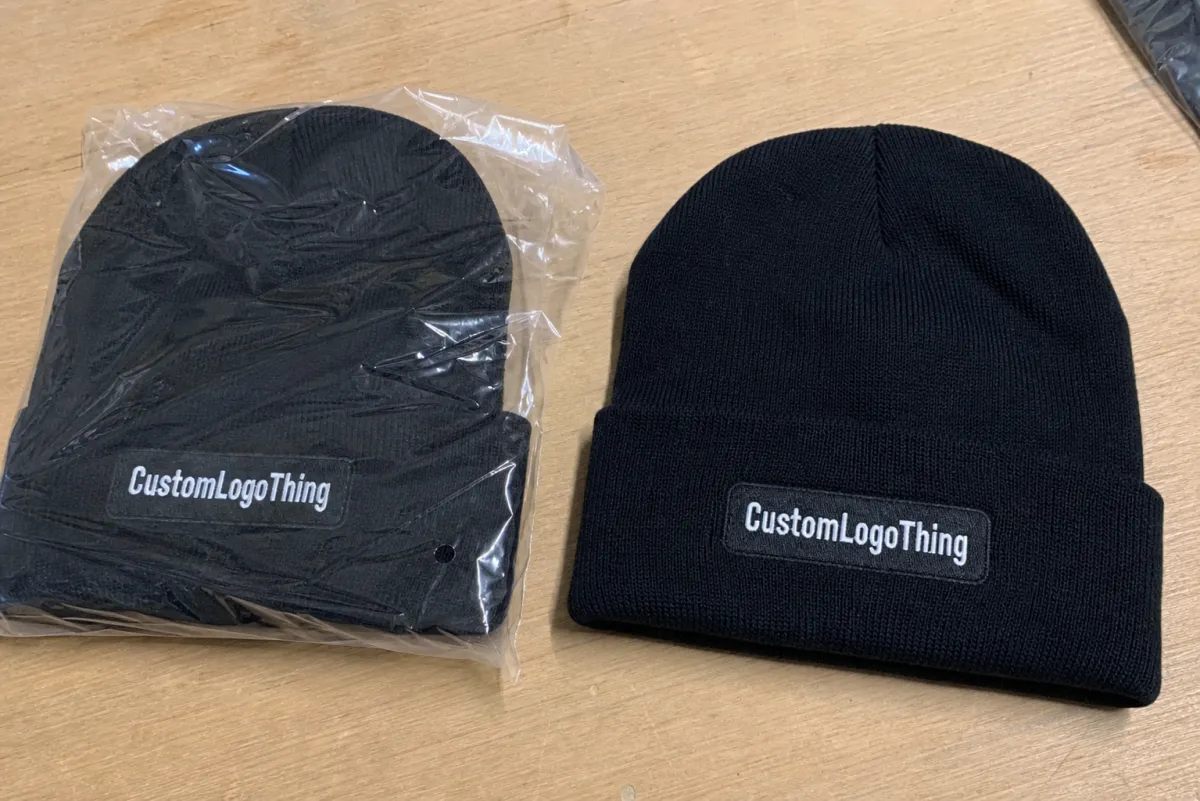
Decoration is where buyers either make the beanie look retail-ready or accidentally create a tiny stitched crime scene. Embroidery is the default premium option for acrylic beanies because it is durable, familiar, and works well on cuffed knits. Bold text, simple icons, and high-contrast marks usually stitch cleanly.
Embroidery has limits. Tiny text fills in. Thin lines disappear. Gradients do not translate. A logo that looks great at three inches wide on a screen may need simplification before it belongs on a stretchy knit cap. This is one of the most common mistakes: buyers want the full brand system on a cuff that has maybe 2 to 2.5 inches of usable height.
Patch and label options can solve that problem.
| Decoration Method | Best For | Typical Tradeoff | Common Cost Impact |
|---|---|---|---|
| Embroidery | Simple logos, bold text, classic promo style | Struggles with tiny lettering and fine detail | Lower to mid range, often setup plus stitch count |
| Woven label | Small text, retail trim, clean edges | Less dimensional than embroidery | Mid range, with label production and sewing |
| Faux leather patch | Outdoor brands, breweries, lifestyle merch | Limited color detail; deboss or print style matters | Mid to higher range depending on size and application |
| Rubber patch | Modern logos, high contrast, durable branding | Requires mold or setup; can feel heavier | Higher setup, better spread across larger runs |
| Printed label | Fine detail, care labels, private label programs | Not as premium on the outside unless designed well | Low to mid range depending on material and sewing |
Placement changes the finished look too. Front cuff is the safest choice. Side cuff feels more retail. Back cuff works for secondary branding. Centered patches feel balanced and easy to merchandise. Offset labels can look sharp if the beanie has the right shape. Wraparound tags and inside care labels make sense for private label programs.
If the beanie is being sold, choose decoration like a customer will inspect it at arm's length. If it is for a jobsite, durability and readability matter more than boutique styling. Both are valid. They are just not the same quote.
Beanie Specs Buyers Should Confirm Before Ordering
Before asking for acrylic Beanies Wholesale Pricing, lock the basic specifications. Otherwise the quote is just a guess wearing a tiny winter hat.
Start with knit type, yarn weight, beanie height, cuff height, stretch, color, decoration size, decoration location, and packaging. Those details decide whether the order is a simple stock program or a more custom production run.
Knit and Yarn Details
Most wholesale acrylic beanies use rib knit because it stretches well and fits many adult head sizes. A 1x1 rib has a tighter, cleaner look. A 2x2 rib feels chunkier and more casual. Waffle knit adds texture. Cable knit creates a classic winter look, often better for fashion or school spirit programs. Jacquard knit allows the design to be knitted into the beanie itself, but it usually requires higher minimums and tighter artwork control.
Fine-gauge acrylic beanies give a smoother surface for labels and patches. Heavier rib knits feel warmer and more substantial, but small embroidery can look uneven if the artwork is too detailed. Not always. Often enough to check before approving production.
Fit and Size Expectations
Most acrylic beanies are sold as one-size adult. That does not mean every style fits the same. A fisherman beanie sits shorter. A slouch beanie needs extra body length. Youth sizes require separate confirmation. Oversized styles may look great in product photos and awkward in a uniform order if the team expected a snug winter cap.
Ask for height in inches. Ask for cuff height. Ask whether the beanie is single-layer or double-layer. If warmth matters, double-layer construction can be worth the added cost. If the order is for indoor retail merch or mild weather, a lighter knit may be enough.
Color and Brand Control
Stock colors are faster and cheaper. Black, navy, charcoal, gray, red, royal, forest, white, and heather tones are common. Custom-dyed yarn gives stronger brand control, but it usually means higher MOQ, longer production time, and more risk if the approval process drags.
For brand color matching, request a physical sample or at least a supplier color card. Screen colors lie. So do office lights. Pantone references help, but yarn is not coated paper, and acrylic texture changes how color reads.
Quality control should include photos or a pre-production sample when the order has retail expectations. Check cuff shape, logo scale, stitch density, patch alignment, seam placement, and whether the beanie looks presentable when laid flat. Product photos matter now. Buyers notice.
Acrylic Beanies Wholesale Pricing: What Changes the Quote
Acrylic beanies wholesale pricing is driven by quantity, style, yarn weight, knit complexity, decoration method, logo colors, patch material, packaging, and shipping method. That is the unglamorous truth. A clean one-color embroidery on a stock cuffed beanie is not priced like a custom-dyed jacquard knit with a rubber patch, woven label, hang tag, barcode sticker, and individual bag.
For planning, simple blank or lightly decorated acrylic beanies may fall into lower wholesale tiers, especially at 500 pieces and up. Basic decorated stock beanies often land roughly in the $3.50 to $7.50 range depending on quantity, decoration, and freight. Retail-grade knits with patches, custom trims, and private label finishing can move into the $7.50 to $14.00+ range. Smaller orders may sit higher because setup and handling are spread across fewer units.
Those are planning ranges, not a promise. Freight, artwork, rush timing, and decoration complexity can shift the final number. Anyone giving one universal price without seeing the logo and quantity is selling confidence, not accuracy.
MOQ also changes the math. Stock color beanies with standard embroidery may start around 48, 72, or 144 pieces depending on the supplier and decoration method. Custom knit patterns, custom-dyed yarn, jacquard designs, rubber patches, and private label packaging often need 300, 500, 1,000, or more pieces to make production efficient.
Quotes vary because suppliers package costs differently. Some include setup, sampling, packing, and freight in a landed price. Others show a pretty unit price and then stack charges like a parking garage: embroidery setup, patch mold, proof fee, carton fee, inbound freight, outbound freight, rush fee, and special packing. Fun little surprise party. Nobody asked for it.
To get accurate pricing, send the useful details upfront:
- Quantity or quantity breaks, such as 144, 300, 500, and 1,000 pieces
- Target budget per unit, if there is a hard cap
- Deadline and whether the date is fixed
- Vector logo file, ideally AI, EPS, or clean PDF
- Preferred decoration method, or permission to recommend one
- Beanie style, color needs, and adult or youth sizing
- Shipping location and any special packing requirements
- Use case: retail sale, giveaway, employee kit, uniform, fundraiser, or donor gift
If you already run seasonal merch or uniform programs, Custom Logo Things can quote quantity breaks through Wholesale Programs so you can compare the real cost difference between “good enough” and “worth selling.” That is usually more useful than chasing a fake cart price.
MOQ, Samples, and Unit Cost Tradeoffs
MOQ is not just a factory power trip. It reflects yarn purchasing, machine setup, decoration setup, labor, packing, and freight efficiency. A 48-piece order can be possible for stock beanies with embroidery, but it will almost always have a higher unit cost than 300 or 500 pieces.
Smaller orders give flexibility. They are good for testing a design, outfitting a small team, or running a limited event. Larger runs spread fixed costs across more units. That is where the pricing starts to improve in a meaningful way.
Here is the practical quantity logic:
- 48 to 72 pieces: useful for small teams, samples, or local events; expect higher per-unit pricing.
- 144 to 300 pieces: common for fundraisers, school groups, employee programs, and small retail drops.
- 500 to 1,000 pieces: stronger price breaks, better for regional events, multi-location teams, and merch programs.
- 2,500+ pieces: better fit for custom trims, private label packing, custom colors, or broad distribution.
Samples come in several forms. A blank stock sample checks fit, material, stretch, and color. A digital mockup checks layout. A pre-production sample checks the real decoration before the full run. A production photo proof helps confirm consistency during larger orders.
Paid samples are worth it for retail sales, influencer boxes, uniform programs, high-visibility events, and any order where color and logo placement cannot be guessed. Skipping samples can save time, but it means approving based on mockups and standard production tolerances instead of a physical item.
Need to protect the budget? Choose stock colors, simple embroidery, standard packing, and fewer custom trims. A well-made cuffed acrylic beanie with clean embroidery often beats a complicated patch-and-label design that costs more and looks worse. Fancy does not automatically mean better. Packaging buyers learn that one early.
For sustainability claims, be careful. If recycled content, FSC-certified paper hang tags, or lower-impact packaging matters, ask for documentation rather than vague “eco” language. For paper-based tags and packaging, the Forest Stewardship Council is a useful reference point. For broader packaging waste guidance, the EPA recycling resources are better than supplier fluff.
Process, Timeline, and Lead Time From Quote to Delivery
The cleanest beanie orders follow a simple process: quote request, artwork review, style confirmation, digital proof, sample approval if needed, production, quality check, packing, shipping, and delivery. Skip steps and the order gets messy. Usually right when the event date stops being theoretical.
Stock acrylic beanies with basic embroidery can often move in about 7 to 15 business days after proof approval, depending on inventory and decoration capacity. More complex orders may take 20 to 35 business days. Custom yarn colors, custom patches, jacquard knitting, private labels, and overseas freight can push production longer, especially if samples are required.
Rush orders are possible sometimes. They are not magic. If the logo file is low resolution, the buyer wants three decoration options priced, and nobody has confirmed the shipping address, the clock is not really running yet.
Delays usually come from predictable places:
- Unclear logo files that need cleanup before digitizing or label production
- Slow proof approvals, especially with committees
- Color changes after sampling
- Quantity changes after production planning
- Missing shipping details or split-ship instructions
- Event deadlines treated as flexible until they suddenly are not
Build a buffer. For event orders, retail launches, school programs, and holiday campaigns, add at least 5 to 10 business days beyond the clean production estimate if the schedule allows. Freight delays do not care about anyone's marketing calendar.
Quality checks should include decoration alignment, logo readability, stitch density, patch adhesion or sewing, color consistency, carton count, and packing method. If the order includes retail packing, confirm hang tags, labels, barcodes, and polybags before production finishes. Retailers do not love receiving 1,000 beanies that need to be reworked by hand. Shocking, I know.
Standards matter more for transit and packaging than most buyers think. If beanies are packed into kits, shipped to multiple locations, or paired with drinkware, packaging design and drop performance should be considered. Organizations such as ISTA publish testing protocols that help define whether packed goods can survive normal distribution. A beanie alone is soft. A kit with a mug, box, insert, and beanie is a different animal.
Want fewer headaches? Approve proofs quickly, confirm quantities before production, provide vector artwork, and decide decoration before asking for a final delivery date. The supplier can move faster when the order is actually defined.
How to Get a Clean Quote Without Wasting a Week
A clean quote starts with a clean request. Choose the beanie style, pick a color range, select the decoration method, decide quantity tiers, set the target delivery date, and prepare the logo file. If the best decoration method is unclear, say that. A good supplier should recommend one instead of forcing embroidery onto a logo that needs a patch.
Custom Logo Things can help match beanie styles to budget, check logo readability, recommend decoration methods, quote quantity breaks, and manage the production details buyers do not want to babysit. That includes setup questions, proofs, packing preferences, and whether the order belongs in a simple promo lane or a more retail-ready program through Wholesale Programs.
Do not over-customize if the goal is simple warm merch. A solid cuffed acrylic beanie, good knit density, and clean front embroidery will outperform a complicated design that eats budget and still looks confused. If the beanie needs to look premium, spend money on the base knit and decoration quality first. If it just needs to keep heads warm at a jobsite, say that too. Different job. Different quote.
Request acrylic beanies wholesale pricing with your quantity, logo, deadline, shipping location, and use case so the quote reflects the real order, not a fantasy cart price. If the beanies need to look retail-ready, say that upfront. If they are basic winter gear for a crew, say that too. Clear input gets cleaner pricing, fewer revisions, and a better finished hat.
FAQ
What affects acrylic beanie wholesale cost the most?
Quantity, yarn weight, decoration method, logo complexity, patch or label material, packaging, and shipping method usually have the biggest impact. Embroidery on a stock cuffed beanie is typically more cost-efficient than custom knit patterns, custom-dyed yarn, or multi-component patch designs. The cheapest unit price is not always the best value if the beanie feels thin, stretches badly, or makes the logo look cheap.
What is the typical MOQ for wholesale acrylic beanies?
MOQ depends on whether the order uses stock beanies or fully custom production. Stock color beanies with standard decoration may start around 48 to 144 pieces, depending on supplier capacity and decoration type. Custom yarn colors, jacquard knit designs, rubber patches, and private label programs often require 300, 500, 1,000, or more pieces. Higher quantities usually reduce unit cost because setup, decoration, and freight are spread across more beanies.
Can I get samples before placing a bulk acrylic beanie order?
Yes. Buyers can usually review a blank sample, digital proof, or pre-production sample depending on timeline, budget, and customization level. A pre-production sample is smart for retail orders, detailed patches, custom labels, or any order where exact logo placement matters. Skipping samples can save time, but it also means approving based on mockups and production standards rather than a physical item.
How long does acrylic beanie production take for wholesale orders?
Lead time depends on stock availability, decoration method, sample approval, order size, and shipping method. Stock beanies with basic embroidery are usually faster and may run about 7 to 15 business days after proof approval. Custom-dyed yarn, patch production, jacquard knitting, or private label finishing can take 20 to 35 business days or longer. Vector artwork, quick proof approval, and locked quantities help avoid delays.
Is embroidery or a patch better for custom acrylic beanies?
Embroidery works well for simple logos, bold text, and classic promotional beanies. Patches are better for fine detail, small text, retail styling, and logos that need a clean edge on a stretchy knit surface. The right choice depends on logo detail, budget, order quantity, and whether the beanie is being sold, gifted, or used as basic team gear.