Wedding Rigid Boxes Cost: Get Pricing, MOQ, and Specs
If you are trying to pin down wedding rigid boxes cost for invitations, favors, jewelry, or keepsake packaging, start with the structure, not the decoration. A rigid box is not a folding carton wearing nicer paper. It costs more because the board has to hold its shape, the wrap has to sit flat, and the finished piece has to look good under harsh room lighting and in photos.
Why wedding rigid boxes cost more than basic packaging
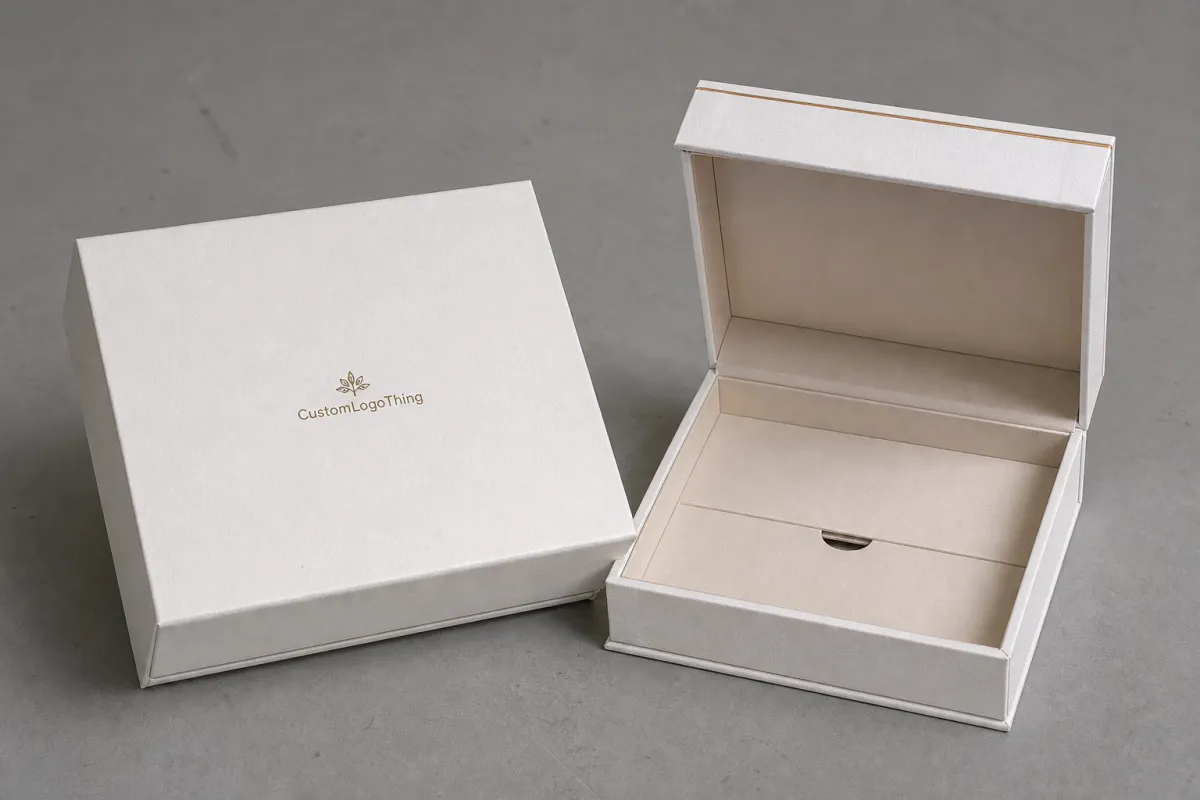
Wedding rigid boxes cost more than standard folding cartons for a very plain reason: a rigid box is built like a presentation object. The shell uses thicker greyboard, the wrap stock has to be aligned by hand, and the closure needs to feel intentional rather than clunky. A folding carton can be printed fast and shipped flat. A rigid box needs assembly, wrapping, alignment, and a lot more patience.
That extra work only makes sense if the box is doing more than holding something. For wedding packaging, it often is. A rigid box may protect invitations, ceremony cards, jewelry, candles, favors, or a keepsake set. It may also survive long enough to be reused, which is not a small thing. I have seen couples keep the box long after the event because the packaging felt worth saving. A flimsy carton, on the other hand, tends to disappear into the recycling bin without ceremony. That difference sits inside wedding rigid boxes cost.
The emotional side matters because it changes how buyers judge the box. If corners bow, print color looks weak, or the lid opens with a rough scrape, the whole package reads as cheaper than it should. That is why buyers ask about wedding rigid boxes cost before they start debating foil, ribbon pulls, or magnetic closures. They are trying to separate meaningful upgrades from decoration that only looks good on a spec sheet.
There is also the practical side. Once the build needs a thicker board, a printed wrap, a custom insert, or a shaped closure, it stops acting like commodity packaging. Labor rises. Setup charges appear. Material waste increases. Freight gets heavier too, which is one of those annoying details that can surprise a buyer who only looked at the box price. If the box also needs an outer shipper to protect it in transit, that adds another layer of handling. None of that is glamorous, but it is why wedding rigid boxes cost what it does.
Wedding rigid boxes cost makes more sense if you compare it with the job a basic carton is expected to do. A carton holds product. A rigid wedding box carries presentation, reuse value, and a certain emotional expectation. Those are different outcomes, and the price gap usually reflects that difference.
A buyer who chases the lowest quote often pays twice: once for the box, and again for the rework when the box fails to feel premium in hand.
Wedding rigid boxes cost: what drives pricing the most
The biggest drivers behind wedding rigid boxes cost are size, board thickness, wrap material, print coverage, and insert complexity. Those five levers move pricing more than any sales pitch ever will. If two suppliers give wildly different numbers, one of those details is almost always the reason.
Size comes first. Larger boxes use more greyboard, more wrap stock, and more hand labor. The increase is rarely linear. A box that is 20% larger can cost far more than 20% extra because it may force a different sheet size, more waste, and a less efficient production layout. That is why wedding rigid boxes cost can jump sharply once the box moves beyond a standard format.
Board thickness matters just as much. Common rigid packaging often uses greyboard around 1200gsm to 1800gsm, and sometimes thicker when the contents are heavy or the presentation has to feel more substantial in hand. Thicker board improves stiffness, but it also raises material cost and can slow die cutting and wrapping. If the box must survive parcel shipping, a heavier build is usually justified. If it only sits on a reception table, the spec can sometimes be trimmed to reduce wedding rigid boxes cost.
Wrap material changes both appearance and price. Plain printed art paper usually costs less than textured specialty paper. Soft-touch lamination, linen textures, pearl stock, and metallic papers all push the quote upward. Add foil stamping, embossing, or spot UV and the number climbs again. The more coverage the print carries, the more each finish shows up in the final wedding rigid boxes cost.
Inserts are another place where buyers get surprised. Foam, EVA, molded pulp, paperboard partitions, and fabric-lined trays each bring their own material and assembly costs. A simple die-cut paperboard insert is usually easier on the budget than custom foam or a multi-compartment tray. If the box holds a necklace, invitation suite, candle, and card, the insert can become a meaningful slice of the total wedding rigid boxes cost.
Then there is the quiet work that never looks dramatic on a quote sheet. Magnets, ribbon pulls, corner protectors, belly bands, custom windows, and specialty closures all add setup time. None of those parts sounds expensive by itself. Put several together on a low-MOQ order and the unit price starts climbing fast. That is not mystery pricing. That is labor, plain and simple.
| Box style | Typical features | Estimated unit price at 300 units | Estimated unit price at 1,000 units |
|---|---|---|---|
| Two-piece rigid box | Wrapped board, simple print, basic insert | $1.85-$2.80 | $1.20-$1.75 |
| Magnetic book-style box | Magnet closure, printed exterior, die-cut insert | $3.40-$5.20 | $2.10-$3.60 |
| Drawer rigid box | Pull ribbon, sleeve, foil or embossing | $4.25-$6.80 | $2.90-$4.90 |
| Shoulder-neck rigid box | Layered structure, premium wrap, custom tray | $5.10-$8.50 | $3.60-$6.20 |
Those are working ranges, not promises. A quote can move up or down depending on print coverage, paper choice, insert detail, and whether the supplier separates tooling fees from setup charges. That is why buyers should ask for pricing at multiple quantities. The jump from 300 to 1,000 units often changes wedding rigid boxes cost more than any finish choice does.
If you want a practical benchmark for transit performance, the test library at ISTA is useful. A wedding box does not always need formal certification, but if it will travel through parcel networks, it should be treated like real freight instead of gift wrap with delusions. I have seen beautiful boxes arrive with crushed corners because nobody tested the outer pack. Pretty does not help much once the box is flattened in a delivery van.
Product details that change wedding rigid boxes cost
Box style changes wedding rigid boxes cost faster than almost anything else. A two-piece lift-off lid is usually the simplest build. A magnetic book-style box costs more because it needs a hinge structure, magnets, and tighter assembly. Drawer boxes add rails and sleeve fit. Shoulder-neck styles are even more involved because they stack parts and require cleaner tolerances. The extra detail looks elegant. It also pushes wedding rigid boxes cost upward.
The more parts a box has, the more labor appears in the quote. Simple setups are cheaper because they wrap and assemble faster. Complex opening mechanisms take longer and demand more quality control. A box that has to open with a smooth reveal, stay aligned, and close without a gap is not built like a generic retail carton. The supplier pays for that time, and so do you. That is the real story behind wedding rigid boxes cost.
Material choices add another layer. Greyboard thickness matters, but wrap paper weight matters too. A 157gsm art paper wrap behaves differently from a textured specialty stock. Lamination helps with scuff resistance, especially on white or pale designs, yet it adds cost. If the box needs a soft-touch finish, expect the quote to rise again. That finish looks refined, and it usually feels refined. The price follows the touch.
Decoration is where many buyers overspend. Foil stamping, debossing, embossing, UV print, ribbon pulls, and windows all look attractive on a sample board. The mistake is stacking every effect without asking whether each one still adds value at production quantity. One strong premium feature often beats five smaller ones. That is how you keep wedding rigid boxes cost under control without making the box feel thin or unfinished.
Artwork placement matters as well. Full-wrap printing costs more than a single-color logo on the lid. Multi-panel art, metallic gradients, and heavy ink coverage can increase setup complexity. If the box must match a wedding palette exactly, the supplier may need tighter color control and more proofing. That should be priced plainly. A box with blush tones and foil script does not cost the same as a plain kraft presentation box, and pretending otherwise only makes the quote harder to trust.
For sustainability, ask whether the wrap stock can be FSC-certified. Standards and chain-of-custody expectations are outlined at FSC. Buyers who need recycled or certified paper should raise that early, because eco paper can affect lead time and wedding rigid boxes cost. The same logic applies to shipping performance. If the box must survive stacking, parcel drops, or event transport, a slightly heavier spec may be the smarter spend. A cheaper box that fails in transit is not cheaper in practice.
Wedding rigid boxes cost, MOQ, and unit price ranges
Wedding rigid boxes cost makes much more sense once MOQ enters the conversation. Low quantities carry the highest unit cost because setup, print preparation, and manual labor get spread across fewer boxes. That is why a 300-unit run can look expensive while a 1,000-unit run starts to look reasonable. Same design. Same labor. Different math.
A practical MOQ for Custom rigid box programs is often 300 to 500 units, though some suppliers will quote smaller runs if the build is simple or if they already have matching components available. The tradeoff is obvious: smaller runs offer flexibility, but the unit cost is higher. If the order is fully custom, the first batch often absorbs a large portion of tooling fees and setup charges. That makes the per-box price feel heavy at low volume, and it is why buyers sometimes think the quote is off when it is really just the math showing through.
Here is the part buyers miss most often. The first quantity jump usually delivers the biggest savings. Going from 300 to 500 units can reduce wedding rigid boxes cost sharply because fixed costs get spread out. Going from 1,000 to 2,000 units still helps, but the percentage drop is usually smaller. Premium finishes can flatten those savings if the labor stays hand-heavy, so the only honest way to know is to compare quotes at several levels.
Sample and prototype charges are usually separate from production pricing. That is normal. If the box needs a physical proof, expect to pay for a sample before bulk approval. A proper sample helps confirm structure, color, insert fit, and closure feel. Skipping that step to save a small amount can backfire fast, especially on wedding packaging where presentation carries real weight. The sample may not be free, but it often protects the larger budget from avoidable mistakes.
Use this as a working framework rather than a fixed promise:
- Simple wrapped rigid boxes: lower wedding rigid boxes cost, best for clean print and basic inserts.
- Magnetic gift boxes: mid-range cost, good for invitation kits and keepsake sets.
- Drawer and shoulder-neck boxes: higher cost, better for luxury presentation and repeated opening.
- Specialty finishes: the fastest way to lift unit price, especially on low MOQ orders.
Ask for tiered pricing, not a single quote. Request 300, 500, and 1,000 units using the same spec. That gives a real view of bulk pricing and shows whether the lower cost per piece justifies a larger buy. If the difference is small, order more. If the savings are thin, keep the run tighter and preserve cash flow. Nobody needs a closet full of fancy boxes just because the spreadsheet looked pretty.
If a supplier can only quote one quantity, the quote is not helping you much. Ask for at least two breakpoints so you can see where the savings actually begin.
There is no magic number that fits every project, but a useful rule is this: the more custom the box, the more the low end gets punished. Simple wrapped rigid boxes can land in a very different range from full presentation sets with inserts, foil, and specialty papers. That is normal. What matters is comparing the same build, not three different builds with one price tag.
Production steps, timeline, and lead time for wedding rigid boxes
The production path for wedding rigid boxes cost is not mysterious, but it does have a few places where time disappears. The usual sequence is quote review, dieline confirmation, artwork check, sample approval, bulk production, inspection, and shipping. If one of those steps stalls, the whole schedule slips.
Artwork cleanup is a common delay. Couples, planners, and brands often send a lovely design file that is not print-ready yet. Fonts need outlining, bleed needs checking, and foil layers need separating. That is where the early back-and-forth starts, and it can affect both timeline and wedding rigid boxes cost if revisions pile up. A clean file saves time and reduces rework. A messy file, frankly, can turn a straightforward order into a small headache.
Sample approval usually takes longer than the actual assembly run. People care about wedding packaging, and they should. Color, texture, magnet pull, insert fit, and board feel all need sign-off. If changes come after the sample, the schedule stretches. A quick estimate is not the same as a reliable delivery date, and those two numbers should never be treated as equals.
For simple Custom Rigid Boxes, a typical timeline may sit around 12 to 18 business days after proof approval. More complex wedding packaging with special finishes, custom inserts, or larger quantities can move into the 18 to 30 business day range. Freight is separate. Ocean shipping, air shipping, and domestic delivery all run on different clocks. A buyer who ignores transit time is not managing lead time. They are guessing.
Lead time also depends on what the factory is already running. Material availability can change the schedule. So can holiday peaks, tooling queues, and order volume. If the paper stock needs to be imported or the insert material needs a special cut, the timeline slows down. It is better to get a realistic plan up front than to force a rush that only increases wedding rigid boxes cost.
A few things speed the process up:
- Final artwork in the correct format.
- Exact dimensions for the contents.
- Clear print and finish instructions.
- A delivery window instead of a vague deadline.
- One decision-maker who can approve samples quickly.
If the boxes will ship individually or move through parcel networks, ask for a packing plan that reflects transit stress. That is where a tester's mindset matters. A beautiful box that crushes in transit is still a bad box. If the supplier understands that, the wedding rigid boxes cost you approve is more likely to match the real outcome.
Why choose us for wedding rigid boxes
Buyers do not need romance in a packaging quote. They need control. That means consistent color, tight structure, clean inserts, and a supplier that can explain where wedding rigid boxes cost is coming from. If the quote is clear, the order is easier to manage. If the supplier can explain the spec in plain English, even better.
At Custom Logo Things, the value sits in the details. We help buyers sort out dimensions, structure, paper wrap, insert type, and closure style before production starts. That matters because the wrong spec can make a box look expensive on paper and disappointing in hand. A well-matched build keeps wedding rigid boxes cost aligned with the actual use case instead of spending money on features nobody notices.
Wedding jobs also tend to involve more variation than people expect. Invitation sets, favor boxes, proposal gifts, jewelry packaging, and keepsake presentation all call for different insert layouts and different opening experiences. A one-size-fits-all box does not solve that. A better supplier should be able to adjust the structure without turning the order into a marathon of revisions. That is the difference between useful support and the usual back-and-forth that burns days.
If you need matching cartons, inserts, or other print packaging alongside the wedding set, browse our Custom Packaging Products. Keeping related items under one supplier helps with color continuity and can also reduce duplicate setup work. Fewer handoffs usually means less friction and a cleaner final quote.
We also keep the procurement side practical. If you need a sample before bulk production, ask for one. If you need multiple quantity levels to compare bulk pricing, ask for those too. If the budget is tight, reduce the finish complexity before you cut the structure down to the bone. That is a better way to protect presentation and keep wedding rigid boxes cost in range.
The best packaging quote is not the cheapest one. It is the one that matches the spec, the schedule, and the event without surprise charges halfway through production. That is the standard worth holding.
Next steps to quote wedding rigid boxes cost accurately
To quote wedding rigid boxes cost accurately, prepare the basics before asking for a number. Box dimensions, intended contents, quantity, print coverage, finish request, insert type, and shipping destination are the minimum. If those items are vague, the quote will be vague too. That is not a supplier problem. That is a missing spec problem.
Reference images help. A mood board or sample photo tells the supplier whether you want a clean matte box, a textured luxury feel, a foil-heavy presentation piece, or a simple wrapped structure with one decorative element. Without that visual reference, two people can read the same brief and price two completely different builds. That is how wedding rigid boxes cost gets messy, and it is honestly one of the easiest problems to avoid.
A strong buying move is to request tiered quotes at 300, 500, and 1,000 units. If the unit cost drops enough at the higher level, you can decide whether the extra inventory is worth it. If the savings are thin, order only what you need. There is no prize for storing expensive boxes in a warehouse.
Another practical shortcut: protect the structure first, then trim the extras. A flimsy wedding box is still flimsy even if it has foil on the lid. A strong rigid shell with one clean premium feature usually performs better than a crowded spec sheet with five upgrades competing for attention. That is the sort of decision that keeps wedding rigid boxes cost sane.
Use this order of operations:
- Confirm the box size and contents.
- Choose the structure and insert style.
- Pick the finish level.
- Request pricing at multiple quantities.
- Approve a sample before bulk production.
- Lock the shipping plan and timeline.
Once the spec is locked, the quote gets much easier to compare. That is the practical way to control wedding rigid boxes cost: define the exact build, then ask every supplier to price the same thing. Do that, and the numbers start making sense.
What affects wedding rigid boxes cost the most?
Size, board thickness, wrap material, print coverage, and insert style usually move wedding rigid boxes cost more than anything else. Special finishes such as foil stamping, embossing, soft-touch lamination, and magnets can raise the quote quickly, especially on smaller orders.
What MOQ should I expect for custom wedding rigid boxes?
A practical starting point is often 300 to 500 units, though some suppliers can go lower on simpler builds. The best unit pricing usually appears closer to 1,000 units, because fixed setup work gets spread across more boxes. That is where wedding rigid boxes cost starts looking more efficient.
How can I lower wedding rigid boxes cost without making them look cheap?
Keep the structure strong and trim the extras first. Simplify the finish, reduce print coverage, or choose one premium feature instead of stacking several. A clean rigid shell with a good insert usually gives better value than a crowded spec that pushes wedding rigid boxes cost up without improving the actual presentation.
How long is the turnaround for wedding rigid box production?
Lead time depends on sample approval, order quantity, finish complexity, and shipping method. Simple runs can move faster, while complex wedding packaging with custom inserts or specialty paper needs more time. Build extra room for proof approval and freight, because the first estimate is not always the final arrival date.
Do inserts and foil stamping change the wedding rigid boxes quote a lot?
Yes. Inserts add material and assembly cost, and foil stamping adds decoration setup cost. The impact is manageable on larger runs, but it shows up fast on low-MOQ orders. If you want the best balance of presentation and value, lock the core spec first and only add the finishes that actually improve wedding rigid boxes cost relative to the look you want.
Here is the most useful takeaway: if you want an accurate wedding rigid boxes cost, ask for the same build at three quantities, insist on a sample, and decide where the box must perform before you decide how decorative it should be. That order keeps the numbers honest and the final box worth handing to a guest.