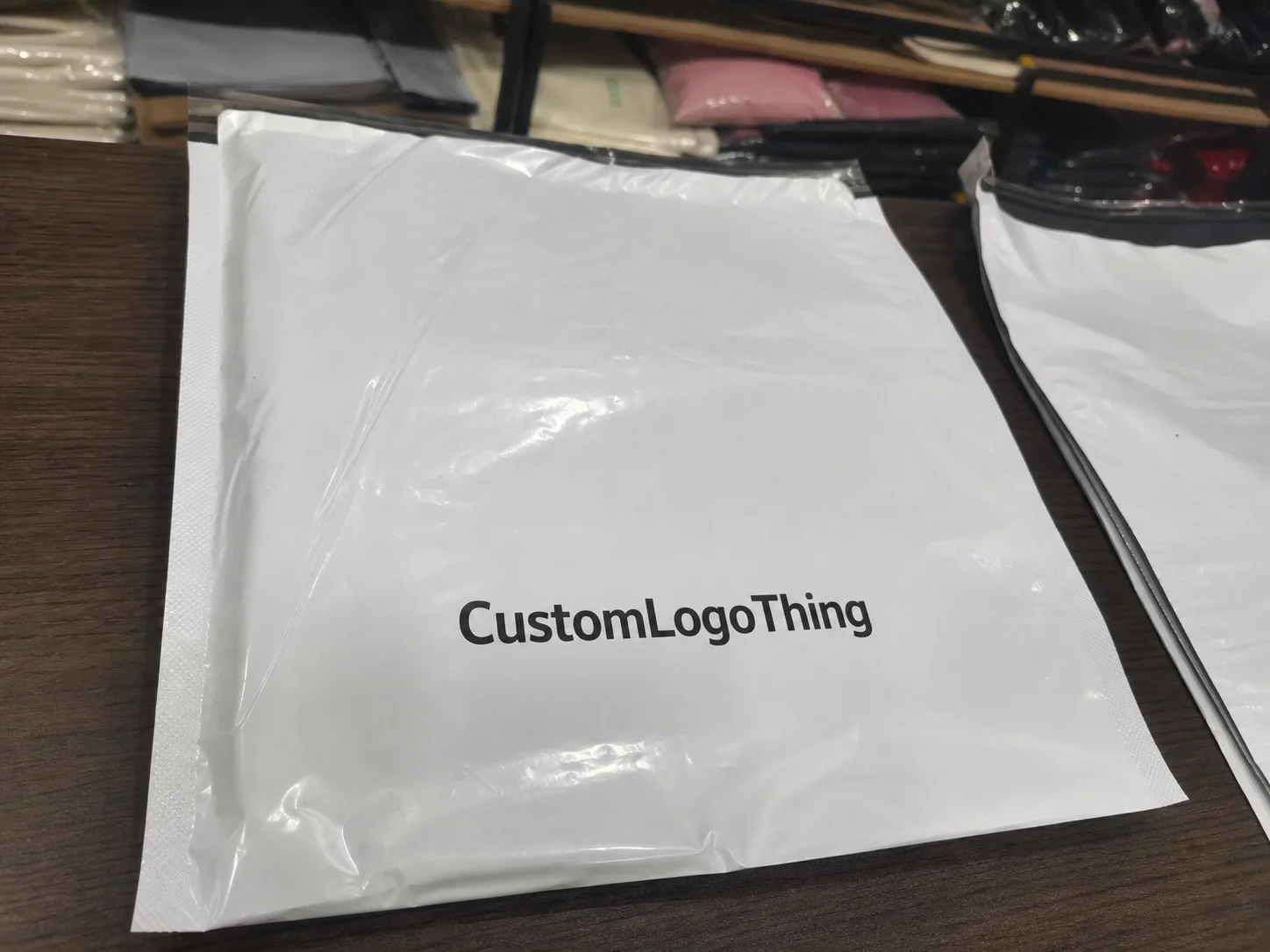
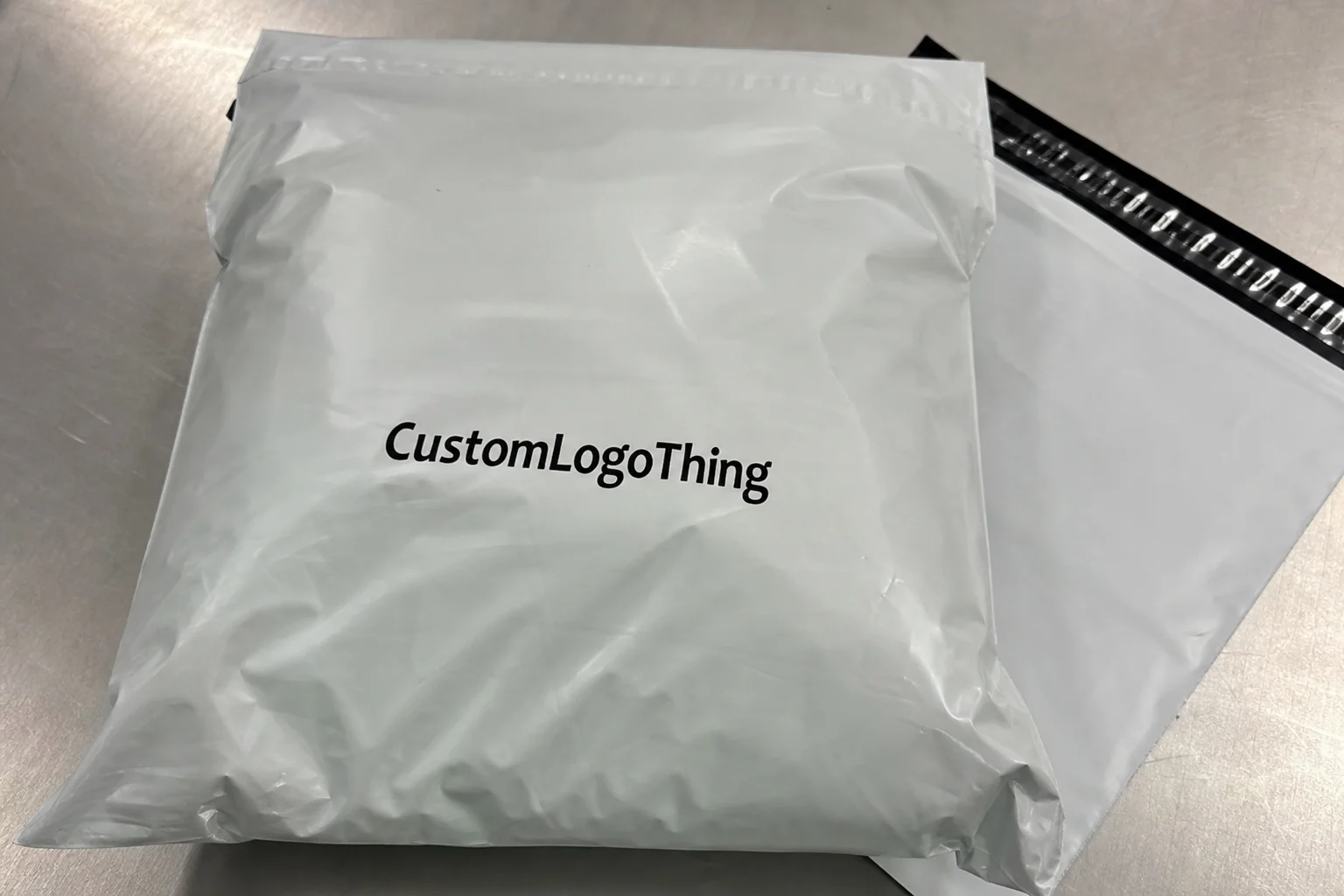
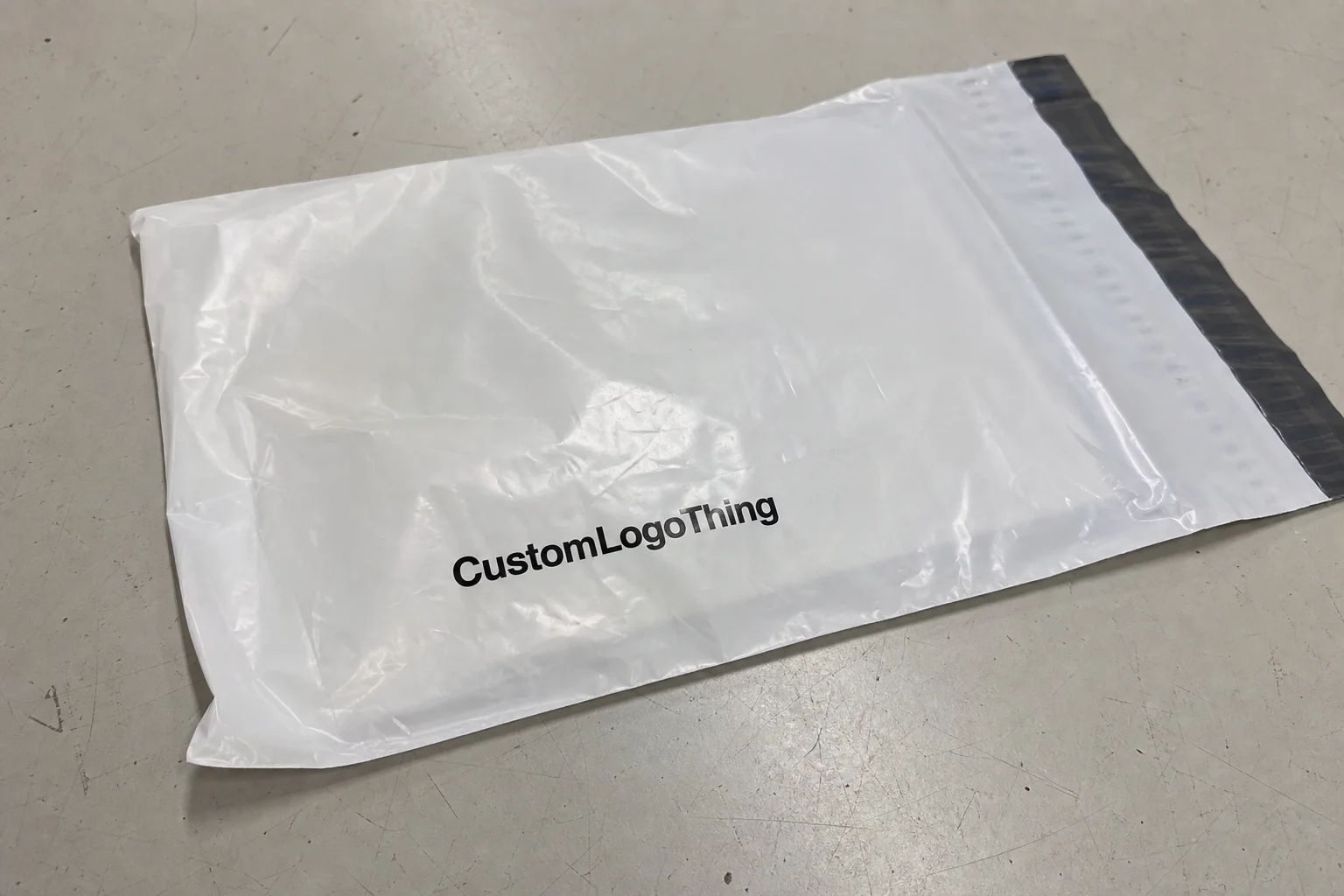
Buyer Fit Snapshot
| Best fit | A Poly Mailer Bag projects where brand print, material claims, artwork control, MOQ, and repeat-order consistency need to be specified before quoting. |
|---|---|
| Quote inputs | Share finished size, material target, print colors, finish, packing count, annual reorder estimate, ship-to region, and any compliance wording. |
| Proofing check | Approve dieline scale, logo placement, barcode or warning zones, color tolerance, closure strength, and carton packing before bulk production. |
| Main risk | Vague material claims, crowded artwork, missing packing details, or unclear freight terms can make a low unit price expensive after revisions. |
Fast answer: A Poly Mailer Bag: Production Spec, Color Control, and Delivery Risk should be specified like a repeatable production item. The safest quote records material, print method, finish, artwork proof, packing count, and reorder notes in one written spec.
Production checks before approval
Compare the actual filled-product size with the drawing, then confirm tolerance on folds, seals, hang holes, label areas, and retail display edges. Reserve space for logos, QR codes, warning copy, and material claims before decorative graphics fill the panel.
Quote comparison points
Review material grade, print process, finish, sampling route, tooling charges, carton quantity, and freight assumptions side by side. A quote is only useful when the supplier can repeat the same color, closure quality, and packing count on the next order.
When someone asks me what is a poly mailer bag, I usually start with the simplest answer I know: it’s a lightweight polyethylene shipping bag made for products that do not need rigid crush protection. That sounds plain enough, but the details matter a great deal. I remember standing on a packing floor in Allentown, Pennsylvania, watching a 2 mil bag save postage on 8,000 apparel orders, and then seeing a different brand lose money because they chose the wrong film thickness for zipper-heavy accessories. Same product category. Very different outcome. Packaging has a funny way of making that point loudly, usually after the first round of returns and a couple of irritated customer emails.
The phrase what is a poly mailer bag often gets lumped together with padded envelopes, bubble mailers, and even compostable-looking shipping bags that are not always truly compostable. That confusion is expensive. In my experience, most shipping mistakes happen before the label is even printed: wrong size, wrong seal, wrong expectations, wrong assumption that “bag is bag.” I wish that were true, honestly, but the warehouse never seems to agree. The good news is that once you understand what is a poly mailer bag and how it behaves in transit, choosing one gets easier, especially when you’re comparing 2.0 mil, 2.5 mil, and 3.0 mil film options side by side.
What Is a Poly Mailer Bag? Start With the Surprising Basics
So, what is a poly mailer bag in plain language? It’s a flexible shipping bag, usually made from polyethylene film, used for sending soft, non-fragile items. Think T-shirts, leggings, books, scarves, and lightweight accessories. It is not designed to replace a corrugated box for fragile ceramics or electronics with sharp corners. The job is simpler than that: keep the product clean, dry, and contained while reducing shipping weight and avoiding all the cardboard drama that makes fulfillment managers mutter under their breath.
Here’s what people often miss. A poly mailer bag is engineered, not improvised. The film, edge seal, closure flap, and sometimes the opacity all serve a purpose. On a client visit in Secaucus, New Jersey, I watched a fulfillment team move from white mailers to co-extruded gray-and-black bags because the opaque inner layer stopped the “see-through” problem that had been triggering complaints on darker garments. That’s not cosmetic. That’s customer confidence. That’s also fewer awkward customer photos posted online, which everyone appreciates even if they pretend not to care.
When shoppers ask what is a poly mailer bag, they usually want to know whether it is just a plastic bag with an adhesive strip. Not exactly. The better ones are built from multiple layers or a carefully selected mono-material structure, which can improve puncture resistance and print quality. Some versions are plain stock mailers. Others are custom Printed Poly Mailers with branding, return messaging, and tamper-evident closures. Then you have bubble mailers, which add cushioning, and “eco” alternatives that may look biodegradable but require close reading of the material spec sheet. I’ve learned the hard way that a leaf graphic does not magically turn a package into a responsible sustainability story, especially when the supplier cannot state the resin family or film gauge clearly.
“We thought a mailer was a mailer until customers started posting photos of split seams. That one mistake cost us three weeks of returns handling.”
That quote came from a founder I met at a packaging line review in Atlanta, Georgia, and it still rings true. The question what is a poly mailer bag is really the first step in a broader decision: what protection do you actually need, and what are you willing to pay for it on a 5,000-piece or 25,000-piece order?
Common variations include plain poly mailers, custom Printed Poly Mailers, bubble mailers, and recycled-content versions. There are also bags marketed as “compostable-looking” or “green” alternatives. Honestly, I think that last category causes the most confusion of all. A bag can be matte green, kraft-colored, or printed with leaves and still be made from a conventional plastic film. The label claims should always be checked against the material declaration, ASTM references, and any third-party certifications. If the supplier gets vague here, I get suspicious immediately, because vague specs have a way of becoming expensive problems. A serious quote should tell you whether the film is 2.5 mil LDPE, a co-extruded blend, or a recycled-content mix with a documented yield percentage.
If you want the short answer to what is a poly mailer bag, it’s this: a lightweight, flexible shipping solution for products that need basic protection without the bulk of a box. The long answer is where the purchasing decisions live, along with the freight math and the return-rate math that no one wants to ignore twice.
What Is a Poly Mailer Bag and How Do You Use One?
If you are still asking what is a poly mailer bag and how to use one, the answer is refreshingly straightforward. Place the item inside, peel away the adhesive liner, press the flap closed, and apply the shipping label to the smooth outer surface. That’s the basic workflow, and it is one of the reasons poly mailers are so popular in ecommerce fulfillment, apparel shipping, and subscription packaging. They reduce labor, take up less shelf space than cartons, and move through pack stations much faster than a box-and-tape routine.
The real value shows up when the package is matched to the product. A lightweight garment can travel efficiently in a poly mailer bag, while a rigid or fragile item needs a different structure. That distinction sounds obvious until you see a warehouse team trying to send a hard-edge accessory in a film that was never meant to handle puncture stress. The result is usually a dented seam, a return request, and an operations manager with a very fixed expression.
Understanding what is a poly mailer bag also means understanding its limits. It is not a miniature box, and it is not a substitute for cushioning when the item needs impact protection. But for folded apparel, soft goods, printed materials, and many accessory categories, it is often the most practical shipping format available.
How a Poly Mailer Bag Works in Shipping and Fulfillment
Understanding what is a poly mailer bag also means understanding how it actually works in a warehouse. Most poly mailers have four key parts: the outer film, the side seals, the flap, and the adhesive strip. Some include a tamper-evident seal that shows if the bag has been opened. Others use double adhesive strips so the mailer can be reused for returns. That matters a lot for apparel brands, where return rates can run from 15% to 40% depending on category. If you’ve ever watched a returns team on a Monday morning in a 60,000-square-foot fulfillment center, you know why anything that reduces friction gets instant respect.
The protection comes from the barrier itself. A poly mailer bag resists dust, minor scuffs, and light moisture much better than an open carton. It does not make a product invincible. If a package sits in a puddle for an hour, or gets crushed under heavy cartons in a hub, the mailer’s limits will show quickly. I’ve seen this firsthand at a distribution center in Chicago, Illinois, where a pallet was wrapped too loosely. Three pallets of soft goods arrived intact, but the mailers at the bottom got a nasty crease pattern that made them look mishandled even though the products inside were fine. The team was not amused, and frankly, neither was I.
So, what is a poly mailer bag doing during shipping? It is buying efficiency. Lower dimensional weight. Less void fill. Faster pack-out. In a high-volume environment, those small gains turn into real money. A 6 x 9-inch mailer is not just smaller than a box; it can change how a parcel is rated by the carrier. For apparel sellers, that may mean the difference between a zone-based fee and a cheaper light parcel rate. And yes, a few pennies per order can become a very serious number once the daily volume gets cranky enough, especially if you are shipping 3,000 parcels a week through UPS Ground or USPS Ground Advantage.
The standard workflow is simple:
- Place the folded item inside.
- Remove the adhesive liner.
- Seal the flap with firm pressure for 2 to 3 seconds.
- Apply the shipping label to the smooth outer surface.
- Send it through the normal parcel stream.
That sounds easy because it is. But the simplicity is why pack-out speed improves so much. On one client project in Dallas, Texas, we timed a 25-item apparel order. Boxes averaged 38 seconds per pack; poly mailers averaged 19 seconds. Over 2,000 orders a day, that gap is huge. It also reduces tape use, which many teams forget to count in the total cost of packaging until someone notices the tape dispenser is being treated like a workout machine and the monthly tape order climbs by 14%.
Still wondering what is a poly mailer bag compared with a cardboard box? A box gives you crush resistance and structure. A mailer gives you speed, lower weight, and lower storage volume. A padded mailer sits in between, with the added benefit of internal cushioning for items that are a little more delicate. The tradeoff is not subtle. If a product needs a rigid shape, use a box. If it can tolerate flexible packing, a poly mailer bag may be the smarter choice, particularly for garments, soft books, or folded textiles packed at 8 to 12 ounces each.
For reference on packaging formats and material considerations, I often point teams to industry resources like packaging.org and material guidance from the EPA recycling pages. They will not choose your mailer for you, but they help separate marketing claims from material reality, which is half the battle some days when a quote sheet includes three different “eco” terms and no actual resin data.
Key Factors to Compare Before You Buy a Poly Mailer Bag
Once you know what is a poly mailer bag, the next question is which one to buy. That’s where specs start to matter. Material type, thickness, size, closure quality, and print all affect performance. I’ve sat through supplier negotiations where buyers fixated on unit price and ignored gauge, only to pay more later in reprints and damage claims. Cheap mailers are not cheap if they fail, and the spreadsheet usually proves that with a kind of smugness I find mildly annoying.
Material type
Most Poly Mailer Bags are made from polyethylene film, often LDPE or a related blend. Some use virgin resin, some include recycled content, and some are engineered as co-extruded films with a stronger outer layer. Virgin material usually gives the most consistent strength and print finish. Recycled content can be a good fit for sustainability targets, but quality varies a lot. The exact resin mix affects tear resistance, gloss, and how the adhesive performs in colder warehouses. I’ve been on factory floors in Shenzhen and Dongguan where the film behaved beautifully in August and then started acting moody in January, which is a very expensive kind of seasonal personality.
When buyers ask what is a poly mailer bag made from, I tell them to request the material declaration, not just the sales sheet. If the supplier cannot state the polymer family, gauge, and whether the material is mono-layer or co-extruded, that’s a red flag. For branded work, I also like to see whether the print is surface printed or reverse printed under a clear layer, because that difference can affect abrasion resistance during parcel handling.
Thickness or gauge
Thickness is one of the easiest specs to misunderstand. A 2.0 mil mailer and a 3.0 mil mailer may look similar on a sample table, but the thicker one usually resists punctures better. The tradeoff is cost and bulk. For soft goods, 2.0 to 2.5 mil is often fine. For products with sharper edges, 3.0 mil or higher may be worth the added price. In a sample test I reviewed for a footwear brand in New Jersey, moving from 2.0 mil to 3.0 mil reduced seam failures by 71% over a 5,000-unit pilot. That was a very pleasant meeting, mostly because it meant fewer complaints and fewer “we need to talk about damages” emails.
Size selection
The wrong size causes more damage than many buyers expect. Too small, and the flap stretches. Too large, and the product shifts around, which can make the package look sloppy and increase scuffing. A good rule: measure the product in its folded or bundled shipping form, then add enough room for an insert card or tissue wrap. If you are still asking what is a poly mailer bag good for, size is the first filter. Soft, compact, and non-fragile products are the sweet spot, especially if the finished pack measures 9 x 11 inches and you are choosing between a 10 x 13-inch bag or a 12 x 15.5-inch bag.
Closure quality
The adhesive strip is not all equal. Some mailers have a clean peel-and-stick seal that holds well from 0°F to 120°F equivalent transit conditions. Others lose tack in cooler climates or after warehouse dust gets on the flap. I always ask for seal test results or, at minimum, a sample run with 20 closures. If the seal opens with a fingernail pull, that mailer is not ready for production. And yes, I have absolutely sat at a table in a Georgia warehouse peeling sample flaps like a very determined raccoon while a plant manager timed the pull strength with a handheld gauge.
Print and branding
Plain mailers are functional. Custom Printed Mailers add branding, tracking color, and a more polished unboxing experience. For DTC apparel brands, print can matter as much as the bag itself because the parcel often serves as the first physical brand touchpoint. I remember a client meeting in Los Angeles where the marketer wanted a metallic print treatment on a white film. The production team pushed back because the design would have slowed curing and raised costs by 18%. The compromise was a two-color print on a recycled gray film. Better margins. Better waste control. Still branded. Nobody got everything they wanted, which is probably the most honest version of packaging development.
Here’s a simple comparison that I often use when clients ask what is a poly mailer bag worth relative to other formats:
| Packaging option | Best for | Typical strength | Relative cost |
|---|---|---|---|
| Plain poly mailer | Apparel, books, soft goods | Basic to moderate | Lowest |
| Custom printed poly mailer | Brand-focused ecommerce | Basic to moderate | Low to moderate |
| Bubble mailer | Small items needing cushioning | Moderate | Moderate |
| Corrugated box | Fragile or crush-sensitive products | High | Higher |
If branding is a priority, the right supplier can also support other formats. We keep related options in our Custom Packaging Products lineup, and for parcel-focused brands, Custom Poly Mailers are often the cleanest starting point. For retail-ready inserts, a 350gsm C1S artboard card can also pair nicely with a mailer when you want a stiffer presentation without jumping to a box.
Cost is driven by size, thickness, print complexity, and order volume. A plain 10 x 13-inch stock mailer may run around $0.09 to $0.14/unit at higher quantities, while a custom printed version can land closer to $0.18 to $0.32/unit depending on colors and film spec. Those are working ranges, not promises. A 5000-piece order at $0.15 per unit is realistic for a basic printed run in a lower-cost production region, while a two-color bag with recycled content and double adhesive often climbs quickly. Artwork setup, freight, and resin swings can move them quickly.
How to Choose the Right Poly Mailer Bag: Step-by-Step
If you are still asking what is a poly mailer bag supposed to solve, the answer is: faster, lighter shipping for the right products. But choosing the right one takes a few practical steps. I like to keep this process simple because complex packaging decisions tend to stall operations teams. The best choices usually come from clean measurements, not opinions, and definitely not from the person in the room who just says, “I don’t know, this one feels premium.”
Step 1: Identify the product type and fragility level
Start with the item itself. Is it soft, rigid, sharp-edged, breakable, or bulk-prone? A folded hoodie is a good mailer candidate. A ceramic mug is not. A set of metal accessories with sharp corners may need a heavier gauge or a box. This sounds obvious, but I’ve seen teams try to mail hard-surface skincare kits in ultra-thin bags because the marketing director liked the look. That ended the way you’d expect: crushed corners and unhappy customers, followed by the kind of meeting nobody volunteers for.
Step 2: Measure the item after packing
Measure the product in the condition it will actually ship in. Folded, wrapped, sleeved, or bagged. Add enough allowance for a thank-you card or insert. If the packed item measures 9 x 11 inches, a 10 x 13-inch mailer may fit better than an 8.5 x 12-inch version, even if the smaller one seems more economical on paper. Fit matters. It changes seal strength and final appearance.
This is a key part of understanding what is a poly mailer bag: it is not just a container, it is a fitted shipping format. A well-sized bag reduces movement and helps the adhesive close evenly across the flap. In practical terms, that means fewer returns caused by overstuffed seams and fewer customer complaints about wrinkled packaging.
Step 3: Decide on standard, padded, or custom printed
Standard poly mailers are the most cost-efficient. Padded mailers add internal protection. Custom Printed Poly mailers add brand visibility. I usually advise apparel and beauty subscription clients to think about customer perception here. If the parcel often arrives directly to consumers, print is doing double duty: logistics and branding. If the product ships pallet-to-store, plain might be enough. For a 10,000-unit monthly program, that decision can change your packaging budget by several hundred dollars.
Step 4: Match thickness and seal strength to transit risk
Short shipping lanes with controlled handling can tolerate lighter gauges. Cross-country parcel networks, especially in peak season, are rougher. The more touchpoints, the more seal integrity matters. A 3 mil bag with a stronger adhesive may be the safer bet for a long-haul ecommerce order than a thinner film, even if the upfront price is a little higher. If your parcels move through sorting facilities in Memphis, Louisville, and Dallas, the extra film thickness is often cheap insurance.
For brands that want a compliance lens, I like to compare packaging choices against widely used test standards such as ISTA procedures. Those tests do not tell you what is a poly mailer bag in theory; they tell you how it behaves in real shipping stress, which is the only part I actually trust when a parcel has to survive a 1,200-mile lane and a conveyor system that does not care about your marketing copy.
Step 5: Estimate quantity and storage needs
Ordering 50,000 bags can reduce the per-unit price, but only if you have the storage space and cash flow. Small businesses often ignore this until pallets start blocking inbound freight. A better strategy is to compare a 5,000-piece run with a 20,000-piece run and calculate the savings against storage cost. In one sourcing review, a client saved $0.036 per unit by doubling volume, but the warehouse cost to store the extra inventory swallowed almost half the savings. That was a painful spreadsheet to present, but an honest one.
Step 6: Test a small batch
Always test. Mail 10 to 25 samples to staff, friendly customers, or internal addresses. Check scuffing, seal performance, label adhesion, and how the package looks after transit. If you want a practical answer to what is a poly mailer bag worth, a small trial gives you far more useful data than a spec sheet alone. A sample can expose cold-weather adhesive issues, print rubbing, or sizes that work on paper but not on the packing line.
I like to keep a simple decision checklist on hand:
- Product type: soft, rigid, fragile, or sharp-edged
- Finished size: packed dimensions, not retail dimensions
- Thickness: 2.0, 2.5, 3.0 mil, or higher
- Branding: plain, one-color print, or custom graphics
- Budget: target unit cost and freight
- Order frequency: monthly, seasonal, or one large run
Poly Mailer Bag Pricing, Lead Times, and Ordering Process
Once you know what is a poly mailer bag, pricing becomes less mysterious. Material choice, film thickness, size, print method, and order quantity all shape the final number. I’ve seen clients save 12% simply by changing artwork from four colors to two. I’ve also seen them lose those savings because they ordered too late and had to pay air freight from Shenzhen to Los Angeles. Timing and unit price belong in the same conversation, which is inconvenient but true.
Typical pricing logic is straightforward. Stock mailers often ship faster and cost less per unit. Custom printed orders require art setup, proofing, production, and sometimes curing or finishing time. If you want a precise cost estimate, ask for the spec: dimensions, gauge, material, number of print colors, finish, and quantity tier. Otherwise you are comparing guesses, and packaging guesses have a cruel habit of becoming line-item surprises that show up right after the monthly close.
| Order type | Example spec | Indicative unit price | Typical timeline |
|---|---|---|---|
| Stock plain mailer | 10 x 13 in, 2.0 mil | $0.09-$0.14 | 3-7 business days |
| Custom printed mailer | 10 x 13 in, 2.5 mil, 1-2 colors | $0.18-$0.28 | 12-15 business days from proof approval |
| Heavier custom mailer | 13 x 16 in, 3.0 mil, 3 colors | $0.24-$0.38 | 15-20 business days from proof approval |
Those figures are directional. They change with resin market shifts, freight mode, and artwork complexity. A black-on-black design, for example, may cost more if it requires special ink coverage or a different print sequence. That is why answering what is a poly mailer bag from a purchasing perspective always comes back to the same question: what specs are you actually buying, and from which manufacturing region are you sourcing it?
The ordering process is usually five steps: request specs, send artwork, review proof, confirm quantity, and approve production. After that comes packing and shipment. If you are under a seasonal deadline, build in extra time. I’ve seen a July reorder request turn into a late-August arrival because the buyer forgot that artwork revisions added four business days. That kind of delay can empty a warehouse during peak month and make everyone suddenly interested in calendars.
Seasonal brands should order early. If your back-to-school, holiday, or event-driven volume spikes by 2x to 4x, do not wait until the last pallet is open. A safe planning buffer is 20% above forecast if your inventory turns fast. That buffer can keep your team from making last-minute compromises on size or print, and it can also keep air freight charges from turning a decent margin into a frustrating one.
Common Mistakes People Make With Poly Mailer Bags
Knowing what is a poly mailer bag is useful. Avoiding mistakes is better. I’ve seen three recurring errors so often that I could probably spot them blindfolded from across a packing line.
First: choosing a mailer that is too small. That creates tension on the flap, stresses the seal, and often makes the parcel look overstuffed. A stretched seam is one of the fastest ways to invite returns. If a 12-inch folded garment needs a 10 x 13-inch bag, do not force it into an 8.5 x 12-inch size just to save half a cent. That half-cent is doing a lot of very lazy work there.
Second: picking a bag that is too thin for the item. Sharp zippers, edge cards, and hard accessories can puncture light-gauge film. I once reviewed a promo kit where metal pin backs cut through 2.0 mil bags during a 1,200-unit run. The fix was a simple move to 3.0 mil, which cost a bit more but cut damage complaints to near zero. Sometimes the fix really is just “use the sturdier thing,” which feels almost too simple until you see the claims file.
Third: treating water-resistant as waterproof. A poly mailer bag can protect against drizzle, damp loading docks, and short exposure to moisture. It is not a dry bag for a river crossing. If a product is highly moisture-sensitive, add an inner sleeve or use a box with protective packaging.
Another common miss is forgetting the customer experience. The mailer is part of the unboxing moment. If it arrives wrinkled, too large, or printed poorly, it affects perceived value. For ecommerce sellers, that first impression can matter as much as the item itself. So when people ask what is a poly mailer bag, I always remind them that it is also a branding surface, not just a shipping shell.
Then there’s sustainability confusion. A lot of buyers see “recyclable” or “eco-friendly” on a sample and assume the disposal path is obvious. It isn’t. Local recycling acceptance varies, and many consumers still discard flexible film incorrectly. If sustainability is a core claim, verify it with documentation from the supplier and review disposal guidance through recognized sources like the FSC for paper components or appropriate material certifications for plastic films. In some programs, the difference between a real claim and a marketing phrase is a document issued by a factory in Vietnam, Taiwan, or Guangdong that names the exact resin and test standard.
Here’s the honest version: a poly mailer bag is not the answer for every product, every brand, or every transit lane. It works brilliantly for the right use case. That distinction is where good packaging programs separate from messy ones, especially when the product mix ranges from 6-ounce tees to 2-pound accessory kits.
Expert Tips for Better Results and Smarter Next Steps
If you want better results from what is a poly mailer bag in practice, start with testing rather than assumptions. Mail sample orders to your own team. Check the seal after 24 hours. Shake the bag. Drop it from waist height. A quick internal test will tell you more than a polished catalog page ever will, and it is usually a lot cheaper than learning from customer complaints.
Use poly mailers where low shipping weight matters. That sounds obvious, but I still see brands overpack soft goods into boxes because “boxes feel safer.” They do feel safer. Sometimes they are safer. But if the product is an apparel item with no crush risk, a mailer can cut shipping cost and pack time at once. I once worked with a gymwear brand in North Carolina that reduced outbound dimensional weight by 31% after switching 70% of its SKUs to mailers. The operations team looked relieved enough to almost smile.
Choose printed mailers when repeat exposure matters. Every parcel becomes a mini billboard, and for direct-to-consumer brands that is valuable. A two-color print with a clean logo often does more than a cluttered design with too many claims. The goal is recognition at the doorstep, not a trade show poster with five competing headlines and a QR code fighting for its life.
Keep a sizing chart near the packing station. Seriously. One laminated sheet can prevent dozens of pick errors a week. I’ve seen teams waste 15 minutes hunting for the “right” bag when the actual problem was a missing label on the bin. Small operational fixes often produce bigger gains than a new supplier relationship. That’s the part people forget because the fix is not glamorous, just effective.
Use this decision checklist before you place an order:
- What product am I shipping?
- Does it need crush protection?
- What packed size does it measure?
- Do I need plain, padded, or custom printed mailers?
- What thickness reduces failure risk without overbuying?
- What is my target unit cost at 5,000, 10,000, and 25,000 pieces?
- How much storage space do I have?
- What shipping method and carrier handling conditions apply?
That list may look simple, but it prevents most bad buys. If you are still refining what is a poly mailer bag supposed to do for your business, the answer is rarely “everything.” It is usually “one job very well,” and doing that job with a 2.5 mil film, a reliable adhesive strip, and the right packed dimensions is often enough.
For companies building out packaging systems, I also recommend comparing adjacent categories inside your broader packaging strategy. Our Custom Packaging Products page can help map where mailers fit alongside labels, boxes, and other branded ship-ready items. And if your apparel or accessory line is leaning toward flexible parcel shipping, Custom Poly Mailers are often the most practical next move, especially when you are coordinating with a print supplier in Shenzhen or a regional converter in California.
One final opinion from the floor: the best mailer is not the one with the fanciest claim. It is the one that survives your real shipping lane at the lowest total landed cost. That includes material, freight, storage, labor, and return handling. If you treat packaging as a system, not a single SKU, you make better choices. That is the real answer to what is a poly mailer bag.
In short, what is a poly mailer bag? It is a lightweight polyethylene shipping bag built for non-fragile products, but the right choice depends on thickness, size, seal, branding, and transit conditions. Audit your top products, request samples, compare unit costs at different quantities, and run a small test batch so you can see whether a poly mailer bag truly fits your shipping mix before you commit.
FAQs
What is a poly mailer bag used for in everyday shipping?
It is used for lightweight, non-fragile items like clothing, books, and soft accessories. It also helps reduce shipping cost because it weighs less than a box, and it offers basic protection from dirt, scuffing, and light moisture during normal parcel handling. For many apparel brands, that means faster pack-out on 1,000 to 10,000 unit runs.
What is a poly mailer bag made of?
Most are made from polyethylene film. Some versions include recycled material or specialty blends, and the exact material affects strength, feel, print quality, and how well the adhesive seal performs in different warehouse conditions. A supplier should be able to tell you the film gauge, resin type, and whether the structure is mono-layer or co-extruded.
How do I know what size poly mailer bag to buy?
Measure the item after it is folded or bundled for shipping, then add a little extra room for inserts or protective wrapping. Choose a size that seals flat without stretching the seam, because overfilled bags are more likely to fail in transit. A packed 9 x 11-inch garment usually fits better in a 10 x 13-inch bag than in an 8.5 x 12-inch bag.
Are poly mailer bags waterproof or just water-resistant?
They are generally water-resistant, not fully waterproof. They can help protect contents from light rain or splashes, but sensitive products may still need inner protection or a different packaging format altogether. If the parcel may sit on a wet dock in Atlanta or Chicago, add an inner sleeve or choose a box.
How much does a poly mailer bag usually cost?
Price depends on size, thickness, print type, and order quantity. Stock mailers are usually cheaper than custom printed versions, and buying in larger quantities often lowers the per-unit cost, especially when you can store the inventory efficiently. For example, a 5000-piece order may price around $0.15 per unit for a simple printed run, while a custom three-color version can cost more.