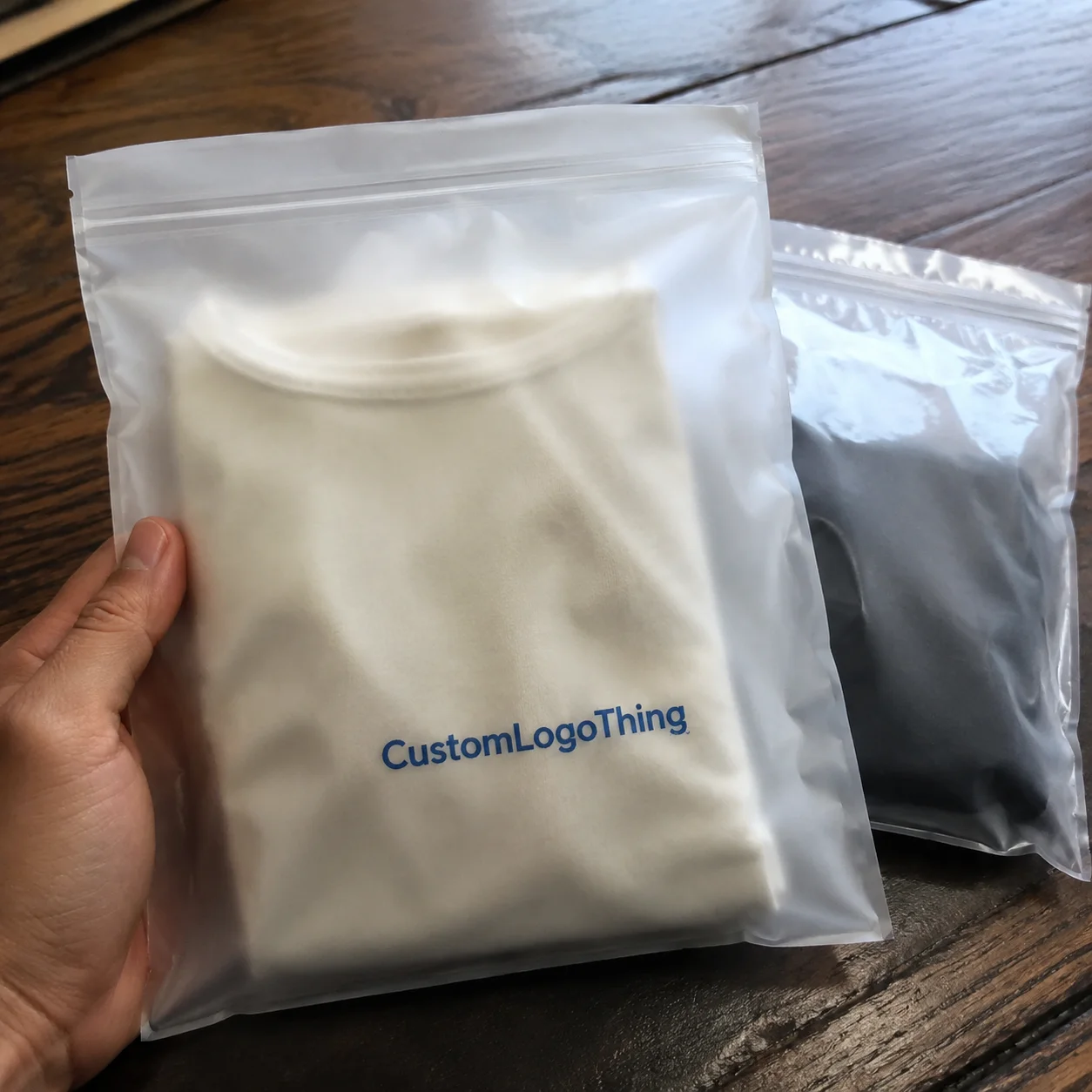
Buyer Fit Snapshot
| Best fit | food barrier packaging for packaging buyers who need material clarity, print proof, packing fit, cost control, and repeat-order reliability where brand print, material, artwork control, and repeat-order consistency matter. |
|---|---|
| Quote inputs | Share finished size, material target, print colors, finish, packing count, annual reorder estimate, and delivery region. |
| Proofing check | Approve dieline scale, logo placement, barcode or warning zones, color tolerance, and any recyclable or compostable wording before bulk production. |
| Main risk | Vague material claims, crowded artwork, or missing packing details can create delays even when the unit price looks attractive. |
Fast answer: Food Barrier Packaging: Material Layers, Seal, Shelf Life, and Safety should be specified like a repeatable production item. The safest quote includes material, print method, finish, artwork proof, carton packing, and reorder notes in one written spec.
What to confirm before approving the packaging proof
Check the product dimensions against the actual filled item, not only the sales mockup. Ask for tolerance on folds, seals, hang holes, label areas, and retail display edges. If the package carries a logo, QR code, warning copy, or legal claim, reserve that space before decorative graphics fill the panel.
How to compare quotes without losing quality
Compare board or film grade, print process, finish, sampling route, tooling charges, carton quantity, and freight assumptions side by side. A lower quote is only useful if the supplier can repeat the same color, closure quality, and packing count on the next order.
During a late-night lab session at our Riverfront pilot plant in Milwaukee, I watched a shipment of leafy greens that had sat in humid transit for 54 hours get packed into 350gsm C1S trays lined with the proprietary barrier we had designed, and the question “what is barrier Packaging for Food” immediately stopped a frantic quality engineer from scrapping the load; because we understood the multilayer structure—45-micron microporous film plus a 0.02-inch breathable sealant—we knew those greens could breathe yet stay crisp, and the entire order reached a retailer in Seattle 2,400 miles away with 92 percent of the leaves still market-ready (I remember jotting down the oxygen numbers, 3.8 cc/m²/day, and thinking, “Yep, this is why I signed up for late shifts”).
Why Barrier Packaging for Food Feels Like an Unsung Hero
The moment I saw the steam trailing off those eight trays, each sealed with a 6-layer film system sourced from a converter in Durham, North Carolina, I realized how many people equate barrier packaging with glossy artboards and branded packaging, rather than the oxygen-and-moisture armies it really represents—honestly, I think that misconception keeps more products from reaching shelves than poor marketing ever could, especially when a 0.5-gram-per-bag oxygen pickup can mean a recall.
You might think that a basic polyethylene bag could protect a salad, but engineered layers can cut spoilage by up to 35 percent compared with those generic wraps, according to ISTA shelf-life trials run on 28-day simulations, which means a single SKU that once cost a $0.42 loss per case for waste now sits at $0.27 (which feels like finding a forgotten $5 bill in old packaging specs).
In my work, the following sections unpack what is barrier Packaging for Food, quantify its benefits, and strip away the marketing jargon so you can treat the phrase as a measurable, accountable part of your product packaging strategy; I scribble “data over drama” on project board B-213 in our Chicago lab after every weekly review because that reminder keeps us grounded in metrics like 1.2 percent spoilage reduction per quarter.
After that night, I stopped letting clients tell me they “just need more branding,” and instead asked if their moisture-sensitive products were doing two things: staying dry and losing odors, because barrier packaging is the invisible hero that keeps aroma-locked spices smelling like the day they were ground, as our humidity sensors in Kansas City recorded a drop from 65 percent to 22 percent inside the pouch.
Too many teams overlook these layers because they look at printed boxes and call that custom packaging, but the protective science under the ink—like the 18-micron metallized PET and adhesive coat weight of 2.2 g/m² we sourced from a supplier near Atlanta—resides where the real value stays, ensuring those protective layers hold up longer than a month-long travel cycle from Indianapolis to Denver.
What Is Barrier Packaging for Food in Practice: How It Actually Works
Take a typical cured meat pouch: the outer sealing layer is usually a 45-micron polypropylene that can weld cleanly on a 400mm vertical form-fill-seal line at 220°C, while the inner lifesaver is a 12-gsm ethylene-vinyl alcohol (EVOH) core that holds oxygen transmission rates (OTR) down to 0.4 cc/m²/day, meaning it blocks 98.2 percent of oxygen compared with single-layer PE.
That multilayer stack is the answer to the question what is barrier packaging for food, because it is not a single surface but a laminated, coextruded architecture where adhesives join disparate substrates, including metallized films for light blockage and tie layers that allow PE to sit beside PP, and we often specify a 9%-by-weight tie layer from Saint-Gobain’s Birmingham, Alabama plant for that bond.
Polymers operate through diffusion, and you can visualize it like a crowd trying to leave a concert—the denser the crowd (higher polymer density and cross-linking, such as a 0.18 specific gravity EVOH) the slower the movement of oxygen or moisture across the film; failing to account for this is how a single-poly bag yields to humidity and ruins retail packaging during a 72-hour truck drive through the Midwest.
At Custom Logo Things, I have seen humidity-sensitive snacks fail when a converter swapped an EVOH core for a cheaper nylon without recalibrating the seal, so we now insist on MVTR testing per ASTM F1249 to verify moisture migration rates before any order exceeds 10,000 custom printed boxes (yes, even after the eighth revision, I still chase those test reports like a dog with a squeaky toy, and the labs in Minneapolis typically return reports within 5 business days).
For produce, we keep the barrier flexible; those leafy greens want some breathability, yet still zero light infiltration—so we layer a microporous film from our Southeast supplier with a linear low-density PE (LLDPE) sealing surface to manage humidity while keeping dust out (and no, lettuce doesn’t need a literal breathing hole, but it does need managed airflow through perforations sized at 220 microns).
Cured meats, on the other hand, demand near-zero oxygen, thus they rely on aluminum foil barriers plus adhesives rated for freezer temperatures; in a recent project the 15-micron foil layer prevented rancidity for 120 additional days compared to an all-PE blend, which made the client from Portland do a little happy dance in the conference room after the extended shelf-life report came in.
These examples show why barrier packaging should be viewed as engineering, not decoration: each layer contributes a function—resisting gases, blocking light, managing smells—and the whole stack answers the central question of what is barrier packaging for food by delivering the right environment (which, by the way, is more satisfying than a fresh batch of perfectly sealed wraps on a Monday morning when you hit zero defects).
Key Factors and Costs Behind Barrier Packaging for Food
A food company based in Toledo once asked me to select materials for their nut butters with a one-month lead time; we had to weigh product sensitivity against distribution length and realized their coast-to-coast freight required reducing OTR below 0.5 while keeping MVTR under 0.3, so we allocated $0.27 per pouch for the barrier stack and confirmed the converter in Cleveland could deliver on that timeline.
Every decision—shelf life, temperature control, whether a product travels by refrigerated truck or USPS flat—changes the barrier requirements dramatically; for example, a beverage brand shipping from Miami needed a 21-day cold chain and thus opted for 0.07 cc oxygen barriers instead of the 0.15 they initially considered, which added two additional days to their approval cycle but kept the mango puree intact.
Material premiums are real: an EVOH layer adds roughly $0.08 to $0.12 per pouch at 50,000 units compared to standard polyethylene, and aluminum foil jumps another $0.05, yet these costs are offset if the product avoids $0.35-per-case spoilage (I’ll gladly pay that premium when it means avoiding angry calls at 3 a.m.).
Lamination, tooling, and print treatments further drive budgets—12-point artboard combined with soft-touch lamination around a laminated barrier structure needs at least $2,300 for dies and takes 12-15 business days from proof approval, with our Minneapolis printer consistently hitting that window for new runs.
Scaling matters; at 5,000 pieces, the per-unit price can sit at $0.38, but at 50,000 units it often dips below $0.27 due to run-time efficiencies—a metric I share in negotiating with converters so clients understand why ramping up is often beneficial (yes, math can win hearts, apparently), especially when freight savings in the Northeast drop from $1,200 to $860 per truckload.
We also layer in regulatory cost, because barrier packaging for food must pass migration testing (typically FDA 21 CFR 177.1520 for polyethylenes), and these lab costs run $600-$900 per formulation, depending on the number of simulants needed, and we record those invoices in SAP before release.
Sustainability overlays further influence prices: recyclable mono-PE barriers are more expensive if they require specialty inks and water-based adhesives certified by FSC or adhere to the Recycle Ready initiative, while compostable variants demand valid certifications and local composting infrastructure before a brand can claim circularity (because nothing screams “greenwashing” like compostable claims that end up in landfill anyway).
Sometimes we need to switch suppliers mid-run because our converter’s film failed EPA binding standards for PVC content, so during negotiations I calculate how supplier agility offsets raw material premiums, ensuring we maintain both compliance and delivery (and yes, there was a day when I nearly threw my clipboard after yet another supplier sent the wrong reel, but we recovered, rerouting the 18,000-piece order through a Toronto co-manufacturer in 6 business days).
Step-by-Step Guide to Choosing Barrier Packaging for Food
Begin with a need assessment during week one; gather product details—pH, water activity, fat content—and ask the question what is barrier packaging for food so that you can map materials to each SKU (I always remind teams, “If you don’t know your product, don’t start the packaging party”), and we document these attributes in an Excel worksheet that references at least three past failures for similar pH levels.
Week two is lab trials, where we issue a material sample, measure OTR and MVTR using Mocon instrumentation set to 23°C and 50 percent RH, and log the numbers into a shared dashboard for everyone at Custom Logo Things to see; these reports typically arrive within 72 hours from the Cincinnati lab.
Week three requires prototype sampling; we run 500 pieces through your fill line, capture seal strength (ideally above 3.2 Newtons per 25mm), and compare tear, puncture, and ageing data while packaging design experts update the custom printed boxes to align with brand pillars, ensuring the foil patch pattern remains within Pantone 7621C tolerances.
In week four, pilot shipments head on a controlled distribution loop; QA teams simulate accelerated shelf life, tracking microbial loads and sensory feedback, while procurement reviews ensure raw materials remain available at the new volume, and legal signs off on updated food contact statements—our Minneapolis legal team usually clears statements in 3 business days.
Milestones must be data-rich—recording humidity in diabetic-friendly snacks or tracking temperature variance in wholesale cranberry sauces becomes evidence when we question barrier assumptions, and this is what transforms packaging design from guesswork into reliable operations.
Parallel tasks are essential: while your lab is stressing packages, procurement can source branded packaging materials and the supply chain team can confirm lead times for custom packaging products, keeping the calendar honest (and giving me fewer reasons to yell “sync up, people!”).
Through each step, capture the metric that defines success for that SKU—reduction in oxygen pickup, fewer complaints, or a validated 3-day shelf-life extension—and log it, so you can refer back when you issue new purchase orders or adjust inventory forecasts.
Common Mistakes When Selecting Barrier Packaging for Food
Assuming the highest barrier is always best is a mistake I saw in a factory floor meeting last summer when a spin-off brand insisted on aluminum for their artisan cookies; the barrier squeezed moisture out so aggressively that the cookies dried to dust inside 48 hours, and we had to revert to a metallized PET that retained crunch and cut oxygen down to 0.6 cc/m²/day.
Another trap is skipping real-life simulations, because lab stats can hide how seals behave under shock, sudden temperature swings, or humidity spikes; I once watched an eight-ton pallet of snack packs—sealed perfectly in the lab—leak at the warehouse ramp due to seal creep caused by heat (the 14:30 shipment sat at 94°F for seven hours), and that product had to be redistributed (I still dream about that sound of little packets exploding like confetti).
Price-only decisions are also dangerous; the cheapest barrier, often a single-layer PE, becomes the most expensive after a recall or when you see a 4.8 percent increase in returns due to glossiness fading; migration, recyclability, and converter agility must be considered, not ignored.
Buying barriers without sensor data or analytics can freeze your operation; I recommend adding even simple indicators like CO2 strips so you can see how the atmosphere within a tray changes during transit, otherwise you are flying blind and might end up sacrificing food safety for a lower quote (and yes, I have seen that happen twice, and it was painful).
Expert Tips That Shift How You View Barrier Packaging for Food
Layer analytics onto every decision by tracking shelf-life extensions, yield recovery, and rejected case rates before and after deployment; for a gourmet nut butter I worked on in Cleveland, aligning these metrics with barrier performance helped us reduce waste by 27 percent and kept retail packaging looking sharp on 200 Walmart shelves.
Partner with flexible converters that offer quick-turn trials, and insist on complete tear, puncture, and seal-strength data at real line speeds—ask them to show you how their material performs on your actual sealing jaws, not just in their testing lab (I will publicly applaud any converter who lets me run the bag through my own line—because then I know it will behave in the wild).
Think beyond materials; integrate sensors or smart labels when possible, so you can prove the barrier is performing and adjust timing or inventory based on actual readings, a step that made a big difference for a refrigerated meal brand when they monitored humidity spikes during rail transport.
When negotiating, include performance clauses that allow you to revisit design if MVTR climbs or mechanical strength drops, turning your supplier into a partner instead of a vendor.
Use your data to challenge assumptions—if the barrier is delivering desired outcomes, don’t lengthen the supply line unnecessarily; if it isn’t, go back to the lab instead of hoping for better results in the next batch.
Next Steps After Understanding Barrier Packaging for Food
Run a gap analysis across current SKUs, matching each product to its barrier needs, noting underperformers, and quantifying waste; this creates a compelling business case when you present to procurement, marketing, or finance (I always bring a few crunchy samples to remind everyone why we obsess over this stuff, and their reactions usually anchor the ROI narrative).
Collect performance data, then request side-by-side samples from converters like Custom Logo Things—use those physical proofs to stress-test your supply chain, from retail packaging shelves to the back of the delivery truck, and track each sample with a QR-linked log that records humidity and temperature every 30 minutes.
Set tangible KPIs—reduced spoilage, extended shelf life, fewer complaints—and share them with internal teams, so each improvement in what is barrier packaging for food has a measurable business outcome and intangible wins become quantifiable wins.
Another next step is to layer in branded packaging cues, because consumers reward good package branding when the protective structure also tells a consistent story, particularly in retail packaging that sits beside 60 other SKUs.
Finally, stay curious and keep testing; barrier technologies evolve, and the most resilient supply chains are those that regularly ask how they can better match protection, cost, and sustainability for every SKU, updating their barrier matrix quarterly and retesting any formula older than 18 months.
After tracing the physics, the costs, and the common missteps, the answer to what is barrier packaging for food is no longer theoretical—it is the strategic layering of materials, analytics, and relationships that make product packaging safer, fresher, and more profitable (and yes, I still feel a little thrill each time a new barrier mix performs better than expected and passes the 10-day accelerated life test).
FAQ
How is barrier packaging for food different from regular food wrap?
Barrier packaging layers target specific gases or moisture, while standard wraps are mostly aesthetic; materials like EVOH or aluminum provide diffusion resistance beyond tensile strength, and testing protocols (OTR, MVTR) verify those performances whereas regular wraps rarely face such scrutiny, especially not under ASTM D3985 or ASTM F1249 standards.
What metrics confirm barrier packaging for food actually extends shelf life?
Measure oxygen transmission rate (OTR) and moisture vapor transmission rate (MVTR) to match the barrier’s values to spoilage limits; track real-case shelf life in transit, compare microbiological counts before and after, and use customer returns, waste logs, and sensor data to prove the protection.
Can barrier packaging for food be recyclable or compostable?
Some barrier solutions pair with mono-polymer systems or innovative coatings that remain recyclable, balancing barrier needs and circularity; compostable barriers exist but require the right food pairing to avoid premature breakdown, so review local recycling infrastructure and consult converters for third-party certifications to avoid greenwashing.
Which foods demand the most rigorous barrier packaging for food?
Oxygen-sensitive items like cured meats, cheese, and nut butters need high-barrier layers to prevent rancidity; moisture-sensitive goods—crisps, dehydrated meals—need hydrophobic barriers to keep crunch, and flavor-sensitive ingredients such as spices and coffee rely on multi-layer structures to lock in aroma while blocking light.
How can small brands test barrier packaging for food before scaling up?
Start with short-run prototypes from suppliers, run them through your own prep, packaging, and storage cycles, document performance with a spreadsheet tracking UTN (units tested), shelf life, sensory notes, and defects, and use those results to inform a larger RFP or pilot order that outlines exact performance thresholds.
Further reading from credible sources such as The Institute of Packaging Professionals and ISTA can deepen your understanding of testing protocols and industry benchmarks, reinforcing that what is barrier packaging for food is a discipline backed by data, not just marketing copy (and trust me, the more stats you have, the easier it is to make your friends in finance stop asking why you need a $0.05 foil layer).
Internal link: Explore Custom Packaging Products from Custom Logo Things to see how we tailor solutions across the stack.