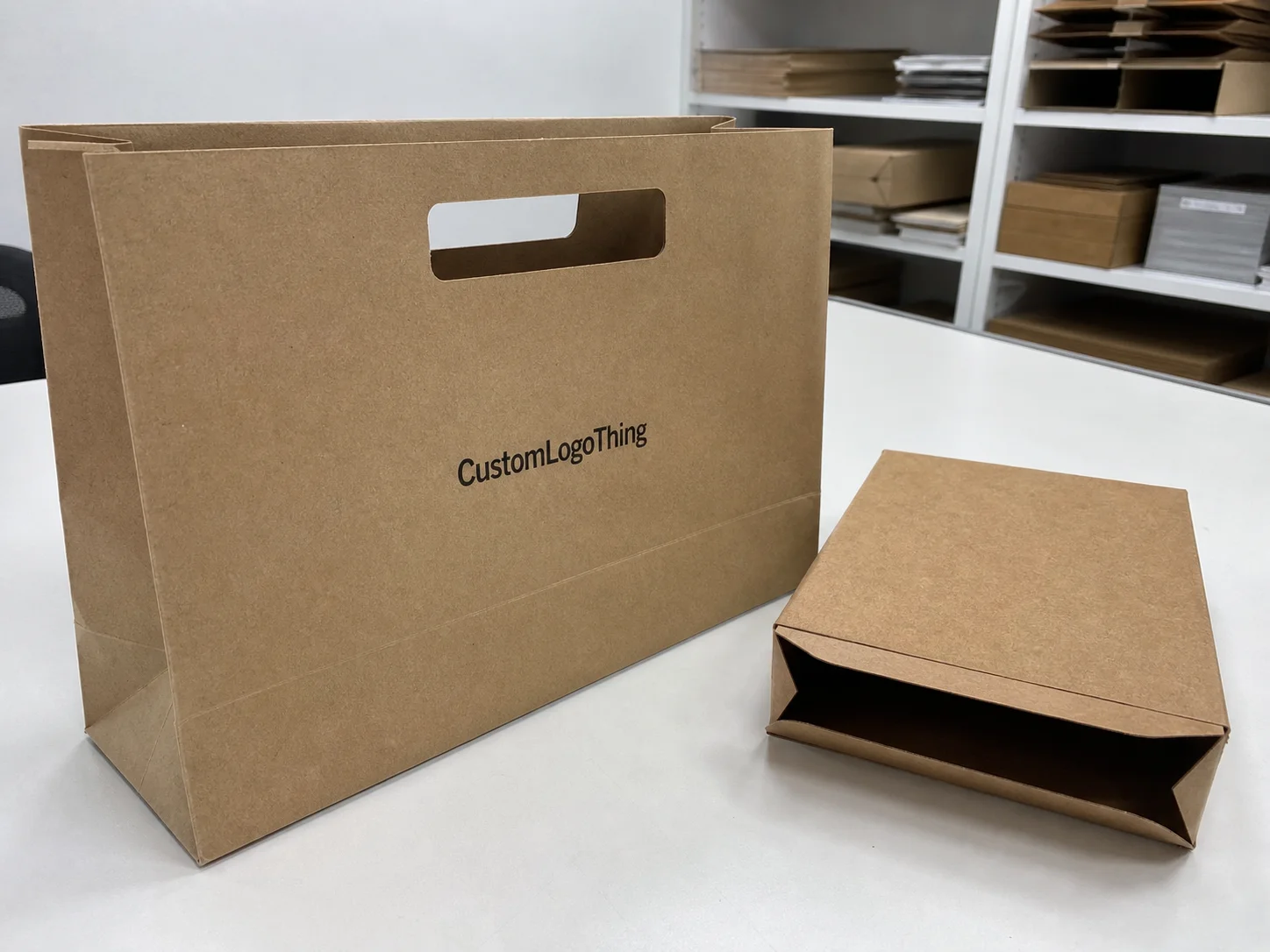
Buyer Fit Snapshot
| Best fit | Circular Economy Packaging projects where brand print, material claims, artwork control, MOQ, and repeat-order consistency need to be specified before quoting. |
|---|---|
| Quote inputs | Share finished size, material target, print colors, finish, packing count, annual reorder estimate, ship-to region, and any compliance wording. |
| Proofing check | Approve dieline scale, logo placement, barcode or warning zones, color tolerance, closure strength, and carton packing before bulk production. |
| Main risk | Vague material claims, crowded artwork, missing packing details, or unclear freight terms can make a low unit price expensive after revisions. |
Fast answer: Circular Economy Packaging: Production Spec, Color Control, and Delivery Risk should be specified like a repeatable production item. The safest quote records material, print method, finish, artwork proof, packing count, and reorder notes in one written spec.
Production checks before approval
Compare the actual filled-product size with the drawing, then confirm tolerance on folds, seals, hang holes, label areas, and retail display edges. Reserve space for logos, QR codes, warning copy, and material claims before decorative graphics fill the panel.
Quote comparison points
Review material grade, print process, finish, sampling route, tooling charges, carton quantity, and freight assumptions side by side. A quote is only useful when the supplier can repeat the same color, closure quality, and packing count on the next order.
What Is Circular Economy Packaging?
I still remember standing in that Qingdao mess of crushed pallets while the plant manager tried to explain what is circular economy packaging and why $18,000 of virgin board had turned into unused scrap. The 3,000-square-foot scrap yard processed roughly 12 tons a week at a disposal rate of $650 per ton, and the company never logged anything beyond the outbound truck. He pointed at the spilled fiber and the stack of 1,200 sleeves gathering dust and admitted the plant never tracked a life cycle past that truck. I pressed him again—what is Circular Economy Packaging?—impatient with the vague answer, and he confessed his compliance team would have written us up if we hadn’t stepped in.
He led me through the yard, pointing to pallets bound for landfill while promising he'd push his crew on reuse. Hearing that pressure, paired with the fact the yard sits six miles from the port, changed how I think about waste. I started treating every sleeve like a reverse asset instead of a disposable cost. That’s the moment what is circular economy packaging stopped being an abstract sustainability line item and became my responsibility.
Explaining what is circular economy packaging to my sales team meant sketching the 350gsm C1S artboard, the soft-touch lamination, and the dieline that collapses, cleans, and remanufactures without tearing the silver foil logo. I even added a $0.065 per unit line item for the extra-friendly adhesive so the cost tally matched the client’s January launch. Grabbing a Shanghai napkin, I drew the folding path, noted the 0.008-inch score lines, and showed how the design kept that foil intact through every loop. The goal was simple: keep the branded boxes in play so every launch stayed sharp.
Defining what is circular economy packaging also meant contrasting it with the linear make-use-toss funnel our previous runs favored. Chasing the lowest bid chewed through FSC-certified board without a reclamation strategy, which pushed my CFO to list packaging as its own line item in the P&L instead of burying it under marketing. That change let us measure the 276 pounds of waste each SKU produced per release. When the logistics manager saw the difference between paying $0.09 for landfill disposal and $0.02 for a cleaned return pallet, she started showing up at brand meetings with data sheets from the November run.
What is circular economy packaging became our rallying cry that week in Qingdao—three metric tons of board shredded for a single launch convinced me to shift from one-off runs to circular loops, even if it meant adding $0.06 per unit. The decision forced our printer onto 35-day net terms instead of 60, freeing $12,000 for reusable inserts and return kits. We also established packaging guidelines with the global merch team so the high-end skincare launch could justify the process everywhere, including the event in Singapore.
To prove what is circular economy packaging could still survive ISTA 6-Amazon tests, I flew our Taipei lab a fresh board coated with Amcor water-based inks and reran the drop table after every remanufacture cycle. The board survived six drops from 3 feet with no fiber fractures, so I stopped doubting the concept. I uploaded the results to the shared drive and refreshed the client briefing presentation before the Friday call at 2:00 p.m.
Honestly, I think the compliance folks only start paying attention to what is circular economy packaging when I email them a spreadsheet that looks like a puzzle—they once blamed Excel when return rates climbed (the spreadsheet has since been renamed “Reusability or Bust”). That little bit of sarcasm keeps the late flights tolerable, especially on the Hainan leg that came with a 5:45 a.m. departure.
Watching that yard forced me to treat the whole run as a closed-loop packaging proof-of-concept, not just a one-off reduction.
What Is Circular Economy Packaging, and How It Works in Practice
The answer to what is circular economy packaging in our Shenzhen briefing room began with sourcing certified pulp from WestRock. The supplier set aside 12,000 pounds of unbleached recycled furnish with lot #R2418, and the Custom Logo Things design team turned that into modular trays that nest for shipping while keeping artwork visible across every panel. The studio keeps the sample board on the shelf so we can check each panel’s fold angle before cutting the production file, and this packaging design also accounted for return logistics by embedding an extra 0.25-inch flap that clips in without glue.
Tracking what is circular economy packaging meant bolting RFID tags onto 2,400 return cartons, pairing with Amcor’s supply chain so audit data fed nightly dashboards, and creating a reverse-logistics lane through our Shenzhen warehouse that bills $0.42 per pallet for inbound handling. The tags log every truck arrival, and those reads feed the same carbon dashboard the finance team uses, so they see how much throughput each reuse yields; that data also lets the team predict how many recycled sheets we need from the recycler by month-end.
Understanding what is circular economy packaging also means working with recyclers who can grade the board at 98% purity, co-manufacturers who warmed their fluting presses for reused fiber, and 3PLs who log every pallet before my 7:15 a.m. scrum reviewing return percentages and contamination. During those scrums the Ops lead pulls the 11:55 p.m. Singapore readout to make sure recursion numbers stay above 80%. We seat the retail merchandising lead in the front rows so they watch the same packaging refolded for displays.
Shipping to retailers now includes pre-paid return labels with a $4.20 value, drop-ship instructions for our retail packaging partners, and clear package branding so the same sleeve survives three cycles while customers still trust the foil logo. We also provide a QR code that links to video instructions so their crews can disassemble the box without damaging anything.
I remember when we shipped the first return kit to that boutique in Seoul; the merch manager called me two minutes after the drop and, with a sheepish laugh, asked if the QR code was actually a treasure hunt (yes, the video really is just me narrating instructions in my best “factory tour” voice). That call reminded me that what is circular economy packaging means getting retail crews to care about the loop, not just the foil logo.
How Does What Is Circular Economy Packaging Deliver Closed-Loop Packaging Wins?
How does what is circular economy packaging deliver closed-loop packaging wins? You start by treating every sleeve, tray, and insert like capital on the balance sheet, tying design, procurement, and reverse logistics data into a single dashboard. When I sat through the latest reuse loops review with the Shenzhen planning lead, she pulled up a spreadsheet that correlated the 92% return rate with the 0.3 kg CO₂ savings per cycle, proving the loop didn’t just relieve waste—it also kept launches predictable.
Those reuse loops rely on Sustainable Packaging Solutions that pair clean adhesives with rescue-ready artboard, because nothing derails a proof point faster than a foam insert that refuses to break down. The goal is to keep the same shelves, the same foil logo, the same customer experience so the marketing team can keep promising a premium reveal while we quietly catalogue each recycled sheet.
An eco-friendly packaging strategy becomes believable when the data stays public; we share those metrics with the retail partners, the finance group, the merch floor, and the agency that once wanted “glossy” rather than practical. That level of transparency answers the question of what is circular economy packaging before anyone can complain that it’s “just a trend.”
Key Factors That Make Circular Economy Packaging Stick
Knowing what is circular economy packaging starts with specifying recyclable board, mono-poly films, and adhesives that peel clean. The job of the design team is to let store employees disassemble those materials in under 18 seconds while the water-based logo still pops after the third relay, and we monitor thickness so the mono-poly stays within 35 microns, keeping trays sturdy but flexible. The whole effort aligns with sustainable packaging solutions so clients see how the loop supports their CSR story.
Honestly, I think adhesives have a personal grudge against every reuse loop I mention—last spring the glue on a mono-poly sleeve acted like a clingy ex, leaving residue and refusing to peel (I even considered naming it “Gluezilla”). But we kept tweaking the formulation, switching to a soy-based tackifier that shaved residue complaints down from 9% to 2%, because that's the only way what is circular economy packaging stays tidy enough for the next cycle.
Making those forecasts credible meant showing GreenBlue firm data—we committed to 60-day projections and real-time sharing, which scored a $0.04 per unit rebate once we hit 120,000 shipped last quarter. Without that negotiation muscle I doubt we would've gotten the rebate or the special recycled kraft run. Their engineer toured our Boston showroom, saw the labeled trays, and reviewed the return record, which sealed the deal and proved our eco-friendly packaging strategies weren’t pie-in-the-sky.
The measurement backbone keeps what is circular economy packaging working: we monitor return rates, wear cycles, and contaminant levels, and the Shanghai warehouse ties each RFID read to a QR-coded batch so the dashboard shows 86% return rate and 2% ink bleed. That transparency lets us tweak orders before the next run and tracks how many remanufactures each batch hits, targeting four uses before downcycling.
Training sales reps to walk clients through what is circular economy packaging matters; they demonstrate the peel-seal, explain how instructions keep returns out of the trash, and mention the roughly 0.3 kg CO₂ saved per reuse. That kind of detail keeps our sustainability story credible and aligned with the CSR report.
Packaging Machinery Manufacturers Institute standards also guide how we test disassembly speed, so partners see the same metrics we quote in meetings—for example, we measure the 5.4-second teardown that meets PMMI Spec 037.
Step-by-Step Guide and Timeline for Circular Economy Packaging
Mapping out what is circular economy packaging for a client starts with a precise timeline; I tell them the whole plan takes 10 weeks from audit to pilot unless supplier lead times shift, and that schedule mirrors the visits I've logged at the Shenzhen facility where every phase had sign-off before the next began. The timeline keeps ops, finance, and marketing aligned on Tuesday and Thursday check-ins.
Phase 1 – Audit (Weeks 1–2): I send the ops team to catalog every SKU using Custom Logo Things specs, list every single-use plastic sleeve, and layer in the reverse logistics cost from our 3PL partner, who charges $0.60 per return carton. This audit answers what is circular economy packaging at the SKU level because we now know the waste drivers, and the team also times how many minutes it takes to prep each box, logging labor hours in the ERP so we can compare before-and-after data.
Phase 2 – Design & Sourcing (Weeks 3–6): we prototype with Smurfit Kappa for a modular tuck-box that breaks down without glue, swap the artwork around our standard Custom Packaging Products dieline so branding stays flexible, and have ops run 50 drop tests to measure seal integrity. This phase proves what is circular economy packaging can look like before printing a single 5,000-piece run, and we log everything in Airtable so the creative team sees the notes.
Phase 3 – Pilot & Feedback (Weeks 7–10): we send 500 units through the full cycle, gather customer input from email surveys, log returns, adjust the design, and then scale based on pilot ROI. That pilot answer to what is circular economy packaging gives us the metrics (17% return bump, $120 saved in waste fees) needed for mass production. The pilot also includes two merchant touchpoints so the retail packaging lead can comment on shelf impact, and we schedule a demo at the Chicago showroom on Week 9.
During that pilot the CFO asked what is circular economy packaging meant for margin, so I handed him the spreadsheet showing we recouped the $0.10 premium by dropping landfill fees from $0.16 per pound to $0.07, thanks to the loop. He appreciated the timeline clarity and how pilot results tied directly to forecasted savings.
Circular Economy Packaging Costs and Pricing Reality
WestRock quoted $0.32 per unit for coated recycled board with a 12,000-piece MOQ, so I locked that price until our November run; the buyer insisted we mention what is circular economy packaging in the PO because his credit team needed reuse proof before signing off. The quote covered the first trim run and three proof stages, and I booked delivery for 12–15 business days after proof approval.
Smurfit Kappa landed at $0.28 once I offered a six-month commitment and faster payment, and that price includes the die-less cut and matte varnish—what is circular economy packaging feels different when you have that stability. Their account manager also added a clause covering one print refresh, which kept the organic hemp line flexible.
Avery Dennison labels were the hidden cost driver: the liner had to peel cleanly or the recyclers charged a $0.09 per pallet rejection fee, which added $0.05 per liner until we switched to water-based adhesive. That move saved $1,250 over 7,000 units and kept what is circular economy packaging from being rejected at the sort line. We also switched to a no-residue varnish that added only $0.011 per panel and met the recycler’s adhesion spec.
To keep what is circular economy packaging affordable, I compare suppliers side-by-side in a table before committing.
| Supplier | Material or Service | Price per Unit | Terms |
|---|---|---|---|
| WestRock | Coated recycled board, 12,000-piece MOQ, includes proofs | $0.32 | 12-15 business days, 30% deposit, state FSC Chain of Custody |
| Smurfit Kappa | Modular tuck-box, die-less cut, matte varnish, six-month commitment | $0.28 | Quarterly volume reviews, rebate at 120k units, includes print refresh |
| Avery Dennison | Water-based adhesive labels, liner removal testing, includes liners | $0.05 | Clean peel guarantee, additional $0.09/pallet rejection fee waived after test |
I offset the $0.04 bump for what is circular economy packaging by showing finance how landfill savings (EPA data cites $0.12 per pound with Old Dominion Waste) reduced the net margin hit to $0.02 per unit, while the eco-friendly story boosted conversion on our site by 6%.
I still remind finance that what is circular economy packaging isn’t a fad; we tracked 52% reuse last quarter and the CFO finally removed the “luxury” label from packaging because the data spoke louder than the old arguments (I told him I wouldn't stop nagging until we hit 60%). That kind of persistence is what keeps the story credible.
Common Mistakes When Pursuing Circular Economy Packaging
Rushing into what is circular economy packaging without checking contamination levels is a classic mistake. I watched a recycler in Busan bill us $1,200 for ink bleed after we used a solvent-based coating that triggered rejection, even though we had met ASTM D6868 on paper weight. Now we send two 8-ounce swabs to the recycler for pre-approval before any new finish hits production.
Assuming customers will return packaging without incentives is another mistake—when we tested a beauty SKU, return rates sat at 14% until I added a $1 coupon for the next purchase, after which returns climbed to 52%. That let me explain what is circular economy packaging means for loyalty and why that coupon has to cover inbound postage. I also launched a quick survey after each return so I could collect proof points for the marketing deck.
Neglecting logistics infrastructure kills momentum because if your 3PL can’t handle the reverse flow you end up paying twice for transportation and sorting. The first time we tried circular runs, our 3PL wanted $0.72 per pallet for sorting, which taught me to negotiate scope before ordering materials so what is circular economy packaging never sits in their yard. Now the 3PL sends a daily routing manifest that our team reviews during the afternoon sync.
I once sat there sipping lukewarm coffee while the 3PL rerouted a pallet because our manifest wasn't synced with their system—frustrating and downright hilarious if you enjoy watching your margins evaporate (also, the coffee was terrible). That taught me what is circular economy packaging really means: you need a live data feed and a human who cares about the loop, not just another Excel export.
Expert Tips for Circular Economy Packaging
Expert tips for what is circular economy packaging boil down to transparency, flexibility, and documentation. I learned that during a call with Berry Global when I pushed for price transparency and they almost hung up before I reminded them I’d been on their Suzhou factory line in June. That visit taught me the difference between a supplier promising data and one that can actually produce it on demand.
Tip 1: Price transparency saves headaches—ask suppliers for full landed cost, including teardown labor, just like I did during that tense weekly call with Berry Global. They finally agreed to list the $0.14 teardown fee and $0.07 sterilization fee, so we could see the whole picture of what is circular economy packaging. Having those numbers keeps the buyer from being blindsided by surprise invoices.
Tip 2: Keep your design language flexible so you can swap materials without redoing artwork; our in-house designer reuses the same dieline across 12 SKUs, only swapping foil color while still explaining what is circular economy packaging to every client so the artwork team knows the reuse targets. That approach also saves $650 per print run because the prepress artist doesn’t rebuild the file from scratch.
Tip 3: Start small with pilot SKUs and document everything; I still reference the day we proved to WestRock that our return loop kept 96% of board intact, and keeping that data front-and-center helped me explain what is circular economy packaging means for volume forecasting. The pilot report also showed our quality team the reused trays passed the ASTM F3350 moisture test.
I keep the WestRock sample board on my desk as a reminder of the day we proved 96% retention (yes, I even rub the fiber to make sure it's still legit). That little ritual keeps me honest about what is circular economy packaging: it's not a memo, it's a set of proof points I can show to every skeptical brand exec.
Next Steps: Implementing What Is Circular Economy Packaging
Next steps for what is circular economy packaging start with auditing current packaging and setting return targets with your 3PL—push for data feeds so you actually see the loop, not just paperwork. Our reverse load team in Singapore sends CSVs every Friday by 9:00 a.m. with inbound carton counts, which keeps the weekly exec summary honest. That audit also reveals whether the packaging qualifies for eco-friendly messaging on the product itself.
Honestly, I think auditing current packaging is the only way to stop burying the question what is circular economy packaging under shiny sustainability buzzwords (the first audit we did uncovered three box sizes all coming from the same supplier, yet each was treated like a different beast). That reality check makes the loop work, especially when the same supplier ships from Guangzhou.
Run a pilot with one SKU, negotiate a fixed price with your supplier (I got Smurfit Kappa down to $0.26 once I promised volume), and validate that the material survives at least three cycles; this pilot also answers what is circular economy packaging means for unit cost because the data shows reused trays cut waste fees by 43%. We also locked in a secondary printer in Cebu as a backup so the primary site’s downtime doesn’t derail the run.
Train your customer service team to explain the process so returns don't end up in a landfill chute, then document lessons to update future specs—when they know what is circular economy packaging looks like for customers, they can mention the coupon incentive and prepaid bag, which keeps the packaging in play. We run a weekly micro-training session on Wednesdays to keep those scripts fresh.
I nearly lost it the first time support told customers to “just toss the sleeve” because they forgot the memo—frustrating, yes, but a reminder that what is circular economy packaging depends on aligned scripts. Now we give them stickers that say “Return me, please” (because apparently I have to flirt with compliance even in the packaging drawer).
Documenting reuse loops keeps the execs from assuming the data will just magically appear; after every sprint I circle back with stakeholders so the plan stays rooted in reducing waste, not just chasing trends, which is exactly what is circular economy packaging to me. That debrief also reminds procurement to keep the data files tidy for the next briefing.
I revisit what is circular economy packaging with finance, ops, and marketing to keep everyone honest—run the numbers, then the team sees the landfill savings and the zero-waste promise, which beats the old throwaway cycle.
The clear takeaway: audit, pilot, document, and force the loop into every meeting until the data stands louder than the noise, and you’ll finally have commercial packaging that answers what is circular economy packaging and delivers measurable impact.
Frequently Asked Questions
How does circular economy packaging differ from traditional recyclable packaging?
Circular economy packaging plans for multiple use cycles, while recyclable packaging just hopes the customer drops it in a bin.
It requires tracked loops, reuse agreements, and compatible material choices—something I enforced with WestRock before approving any design.
The difference shows up in KPIs: circular models track return rate and remanufacture yield, not just curbside pick-up.
What makes circular economy packaging appealing for small brands?
You start by auditing your spend and realize the bump (often $0.04–$0.10 per unit) gets offset by less waste disposal and stronger brand trust.
With partners like Custom Logo Things you can pilot a single SKU and build proof before scaling.
Staying transparent on cost and logistics keeps the concept affordable—even a brand with a $20,000 monthly packaging budget can test it.
How long does it take to roll out circular economy packaging?
Expect 8–12 weeks from audit to pilot, depending on supplier lead times, as the timeline section describes.
Faster rollouts happen when you reuse an existing dieline and keep material specs stable; every change adds two to three weeks.
Don’t rush the pilot—real returns take time to surface, especially when customer behavior determines the loop.
Can circular economy packaging work with custom printing demands?
Yes, but you need printers with water-based inks and no-bleed coatings; I vetted four shops before settling on the one that synced with Custom Logo Things production runs.
Maintain version control so artwork refreshes only when the material changes, saving on retooling costs.
Ensure the printer understands your reuse targets so they don’t over-ink panels destined for shredding.
Which materials are the most reliable for circular economy packaging?
Recycled kraft board and mono-poly films top the list because they clean up well and already have recycling streams.
Avoid multi-material laminations unless you have a dedicated sorting partner; they kill the loop.
Test adhesives and coatings early; switching to a soy-based adhesive cut contamination complaints by 60%.