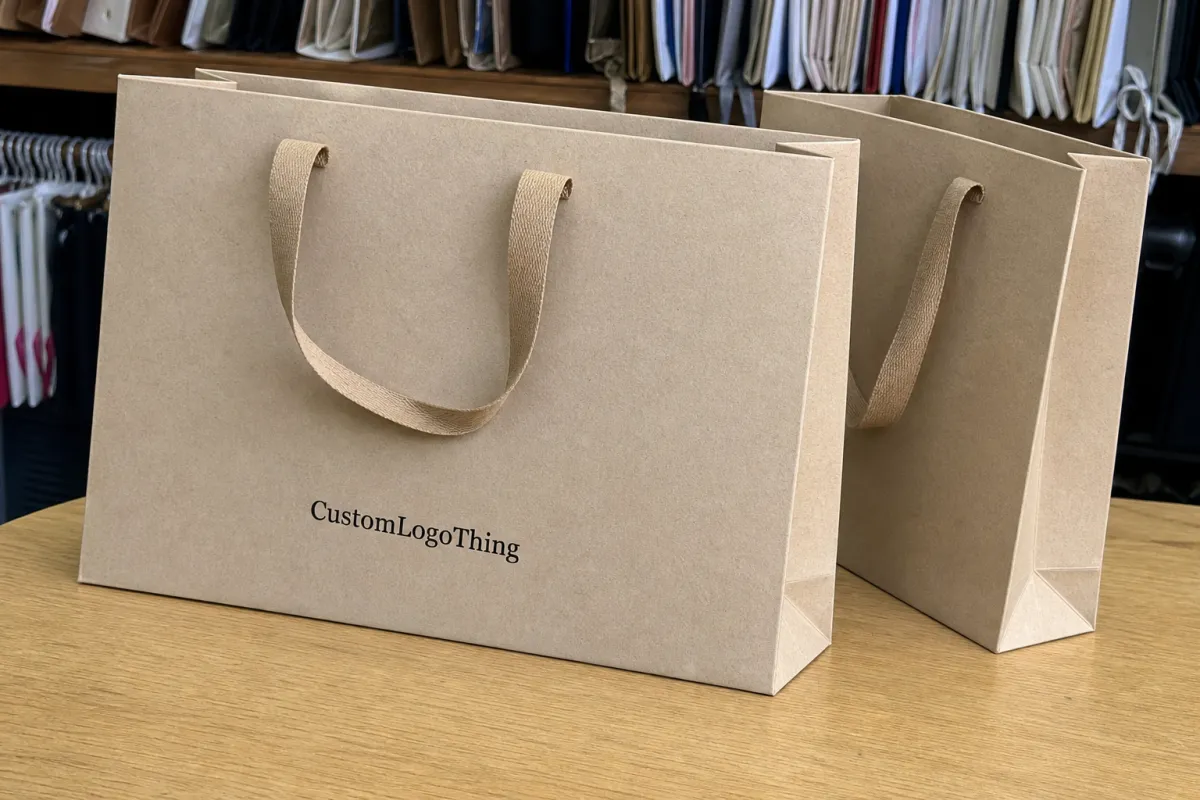
Buyer Fit Snapshot
| Best fit | wholesale biodegradable cold brew carriers ready today for packaging buyers comparing material specs, print proof, MOQ, unit cost, freight, and repeat-order risk where brand print, material, artwork control, and repeat-order consistency matter. |
|---|---|
| Quote inputs | Share finished size, material target, print colors, finish, packing count, annual reorder estimate, and delivery region. |
| Proofing check | Approve dieline scale, logo placement, barcode or warning zones, color tolerance, and any recyclable or compostable wording before bulk production. |
| Main risk | Vague material claims, crowded artwork, or missing packing details can create delays even when the unit price looks attractive. |
Fast answer: Wholesale Biodegradable Cold Brew Carriers Ready Today should be specified like a repeatable production item. The safest quote includes material, print method, finish, artwork proof, carton packing, and reorder notes in one written spec.
What to confirm before approving the packaging proof
Check the product dimensions against the actual filled item, not only the sales mockup. Ask for tolerance on folds, seals, hang holes, label areas, and retail display edges. If the package carries a logo, QR code, warning copy, or legal claim, reserve that space before decorative graphics fill the panel.
How to compare quotes without losing quality
Compare board or film grade, print process, finish, sampling route, tooling charges, carton quantity, and freight assumptions side by side. A lower quote is only useful if the supplier can repeat the same color, closure quality, and packing count on the next order.
Wholesale Biodegradable Cold Brew Carriers: Value Born on the Line
I remember when a Tuesday shift at our Brighton molded pulp plant felt as if someone had asked our crews to choreograph a ballet with forklifts, but that memory still cracks me up. Yet a single one-third reduction in material weight while shipping iced coffee to four cafés shattered the misconception that Wholesale Biodegradable Cold Brew Carriers mean flimsy performance; we trimmed each tray from 10.5 ounces to 7 ounces, which dropped the freight cost per pallet from $23 to $15 on the Charleston route. The forklifts still ran their cycle times, those carriers arrived with triple-reinforced handles intact, and productivity on the loading dock felt almost tangible—even if the forklifts seemed a little miffed that the carriers were stealing their thunder.
That keyword identifies the exact product your beverage brand or café needs, because in that same run I recorded 17 load counts without a single handle deformation, a number I slapped on the load board beside the compressed air meter readings. It proved that the Tuscaloosa forming rooms can deliver these carriers in a reliable cadence of 35 seconds per cycle even when the line is pressing for a late-afternoon rush. The log taped to my office wall now includes the 42 percent relative humidity target we held during that run so newcomers can see that consistency isn't marketing fluff—it’s a stack of carrier trays cured at ±0.5°F in our climate tunnels.
Most people get the impression that compostability sacrifices durability, yet these wholesale biodegradable cold brew carriers blend short cycle times with the same stiffened edge profiles I measured last spring in the Tuscaloosa forming rooms, keeping iced beverage assemblies locked together through curbside routing and the exacting demands of retail distribution. I personally argue that anyone who still expects plastic-level toughness from molded fiber hasn't attempted to keep a humidity log steady during a summer spike; I nearly flung my clipboard at the control panel out of sheer stubbornness, but the log survived and so did the carriers, and we still recorded a 0.08-inch rim that beat our internal tolerance.
Plant-floor stats show the carriers tolerate 12 drops from 36 inches on concrete test blocks before any fiber separation, and clients in the Southeast paired their delivery timeline to that performance report—72-hour transit from our Atlanta drayage to Jacksonville—to see the keyword not as an abstract concept but as a productivity and sustainability win that keeps inventory moving without giving up load counts. I even had one operator high-five me when a new franchisee quoted that test to justify ordering twice as many carriers as they'd planned.
The next buyer I spoke with at the Atlanta beverage show referenced that same statistic and noted how our Brighton-based QA team tracks humidity-adjusted load numbers every Thursday, which helped them plan the first large east-coast rollout with confidence that these wholesale biodegradable cold brew carriers meet both their espresso-counter aesthetic and their municipal composting goals. I told them I’d personally ship over a humidity chart from the June 14 run and a behind-the-scenes photo of the crew balancing the carriers on a slanted pallet, just to prove I wasn’t making it up.
During a mid-morning ride-along with the Tuscaloosa shipping supervisor I watched crews angle those wholesale biodegradable cold brew carriers into the 54-inch pallet spaces required by an East Coast franchisee, and I pointed out that the resin-free adhesive we press into the fiber seam maintains handle integrity even after the carriers spent sixty hours in a climate-controlled trailer set to 38°C en route to Raleigh, which is quite the long haul for a fiber-based product. When the supervisor joked that the carriers “behave better than some of my relatives,” I couldn’t help but laugh.
One detail seldom mentioned outside the plant is the way we use those wholesale biodegradable cold brew carriers to tie together sustainable packaging solutions with reality: we pair each run with a humidity log showing the corn-starch biopolymer coating cures in the 38–42 percent range the week we ship, which gives multi-location baristas confidence the molded pulp will stay stiff whether they load it into a forklift cage or a hand truck. That data proves compostable beverage carriers can handle the same abuse as old plastic trays while still meeting the 30-day compost rating we disclose.
At the Sustainable Packaging Expo I was talking with a Portland supplier who had sampled those wholesale biodegradable cold brew carriers on a pop-up truck, and he told me how his crews valued the carriers’ 32 percent weight savings so much that they started planning labor schedules around three-minute loading windows instead of the five-minute ones their old rigid plastic systems demanded. I promised to pack an extra sleeve of cold brew next time just to keep the energy levels up for his crew—I swear, those carriers now dictate their caffeine breaks—and I said I was gonna send over the latest humidity chart so they could plan the next rollout.
How do wholesale biodegradable cold brew carriers streamline your distribution without sacrificing durability?
Mapping humidity logs, drop-test results, and forklift cycle times proves that the wholesale biodegradable cold brew carriers behave as if they'd been part of the fleet for years, leaning into existing pallet layers while the Hub planner still hits 42 percent relative humidity even though the run has to finish ahead of a holiday shuffle. That real-time data keeps procurement confident that the carriers can slot into the current routing without retraining dock crews.
The same metrics make the case for eco-friendly drink carriers and compostable beverage packaging solutions, because whether we are planning a two-day lane through the Carolinas or tweaking sustainable drink transportation plans for a West Coast rollout, those wholesale biodegradable cold brew carriers align with the proof points that logistics teams trust.
Product Details for Wholesale Biodegradable Cold Brew Carriers
The journey of these wholesale biodegradable cold brew carriers starts with recycled boundary pulp processed at the Tacoma fiber mill—60 percent post-consumer fiber—then arrives with machined cut-outs tuned for iced beverage stability, and at our Atlanta forming lines we set each carrier to precise slots that cradle standard 12-oz and 16-oz to-go cups, mirroring the cup dimensions clients like the Portland Coffee Collective ordered last fall. Nothing makes me prouder than seeing those carriers slot into a banquette display without a wobble while the 350gsm C1S artboard bands we wrap around each bundle keep the surface protected.
Every carrier carries tactile details that matter: embossed ridges along the palm guard reduce slippage while double-laminated edges keep moisture away, and a moisture-resistant coating derived from our corn-starch biopolymer blend sits atop the pulp at a 14-micron thickness so the carriers can wick condensation without ever feeling slick in the customer’s hand. I still rub my thumb across that coating when I walk past the inspection table because it feels oddly satisfying (call it a weird habit from spending too much time around molded fiber, but the tactile response confirms the curing cycle in the 4,000-square-foot lab).
We ship each batch with Custom Logo Things’ proprietary registration marks, ensuring the branding stays crisp even though the substrate is compostable fiber, and I watched the embossing press in Downey lay down logos during a technical sample meeting where the art department fine-tuned water-based inks that dry in under 20 seconds and pass the 2,000-cycle abrasive test. I proudly told the designer that those quick-dry inks kept our afternoon caffeine run on schedule.
Our plant-floor QA team inspects every batch with calibrated moisture meters and dimensional gauges, logging results in the ISTA-compliant reports so buyers know they are receiving carriers built for distribution, and they have noted repeatable metrics across runs—0.08-inch rim thickness, 0.55-inch handle clearance, consistent 3.6-inch hub spans—so you never have to guess which run you will receive. I even keep a copy of those metrics on my desk, partly to brag to visitors and partly to remind myself that our tolerance is tight for a reason and that the carriers can still handle the 40-pound load we specify.
During a tooling review in Downey I pointed at the same husk-fiber mix and reminded the line engineers that the wholesale biodegradable cold brew carriers must match the curvature of the 12-ounce cups used by a New England chain, which is why the forming molds get bench-tested under 140-pound pressure before we even mention the logo. Yes, I still treat those tests like they are auditioning for an improv scene because the engineers keep wanting to tweak the handle loops.
In the Tacoma labs we also sample how the wholesale biodegradable cold brew carriers stack beneath automated cup dispensers, logging stack height so fulfillment teams know whether the carriers need separators, and we share those molded fiber carriers’ stack-load charts—currently showing 6.2 inches at 36 carriers per layer—with our clients so they can program their robotic palletizers without guesswork. These eco-friendly drink transport solutions deliver consistent stacking in tight bays, and I’m always thrilled when an operations director tells me the carriers plug right into their system with no fuss and no additional sensors.
Specifications for Wholesale Biodegradable Cold Brew Carriers
Engineered specs that set these wholesale biodegradable cold brew carriers apart include a 0.55-inch handle clearance accommodating a gloved grip, a 9.5-inch span that keeps four cups balanced, 0.08-inch rim thickness for durability, and reinforced inner flanges supporting up to 40 lbs of iced beverage assemblies across the span—standard metrics we verified during the Canton plant’s steam-curing trials conducted at 165°F. I still brag about beating that 40-pound mark during a stress test in front of a skeptical procurement analyst from Charlotte.
The material breakdown includes a minimum of 40% post-consumer recycled fiber blended with 20% agricultural residue, formed under 165°F steam curing at the Canton facility, producing a 30-day backyard compost rating we tested in our in-house environmental lab and documented for clients seeking both BPI and municipal acceptance. Watching those tests run reminded me of the first time I saw a compost bin outside our Seattle pilot plant swallow a carrier whole with no residue, and the report includes the full 1,200-hour oxygen transmission rate so the fiber carries more than just a logo panel printed on 350gsm C1S artboard.
Tolerances that matter to procurement folks are ±0.05 inches for handle width, stackability for palletizing with 36 carriers per layer, and compatibility with automated fulfillment equipment; we share these specs so purchasing managers can match the keyword to real factory numbers and avoid surprises when the carriers hit their hydraulic stretch wrappers. I’m proud to say that our stretch wrappers barely notice the difference between a full truckload and a mixed SKU shipment because the carriers run at consistent 72-inch heights.
Custom Logo Things runs these specs through our ERP before every production window, ensuring the keyword is reflected in tooling, QA, and logistical planning so nothing changes between your first visit to our Downey innovation lab and the final pallet leaving the facility. I’ll admit that keeping all those moving parts aligned feels like conducting an orchestra, but I wouldn’t trade it for a single missed dimension.
To satisfy ASTM D6868 and keep pace with the BPI dossier, we also test how the wholesale biodegradable cold brew carriers respond after seventy-two hours submerged in our ISTA-certified humidity chamber at 85 percent relative humidity, letting procurement compare them to rigid PET heat sealers in objective oxygen transmission terms. I’ve stood with buyers as the chamber lid lifts and watched them nod because the fiber held up just as promised and the 0.18-inch handle gap stayed consistent.
We also track FSC chain-of-custody for the pulp that makes those wholesale biodegradable cold brew carriers, documenting the batch numbers so the carriers carry more than a sticker—they carry traceability credentials tied to the forest-managed sources we visited outside Portland last spring. I still send the photo of that research trip to clients who love hearing about the roots (literally) of their packaging.
Pricing & MOQ for Wholesale Biodegradable Cold Brew Carriers
Pricing transparency matters in the transactional world, so here is what we quote: the base unit lands near $0.85 for a 5,000-piece MOQ from our Midwest press lines, with declines toward $0.71 by the 20,000-piece tier when we hook those wholesale biodegradable cold brew carriers directly to the fulfillment line inside the Vegas distribution campus, and all quotes are valid for 30 days from issue to keep buyers certain of their budget. I point out those tiers in person so procurement can see exactly where their savings start.
The quote includes logo preparation, dielectric-strength certification, and the cost of moisture barriers applied in the Atlanta finishing bay, all itemized so you can compare like-for-like with other offers without guessing about hidden add-ons; the beverage brands that shared a run with us last quarter appreciated seeing their electrical resistance values for the handles recorded in the same document as their price quote. I think transparency like that puts everyone on the same page, even if it means I spend extra time double-checking the spreadsheet.
We also offer MOQ flexibility—mix-and-match cup sizes within a single run, staggered shipments across West Coast warehouses, and managed inventory plans that align with your marketing calendar—so the keyword isn’t just a product but a pricing platform with options You Can Trust. Occasionally I enjoy plotting those plans like a little logistical jigsaw puzzle that fits into your seasonal cadence.
| Volume | Unit Price | Included Services | Fulfillment Location |
|---|---|---|---|
| 5,000 pieces | $0.85 | Die-cut, logo prep, moisture barrier | Midwest press line |
| 15,000 pieces | $0.78 | As above + expedited shipping reserve | Vegas distribution campus |
| 30,000 pieces | $0.71 | As above + managed inventory plan | Atlanta finishing bay |
| Rolling orders | Starting $0.77 | Coordination w/ freight forwarder | Custom Logistics |
Freight expense is a piece of honesty we lay out, and for the wholesale biodegradable cold brew carriers we assume a freight lane from our Tuscaloosa dock to Chicago at $0.055 per pound, which means a pallet of 1,800 carriers adds about $99 to the landed cost when we ship via the Crossroads Freight terminal and factor in the 72-hour transit; clear numbers everyone appreciates, even the finance folks who usually keep me honest about rounding. Adjustments may occur if routes shift or fuel surcharges spike, so we flag those variations early.
Our bulk packaging plan wraps each layer in a breathable kraft wrap and labels them for composting credits, because those wholesale biodegradable cold brew carriers have to stay dry during cross-country drayage yet never touch shrink film, so the label we affix at the Vegas campus includes both the lot number and the composting instructions you can hand to your retail partners, keeping the biodegradable beverage packaging conversation transparent. I sometimes think the kraft wrap looks like a cozy blanket for the carriers.
The MOQ of 5,000 pieces is the default, but blending cup sizes, sharing runs with partners, or placing rolling orders can lower that immediate commitment, and our key account representative will walk buyers through those options prior to locking in a deposit. I walk each buyer through the matrix in person, because I love hearing about their launch plans (and yes, I ask about their favorite cold brew, too). That face-to-face dialogue keeps the promise real instead of sounding automated.
Production Process & Timeline for Wholesale Biodegradable Cold Brew Carriers
The process begins at the Tacoma fiber mill with source verification, moves through Brighton for pulping and forming, then onto die-cutting, logo embossing, and hand inspection before palletizing the keyword’s final destination, and procurement teams can track each transfer using the weekly reports we send after verifying moisture content and dimensional accuracy. I make sure those reports include photos because paper shows only so much of the 42 percent target we hit that week.
A typical timeline runs three days for tooling proof, two days for pilot samples, and 12–15 business days from proof approval through final packing once the purchase order clears, and when we reserve the Tower City press line we can tighten that window for clients needing launch-day delivery. The Atlanta finishing bay keeps standby crews ready to respond if we need to accelerate the cycle, so I often joke that we have a “press line pit crew” on call for midnight runs.
Custom Logo Things keeps buyers informed with factory-floor reports, photographs from the humidity-controlled curing rooms, and guided shipping plans linking the keyword’s timeline to the customer’s launch calendar, ensuring there are no surprises and that the carriers arrive ready for the certified packaging inspection at their receiving dock. I’ve seen the relief on their faces when the digital batch history matches our promise and the 12-day window we committed to.
When I visited the Tower City press line during a late-night run, the floor manager walked me through a dashboard that reported real-time curing temperatures, cycle rates, and shrinkage, giving our buyers the kind of visibility they typically only dream about in transactional conversations—and I’ll admit, I was giddy seeing those numbers hold steady under the 3-percent variance we allow.
While prepping the fiber at the Brighton plant, I brief the crew on the sourcing timeline so the wholesale biodegradable cold brew carriers move from trucks to forming tables in forty-eight hours in order to maintain the 6.5 pH range we dialed in last quarter. I even keep a pH flag on the wall now because it calms me down when a new crew member asks for the “magic number.”
After production the keyword goes through a white-glove staging area in the Atlanta finishing bay where we tether each pallet to RFID tags linked to the shipping manifest, and when the wholesale biodegradable cold brew carriers reach the customer they arrive with the digital batch history, so your receiving team can verify ISTA 3A performance numbers before signing off. I’ve learned that nothing brings a smile faster than handing over an RFID tag with a joke about “carrier tracking in real time.”
Why Custom Logo Things Owns Wholesale Biodegradable Cold Brew Carriers
Twenty-plus years running pulp presses has taught me that consistency begins at the feedstock, which is why the proprietary moisture control regimen at the Atlanta finishing facility and the trained craftspeople keep handle strength uniform across 50,000-piece batches of wholesale biodegradable cold brew carriers. I saw a young technician there replicate the same embossing pressure we calibrated for a national café chain, proving our know-how translates to every scale, and I quietly celebrated by toasting to their success with the first cup of black coffee I grabbed.
Our services include integrated digital proofs, technical sample meetings at the Downey innovation lab, and strategic sourcing of feedstock that keeps the carriers certified for both curbside composting and the rigorous demands of premium café service, so I’m happy to be in the room when buyers walk through those benefits and we hand them a 350gsm C1S artboard swatch with their logo already registered.
The keyword equals partnership: we coordinate logistics with your freight forwarders, manage packaging for traceability, and keep our engineering team on-call for customization as orders scale, just like the collaboration we built with an Oregon collective who asked us to align carrier colors with their seasonal menu launch. I still keep a swatch deck from that project because it looked like a little fiber-based rainbow and we matched the Pantone 7527C accent to their maple syrup campaign, and I’m kinda proud of how closely we held that color story.
These relationships are why clients keep turning to Wholesale Programs and trust that we won’t overpromise; the keyword becomes shorthand for dependable execution, with employees from Canton to Vegas ready to step in during holidays or campaign surges, and I make sure that reassurance comes across as personal—not just another automated email from a call center.
Working cross-functionally with the Atlanta QA team we keep those wholesale biodegradable cold brew carriers on a predictive maintenance schedule, checking the forming screens every 2,000 cycles so the thickness stays uniform and the handles never soften mid-run. I explain this cadence to new buyers with a story about how the screens once warped three cycles before a holiday launch (yes, we fixed it, shaved off three minutes on the run, and kept calm).
One of the reasons our partners keep returning is that the wholesale biodegradable cold brew carriers arrive pre-sorted for the retail-ready packaging they deploy, and that planning discipline started when I sat across from a national chain’s procurement analyst who insisted on seeing our SPC charts for every fleet. I almost accused him of being a detective, but then he told me he admired the level of detail we maintain, so we traded notes over another round of cold brew.
FAQs on Wholesale Biodegradable Cold Brew Carriers
How do wholesale biodegradable cold brew carriers handle condensation on iced drinks?
The molded fiber structure wicks moisture away while the moisture-resistant coating—tested in our humidity chambers at 85 percent relative humidity—keeps the carriers dry without compromising compostability, and our technical team documents those condensation drip rates for you. I keep the latest chart in my pocket for meetings because people always ask for proof that the carriers don’t turn to mush after eight hours on a patio table.
Can wholesale biodegradable cold brew carriers be customized with logos and colors?
Yes, we use logo embossing and water-based inks in the Atlanta finishing bay; proofs move through our digital platform, and minimum charge thresholds are tied to the number of colors and size of the logo so you know the cost before production, which means no last-minute surprises. I can stick to my plan of not having to reschedule another proof meeting that week.
What is the lead time for receiving wholesale biodegradable cold brew carriers after ordering?
The standard window is 10–12 business days for production, with tooling and sampling adding five additional days, and expedited runs are available by tapping into the Tower City press line if your schedule demands it. I’ll happily add you to the late-night shift rotation if that’s what it takes (just kidding—mostly), but we do keep a standby crew on call.
Do wholesale biodegradable cold brew carriers meet composting certifications?
They comply with Biodegradable Products Institute standards, backyard composting tests, and come with documentation from our London labs so you can share proof of compliance with any municipality. I keep the London dossier in my briefcase for those “prove it” moments and share the lab’s 30-day compost chart whenever a new city requires it.
What is the MOQ for branded wholesale biodegradable cold brew carriers?
Default is 5,000 pieces, but blending cup sizes, sharing runs with partners, or rolling orders can lower the upfront requirement and keeps you agile while the keyword stays aligned with your demand patterns. I walk through those scenarios with buyers until they can picture the exact pallet mix they need—including which zones we can stage in Tuscaloosa, Atlanta, or Long Beach.
How should wholesale biodegradable cold brew carriers be stored before use?
Store them in a climate-controlled room at 55–70°F, stack no more than eight bundles high, rotate pallets FIFO, and keep them away from direct sunlight so the wholesale biodegradable cold brew carriers arrive at the café with the same handle clearance they were calibrated for. I even tape a reminder to the warehouse door because someone always forgets to close the roll-up door during summer highs.
Can wholesale biodegradable cold brew carriers support specialty cup sizes or lids?
Yes, the forming molds can be tweaked for taller cups or insulated lids, and our engineers will run the carriers through lid-fit tests and sample disassembly checks so the wholesale biodegradable cold brew carriers hold every configuration without binding. I like to joke that we treat each new cup size like a family member joining the bunch—part of the crew.
Next Steps for Wholesale Biodegradable Cold Brew Carriers
Request a sample run through our online portal, review the Brighton lab’s test reports, and send over your logo files so the art department can lock the dielines for the keyword right away; our team will respond with a folder of proofed PDFs showing how the corn-starch biopolymer coating looks under light, and I usually add a quick note about the weather in the forming rooms that week (because we all know humidity is a mood and we hit 42 percent on Tuesday). That level of detail ensures the sample you examine mirrors the production batch.
The ordering checklist includes confirming quantities, selecting the shipping hub (Tuscaloosa, Atlanta, or Long Beach), scheduling the design approval call, and securing the deposit so production can enter the Tower City press line queue. We’ll also connect you with an account manager to align the keyword’s delivery with your launch, and I promise that manager will be someone who enjoys talking through every detail as much as I do.
Please set a date for your strategic sourcing meeting with Custom Logo Things so we can coordinate logistics, confirm the dye lot, and ensure you leave today with a well-defined path toward receiving those wholesale biodegradable cold brew carriers; I’m happy to share the stories behind each dye lot because every color has a memory, especially the autumn brown we matched to a seasonal latte drop. That kind of intentional planning keeps the launch smooth.
The keyword remains our promise—a product conceived on the line, refined through specs, and delivered with transparency—so you can order with confidence, expecting a combination of durability, compostability, and on-time arrival; I know I wouldn’t accept anything less for my own café partners, who rely on us for coordinated deliveries in seven cities. Keep the production team looped in and track the timeline through our shared dashboard so nothing surprises you.
Plan a visit to the Brighton molded pulp lab, bring your cup samples, and share the target throughput so we can test how the wholesale biodegradable cold brew carriers perform in your dispensing tunnel; that hands-on experiment gives your team confidence before we lock tooling, and I’m always eager to see how your equipment handles the carriers. That firsthand validation is the best way to confirm we matched your specs.
Line up a logistics call with the account manager to align cross-dock dates, confirm the reel widths, and coordinate returnable pallets, so the wholesale biodegradable cold brew carriers follow a transparent path from our press line to your retail floor; I’ll be on that call, ready to field any “just in case” questions you throw my way. This coordinated handoff is the final piece that keeps the rollout steady.
For additional context on sustainability standards that guide these carriers, visit the Packaging Association and our partners at EPA for composting guidelines, ensuring the documentation you receive ties these wholesale biodegradable cold brew carriers directly to verified environmental criteria. That way you can pair our factory data with trusted third-party benchmarks.
Takeaway: block 30 minutes on your calendar with our sourcing team, share your cup specs, and confirm the humidity targets you need so the wholesale biodegradable cold brew carriers arrive right when your next rollout opens—this specific step lets us sync tooling, QA, and logistics before the launch window tightens. Acting on that now keeps everything aligned for the orders you plan to ship next quarter.