Buyer Fit Snapshot
| Best fit | Wholesale Biodegradable Product Boxes That Ship Well projects where brand print, material claims, artwork control, MOQ, and repeat-order consistency need to be specified before quoting. |
|---|---|
| Quote inputs | Share finished size, material target, print colors, finish, packing count, annual reorder estimate, ship-to region, and any compliance wording. |
| Proofing check | Approve dieline scale, logo placement, barcode or warning zones, color tolerance, closure strength, and carton packing before bulk production. |
| Main risk | Vague material claims, crowded artwork, missing packing details, or unclear freight terms can make a low unit price expensive after revisions. |
Fast answer: Wholesale Biodegradable Product Boxes That Ship Well should be specified like a repeatable production item. The safest quote records material, print method, finish, artwork proof, packing count, and reorder notes in one written spec.
Production checks before approval
Compare the actual filled-product size with the drawing, then confirm tolerance on folds, seals, hang holes, label areas, and retail display edges. Reserve space for logos, QR codes, warning copy, and material claims before decorative graphics fill the panel.
Quote comparison points
Review material grade, print process, finish, sampling route, tooling charges, carton quantity, and freight assumptions side by side. A quote is only useful when the supplier can repeat the same color, closure quality, and packing count on the next order.
Wholesale biodegradable product boxes are often a smarter buy than buyers expect. Not because they sound virtuous on a sales page, but because a well-built box cuts avoidable costs: less void fill, fewer crushed corners, fewer returns, and less time spent making bad packaging decisions look acceptable. If you shave the board down too far, the box stops saving money and starts quietly spending it for you. That is usually how packaging revenge works.
The real question is not whether the carton has a green label. It is whether the wholesale biodegradable product boxes hold their shape, fit your line, protect the product, and still land at a sane total cost per packed unit. Get the structure, print, and closure method right, and the carton does more than carry a message. It helps freight efficiency, product safety, and repeatable production every time the order rolls back around.
Why Wholesale Biodegradable Product Boxes Are a Smarter Buy
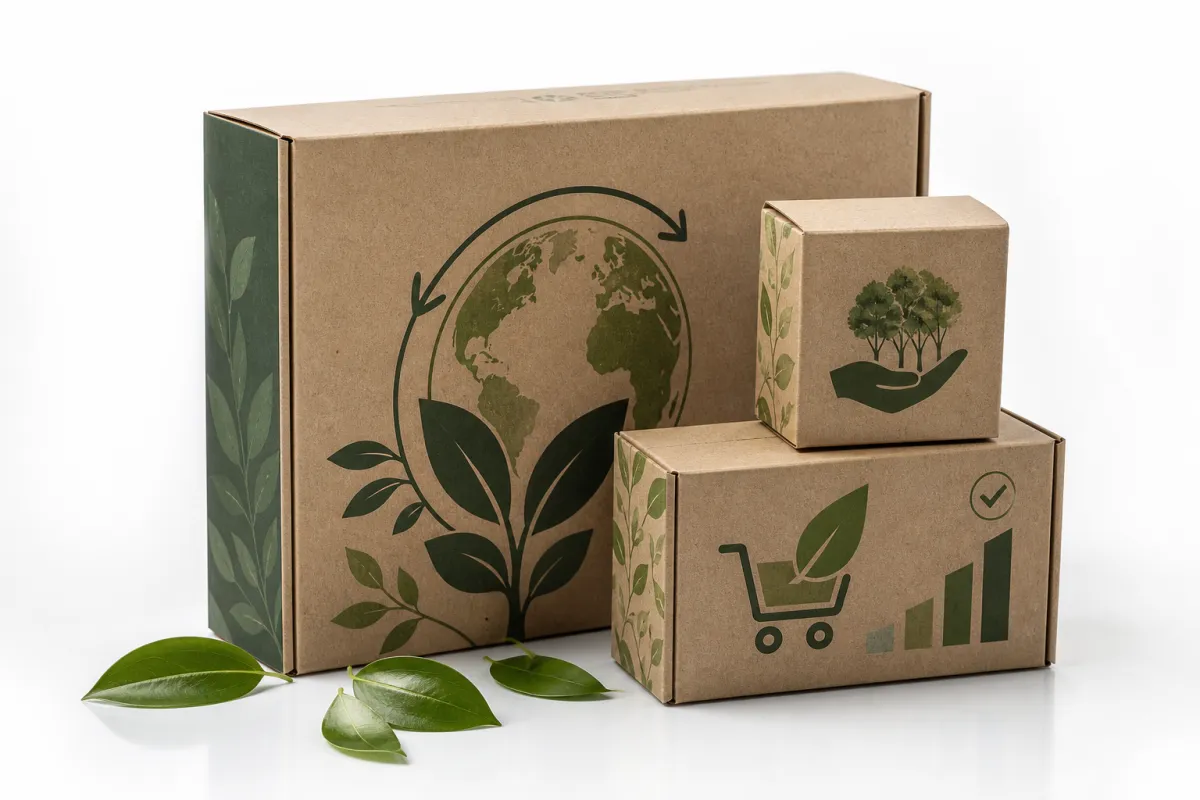
Experienced buyers keep coming back to wholesale biodegradable product boxes for one simple reason: the right carton can lower several costs at once. A box that fits properly cuts void fill, which saves material and packing time. A box that keeps its shape lowers crush damage, which reduces returns and rework. A box that prints cleanly makes the brand look disciplined, and that matters in retail just as much as it does in direct-to-consumer shipping. Wholesale biodegradable product boxes should be judged as a system, not as a single line item.
I have watched plenty of packaging decisions go sideways because teams focus on the material label and ignore the packed result. A biodegradable paperboard mailer that folds badly can create more waste than a slightly heavier structure that ships cleanly and arrives intact. I saw one brand spend weeks celebrating the word "eco" while their returns team quietly dealt with split seams and bad score lines. That kind of mismatch is expensive. The best wholesale biodegradable product boxes are right-sized, correctly scored, and built for the actual weight range of the product inside. That is where the value shows up. Not in the brochure. In the warehouse.
For sustainable packaging buyers, the wholesale model works because repeat volume rewards stable specifications. Once the dimensions, print layout, and closure style are locked, the run becomes more predictable, assembly time evens out, and reorders stop turning into little emergencies. Wholesale biodegradable product boxes work especially well for brands that restock monthly, ship subscription kits, or need dependable cartons for ongoing retail replenishment. A one-off campaign box may look great in a mockup. Wholesale buying is about repeatability, and repeatability is where the money is. Also, it keeps the packing team from guessing, which is always a nice bonus.
There is a branding upside too, and people tend to overcomplicate it. A box can support sustainability positioning without acting like a speech. Buyers do not need loud claims on every panel. They need wholesale biodegradable product boxes that look intentional, use accurate material language, and show care through the physical finish. A natural kraft exterior, a restrained one-color logo, or a well-placed emboss can communicate more trust than a full panel of generic green messaging. Clean is stronger than loud more often than marketers want to admit.
A good wholesale packaging purchase should be measured by fit, strength, print consistency, and landed cost. If one of those four breaks down, the "green" story usually gets expensive fast.
From a buyer's point of view, the category works best when it fits standard fulfillment workflows. Too much complexity slows packing. Too little strength raises transit failures. Inconsistent print makes the brand look careless. Wholesale biodegradable product boxes should solve those problems, not create new ones. That is the logic in plain English: use a carton that performs well, ships well, and disposes in a way that matches the material composition. If the material breaks down under the right conditions, great. If not, call it what it is and move on. Accuracy beats wishful thinking every time.
For sourcing teams that need broader packaging support, our Wholesale Programs are built for repeat ordering, and our Custom Packaging Products page is a useful starting point if you are comparing structures across product lines.
Product Details: Materials, Styles, and Use Cases
Wholesale biodegradable product boxes are not one construction. That detail matters. A lightweight folding carton used for cosmetics is a very different build from a corrugated mailer designed for shipping. The box should match the product weight, the channel, and the handling stress it will face. Overbuild it and you pay for unnecessary board and freight. Underbuild it and you pay later through damage and replacement costs. Packaging likes receipts. It always sends them eventually.
Common formats include tuck-end cartons, mailer-style boxes, sleeve packs, folding cartons, and corrugated shippers. Tuck-end cartons work well for retail items and lighter products because they are efficient to store and easy to assemble. Mailer-style boxes fit e-commerce and subscription kits because they open neatly and control the presentation. Sleeve packs add a premium outer layer for promotions or bundled products. Corrugated shippers are the practical choice for heavier items and parcels that need compression resistance. Wholesale biodegradable product boxes can use any of these structures, depending on how the product moves through the supply chain.
Material choice matters just as much as box style. Paperboard is common for retail cartons because it prints well and gives a smooth presentation surface. Kraft-lined corrugated board is often selected for shipping boxes because it balances rigidity with a cleaner recycled look. Molded fiber inserts can secure fragile items without plastic trays, and paper-based closures or wraps can replace some secondary packaging pieces. In many wholesale biodegradable product boxes, the outer box and the internal support work together, so the buyer should think about the full pack-out, not just the shell. That is the part people skip, then wonder why the product rattles around like loose hardware in a toolbox.
Use case is where the buying decision gets clear. For retail shelves, the box needs front-panel clarity, accurate color, and a finish that reads clean under store lighting. For e-commerce shipping, the priority shifts to compression strength, easy folding, and label placement. For promotional kits, the unboxing sequence matters because the box should guide the product reveal without adding unnecessary parts. For sample sets, compact sizing and low material waste are often more important than a heavy decorative build. Wholesale biodegradable product boxes can support each of these channels, but only if the construction fits the job.
Print coverage and coatings change the feel of a box more than many buyers realize. A simple uncoated kraft carton can feel earthy and practical, especially if the brand wants an obvious fiber-based look. A coated paperboard box offers a cleaner and more refined finish, which helps when the product sits close to premium retail. Natural kraft is usually the best choice for brands that want a visible recycled appearance. Coated white board is better when image reproduction and sharp color control matter. Wholesale biodegradable product boxes can look premium without drowning in decoration; the details just have to be chosen with discipline.
One way to compare constructions is to say it without the packaging jargon. If the product is light and display matters, a folding carton usually wins. If the product ships directly to the customer and needs a strong first impression, a mailer-style box can be the better fit. If the product is heavy, fragile, or stacked in cartons, corrugated is safer. Wholesale biodegradable product boxes should be selected by function first, then by look. That order saves a lot of regret. It also saves a lot of meetings, which I personally treat as a valid sustainability metric.
| Box Style | Best Use | Typical Look | Common Cost Range |
|---|---|---|---|
| Folding carton | Retail, cosmetics, lightweight goods | Clean, compact, print-friendly | $0.18-$0.42 per unit at 5,000 pieces |
| Mailer-style box | Subscription kits, DTC shipping | Premium opening experience | $0.38-$0.95 per unit at 5,000 pieces |
| Corrugated shipper | Heavier items, parcel delivery | Practical, durable, stackable | $0.52-$1.20 per unit at 5,000 pieces |
| Sleeve pack | Bundles, promotional sets | Layered and brand-forward | $0.22-$0.60 per unit at 5,000 pieces |
Those ranges are not fixed, and they should not be treated like gospel. Print coverage, size, board thickness, and insert complexity can move the price quickly. Still, the table gives a useful starting point for wholesale biodegradable product boxes because it shows how structure affects both the customer experience and the total budget. If a quote comes in far outside those ranges, the buyer should ask what is driving the difference before signing off on anything. A cheap quote that leaves out the insert or the freight is not cheap. It is just incomplete.
For buyers who need a clearer sustainability benchmark, packaging claims should stay tied to the real material. The EPA recycling guidance is a useful reference point for understanding end-of-life expectations, and it is better to speak precisely than to make broad promises the material cannot support. The same rule applies to biodegradable claims. Wholesale biodegradable product boxes should be described accurately, with coating, ink, and insert details all considered together. If the box is fiber-based but the film lamination blocks breakdown or recycling, that needs to be disclosed. No drama. Just honesty.
Specifications That Affect Performance and Brand Feel
The strongest packaging projects begin with clean specs. For wholesale biodegradable product boxes, the buyer should provide exact internal dimensions, product weight, closure style, insert requirements, print side count, finish preferences, and the shipping method the carton must survive. Those details sound basic, but they are what separate a smooth production run from a frustrating one. If the spec is vague, the quote will be vague too, and the risk of rework goes up. Everyone loves ambiguity right up until it shows up on a packing bench.
Structural terms matter, even if the buyer does not use them every day. Board caliper is the thickness of the paperboard or corrugated sheet, and it affects stiffness and protection. Flute profile describes the corrugated wave pattern inside the board, which influences crush resistance and print surface quality. Tuck depth is how far the flap inserts into the box, which affects closure security. Score quality determines how clean the carton folds. Carton strength is the practical outcome of all those choices working together. Wholesale biodegradable product boxes ship better when those basics are specified properly.
Print and finishing choices are just as important for brand feel. One-color branding can look extremely sharp on kraft stock if the ink density is controlled. Full-coverage graphics work well when the brand wants more shelf impact, but they increase ink coverage and can change the feel of the fiber surface. Embossing gives a tactile point of difference without adding plastic decoration. Water-based coatings are often a sensible choice for buyers seeking a more material-friendly finish, and minimal ink coverage can support a cleaner disposal story. Wholesale biodegradable product boxes do not need expensive decoration to look professional; they need the right finish for the market.
Compliance language deserves careful handling. I have seen too many packaging specs use vague terms like "eco-safe" or "fully green," which create more risk than they solve. It is better to say exactly what the box is made from, whether it is recyclable, whether the insert is molded fiber, and whether any coating changes the end-of-life path. If the packaging is certified, the certification should be named correctly. FSC, for example, is widely recognized for responsible forest management, and buyers can review the standards at fsc.org. Wholesale biodegradable product boxes gain trust when the claim language is precise. Buyers and regulators both appreciate that, even if the marketing team pretends not to.
Before production, ask for dielines and sample blanks. A dieline shows the cut and fold structure, and a blank sample lets the buyer check fit, closure tension, and label placement. This step matters because a box that looks correct in a PDF can still be awkward on the line if the tuck is too tight or the insert pocket is undersized. Wholesale biodegradable product boxes should be tested before the full run, especially when the product is expensive, fragile, or tied to a launch date. A simple blank sample can save a costly mistake. I would rather lose an hour on samples than a week on avoidable rework. That trade is easy.
What buyers should confirm before approval
- Exact internal dimensions, not just retail-facing size.
- Product weight and any movement that happens inside the box during transit.
- Insert style, insert material, and whether it needs a locking feature.
- Print sides, ink count, and finish such as uncoated, coated, or soft-touch.
- Shipping method, because parcel, pallet, and shelf display create different stress points.
Those five checks are small, but they shape almost every outcome. Wholesale biodegradable product boxes are easier to approve, easier to assemble, and easier to reorder when the buyer locks those details early. I would rather see a simple, well-measured carton spec than a fancy concept with missing dimensions every time. Fancy is fun. Rework is not.
Wholesale Biodegradable Product Boxes: Pricing and MOQ
Price in this category is driven by a handful of practical factors: size, board type, print method, finish, insert count, tooling, and order quantity. Larger boxes use more board, so material cost rises quickly. More complex print layouts add setup time and can require more careful color control. Inserts can be cheap or expensive depending on how they are made and how many are needed. Wholesale biodegradable product boxes are priced by the actual build, not by the sustainability label.
The biggest mistake I see is comparing quotes that are not truly the same spec. One vendor may quote a lighter board, another may include a coating, and a third may leave out the insert or use a different closure style. That makes the numbers look better on paper than they are in reality. Buyers should ask each supplier to quote the same dimensions, the same print coverage, the same insert, and the same finish. Only then does the price mean anything for wholesale biodegradable product boxes. Otherwise it is just spreadsheet theatre.
MOQ matters just as much. Simple folding cartons or plain corrugated shippers often allow lower entry quantities than highly custom structures with multiple finishing steps. When a design uses custom tooling, specialty inserts, or layered print effects, the minimum usually rises because setup time is higher. That does not make the project bad. It just means the buyer should expect a different starting point. For wholesale biodegradable product boxes, an MOQ can be reasonable at 1,000 to 3,000 units for simpler builds, while custom premium runs may start higher depending on the structure. If a vendor offers an unusually low MOQ on a complicated carton, ask how they are getting there. Sometimes the answer is efficiency. Sometimes it is compromise.
Here is the clean way to compare quotes: look at the unit price, the setup cost, the sample cost, the freight cost, and the expected assembly time. A slightly more expensive box may still be the better deal if it reduces labor, packs faster, or cuts damage rates. Wholesale biodegradable product boxes should be judged by total cost per packed unit, not by carton price alone. Otherwise you are picking the cheapest headache. And cheap headaches have a way of becoming recurring ones.
| Quote Factor | What to Ask | Why It Matters |
|---|---|---|
| Board type | Paperboard, kraft corrugated, or molded fiber? | Changes strength, printability, and freight cost. |
| Print coverage | One side, full wrap, or specialty decoration? | Directly affects setup, ink use, and cost. |
| Insert count | How many pieces are included per box? | Impacts material price and pack time. |
| MOQ | What is the minimum order quantity? | Defines entry cost and inventory risk. |
| Freight | Is shipping included or separate? | Changes landed cost materially on small runs. |
As a rule of thumb, simple wholesale biodegradable product boxes with light print coverage often land in a friendlier price band than heavily finished premium cartons. A plain kraft folding carton can sit well below half a dollar per unit at mid-volume, while a multi-color mailer with inserts can climb much higher. That range is broad because the box spec matters so much. The buyer who wants the best value should ask for the same spec, the same quantity, and the same shipping terms from every vendor.
Inventory strategy gets missed more than it should. If a brand overbuys to chase a lower unit price, storage costs and obsolescence can eat the savings. Wholesale biodegradable product boxes are often best purchased in the quantity that balances unit economics with storage reality. For launch-driven products, that may mean splitting the order into staged releases. For stable SKUs, a larger run can make sense if the spec is unlikely to change anytime soon. That is a boring answer, but boring is nice when the invoice shows up.
From Quote to Delivery: Process and Timeline
The process should be clear from the start. First comes the inquiry, where the buyer shares dimensions, product weight, artwork needs, and target quantity. Then comes spec review, where the box structure is matched to the actual use case. After that, the vendor issues a dieline or confirms an existing one. Artwork setup follows, and then the proof is reviewed. Once the proof is approved, the production sample or preproduction check may happen if the project calls for it. After that, the line runs, the boxes are finished, packed, and shipped. Wholesale biodegradable product boxes move smoothly when each stage is handled in order.
Most delays come from a handful of avoidable problems. Missing dimensions force revisions. Low-resolution artwork can slow print approval. Late changes to the finish or coating can push the schedule. A buyer who is still choosing between natural kraft and coated white board at the proof stage has already added risk. Wholesale biodegradable product boxes are easiest to deliver on time when the final structure is decided before artwork is finalized. Deciding after the fact always costs more time than people think it will. It also creates unnecessary friction for the people who have to turn the spec into something physical.
Timing is best understood in two parts: approval time and production time. A quote may come back quickly, but that does not mean the production clock has started. If the proof sits in the buyer's inbox for three days, the schedule moves right with it. If custom tooling is needed, there may be extra setup time before production begins. Simpler wholesale biodegradable product boxes can often move faster once the artwork is approved, while multi-step builds naturally take longer.
Typical production windows can vary, but a useful planning range is often 12 to 20 business days after final proof approval for simpler cartons, with longer timelines for custom inserts, specialty finishing, or large-volume runs. Freight transit is a separate piece of the calendar. A project can look fast on paper and still arrive late if shipping is underestimated. Wholesale biodegradable product boxes should always be scheduled with both factory time and transit time in mind. If your launch date is immovable, build in cushion now instead of hoping logistics will behave out of character.
The best way to protect a launch date is to lock the final spec early. If the carton is tied to seasonal inventory, a product release, or a replenishment cycle, the buyer should avoid open-ended design changes after proofing starts. That includes changes to the logo size, the insert pocket, or the closure style. Small changes seem harmless, but they can ripple through the die line, the print layout, and the assembly behavior. Wholesale biodegradable product boxes reward early decisions. Slow specs turn into slow shipments. No surprise there.
Timeline checkpoints that keep projects moving
- Send exact product dimensions and weight with the initial request.
- Confirm board type, print coverage, and finish before artwork is finalized.
- Review the dieline against the real product, not only the mockup.
- Approve the proof only after label placement and barcode area are checked.
- Reserve time for freight so the boxes arrive before packing starts.
That sequence may sound basic, but it is what keeps wholesale biodegradable product boxes on schedule. Packaging projects rarely fail because of one huge issue. They usually slip because several small decisions were left open too long. A disciplined process is the cheapest insurance a buyer can buy.
Why Buyers Stick With Us
Buyers stay with a packaging partner when the advice is technically sound and the output is consistent. That is especially true for wholesale biodegradable product boxes, because the carton has to satisfy product protection, branding, and disposal expectations at the same time. The work is not about pushing the fanciest structure. It is about choosing the box that fits the product, the shipping lane, and the customer experience without creating waste or frustration.
Our approach is practical. If a product is light and display-sensitive, we may steer the buyer toward a folding carton with restrained print and clean scoring. If the unit ships through parcel delivery, we may recommend a mailer-style build or corrugated shipper with better edge protection. If the package needs an internal hold-down, we can guide the choice of molded fiber or paper-based inserts. Wholesale biodegradable product boxes perform best when the recommendation starts with the product, not with the artwork.
Consistency across reorders matters more than many first-time buyers realize. A carton that prints a little warmer, folds a little looser, or stacks a little differently can create problems in the warehouse and on the shelf. Wholesale biodegradable product boxes should repeat cleanly from run to run, which means the artwork, board spec, and finishing method need to stay controlled. Buyers do not want surprise changes on a reorder, and neither does the fulfillment team. The second run should look like the first one, not like a distant cousin.
We also keep sustainability claims honest. That means using clear language about recycled content, biodegradability, compostability, or recyclability based on the actual construction. Some wholesale biodegradable product boxes are made from fiber-based materials that break down more readily than plastic laminates. Others may include coatings or inserts that change the end-of-life path. Accuracy protects the brand, especially if the box appears in retail, on product pages, or in shipping notices.
Responsive support helps too. Dielines, sample review, artwork checks, and spec clarification save time before the order is released. That is not glamorous work, but it is the part that prevents expensive mistakes. In packaging, the best projects usually look simple because the difficult decisions were handled early. Wholesale biodegradable product boxes should feel that way: clear, repeatable, and ready for production. If it feels chaotic before approval, it is probably gonna be worse in production.
If a box is going to be reordered many times, the first run should teach you everything you need to know about fit, print, and pack speed. Wholesale biodegradable product boxes are a system purchase, not a one-off design exercise.
For teams comparing packaging across SKUs, the best outcome is a carton family that stays visually consistent while still adapting to different product sizes. That keeps the brand orderly and makes purchasing easier. It also gives the warehouse fewer box styles to manage. Wholesale biodegradable product boxes are easier to scale when the spec logic is clean. A tidy system tends to survive real-world handling better than a pretty idea with no structure behind it.
Next Steps for Wholesale Biodegradable Product Boxes
Start with three numbers: internal product dimensions, unit weight, and target quantity. Those three inputs give the packaging team enough to identify the right structure, estimate the board usage, and shape the quote. Then add the print and finish requirements, because those details have a major effect on both price and appearance. Wholesale biodegradable product boxes get much easier to source once the basic facts are clear.
Next, compare a plain sample, a printed proof, and a full quote. The plain sample tells you about fit and assembly. The proof tells you about color, placement, and line accuracy. The quote tells you about unit cost, setup, and order minimums. Looking at those three pieces together is the cleanest way to judge wholesale biodegradable product boxes before placing the order. If one of the three is missing, the decision is still half-blind.
Do not skip the timeline conversation. Ask for a clear separation between proof approval, production, and transit. That matters even more if the boxes are supporting a launch or replenishment schedule. A quote that looks fast can still miss the delivery date if freight is not planned well. Wholesale biodegradable product boxes should arrive with enough margin to protect the packing schedule.
Have artwork files ready in advance if possible. Brand notes, logo files, and compliance copy should be organized before the quote is finalized. That keeps the proof stage tighter and reduces back-and-forth. If the box requires FSC references, recycled content language, or disposal notes, those should be reviewed early so the final copy does not need to be rebuilt later. Wholesale biodegradable product boxes move faster when the documentation is ready before the run starts.
Before you approve production, confirm the exact specification in writing. The final material, size, print coverage, insert design, and finish should match the sample, the quote, and the delivery plan. That single discipline protects the whole order. For buyers who care about performance as much as presentation, wholesale biodegradable product boxes are strongest when the spec is locked and the production path is simple.
The practical takeaway is simple: lock the internal dimensions, board type, print coverage, insert plan, and freight terms before you ask for final pricing. Do that, and wholesale biodegradable product boxes become a controlled purchase instead of a guessing game. Skip that step, and you will probably end up paying for the same decision twice. Packaging has a funny way of collecting its debt.
FAQ
What are wholesale biodegradable product boxes usually made from?
They are commonly made from paperboard, kraft corrugated board, or molded fiber components, depending on whether the box is for retail display or shipping. The most practical choice depends on product weight, stackability, and how much print coverage the buyer wants. If sustainability claims matter, ask what part of the structure is biodegradable, compostable, or recyclable before final approval. Not every fiber-based carton behaves the same once coatings, inks, and inserts are added.
How do I choose the right size for biodegradable product boxes wholesale?
Use the exact product dimensions, not the retail label size, and allow space for any insert, padding, or closure overlap. Choose the smallest box that protects the product without forcing the packer to overfill void space. If you ship through parcel carriers, test the packed unit for corner crush, stack pressure, and movement during transit. I have seen a box pass the spreadsheet test and fail the shake test, which is a very expensive way to learn the difference.
What is a realistic MOQ for wholesale biodegradable product boxes?
MOQ depends on structure, print method, and material availability, so simple unprinted or lightly printed runs usually start lower than fully custom builds. Custom dielines, inserts, and specialty finishes often raise the minimum because setup time is higher. The best quote is the one that shows MOQ, unit price, and setup cost together so you can compare true entry cost. If a supplier only shows the unit price, keep asking until the rest shows up.
Are biodegradable product boxes the same as compostable boxes?
Not always; biodegradable describes how a material breaks down over time, while compostable usually means it breaks down under specific composting conditions. Some boxes may be recyclable, biodegradable, or partly compostable depending on coatings, inks, and inserts. For accurate marketing, ask for the exact material composition and any certification or testing documentation. The labels sound similar, but the material behavior can be very different.
How fast can wholesale biodegradable product boxes be produced?
Timing depends on proof approval, artwork readiness, order size, and whether the box is stock-based or fully custom. Simple constructions can move faster than multi-part packaging with inserts, specialty printing, or extra finishing steps. To avoid delays, approve the dieline early and provide final artwork in the correct format before production starts. If the design keeps changing after proofing, the schedule is gonna get ugly.

