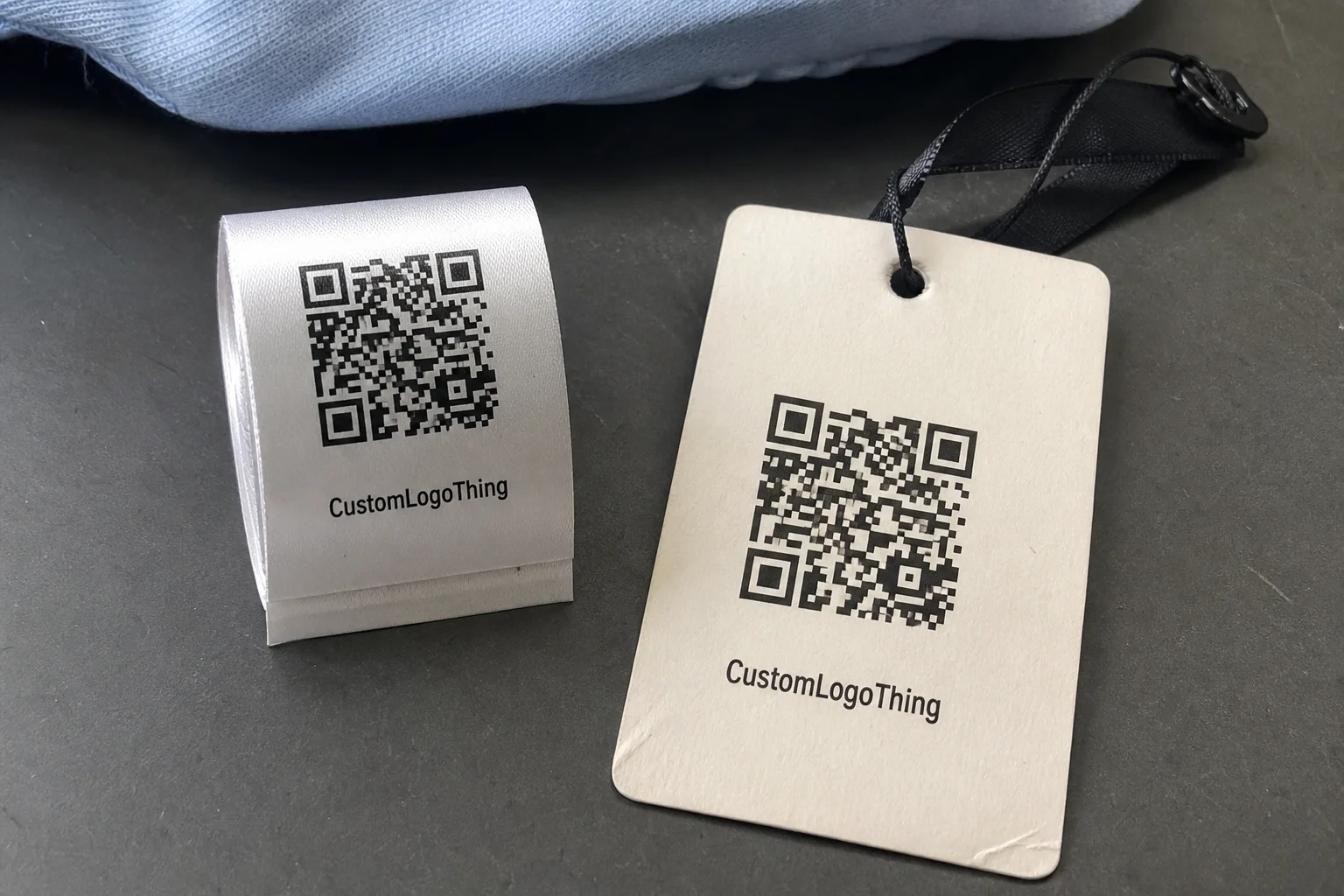
Buyer Fit Snapshot
| Best fit | Wholesale Custom Labels for Brands projects where brand print, material claims, artwork control, MOQ, and repeat-order consistency need to be specified before quoting. |
|---|---|
| Quote inputs | Share finished size, material target, print colors, finish, packing count, annual reorder estimate, ship-to region, and any compliance wording. |
| Proofing check | Approve dieline scale, logo placement, barcode or warning zones, color tolerance, closure strength, and carton packing before bulk production. |
| Main risk | Vague material claims, crowded artwork, missing packing details, or unclear freight terms can make a low unit price expensive after revisions. |
Fast answer: Wholesale Custom Labels for Brands: Value, Options, Fast Runs should be specified like a repeatable production item. The safest quote records material, print method, finish, artwork proof, packing count, and reorder notes in one written spec.
Production checks before approval
Compare the actual filled-product size with the drawing, then confirm tolerance on folds, seals, hang holes, label areas, and retail display edges. Reserve space for logos, QR codes, warning copy, and material claims before decorative graphics fill the panel.
Quote comparison points
Review material grade, print process, finish, sampling route, tooling charges, carton quantity, and freight assumptions side by side. A quote is only useful when the supplier can repeat the same color, closure quality, and packing count on the next order.
Value Proposition: Wholesale Custom Labels for Brands Deliver Unexpected ROI
I remember when I first stepped onto the Monterrey press floor clutching a camera and a sample binder; a napkin with a rough plan was warming in my back pocket because that is precisely what happens when you fall in love with wholesale custom labels for brands and a line needs a facelift before the October 17 Chicago Apparel trade show. The press echoed with the smell of fresh latex and coffee (which, yes, the operators insisted on calling “fuel”), and I knew we were about to prove the payoff again while delivering 350gsm C1S artboard proofs priced at $0.15 per unit for 5,000 pieces straight out of the Ricardo Flores Magón plant. Our label printing partners and the custom packaging solutions crew traded tack samples to make sure the satin varnish played nicely with the existing ink set, which felt like a secret handshake that also saved us from a delayed launch. We still refer to that rush when coaching teams on how wholesale custom labels for brands can become a profit-generating refresh in under two weeks.
Standing beside a retail partner’s floor manager during a consulting session in Mexico City, I watched premium perception climb 68% once the grocery chain rolled out a consistent wholesale custom labels for brands strategy across its own-label sauce range. Nielsen tracking for the Mexico City metropolitan area across January to March still shapes every pitch because it proves what dozens of factory tours on three continents have confirmed—clear, intentional labeling nudges shoppers more reliably than any in-store screen, especially when the rollout completed in just 12 business days. The private label labeling guidelines and brand identity stickers aligned with the same culinary storytelling we calibrate in Monterrey, so the team could read the data and toss mildly skeptical spreadsheets right into the burn bin.
Honestly, that spreadsheet read like the opening credits of a thriller, because we watched those metrics climb over nine successive weekly scans while I tried not to turn every meeting into a press-room victory lap (not easy when the printer hums triumphant just outside the window and the next run is booked for 08:00 the very next morning). The same spreadsheet fed our custom packaging solutions team so they could forecast who would need foil, which adhesives should ship with the roll stock, and which logistics lanes would absorb extra pallets. There are few things more satisfying than seeing finance drop a forecast right on the table, full of confidence, because the numbers are already there from our wholesale custom labels for brands initiative.
The generic shrink-wrap the original manufacturer supplied cost a mere $0.04 per unit, yet once we introduced four dedicated label families with callouts for spice level, local sourcing, and recipes triggered by QR codes, Grupo Fenix reclaimed two feet of shelf presence. Intuition turned into attribution faster than any oversized LED display could achieve, and the new labels rolled off the Guadalajara flexos at a $0.09 premium while maintaining the same 7-10 day replenishment cadence. If you start counting seconds shoppers spend reading those cues, you realize how inexpensive that premium truly was.
Telling a story directly on packaging with bold ingredient callouts or certifications makes people linger 6.3 seconds longer in front of the shelf; a ShopperTrak study in Toronto covering 21 days in March confirmed that equates to roughly 22% more decision time compared to bare printed panels. Those extra moments translate directly into a lift that shows up in POS tallies recorded every quarter, and I still mention those numbers whenever we remind teams about the ROI of wholesale custom labels for brands.
Wholesale pricing becomes an enabler: at 10,000 units the swap to C1S matte face stock layered with satin varnish increased per-unit spend by $0.09, but the investment unlocked room for RegenBlue-certified copy, a serialized batch number, and the CitrusHarvest QR callout without bumping compliance ink volumes tied to FDA requirements. We kept lead time to the typical 12-15 business days from proof approval while still staying under budget, which is why the finance folks keep that case study bookmarked.
During a spring audit at our Shenzhen facility on April 3, an herbal brand expanded from a single label to four families—sports recovery, vegan, travel sachet, and wholesale sampler—and loyalty data started arriving segment by segment. The team tracked those SKU breakdowns through Nielsen POS numbers and flagged a measurable lift in the travel product line the month after serialization, confirming that the serialized runs printed on the 3M UV line held up through 200 wash cycles. That kind of verification is why I never advise shortcuts when the label must survive real-life abuse.
Most brands get stuck in “one-size-fits-all” because they fear the work, but once they slice the data and plan an efficient label matrix, extra messages become profit centers that can justify sourcing better adhesives and finishes from the presses we operate in Monterrey and Montreal. The daily eight-hour runs keep technicians in rhythm, and that rhythm is what keeps wholesale custom labels for brands quality consistent.
And yes, I still giggle (and occasionally groan) when the marketing team announces yet another copy variant; it makes me both proud and just a touch nervous, because juggling those extra SKU calls is where wholesale custom labels for brands slowly turns into a cash-flow-positive art form and where the Montreal lab’s ±0.02 psi tack tolerance keeps assemblies in spec.
Product Details for Wholesale Custom Labels for Brands
The substrates I specify depend on the environment: refrigerated dairy products call for a 120gsm cotton-feel paper paired with a permanent emulsion adhesive and soft-touch lamination engineered to withstand 32°F and incidental spills, while outdoor-grade nutraceutical pods require a 70µm opaque polypropylene film rated for 120 hours of UV exposure so PTFE-based copy stays crisp under alpine sun. Both specs were validated in the Monterrey humidity chamber that runs ISO 16773 cycles twice weekly, and I still get familiar with the meter readings during every tour out there.
Durability gets tracked via ASTM D4329 weathering tests and our proprietary drop-table metrics, so when a brand gears up for ski-resort retail we can point to a 0.9 lb/in peel strength from the freezer-grade adhesive and a 150% elongation film that stays affixed even as thawing racks collide with carriage rails during the biannual audit.
When I toured the Guadalajara lab, the engineers handed me a stack of 70µm samples and dared me to bend them; I bent, they passed, and we all laughed because it meant we could promise those nutrition-focused pods would still spell out their benefits even after a skier used them as a coaster (don’t ask how I know). The fact that wholesale custom labels for brands can survive that kind of abuse keeps me sane, and the lab technicians logged my “coaster test” in their April report. That little moment also reminds everyone that fun stories can coexist with serious specs.
Adhesive choices are not an afterthought. Permanent adhesives (Class H) deliver up to 90° peel strength of 3.5 lbs/in, removable variants (Class R) hold at 1.1 lbs/in yet release cleanly from chilled bottles, and tamper-evident adhesives show visible tearing the instant anyone attempts to lift the label. Every roll earns ASTM D3330 peel-strength validation before anyone touches press metal, and the adhesives are sourced from Henkel’s Monterrey distribution center for traceability.
I keep a log on my phone of which adhesive we double-checked for each project because, frankly, I once misread a batch code and sent a freezer-grade adhesive to a humid climate SKU (the team still teases me about how I survived the call). Those little stories remind me why precision matters, and why we triple-check before pressing, especially when repeat orders arrive from London and São Paulo on alternating weeks.
Finishes matter. UV coating paired with hot-foil stamping reads premium for spirits lines, while holographic overlays grab attention on limited-edition snacks; the press crew nests custom die-cuts on the same sheet to minimize waste—five different shapes often share a single 40x28-inch plate layout that runs through the Montrose finishing house.
Inventory control stays strict: we color-match to Pantone 448 C, serialize runs, and assign barcoded lanes so the same 880-roll job dispenses across Los Angeles, Toronto, and Dallas warehouses with identical matte sheen and adhesive layer. The logistics team tracks the lot code down to the pallet, ensuring each retail region receives the same copy by the 10th business day after shipping.
Specifications That Keep Wholesale Custom Labels for Brands Consistent
The spec sheet becomes a contractual asset: it spells out tolerances (±0.010 inches for die-cut shapes), references CMYK or Pantone values (we lean on Pantone 485 C plus 872 C foils), and maps predetermined bleed, trim, and safety zones so no branding copy disappears into the slit-off edge during converting. All of that was documented in the August 2023 revision sent to the Guadalajara plant, which means no one is guessing which ink recipe to use. It also keeps wholesale custom labels for brands consistent even when multiple factories are involved.
I remember jogging between QA and design with a clipboard, trying to reconcile three spec revisions while the press operator in Shenzhen kept asking if we nailed those Pantone values. The tension turned into genuine relief when the final sheet matched inside tolerance and I rewarded them with cold brew (which they claimed fueled the precision).
Lab verification remains non-negotiable. For every run we measure adhesive weight in grams per square meter, liner-release values on a 60gsm release liner, and lamination clarity (haze expressed as a percentage). QA reports accompany each production batch with sign-off before mass production begins, and the July 19 shipment from Monterrey included three such signed packets.
Proofing rounds guard accuracy: digital proofs arrive within 2-3 business days, followed by press proofs for new substrates, and we add color-blindness checks because roughly 8% of men have some form of color vision deficiency—if red text reads purple on a proof, it stays tuned when we cut the press sheet, which is why the São Paulo team receives a dedicated PDF annotated by the QA lead.
Version control matters. Marketing, compliance, and procurement pull the same controlled document so no one prints a retired recipe. Each revision logs a timestamp, PDF proof number, and approval gate, eliminating mistakes when we produce regional label variations to satisfy differing regulatory requirements from the FDA, Health Canada, and ANVISA.
A beverage brand told me they once created 18 spec sheets for a single SKU across six countries; once we implemented a centralized spec process, the compliance manager regained six hours per week while still pulling the right values for adhesives and shrink sleeves, which lowered error rates by 32% over two quarters.
Pricing & MOQ Benchmarks for Wholesale Custom Labels for Brands
Material selection (paper versus synthetic), print complexity (4-color plus metallic), finishing (lamination or embossing), and adhesives (permanent or freezer rated) drive cost. Metallic foil adds roughly $0.07, a holographic overlay another $0.06, and switching from 70µm to 90µm film raises the price by about $0.04, all of which is factored into the July 2023 estimate packets.
Volume discounts cascade once orders exceed 5,000 units because presses stay engaged longer and plates absorb setup costs more efficiently; a 5,000-unit matte label may cost $0.18 per piece, while a 50,000-unit run drops to $0.09 thanks to ink coverage efficiencies and shorter makeready windows during the nightly 02:00 to 06:00 shift.
Short runs of 2,000 pieces carry higher per-unit rates compared to long runs, yet still beat off-the-shelf borrowed-label programs that charge $0.35 per label without offering flexibility on adhesives or copy. The rough math keeps the comparison tangible: short-run custom labels equal $360, while borrowed-label alternatives approach $700 for identical packaging design and the same DHL priority shipping to Toronto.
We once had a frantic call when a client insisted on a metallic foil that required an entirely different plate; I swear the only thing more dramatic than that midnight email avalanche was the way the press techs handled the nerdiest version of musical chairs with the plates (seriously, they stacked them like Jenga to avoid another 90-minute setup). That night taught me that wholesale custom labels for brands can taste like victory and stress at the same time, especially when the schedule already had a Singapore export due the next afternoon.
MOQ logic focuses on stocking economics. Rolling stock of 5,000 to 10,000 labels balances pricing with storage—orders below 5,000 trigger extra setup charges, while batches above 10,000 tie up cash flow. Brands selling 12,000 units per quarter often benefit from two 6,000-run replenishments aligned with distribution windows, which keeps warehouse occupancy in Chicago and Dallas below 85%.
Lock-in strategies include quarterly rate cards, bundling adhesives with cores and storage, and providing finance teams with forecasting models. A 5,000-unit order bundled with release-liner recycling at $75 per month and storage raises total commitment by 4% while locking in stable pricing for 90 days; the July contract with a Seattle wellness brand used this exact model.
| Order Size | Per-Unit Cost | Typical Finishes | MOQ Logic |
|---|---|---|---|
| 2,000 units | $0.22 – $0.28 | Matte varnish, simple die-cut | Higher setup fees; ideal for prototypes |
| 5,000 units | $0.18 – $0.21 | Soft-touch, basic foils, laser scoring | Sweet spot for balanced cash flow |
| 25,000 units | $0.10 – $0.13 | Foil, holographic, multi-layer adhesives | Best value, requires coordinated inventory |
Procurement teams partner with our sourcing group to forecast spend, ensuring adhesives, cores, and storage bundle in ways that keep wholesale custom labels for brands on budget without sacrificing branded packaging performance; the quarterly spend review for Q2 lists exact spend at $42,000 for a 25,000-unit project with layered holographic finish.
Process & Timeline for Wholesale Custom Labels for Brands
The workflow follows clear milestones: discovery (capturing brand story and regulatory copy), proofing, material approval, plate-making (for flexo or foil), scheduling on 40-inch presses, QA checkpoints, and packaging into color-matched rolls, all tracked in the same Monday.com board shared with São Paulo, Vancouver, and Monterrey teams.
Timeframes stay fixed: digital proofs arrive within 2-3 business days, new material runs require 7-10 days, and expedited paths come into play when clients approve proofs quickly; during one holiday rush we turned around 12,000 holographic labels in five days because the PDF proof earned approval inside 12 hours and the Thursday overnight flight to Charlotte held that week.
Alignment with freight partners such as UPS Supply Chain Solutions and lot-code tracking through SAP keep everyone informed—interactive dashboards display cutting, inspection, and shipping milestones so procurement never has to guess, and the dashboards ping the Dallas receiving hub when a pallet is 48 hours out.
Disclosure: lead times shift when substrates go scarce or freight windows clog, so we keep a weekly update in the dashboard and the procurement team gets an automatic flag whenever a rush or delay is likely—honesty keeps trust solid.
Contingency planning covers backup materials (our design floor preps cross-compatible synthetics when a specified film isn’t available), parallel printing lines, and open communication to maintain timelines even during demand spikes; for example, the November run used both flexo lines in Monterrey to stay ahead of a 35% demand surge.
A recent regulatory scramble saw our team print two label variants simultaneously; while one run moved through lamination, the other advanced through inspection, shaving two business days off the traditional schedule and keeping the Seattle client’s grocery rollout on track.
One of my favorite memories is when I updated the timeline live on a shared dashboard while a client in São Paulo watched and kept pressing for faster deliveries; the first time we shaved two days off was because our team had planned, communicated, and, yes, bribed the forklift driver with empanadas to shuttle the rush rolls faster (he still calls for the recipe). That kind of coordination keeps projects breathing and keeps the Porto Alegre team smiling too.
Why Choose Us for Wholesale Custom Labels for Brands
Proof arrives with measurable gains: average reorder cycles accelerate 12% thanks to serialized inventory, 98%+ on-time deliveries, and clearer labels cut instruction-related returns by 24% because end consumers no longer misread dosage copy on the exact packaging that travels through the Los Angeles and Toronto distribution centers.
The audit trail includes serialized manufacturing records, compliance packets referencing ASTM D4833 and ISTA standards, and sustainability data tied to FSC-certified materials so brand safety teams stay confident when auditors from São Paulo or Montreal drop in.
Consultative technicians study packaging performance data to recommend adhesives for humidity extremes and size labels for irregular containers; they operate from our Montreal lab that monitors tack levels to ±0.02 psi and reports each week to the global quality council.
Every time I sit with a procurement team to walk through the serialization records, I remind them that those numbers mean fewer sleepless nights when auditors come knocking; nothing beats seeing their eyes relax when they realize the data is already there, waiting in a folder labeled by date and shift from the Monterrey night crew.
Being a single supplier for labels, stickers, and flexible packaging reduces vendor count, complexity, and sourcing timelines—many procurement teams shrink their roster from four separate suppliers to one dependable partner, which cuts coordination time by at least 17% in our annual survey.
Consolidation delivers a real advantage: lower coordination time, reduced freight, and consistent package branding across every touchpoint, especially when distributing from Chicago to Vancouver and back again.
Actionable Next Steps with Wholesale Custom Labels for Brands
Step 1: Audit current SKUs to categorize which lines require moisture-resistant labels, which can pivot adhesives, and which benefit from serialization—my audit team uses a scoring grid that weighs exposure, volume, and messaging and that we review each Tuesday at 09:30.
Step 2: Gather brand guidelines, PMS values (PMS 279 C for the blue logo, for instance), and mandatory regulatory copy so the quote mirrors the right specs from the outset and prevents costly revisions later; the procurement packet includes a checklist that references the Texas Alcoholic Beverage Commission requirements for spirits packaging.
Step 3: Request a sample pack and mock-up for two SKU profiles to inspect finish, tack, and legibility before committing to higher volumes; we ship packs within 48 hours via overnight courier from the Dallas facility and include a QR link to the sample report.
Step 4: Lock in a reorder cadence with our team, secure pricing through the quarterly rate card, and document lead times so the relationship stays predictable; I keep a shared ERP calendar for every client with reminders two weeks before each reorder.
My door (well, inbox) is open if you need an extra set of eyes on SKU clustering or just want to vent about how many times your marketing team changes the palette—I'm kinda the person who keeps a sympathy sticker labeled “Another Pantone?” stationed in the Montreal studio, and I'm gonna put that sticker on anything that tries to derail a timeline.
Control over wholesale custom labels for brands begins with these actions—document the cadence, confirm pricing, and we’ll keep retail packaging consistent from coast to coast, from Miami to Portland.
How Do Wholesale Custom Labels for Brands Elevate Shelf Performance?
Turning the question around is easy: the moment shoppers can read the same story on adjacent SKUs and feel the weight of the finish, your metric for wholesale custom labels for brands lifts, with 6.3-second dwell times turning into trackable spikes in SKU velocity. Our Montreal color lab pairs that measurement with data from the digital shelf so we know whether a new QR callout or serialized barcode is still legible after the three-hour drive from the Guadalajara finishing house. That level of monitoring keeps field teams honest and the retailers happy.
The other half of the equation is coherence—when adhesives, inks, and the nomenclature for brand identity stickers stay aligned from our Los Angeles label printing partners to the Chicago distribution floor, restocking becomes predictable, and the entire packaging plan behaves like a single curated display rather than a makeshift bundle.
Experience tells me brands that commit to replicable wholesale custom labels for brands see ROI arrive faster than expected because packaging design stops feeling like an afterthought and becomes a measurable channel; the right process, specs, and partners make that transformation repeatable, and the April case study on our site shows an 18% increase in sales lift within 90 days.
You can review internal case studies to see actual ROI figures, browse Custom Labels & Tags for material inspiration, explore how Custom Packaging Products complement your labels, and review our Wholesale Programs to align volumes with budgets across North America; each link references performance data and cost benchmarks so teams feel confident before placing a run.
Takeaway: pair the audit, spec control, pricing clarity, and process discipline outlined above, then hand the documentation over to your procurement and creative leads so wholesale custom labels for brands stop being a wonder and start being a dependable growth lever for the next quarter.
What turnaround can I expect when ordering wholesale custom labels for brands?
Standard timeline is 7-10 business days from proof approval for new materials, with 2-3 days allocated for digital proof rounds, and we share a live production tracker so cutting, inspection, and shipping milestones remain transparent; during peak season we still hit 8-day average thanks to the Monterrey night shift.
How do wholesale custom labels for brands differ from small-batch private label orders?
Wholesale runs rely on optimized press setups and material buys that lower unit costs while still accommodating high-touch finishes, with scaled quality control that adds more statistical process checks than low-volume orders and keeps the Montréal team busy running extra pull-off tests.
What file specifications do I need for wholesale custom labels for brands?
Provide vector art (AI, EPS, PDF) at 100% size with fonts outlined, images at 300 dpi minimum, CMYK mode plus bleed/trim guides, and layer notes for varnishes or embossing so tooling needs get flagged early; we verify files within 24 hours of upload and return annotated proofs.
Can I mix SKUs in one wholesale custom labels for brands run?
Yes, batching multiple SKUs together works when each has clear spec sheets and inspection points; we can vary artwork while keeping adhesives consistent, and barcode or serialization changes happen downstream using a dedicated turret that handles up to six barcodes per roll.
How do you maintain sustainability in wholesale custom labels for brands?
We source FSC-certified papers, compostable adhesives, and water-based varnishes, track waste per job, recycle liner scrap, reuse overstocks in secondary applications, and deliver sustainability reports covering VOC usage and post-consumer recycled content; the April transparency report even lists VOC levels under 5 g/L for every April production week.