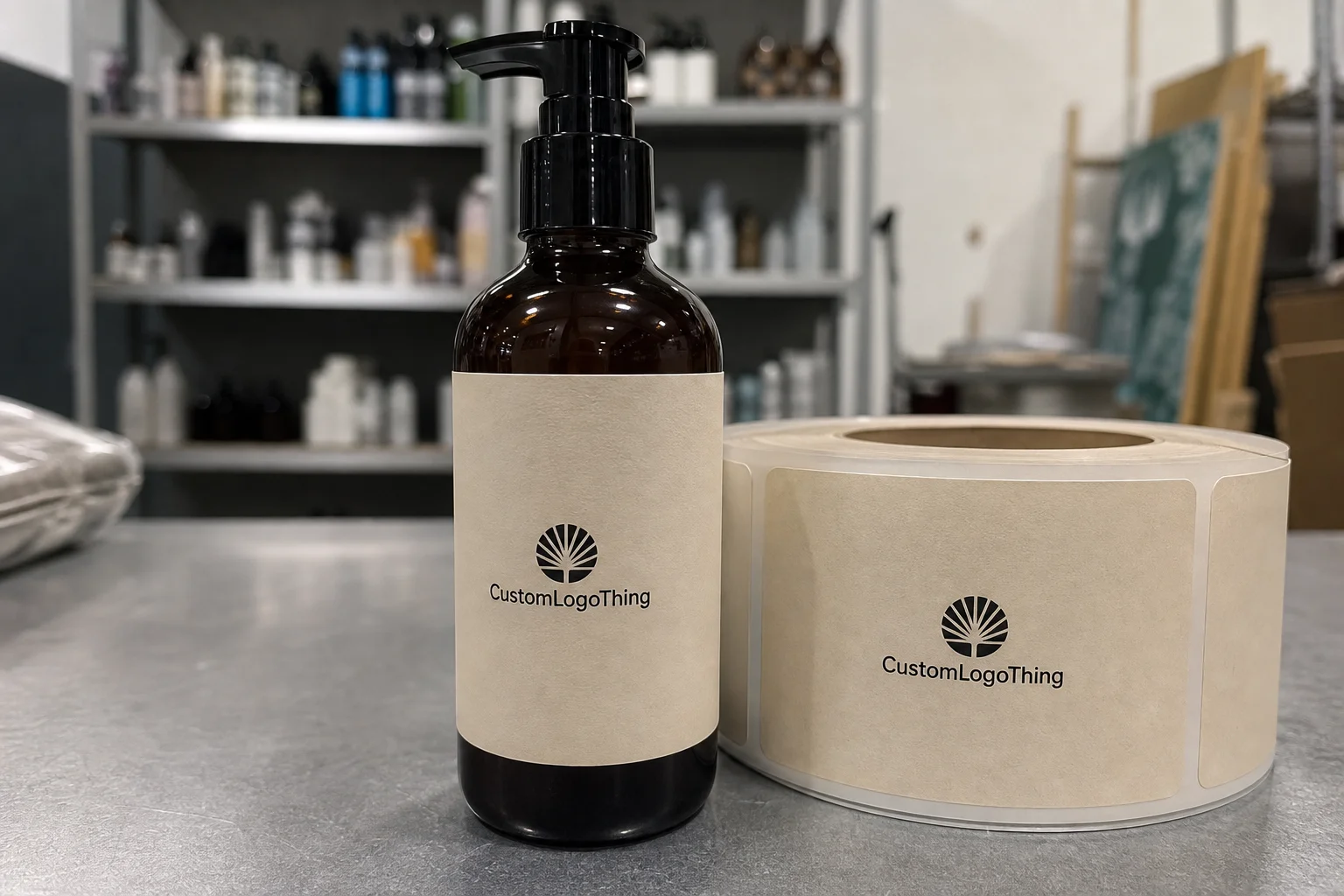
Custom printed lip balm labels have to do several jobs in very little space. They identify the product, carry the brand, survive handling, and still read clearly after a tube has been carried in a pocket or bag.
That creates a tight design brief. Small labels leave little room for error, so type size, contrast, material choice, and wrap dimensions matter as much as the artwork itself. On a small tube or tin, the label can determine whether the product feels polished or disposable.
Why lip balm labels do more than decorate a tube
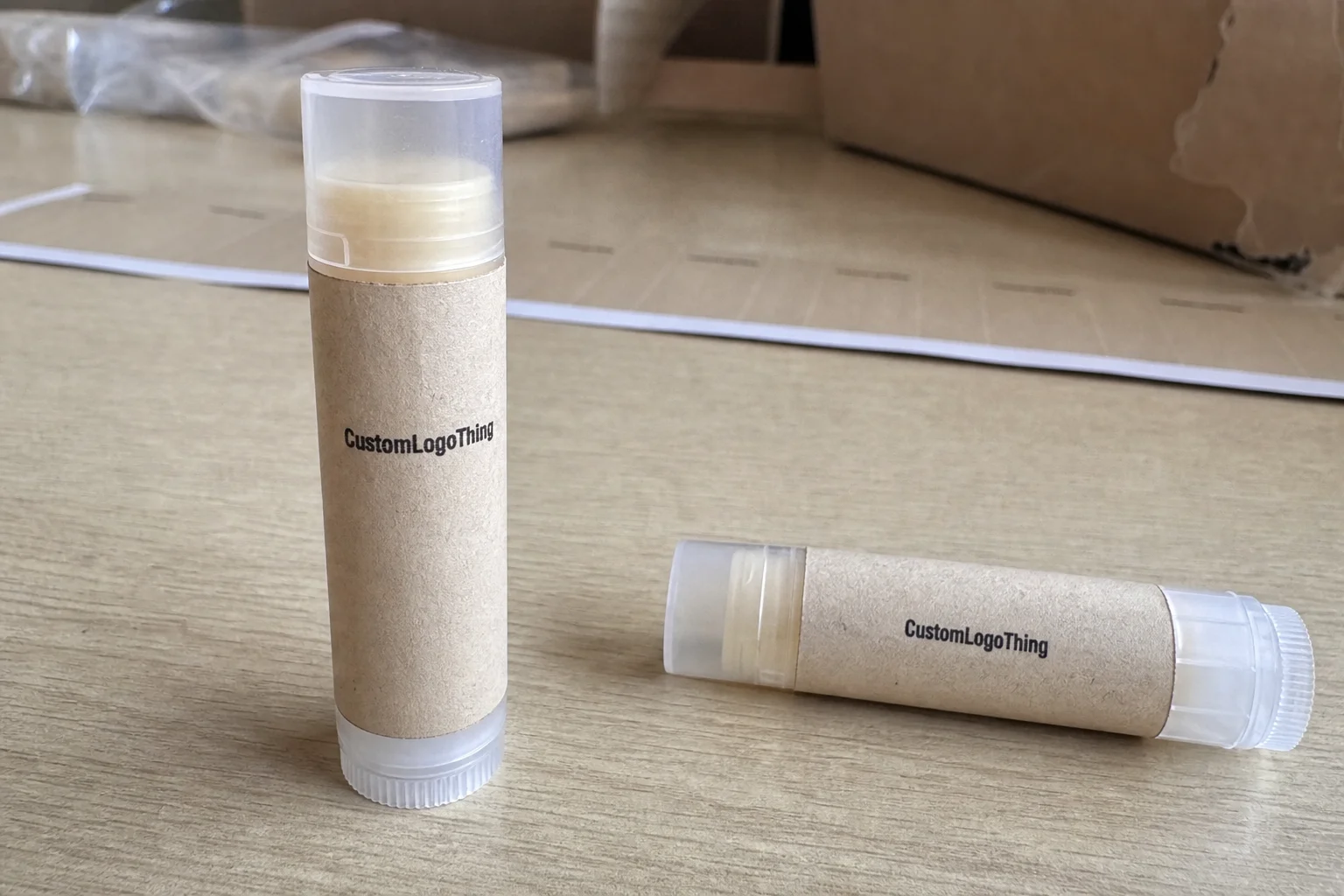
These labels have three practical jobs: sell the product, communicate required information, and hold up in use. A typical 0.15-ounce tube or small tin may only offer a few square inches for the brand name, flavor, ingredients, barcode, and warnings.
That limited space forces decisions about hierarchy. Some brands want a clean premium look. Others need more copy for compliance or multi-claim packaging. Both can work, but both depend on restraint. Once the label is printed at actual size, clutter turns into unreadable packaging fast.
For retail, the label is often the first thing a customer sees. In a gift set, it helps the balm feel coordinated. In a subscription box, it acts like a miniature billboard. If it does not communicate quickly, the product can disappear visually even when the formula is strong.
Format should follow the container. A cylindrical tube usually needs a wrap label with correct overlap. A flat tin may work better with a top label and a second panel for ingredients or lot coding. The shape of the package should drive the artwork, not the other way around.
“Small labels fail for small reasons: poor contrast, weak adhesion, and artwork that looked fine on a screen but did not respect the actual container.”
That is why the label should be treated as part of the packaging system, not an afterthought. Consistency across the line also helps a low-ticket item feel organized next to cartons, inserts, and other Custom Packaging Products.
How the label production process works from file to finish
The production path is usually simple, but delays start when files are incomplete. Most jobs begin with artwork setup, where the supplier checks dimensions, bleed, image resolution, and text placement. The proof stage is the main chance to catch a typo, a missing barcode, or a wrap width that is slightly off for the tube.
After approval, the supplier selects the Material and Print method, then prints, cuts, finishes, and packages the labels. If the order ships on rolls, the core size, unwind direction, and spacing need to match the applicator. Sheet-fed jobs depend more on cut layout and trim accuracy. Either way, the file has to match the intended application method.
Send the core information upfront:
- Final label dimensions, including wrap overlap if needed
- Container type and diameter or panel size
- Logo files in vector format whenever possible
- Exact copy for ingredients, claims, barcode, and warnings
- Quantity, finish, and target ship date
Proofing matters more on small labels because the text is compressed into a tiny area. A layout that seems readable on screen can become too small once printed, especially on a curved tube. Proofs should reflect final size and placement, not just a generic mockup.
Print method affects both cost and speed. Digital printing usually fits short runs, multi-SKU orders, and frequent flavor changes. Flexographic printing is often more efficient on longer runs. The right choice depends on quantity, artwork stability, and how often the design will change.
Protective finishes are not decorative only. A clear laminate, varnish, or coating can improve smear resistance and reduce scuffing from handling, heat, and condensation. That matters for a product that may sit in a gym bag, coat pocket, or car console.
For broader technical reference, packaging teams often look to the ISTA test methods for transport durability and the Institute of Packaging Professionals for education and standards. Those resources do not replace supplier testing, but they help frame durability in practical terms.
Cost, pricing, and MOQ factors that change your quote
Label pricing usually comes down to size, quantity, material, finish, color count, and format. A small paper label in one or two colors will cost less than a waterproof film label with a matte finish and a custom shape because setup, material usage, and press time all change.
Minimum order quantity affects unit price directly. A run of 500 labels usually costs more per piece than 5,000 because fixed setup charges are spread across fewer labels. That is not a sales tactic; it is how print production works.
| Label option | Typical use | Relative cost | Durability | Best fit |
|---|---|---|---|---|
| Paper label | Dry storage, light handling | Lowest | Moderate | Budget launches, indoor gift packs |
| BOPP film label | Tubes, tins, travel items | Mid-range | High | Moisture-prone or high-touch use |
| Polyester label | Extra abrasion resistance | Higher | Very high | Rough handling, longer shelf life |
| Specialty finish label | Premium brand presentation | Higher | Varies | Gift sets, boutique retail |
Other variables can move the quote too. Specialty adhesive adds cost. Variable data, such as batch codes or changing scent names, adds complexity. Custom shapes may require a new die or tool. Rush service usually costs more because it compresses scheduling and limits production flexibility.
For seasonal products or lines still being refined, smaller orders can be the smarter cash decision. Overordering Labels for Packaging that may change in a few months creates dead inventory, and that cost is easy to miss when comparing quotes only by unit price.
Choosing materials, adhesives, and finishes for durability
Lip balm is a demanding environment because the package gets handled often and may be exposed to oils, warmth, and friction. Labels rub against pockets, makeup bags, key rings, and other items. They can also see condensation when the product moves from a cool space to a warm one.
Paper is the most economical option, but it is not always the best fit. It can work for dry, low-touch environments, especially inside a gift box. BOPP film is a common step up because it resists moisture and scuffing better than paper. Polyester is usually the toughest option when abrasion resistance matters most.
Adhesive choice matters as much as stock choice. Permanent adhesive is usually the safer pick for plastic tubes and tins when the label needs to stay put through repeated handling. Removable adhesive can make sense for promotional packaging or repurposed containers, but it is not always the right choice for a consumer product that needs long-lasting adhesion.
Finish changes both appearance and performance. Gloss gives color a sharper, more polished look. Matte feels softer and can hide scuffs better in some designs. Soft-touch creates a tactile effect, but it can show wear differently and may not suit a label that will be handled constantly. Spot effects can work if the typography remains clear.
When buyers ask for “premium,” the next question should be premium in what way. If the goal is boutique appeal, a matte BOPP with a restrained color palette may be the right move. If the goal is moisture resistance for a travel or gym product, function should come first. That tradeoff shows up often in package branding.
Some brands also want FSC-certified paper or reduced material usage. The FSC system is one route packaging teams use when paper sourcing needs third-party verification. The claim should match the actual material and documentation. Sustainability language should be precise, not aspirational.
In practice, the best label is the one that matches the container, storage environment, and brand promise. If one of those is off, the label usually shows it first.
Process and turnaround: a step-by-step ordering timeline
The cleanest orders follow a simple sequence. Request a Quote, send artwork and specs, review the proof, approve it, then move into production, finishing, packing, and shipping. Straightforward jobs with print-ready files usually move faster than orders that need artwork edits or custom tooling.
A realistic production window for many label jobs is often 7-15 business days after proof approval, though that varies by quantity, material, and print method. Shipping time is separate. A short production schedule can still arrive late if transit takes another week.
The most common delays are:
- Missing dielines or incorrect dimensions
- Low-resolution logos or rasterized artwork
- Late changes to ingredients, claims, or scent names
- Barcode issues that require rescans or replacement art
- Unclear directions on roll direction, sheet size, or cut shape
Rush orders are possible, but speed narrows the options. You may have fewer materials to choose from, fewer finish options, or a higher total cost. That is normal. Faster production compresses proofing and press scheduling, so mistakes become more expensive when time is tight.
If you want a cleaner quote process for custom printed lip balm labels, send a complete brief up front:
- Container type and exact label area
- Desired quantity and any overage needed
- Preferred stock, adhesive, and finish
- Artwork files and final copy
- Any compliance text or barcode requirements
That step reduces back-and-forth and gives the supplier enough information to recommend the right format instead of guessing.
Common mistakes that make small labels look cheap
The fastest way to make a small label look weak is to overload it. Too much text, too many typefaces, and too many colors fighting for space turn a lip balm tube into visual noise. Good packaging design on a small format usually depends on subtraction, not addition.
Low contrast is another frequent problem. Light gray copy on a cream background may look elegant on a screen, but on shelf it can be nearly invisible. The same goes for tiny font sizes. If the label includes ingredients or net weight, those details need to stay legible after printing and application.
Bleed and safe margins are not optional. On a small format, a half-millimeter misalignment can matter. If the artwork is built too close to the edge, cutting variation may clip text or logos. The proof should reflect the final dimensions, not just a generic placement mockup.
Inconsistent branding across flavors or seasonal editions is another common mistake. If peppermint, vanilla, and lavender all use unrelated colors and layouts, customers may not recognize them as part of the same line. Retail packaging works better when the system is flexible but still recognizable.
There is also a false economy in choosing a finish that looks fancy but performs badly. A label that scratches, smudges, or peels in normal use will hurt perception faster than a simple, durable one ever will. That is especially true for a product people hold directly in their hands.
Expert tips for ordering custom printed lip balm labels
If you are ordering custom printed lip balm labels for the first time, test one or two materials before committing to a full run. A sample can reveal things a digital mockup will not: how the stock feels, whether the adhesive holds, and whether the finish makes text easier or harder to read.
Keep the most important information where the eye lands first. That usually means brand name, flavor or scent, and a short product claim if you use one. Secondary details can move to the back, bottom, or side panel if the format allows it. On tiny packaging, hierarchy matters more than decoration.
Build a label system that can flex. If the line may expand to more flavors later, use a template that can swap color bands or scent names without rebuilding the entire artwork. That keeps the brand language consistent across custom printed boxes, inserts, and labels.
Order a modest overage. A 5% to 10% buffer is often reasonable for small consumer products, especially if the line will be used in trade shows, gift bundles, or promotional packs. It covers launch samples, damage, and unexpected demand without creating dead inventory.
Compare quote options by total value, not only by unit price. A label that costs more but resists scuffing, applies cleanly, and supports sell-through may be the cheaper choice in practice. That is especially true when the label is part of a larger Custom Labels & Tags order or a coordinated launch across multiple SKUs.
What to do before you request a quote
Before contacting a supplier, gather the variables that determine the quote. The cleaner the brief, the cleaner the pricing.
- Final dimensions or container measurements
- Tube, tin, or jar material
- Quantity needed
- Preferred stock and finish
- Any waterproof or oil-resistant requirement
- Artwork files and required text
- Need for barcode, lot code, or ingredient panel
- Target delivery window
Then decide what matters most: cost, durability, premium appearance, or fast delivery. You will get a better result if those priorities are ranked before pricing starts. A supplier can recommend paper for one job and film for another, but only if the desired outcome is clear.
- Confirm the package dimensions.
- Lock the label copy.
- Choose the material family.
- Decide on finish and shape.
- Approve the proof only after checking legibility at actual size.
That last step catches many mistakes. A design that looks balanced at 300% zoom can still fail at actual size. Print it if possible. Measure it against the tube. Check the margins. Then approve.
What are custom printed lip balm labels used for?
They brand lip balm tubes, tins, and jars with product identity, ingredients, and marketing details. They also help small products look polished and retail-ready while supporting seasonal flavors, limited editions, and gift packaging.
Which material works best for lip balm label durability?
Waterproof or oil-resistant films usually perform better than basic paper in high-handling situations. BOPP and similar films are common choices for moisture and scuff resistance, but the best option depends on container type, storage conditions, and budget.
How much do custom printed lip balm labels typically cost?
Price depends on quantity, size, material, finish, and whether the shape is standard or custom. Smaller orders usually have a higher unit cost because setup is spread across fewer pieces, and specialty finishes or rush production can increase the quote.
What is the usual turnaround for custom lip balm labels?
Turnaround depends on proof approval, print method, quantity, and finishing requirements. Files that are ready to print usually move faster than jobs needing artwork corrections, and shipping time should be added separately to production time.
How can I avoid common mistakes when ordering lip balm labels?
Send accurate dimensions, clear artwork, and finalized copy before proofing. Choose a material and adhesive that match the container and handling conditions, and check font size, contrast, and cut margins carefully before approving the proof.