Buyer Fit Snapshot
| Best fit | packaging buyers who need clearer specs, stronger internal paths, and repeatable quote decisions where brand print, material, artwork control, and repeat-order consistency matter. |
|---|---|
| Quote inputs | Share finished size, material target, print colors, finish, packing count, annual reorder estimate, and delivery region. |
| Proofing check | Approve dieline scale, logo placement, barcode or warning zones, color tolerance, and any recyclable or compostable wording before bulk production. |
| Main risk | Vague material claims, crowded artwork, or missing packing details can create delays even when the unit price looks attractive. |
Fast answer: Wholesale Molded Pulp Inserts for Sustainable Packaging should be specified like a repeatable production item. The safest quote includes material, print method, finish, artwork proof, carton packing, and reorder notes in one written spec.
What to confirm before approving the packaging proof
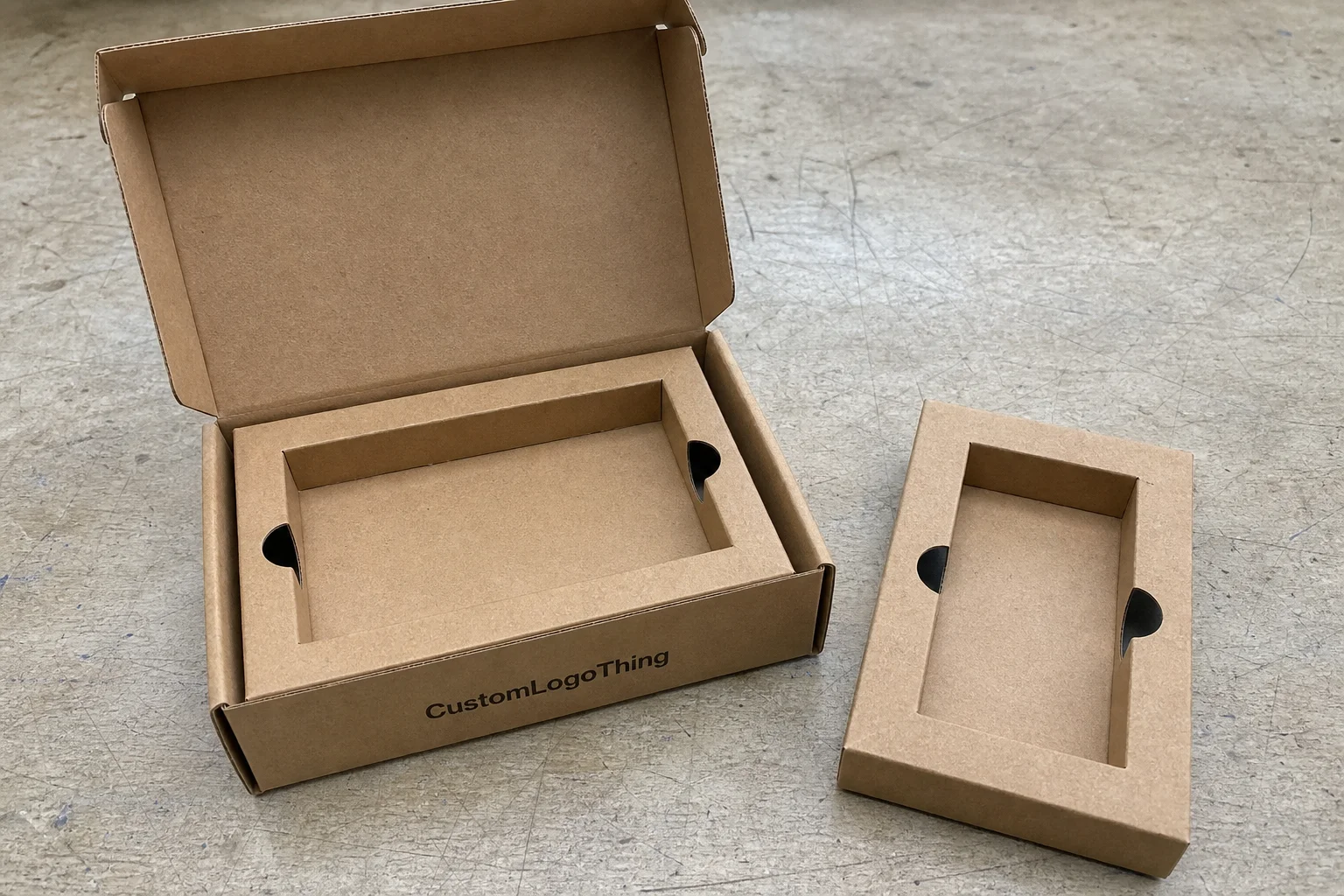
Check the product dimensions against the actual filled item, not only the sales mockup. Ask for tolerance on folds, seals, hang holes, label areas, and retail display edges. If the package carries a logo, QR code, warning copy, or legal claim, reserve that space before decorative graphics fill the panel.
How to compare quotes without losing quality
Compare board or film grade, print process, finish, sampling route, tooling charges, carton quantity, and freight assumptions side by side. A lower quote is only useful if the supplier can repeat the same color, closure quality, and packing count on the next order.
Wholesale Molded Pulp Inserts for Sustainable Packaging
One cracked bottle carton can erase the margin on 400 good orders, and I have seen that happen in the least theatrical way possible: the outbound trailer leaves on Friday from a plant in Dongguan, the receiving dock signs clean paperwork, and by Tuesday the claims queue starts filling with photos of broken shoulders, dented corners, and one very unhappy retailer. I watched a buyer move to wholesale molded pulp inserts after a single pallet of foam-packed glass jars arrived with 17 shattered units and a claims trail that ran longer than the invoice; the switch was not driven by a slogan, it was driven by a replacement cost of roughly $218 on that one pallet alone. For brands comparing molded fiber packaging, protective packaging, and custom packaging inserts, the right insert is not decoration. It is a shipping decision with a real number attached, and the cost shows up fast when a product leaves the plant, rattles through a truck line, and lands in a warehouse with one weak corner and a lot of excuses.
Wholesale Molded Pulp Inserts: Value Proposition
In procurement meetings, I keep hearing the same story from cosmetics, electronics, and beverage teams: once breakage crosses a certain threshold, the old packaging stops looking "good enough." Wholesale molded pulp inserts usually enter the conversation after a damage report shows 1.5% to 4% loss in transit, or after a retailer in California or Ontario rejects cartons that arrive scuffed, crushed, or floating in loose-fill. That is not a sustainability story first. It is a margin story, and the finance team usually recognizes it before anyone else does, especially when a line item for chargebacks starts showing up at $0.87 per unit. Finance people have a way of finding the pain point faster than the rest of us, which is inconvenient but also, frankly, useful.
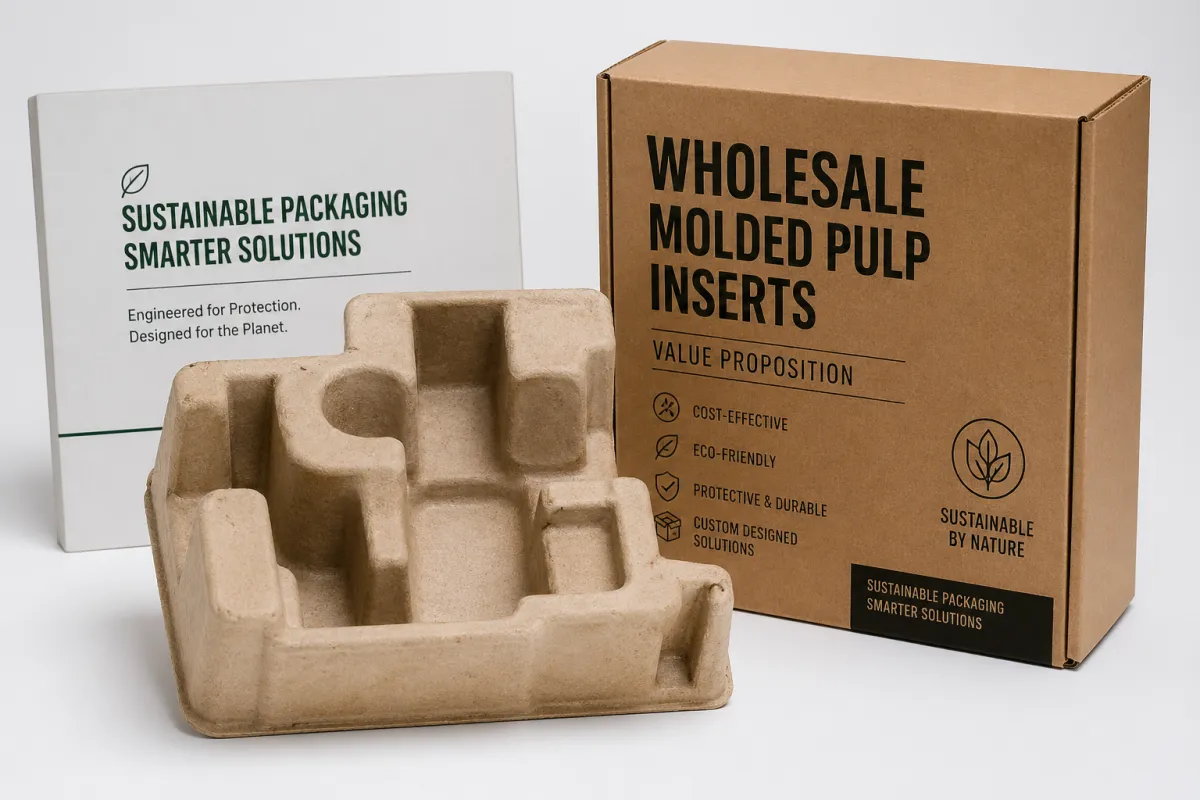
Here is the practical case. Wholesale molded pulp inserts protect products by holding them in a fixed cavity, which reduces vibration, rattling, and side-load damage inside the shipper. They also cut plastic use, reduce excess void fill, and create a cleaner unboxing moment without forcing the buyer to pay for visual theater. Plenty of brands want that cleaner presentation, but the real win is operational: fewer repacks, fewer claims, and less time teaching warehouse staff how to pad around a product that should have been engineered properly from the start. I am not trying to be dramatic here, but I have stood in enough packing rooms in Shenzhen, Suzhou, and Louisville to know that "just add more filler" is how people end up with expensive, ugly chaos.
I keep coming back to that point because it gets missed so often. On a visit to a contract packer handling 60,000 units a month in Monterrey, the labor manager showed me a packing station where workers were stuffing crumpled paper by hand to correct a box design that never fit well in the first place. Switching to wholesale molded pulp inserts shaved 22 seconds off each pack cycle, which translated into about 367 labor hours saved over a 30,000-shipment quarter. Nobody had to guess whether the change mattered; the conveyor told the story in real time. I remember one operator laughing and saying, "So we're paying people to fight the box?" and, honestly, that was the cleanest summary I heard all week.
The savings also show up in freight efficiency. A well-designed pulp insert nests tightly around the product, so you can often reduce carton size by 5% to 12% compared with a loose-fill setup. I have seen one client lower Dimensional Weight Charges by moving from a 12 x 12 x 10 inch mailer to a 10 x 10 x 9 inch shipper, which cut billed weight by 0.6 lb on every parcel. The insert cost rose by a few cents; the landed cost dropped by more than that, and the warehouse team stopped wrestling with a box that was two sizes too large for the item it carried. That little victory matters more than people admit. A box that fits correctly is a small mercy.
"We stopped treating packaging like a filler expense and started treating it like a damage-control tool. That changed our reorder rate and our customer complaints in the same quarter."
Wholesale molded pulp inserts are therefore a procurement decision, not just an environmental one. The strongest projects balance fit, price, lead time, and end-of-life impact. If the insert helps a product survive drop testing, keeps the line moving, and fits the brand's purchasing limits, the sustainability upside becomes the bonus that the finance team can actually live with. In one project outside Ho Chi Minh City, the buyer compared a recycled pulp insert at $0.15 per unit for 5,000 pieces against a thermoformed plastic tray at $0.19, then chose pulp because the claims forecast dropped by $6,400 over the next 12 months. That same logic often applies to molded fiber packaging programs that need to reduce waste without adding friction to the warehouse.
That is the lens I use with buyers: product fit first, material spec second, pricing structure third, and supplier support last only because it often decides whether the first three stay on track. The rest of this piece covers the details you need before requesting a quote for wholesale molded pulp inserts, including exact pricing bands, sample timing, and the fiber grades suppliers in Xiamen, Foshan, and Ningbo usually keep on hand.
Wholesale Molded Pulp Inserts: Product Details
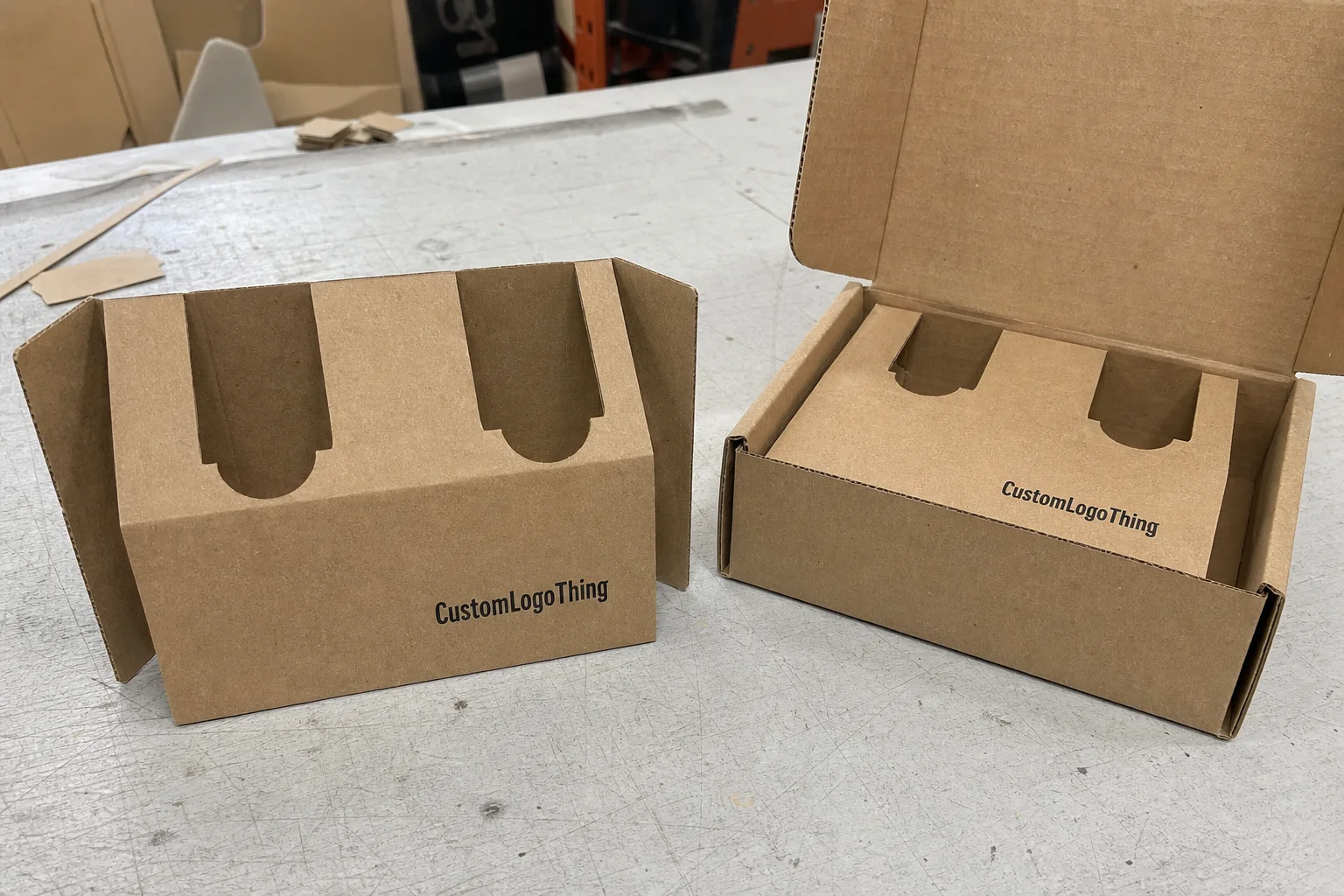
Wholesale molded pulp inserts come in more than one shape, and that matters because the insert has to match the product journey from factory to shelf. Tray-style inserts are common for cosmetics and small electronics. Clamshell-style supports work well when the product needs pressure from both sides. Corner protectors and end caps are more common for glass, ceramics, or boxed appliances that need edge control more than full-body restraint. Custom cavities are the answer when the item is oddly shaped, premium, or too expensive to leave to generic packaging. I have a soft spot for custom cavities because they solve the problem that everyone else keeps trying to patch over with tape and optimism, usually after a launch meeting in which nobody wanted to hear the words "new mold."
The material base is usually recycled paper fiber, molded under heat and pressure into a defined cavity. Some suppliers use a blended fiber recipe that may include virgin pulp or natural fibers for a smoother surface or tighter structure, but the core idea stays the same: compress the fiber, dry it, and create a rigid yet cushioning form. For wholesale molded pulp inserts, the exact recipe affects density, color, and finish. A denser part at about 0.55 to 0.75 g/cm3 can hold a heavy glass bottle better; a lighter part around 0.35 g/cm3 may work for accessories, refill kits, or display sets that do not need the same crush resistance. The craft is in balancing those traits without making the insert heavier than it needs to be. Nobody wants to pay to ship extra mass that exists purely for moral support.
Standard shapes are faster and usually cheaper because the tooling already exists. Custom work is worth paying for when the product geometry is difficult or the retail presentation matters enough to justify a mold. I once sat through a supplier negotiation for a premium skincare line where the brand wanted the bottle to "sit perfectly centered" under a die-cut window on a carton printed on 350gsm C1S artboard with matte lamination. That was not a vanity request. The margin on that bottle depended on shelf appeal, and the custom pulp cavity was cheaper than losing the retail listing because the pack looked improvised at first glance. I remember thinking that packaging has a strange talent for looking simple right up until it ruins a launch.
Use cases are broad, and that is one reason wholesale molded pulp inserts keep gaining ground. Cosmetics teams use them for jars, dropper bottles, and gift sets. Electronics brands use them for chargers, speakers, and small devices that need shock protection without static-heavy foam. Food service buyers use them for glass condiment bottles and premium takeaway kits. Subscription brands like them because a well-shaped insert makes the first opening feel organized instead of chaotic, like someone planned the reveal rather than tossed a bundle into a carton and hoped for the best. I am partial to the unboxing experience when it feels calm; customers can tell the difference between care and improvisation in about two seconds, especially when they open the box at a desk in Austin, London, or Brisbane and see every part seated correctly.
The best product details section always connects the insert to the use case after packing, not just during shipping. A tray that protects a product in transit and also stacks cleanly on a shelf gives the buyer two forms of value. A pulp insert that can be removed and recycled without confusion lowers friction for the end customer too. That is one reason wholesale molded pulp inserts fit both retail and ecommerce programs: they support the shipping process, the display process, and the disposal process without forcing the brand to explain extra parts or mixed materials at the customer service desk. I have seen a customer support team in Dublin reduce "how do I dispose of this?" tickets by 31% after a switch to molded pulp with a simple printed recycling icon. This is also where recycled fiber packaging earns its keep, because the material story is easy to explain and easy to act on.
For buyers comparing options, I usually break the field into four categories:
- Tray inserts for fixed, repeatable product shapes.
- Clamshell supports for enclosed protection and premium presentation.
- Corner and edge protectors for high-impact shipping environments.
- Custom cavities for products with irregular geometry or tight tolerances.
If you are sourcing wholesale molded pulp inserts for the first time, ask how the supplier handles nesting. A good design uses the empty space between parts efficiently so cartons ship compactly and pallet counts stay predictable. That one detail often separates a workable program from one that becomes a warehouse headache, especially when a 3PL in Chicago or Rotterdam is trying to fit one more line item onto a pallet that already wants to tip. I have seen a pallet wobble just enough to make everybody in the room suddenly find paperwork very interesting, particularly after the fourth stack reached 58 inches high.
What Are Wholesale Molded Pulp Inserts Best For?
Wholesale molded pulp inserts are best for Fragile Products That need stable, fitted protection without relying on loose-fill or excess plastic. They work especially well for glass bottles, skincare jars, electronics accessories, premium gift sets, and subscription kits that need a clean, repeatable presentation. Because molded fiber packaging can be shaped around the exact dimensions of a product, it reduces movement inside the carton and gives brands a more controlled unboxing experience. For buyers balancing protection, presentation, and cost, wholesale molded pulp inserts often hit the most practical middle ground.
They also shine in programs where shipping efficiency matters. A snug insert can help reduce carton size, lower dimensional weight charges, and make pallet layouts easier to manage. In retail and ecommerce, that combination matters almost as much as the material itself. I have seen teams move to wholesale molded pulp inserts after discovering that the old setup was creating too much void fill, too much repacking, and too many preventable claims. In those cases, the answer is not just better packaging; it is Packaging That Fits the operation.
For launches that rely on consistent presentation, molded pulp earns its place quickly. The same insert that cushions a glass bottle on a truck can also help a product sit squarely in a carton for a retail display or subscription kit. That kind of repeatability matters when your assembly line is moving fast and the packout team cannot babysit every box. In my experience, the programs that hold up best are the ones where the packaging decision was made with the actual product in hand, not in a slide deck.
Wholesale Molded Pulp Inserts Specifications
Before you request pricing for wholesale molded pulp inserts, gather the same fields you would bring to any packaging engineering review. I want the product dimensions in millimeters, the weight per unit, the weak points, the shipping carton size, the expected stack height, and whether the item will face humidity, cold-chain conditions, or long ocean transit. Without those details, quotes drift, samples miss, and everyone wastes a week reconciling assumptions. I have seen a six-minute measurement error turn into three rounds of sample revisions, and none of those extra rounds made the box fit better. It mostly made everyone tired and mildly irritable, which is never a thrilling project outcome, especially when the approval chain runs through three time zones.
The most useful performance specs are usually not visual. Compression strength, vibration resistance, and fit tolerance matter more than whether the pulp looks perfectly smooth. A rugged insert that tolerates a 1.5-meter drop can be more valuable than a prettier one that crushes at the corner. For wholesale molded pulp inserts, the supplier should be able to explain how the wall thickness, cavity depth, and fiber density relate to the product's actual risk profile, not just hand over a sample and hope the buyer never looks at the inside of the carton too closely. I have been handed a "finished" sample before and thought, with no disrespect, that it looked like someone had pressed it with a good intention and a prayer.
Testing should be part of the conversation early. I like to hear a supplier mention drop testing under ISTA transit test standards, compression checks using ASTM D642 or a similar method, and fit verification against the actual item rather than a sketch. If the packaging is for regulated goods or high-value retail items, ask for the relevant compliance checkpoints before tooling starts. That keeps wholesale molded pulp inserts aligned with both the distribution chain and the category requirements, which matters a great deal when the product is moving through more than one warehouse and one temperature zone. Trust me, no one enjoys discovering a weak point after the pallets are already somewhere they should not be, like a freight lane out of Incheon in July with no humidity protection in the spec.
Finishing options are more limited than with paperboard, and that is fine if the buyer understands the tradeoff. Natural pulp color is standard. Pigment can be added in some programs, but the color range is narrower than printed cartons. Surface smoothness depends on the mold, the fiber mix, and the drying cycle. A coating may help with humidity resistance, but it can also complicate recyclability, so I only recommend it when the ship lane actually calls for it. A product moving through 70% relative humidity in a tropical port needs a different answer than one shipping in climate-controlled parcels from a regional fulfillment center in Ohio. One is a damp, stubborn mess of a journey; the other is a lot kinder, and the insert can stay lighter at about 12% less fiber content.
For wholesale molded pulp inserts, I tell procurement teams to compare suppliers on the same checklist. Otherwise, one quote may look cheaper simply because it assumes thinner walls or ignores freight damage risk. Here is the checklist I use:
- Dimensions: exact outer size, cavity dimensions, and tolerance range.
- Wall thickness: measured in millimeters, not "standard" or "heavy-duty."
- Fiber type: recycled fiber, blended fiber, or natural fiber mix.
- Weight capacity: the actual product mass plus a safety margin.
- Moisture exposure: dry warehouse, humid lane, or cold-chain exposure.
- Stacking requirements: how many units can stack without deformation.
- Test method: ISTA, ASTM, or the buyer's own internal protocol.
That list sounds basic, but basic is exactly where projects get derailed. On one factory-floor visit in Qingdao, I watched an operator reject a batch because a cavity was 3 mm shallow. The buyer had assumed "close enough" would be fine. It was not fine. The cap lip was the only part of the product that centered the whole unit, and 3 mm was enough to make the pack shift during transit. That is the kind of mistake wholesale molded pulp inserts are supposed to prevent, not inherit.
One more detail: ask whether the supplier can provide dimensional drawings, a sample report, and a transit test recommendation in the same package. The faster a team can compare those documents, the faster the final order moves. For procurement people, the best quote for wholesale molded pulp inserts is the one that reduces interpretation, not the one that just shows a lower number. I would take a clear drawing from a supplier in Jiangsu over a vague promise from a sales rep any day, because the drawing can be measured and the promise cannot.
Wholesale Molded Pulp Inserts Pricing and MOQ
Pricing for wholesale molded pulp inserts depends on five main variables: tooling complexity, cavity count, material blend, order volume, and drying method. Add secondary finishing, like pigment or coating, and the quote can move again. A simple tray with one cavity costs very differently from a multi-cavity insert that locks a bottle, cap, and accessory into place. Buyers often compare only unit price, but unit price without tooling, freight, and breakage risk is a weak number. I say that with affection, but also with some frustration, because unit price gets treated like the whole story far too often, especially when a salesperson is trying to make a $0.15 unit sound like it appeared out of nowhere.
I like to break the cost stack into four buckets. First is sample or prototype cost, which may land around $180 to $450 depending on how many revisions the supplier has to make. Second is tooling or mold cost, which can range from $1,200 to $4,800 for many projects, although complex geometry can push higher. Third is unit price at scale. Fourth is shipping or palletization, which becomes meaningful when the insert is bulky. For wholesale molded pulp inserts, ignoring any one of those pieces leads to false comparisons. A quote that looks light on paper can grow teeth once it reaches the dock, and that is not the kind of surprise anyone wants before lunch in a warehouse outside Dallas.
MOQ is where buyers need honest guidance. Custom inserts almost always require a higher minimum than stock shapes because the mold has to be justified across a full production run. A small brand might see a starting MOQ of 5,000 pieces for a custom cavity, while a stock or lightly adapted option could start at 1,000 to 3,000 pieces. That difference is not a trick; it reflects machine setup, mold wear, and labor allocation. If your volume is below the custom threshold, ask whether a stock format can be tuned to fit instead of paying for tooling you will not use efficiently. A buyer who can move from 2,000 to 8,000 units in three months has a much easier path than one ordering 750 units at a time.
For comparison, here is a simple pricing view I use with buyers evaluating wholesale molded pulp inserts:
| Option | Typical MOQ | Unit Price at 5,000 | Unit Price at 20,000 | Lead Time | Best Fit |
|---|---|---|---|---|---|
| Stock tray | 1,000 pcs | $0.15 | $0.11 | 7-10 business days | Fast launch, standard product shapes |
| Semi-custom | 3,000 pcs | $0.23 | $0.16 | 10-15 business days | Minor geometry changes, better fit |
| Fully custom | 5,000 pcs | $0.31 | $0.20 | 12-15 business days from proof approval | Tight cavity control, premium presentation |
Those numbers are realistic starting points, not universal promises. A heavier part, a more complex cavity, or a moisture-resistant treatment can move the range upward. But the table helps buyers of wholesale molded pulp inserts compare options with their finance team instead of arguing from guesswork. In one case from a fulfillment center in Nevada, a semi-custom insert saved $0.04 per unit on freight and cut one whole carton size, which mattered more than the slightly higher tooling fee.
The financial argument should include the cost of damage reduction. If a $0.24 insert prevents just one return for every 200 units shipped, the savings can beat a cheaper $0.18 alternative that performs poorly. I saw that happen with a glass dropper bottle line where breakage fell from 2.8% to 0.4% after the team moved to wholesale molded pulp inserts that fit the bottle shoulder more tightly. The insert cost rose by 6 cents. The claim cost fell by much more, and the production manager stopped asking whether the cheaper option was worth the gamble.
Ask every supplier whether tooling is one-time, amortized, or refundable against volume. Ask whether freight is included. Ask whether the quoted price is ex-works, FOB, or landed to your warehouse. For wholesale molded pulp inserts, those terms change the real cost more than most first-time buyers expect. The cheapest unit price is not the cheapest purchase if the pallet bill and rework bill show up later, and they usually do when nobody pressed for the full shipping terms in writing. I have seen a buyer in Toronto save $0.02 per unit on paper and spend $1,100 extra on expedited freight because the mold was quoted without packaging for export pallets.
Wholesale Molded Pulp Inserts Process and Timeline
The ordering process for wholesale molded pulp inserts should feel orderly, not mysterious. It usually starts with an inquiry that includes product dimensions, weight, photos, and target quantity. Then the supplier recommends a structure, confirms the cavity layout, and sends a sample or digital mockup. After that comes approval, production, quality check, and shipment. Each step needs a named owner. Without one, a packaging project can stall for ten days because nobody wants to approve a sample from a file that was never measured correctly. I have watched that kind of delay happen in a Shanghai office with four people staring at the same email thread, and it is always a little painful because it was so avoidable.
Most delays are avoidable. The biggest ones I see are unclear measurements, late CAD files, last-minute artwork changes, and approval cycles that stretch longer than the production schedule. If a buyer says "approximately 96 mm" for the product height, the sample may arrive 2 mm off and trigger a second round. For wholesale molded pulp inserts, a digital model is useful, but I still want the physical product in hand. A caliper and a real sample save more time than a polished slide deck, especially when the carton has a tapered wall or the cap shoulder is doing all the work. Presentations are nice; calipers are honest, and a 0.5 mm variance can be the difference between a smooth fit and a nightmare on the line.
Timeline planning works better when you separate phases instead of asking for one magic date. Prototype timing may be 3 to 7 business days for a simple format. Tooling may add 7 to 14 business days, depending on the mold complexity and drying method. A first production run can take 12 to 20 business days once the sample is approved. Freight transit depends on route and mode, so buyers should work backward from launch, not forward from the day the quote lands. That is especially true for seasonal launches, retail resets, and subscription box deadlines. A team in Melbourne planning a holiday drop in October should not wait until mid-September to start sample approval.
A disciplined supplier reduces risk by catching fit problems early. I like to see a sample protocol that includes cavity depth, retention pressure, and carton closure checks. Some teams also run a quick vibration test or a drop test before they commit to full production. The best wholesale molded pulp inserts programs use those checks to avoid ugly surprises after the first shipment lands at the 3PL, where a small dimension miss can become a whole pallet of returned product. And yes, I have seen a 3PL team discover a problem by stacking boxes until the top carton started leaning like a sleepy tower. That was not a fun conversation, especially after the freight had already left a facility in Shenzhen.
If you need a practical timeline framework, use this:
- Day 1-2: Send product specs, carton size, volume target, and photos.
- Day 3-5: Review recommended structure and initial pricing.
- Day 6-10: Receive sample or mockup and test fit on the actual item.
- Day 11-18: Approve the sample, finalize tooling, and confirm packaging details.
- Day 19-35: Run production, inspect quality, and prepare shipping documents.
I have seen teams compress that schedule, but only when they arrive with complete information on day one. If the buyer already knows the annual volume, the shipping lane, and the target carton footprint, wholesale molded pulp inserts can move faster than most people expect. If not, every small question adds another round trip, and the project starts to feel like a scavenger hunt instead of a purchase order. I do not recommend packaging projects that feel like scavenger hunts; they tend to end with someone muttering about missing measurements and one very unhelpful spreadsheet.
One packaging manager told me, after a late-stage launch delay in Atlanta, "We saved three cents on the insert and lost two weeks on the timeline." That is the real tradeoff. For wholesale molded pulp inserts, speed matters, but only if the fit is right and the test data is credible. A launch that slips by 14 days can cost more than a whole pallet of custom inserts, particularly when retail ads are already booked and the warehouse has a hard slot date.
Why Choose Us for Wholesale Molded Pulp Inserts
At Custom Logo Things, the value is not just that we sell packaging. It is that we help buyers move from concept to repeat order without unnecessary detours. For wholesale molded pulp inserts, that starts with fast quoting, practical design support, and a sampling process that does not pretend every product fits into a generic cavity. If your item has a fragile edge, a curved shoulder, or a mixed-material assembly, the design has to acknowledge it from the beginning rather than hope the mold will forgive the mistake later. Packaging does not usually forgive mistakes, which is rude but true, especially when the product is going into a retail program out of Nashville or a subscription kit shipping out of Leeds.
I prefer suppliers who can explain geometry in plain language. That usually tells me they understand the manufacturing side, not just the sales side. A good partner should be able to suggest a wall-thickness adjustment, a cavity angle change, or a nesting improvement that reduces material use without weakening the part. For wholesale molded pulp inserts, that kind of input saves money before the order is locked, and it saves embarrassment after the first sample comes back from the tool shop. I have seen too many "perfect" renders collapse the moment a real bottle arrives, usually because the shoulder radius was 1.8 mm larger than the drawing anticipated.
Service matters more than slogans. Buyers need transparent MOQ terms, clear sample timing, and pricing that does not change every time a file is revised. They also need a supplier who can say, "This version will hold the bottle, but the shoulder needs another 2 mm of clearance," instead of nodding politely and sending a pretty render. In my experience, that honesty is what keeps programs stable after the first reorder, when everyone is tired and the launch calendar is already crowded. If a supplier can put a firm number on sample turnaround, such as 4 business days for a simple tray or 9 business days for a complex cavity, that is worth more than a dozen polished adjectives.
Quality control is the hidden advantage. Consistent density, dimensional checks, and transit-safe packaging for the inserts themselves are not glamorous topics, but they protect the buyer's launch date. On a supplier review in southern China near Foshan, I saw a production line reject a batch because the drying cycle left one corner softer than spec. That decision delayed shipment by a day and saved the customer from a pallet of unusable parts. That is the kind of discipline I want behind wholesale molded pulp inserts. I would rather hear "we held it back and rechecked it" than "we shipped it and hoped." Hope is not a process control method, despite how often people try to make it one.
If you are comparing vendors, use this short checklist:
- Does the supplier respond with drawings, not just pricing?
- Do they ask about shipping lane, humidity, and stack height?
- Can they explain the difference between stock, semi-custom, and custom formats?
- Do they provide sample approval before full production?
- Do they quote freight terms clearly, or leave them vague?
For buyers who want a broader purchasing path, our Wholesale Programs page is the fastest place to start. It helps procurement teams align volume, artwork, and packaging specs before the first quote is issued. If your team is sourcing wholesale molded pulp inserts alongside other custom packaging, that single starting point reduces back-and-forth and keeps the launch schedule readable. I have seen it save a week of email traffic when a team in Portland needed both inserts and printed cartons for a November roll-out. It is also a good place to compare molded fiber packaging options with other protective packaging formats before committing to tooling.
I also like to see suppliers reference standard test language and responsible-material certifications. FSC-certified fiber can matter for brand claims, and a documented transit test reference helps procurement trust the results. You do not need every option on day one, but you do need a supplier who knows the difference between a nice-looking sample and a program that survives 10,000 shipments. That is where wholesale molded pulp inserts either earn their place or get replaced after the second damage report, and the better programs never let it get that far.
Next Steps for Wholesale Molded Pulp Inserts
If you want a quote that is actually useful, prepare five things before you send the first email for wholesale molded pulp inserts: product drawings, sample units, target dimensions, shipping conditions, and annual volume estimates. The more exact the inputs, the faster the answer. A buyer with a 105 mm glass jar and a target of 24,000 units a quarter will get a better proposal than a buyer who says "small bottle, maybe a thousand." Precision changes the conversation immediately, which is refreshing because vague requests tend to produce vague answers and everyone's calendar gets worse. A clear brief can also shave 2 to 3 days off the back-and-forth, which matters when a launch is already pinned to a retailer's reset date.
My preferred order of operations is simple. Share the product specs first, then ask for the insert style recommendation, then compare MOQ and sample timing, and only then discuss unit price at different volume tiers. That sequence keeps the conversation practical. It also avoids the common trap where a low quote is based on a design that never really fit the product in the first place. With wholesale molded pulp inserts, fit is the price of admission. A quote from a supplier in Xiamen or Dongguan only becomes useful once the cavity actually holds the item without rocking or pinching the cap.
Use this checklist before you approve production:
- Confirm the insert holds the product at the top, middle, and base.
- Confirm the carton closes without pressure points or bowing.
- Confirm the sample passes a drop or vibration test on the real item.
- Confirm freight, tooling, and sample charges are written clearly.
- Confirm the total landed cost, not just the unit cost, fits the budget.
If you are building a packaging change around a launch date, work backward from the deadline and add a buffer of at least 7 business days. That cushion matters more than buyers think, especially if the product needs retail approval or a revised master carton. I have seen teams lose an entire shipping window because they approved a sample on a Thursday and assumed production could start the next morning. For wholesale molded pulp inserts, the safe plan is the one with time for a second review and enough margin to handle a small correction without throwing the schedule off. A 14-day buffer is even better for seasonal goods, particularly when freight from South China has to clear multiple checkpoints.
The bottom line is straightforward. Wholesale molded pulp inserts offer protection, lower waste, and scalable supply when the buyer needs more than a generic filler solution. If the goal is to protect fragile products, keep the packing line efficient, and avoid surprise freight or damage costs, they are one of the most sensible options available. Start with the product dimensions, ask for a sample, compare the total landed cost, and lock the fit before you get seduced by a low unit price. That is how you buy wholesale molded pulp inserts without paying for preventable mistakes later.
FAQ
What are wholesale molded pulp inserts used for in packaging?
They hold products in place during transit and reduce breakage from vibration, drops, and shifting inside the shipper. I usually recommend wholesale molded pulp inserts for fragile, premium, or oddly shaped items that need a fitted insert instead of loose filler, because a fixed cavity does a better job of controlling movement over 300 to 1,000 miles of transport. They also improve unboxing consistency, which helps brands across retail, ecommerce, and subscription packaging. In my experience, that consistency saves customer service teams a lot of tedious back-and-forth, especially when the product is shipping from a plant in Ningbo to a warehouse in New Jersey.
How do I choose the right wholesale molded pulp inserts for my product?
Start with exact product dimensions, weight, and weak points so the insert supports the most fragile areas. Then match the insert style to the use case: tray, corner, end-cap, or clamshell depending on the box structure and product shape. For wholesale molded pulp inserts, request a sample or prototype and test fit, retention, and drop performance before you place a full order. A 2 mm tolerance issue can matter more than a 10% price difference, and I have seen that tiny gap cause more trouble than a dozen "close enough" estimates, especially on bottles with tall shoulders or lids that need exact centering.
What is the typical MOQ for wholesale molded pulp inserts?
MOQ depends on whether the insert is stock or custom, with custom tooling usually requiring a higher starting quantity. Larger orders often reduce per-unit cost, so ask for pricing at multiple volume tiers before deciding. If volume is low, ask whether a standard shape can be adapted so you avoid unnecessary tooling costs on wholesale molded pulp inserts. A stock tray tuned to the right footprint can save more than a custom mold that never reaches repeat order volume, which is a sentence that has saved more than one team from a very awkward meeting in a finance office in Chicago or a product studio in Berlin.
How long does it take to produce wholesale molded pulp inserts?
Timeline depends on sample approval, tooling complexity, and the production method used. Simple orders can move faster than fully custom projects, which need design review and fit testing first. Build in time for shipping and approval so packaging changes do not delay a product launch; for wholesale molded pulp inserts, a careful timeline is often the difference between a clean launch and a rushed one. Rushed packaging almost always ends up making everyone stare at the tracking page with the same tired expression, especially when proof approval takes 2 extra days and the freight cutoff is already locked.
Can wholesale molded pulp inserts be customized for branding or special requirements?
Yes, custom sizes, cavity layouts, embossing, and color options may be available depending on the supplier and tooling setup. Special requirements like moisture resistance or tighter tolerances should be discussed early because they affect cost and lead time. Customization works best when the design improves protection or presentation rather than adding cosmetic complexity alone, which is why the best wholesale molded pulp inserts projects stay focused on function first. A beautiful insert that fails in transit is just expensive disappointment wrapped in paper fiber, no matter whether it ships through Xiamen, Guadalajara, or Savannah.