Buyer Fit Snapshot
| Best fit | Wholesale Packaging for 3PL Warehouses That Cuts Waste projects where brand print, material claims, artwork control, MOQ, and repeat-order consistency need to be specified before quoting. |
|---|---|
| Quote inputs | Share finished size, material target, print colors, finish, packing count, annual reorder estimate, ship-to region, and any compliance wording. |
| Proofing check | Approve dieline scale, logo placement, barcode or warning zones, color tolerance, closure strength, and carton packing before bulk production. |
| Main risk | Vague material claims, crowded artwork, missing packing details, or unclear freight terms can make a low unit price expensive after revisions. |
Fast answer: Wholesale Packaging for 3PL Warehouses That Cuts Waste should be specified like a repeatable production item. The safest quote records material, print method, finish, artwork proof, packing count, and reorder notes in one written spec.
Production checks before approval
Compare the actual filled-product size with the drawing, then confirm tolerance on folds, seals, hang holes, label areas, and retail display edges. Reserve space for logos, QR codes, warning copy, and material claims before decorative graphics fill the panel.
Quote comparison points
Review material grade, print process, finish, sampling route, tooling charges, carton quantity, and freight assumptions side by side. A quote is only useful when the supplier can repeat the same color, closure quality, and packing count on the next order.
Wholesale Packaging for 3PL Warehouses That Cuts Waste
I remember a Tuesday morning in a Phoenix 3PL, ZIP code 85043, when one wrong-size mailer added 11 seconds to every parcel on a 1,400-order lane. That sounds tiny until you stretch it across 6,300 orders in a five-day week; suddenly wholesale packaging for 3PL warehouses is not a purchasing line, it is labor, cube, and carrier spend hiding in plain sight, especially when the carton mix is pulled from a pallet staged 30 feet too far from the pack bench.
I have seen the same pattern in two other buildings: a Dallas operation near Grand Prairie lost 18 minutes a shift because cartons were stored in the wrong bay sequence, and a New Jersey client in Edison paid for 14% more dimensional weight than necessary because the box footprint missed by just 1.5 inches. Those are not branding problems. They are throughput problems, and wholesale packaging for 3PL warehouses has to solve them before it adds one more touch point. Honestly, I think that is where a lot of teams go sideways: they treat packaging like an office supply order, then act surprised when the dock starts complaining by 3 p.m.
Custom Logo Things works with teams that handle 800 orders a day and teams that handle 8,000, from contract warehouses in Atlanta, Georgia to fulfillment centers in Riverside, California. The scale changes, the logic does not. Wholesale packaging for 3PL warehouses needs to satisfy the same three realities every time: the product has to survive the trip, the pack station has to stay fast, and the receiving dock has to handle replenishment without turning into a storage puzzle.
Wholesale Packaging for 3PL Warehouses: Why It Matters
In a high-volume facility, wholesale packaging for 3PL warehouses affects four numbers managers track every week: labor minutes per order, cube utilization per pallet, damage rate per hundred shipments, and carrier charges per zone. If a box adds 6 cubic inches to a SKU that ships 3,200 times a month, you are paying for that mistake in storage, picking, and freight at the same time, which is why a 12 x 9 x 4 carton can outperform a 14 x 10 x 4 carton by more than a line-item price difference suggests.
A packaging choice that saves $0.04 on unit cost can still cost more when it adds one rework step, because one extra hand motion across 4,000 orders becomes 4,000 extra motions. I sat in a client meeting in Columbus, Ohio, where an operations manager showed me a station that lost 7 seconds every time a packer had to flatten and reopen a mailer. Over a 10-hour shift, that was enough to push overtime into the next day, and the difference showed up as $187 in extra labor on a single Friday.
Wholesale packaging for 3PL warehouses also has to work across multiple client accounts. One building may be handling apparel in poly mailers, supplements in Custom Printed Boxes, and brittle cosmetics in double-wall cartons. If the packaging mix is too broad, staff spend time hunting for SKUs. If it is too narrow, they force products into the wrong format, and that is where damages rise, especially on items shipping through hubs in Memphis, Tennessee or Harrisburg, Pennsylvania.
The best wholesale packaging for 3PL warehouses is boring in the right way: standard footprints, predictable stack heights, clear labels, and a replenishment rhythm that does not surprise the receiving team. I have seen a 3PL lose 22 minutes a day because their void fill arrived in loose bales instead of palletized bundles, and that single detail changed the pack lane flow for the entire week. A dock crew in Fort Worth, Texas can tell you within one shift whether the packaging was planned for the building or just ordered from a generic catalog.
"If a packaging change adds 8 seconds and 2 inches of cube, it is not a packaging issue anymore; it is a staffing and freight issue." That was the blunt note a warehouse director gave me after his team tested 500 orders with a new carton size, and he was right to call out the 8-second penalty and the 2-inch oversize immediately.
For teams that want a benchmark, I start with wholesale packaging for 3PL warehouses that can be replenished in pallet counts of 48 to 96 cases, labeled by SKU, and stored within 30 feet of the pack station. That does not sound glamorous, but it does reduce hunting, mis-picks, and avoidable touch points, especially in buildings running two shifts in Joliet, Illinois or Laredo, Texas. It also keeps the receiving crew from giving you that look that says, "Please do not make me babysit six loose cartons and a prayer."
Product Options for High-Volume 3PL Operations
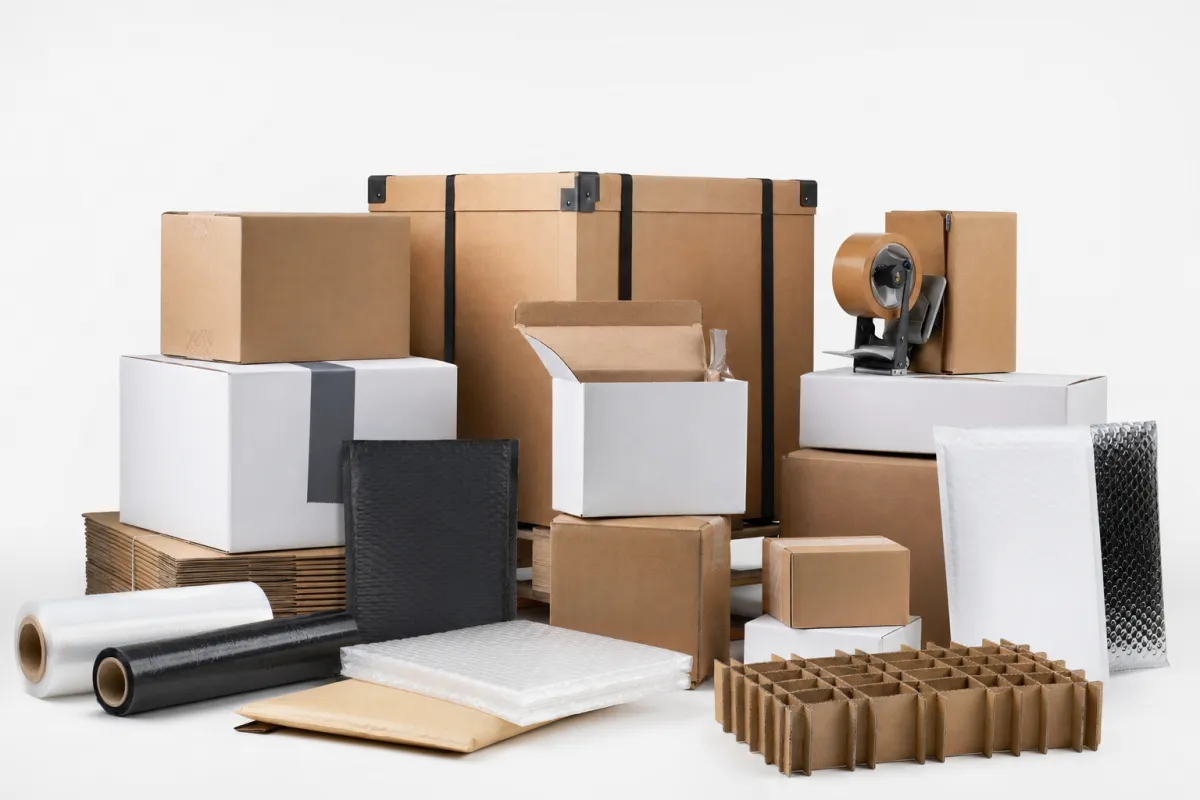
Wholesale packaging for 3PL warehouses is not one product line. It is a mix of materials that map to order type, fragility, and speed. A good assortment usually starts with corrugated cartons, poly mailers, void fill, labels, tape, dunnage, pallet covers, and protective wraps. Each one solves a different bottleneck, and each one creates a different storage demand, whether the goods are being packed in Nashville, Tennessee or shipped through a port-adjacent warehouse in Newark, New Jersey.
- Corrugated cartons: Best for rigid or mixed-SKU orders; common specs include 32 ECT single-wall for light-to-medium parcels and 44 ECT or double-wall for heavier items above 35 lb, with a 200 lb burst test often used for rough-handling lanes.
- Poly mailers: Useful for apparel, soft goods, and returns; 2.5 mil to 4 mil thickness is common, and 4 mil often survives rougher carrier handling on routes through Denver, Colorado or Atlanta, Georgia.
- Void fill: Paper, air pillows, or kraft pads keep fragile items centered; the right choice depends on pack speed and how much cushioning is needed per order, with 30% recycled kraft paper often used in apparel and beauty programs.
- Labels: Thermal direct or thermal transfer labels must match the printer model, ribbon type, and scan distance on the line, with 4 x 6 inch shipping labels still the standard in most 3PLs.
- Tape: 2.0 mil to 3.1 mil acrylic or hot-melt tape changes both seal quality and dispenser drag, and 3.1 mil hot-melt is common in cold docks in Chicago, Illinois.
- Dunnage and wraps: Corner boards, stretch wrap, and pallet covers protect bulk inventory during storage and outbound movement, especially on 48 x 40 inch pallet builds stacked 6 to 8 cases high.
I watched one 3PL in Ontario, California try to solve every order with a single carton family, and it backfired within 3 days. The apparel team needed a 14 x 10 x 2 inch mailer, the wellness team needed a 12 x 12 x 8 inch carton, and the gift set station needed Custom Printed Boxes with inserts because the product moved during transit. Wholesale packaging for 3PL warehouses works better when the material matches the lane, not when the lane is forced to match the material, and the difference shows up quickly when a packer has to tape the same box three times just to make it hold.
Mixed-client warehouses also need formats that support kitting, returns, and pick-and-pack. In a returns lane, a 4 mil poly mailer with a peel-and-seal strip can save 2 seconds per item over tape-and-fold rework, which matters when a reverse-ops team processes 900 units per day. In a kitting station, a narrow corrugated tray can replace three loose inserts and keep the packer from hunting for parts. In an e-commerce lane, a carton with a consistent tuck flap can keep motion the same from order 1 to order 1,000, even on a cold morning in Kent, Washington.
There is a clear line between stock sizes and custom formats. Stock works when the product is close to standard dimensions and the monthly volume is spread across multiple accounts. Custom is worth the setup when one SKU family creates a recurring problem, such as a 1.2-inch void on every shipment or a presentation issue that hurts branded packaging. I have seen wholesale packaging for 3PL warehouses improve by 15% in line speed after one custom insert removed a second layer of void fill, and the sample was approved in a 20-order test on a Friday before the full run shipped from a plant in Dongguan, Guangdong.
For packaging design, I like to separate items into three buckets: fast movers, protected movers, and presentation pieces. Fast movers need standard carton runs and easy seal steps. Protected movers need shock control and better corner strength. Presentation pieces need custom printed boxes or branded packaging that still closes in under 12 seconds. That is a practical framework, not a theory, and it keeps everyone from overcomplicating the simple stuff when a pack station in Charlotte, North Carolina is already running at full pace.
Packaging Specifications That Keep Orders Moving
The spec sheet is where wholesale packaging for 3PL warehouses either becomes useful or becomes decoration. I want dimensions in inches and millimeters, board caliper, burst strength or ECT rating, seal performance, print coverage, pallet count, and case pack. Without those details, a buyer cannot compare two quotes on equal ground, and a vague "medium-duty" note is not enough when a warehouse in Sacramento, California is burning through 250 cartons an hour.
Right-sizing matters because air is expensive. A carton that is oversized by just 1 inch on each side can add empty cube, raise the chance of movement inside the box, and trigger a larger carrier dimensional weight bill. In one audit I reviewed, a 13 x 10 x 6 inch box replaced a 12 x 9 x 5 inch box, and the customer lost 9% more pallet efficiency before anyone noticed. That is why wholesale packaging for 3PL warehouses has to be measured, not guessed, especially on multi-stop freight lanes out of Atlanta and Dallas.
Before I approve a run, I ask three sourcing questions. What is the material grade? Is there moisture resistance or a coating involved? Is the fiber FSC-certified, and can the supplier document it? For testing and sourcing standards, I point teams to the ISTA protocols for transit testing and the FSC system for responsible fiber sourcing. I also ask whether the carton design has been checked against ASTM-style compression expectations, especially for stacked pallet loads shipping from a plant in Monterrey, Nuevo Leon or Chicago, Illinois.
Wholesale packaging for 3PL warehouses should come with a spec sheet that operations people can actually use. That means SKU names that match the ERP, a case pack such as 25, 50, or 100 units, a pallet count such as 40 cases per skid, and a reorder threshold. If the sheet does not tell the warehouse when to reorder, it is missing the most practical part of the job, and the buyer ends up placing emergency orders at 4:45 p.m. on a Thursday.
I also recommend one sample-and-test step before a full wholesale order. Put the sample carton on the same bench, use the same tape gun, and run the same seal motion for 20 consecutive packs. Measure two things: average pack time and failure count. If one custom mailer saves 4 seconds but needs a different dispenser, the math changes quickly. Wholesale packaging for 3PL warehouses should make work simpler, not just look clean on a sheet, and it should still work after a full shift in humid weather in Tampa, Florida.
Here is the rule I use on the factory floor: if the packaging cannot survive a 3-foot drop, a 40-pound top load, and a 24-hour humidity swing without changing shape, it is not ready for bulk use. That is not a lab-only standard. It is a warehouse standard, and it saves rework. It also prevents the classic "well, it looked fine in the sample room" excuse, which I have heard more than once from teams sampling cartons out of a facility in the Chicago suburbs.
Wholesale Packaging for 3PL Warehouses: Pricing and MOQ
Pricing for wholesale packaging for 3PL warehouses breaks into five parts: material type, print complexity, custom sizing, palletization, and freight distance. A 1,000-mile shipment of pallets can erase the savings from a lower carton price, especially if the supplier needs to split the order across two trucks from a plant in Atlanta, Georgia or a converter in Phoenix, Arizona.
MOQ matters because it drives both unit cost and storage pressure. A larger run usually lowers the per-unit price, but the warehouse must have room to store it and cash to carry it. I once negotiated with a supplier who offered 5,000 cartons at $0.18 each, but the client only used 1,100 cartons a month. The math looked good until we priced the 4 extra pallets of storage and the 2-week cash tie-up. That is the kind of deal that sounds efficient until someone actually runs the numbers on a Monday morning in San Antonio, Texas.
| Option | Example Unit Price | Typical MOQ | Lead Time | Best Use | Main Tradeoff |
|---|---|---|---|---|---|
| Stock 32 ECT carton | $0.18/unit at 5,000 | 1 pallet or 2,500 units | 7-10 business days | Standard SKUs with steady demand | Less brand control |
| Custom printed boxes | $0.42/unit at 10,000 | 5,000-10,000 units | 12-15 business days after proof approval | Branded packaging and retail packaging | Higher setup and storage needs |
| 4 mil poly mailer | $0.11/unit at 10,000 | 2,000-10,000 units | 5-7 business days | Apparel and soft goods | Lower protection for rigid items |
| Hybrid kitting set | $0.63/order set at 2,500 | 2,500 sets | 15 business days | Multi-piece kits and subscription packs | More assembly planning |
That table is why wholesale packaging for 3PL warehouses cannot be priced on unit cost alone. A lower sticker price can still be more expensive if it creates 20 extra minutes of labor per pallet, or if it forces the warehouse to store 6 months of supply just to meet the MOQ. I tell buyers to ask for tiered quotes at 2,500, 5,000, and 10,000 units so they can see where the breakpoint really sits, whether the order is shipping from Savannah, Georgia or printed in Shenzhen, Guangdong.
There is another angle that matters in negotiation. Freight terms can make or break the deal. In one supplier call, the cartons were 9 cents cheaper than a competitor’s, but the dock delivery window was only 2 hours and the freight bill ran $860 to Dallas because the shipper would not hold the load for a consolidated pickup. A good wholesale packaging for 3PL warehouses quote should show unit cost, freight, setup, and delivery window in the same view, plus whether the cartons are built on 350gsm C1S artboard, 32 ECT corrugated, or 4 mil poly material.
My advice is simple: group recurring SKUs, align order cycles with consumption, and let monthly usage drive the buy. If a pack lane burns through 600 rolls of tape and 8 pallets of cartons per month, then the replenishment plan should be built around that cadence. That is how wholesale packaging for 3PL warehouses stays predictable, and how the buyer avoids those frantic "we are out again" calls that make everyone grumpy before noon in a warehouse office with a 2 p.m. cutoff.
Process and Timeline From Quote to Dock Delivery
The cleanest wholesale packaging for 3PL warehouses projects follow a simple order flow: discovery call, spec review, quote, sample approval, production, quality check, and shipment booking. If the supplier skips sample approval, I treat that as a warning sign. A good quote without a sample can still become a bad dock delivery if the dimensions or print file are off by even 0.25 inch. I have seen a whole week get burned because somebody thought "close enough" was a valid measurement strategy, and that kind of miss can cost a Tampa or Houston operation a full receiving cycle.
- Discovery call: Share monthly usage, target dimensions, pack station photos, and the current pain points in numbers, such as 9 seconds of rework per order or 3 damage claims per 1,000 shipments.
- Spec review: Confirm sizes, board grade, finish, print colors, case packs, and pallet count.
- Quote and tiering: Review pricing at 2,500, 5,000, and 10,000 units so the breakpoints are visible.
- Sample approval: Test fit, closure, stacking, and labeling on a real line for 20 to 50 orders.
- Production: Expect most standard runs in 7-10 business days and custom printed runs in 12-15 business days after proof approval.
- Shipment booking: Confirm dock hours, pallet count, and any liftgate or appointment needs before the freight leaves.
What slows projects down? Missing artwork files, vague dimensions, or a client changing a product insert after the sample is already approved. I saw one account lose 9 business days because the artwork team sent a low-resolution logo and then requested a second proof with a new Pantone reference. Wholesale packaging for 3PL warehouses moves fastest when the buyer sends measurements, product photos, and print files in the first round, ideally from the same person who knows whether the warehouse is in Irving, Texas or Ontario, California.
The receiving side matters just as much. I advise warehouses to clear staging space for at least 1.5 pallet positions per expected pallet, label incoming cases before the first truck arrives, and assign one receiving associate to verify counts against the packing list. If the dock team is still moving yesterday’s inbound when today’s carton order lands, the delay will show up as bottlenecks in the pack lane within 24 hours, and the cost usually appears as overtime on Friday.
A pilot launch works better than a full switch. Start with one high-volume client, one pack line, and one packaging format such as a 12 x 9 x 4 corrugated carton or a 4 mil mailer. Track labor time, damage claims, and customer returns for 30 days. If wholesale packaging for 3PL warehouses is doing its job, you should see fewer touches, fewer complaints, and a cleaner replenishment rhythm by the second reorder, whether the goods are processed in Louisville, Kentucky or Reno, Nevada.
Why Choose Our Wholesale Packaging Program
Custom Logo Things is built around operations, not showpiece packaging. Our wholesale packaging for 3PL warehouses is designed for repeatable quality, stable specs, and account support that understands what happens on a line moving 1,000 parcels a day. That matters because one missed case count can stop a pack station for 30 minutes, and one late replenishment can affect three client accounts at once, especially in a multi-client building outside Charlotte, North Carolina or Kansas City, Missouri.
If your team needs Custom Packaging Products that fit a SKU family down to the inch, or an account structure through our Wholesale Programs page that matches monthly usage, we set the plan around the warehouse flow. I do not like supplier language that sounds polished but ignores the receiving dock. I prefer a program that can say, for example, 5,000 custom printed boxes, 3 color proof stages, and 12-15 business days from approval. That is concrete, and it is a lot easier to manage when the building is already loud and busy, especially if the print run is coming out of a facility in Dongguan, China or Monterrey, Mexico.
We also make space for practical customization. Branded packaging matters in 3PL work, but it has to fit the station. I have seen a client win repeat orders because the box printed cleanly, closed with one tape pass, and stacked 6 high without bowing. That is package branding doing a job, not decorating a shelf. In another case, a simple one-color logo on a corrugated mailer reduced client complaints because the box matched the product packaging promise at unboxing, even after a 900-mile route through the Midwest.
What separates a packaging vendor from a real operations partner is the way problems get handled. If a freight lane changes, if a client adds a new SKU family, or if a reorder needs to be split across two receiving dates, the answer should be specific: what is in stock, what can ship this week, and what changes the price by $0.02 or $0.05 per unit. Wholesale packaging for 3PL warehouses works best with that level of honesty, especially when the dock calendar is already full and the next appointment is 45 minutes away.
"We stopped treating packaging as a nice-to-have once the carton count reached 17 pallets a month." That was a client note from a Midwest fulfillment center in Indianapolis, Indiana, and it reflected exactly why wholesale packaging for 3PL warehouses deserves the same attention as labor planning and freight scheduling.
We test sample fit, support multi-SKU replenishment plans, and help keep reorders consistent from run to run. If a carton is supposed to hold 18 units and the sample only fits 16 with the same insert, I would rather say that upfront than let the warehouse find it after 2,000 units are already in production. That is the standard I use, even if it means having the awkward conversation early. Awkward early beats expensive late, especially when the packaging line is already booked for the week.
Next Steps to Launch the Right 3PL Packaging Mix
If you are rebuilding wholesale packaging for 3PL warehouses, start with the numbers already in your building. Pull the current packaging SKUs, measure every carton and mailer in inches, count monthly usage for the last 90 days, and mark the top three sources of waste or damage. Most teams discover one box size, one tape issue, and one storage problem within 20 minutes of that review, and the list is usually visible from the first pallet row.
- Request samples: Ask for cartons, mailers, tape, and any custom printed boxes that match the top 2 or 3 order profiles.
- Run a live test: Put the samples on the actual pack line for 25 to 50 orders and measure average pack time in seconds.
- Review storage: Confirm that pallet counts, case packs, and bay locations fit the receiving area and the first 30 days of demand.
- Compare quotes: Put stock, custom, and hybrid options side by side with freight, setup, MOQ, and lead time included.
- Launch a pilot: Start with one high-volume client or one packing lane, then expand once the damage rate and labor time improve.
I have seen wholesale packaging for 3PL warehouses improve fastest when the pilot is small and the metrics are real. One client reduced pack time by 14% by switching from a loose-fill heavy carton to a right-sized box with an 8-cell insert. Another cut damage claims by 22% after moving fragile SKUs into a double-wall carton with a tighter case pack and better tape. Those changes were not guesses; they were measured over 30 days in a building outside St. Louis, Missouri.
Before you commit to a larger wholesale run, compare the options one more time against the actual warehouse constraint. Is the issue labor, storage, damage, or freight? If it is labor, prioritize box speed and seal quality. If it is storage, prioritize case pack and pallet count. If it is damage, ask for better board strength and transit testing. If it is freight, check pallet density and dock delivery terms. Wholesale packaging for 3PL warehouses should be chosen from data, not habit, and the numbers should be visible to both operations and procurement.
The fastest path is usually the simplest one: sample, test, quote, pilot, reorder. I tell buyers to keep the first order focused, because a 3PL can always add a second SKU family once the first one proves itself. For most operations, wholesale packaging for 3PL warehouses pays off when the box fits, the schedule is clear, and the dock knows exactly what is arriving. That combination sounds plain, but plain is often what keeps the whole operation from turning into chaos on a 6 a.m. receiving shift.
What Does Wholesale Packaging for 3PL Warehouses Need to Solve?
Wholesale packaging for 3PL warehouses needs to solve four things at once: protect the product, reduce pack time, control cube, and keep replenishment predictable. If one carton saves a few cents but slows the line or creates more damage claims, it is not a win. The best packaging mix supports labor planning, carrier efficiency, warehouse storage, and the daily rhythm of the pack station without forcing the team to improvise around bad specs.
That is why I push teams to think about wholesale packaging for 3PL warehouses as part of operations planning, not as a shelf item. A good box, mailer, or insert should fit the product, the bench, and the dock. It should also hold up under normal warehouse stress, from the first scan at receiving to the last mile in transit. If it misses any one of those jobs, the whole system pays for it.
Frequently Asked Questions
What type of wholesale packaging works best for 3PL warehouses?
The best option depends on the order mix, but most teams need a core set of cartons, poly mailers, tape, labels, and void fill. In a 2,000-order facility I audited, the biggest gains came from standardizing just 6 SKUs instead of 19, because staff stopped hunting for the right size. Wholesale packaging for 3PL warehouses works best when the materials match the packing lane and the monthly order profile, whether the building is in Phoenix, Arizona or Newark, New Jersey.
How do I estimate MOQ for wholesale packaging in a 3PL operation?
Start with average monthly usage for each packaging SKU and multiply it by the replenishment cycle you want to maintain, such as 30, 45, or 60 days. Then compare that number with supplier MOQ, pallet quantities, and available storage space. If the MOQ is too high, consolidate SKUs or choose stock sizes first, because wholesale packaging for 3PL warehouses should not create inventory pressure that outlasts the savings, especially when storage runs tight at 48 pallet positions or fewer.
Can custom wholesale packaging slow down warehouse throughput?
It can, especially if the format is hard to store, seal, or sort. I have seen a custom mailer add 5 seconds per order because the adhesive strip was too narrow for gloved hands. The fix is not to avoid custom work; the fix is to test wholesale packaging for 3PL warehouses against actual line speed before a full rollout, ideally with 25 to 50 live orders on the same pack bench.
How should a 3PL compare pricing from packaging suppliers?
Compare unit price, freight, MOQ, lead time, and any setup or print charges together. A lower per-unit quote can still cost more if it creates extra labor or requires 4 more pallets of storage. I ask for pricing at 2,500, 5,000, and 10,000 units so wholesale packaging for 3PL warehouses can be judged at the volume breakpoints that matter, not just the first number on the page.
What information should I send for a wholesale packaging quote?
Send dimensions, material preferences, target quantities, print requirements, and delivery location. If the fit is complex, include photos or a sample of the product being packed, because a 1-inch difference can change the whole spec. The more complete the detail set, the faster the quote and sample process for wholesale packaging for 3PL warehouses, and the less likely you are to need a second proof at the last minute.
For most operations, wholesale packaging for 3PL warehouses works best when the buying decision is tied to measured labor, damage, and freight data rather than guesswork. If you start with the right spec sheet, a 25-order sample run, and a clear reorder plan, you can cut waste, keep the dock calm, and build a packaging system that holds up under real volume in Dallas, Atlanta, or any other high-throughput market.

