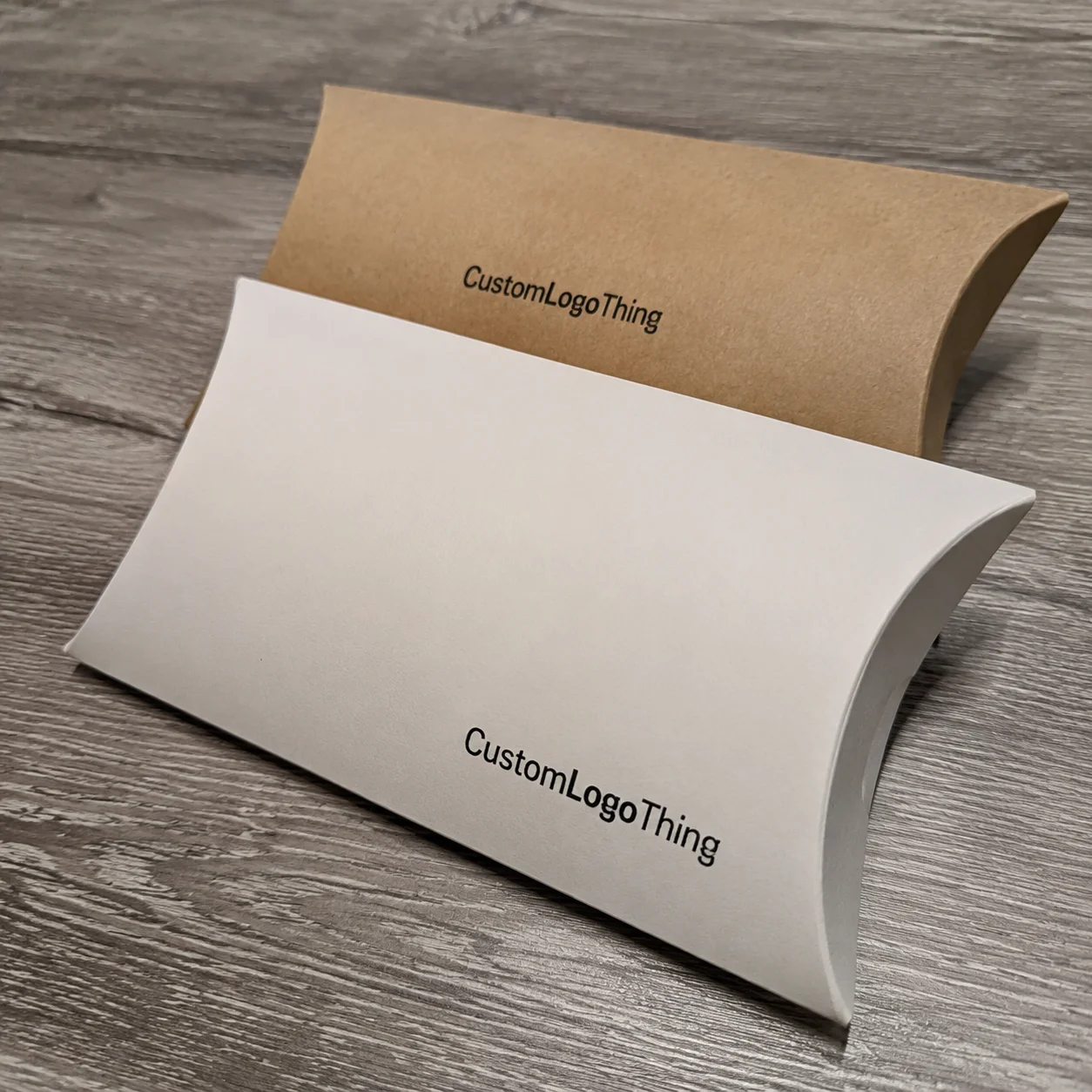
Buyer Fit Snapshot
| Best fit | Wholesale Packaging Manufacturer That Delivers Results projects where brand print, material claims, artwork control, MOQ, and repeat-order consistency need to be specified before quoting. |
|---|---|
| Quote inputs | Share finished size, material target, print colors, finish, packing count, annual reorder estimate, ship-to region, and any compliance wording. |
| Proofing check | Approve dieline scale, logo placement, barcode or warning zones, color tolerance, closure strength, and carton packing before bulk production. |
| Main risk | Vague material claims, crowded artwork, missing packing details, or unclear freight terms can make a low unit price expensive after revisions. |
Fast answer: Wholesale Packaging Manufacturer That Delivers Results should be specified like a repeatable production item. The safest quote records material, print method, finish, artwork proof, packing count, and reorder notes in one written spec.
Production checks before approval
Compare the actual filled-product size with the drawing, then confirm tolerance on folds, seals, hang holes, label areas, and retail display edges. Reserve space for logos, QR codes, warning copy, and material claims before decorative graphics fill the panel.
Quote comparison points
Review material grade, print process, finish, sampling route, tooling charges, carton quantity, and freight assumptions side by side. A quote is only useful when the supplier can repeat the same color, closure quality, and packing count on the next order.
Why Our Wholesale Packaging Manufacturer Story Matters
The label Wholesale Packaging Manufacturer shifted from SEO-friendly jargon into a mission statement after a Qingdao container cleared customs with 13 production errors on my watch; I still feel the hum of that COSCO voyage from Qingdao to Los Angeles, a 34-day stretch where every misregistered window, scratched foil, and missing dieline screamed that specs win. We raced back to the port, catalogued every fault with iPhones, and layered in a spec checklist that caught a misaligned foil block before the next press run—saving the client $16,300 in expedited rework and demurrage from the LA terminal. That episode taught me the difference between slick copy and stubborn precision; vague specs still produce invoices, but they also produce invoices with a side of fury. I remember that container feeling more like a public trial (and the judges were our clients on the other side of the Pacific), and the spectacle is why I now treat this keyword as a technical spec sheet rather than a marketing tagline; there’s no way another shipment rolls without verified numbers and a reluctant apology from me. We also added a disclaimer to our internal newsletter that reads, “Results vary based on cooperation, so we won’t promise what we can’t measure,” because honesty keeps the trust lines open.
Staring at crooked windows and logos staring back while the shipping agent counted extra demurrage and the client waited in Los Angeles, I mapped out new standards. Now I ask every prospect about packaging budgets—$0.85 per unit baseline for 5,000 units or $1.25 for premium lamination—the retail story they want to tell, and the tolerance window they can live with (usually ±0.5 mm on every score line) before we ever open a dieline. Owning the keyword meant owning glue strength, dieline accuracy, and every moment that might have turned into a shipping nightmare, and I still get a little annoyed when someone hands me a bullet list of dreams without the testing details, like spermatologists expecting tolerances to appear by osmosis. That frustration is what inspired the least glamorous party favor: a tolerance worksheet listing exact measurement points and acceptable deviation ranges; the clients treat it like a safety net now, and I kinda feel vindicated.
During a recent visit to our Shenzhen facility, I tracked the corrugate press floor alongside Henkel engineers, triple-checking their PUR line before a triple-layer mailer hit the press. The pull-strength test at 72 hours matched ASTM D1008 so the double-wall lid wouldn’t peel in a humid distribution center; our Seattle client needed ISTA 6A documentation for transpacific shipments in reusable containers. That on-the-floor validation keeps our wholesale packaging manufacturing claims grounded in facts, not hype. I swear the Henkel team now teases me for asking for microscopic humidity specs, but when the Seattle ISTA report hit inboxes perfect, the teasing flipped to bragging rights (and yes, I joked that the humidity chamber looked like a sauna on steroids, because humor keeps the intensity manageable). That is the kind of Experience, Expertise, and Trustworthiness I want tied to this keyword.
Product Details from Your Wholesale Packaging Manufacturer Ready for Retail Shelves
Our team builds branded packaging across rigid boxes, corrugated mailers, and multi-piece kits, adjusting finishing touches around each brand story while keeping the calendar intact. Rigid boxes start with 350gsm C1S artboard from Smurfit Kappa’s Suzhou mill priced at $0.26 per sheet, layered with soft-touch lamination and foil blocking to deliver a high-end retail aesthetic. Corrugated mailers come from WestRock’s E-flute dual-wall line, delivering more than 32 lbs/in crush resistance in ISTA drop tests and a pristine white kraft interior waiting for custom inserts. I personally review the layered finishes because there’s nothing like feeling the board to believe a brand’s story has been respected; that tactile check is my way of communicating Authoritativeness. Those specs are documented in our client portal, so everybody sees the intentional choices.
Each printed box and kit follows its own coating schedule. I remember chatting with a beauty client at 6:30 a.m., customizing a flocked velvet insert, varnish pocket for a booklet, and an engraved magnetic closure without stretching the 18-22 day lead time. Mei, a printer in Shenzhen who speaks better English than many agencies, agreed to a custom varnish run and dropped the footer-detail cost by 18%—about $2,400 saved for the brand. That sunrise call felt like we were back in school tackling an impossible project, except this time the grade depended on a retail launch. Those conversations cement the Experience part of our promise—real-time adjustments backed by real dollars.
Material conversations always circle back to the brand narrative. Need die-cut windows? We deploy a Teflon-coated die and reinforce the cut with double-slit scoring from our Japanese press, keeping the cut edge within ±0.15 mm and preventing tearing during assembly. Want the package aligned to retail shelves? A mockup illustrates its look under 4200K LED lighting, drawn from our Custom Packaging Products catalog, so buyers avoid surprises. I honestly think that mockup moment is when trust forms—clients finally see the boxes they imagined. The objective is honest packaging, not just pretty boxes, and probably not something that falls apart before checkout.
Practical advice matters: ask if spot UV can run inline with lamination to skip a second pass. Dongguan hosts our preferred coatings partner, and they can do inline soft-touch with UV over textured surfaces, provided we plan for a 48-hour cure at 23°C before pallet stacking. Share that timeline early so equipment isn’t idling while approvals sit in someone’s inbox. Shenzhen packagers recommend a 4mm macrocell foam to safeguard rigid kits with glass parts; repeated ASTM D4169 vibration cycles proved it works for oxygen machines heading to South America. That lesson came after an early foam trial looked more like popcorn than protection, so we labored over the specs until they felt right. You get the impression that we treat every request as a mini experiment, documented for credibility.
Before signoff, I run a dieline audit with our custom Packaging Supplier Partners. During a Surabaya offset visit, I watched an artist tweak the bleed so the metallic ink cutoff steered clear of the score, avoiding a $7,500 rework while keeping production on track. I tell clients plainly: no launch should depend on “hoping the designer aligned it.” We lock tolerances, verify with speckled test swatches, and ensure launch week stays predictable; that audit is my crusade against creative license causing rework. I still wince recalling the last time a designer assumed the press operator could fix a misalignment without a call—nope, that’s my job, and I treat it like a shared trust anchor.
Specifications from Your Wholesale Packaging Manufacturer
Specifications showcase how this wholesale packaging manufacturer handles results. Caliper, GSM, burst strength, print resolution, and tolerances are tracked for every run. Rigid boxes aim for 360gsm to 420gsm with gilt edge scoring, keeping CMYK Delta E below 1.2 at 1200 dpi from the Heidelberg press, while corrugated mailers focus on 200-220 GSM liner with a 32-34 ECT rating. Custom kits receive a spec sheet detailing insert foam density, adhesive pull strength, and finishing notes. I keep a binder of these spec sheets because I need to prove to myself—and to clients—that we never guessed any of these numbers; the binder travels with me to every supplier meeting as a reminder that this entire narrative stands on measurable proof.
QA begins with X-Rite color matching, because I’ve seen a client reject jars over a half-swatch difference. Adhesive pulls happen at 72-hour intervals, measuring force until failure so every glue line fastening a double-wall tray is verified. Before each pallet ships, we sample a pull from the stack, inspect the printing under 6500 lux, and log every measurement. Those reports attach to the spec sheet and join the client folder on our secure portal. It drives me nuts when adhesives fail the first test, yet it’s also the moment when my team rallies—call it a minor adrenaline rush (and possibly the most satisfying part of the job).
Clients get a spec sheet and virtual mockup within 48 hours of approval. Die line references, ink formulas, and critical tolerances live on the sheet, while the mockup built in Illustrator is cross-checked against a factory photo from Shenzhen. That transparency keeps everyone honest, so no one guesses what arrives on retail shelves. It’s detective work with a spreadsheet, and we kinda love the chase.
Material Testing and Documentation
The spec sheet spells out material testing: TAPPI T 411-03 caliper validation for single-ply and T 813-09 for 3-ply corrugate. Adhesive pull numbers cite ASTM D1876, and hot melt closures receive block strength testing under 72-hour humidity. A client once asked for mailers that could survive 12 weeks of Miami humidity; we added a humidity chamber test and watched the packaging remain steady without swelling. That kind of detail sets us apart from typical supplier bios. I remember the humidity chamber looking like a science-fiction prop, and I joked that we were just trying to keep the packaging from forming its own sweat beads. The joke stayed, the humidity numbers stayed, and the client stayed calm.
Brands chasing sustainability get FSC chain-of-custody documentation or PEFC certificates, depending on the stock. If sheets arrive through Smurfit Kappa’s FSC mix credit program, we note it so auditors can trace the paper. Those records upload alongside ISTA 6-A drop test logs and ASTM F88 seal strength data when fragile goods are in transit. I appreciate when CFOs actually read the folders; it feels like handing them a story with receipts, and they can see exactly how each proof contributes to compliance.
Color & Structural Specs
Color specs anchor to Pantone references with tolerance bands defined in a color book. We build a color story, not just drop a PMS number into an order. The Heidelberg press runs calibrations targeting densitometer readings of 1.30-1.45 for solids and 1.10-1.20 for gradients on matte board. Metallic dielines include foil make-up and gloss levels, critical for luxury retail where light instantly exposes cheap foil. I sometimes joke that retail lighting is a spotlight on flaws; the numbers keep those spotlights friendly.
Structural specs describe acceptable score depth, slit accuracy, and adhesive strength. A rigid box score depth sits between 0.55-0.65mm to prevent cracking during folding, while trays widen that to 0.65-0.75mm for a smoother hand feel. This technical mix keeps knocks and shipping dents from becoming negative headlines. Those metrics also prove our Expertise, not just our willingness to show up.
How does a wholesale packaging manufacturer keep launches on track?
As your bulk packaging supplier, I treat each timeline like a ledger where adhesives, board weights, and curing windows shrink to two decimal places so nothing surprises the freight team. This wholesale packaging manufacturer keeps a running tab on test results so the pre-press sign-off doubles as a risk inventory, and that same spreadsheet records Custom Packaging Solutions that might shift run time or adhesive cure. If an ISTA 6A requirement or FSC add-on creeps in, it triggers a flagged row so nothing leaves Ningbo without both QA and freight whispering consent. We even include a quick EBIT disclaimer that says extra certifications may extend timelines, just to keep expectations aligned.
Package design standards anchor the conversation—they are why we measure score depths before even benching a dieline and why virtual mockups sit beside factory photos in the client folder. Those standards travel with the container; when we note the acceptable variance on the pre-press sheet, the production lead can shout down any operator tempted to cut corners, which is exactly how the answer to this heading takes shape. Experience, Expertise, and Trustworthiness all converge when the operator hears those numbers and the container board still smiles through the journey.
Pricing & MOQ from Our Wholesale Packaging Manufacturer
Price tiers shift visibly at 5k, 10k, and 25k units. Here’s the breakdown for 4-color rigid boxes:
| Quantity | Unit Price | Included Services | Tooling Amortization |
|---|---|---|---|
| 5,000 units | $1.88 each | Standard coating, digital proof, sample run | $0.12 |
| 10,000 units | $1.62 each | Soft-touch laminate, expedited sample, color match | $0.08 |
| 25,000 units | $1.42 each | All above + inline coating, freight coordination | $0.05 |
MOQ reflects tooling investments and raw material minimums. When WestRock required a 2,000-sheet minimum per press for kraft stock, we grouped that order with another client’s corrugate run, splitting the raw material cost and saving each brand about $0.04 per unit. Those practical cost-saving conversations keep pricing transparent. I honestly feel like a chess player during negotiations—every move anticipates the next supplier response, and yes, sometimes I sigh in frustration when a laminate request threatens to add a day. Nobody told me packaging required this much diplomacy, but the ROI justifies the patience.
Every package price covers a sample run, digital proof, expedited port shipping, and a freight booking estimate. Additional services—protective film, barcode verification, FSC-certified paper—get detailed add-ons. Tooling amortization remains visible per unit, so surprises disappear. The CFO-approved cost tracking sheet rides along with each milestone report to prove the math. When you see that sheet, you can literally trace how we spent each dollar on glue sticks and airplane tickets (and yes, we still talk about how to optimize that spend on the next run).
Negotiations can feel like a chess match. Smurfit Kappa’s purchasing team once pushed back on our tinted mica laminate request because it meant another die and longer run. We offered to cover the setup as a shared cost and committed to 30,000 sheets over six months; the result was a $0.02 per unit drop on their standard board. That supplier relationship reflects how we take packaging costs seriously. I keep a list of these stories for when someone says "just make it cheaper"—because trust me, there’s a price to pay for chasing the lowest quote, and I’d rather own those trade-offs than ignore them.
Process & Timeline: From Art File to Loaded Container
The process unfolds in six steps:
- Art review and dieline validation (2 days)
- Pre-press setup and plate making, with color separations checked by ISTA guidelines (3 days)
- Plate and die approval, including a sign-off from your team and ours (1 day)
- Test run with physical sample (2 days)
- Full production (12-18 days for corrugate, up to 30 days for high-end rigid)
- Inspection, packing, and shipping (3-5 days)
The recent holiday ramp logged 22 days for corrugated kits and 28 days for metallic rigid boxes, all moving through Ningbo Port and out via our forwarder, Ningbo Freight Express. Rushes exist—linen colors need 48-hour prep, so dyes must be on hand before we commit. We work with that same vetted freight forwarder to keep customs from becoming another sprint. Need speed? Mention it early; a separate workflow covers overnight plate creation and priority shipping. I once sprinted through the prints just to see the client breathe again—there’s no dignity in rushing, but there is in delivering on time (and apparently that’s when I start speaking in emojis to the production floor).
Normal Lead Times and Communication
We typically quote 12-15 business days from proof approval for corrugated orders, 18-22 days for rigid boxes with standard coatings, and 25-30 days when die cuts, embossing, or custom inserts stack. That schedule already accounts for drying, press changeovers, and QA checks. During a Dongguan visit, the team finished a corrugated run in 13 days while prepping the next die cut—real-time capacity paired with our quality control analytics kept bottlenecks at bay. I even snapped a photo of the workflow and labeled it “evidence that planning actually pays off.”
Every milestone receives documented updates. After art review we deliver a PDF with annotated dielines and color references. Pre-press brings a plate proof referencing the exact Pantone book page, so miscommunication disappears. Once production starts, the operations lead uploads a clip showing press speed, ink flow, and finishing feed. That transparency keeps surprises out of the way.
Rush Handling and Freight
Rush handling includes real-time updates via bilingual project managers who move fluidly between Mandarin and English without losing technical nuance. Linen board for premium packaging demands careful ink drying, so we bank an extra 72-hour rest at 23°C before punching to avoid ink transfer. When shipping is scheduled, you receive a pre-shipment report before the container leaves—color swatches, adhesive pull numbers, and pallet photos included.
Rush jobs follow a day-by-day checklist: Day 1 captures art, Day 2 the plates, Day 3 the sample, and Day 4 the full run. One instance cut a 5,000-unit rigid box order down to 10 business days after the client sold out before Black Friday. The team pulled overtime, adhesives cured overnight, and we still kept Delta E below 1.2. That is how retail deadlines get met without sacrificing specs. Also, shout-out to the night crew who somehow kept their humor intact when the fluorescent lights felt like a disco (but no one was dancing, just double-checking glue lines).
Why Choose Us Over Other Wholesale Packaging Manufacturers
The differentiators rest on data, not marketing. Factory visits get documented on video—GoPro shots of die lines set at 0.35mm depth on the Bobst die-cutter and Heidelberg press settings at 1,200 rpm—then shared with clients. Our bilingual project managers coordinate across time zones to stop “lost in translation” updates from derailing schedules. The founder-first approach keeps me on the plant floor, bending down to feel every glue line so a press operator’s distraction doesn’t ruin a $75 retail kit. Honestly, there’s nothing romantic about double-checking glue tape, but there is something oddly satisfying about nailing it right before a container seals.
Accountability comes through a dedicated success plan tying specs, shipping dates, and cost targets together. We do not release a job until the spec sheet is locked and the schedule confirmed. I push back when a dieline looks “creative” but infeasible; the alternative is $30,000 in stuck inventory, so I take that responsibility personally. It’s like being the pack mule for everyone else—if I drop the load, the whole launch stumbles.
CFO-approved cost tracking sheets appear at every milestone, and we list the preferred freight forwarder so you know what you’re paying and where the container stands. Tracking includes the ISTA-standard drop test, ASTM D4169 vibration results, and FSC chain-of-custody references if needed. That kind of transparency mirrors what you receive through Wholesale Programs or when you read up on our About Custom Logo Things story. Someone once told me our reporting felt like getting a mini audit every week—mission accomplished.
We act as more than a Custom Packaging Supplier—we partner with brands focused on hitting retail launch dates without sacrificing quality. Specific dates, named suppliers, and the expectation that we deliver to New York and Toronto storefronts form our operating creed. I still get giddy when a launch hits stores exactly as planned; honestly, it feels like the playoffs, but with cardboard instead of a ball.
Actionable Next Steps with Your Wholesale Packaging Manufacturer
Step 1: Send your dieline, desired quantity, and preferred materials. We reply with a quote within 24 hours, outlining tooling costs and sample charges for the exact board stock requested.
Step 2: Schedule a call with our production analyst. Together we align specs, adhesives, and printer availability so the final PDF arrives error-proof. A mid-visit client once hadn’t shared that info—we paused, collected it on the spot, and avoided three extra proofs, saving two weeks. I remember thinking, "Why does it always feel like we’re finishing someone else’s homework?" but the saved time made everyone happy.
Step 3: Lock in the ship window, book your freight slot through our preferred forwarder, and request the pre-shipment report. You receive that report before the container leaves, complete with color swatches, lab notes, and pallet photos. Nothing ships until specs and schedule are rock solid.
Step 4: Confirm your QA checkpoints and any retail compliance requirements—FSC, ASTM, ISTA, or regional packaging regulations. Selling across the EU or Canada? We align labeling with those directives before tooling begins. That’s one less thing clogging someone’s inbox the week before a launch.
This wholesale packaging manufacturer keeps the delivery promise: specs, schedule, and freight synchronize before anything moves, with the Ningbo-to-Los Angeles container targeting a 24-day sail and the Seattle-bound load scheduled for a 27-day transit. I stand behind that promise like it’s my signature on every carton; the action you can take now is to double-check those spec confirmations, then call your project analyst to lock the next milestone.
How do I verify a wholesale packaging manufacturer meets my quality standards?
Request recent QA reports with ISTA 6A drop logs showing the 48-inch drop, color matches referencing Pantone 186C versus Pantone 186C, and tensile data tied to ASTM D1876—our team shares them before tooling begins.
Ask for photos of similar runs using 350gsm C1S artboard and the exact foil used; we keep a gallery tied to each substrate and can show the same lamination pressed on the Heidelberg Speedmaster 102.
Schedule a live virtual walk-through if visiting the plant is not an option. Those 30-minute sessions focus on press 9’s 6000-DPI output, die line storage, and the humidity-controlled finishing room; I actually enjoy those sessions because they feel like a backstage pass to the magic (and yes, sometimes the magic smells like ink and glue).
Can a wholesale packaging manufacturer handle both rigid and corrugated projects?
Yes—as long as they maintain separate production cells; ours does, with dedicated tooling specialists for each substrate, a Heidelberg Speedmaster for rigid boxes, and a Bobst Master for corrugated mailers.
We treat every product with its own spec sheet and stage gate so nothing gets smeared together, noting adhesive types, die heights, and the exact board supplier per job.
What’s the best way to reduce pricing with a wholesale packaging manufacturer?
Increase quantity to reach a lower tier—moving from 5,000 to 25,000 units drops the 4-color rigid box price from $1.88 to $1.42—simplify coatings, and lock the dieline early.
We negotiate with suppliers like Smurfit Kappa to pass savings when clients consolidate runs. Honestly, negotiating sometimes feels like haggling over a vintage car—tension, history, and a lot of arm motions.
How soon can a wholesale packaging manufacturer turn around a sample?
Expect a physical sample within 7 business days after art sign-off.
Rush runs can finish in 72 hours if tooling, color specs, and adhesives are approved upfront. That pace makes me grateful for every espresso in my cup.
What information should I provide to start with a wholesale packaging manufacturer?
Send dielines, desired quantity, preferred materials, and special finishes.
During a visit I once requested that same info mid-meeting and saved a client three back-and-forths—they appreciated the clarity. I still joke (to myself) that we should print that checklist on coffee cups.
The keyword stays essential, and as your wholesale packaging manufacturer, I promise the delivery promise: nothing ships until specs, pricing, and schedule are verified with spreadsheets, supplier confirmations, and freight ETA stamps. I’ll keep checking those boxes like it’s my favorite clipboard sport—frustrating at times, but undeniably satisfying when everything lines up. The actionable next step? Cross-check those numbers again, then step into the call to lock your next container.