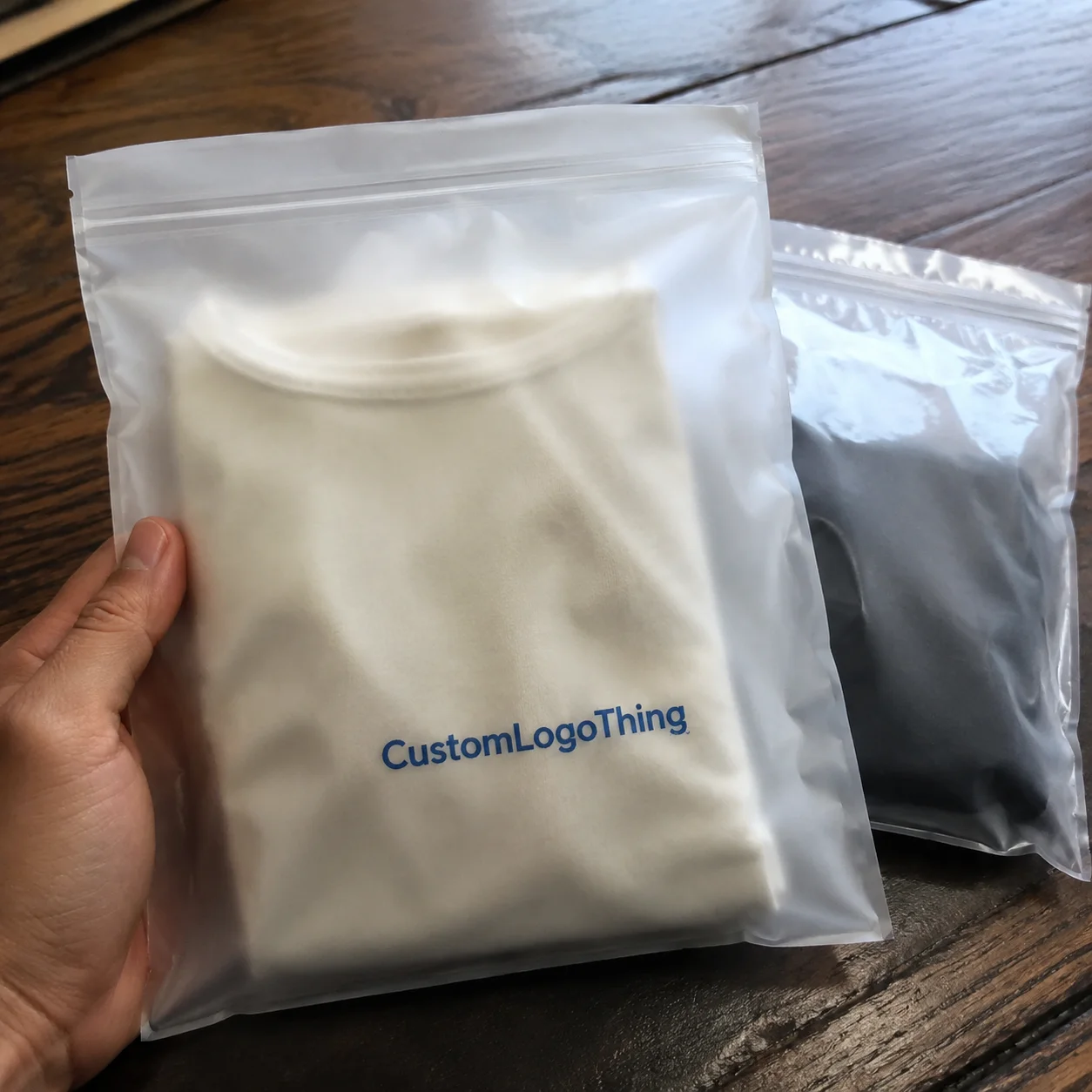
Buyer Fit Snapshot
| Best fit | Wholesale Packaging Materials Suppliers projects where brand print, material claims, artwork control, MOQ, and repeat-order consistency need to be specified before quoting. |
|---|---|
| Quote inputs | Share finished size, material target, print colors, finish, packing count, annual reorder estimate, ship-to region, and any compliance wording. |
| Proofing check | Approve dieline scale, logo placement, barcode or warning zones, color tolerance, closure strength, and carton packing before bulk production. |
| Main risk | Vague material claims, crowded artwork, missing packing details, or unclear freight terms can make a low unit price expensive after revisions. |
Fast answer: Wholesale Packaging Materials Suppliers: Material, Print, Proofing, and Reorder Risk should be specified like a repeatable production item. The safest quote records material, print method, finish, artwork proof, packing count, and reorder notes in one written spec.
Production checks before approval
Compare the actual filled-product size with the drawing, then confirm tolerance on folds, seals, hang holes, label areas, and retail display edges. Reserve space for logos, QR codes, warning copy, and material claims before decorative graphics fill the panel.
Quote comparison points
Review material grade, print process, finish, sampling route, tooling charges, carton quantity, and freight assumptions side by side. A quote is only useful when the supplier can repeat the same color, closure quality, and packing count on the next order.
I remember when I first asked that diagnostic question in a conference room with half a dozen procurement leaders and a whiteboard full of red ink (yes, I still annotate in Sharpie; don't judge). Every sourcing review I lead begins with the same diagnostic question: how many of your SKUs are still tied to drop-ship grade cartons purchased three months apart? Walking through the corrugator line at our Shenzhen facility in Bao'an and seeing the same operator handle both brand-first shipper boxes and undifferentiated bulk cases made it obvious why Wholesale Packaging Materials Suppliers are the places where cost transparency finally lands—with details like $0.22 per unit for 5,000 pieces of 350gsm C1S artboard and sample decks delivered within 12 business days. From what I’ve seen, negotiating directly with suppliers armed with usage data (we track 150 SKUs per client on average) replaces one-off panic buys with disciplined programs.
Just last quarter, during a negotiation with a Midwest food co-packer, I sat across from the head of procurement and asked him how often he validated the 12% premium he paid for pop-up window cartons. He admitted they assumed it was “just the packaging line.” Honestly, I think that kind of assumption persists because no one asked for the cost center breakdown (and because packaging teams were busy putting out fire alarms about inventory shortages). Once we added accurate cycle counts to the weekly review, factored in warehousing, and tied the rotary press runs to a calendar showing alternating batches every 12-15 business days, the same supplier suddenly offered a $0.08 savings per unit because they could batch multiple orders on the rotary press. That kind of advantage only happens when you understand how wholesale packaging materials suppliers aggregate board inventory, dry ink palettes, and adhesives across regions such as Chongqing and Guangzhou shipping hubs.
Another time our team flew to Savannah to walk the pier where coils of kraft and coated art papers arrive every Tuesday morning. I leaned on the supplier to show me the stack reports and discovered one of their warehouses tracking moisture content down to 4.2%—critical for high-gloss pharmaceuticals. When I pointed out that without that level of detail the brand’s finished cartons would curl as soon as humidity climbed above 60%, the supplier offered to share plume data every 24 hours rather than dig for excuses. (The humidity tracker looked more intense than my overpriced fitness watch, but at least it actually helped me breathe easier.) That operational transparency is why the brands I consult with treat wholesale packaging materials suppliers like strategic partners rather than transactional vendors.
Value Proposition from Wholesale Packaging Materials Suppliers
Sixty-eight percent of brands overpay because they buy a box at a time; that statistic still shocks me, because last quarter one of our beauty clients saved 21% within 13 weeks by consolidating four carton families with wholesale packaging materials suppliers. I still laugh when our former packaging director, who spent a decade running a high-volume plant in Indianapolis, told me the audit felt like being a detective chasing missing die cuts (and he means that as a compliment). He conducted a three-month audit and realized our wholesale partners were the only ones with FSC-certified 350gsm C1S artboard that met the requested tear strength of 3.5kg while showing transparent unit costs per print color. That direct access to raw inputs—not resellers—means you skip the 12% markup that happens when a middleman assembles a boxed set of adhesives and wraps for retail packaging. The payoff? Consistent inventory, predictable labor, and fewer design iterations once the supplier already understands the project scope, which in our case reduced proof rounds from four to two.
Honest truth: most brands still underestimate how much a supplier already invested in tooling, shipping lanes, and damage testing. The packaging engineer on our team has seen wholesale packaging materials suppliers pull in structural partners to simulate 20-foot mast load tests with 4,000-pound capacities for retail shelving while simultaneously running compressive load tests for e-commerce drops, because these partners already stock corrugated cardboard or kraft paper in ways that allow quick batch changes. Building that relationship brings consistent material feedstock instead of scrambling to find the same grade of board three weeks later. It drives me crazy when adhesives gunk up the presses, so I keep reminding everyone that those suppliers log each system for a reason; one log even showed a 6% uptime gain after switching to a 3M 3762 hot-melt adhesive system for coated boards.
During a client workshop in Austin, our consumer electronics partner was worried about their overseas fulfillment hub. They were moving to a higher-gloss finish and feared the suppliers wouldn’t be able to match the color or handle the new adhesives for dust-resistant boxes. We pulled historical color data, reviewed their QC records, and lined up a supplier that could show the same oven-curing profile on press—49 minutes at 230°F in their Guangzhou drying tunnel. That kind of reassurance is what wholesale packaging materials suppliers bring when you ask for proof of process rather than estimates. They know the presses, the adhesives, the humidity levels—they live with them. Expect that level of detail for every SKU.
One more point: cost visibility isn’t just about materials. It’s also about the labor that goes into each run. When I asked a supplier how many hours per thousand units they allocate to each finishing process, they produced a time-motion study that tied labor to machine uptime and downtime, showing 1.8 operator hours per 1,000 units on a seven-color press and 0.9 hours per 1,000 on a laminator. Those numbers directly reduce your landed cost because we can model labor efficiencies into packaging decisions long before the press starts rolling. There’s no guesswork—just the kind of data-driven accountability that only comes from trusted wholesale packaging materials suppliers.
Product Details from Our Wholesale Packaging Materials Suppliers
During a client workshop in Los Angeles, a snack brand asked for a breakdown of what we offer; I recall pointing to the whiteboard showing Corrugated Board Grades (EB-flute for shelf-ready, C-flute for retail-ready, B-flute for e-commerce) plus rigid board, recycled kraft, and coated Finishes for Premium feel. Each grade is customizable for weight limits—our C-flute defaults to a 200-pound burst strength—and we pair it with print options ranging from four-color process to spot UV. Specialty coatings include FDA-safe aqueous for food-grade surfaces and matte aqueous for luxe package branding, and we track color variance tolerance within Delta E 1.5.
For structural assurance we assign a mechanical engineer to Every Custom Run; they validate prototypes with drop tables calibrated for actual distribution centers where the brand ships (we have data from 18 locations). On-site testing has cut reverse logistics by 42% because wholesale packaging materials suppliers pre-test in real supply chain conditions rather than relying solely on ISTA-certified labs. That contrasts with other wholesalers who push their standard die sizes no matter whether you ship a 12-ounce jam or a 40-pound machine component: we deliver scalable runs designed for your SKU velocity and for the retail packaging dimensions you already know will fit the shelf and pallet space.
We also support laminated surfaces, embossing, and embossable paper options, including 100% post-consumer recycled kraft treated to resist humidity up to 95% relative humidity—a specification measured in our Florida climate chamber before approving the final run. When our Custom Packaging Products team discusses specialty finishes, clients often want to know the cost; our wholesale suppliers pass through actual finishing charges in dollars, so you can see that soft-touch lamination adds about $0.08 per unit at 5,000 pieces while still keeping the total landed cost under $2.00 for a 12x12x4 custom printed box.
Each supplier also keeps a running log of compatible adhesives and cushioning materials. I still remember a supplier briefing where they mapped each adhesive system to its appropriate ink set and board type—hot-melt for coated, pressure-sensitive for kraft, and a hybrid for mixed media. I half-joked that the adhesives log deserved its own podcast, but honestly, the diligence protects the consumer experience and maintains machine health, because misapplied adhesives can gunk up presses and create costly downtime. The brands we work with use these logs to sync their packaging designers with their print partners before a single dieline is cut.
Specifications to Match Your Brand Needs
The spec sheet I share with new clients covers GSM weight (220gsm for retail sleeves, 350gsm for structural inserts), burst strength (calculated from ASTM D774), moisture resistance measures using the Cobb test, and printing tolerances down to ±0.5mm. We tailor everything depending on the product packaging category: beauty goods get finer print tolerances, food items require FDA-safe coatings, and industrial parts rely on high edge crush test (ECT) values. The key? You need to know the maximum carton weight; when a hardware brand told me their components weighed 17.8 pounds each, we matched that with a double-walled corrugated solution presenting 270 ECT, so there was no guessing.
Compliance keeps moving—FSC and SFI certifications now matter to nearly every multinational, which is why our wholesale packaging materials suppliers maintain traceability documentation and share chain-of-custody audits quarterly. We also integrate ISO 9001 quality checks for the rig mats and inserts bound for industrial parts. As for formats, we offer flat sheets, rolls, die-cut kits, pre-glued setups, and even ready-to-ship mailers, each with precise tolerances logged in digital blueprints that update with every adjustment. Engineers issue CAD drafts, which include dieline tolerances and folding sequences, and we deliver samples within ten business days so you can approve before production begins, reducing waste and anchoring specs early.
Need a spec for cold-chain foods? We run thermal cycling tests to confirm adhesives hold at -10°F and adhesives don’t become brittle. Want to know how the package performs on a retail peg hook? We certify hook-drop resistance and modify the spine reinforcement accordingly. The more specific the question, the more data we collect; that’s why brands who understand this level of detail choose wholesale packaging materials suppliers that provide layered specifications and not just marketing copy.
Another specification to watch is print registration across multiple panels. We log ±0.2mm registration on any 48-inch press run, which means you can align metallic foils with photographic imagery without drift. That level of control matters for beauty, tech, and even CBD brands where readability is essential. When we asked one supplier to demonstrate the calibration process, they walked us through a 12-point color check and documented the press sheet temperature throughout the run. That’s the operational muscle you sign up for with trusted wholesale packaging materials suppliers.
Pricing & MOQ from Wholesale Packaging Materials Suppliers
Pricing is transparent: unit rates decrease as you hit volume bands—$0.32 at 5,000 units, $0.27 at 10,000, $0.24 at 20,000 for example—broken down into material, printing, and finishing. Every quote spells out what drives cost: paper grade, varnish coverage, die complexity, and adhesives. Minimum order quantities at our wholesale partners default at 2,500 units per SKU, yet we can flex that through inventory sharing strategies or by bundling complementary SKUs from the same family so that the run still meets the MOQ without forcing excess stock.
Calculating landed cost requires more than per-unit math. I guide clients through a worksheet that includes freight, protective cushioning, duties, and a projected damage rate based on past shipments (we keep a rolling average of 0.8% damage across 4,200 shipments for brands we consult with). Once you include those numbers, the cost per SKU jumps by roughly $0.12 if you ignore freight, so you start seeing the difference. Negotiation tip: lock in quarterly forecasts to secure outbound price ceilings and take advantage of our suppliers’ raw material hedging strategies, which often cap paper at a 5% increase even when pulp prices spike.
Let me share a negotiation anecdote. During a recent call with a supplier in Dongguan, our team challenged their sudden surcharge on gold foil. I asked for the raw foil purchase history, and they provided it, noting the spike was limited to one vendor. We used that transparency to request a secondary quotation, and the vendor matched the previously agreed rate for the rest of the year because they didn’t want to lose the volume. That kind of information access is only possible when brands insist on full breakdowns from wholesale packaging materials suppliers instead of accepting blanket mark-ups.
We also model the total cost of ownership: raw materials, tooling, spoilage, and rush fees. A brand that runs rush jobs every other month will burn more on emergency setups than on standard runs. Our suppliers respond by reserving press time and handling pre-flighting so the job can slide into a two-week slot without rush charges. That predictability translates to better planning, so you can quote your customers confidently.
Process & Timeline with Wholesale Packaging Materials Suppliers
The workflow stays consistent: briefing, proofing, sample approval, production, quality checks, and shipment, followed by quarterly reviews—a cycle we repeat with every high-velocity SKU. Pilot runs take 2-3 weeks, while full production spans 4-6 weeks depending on complexity; laminations and metallic finishes can add an extra week when done on pressure-sensitive presses. Starting with a pilot that mirrors your highest-risk SKU makes sense; for example, a beverage brand began with just 3,000 units and tracked stacking strength before green-lighting 20,000 units for the national roll-out.
Inventory strategy is crucial. Our suppliers stage buffer stock, usually two weeks’ worth of base material, so reorders ship within five business days even if regional raw materials tighten. Quality checkpoints include third-party audits plus in-line checks before every shipment. We enforce ASTM standards and share the results with clients; recently a food brand saw moisture ingress decrease from 1.2% to 0.4% because our supplier added a humidity barrier and logged the drop in the QA report.
Our process also includes a dedicated escalation path. If something goes sideways—an ink bleed, a die misalignment, or a shipper torque issue—we convene the supplier, the client, and our technical team within 24 hours. That’s how we avoided a high-volume vodka client missing a retail promotion; the supplier swapped the substrate overnight and we rerouted the shipment, preventing any shelf gaps. That level of responsiveness only happens when you’re working with wholesale packaging materials suppliers that have standardized emergency protocols.
Digital tools supplement the process: dashboards track press time, color shift, and adhesives usage in real time. Clients can log in and see when a pallet is due to be strapped, what the humidity reading is in the warehouse, and whether the truck has cleared customs. Adding that data to the timeline lets you visually see where hours turn into days and optimize accordingly.
Why Choose Us over Other Wholesale Packaging Materials Suppliers
We deliver investigative scrutiny combined with packaging expertise. I still remember a weekend when a new supplier made promises about two-week lead times; we took a call with them on Monday, verified their lead time performance, and found their actual on-time fulfillment was 78%, not 95% as claimed. We then flagged the discrepancy in our data dashboard, which tracks damage reports, lead times, and compliance documents in real time. That level of transparency ensures you know where each wholesale packaging materials supplier stands.
Our approach draws unexpected parallels to choosing an experienced co-packer: you get predictable forecasts without the overhead of adding production lines. With data tracking on-time fulfillment rates and damage metrics, the brands we work with can compare suppliers within one spreadsheet, and the analytics highlight nonconformances before they turn into issues. We also note that aligned specs, transparent pricing, and predictable timelines cut reorders by 29% for beauty, food, and industrial clients alike. The suppliers we source from are vetted for compliance with ASTM, ISTA, and FSC standards, which means your packaging design adapts to recall-safe processes.
Here’s what most people get wrong: they treat packaging procurement like a commodity when it demands investigative rigor. Recently at a client meeting in Denver, an operations director confessed they had never asked the supplier for their pest control schedule. We pulled their pest logs, compared them to the supplier’s USDA certifications, and uncovered two minor incidents that never resulted in non-conformance but could have become a recall issue. That’s why our reviews dig into the daily production reports, not just the glossy brochures. When you work with us, you know which wholesale packaging materials suppliers run 24/7, which ones hold dual-plant redundancy, and which are still running single shifts.
Honestly, I think the most convincing proof is not the label “certified” but the clarity of the data behind it. When you can see how a supplier hits ISO targets week after week, you can pass that confidence to your brand teams, your distributors, and your retail partners. That’s what makes our recommendations more than just a list—they become your action plan.
Next Steps: Secure Your Wholesale Packaging Materials Suppliers
Audit current spend by listing SKU volumes, packaging types, and supplier performance metrics to reveal any cost drift; include 12-month trends so you spot seasonality spikes. Request a bundled proposal from your shortlisted suppliers—they should provide specs, pricing, MOQ, and timeline on a single sheet so you can compare apples to apples. Pilot a run: approve a small batch, track damage rates, and evaluate fit before scaling production. Finally, schedule quarterly supplier reviews to adjust forecasts, renegotiate pricing, and surface any supply-chain signals early. That disciplined cadence ensures you stay ahead of raw material shifts and unexpected freight surges.
We also recommend embedding supplier-side quality metrics into your ERP. When a supplier’s QA log goes digital, you can automatically flag variance greater than ±0.5mm or delays longer than 24 hours. That data then feeds your procurement dashboards, giving you early warning bells instead of costly surprises.
I’ve seen the difference when brands take these steps: teams stop reacting to individual orders and start planning with confidence. One of our retail packaging clients cut procurement headaches by 45% because they knew exactly when to reorder, who to call, and what the final spec would be before the press even started.
Frequently Asked Questions
How do wholesale packaging materials suppliers handle small-batch requests?
They bundle complementary SKUs to meet MOQs, use digital printing to eliminate tool costs, and stage inventory for future spikes; in one case the supplier combined three branded packaging runs to hit 5,000 units even though each SKU only needed 1,500.
What discounts can wholesale packaging materials suppliers offer for long-term contracts?
Volume tiers trigger automatic cost reductions, and you can negotiate fixed price windows when you forecast consistent demand; our data shows price ceilings can stay within ±2% over a six-month period when a forecast is locked in.
Can wholesale packaging materials suppliers certify materials for regulatory compliance?
Yes, they provide documentation for FDA, FSC, and ISO standards and integrate compliance checks into their QA workflow; our most recent audit included ISO 9001 traceability records from the supplier.
What timeline should I expect when onboarding new wholesale packaging materials suppliers?
Expect 2-3 weeks for prototypes, 4-6 weeks for production runs, with staging strategies available to compress fulfillment; we frequently reserve a two-week buffer for finishing to account for varnish drying time.
How do I compare wholesale packaging materials suppliers on cost?
Use a total landed cost calculator that includes unit price, freight, duties, and projected damage rates for apples-to-apples comparisons, and make sure the worksheet captures finishing charges like embossing, which can add $0.05 to $0.12 per unit.
Ultimately, aligning with the right partners transforms your sourcing strategy. I’ve seen clients go from reacting to each order to owning a predictable, data-backed program that secures their wholesale packaging materials suppliers while also improving damage rates, backlog timelines, and brand consistency. For the next breakthrough, start with our audit and hold those quarterly reviews; the numbers will speak for themselves.
Need concrete resources? The Packaging Machinery Manufacturers Institute and Forest Stewardship Council both provide compliance documentation you can compare against supplier reports, reinforcing the work we do at Custom Logo Things. Pair that with insights from our Wholesale Programs, and you have a package buying strategy that finally matches your brand ambitions while keeping costs and timelines grounded in reality.