Custom Clothing Store Paper Bags Wholesale Pricing: What Retail Buyers Are Really Paying For
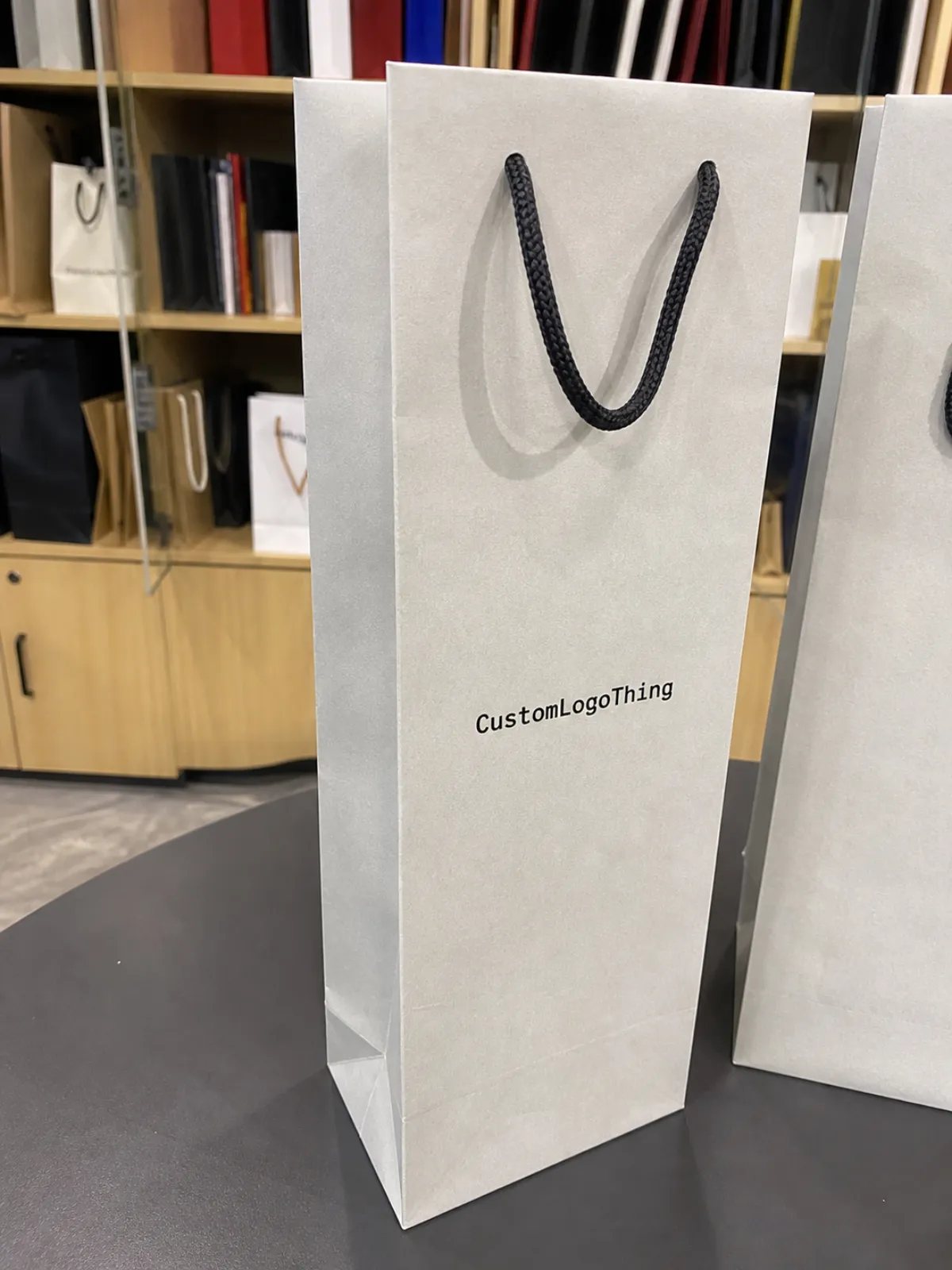
A shopper may carry your bag for 20 minutes. The bag may keep advertising your store across a mall, parking lot, sidewalk, hotel lobby, train platform, or social feed for hours. Buyers researching Custom Clothing Store Paper Bags wholesale pricing are not comparing paper alone. They are comparing brand exposure, durability, freight, checkout speed, and reorder risk.
That distinction matters. A flimsy generic bag may save $0.05 at the counter, then cost more when handles tear, garments wrinkle, or the purchase feels bargain-bin. Apparel is visual. The bag becomes part of the handoff: folded garments, tissue wrap, receipts, return slips, loyalty cards, and sometimes a boxed accessory all need a package that holds its shape.
Paper bags are one of the few physical brand assets that leave the store with the customer. A hangtag gets removed. A receipt gets folded away. A branded shopping bag travels. That makes unit cost only one part of the buying decision.
Wholesale ordering gives clothing retailers control over the variables store teams otherwise patch together: color, logo placement, paper weight, handle type, carton packing, and replenishment timing. If 12 stores start using different emergency bags because inventory ran short, the brand loses consistency before anyone studies the monthly packaging spend.
Practical rule: the cheapest bag is not automatically the lowest-cost bag. The better question is whether the specification matches the garments, the store environment, and the reorder cycle.
Paper Bag Styles That Fit Clothing, Boutique, and Apparel Retail Orders
Most apparel teams start with style. Function should lead. Kraft Paper Bags, white paper bags, laminated luxury shopping bags, matte art paper bags, rope-handle bags, ribbon-handle bags, and twisted-handle bags all solve different retail packaging problems.
Lightweight tees, socks, scarves, and accessories can often use kraft or white paper bags in the 120gsm to 180gsm range, depending on size and handle construction. Coats, denim, shoes, and multi-item purchases usually need heavier paper, reinforced folds, or bottom cards. Premium apparel often moves into 210gsm to 250gsm art paper, and rigid luxury bags can go higher once lamination, rope handles, and reinforcement enter the spec.
The retail setting changes the decision. Boutique counter sales benefit from a polished finish: matte lamination, colored paper, ribbon handles, or foil stamping can support a higher average order value. Mall apparel stores usually need speed, durable handles, and carton efficiency, so stock-size kraft or white bags with twisted paper handles may be the smarter choice. Pop-up shops need compact cartons, manageable quantities, and replenishment that does not trap too much cash in inventory.
Apparel shopping bags are not corrugated shippers. They do not need to absorb the same impact as custom packaging products built for parcel networks or custom printed boxes used for e-commerce fulfillment. Their job is narrower: preserve garment shape, present the purchase neatly, carry comfortably, and keep the logo visible.
Decoration choices influence both price and perception. One-color logo printing is efficient for core retail runs. Full-color artwork works for campaign drops or limited collections. Foil stamping adds a premium signal, but it needs clean vector art and enough surface area. Spot UV can create subtle contrast on matte stock, although it adds setup complexity and usually makes more sense on higher-end runs.
Finishes come with tradeoffs. Matte lamination feels refined and protects the surface, but it raises unit cost and can complicate recyclability claims. Gloss lamination looks brighter. Uncoated kraft has an honest texture, yet ink absorbs differently than it does on coated white paper. Colored paper looks distinctive but can shift logo appearance unless color expectations are approved before production. That small approval step is not glamorous. It prevents annoying surprises.
Specifications That Change Strength, Appearance, and Unit Cost
Good quotes start with good inputs. Before requesting Custom Clothing Store Paper Bags wholesale pricing, prepare the basics: bag size, paper weight, paper color, handle type, print colors, finish, quantity, carton requirements, delivery location, and any split-shipment needs.
Sizing should follow the purchase, not a guess. Small bags work for accessories, folded tees, cosmetics, and light merchandise. Medium bags fit shirts, sweaters, athletic wear, and folded denim. Large bags handle coats, shoe boxes, boxed gifts, or multiple garments. Oversized bags look wasteful. Undersized bags crease clothing and strain handles.
Paper weight is easier to understand in store terms than in technical jargon. Thin paper lowers unit cost, but it may buckle under denim or boxed items. Heavier paper supports premium positioning and repeat carrying, especially if customers walk through a mall or transit hub after checkout. For many clothing stores, a balanced specification sits around 150gsm to 210gsm, with heavier options for luxury formats.
Handle choice affects price, packing, and customer comfort. Twisted paper handles are cost-efficient and common for retail packaging. Flat paper handles pack neatly and can reduce carton bulk. Rope handles feel more upscale and suit laminated bags. Ribbon handles work well for boutique, bridal, resort, and gift-oriented apparel lines, but they add labor and material cost.
| Specification Choice | Typical Use | Pricing Impact | Buyer Watchpoint |
|---|---|---|---|
| Kraft paper, one-color print | Everyday apparel, tees, pop-ups | Lower | Ink color may look muted on brown paper |
| White paper, two-color print | Boutiques, mall stores, accessories | Moderate | Confirm logo placement and handle strength |
| Matte laminated art paper | Premium fashion, launches, gift purchases | Higher | Check lamination adhesion and finish feel |
| Rope or ribbon handles | Luxury apparel, occasion retail | Higher | Verify attachment strength and carton count |
Reinforcement is not cosmetic. Top fold reinforcement, bottom cards, and glue quality matter when stores sell heavier clothing or encourage multi-item purchases. A bag that carries one blouse in testing may perform differently with jeans, a sweater, tissue paper, and a receipt folder inside.
Artwork readiness also changes timeline. Vector logo files, Pantone or CMYK references, bleed margins, print area limits, and proof approval affect accuracy. Standards such as ASTM test methods and transport guidance from ISTA are useful reminders that packaging performance is measurable, even for items that look simple.
Many buyers under-specify the boring parts. Load capacity, carton counts, finish durability, and delivery conditions are not footnotes. They decide whether two quotes are actually comparable.
MOQ, Quote Inputs, and Wholesale Pricing Variables
Wholesale pricing is driven by fixed setup costs spread across quantity. Printing plates, screens, die setup, artwork review, machine changeover, material procurement, packing labor, and freight coordination do not disappear because the order is small. They get divided across fewer bags.
That is why unit pricing usually drops as volume rises. A 1,000-piece run may carry a noticeably higher unit price than 5,000 pieces. A 10,000-piece order may unlock a better material buy, more efficient press time, or lower per-unit freight. Not always. Spec, carton volume, production route, and shipping destination can change the curve fast.
The largest quote variables are bag dimensions, order quantity, paper material, paper thickness, handle construction, print method, number of ink colors, finishing, packing method, and delivery ZIP code. Freight can distort a comparison because paper bags are bulky even when they are not especially heavy.
MOQ expectations should stay realistic. Simple printed kraft or white paper bags often support more flexible minimums than laminated luxury shopping bags with rope handles, foil stamping, and reinforced bases. Exact MOQ depends on the production route. Stock dimensions can reduce setup complexity, while fully custom sizing can improve garment fit and store presentation.
| Order Scenario | Likely Configuration | Approximate Unit Range | Best Fit |
|---|---|---|---|
| Entry wholesale run | Stock-size kraft bag, one-color logo, twisted handles | $0.28-$0.55 | Pop-ups, small boutiques, basic branded packaging |
| Balanced retail run | White or kraft paper, one- to two-color print, stronger handle | $0.45-$0.90 | Apparel stores with steady monthly usage |
| Premium apparel run | Matte art paper, rope handle, lamination, reinforced base | $0.85-$1.80+ | Boutiques, luxury collections, gift-heavy retail |
These ranges are directional, not a promise. Print coverage, bag size, material market shifts, and freight can move the quote. For serious buying, ask for tiered pricing at several quantities: 1,000, 2,500, 5,000, and 10,000 pieces, for example. The breakpoint may surprise you.
Hidden cost categories deserve direct questions: plate or screen setup, proofing, physical sample fees, freight, residential or liftgate delivery, rush fees, and split shipments. A clean quote names the assumptions. A vague quote leaves the buyer to discover them later, usually when the deadline is already uncomfortable.
Process, Timeline, and Lead Time From Artwork to Delivery
The operational path is predictable when the inputs are clear: spec confirmation, artwork review, quote approval, digital proof, optional physical sample, production, quality check, packing, freight booking, and delivery. Skip clarity early and the schedule absorbs the penalty later.
Artwork quality is a timeline issue. Low-resolution logos, missing Pantone references, unclear placement notes, and late design changes can delay production before paper is cut or printed. If your logo exists only as a small PNG from a website header, expect a prepress correction step. Vector files such as AI, EPS, or production-ready PDF are much easier to handle.
Proof type matters. A digital proof checks layout, spelling, size relationship, and print position. A physical sample can confirm paper feel, handle comfort, color impression, lamination finish, and structural details. For a basic reorder, a digital proof may be enough. For a premium store launch, sample approval can prevent expensive disappointment.
Many custom apparel paper bag orders fall into a production window of roughly 12-25 business days after proof approval, with more time for complex finishes, sampling, larger quantities, or ocean freight. Rush orders may be possible, but they can raise costs through schedule changes, expedited freight, or narrower customization choices.
Plan around retail reality. Store openings, holiday promotions, seasonal collections, trade shows, and campaign drops create predictable demand spikes. Bags should not be treated like emergency office supplies. A reorder trigger based on remaining carton count is more reliable than waiting until staff start asking whether plain local bags are acceptable. They rarely are.
For multi-location retailers, delivery planning matters as much as production. Confirm whether cartons ship to one warehouse, several stores, or an event venue. Split shipments can be useful, but they should be priced upfront. Carton labels by size, store, or campaign can save hours during receiving.
Quality Checks That Prevent Retail Counter Problems
Most bag failures are discovered in the worst possible place: in front of a paying customer. Not during purchasing. Not during a spreadsheet review. At the counter, with a line forming.
Quality checks should focus on the failure points that affect real apparel orders: handle attachment strength, bottom seal integrity, paper thickness, print registration, color consistency, lamination adhesion, odor, scuffing, and carton labeling. If a bag looks good empty but sags under two pairs of jeans, the design has failed the store.
Load testing should be plain and practical. Put the realistic mix of merchandise inside: a folded hoodie, denim, a shoe box, tissue wrap, and receipt folder. Carry it by the handle. Set it down. Pick it up again. Laboratory weights have value, but retail use is uneven and impatient.
Color control is another common trap. Brand colors shift across kraft, white, matte, and laminated papers. A black logo on kraft may look softer. A bright red may read differently on uncoated stock than on a coated white sheet. Approve the expected color behavior before production, especially if package branding must match signage, tags, or apparel labels.
Finishing adds risk as well as value. Foil can look expensive, but fine lines may fill or break if artwork is not prepared correctly. Lamination improves surface protection, though it changes hand feel and can affect sustainability targets. Uncoated kraft gives a natural look, but it absorbs ink more heavily. If sustainability claims matter, buyers can review sourcing programs through the Forest Stewardship Council and ask whether FSC paper is available for the intended specification.
Carton packing sounds dull until receiving goes badly. Bags should arrive flat, clean, dry, and organized by size or store destination. Carton counts should match the packing list. If your team operates several locations, labeled cartons reduce confusion and prevent the wrong bag size from being sent to a small-format store.
A slightly higher unit price can be rational if it lowers defects, returns, store complaints, and inconsistent presentation. That is the less glamorous side of custom clothing store Paper Bags Wholesale pricing, and it is usually where serious buyers separate a good quote from a risky one.
Why Apparel Buyers Use Custom Logo Things for Paper Bag Orders
Custom Logo Things treats paper bags as working retail packaging, not decoration alone. The goal is to match bag construction, decoration, and quantity to the buyer's actual store use. Overbuilt bags waste budget. Underbuilt bags create counter problems. Vague quotes hide assumptions.
The team can help compare paper weights, handle styles, print options, finishes, and carton plans before the buyer commits spend. That step matters because pricing changes quickly once one variable moves: a larger gusset, a second ink color, a rope handle, a matte laminate, or a heavier sheet.
Custom manufacturing also gives clothing stores better fit. Bag dimensions can be planned around folded garments, boxed accessories, tissue wrap, gift presentation, and store standards. A boutique selling silk pieces has different needs than a uniform supplier sending customers out with heavy workwear. A merch seller at an event needs different carton logistics than an apparel chain replenishing multiple locations.
Custom Logo Things supports boutiques, apparel chains, fashion pop-ups, merch sellers, uniform suppliers, and event retail teams through wholesale ordering. Buyers can request tiered pricing, compare economical and premium specs, and see which upgrades materially affect the quote. That is more useful than a single low number with unclear paper weight and freight assumptions.
Production coordination is another reason apparel teams use a packaging specialist. Artwork checks, proofing, optional sampling, production updates, and delivery planning reduce operational guesswork. For buyers also sourcing product packaging, promotional items, or related branded packaging, Wholesale Programs can help align volume ordering with budget and replenishment needs.
Confident does not need to mean inflated. The practical value is simple: better specifications, cleaner quotes, fewer surprises, and bags that look right in the customer's hand.
Next Steps Before You Request a Clothing Store Bag Quote
Before asking for custom clothing store paper bags wholesale pricing, collect the information a manufacturer actually needs. Decide the bag sizes, estimate monthly or seasonal usage, choose paper color, choose handle type, confirm logo files, and identify the delivery address. If you are unsure on size, measure the folded garments and boxed items that create the most checkout friction.
Use real store data. Average items per purchase, heaviest common purchase, peak season volume, number of locations, and current bag failure complaints can all change the recommendation. A shop selling lightweight resort wear can often use a different bag than a denim-heavy retailer or outerwear brand.
Ask for two or three specification scenarios: economical, balanced, and premium. The economical version might use standard kraft with one-color printing. The balanced version might upgrade paper weight or handle construction. The premium version might include matte lamination, rope handles, foil, or a reinforced base. Comparing those options makes the tradeoff visible.
Quantity breaks are essential. A single price for a single quantity hides the curve. Ask where the unit cost changes meaningfully and then compare that saving against storage space, cash flow, and expected usage. Sometimes the larger run is clearly better. Sometimes the storage burden is not worth it.
Timing should be part of the first request, not a late correction. Share the launch date, in-hands deadline, approval contact, sample requirement, and whether split shipments are needed. Faster quoting depends on fewer unknowns.
The fastest way to evaluate a wholesale custom bag order is to submit specs that reflect real apparel purchases, not guesses. Send bag dimensions, quantity, logo file, preferred handle, finish preference, and delivery ZIP code to Custom Logo Things for a cleaner quote with fewer revisions.
FAQs
What affects custom clothing store paper bag wholesale pricing the most?
The largest pricing drivers are quantity, bag size, paper weight, handle type, print colors, finishing, and freight destination. Special finishes such as foil stamping, lamination, embossing, or ribbon handles usually increase unit cost and setup complexity. Requesting tiered quantities helps reveal whether ordering more bags significantly lowers the per-unit price.
What is the typical MOQ for custom apparel paper bags?
MOQ depends on the bag style, print method, material, and finish. Simple printed kraft or white paper bags usually have more flexible minimums than luxury laminated bags. Buyers should share target quantity early so the manufacturer can recommend a production method that fits both budget and timeline. For lower quantities, standard sizes and simpler printing can help control cost.
Which paper bag size should a clothing store order?
Most apparel retailers benefit from at least two sizes: a smaller bag for accessories or light garments and a larger bag for sweaters, denim, coats, shoe boxes, or multiple items. The best size depends on folded garment dimensions, average basket size, and whether tissue wrap or boxed items are included. Oversized bags can look wasteful, while undersized bags can wrinkle clothing and strain handles.
How long does production take for wholesale custom clothing bags?
Timeline depends on artwork readiness, proof approval, material availability, order complexity, quantity, and shipping method. Digital proof approval is usually faster than physical sampling, but a physical sample may be useful for premium retail launches. Buyers should plan ahead for store openings, holiday volume, seasonal collections, and trade show deadlines.
Can I get a lower unit cost without weakening the paper bag?
Yes. Cost controls can include using standard sizes, limiting ink colors, choosing efficient handle styles, ordering higher quantities, and avoiding unnecessary finishes. Do not reduce paper weight blindly if the store sells denim, shoes, coats, or multi-item purchases. A balanced quote should compare savings against handle strength, presentation, freight, and defect risk.
