Buyer Fit Snapshot
| Best fit | Wholesale Packaging Price Breaks for Growing Brands projects where brand print, material claims, artwork control, MOQ, and repeat-order consistency need to be specified before quoting. |
|---|---|
| Quote inputs | Share finished size, material target, print colors, finish, packing count, annual reorder estimate, ship-to region, and any compliance wording. |
| Proofing check | Approve dieline scale, logo placement, barcode or warning zones, color tolerance, closure strength, and carton packing before bulk production. |
| Main risk | Vague material claims, crowded artwork, missing packing details, or unclear freight terms can make a low unit price expensive after revisions. |
Fast answer: Wholesale Packaging Price Breaks for Growing Brands should be specified like a repeatable production item. The safest quote records material, print method, finish, artwork proof, packing count, and reorder notes in one written spec.
Production checks before approval
Compare the actual filled-product size with the drawing, then confirm tolerance on folds, seals, hang holes, label areas, and retail display edges. Reserve space for logos, QR codes, warning copy, and material claims before decorative graphics fill the panel.
Quote comparison points
Review material grade, print process, finish, sampling route, tooling charges, carton quantity, and freight assumptions side by side. A quote is only useful when the supplier can repeat the same color, closure quality, and packing count on the next order.
Most brands wait too long to study wholesale packaging price breaks for growing brands, and I have watched that hesitation shave 8% to 18% off margin on the factory floor more times than I can count. I still remember a client who moved from 2,500 mailer boxes to 5,000 units and watched the quote drop from $0.47 to $0.31 per box; she looked at the spreadsheet like it had personally insulted her. That reaction is normal. Wholesale packaging price breaks for growing brands are not only about buying more cartons. They are about matching the right structure, print method, and production lane to the quantity you actually need, whether the job is running in Dongguan, Foshan, or a corrugated plant outside Charlotte, North Carolina.
I have stood beside corrugated converting lines where a 1,000-piece run paid for a long setup, then watched the same dieline get easier to price at 5,000 or 10,000 units because the press stayed in motion longer and waste dropped from roughly 11% to 4% on a clean run. That is the practical heart of wholesale packaging price breaks for growing brands: lower unit cost, fewer emergency reorders, and a packaging budget that stops acting like a surprise invoice every 30 days. If you are deciding between a smaller order now and a larger order that stretches cash flow, this should help you compare the numbers with clear eyes and a steady hand.
I think too many buyers fixate on the sticker price of a box and ignore the full production picture. A carton that costs $0.41 instead of $0.53 can be the difference between a healthy 62% gross margin and a squeezed 58% margin, especially if your packaging ships in 3,000-unit monthly waves or supports retail launches with fixed go-live dates. The good news is that wholesale packaging price breaks for growing brands usually show up sooner than people expect once your order lines up with how the plant actually runs, especially on standard sizes like 6 x 4 x 2 inches or 10 x 7 x 3 inches.
How Do Wholesale Packaging Price Breaks for Growing Brands Work?
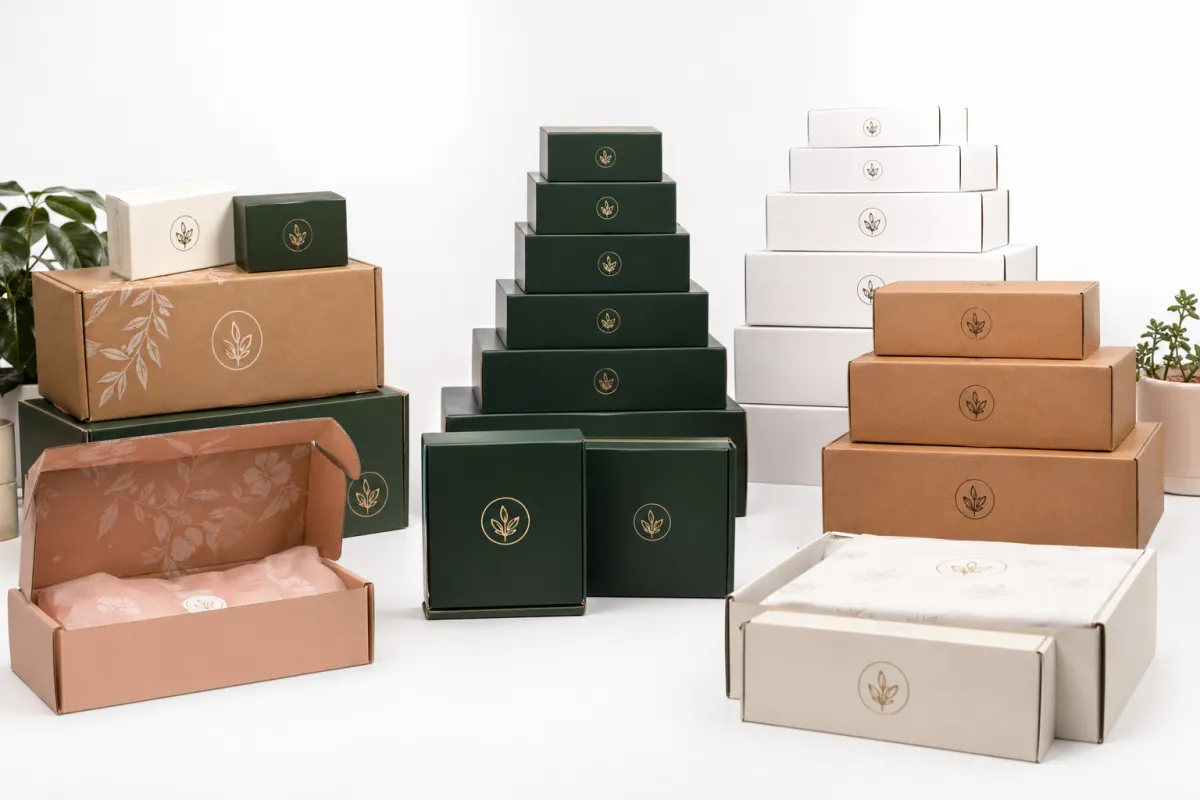
The first meaningful price drop often happens before a brand feels truly established. I remember a snack company in Ohio that thought 3,000 cartons was the safe number for a test launch, but once we compared that against 6,000 and 10,000, the first real break showed up at the 5,000-piece mark because press setup, die cutting, and packing labor got spread over more units. That is why wholesale packaging price breaks for growing brands matter so much early on: the jump from short-run pricing to production pricing can be sharper than the jump from one sales forecast to the next.
In practical terms, wholesale packaging price breaks for growing brands lower the unit cost, reduce the number of urgent reorders, and give you more control over margin. If you sell $24 candles and your carton cost drops from $0.62 to $0.39, that $0.23 difference sounds small until you multiply it across 8,000 units and recover $1,840 for freight, sampling, or a second production round. I have seen founders do the math on the back of a sample sheet, then stare at the sheet like it betrayed them, which is fair because the first quote often hides setup charges that do not show up until line 14 of the estimate.
From a buyer's point of view, the decision usually comes down to four questions. What volume qualifies for a better tier? How much does the packaging format reward scale? Which print method is being used? And how much inventory can the brand realistically store before cash gets tied up in a 12-pallet stack? Those questions sit at the center of wholesale packaging price breaks for growing brands, because bigger orders only help if they align with demand, storage, and lead time, not just because the per-piece number looks prettier at 10,000 than it does at 2,000.
I learned this years ago while visiting a folding carton plant in Shenzhen that served beauty and nutraceutical clients. A team had pushed for a tiny first run on a custom printed box with foil and embossing, and the per-unit price looked ugly because setup time swallowed so much of the order. When they came back for a reorder at four times the original quantity, the quote moved down from $0.72 to $0.44 without changing the artwork at all. That is the kind of shift that makes wholesale packaging price breaks for growing brands worth studying before you sign off on a first purchase order.
"We thought the safer move was ordering less. The safer move was actually ordering enough to hit the first price break without filling the warehouse."
If you want a simple rule, I use this one on quote reviews: once your reorder cycle is predictable, wholesale packaging price breaks for growing brands become a planning tool, not just a negotiation tactic. That is especially true for subscription brands, ecommerce launches, and seasonal collections that need the same packaging format every 28 to 35 days. I like predictable production schedules for the same reason I like a proper packing line in the morning: you know the cartons will show up on time, and nobody has to improvise with a tape gun at 5:45 p.m.
Packaging Product Details That Unlock Better Pricing
Not every packaging format rewards scale in the same way. Mailer boxes, folding cartons, rigid boxes, sleeve wraps, labels, inserts, and shipping cartons all behave differently on the production line, and that difference shows up fast in wholesale packaging price breaks for growing brands. A corrugated mailer box that dies cleanly on a converting line may become cheaper much faster than a rigid box that needs hand wrapping, corner assembly, and glue curing for 2 to 4 hours before packing. I have seen a production manager rub his forehead over that kind of job like the box personally owed him money.
I have seen mailer boxes run beautifully on a corrugated converting line with a standard B-flute or E-flute structure, because the board feeds consistently and the die cut repeats well at 3,000, 5,000, and 10,000 pieces. Folding cartons are often even more forgiving when you keep to common board calipers like 14pt, 16pt, or 18pt SBS, especially when the print coverage is moderate and the structure uses a repeat dieline. That is one reason wholesale packaging price breaks for growing brands often appear earliest in those categories, particularly when the paper is sourced from mills in Guangdong Province or coastal Zhejiang where the plant buys the same stock every week.
Rigid boxes tell a different story. They look premium, and they are, but they also ask more of the factory. Wrap paper, greyboard, magnet inserts, and manual assembly can all add labor. I was in a Shenzhen facility where a 2 mm rigid set with a custom tray looked perfect, yet the hand-labor line slowed the quote enough that a brand founder changed the internal tray design by 3 mm and saved nearly 14% on the next order. That kind of adjustment is exactly where wholesale packaging price breaks for growing brands can be won or lost, especially when the production team has only 6 operators on the assembly bench that day.
Use case matters too. A subscription program that ships every 30 days can justify a larger order because the run is repeatable. A retail shelf launch may need more polish, but it can still benefit from standard structure choices that keep wholesale packaging price breaks for growing brands within reach. Influencer kits, seasonal promotions, and PR mailers are more variable, so they reward designs that reuse the same dieline, board grade, and print layout across multiple campaigns, even when the artwork changes from winter to summer.
Here is the practical distinction I give buyers: Custom Printed Boxes are not expensive because they are custom; they become expensive when every detail is custom at once. If you can keep the footprint standard, hold the board grade steady, and limit extra inserts, wholesale packaging price breaks for growing brands start to show up sooner. If you need a complicated shape, specialty coating, and several hand-assembled pieces, the savings curve gets flatter. That is not a moral judgment, just the factory being the factory, and the factory keeps its own rules whether the order is 800 units or 18,000.
One more thing I tell clients: branded packaging and package branding are not the same as expensive packaging. A clean one-color logo on a well-built carton can outperform a noisy design with too many effects, especially if the box travels through e-commerce fulfillment and needs to survive drop testing under ISTA 3A conditions from a hub in Los Angeles to a customer in Atlanta. If you want a useful reference point for transit expectations, the ISTA testing standards are worth knowing before you lock in a structure.
For buyers comparing product packaging formats, I usually group them by production behavior, not by appearance alone. That makes wholesale packaging price breaks for growing brands easier to forecast because you can see which items need more labor, which ones nest better on sheet-fed equipment, and which ones will reward a larger batch without creating unnecessary inventory risk. A straight tuck folding carton in 350gsm C1S artboard behaves very differently from a 2-piece rigid lid-and-base set wrapped in 157gsm art paper, and the quote will tell you that long before the warehouse does.
Specifications That Change the Unit Cost
Finished dimensions are the first lever. A box that fits efficiently on a press sheet or corrugated blank layout wastes less material, and waste is money. When a brand requests a 6.25 x 4.75 x 2.1 inch mailer box instead of a cleaner 6 x 5 x 2 inch footprint, the nesting can shift just enough to change the quote by $0.03 to $0.06 per unit. That is why wholesale packaging price breaks for growing brands are tied so closely to dimensional choices that seem minor on paper.
Board grade comes next. A 32 ECT corrugated shipper is not the same as a 44 ECT shipper, and 14pt SBS is not the same as 18pt C1S artboard. Add in flute selection, paper thickness, or a heavier rigid board, and you can move the cost by pennies or much more depending on quantity. In my experience, wholesale packaging price breaks for growing brands arrive faster when the spec uses a common material the plant buys often and can source without a special order, such as 350gsm C1S artboard for folding cartons or E-flute for mailers running through a Guangzhou converting line.
Print coverage also matters. One-color black on kraft is simpler than four-color process with full bleed, and both are simpler than a design that mixes spot colors, a flood coat, and a foil stamp. Ink pass count, plate count, and whether the artwork uses limited coverage or total-wrap graphics all affect press time. That is not theory; it is the difference between a 45-minute setup and a 3-hour setup, and wholesale packaging price breaks for growing brands reflect that difference every time.
Finishing is where many quotes drift upward. Matte or gloss lamination, spot UV, soft-touch coating, embossing, debossing, foil, and special die-cut windows all add setup and handling. A cosmetic brand I worked with wanted a soft-touch rigid box with gold foil, and the first quote came in at $1.26 per unit on 3,000 pieces. We simplified the finish stack, kept the foil only on the lid, and moved the inserts to a standard tray. The revised order still looked premium, but wholesale packaging price breaks for growing brands became real instead of theoretical.
Here is the part buyers sometimes miss: even a tiny change can affect the whole production chain. A 1/8 inch board increase may require a different cutting die, a different folder-gluer setting, or a different carton bundle count per pallet. Once that happens, setup time and waste rate can rise by 2% to 5%. That is why wholesale packaging price breaks for growing brands are often protected by disciplined specification reviews before artwork is finalized. I wish more people treated specs like the money they are, because that would save all of us a few headaches and at least one rushed reprint.
If you are comparing options for wholesale packaging price breaks for growing brands, think about these variables together:
- Size: the most efficient blank footprint and finished dimensions.
- Material: common board grades, calipers, and flute profiles.
- Print method: offset, digital, flexographic, or litho-lam.
- Finish: coatings, foil, laminate, or specialty effects.
- Assembly: machine-folded, glued, inserted, or hand-built.
Those five levers make a bigger difference than many first-time buyers expect, and they explain why wholesale packaging price breaks for growing brands are rarely just a function of quantity alone. A 5,000-piece run in a simple two-color format on 16pt SBS may cost less than a 2,000-piece run with a foil stamp, a custom insert, and a soft-touch coating, even before freight from Ningbo or Qingdao enters the picture.
Wholesale Packaging Price Breaks, MOQ, and True Cost Breakdown
MOQ is not a punishment; it is a production reality. A factory sets a minimum because press setup, prepress, plates, die cutting, glue application, packing, and quality checks all take time whether the order is 500 units or 5,000. The smarter question is not "Why is there an MOQ?" but "What quantity gives me the best cost structure for this specific format?" That question is central to wholesale packaging price breaks for growing brands, especially when a plant in Foshan or Dongguan is balancing several other jobs on the same week.
To compare orders honestly, you need the full cost stack. Tooling, plates or cylinders, sampling, production, finishing, packing, freight, storage, and any rush fee should all sit on the same page. A quote that looks inexpensive at the factory door can become costly once pallet freight, customs handling, or reprint risk is added. That is why wholesale packaging price breaks for growing brands should always be judged on landed cost, not just unit price. I have seen a $0.29 carton become a $0.41 landed cost after freight from Shenzhen to Long Beach, then inland delivery to Arizona.
Here is a simple example from a folding carton run I reviewed with a health brand. At 2,500 units, the quote was $0.58 each, plus a $240 setup and $180 freight. At 5,000 units, the price dropped to $0.39 each, with the same setup and only a modest freight increase. At 10,000 units, it moved to $0.31 each. That is a clean illustration of wholesale packaging price breaks for growing brands: once setup is spread over more units, the economics improve fast, and the savings can cover a full sample round or a month of paid search spend.
| Quantity | Example Unit Price | Setup Spread Per Unit | Best Fit |
|---|---|---|---|
| 2,500 | $0.58 | $0.10 | Test launch, limited SKU |
| 5,000 | $0.39 | $0.05 | First real price break, steady reorder |
| 10,000 | $0.31 | $0.02 | Growing demand, lower landed cost |
| 20,000 | $0.27 | $0.01 | High-volume program, long shelf life |
Those numbers are examples, not promises, because stock levels, paper markets, and production calendars shift. Still, the shape of the curve is consistent, and that curve is the reason wholesale packaging price breaks for growing brands can improve margins more reliably than many ad campaigns. A better box cost does not depend on a conversion rate or a media auction; it depends on how efficiently the job runs in the plant, whether the board is on hand, and whether the finishing line is already warmed up for a similar order.
One manufacturing detail worth understanding is scheduling. If your order can fill a line that is already set up for a similar structure, the factory may price it more aggressively. If it forces a machine change, a different glue pattern, or a separate finishing step, the unit cost rises. I have seen buyers miss this because they compared two quotes without asking about the production lane, and that is a common blind spot in wholesale packaging price breaks for growing brands. A job that runs in the morning slot after a 7:00 a.m. changeover is rarely priced the same as a job that breaks a whole day into two half shifts.
Once you understand the cost stack, wholesale packaging price breaks for growing brands become easier to calculate. Compare your current inventory burn rate, the reorder lead time, and the extra cash needed for a bigger order. If a 10,000-piece run saves $1,500 versus two 5,000-piece runs, but you cannot store the extra 5,000 pieces safely, the "better" price may actually hurt you. The right move is the one that protects cash while still using the price tier effectively, and that usually means checking your warehouse space before you check the lowest quote.
Process and Timeline: From Quote to Delivery
The quote path is usually straightforward, but small mistakes slow it down. A clean request for pricing should include finished dimensions, material, print colors, finish, estimated quantity, ship-to location, and any special assembly notes. When those details are complete, wholesale packaging price breaks for growing brands are easier to quote accurately, and you avoid the back-and-forth that adds 2 to 4 business days to the process. I have seen one missing barcode spec create three separate revisions before a plant in Guangzhou could even schedule the job.
In a normal Custom Packaging Workflow, I expect request for quote, specification review, artwork check, structural proof, sample approval, production scheduling, quality inspection, and shipping. If the packaging format is familiar and the dieline is approved, a reorder may move through in 10 to 15 business days after proof approval, while a first-time custom job can take 20 to 35 business days depending on finish and capacity. That timing matters because wholesale packaging price breaks for growing brands are only useful if the goods arrive when you need them. I have seen a beautiful price tier turn into a headache because the boxes showed up after the launch window, and no one wants to explain that to a sales team already holding empty shelves.
Delays tend to come from a handful of places. Missing dielines are common. Late artwork changes are even more common. Approval bottlenecks happen when three people need to sign off on one mockup, and material substitutions can appear if the paper mill is under pressure. I once watched a launch slip by 5 business days because the team changed the barcode placement after structural approval, then asked the pressroom to re-check the whole layout. That single change affected the broader economics of wholesale packaging price breaks for growing brands because the order lost its production slot and had to wait behind an 8,000-unit carton run already on press.
Good buyers keep the schedule moving by locking specs early, confirming forecasted quantities, and sending shipping details before production begins. They also know whether the job needs a transit test, a shelf-ready display requirement, or a sustainability spec like FSC-certified board. If sustainability is part of the brief, the FSC program is a useful benchmark for chain-of-custody expectations, especially when retail buyers ask where the paper came from or whether the 350gsm C1S artboard can be traced back to a certified mill in Asia or Europe.
If your packaging must travel through parcel networks, I also recommend keeping quality and shipping expectations in the same conversation. A stronger outer shipper, the right inner insert, and a clean pallet pattern can protect the order and reduce claims. That is part of the hidden value inside wholesale packaging price breaks for growing brands, because a lower unit price means very little if the product arrives dented or crushed. I have had to look a client in the eye and tell them that a cheap box was, in fact, an expensive box after freight damage, and that lesson usually arrives after the second damaged pallet, not the first.
One client story stays with me. A subscription coffee brand in Portland needed branded packaging for a quarterly drop, and the team wanted the lowest possible first order. After we walked through 12- to 15-business-day production timing, storage space, and expected refill volume, they chose a larger tier that cut the per-unit cost by 19% and still left room for a small reprint later. That is the kind of practical planning that makes wholesale packaging price breaks for growing brands work in the real world, not just on a spreadsheet.
Why Choose Us for Wholesale Packaging Price Breaks
Custom Logo Things works with buyers who want straight answers and production-aware guidance. We have seen enough corrugated converting, folding carton runs, and rigid box assembly to know where pricing gets efficient and where it does not. That experience matters when you are chasing wholesale packaging price breaks for growing brands, because the best quote is the one that reflects how the line actually runs in Dongguan, Shenzhen, or a domestic plant in the Midwest, not just what looks good in a sales deck.
What most brands value first is clarity. They want to know the minimum, the tiered pricing, the lead time, and the tradeoffs between a standard structure and a fully custom one. We believe wholesale packaging price breaks for growing brands should come with honest guidance on board choice, print coverage, and finishing choices, so you can protect margin instead of watching it disappear into unnecessary complexity. Honestly, that is the part of the job I still care about most, especially when one simplified spec can save $0.12 to $0.18 per unit at the 5,000-piece tier.
In one client meeting, a founder arrived convinced she needed a full-laminate rigid box with foil on both sides. After looking at her shelf placement, product weight, and quarterly sales forecast, we showed her a better path: a well-built folding carton paired with a printed insert, which lowered packaging spend by about 27% while still looking premium in retail. That kind of adjustment is why I trust wholesale packaging price breaks for growing brands more when the supplier understands both design and manufacturing, not just the quoting software.
I also like to be candid about what price breaks do not solve. If your artwork is still changing every week, if your dimensions are untested, or if you need 100% hand assembly, the savings curve will flatten. Good suppliers tell you that directly. That trust is part of our approach across Custom Packaging Products, where we match structure and print method to the real job, not just the ideal one, whether the order is 2,000 labels or 12,000 folding cartons.
For buyers who want proof, our Case Studies and Wholesale Programs pages show how different brands have handled seasonality, launch volume, and repeat ordering. I have found that the best clients are not chasing the cheapest quote; they are building a repeatable packaging system that supports product packaging, retail packaging, and package branding across multiple sales cycles. That is where wholesale packaging price breaks for growing brands create long-term value, especially when a steady 6,000-unit reorder trims unit cost without tying up the warehouse.
Here is my honest opinion: a supplier should help you buy at the right level, not push you to max out your storage rack. If your growth pattern supports 6,000 units, we should show you what happens at 3,000, 6,000, and 9,000 so you can choose with confidence. That is how wholesale packaging price breaks for growing brands should be handled, and it is the standard I would expect if I were buying for my own plant in Houston, Valencia, or Monterrey.
Next Steps to Secure Your Wholesale Packaging Price Breaks
Start with a simple audit. List every SKU, its finished dimensions, your current usage rate, and how often you reorder. Then flag the items that are already stable enough for tiered pricing. That one-hour exercise can reveal where wholesale packaging price breaks for growing brands will save the most money, especially if you have one or two packaging items that repeat every month and already consume 4,000 to 8,000 units per quarter.
Next, gather the basics for a clean quote: artwork files, a sample or photo of the current pack, target ship date, and a realistic forecast for the next 90 days. If you can request a tiered quote at 2,500, 5,000, and 10,000 units, you will see the price curve clearly instead of guessing at it. That is the fastest way to compare wholesale packaging price breaks for growing brands against the cash you are ready to commit, and it gives the factory something concrete to quote against instead of a vague "we might need more later."
Then, compare landed cost, not just factory price. Freight, storage, and the cost of carrying extra inventory all matter. A lower unit price is only useful if the boxes fit your warehouse, your fulfillment schedule, and your launch calendar. I have watched more than one buyer chase a better rate and then pay for it in pallet space and delayed cash flow, which is why wholesale packaging price breaks for growing brands need to be studied with the full picture in front of you and a calculator that includes the 10% buffer for damage or remake risk.
If you want the next quote to be more accurate, do three things before you send the request: confirm the exact spec, approve the dieline, and decide whether you are planning a one-time run or a repeat order. Those three decisions shorten the back-and-forth and usually improve pricing discipline. They also help us match your job to the right production lane, which is where wholesale packaging price breaks for growing brands become truly useful, especially when the plant can schedule your 5,000-piece run behind a similar 350gsm C1S artboard order.
If your brand is still deciding between product packaging styles, compare structure, not just appearance. A slightly simpler carton with a smarter insert often protects the product, supports package branding, and keeps the price tier where it needs to be. That is especially true for branded packaging that must work in e-commerce, retail, and wholesale channels at the same time, whether the final destination is a fulfillment center in Illinois or a retail dock in Southern California.
My last piece of advice is simple: do not overbuy just to chase the lowest number, but do not underbuy if the first real savings tier is sitting right in front of you. The best decision is the one that balances margin, storage, and reorder timing while still making wholesale packaging price breaks for growing brands work in your favor. If your reorder cycle is already steady, compare 2,500, 5,000, and 10,000 units on landed cost, then choose the smallest tier that supports the next 60 to 90 days without crowding the warehouse. That is the clearest path to better pricing without turning your storage room into a carton graveyard.
FAQ
How do wholesale packaging price breaks for growing brands usually work?
Pricing usually drops in tiers as quantity increases because setup, prepress, and machine time are spread across more units. In practice, the first meaningful break often shows up when an order moves from a short-run lane into a more efficient production run, such as 2,500 units moving to 5,000, with unit pricing falling from something like $0.58 to $0.39. The best quote shows the unit price, setup cost, and landed cost side by side so wholesale packaging price breaks for growing brands can be compared fairly.
What minimum order quantity should I expect for custom packaging price breaks?
MOQ depends on the packaging format, print method, and finishing requirements, so there is no single number that fits every job. Simple corrugated or label runs may qualify at lower volumes than rigid boxes or specialty finishes that require more handwork, and some plants in Guangzhou or Ningbo will quote differently from a domestic line in Ohio or Texas. A good supplier will explain the MOQ in relation to your exact structure and show how it affects wholesale packaging price breaks for growing brands.
Which packaging specs create the biggest savings at volume?
Standard sizes, common board grades, and repeatable print layouts usually deliver the cleanest savings. Limiting special finishes, extra inserts, and complex hand assembly can reduce unit cost significantly, especially when the material is a familiar spec like 16pt SBS, 350gsm C1S artboard, or E-flute corrugate. Designs that nest well on sheet-fed or roll-fed equipment also waste less material, which helps wholesale packaging price breaks for growing brands work harder for your margin.
How long does it take to move from quote to delivery on wholesale packaging?
First-time custom orders usually take longer because they need artwork review, proofing, and sample approval before production starts. Reorders are faster when the dieline and specs are already approved and the materials are in stock, and a typical reorder can ship in 12 to 15 business days from proof approval if the line is available. Timing still depends on product type, plant capacity, and shipping distance, so wholesale packaging price breaks for growing brands should always be paired with a realistic timeline.
How can I compare a smaller order now versus a larger order for price breaks?
Compare unit price, setup cost, freight, and storage together instead of looking only at the per-piece number. Estimate how many units you will actually use before the next reorder so you do not overbuy inventory just to reach a lower rate, and include the cost of holding that inventory for 30, 60, or 90 days. The best decision is usually the order size that balances cash flow, storage space, and enough margin to support growth, which is exactly where wholesale packaging price breaks for growing brands become most valuable.


