Buyer Fit Snapshot
| Best fit | Wholesale Packaging Pricing projects where brand print, material claims, artwork control, MOQ, and repeat-order consistency need to be specified before quoting. |
|---|---|
| Quote inputs | Share finished size, material target, print colors, finish, packing count, annual reorder estimate, ship-to region, and any compliance wording. |
| Proofing check | Approve dieline scale, logo placement, barcode or warning zones, color tolerance, closure strength, and carton packing before bulk production. |
| Main risk | Vague material claims, crowded artwork, missing packing details, or unclear freight terms can make a low unit price expensive after revisions. |
Fast answer: Wholesale Packaging Pricing: Artwork Proof, Packing Count, and Landed Cost should be specified like a repeatable production item. The safest quote records material, print method, finish, artwork proof, packing count, and reorder notes in one written spec.
Production checks before approval
Compare the actual filled-product size with the drawing, then confirm tolerance on folds, seals, hang holes, label areas, and retail display edges. Reserve space for logos, QR codes, warning copy, and material claims before decorative graphics fill the panel.
Quote comparison points
Review material grade, print process, finish, sampling route, tooling charges, carton quantity, and freight assumptions side by side. A quote is only useful when the supplier can repeat the same color, closure quality, and packing count on the next order.
Three years ago, I watched a startup founder sign a purchase order for 50,000 printed boxes at what she thought was an unbeatable price. Three weeks later, she discovered she'd forgotten to factor in freight ($2,100), storage fees ($840), and a tooling surcharge ($1,500). Her "savings" evaporated, and her product launch was delayed by six weeks. That's exactly the kind of scenario this Wholesale Packaging Pricing guide exists to prevent.
Whether you're launching a new product line or switching suppliers for an established brand, understanding how wholesale packaging pricing actually works will save you thousands of dollars and countless headaches. I've spent fifteen years in this industry negotiating with manufacturers in Dongguan, Shenzhen, and Monterrey, auditing production runs at facilities in Los Angeles and Chicago, and watching buyers learn these lessons the hard way. This guide puts everything on the table.
What Determines Wholesale Packaging Pricing? Key Factors Most Buyers Miss
Here's what most first-time wholesale buyers get wrong: they focus entirely on the per-unit price without calculating their actual total landed cost. They'll compare quotes showing $0.18 per folding carton versus $0.22 from another supplier, feel confident in the savings, and then get blindsided when the invoice arrives. (Spoiler: that "savings" usually vanishes faster than a free sample at a trade show.)
The math is straightforward once you understand the structure. A quote that looks 18% cheaper on paper might carry $2,500 in tooling fees that the competitor waived. Freight from an overseas manufacturer in Guangdong Province might cost $0.08 more per unit when you factor in customs brokerage ($350 per shipment) and drayage ($180 per container). Storage at your warehouse in Dallas for six weeks while waiting for components to arrive from multiple suppliers adds carrying costs that silently destroy margins—calculating at just $0.002 per unit per week, that six-week delay costs $600 on a 50,000-unit order.
"The buyers who end up frustrated are almost always the ones who compared line-item prices without understanding what those line items actually meant to their total budget."
Research I've seen from the Packaging Machinery Manufacturers Institute suggests that roughly 67% of first-time wholesale buyers end up overspending by approximately 23% due to hidden fees and poor quantity calculations. The percentage shocks people until they realize how many separate cost centers exist in a single custom packaging order—tooling amortization, freight classification fees, liftgate charges ($75-125 per delivery), and residential delivery surcharges ($50-100) add up quickly.
When I first started in this business, a mentor told me: "A penny saved per unit sounds great until you realize you're shipping double the weight, storing for three extra weeks, and paying $1,200 in bank fees for the international wire." That advice has stuck with me through hundreds of negotiations.
Honestly, I think the industry does a terrible job of explaining this to newcomers. Suppliers advertise per-unit pricing because it looks good in a quote. Nobody puts "and you'll also pay $3,000 in fees you didn't see coming" at the top of their brochure. So here I am, writing this wholesale packaging pricing guide to be the resource I wish existed when I started.
The fix is simple but requires discipline. Before you request a single quote, build a complete cost model. Include the unit price, tooling or setup fees ($500-3,500 depending on complexity), freight and logistics ($0.08-0.15 per pound domestically), storage costs ($0.25-0.75 per square foot monthly at third-party warehouses), quality control expenses ($150-300 per inspection), and any financing charges. Only then can you make a true comparison between suppliers.
Product Types: What Wholesale Packaging Options Are Available
Not all wholesale packaging is created equal, and your product category determines which options actually make sense for your needs. Here's the breakdown of the four primary categories you'll encounter when sourcing custom branded packaging.
Corrugated boxes remain the backbone of e-commerce and shipping-focused businesses. These range from basic RSC (regular slotted carton) construction to fully custom die-cut designs with integrated handles and promotional displays. For product packaging in the food industry, you'll typically see B-flute double-wall corrugated with food-safe coatings meeting FDA 21 CFR regulations. A standard RSC box using 32ECT single-wall board costs approximately $0.45-0.75 per unit at 2,500 quantity, while the same dimensions in 44ECT double-wall board runs $0.85-1.25 per unit.
Folding cartons dominate retail Packaging for Cosmetics, supplements, small hardware, and consumer goods. These flat-packed sheets fold into 3D containers and print beautifully with litho-laminated graphics. If you're after maximum shelf presence at point of sale, folding cartons deliver the visual impact that corrugated simply can't match. A standard 4-color litho laminated folding carton using 350gsm C1S artboard typically costs $0.18-0.32 per unit at 10,000 quantity from domestic manufacturers in Grand Rapids, Michigan or Elgin, Illinois.
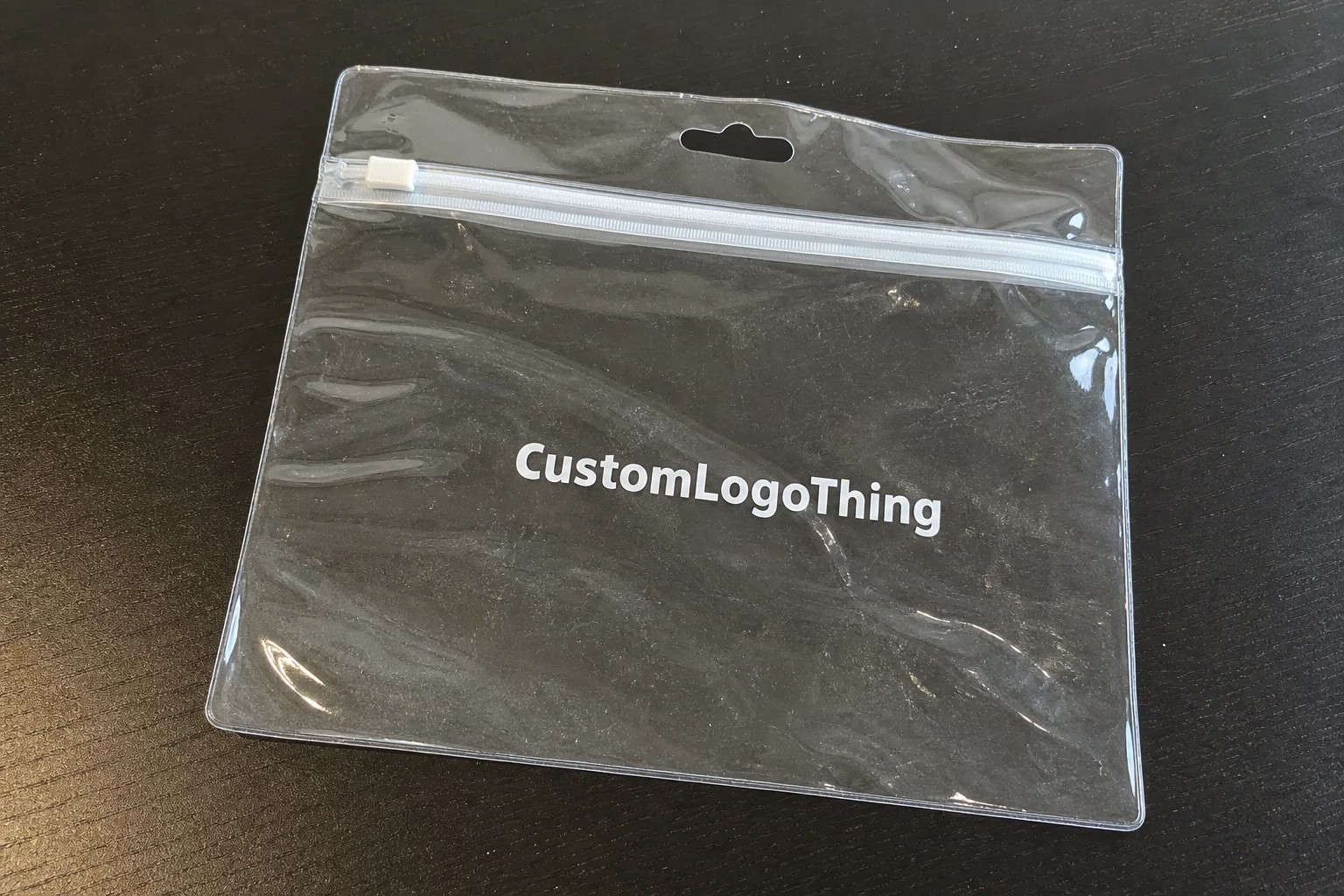
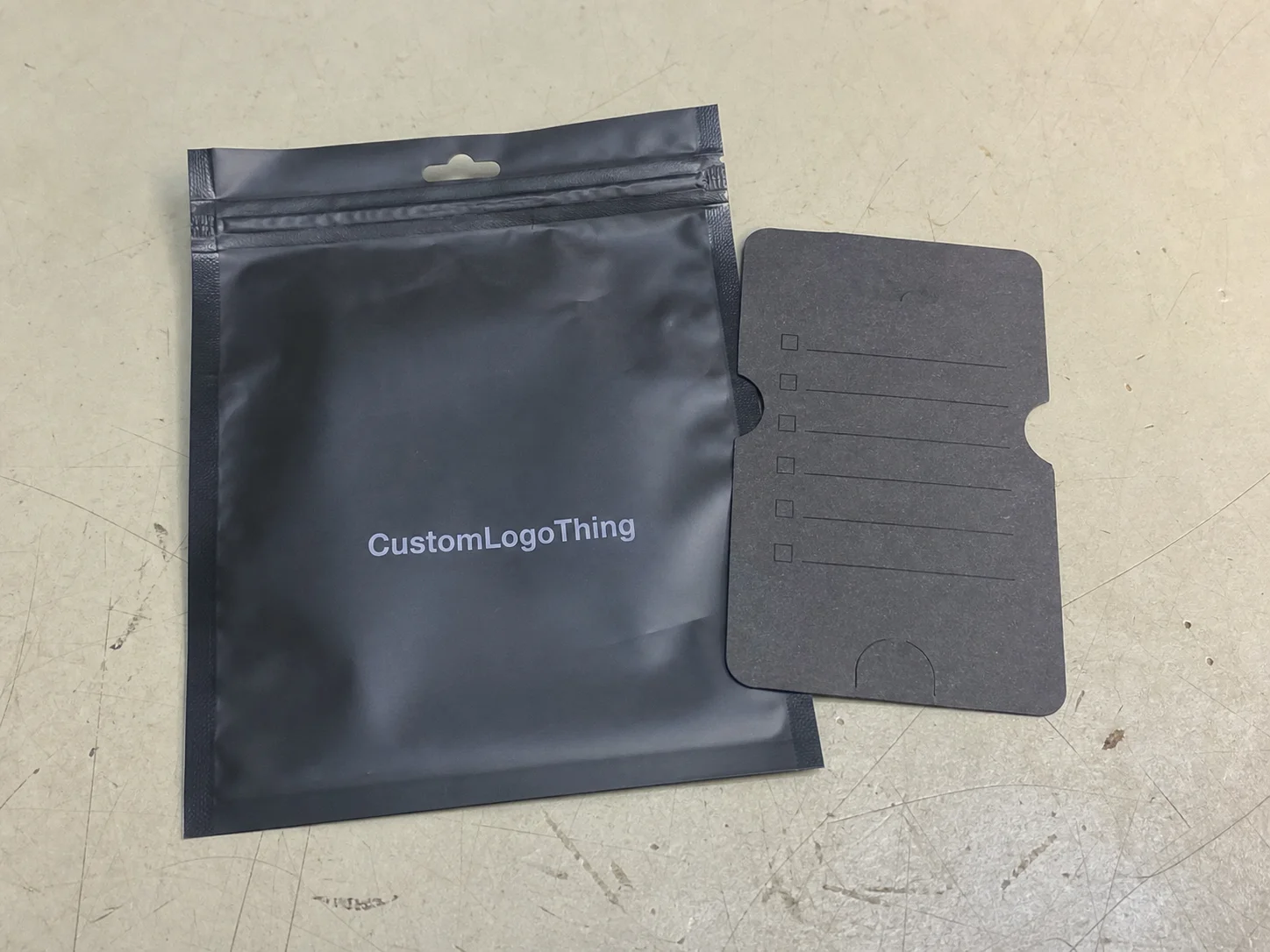
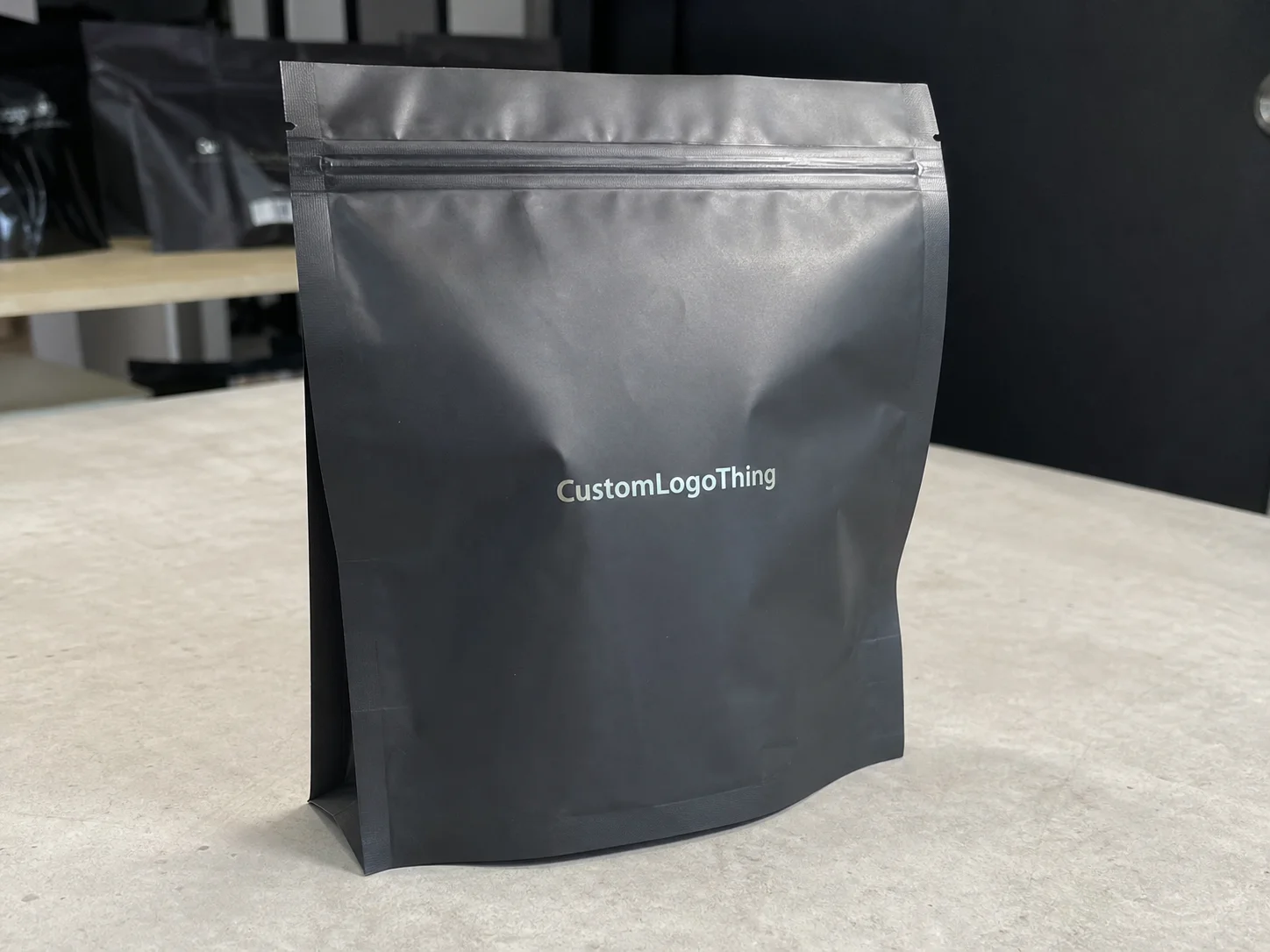
Flexible packaging has exploded in popularity over the past decade, particularly for beverages, snacks, and personal care products. Stand-up pouches with zip closures, vacuum-sealed bags, and shrink sleeve labels all fall into this category. The material savings compared to rigid containers make flexible packaging extremely attractive for high-volume consumer goods. (I remember my first flexible packaging project—$0.04 per unit savings multiplied across 200,000 units made the CFO very happy. That's $8,000 in annual savings, which bought us a decent lunch budget for the whole team.)
Rigid containers—think perfume boxes, electronics packaging, and luxury retail packaging—use thick paperboard or wood construction. The production costs run significantly higher, but the unboxing experience and perceived value justify the investment for premium brands. I've worked with cosmetic companies spending $3.50 per unit on rigid containers because their customers expected that level of presentation. A typical rigid setup box using 1200gsm chipboard with velvet lining costs $1.80-3.20 per unit at 5,000 quantity.
Your market channel matters enormously when selecting product packaging types. An e-commerce brand shipping direct-to-consumer has completely different requirements than a CPG company placing products on retail shelves. The former prioritizes protective durability and dimensional efficiency. The latter emphasizes print quality, barcode readability (GS1-128 compliant), and retail compatibility with EDI 856 ASN requirements.
Specifications That Directly Affect Your Wholesale Packaging Pricing
Here's where things get granular. Your packaging design specifications determine your price more than almost any other factor. I can't stress this enough: the difference between a well-optimized spec and a poorly designed one can easily be $0.12 per unit on a 50,000-piece order. That's $6,000 in unnecessary costs.
Dimensions and structural engineering matter more than most buyers realize. Packaging manufacturers price based on the sheet size required to produce your container. If your box dimensions don't nest efficiently on standard parent sheet sizes (48"x36" for corrugated, 28"x20" for folding cartons), you waste material and pay premium prices. I've seen buyers specify boxes that required custom 52"x42" sheet sizes, adding 22% to their material costs overnight. And here's the thing—they had no idea until I showed them the waste layout on a production sheet. It was painful to watch.
Working with your supplier's engineering team to optimize dimensions before finalizing tooling typically saves 10-15% on material costs alone. A simple dimension adjustment from 8.5"x6"x3" to 8.25"x5.75"x2.75" might allow four additional boxes per parent sheet, reducing material cost by $0.03 per unit on a 25,000-piece order. This is one of the highest-ROI activities you can do before placing a production order. (Said differently: spend two hours on dimensions now, save thousands later. I'm a fan of that math.)
Material grade selection creates another major pricing variable. Take corrugated, for example. A 32ECT single-wall board costs approximately $0.12 per square foot in volume, while 44ECT double-wall runs $0.19 per square foot. For lightweight products under 3 lbs, stepping down from 200gsm to 180gsm white-duplex board on folding cartons might reduce your cost by 8% without affecting performance. But here's the catch: if you specify the wrong grade for your application, you'll face damage claims that dwarf any savings. I've seen a brand save $800 on packaging material, then pay $12,000 in freight damage claims. Not their finest hour.
Print configuration affects both tooling costs and per-unit pricing. Full process four-color printing (CMYK) with aqueous coating represents the premium end at $0.08-0.15 per square inch of print coverage. Two-color flexographic printing with varnish offers excellent quality at $0.04-0.07 per square inch. Pantone spot colors sit somewhere in between at $0.05-0.09 per square inch depending on color count. The shift from four-color process to two-color design can eliminate $1,500 to $3,000 in platemaking fees (typically $250-400 per color per plate) while potentially reducing per-unit costs by 5-8%.
"I've watched brands spend $8,000 on elaborate multi-color designs for packaging that sits inside a mailer box and never gets seen by the consumer. Matching your print complexity to actual visibility makes financial sense."
Artwork complexity also drives proofing time and revision costs. Design files that require extensive prepress preparation—trapping adjustments, bleed extensions, color separation corrections—add production overhead. Expect to pay $150-400 per hour for specialized prepress work on complex graphics, with typical prepress projects requiring 4-8 hours of work.
Understanding Wholesale Packaging Pricing: MOQs, Tiers, and Hidden Fees
Now we get to the section where most buyers feel they've been treated unfairly, and honestly, sometimes they have. Understanding the economics behind minimum order quantities, volume discount structures, and ancillary charges empowers you to negotiate from a position of knowledge.
Minimum order quantities (MOQs) exist because custom packaging production requires significant setup. A manufacturer running your job must allocate machine time, create tooling, calibrate colors, and perform quality checks. That setup represents fixed costs that get amortized across every unit produced. With lower quantities, your per-unit share of setup costs skyrockets. Is it fair? Maybe not. Is it how manufacturing economics work? Absolutely.
Typical MOQs by product type:
| Product Type | Standard MOQ Range | Start-up MOQ Available |
|---|---|---|
| Corrugated Boxes | 1,000 - 5,000 units | 500 units (premium pricing) |
| Folding Cartons | 2,500 - 10,000 units | 1,000 units (premium pricing) |
| Flexible Pouches | 5,000 - 25,000 units | 2,500 units (significant premium) |
| Rigid Containers | 3,000 - 10,000 units | 1,000 units (highest premium) |
Volume discount tiers follow predictable patterns once you understand production economics. Manufacturers typically structure pricing with 12-18% savings at each major volume milestone. Common tier structures:
- Base pricing applies to minimum quantities
- 5,000+ units typically unlocks first discount tier (savings of 5-8%)
- 10,000+ units provides second tier savings (additional 4-6%)
- 25,000+ units triggers significant per-unit reductions (additional 8-12%)
- 50,000+ units often requires direct manufacturer negotiation (potential total savings of 18-25%)
The exact percentage varies by supplier capability and current capacity utilization. A manufacturer running at 60% capacity will negotiate more aggressively than one at 95% utilization. (Tip: if a supplier's sales rep is impossible to reach during "slow season," they might be too busy to give you fair pricing. Call their production floor directly—operations managers often have more flexibility than sales.)
Hidden fees that surprise buyers deserve special attention because they're completely predictable if you know what to ask. Tooling depreciation fees ($400-2,800 depending on complexity) distribute the cost of creating your custom dies or printing plates across your first 3-5 orders. Setup fees cover machine preparation ($200-600), color matching ($150-350), and initial quality checks ($100-200). Freight and logistics charges often get quoted separately from the base unit price—blind freight provisions can add $0.02-0.05 per unit depending on distance from facilities in Chicago, Atlanta, or Los Angeles.
In my experience, these ancillary charges typically represent 8-15% of total order value for domestic production and 15-25% for overseas manufacturing when all costs are included. Buyers who negotiate solely on unit price frequently underestimate their actual spend by this margin. Frustrating? Yes. Avoidable? Completely—with proper due diligence before signing any purchase agreement.
From Order to Delivery: The Wholesale Packaging Timeline
Time costs money in ways that aren't always obvious. Production lead times, shipping windows, and inventory carrying costs all factor into your effective total landed cost. Understanding realistic timelines prevents both emergency expedite charges and expensive over-ordering to buffer against delays.
Standard production lead times for custom wholesale packaging vary by product complexity and manufacturer location. Domestic production of folding cartons and corrugated boxes typically runs 14-21 business days from artwork approval to completion. This includes printing (2-4 days), finishing and coating (2-3 days), die-cutting (1-2 days), and quality inspection (1-2 days). Flexible packaging often requires 18-28 days due to additional material preparation steps including extrusion lamination (3-5 days) and specialized sealing equipment calibration (2-3 days).
Overseas manufacturing, commonly from facilities in Shenzhen, Dongguan, Ho Chi Minh City, or Monterrey, extends production timelines to 30-45 days. The actual production time might be similar to domestic, but ocean freight transit alone takes 4-6 weeks via Pacific routes from Yantian or Busan ports. Factor in time for sample approvals (7-10 business days), potential production issues requiring reprints (5-7 days), and port congestion (common at Long Beach, Oakland, and Savannah), and you quickly see why brands sourcing offshore typically maintain 60-90 days of inventory buffer.
Rush production surcharges exist for good reason. Manufacturers must shuffle production schedules, potentially delaying other customers' orders, to accommodate expedited timelines. A 7-10 day rush production typically adds 15-25% premium to base pricing. If your product launch depends on receiving packaging on a specific date, building that contingency into your initial order timeline costs far less than emergency expedite fees—rush charges of $1,500-3,000 easily eclipse the cost of ordering 2-3 weeks earlier.
I've seen buyers attempt to negotiate rush production at standard pricing, assuming manufacturers have idle capacity. The reality is that quality manufacturers maintain full production schedules. Expediting your order means displacing another customer's production, which justifies the premium. (Pro tip: asking nicely doesn't change machine time availability. Neither does reminding them how great your business will be someday.)
Shipping and transit variations dramatically affect your timeline and cost structure. Domestic ground freight averages $0.08-0.15 per pound depending on distance (typically $180-450 for a full pallet shipment) and fuel conditions. Air freight runs $1.50-3.00 per pound but might make sense for time-sensitive launches—expect to pay $3,000-6,000 for a 2,000-pound expedited shipment versus $200-400 for standard ground. Ocean freight ranges from $2,000-8,000 per 40-foot container depending on origin port (Shanghai vs. Shenzhen vs. Ho Chi Minh City) and seasonal demand, which peaks October through December.
"The single biggest timeline mistake I see? Brands that assume production delays won't happen to them. Build contingencies into your launch planning or pay the price with emergency orders from secondary suppliers at 2-3x normal costs."
Why Your Wholesale Packaging Pricing Strategy Should Start With Prototype Testing
Here's where I'll probably lose some readers who think they can skip straight to production. Don't. I've watched brands skip prototype testing to save $500, then spend $15,000 replacing damaged inventory that arrived in inadequate packaging. The economics never work out.
Prototype samples typically cost $200-500 depending on complexity and whether they use production-equivalent materials or mock-up substitutes. For folding cartons and corrugated boxes, a die-cut prototype shows you exactly how your graphics will look folded, what the structural integrity feels like, and whether your dimensions work in practice. For flexible packaging, prototype pouches demonstrate seal strength (measured in pounds per linear inch, typically 8-12 lb/in for food-grade applications) and barrier properties (oxygen transmission rate measured in cc/m²/day).
The sample cost seems expensive until you consider what it prevents. A single production mistake on a 25,000-unit order—wrong dimensions, incorrect material grade, color shift—costs multiples of prototype expenses. I worked with a supplement brand that specified 4-mil thickness for their stand-up pouches based on a competitor's product without testing. Their pouches split during shipping, resulting in $40,000 in damaged goods and re-shipment costs. The correct 5-mil specification would have added $0.02 per unit—less than $500 total on their 25,000-unit order.
Material thickness testing is especially critical for Product Packaging That requires specific protective properties. Compression testing tells you how much weight a box can withstand before collapse (measured in pounds-force, with ECT-32 board supporting approximately 40 lbs stacked). Burst strength testing (measured in pounds per square inch, with 200 PSI typical for 32 ECT board) verifies material integrity for packaging that encounters rough handling. Vibration testing simulates transit conditions at 60-70 Hz frequency and reveals potential failure points that aren't visible during static inspection.
Requesting prototype samples from your supplier before committing to full production runs represents standard industry practice. Any supplier that resists providing samples—or charges excessively high fees for them—should raise serious concerns about their quality management or the viability of your specifications.
Virtual proofs have improved dramatically with modern design software and rendering capabilities. While they don't replace physical samples for final approval, digital proofs let you catch artwork errors (missing bleeds, incorrect fonts, low-resolution images below 300 DPI), color discrepancies (CMYK vs. Pantone mismatches), and layout problems early in the process. Most suppliers provide digital proofs as part of standard production workflow at no additional charge. Physical samples require more time (5-10 business days) and materials but give you confidence before committing to production runs of 5,000+ units.
When evaluating wholesale programs, ask specifically about their sample and prototype policies. Suppliers who offer complimentary digital proofs but charge reasonable fees for physical prototypes ($200-400 for folding cartons, $350-600 for flexible packaging) typically provide better value than those who advertise "free samples" but bury setup costs elsewhere in their pricing.
FAQ: Wholesale Packaging Pricing Questions Answered
What is the typical minimum order quantity for wholesale packaging?
Standard MOQ ranges from 1,000 units for basic corrugated boxes to 5,000 units for rigid containers. Some suppliers offer flexible MOQ options for startups at premium per-unit pricing. The exact minimum depends on your product complexity, material requirements, and whether you're working with domestic manufacturers in the Midwest (Grand Rapids, Chicago, Cleveland) or overseas producers in Asia. I've seen minimum orders as low as 500 units for simple branded mailer boxes when suppliers have available capacity, though this typically carries a 35-45% price premium over standard quantities—a $0.35 unit becomes $0.48 at the reduced MOQ.
How much does tooling or setup cost for custom wholesale packaging?
Custom tooling ranges from $500 for simple embossing dies to $3,500 for complex multi-color flexographic plates requiring individual impression cylinders. Lithographic printing typically requires lower upfront tooling investment ($300-800 for printing plates) but higher per-unit costs due to plate wear over runs of 100,000+ impressions. Digital printing eliminates tooling costs entirely but increases per-unit price by 20-30% compared to offset lithography at volume. Always request itemized tooling depreciation schedules—many suppliers amortize these costs over your first 3-5 orders at $125-350 per order, which means repeat orders become $125-350 cheaper once tooling is fully paid off.
What factors cause wholesale packaging pricing to vary between suppliers?
Manufacturing location and labor costs account for 15-25% of price differentials between suppliers—facilities in Shenzhen with labor rates of $3-5/hour versus domestic manufacturers in Atlanta paying $18-22/hour explain significant portions of this variance. Equipment capabilities (single vs. eight-color printing, automated vs. manual finishing) affect production efficiency and quality consistency—newer inline presses reduce labor costs by $0.02-0.05 per unit. Raw material sourcing partnerships and volume purchasing power create supplier advantages—major converters purchasing 10 million+ square feet annually receive material discounts of 8-12% that translate to lower customer pricing. Some suppliers also maintain inventory of common board grades (14pt C1S, 18pt C2S, 24pt CCNB) in standard sizes, reducing their lead times by 5-7 days compared to competitors who order materials per job. Comparing suppliers requires standardizing your specifications exactly—the moment specifications vary between quotes (200gsm vs. 180gsm board, 4-color vs. 2-color process), you're no longer comparing equivalent offerings.
How can I reduce my wholesale packaging pricing without sacrificing quality?
Consolidate multiple SKU orders into single production runs to hit volume tiers faster—combining four seasonal variants into one print run can unlock 8-12% volume discounts. Optimizing box dimensions to standard sheet sizes (28"x20" for folding cartons, 48"x36" for corrugated) reduces material waste by 8-15% and can cut costs by $0.02-0.05 per unit. Shifting from multi-color process printing to two-color designs where brand guidelines allow typically saves 15-20% on production costs ($1,200-2,400 on platemaking alone) while maintaining brand integrity for internal or mailer packaging. Consider material alternatives that provide equivalent performance at lower price points—for example, switching from virgin fiber to 30% recycled content board can reduce material costs by 10-15% while meeting sustainability commitments; switching from coated to uncoated board saves $0.015-0.03 per unit when print vibrancy isn't critical. The key is maintaining performance requirements while eliminating unnecessary specifications—audit every element of your spec against actual functional needs.
What payment terms do wholesale packaging suppliers typically offer?
First-time orders typically require 50% deposit with balance due before shipping (net 10 or net 15). Established accounts with proven payment history may qualify for Net-30 or Net-45 terms after 3-6 months of successful orders. Credit approval usually requires three or more months of order history ($15,000+ total volume) or completion of a commercial credit application with bank references and trade references from existing suppliers. Some suppliers offer early payment discounts of 1-2% for payment within 10 days (1/10 Net 30 terms). International orders from manufacturers in China, Vietnam, or Mexico frequently require full payment upfront or letters of credit ($500-1,500 to establish) due to the complexity of cross-border collections and increased default risk on overseas transactions.
Every packaging project has variables that affect actual costs, and this wholesale packaging pricing guide covers the fundamentals you'll encounter. Our team maintains relationships with manufacturers across Grand Rapids, Elgin, and Chicago domestically, plus international partners in Guangdong Province, Vietnam, and Mexico. If you want specific quotes or cost reduction analysis for your project, reach out directly. Our engineers look at these specs every day and often spot opportunities that might not be obvious from a first read-through.