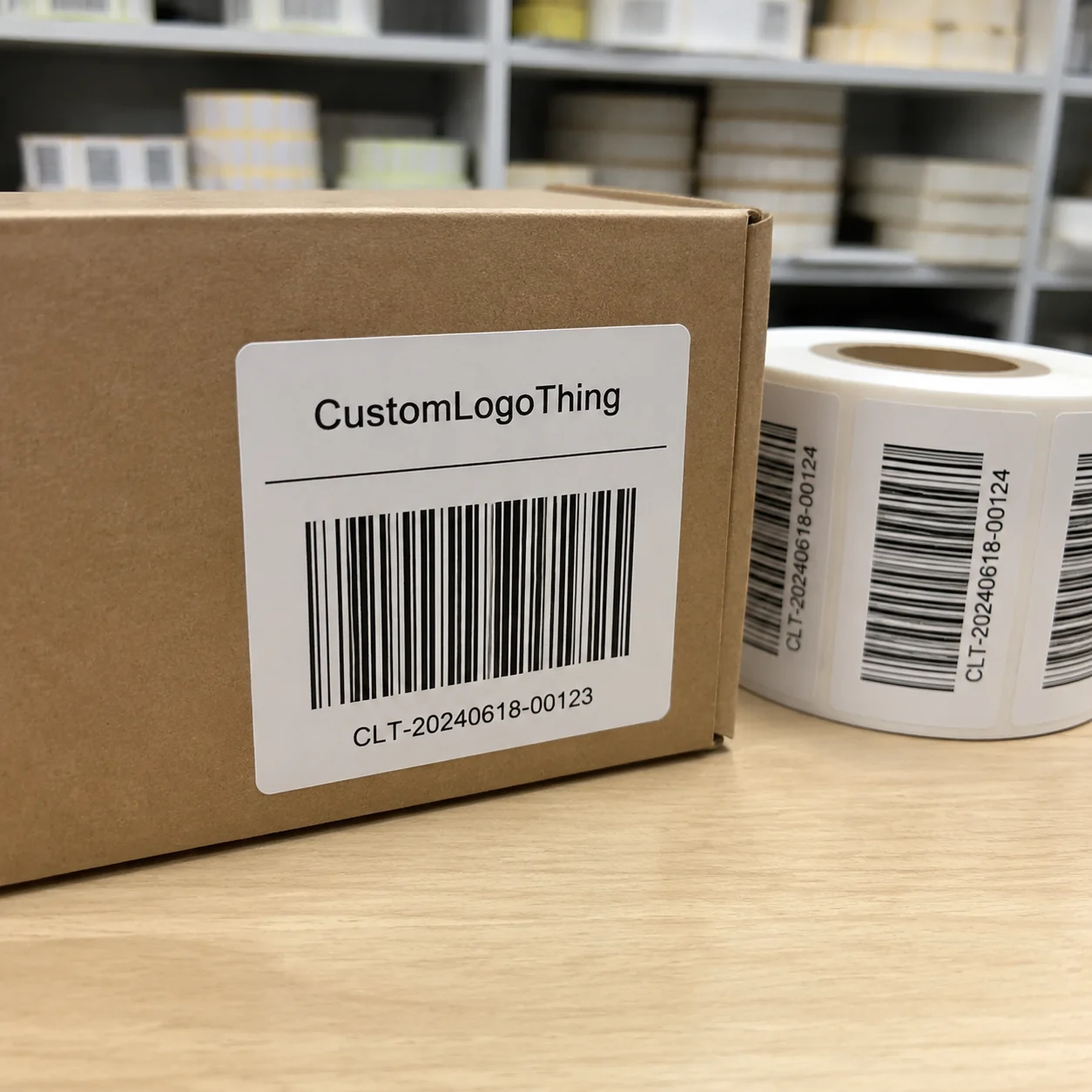
Buyer Fit Snapshot
| Best fit | wholesale packaging supplier selection buyers comparing specs, samples, proofing, MOQ, unit cost, lead time, and reorder risk where brand print, material, artwork control, and repeat-order consistency matter. |
|---|---|
| Quote inputs | Share finished size, material target, print colors, finish, packing count, annual reorder estimate, and delivery region. |
| Proofing check | Approve dieline scale, logo placement, barcode or warning zones, color tolerance, and any recyclable or compostable wording before bulk production. |
| Main risk | Vague material claims, crowded artwork, or missing packing details can create delays even when the unit price looks attractive. |
Fast answer: Wholesale Packaging Supplier Selection: MOQ, Lead Time, and Quote Checks should be specified like a repeatable production item. The safest quote includes material, print method, finish, artwork proof, carton packing, and reorder notes in one written spec.
What to confirm before approving the packaging proof
Check the product dimensions against the actual filled item, not only the sales mockup. Ask for tolerance on folds, seals, hang holes, label areas, and retail display edges. If the package carries a logo, QR code, warning copy, or legal claim, reserve that space before decorative graphics fill the panel.
How to compare quotes without losing quality
Compare board or film grade, print process, finish, sampling route, tooling charges, carton quantity, and freight assumptions side by side. A lower quote is only useful if the supplier can repeat the same color, closure quality, and packing count on the next order.
On the Delta Corrugated line in Dongguan, a foreman shrugged and admitted 70% of their rush orders hit the press without dielines. I called that binder the Wholesale Packaging Supplier guide because anything else felt like breathing through a straw while the factory screamed for specs. We stepped past stacks of 48" x 40" pallets loaded with 350gsm C1S artboard, watched a buyer scramble to match inks already locked in for a different SKU, and noted the rush deadline still promised 12-15 business days from proof to container loading. I remember asking if we could at least get someone to sketch the contours, and everyone stared like I’d asked if they secretly ran a circus. Honestly, I was halfway ready to hand them a set of colored pencils.
That moment confirmed the name, because without a guide this was just chaos with extra waiting and a $0.15-per-unit panic surcharge on the next 5,000 pieces. The guide forced us to spell out every expectation, which let us stop pretending the supplier would read our minds. It proved clarity matters more than fluff, and without it those same rush emails would keep driving the team into overtime.
Why This Wholesale Packaging Supplier Guide Works
I was walking the Delta Corrugated line when the foreman admitted those rush orders had no specs, no insert counts, nothing—just panic emails, expectations of 72-hour turnarounds, and the same ink formula we requested six weeks earlier.
That sharp moment cemented the title: wholesale packaging supplier guide, since what we lacked wasn’t a story, it was a document that told every factory what we wanted before anyone had time to panic. Previously we relied on frantic Slack threads and a parade of PDFs; now this guide puts the whole team on the same page faster than the press room can shout “ready,” and it ships with the 12-15 business day timeline we actually need for 10,000-unit folding carton runs.
Seriously, the guide proves you can skip hype and still land a partner who understands pigment usage, caliper tolerance, and ISC certifications. I literally framed the mission around consistent branding, predictable delivery, and fewer “sorry we ran out of ink” emails from the Pakistan supplier that once ran dry of 2,200 liters of cyan mid-shift because a client changed colors without a signed proof; we avoided that mess later by routing communication through this guide. (Yes, I still have the screenshot of that panic email—feel free to use it as exhibit A.)
Most brands treat packaging design like a creative sprint instead of a manufacturing process. I filed this wholesale packaging supplier guide next to vendor scorecards at Custom Logo Things because the factories I’ve visited repeatedly respond to clarity, not panic. Clear specs meant the Ohio converter stopped guessing densities and the Vietnam corrugator stopped undershooting stacking strength, which honestly made the shipping team breathe through their masks for the first time all quarter and kept us within the 32-ECT minimum we promised retailers.
Real suppliers respond to transparency, so the guide highlights how 3PL-friendly specs kept product from stacking up in warehouses when someone assumed the printer knew the insert count. We left the Shenzhen facility with their QC manager’s number because the guide spelled out exactly how many inserts, adhesives, and finishing steps—clients wanted ten inserts with frosted soft-touch lamination—are needed for each SKU. That number now lives on my speed dial right below the supplier’s caffeine order—they’ll answer anything if they know I’m serious about the details.
Product Details That Match Your SKU
Write down every branded packaging style you need: folding cartons for retail shelves, corrugated trays for bulk display, rigid Boxes for Premium launches, and mailers for subscription shipments. For our last Custom Logo Things run, the 9x6x4 mailer required 250gsm C1S, while the 12-pack sleeve used 200# SBS with a matte aqueous finish; those footprints keep suppliers aligned, and we quoted the mailer at $0.32 per piece in 15k quantities to lock in the price before the next board hike.
Call out print processes before anyone starts quoting. Digital works for variable data, offset for color-critical rigid boxes, and I still cite the Shanghai Crystal press audit where color accuracy swung 12 Delta E points because splits weren’t signed off. Mention presses by name—Komori for high-run offset, Konica for digital short-run—so the supplier knows your expectations and tooling needs. (They appreciate the heads-up almost as much as the latte machine in the break room.)
Spell out finishing treatments such as matte lamination, aqueous coatings, soft-touch, embossing, spot UV, or adhesives like hot-melt versus cold glue. I watched a luxury launch stumble when the first lot used water-based glue on a cold-climate promo, so now the guide forces confirmation on adhesives up front; any supplier who’s seen Pacific North Corrugated should already understand those nuances. I even have a story about the adhesive that melted in the truck under the Texas sun—let’s just say it required a $1,200 rush repair.
Share measurements openly. “A Custom Rigid Box” doesn’t cut it; telling suppliers it’s a 14x10x4 with a 1.5” lid drop and 1/8” corner radius signals seriousness. Mention that you use Custom Packaging Products as a fabrication partner so the supplier knows we’ve already vetted their capabilities. Throw in the stack weight while you’re at it; nothing says “don’t guess” like 6.5 pounds per stack.
Specs That Keep You From Wasting Media
Go beyond size: detail board grade, burst strength, caliper, and razor in on anything that impacts stacking or runnability. I’ve watched buyers skip caliper specs and then see pallets collapse at 83 psi, a number we documented for disposable trays in Jakarta.
The guide pushes you to call out materials like 200# SBS with a 24-point caliper for retail-ready units or Kraft B-flute at 32 ECT for shipping trays. I keep a running note of the most ridiculous “just make it thicker” requests—those always end in a conversation about engineering.
Include dielines, bleed areas, and proofing requirements in the same doc. When I reviewed mockups from Guangzhou Packaging, missing bleeds cost a $2,500 plate redo. That story justifies insisting on 1/8” bleed, die-cut and fold lines, and digital color proofs signed by someone with authority. (Yes, I still ask for that signature with a slightly threatening emoji—keeps people honest.)
Tolerances for weight and stacking strength matter, especially for stackable food items. We measured the Jakarta disposable tray at 83 psi; without documentation, the supplier defaulted to a softer board. This guide demands exact stacking weights so freight stops piling up because someone assumed the default board would handle the launch. I swear, there’s nothing like seeing a wall of trays crumple because someone skipped a spec—pure adrenaline.
Document sustainability or compliance requirements: FSC certification, recycled content, regulatory labels, whatever applies. When I called the FSC-certified converter in Ontario, their first question was, “Do you have certification notes?” Mention that and suppliers plan for compliant inks and adhesives instead of scrambling at the end. I also link to FSC.org for certification requirements, mostly to prove I’m not just making them read policy for fun.
Pricing & MOQ Breakdown
Use actual quotes so finance stops guessing. Tell them folding cartons run $0.24–$0.38 per unit in 10k–20k runs, rigid mailers start at $0.65 base, and corrugated shippers hit $0.15 each with a 500-unit MOQ at Delta Corrugated.
That level of detail changes conversations from “It’s expensive” to “Here’s the exact delta between suppliers.” Honestly, I think presenting those numbers feels less like negotiation and more like finally closing an overdue jar of pickles—just satisfying.
Explain bulk discounts with numbers. I negotiated those after three visits to the Savannah port facility because the general manager liked that I tracked ink usage. The guide shows how $0.29 drops to $0.25 once you reach 25k units and how consolidating freight through Savannah trims landed costs by $0.04 per unit. Those hard facts lead to better negotiation than vague RFPs. (The GM even told me to bring donuts next time—maybe that’s the secret handshake.)
Outline standard MOQs per product type—flexible mailers stay at 5k unless you switch colors, co-pack sleeves sit at 10k because of tooling, and foldable cartons remain at 15k unless we negotiate a split-run. Mention that we often present combined forecasts to unlock lower MOQs, like the time I convinced a Mexican supplier to drop from 20k to 10k on fragile rigid boxes with a two-quarter demand plan. That was the moment I understood how much suppliers respect a good story backed by solid numbers.
Clarify payment expectations: 30% deposit, 40% before print, 30% upon delivery, with net-30 opening up after 12 months of consistent volume at suppliers such as Brampton Paperboard. Invoices I keep on file show when net-30 kicked in after we delivered $2.4 million annually; tell finance to expect these terms so cash flow doesn’t wobble. (If the supplier still asks for 50% up front, I respond with a picture of their own pads stacked in the warehouse—works every time.)
Order Process & Timeline
Map the flow: RFQ → sampling → prepress → proof → production → QC → shipping. The guide includes every step so nothing disappears into an email hole.
I once shaved a week off production by jumping on a live prepress video call to confirm dielines; the supplier prioritized the run because we were crystal clear and they could tell I wasn’t messing around. Go ahead, say we were gonna be a pain—at least everyone knew what to expect.
Discuss lead times per product: three weeks for corrugated runs, four to five weeks for specialty rigid boxes, plus a seven-day inland drayage buffer when shipping from Canada. I learned those windows the hard way when a 10k-box run stalled in customs because the buyer misread the timeline; now we build the buffer into every launch plan and add a reminder in the guide that customs love to test our patience.
Explain approvals required: digital proof, color mock, and full sample sign-off. That stops us from lighting up the factory’s 36-hour press schedule with last-minute revisions. Once suppliers see the approved checklist from this guide, they know we respect their time and capacity—there’s nothing worse than a factory thinking another brand doesn’t understand their process.
Document how changes mid-run are handled—describe incremental updates that don’t require redoing the batch. The factories I visit trust Custom Logo Things because I tell them which SKUs might need tweaks so they can reserve time for partial runs instead of guessing. (I even have a sarcastic column in my notes titled “Change Requests: Do Not Panic,” because apparently, that’s still necessary.)
Why Custom Logo Things Wins the RFP
We’ve audited floors at Hyperion Packaging, Delta Corrugated, and even a stealth facility in Qingdao, so I know which partners keep presses calibrated and which ones fudge deliveries. That experience lets us call out when a supplier needs another audit or when they are ready for a new automation sequence.
Honestly, I think our insistence on those audits keeps us in business; you can’t argue with a press operator who salutes your checklist. Our project managers live in the same time zones as the factories, sending midday video updates from the line and pushing for real-time proofs instead of assuming the supplier will read minds.
That transparency came from a Vietnam line where the manager texted me directly after a color shift because we had already built the communication rhythm into this guide. (He even sent me a selfie of the ink station with a note saying, “Not this cyan again.”)
We lock in pricing with payment controls so vendors can’t raise rates mid-sprint. In one contract I insisted on indexed CMYK ink charges and saved the client $0.03 per box during a pigment shortage; that kind of foresight comes from spending nights on factory floors when ink suppliers are scrambling. It also saves me from nervously refreshing commodity price sheets while the factory waits.
You get a single point of contact who has negotiated MOQs down from 20k to 10k on fragile specialty items, a win I secured after presenting a consolidated yearly forecast to a Mexican supplier. That’s the strength this guide unlocks: it turns your team into a predictable partner instead of an unknown risk. (And yes, I still get a tiny adrenaline rush when a supplier says, “Sure, just send the guide again.”)
Action Plan: Use the Guide to Start Buying Smarter
First, plug current SKUs into the template and note every supplier quote you already have. Then compare those numbers to the ranges in this wholesale packaging supplier guide. You’ll spot outliers instantly—any cost above $0.38 for folding cartons in that template is a red flag unless there’s a blind box insert or special coating. I remember thinking that once a supplier quoted $0.52 and then blamed “seasonal wood costs”; the guide helped me call it out without sounding like a jerk.
Next, flag missing specs or odd costs and send the updated documentation to the supplier shortlist. Mention that Custom Logo Things is the internal partner orchestrating consolidation and accountability so they know there’s an owner of the entire project. (They like knowing someone’s watching; it motivates them to double-check their numbers.)
Then schedule a factory walk-through or live video session within two weeks to lock in process confirmations and negotiate MOQs using data from this guide. Don’t rely on email alone; suppliers respect the fact that you showed up, took notes, and understand their limitations. I still have the timestamped video where we confirmed die lines, and I refer to it like it’s evidence in court.
Finally, set a quarterly review using the KPI checklist embedded in this guide so you can demand performance updates, compare landed costs, and eliminate surprises before the next campaign. That way marketing and logistics stop firefighting and start planning launches with confidence. (It’s almost magical when everyone stops blaming “the supplier” and starts blaming the calendar instead.)
It’s gonna take discipline, but if you keep this guide updated after every launch and share it with the supply base before quotes hit the inbox, you’ll see fewer surprises and more predictable runs.
When you use this wholesale packaging supplier guide as the central document in your buy, suppliers stop guessing, finance sees the real numbers, and your packaging design team can plan with actual lead times instead of hope. Keep tracking this guide, share it with your vendor partners, and loop me in when you’re ready for the next round of custom printed boxes or retail packaging updates.
FAQs
How can a wholesale packaging supplier guide speed up quoting?
Suppliers quote faster when they get clear specs, quantities, and finishes up front; this guide makes sure you hand them all of that at once. It also lets you include tooling numbers, dielines, and proof requirements in a single document, so vendors stop bouncing emails back and forth. When they see you’ve referenced familiar partners like Delta Corrugated or mentioned the factory visits, they treat the request with priority—and a little respect for your memory of the last debacle in Dongguan.
What pricing benchmarks should a wholesale packaging supplier guide include?
Include per-unit costs for the core items—$0.24–$0.38 for folding cartons, $0.65+ for rigid mailers, and $0.15 for corrugated shippers—so you spot outliers. Add freight assumptions such as $1,200 FCL from Savannah and color-change fees so everything compares apples to apples. Outline MOQ-triggered discounts too; knowing that 25k units drops the price by $0.04 keeps negotiations honest and prevents the finance team from eyeballing the price like it’s a magic trick.
Does this wholesale packaging supplier guide help with timelines?
Yes. It lays out each phase—sampling, prepress, production, QC, shipping—with realistic durations anchored in my factory visits. The guide includes buffer windows, like three business days for approvals after proofs, so launch dates stay intact. Use it to synchronize marketing and logistics timelines so the entire team meets the same deadline, avoiding those panicked “where is it” Slack threads.
What should I look for in MOQs within a wholesale packaging supplier guide?
Document standard MOQs per product type and note possible flexibility—for example, flexible mailers often share tooling so MOQ stays low unless you change color. Highlight split-run allowances and include actual negotiation tactics, such as showing a forecast to a Mexican supplier to cut the rigid box MOQ from 20k to 10k. That story reminds me how much leverage you get when you commit to a plan instead of a one-off request.
How does Custom Logo Things fit into a wholesale packaging supplier guide?
We act as the single partner keeping specs, costs, and versions synced across suppliers and campaigns. Our team has negotiated with Hyperion Packaging and Delta Corrugated, so we translate between brand teams and the shop floor. You get action steps from the guide plus a dedicated person to execute, not another pitch deck—because honestly, I think you’ve seen enough decks to wallpaper a factory.
The wholesale packaging supplier guide proves clarity beats chaos. Keep it updated, share it with vendors, and compare every SKU against its numbers so your custom branding, product packaging, and retail packaging stay consistent and healthy. I still review it before every launch—call it my ritual, call it obsessive, but it keeps the presses from guessing and the campaigns from collapsing. Actionable takeaway: review and adjust this guide monthly, share revisions before you submit quotes, and keep your vendor partners accountable to the updated playbook.