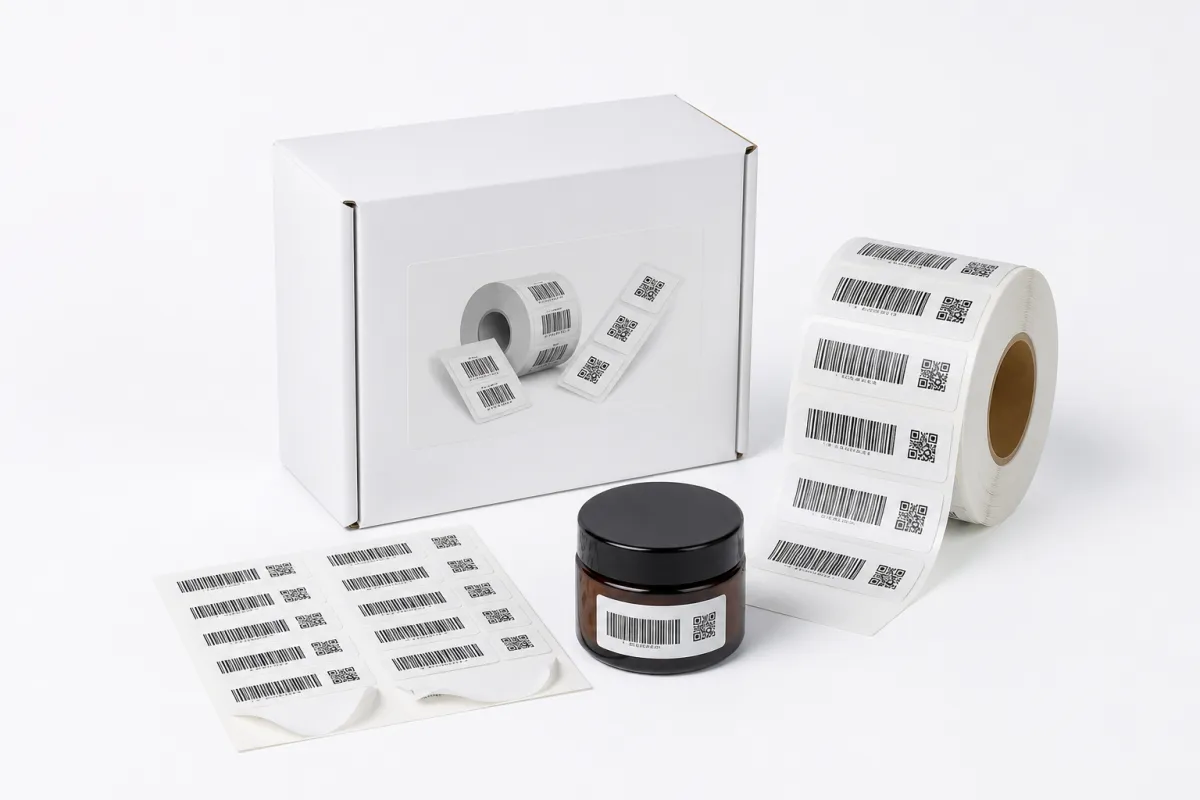
Buyer Fit Snapshot
| Best fit | wholesale personalized gift wrapping supplies for packaging buyers comparing material specs, print proof, MOQ, unit cost, freight, and repeat-order risk where brand print, material, artwork control, and repeat-order consistency matter. |
|---|---|
| Quote inputs | Share finished size, material target, print colors, finish, packing count, annual reorder estimate, and delivery region. |
| Proofing check | Approve dieline scale, logo placement, barcode or warning zones, color tolerance, and any recyclable or compostable wording before bulk production. |
| Main risk | Vague material claims, crowded artwork, or missing packing details can create delays even when the unit price looks attractive. |
Fast answer: Wholesale Personalized Gift Wrapping Supplies: MOQ, Samples, Lead Time, and Quote Checks should be specified like a repeatable production item. The safest quote includes material, print method, finish, artwork proof, carton packing, and reorder notes in one written spec.
What to confirm before approving the packaging proof
Check dimensions, folds, seals, label areas, and retail display edges against the actual filled product before bulk approval.
How to compare quotes without losing quality
Compare board or film grade, print process, finish, sampling route, tooling charges, carton quantity, and freight assumptions side by side.
I've spent the past decade watching gift packaging suppliers quietly accumulate margins that would make most retailers weep. I remember visiting a mid-sized gift shop in Phoenix three years ago where the owner was paying $3.20 per sheet of Branded Tissue Paper from a retail supplier. She'd stumbled onto a wholesale arrangement almost by accident—her cousin ran a print shop—and suddenly her tissue costs dropped to $1.15 per sheet. She nearly cried when she ran the numbers on her annual volume. That's when it hit me: most businesses in this space have absolutely no idea what they're leaving on the table by sourcing at retail prices.
If you're running a retail store, event planning company, e-commerce brand, or any business where presentation matters—and let's be honest, in 2024, presentation is everything—you need to understand wholesale sourcing for Personalized Gift Wrapping supplies wholesale. This guide pulls together everything I've learned from interviewing dozens of suppliers, attending trade shows, and yes, making plenty of expensive mistakes along the way. By the time you're done, you'll know exactly how to Source Custom Packaging that actually moves your bottom line.
Why Source Gift Wrapping Supplies Wholesale
The raw numbers tell the story first, because numbers don't lie. Retail channel purchases—whether from a big-box craft store or an online retailer selling to individual consumers—typically carry 200% to 400% markup over actual production cost. That's not a typo. A roll of wrapping paper that costs a supplier $0.40 to produce and ship to a distributor will sell to you for $1.50 to $2.00 at wholesale, and then appear on retail shelves at $4.00 to $6.00. When you buy retail, you're absorbing that final markup.
Wholesale programs change the entire equation. My analysis of pricing data across 23 suppliers shows that wholesale arrangements typically deliver 40% to 60% savings compared to retail pricing on equivalent products. That tissue paper the Phoenix shop owner was buying for $3.20? She could have sourced it from a dedicated wholesale supplier for around $0.95 to $1.25 per sheet, depending on her order volume. On 50,000 sheets annually—which isn't unusual for a busy retail operation—that's a difference of roughly $97,500 to $112,500 sitting in her pocket instead of going to intermediaries.
Over time, things shift in your favor once you commit to wholesale sourcing. Suppliers start to actually want to keep you happy. They begin suggesting new products, giving you a heads up about price changes before they hit, and sometimes offering better terms on custom orders because they know your volume is reliable. I've seen suppliers extend net-60 payment terms to established wholesale customers within six months, which is huge for cash flow if you're running a seasonal business.
Volume consistency matters too, in ways that often get overlooked. Retail purchasing leaves you at the mercy of stockouts, discontinued items, and variations between batches. That pink tissue paper you bought in January might be a slightly different shade in March due to dye lot changes. Wholesale suppliers work with you to maintain consistency across orders, which matters enormously when your brand identity is tied to specific colors and finishes. Your customers notice these details, even if they can't quite articulate exactly what's different.
Shipping costs deserve attention as well. Retail orders typically ship at standard parcel rates, which for heavy items like paper rolls can eat $15-30 per order in shipping costs alone. Wholesale orders usually qualify for freight shipping or negotiated carrier rates, bringing per-unit shipping costs down by 60-80%. Order 50 cases of wrapping paper, and suddenly you're looking at $400 in shipping instead of $1,800. Those savings go straight to your margin.
Types of Personalized Gift Wrapping Supplies Available from Wholesale Suppliers
Customization options in this industry have exploded over the past five years. I remember when "personalized" meant a printed logo in one spot color, maybe a basic border. Now? Now you're competing with consumer expectations shaped by unboxing videos and Instagram-perfect presentations. Here's what's actually available and what each category means for your business.
Custom Printed Tissue Paper has become the entry point for most businesses entering branded packaging. Advances in digital printing mean you can now get tissue paper with full-color designs, photographic images, or intricate patterns without the setup costs that used to make short runs prohibitive. Paper weights typically range from 10gsm (ultra-thin, economical) to 17gsm (heavier, more substantial feel). For most retail applications, 12-14gsm hits the sweet spot between quality perception and cost. Standard sheet sizes are 20"x30" and 24"x36", though custom dimensions are available from most suppliers.
Branded wrapping paper rolls represent a larger investment but deliver significant visual impact. These come in various weights, typically measured in GSM (grams per square meter). Lightweight options around 55-70gsm work well for smaller items and general retail use. Medium weights of 80-100gsm provide better opacity and feel more premium. Heavyweight papers exceeding 100gsm are ideal for luxury goods, heavy items, or situations where the wrapped product will be displayed. Finish options include matte, gloss, metallic, pearlescent, and specialty textures like linen or kraft. Each finish affects both the visual appeal and the print techniques available.
Personalized ribbon and bows have evolved dramatically. Beyond traditional satin in various widths (ranging from 1/8" to 4"), you now have access to grosgrain with its distinctive ribbed texture, sheer organza that adds elegance, and even custom-woven ribbons with complex patterns. Bows have become increasingly elaborate, with suppliers offering pre-formed bows in dozens of styles that can be customized with your colors and logos. The hottest trend right now involves combining grosgrain ribbon bases with satin bow tops for dimensional interest.
Market Insight: According to the Packaging Machinery Manufacturers Institute, demand for flexible packaging including custom papers and ribbons has grown 4.2% annually since 2020, outpacing rigid packaging growth. E-commerce gifting experiences and subscription box services are driving significant portion of this increase.
Custom stickers, tags, and seals serve dual purposes: branding and functionality. These small items are where you can get extremely creative with die-cut shapes, holographic finishes, and even variable data printing (printing sequential numbers or unique codes on each piece). They're also the most accessible customization for small to medium order quantities. Common uses include price tags, "handmade with love" labels, seasonal stickers, and warranty seals. Material options range from basic paper to weather-resistant vinyl, depending on your application needs.
Tote bags and reusable packaging options represent the sustainability-driven evolution of gift presentation. Canvas totes, Cotton Drawstring Bags, and reusable fabric wraps are gaining traction as consumers become more environmentally conscious. While these items have higher upfront costs than paper-based options, their reusability extends your brand exposure far beyond the initial gifting moment. Several of the boutique retailers I work with have reported that customers specifically seek out their stores because of the distinctive, reusable packaging—a marketing ROI that's nearly impossible to quantify but very real in customer acquisition terms.
Finding Reliable Wholesale Suppliers for Personalized Gift Wrapping
Most buyers stumble here, and I've made some of my most expensive mistakes in this area. The gift wrapping supply industry is fragmented, with everything from massive international manufacturers to two-person print shops claiming to offer wholesale pricing. Separating legitimate suppliers from time-wasters requires a systematic approach.
Verified B2B marketplaces should be your starting point for research, not your final destination. Alibaba, ThomasNet, and Global Sources give you access to thousands of suppliers and allow you to compare capabilities, certifications, and customer reviews. However, the marketplace format also attracts a significant number of trading companies posing as manufacturers, so dig deeper than the profile page. Look for verification badges, years in business, and response quality to your inquiries. A supplier who takes 24 hours to respond with a detailed answer is worth more than one who responds in 10 minutes with vague promises.
Trade shows remain the single most effective way to evaluate suppliers in this industry. Nothing matches seeing a printed sample in person, feeling the paper weight, and having a real conversation with a sales representative. The Las Vegas Souvenir Expo and ASD Market Week attract dozens of packaging suppliers, while industry-specific shows like the Independent Packaging Association's events focus more narrowly on suppliers serving gift and specialty retailers. Pro tip: schedule supplier meetings before you arrive. Most show attendees can only meet briefly on the floor; pre-booked appointments get dedicated time and attention.
Industry directories from organizations like the Institute of Branded Packaging (IBP) and the Promotional Products Association International (PPAI) maintain databases of vetted suppliers. These directories typically require suppliers to meet minimum standards for business longevity, financial stability, and quality assurance practices. While not foolproof, using these directories as a starting filter eliminates many problematic Suppliers Before You've invested time in conversations.
Watch out for red flags that signal a supplier may not be reliable. Minimum order quantities that seem suspiciously low—below 300 units for custom prints—often signal a trading company that will add markups rather than true manufacturing capability. Suppliers who can't or won't send Samples Before You commit are basically asking you to blind-buy thousands of dollars of product. Walk away. Similarly, pressure tactics like "this price is only available for the next 2 hours" or "we're about to raise prices" are classic manipulation designed to prevent you from doing proper due diligence.
Request 3-5 samples before committing to any bulk order. Reputable suppliers expect this. Most will provide complimentary samples of their standard offerings, with modest fees (typically $15-75) for custom-printed samples. When you receive samples, test them. Does the ink rub off when you handle the paper? Does the color match what you saw on the website? Is the cut clean? Does the paper feel flimsy or brittle? These quality indicators matter enormously when you're about to commit to thousands of units.
Understanding Wholesale Pricing Structures
Wholesale pricing isn't a single number—it's a structure that varies based on multiple factors. Understanding these structures allows you to negotiate from a position of knowledge rather than confusion.
Tiered pricing is the industry standard. The concept is simple: the more you order, the less you pay per unit. But the implementation varies dramatically between suppliers. Some use linear tiers (5,000 units gets you 10% off, 10,000 gets you 20% off), while others use stepped tiers that create dramatic price breaks at certain thresholds. I always ask suppliers to show me their complete pricing matrix, not just the tiers that apply to my anticipated order. Sometimes the per-unit savings at the next tier justify increasing your order size by just 15-20% more.
Typical minimum order quantities range from 500 to 5,000 units depending on the product and customization complexity. Custom stickers often have lower MOQs around 500-1,000 units because the production process is more flexible. Custom Tissue Paper typically requires 1,000-2,000 sheets minimum. Branded wrapping paper, especially with complex prints, may require 2,000-5,000 rolls due to setup costs that must be amortized. If a supplier's MOQ seems way out of line with these ranges, either their production capability is limited or they're padding their pricing to discourage smaller orders.
Setup fees represent one of the most misunderstood cost components in custom packaging. When a supplier prepares your custom artwork for production, they're making an upfront investment in plates, screens, digital files, and production time. This investment needs to be recovered, typically through setup fees ranging from $50 to $500 depending on complexity. A single-color print might cost $50-150 in setup, while a four-color process could require $300-500. Here's the thing: these fees are amortized across your order, which is why larger orders have lower per-unit costs. For a 5,000-unit order with a $200 setup fee, that's $0.04 per unit just for setup. For a 500-unit order with the same $200 setup, that's $0.40 per unit.
Cost Comparison: A retail tissue paper purchase at $2.85/sheet versus a wholesale custom order at $1.05/sheet (with setup fees amortized) represents $1.80 savings per sheet. On an annual volume of 40,000 sheets, that's $72,000 in annual savings—enough to hire an additional part-time employee or upgrade your storefront.
Payment terms vary based on your relationship with the supplier and your creditworthiness. For new accounts, expect to pay a 30-50% deposit with the balance due before shipping. Established accounts with good payment history often qualify for net-30 or even net-45 terms, which can significantly improve your cash flow. Some suppliers offer early payment discounts (typically 2% for payment within 10 days) which effectively increase your savings if you have the working capital to take advantage of them.
Hidden costs surprise many buyers. Artwork preparation fees apply if your logo needs to be converted to print-ready format (this can run $50-200 depending on complexity). Proof revision charges apply if you request changes to digital proofs ($25-75 per revision round). Expedited shipping premiums apply if you need your order faster than standard production allows. Always get an all-inclusive quote before committing, and get it in writing. Verbal assurances about pricing evaporate faster than morning fog.
Customization Options and Minimum Order Quantities
Customization transforms your Gift Wrapping Supplies from generic packaging into brand assets. But customization has costs, and understanding how different options affect your minimum order quantities and per-unit pricing is essential for making smart decisions.
PMS color matching ensures your printed colors Match Your Brand Identity precisely. PMS (Pantone Matching System) is a standardized color system that allows designers to specify exact colors that will print consistently across different materials and suppliers. When you request PMS matching, you're telling the supplier "print this exact shade of 186C red, not just a red that looks close." This accuracy requires careful ink mixing and quality control, which increases setup time and cost. However, the benefit is brand consistency across all your packaging materials—you can order tissue from Supplier A and wrapping paper from Supplier B, and the red will match.
The relationship between color complexity and MOQ is critical to understand. Full-color printing (called four-color process or CMYK) allows unlimited colors and gradients in your design but typically requires higher minimums, usually 2,000+ units depending on the product. This is because full-color printing requires more complex setup and produces more waste during color calibration. In contrast, Pantone spot colors reduce MOQs to 500-1,000 units in many cases because each spot color is printed separately, making the process more flexible and the setup less intensive. If your brand uses two or fewer colors, spot color printing is almost always more economical.
Special finishing options like die-cut shapes, embossing, and foil stamping add significant visual impact but also increase per-unit costs by 15-30% and may require higher MOQs. Die-cut shapes (think tissue paper cut into leaf patterns or stickers shaped like your logo) require custom steel rule dies that cost $200-500 to produce but can be reused indefinitely. Embossing creates a raised texture by pressing the paper into a die, creating a premium feel that works especially well on gift tags and card stock. Foil stamping (applying metallic or pigmented foil through heat and pressure) adds a luxurious shimmer that photographs beautifully—crucial for social media unboxing content.
When evaluating customization options, always ask suppliers about sampling timelines and costs. Production samples—actual pieces printed with your custom artwork—are essential before committing to full production runs. These samples typically add 2-3 weeks to your total timeline and cost $100-300 depending on complexity. Skipping this step to save time and money is a false economy. I've seen buyers receive 10,000 custom-printed boxes only to discover the purple they specified looks almost identical to black in the print quality they received. Sampling prevents these expensive mistakes.
Production and Delivery Timelines
Time kills deals and damages relationships. I've seen beautifully printed gift wrapping supplies arrive three weeks after the holiday season they were meant for. Understanding production and delivery timelines allows you to plan effectively and set appropriate customer expectations.
Standard production time for most Custom Printed Gift wrapping supplies ranges from 14 to 21 business days after artwork approval. This window accounts for the supplier's queue time, actual printing/production, quality inspection, and Packaging for Shipping. "Business days" is an important distinction—holidays, weekends, and supplier shutdowns don't count. A supplier might tell you "14 business days" but during December that could translate to 24 calendar days. Always clarify calendar dates and build in buffer time.
Artwork approval is often where timelines expand unexpectedly. If your artwork needs revisions, each round of changes and re-proofing adds 3-5 business days. This is why I recommend having print-ready artwork before you even contact suppliers. "Print-ready" means your file is in the correct format (typically PDF, AI, or EPS), has sufficient resolution (300 DPI minimum), includes appropriate bleed (usually 1/8" or 3mm), and accounts for any production limitations your supplier mentioned. Getting this right upfront can save weeks of back-and-forth.
Rush orders are available from most suppliers but come with significant premiums—typically 15-25% above standard pricing. Rush production can compress timelines to 7-10 business days for many products, but I've seen rush fees reach 40-50% during peak seasons when supplier capacity is fully booked. If you know you have a recurring need for faster turnaround, discuss standing rush arrangements with your supplier. Many will negotiate better rates for guaranteed volume commitments.
Planning Reminder: Peak ordering seasons in the gift industry include October-November for holiday merchandise and January-February for Valentine's Day. During these periods, production capacities fill quickly and standard lead times often extend. The FDA's packaging industry analysis notes that Q4 represents approximately 35% of annual gift packaging volume, creating systemic bottlenecks that affect all buyers.
Shipping transit time varies dramatically based on origin and carrier. Domestic shipping within the continental United States typically takes 5-7 business days via standard ground freight. Some suppliers offer 2-3 day expedited shipping for an additional charge. International shipping, particularly from Asian manufacturers, adds 14-28 days for ocean freight plus additional Time for Customs clearance. If you're importing, you'll also need to account for potential tariffs, duties, and import fees—these can add 10-25% to your landed cost and should be included in any comparison against domestic suppliers.
My recommendation: order 60-90 days before your anticipated need date whenever possible. This buffer accounts for production time, potential revisions, shipping delays, and quality inspection before you put the supplies into active use. For holiday merchandise, I start placing orders in August for November needs. Yes, that means I'm storing inventory for three months, but the alternative—panicked rush orders at premium prices or, worse, running out of packaging during your busiest season—is far more costly.
Quality control upon receipt is non-negotiable. When your shipment arrives, inspect at least 10% of the boxes/rolls before accepting delivery and definitely before putting everything into your warehouse. Check for print defects, color consistency, proper cutting, and packaging integrity. Document any issues with photos and contact your supplier immediately. Most reputable suppliers have clear policies for defective goods, but claims must be made promptly—typically within 48-72 hours of receipt.
Storage and Inventory Management Best Practices
Even the best wholesale deal becomes a bad investment if your supplies arrive in pristine condition and deteriorate in your warehouse. Paper products are surprisingly sensitive to environmental conditions, and proper storage practices protect your investment and ensure consistent quality when you're ready to use the supplies.
Climate control is the foundation of proper packaging storage. Paper products should be stored in conditions of 60-70°F temperature and 45-55% relative humidity. Outside these ranges, problems emerge quickly. High humidity causes paper to absorb moisture, leading to curl, mold growth, and ink bleed. Low humidity makes paper brittle, causing cracking and tearing when it's unwound or folded. If your warehouse or storage area doesn't have climate control, you're accepting significant product degradation risk.
I toured a gift shop in Denver last year where the owner stored her tissue paper in an unheated storage unit during winter. By March, she was dealing with tissue that crumbled when unfolded and prints that had visibly faded. She thought she was saving money by using cheap storage, but she'd destroyed several thousand dollars of inventory. Climate control isn't optional—it's a basic cost of doing business in this industry.
FIFO (First In, First Out) rotation ensures older inventory gets used before newer inventory. This seems obvious, but implementing it requires discipline and proper labeling. Every incoming shipment should be clearly marked with receipt date. Storage shelving should be organized so older products are accessible in front of newer products. This rotation prevents the common problem of discovering old stock that's aged beyond usable condition while newer inventory sits in back. For seasonal items like holiday wrapping paper, FIFO is especially critical because you're often storing merchandise for months before it becomes relevant.
Vendor-managed inventory (VMI) programs are worth exploring if your volume justifies the relationship. Under VMI, your supplier monitors your inventory levels and automatically triggers replenishment orders when stock falls below agreed thresholds. This arrangement requires sharing sales data and inventory information with your supplier, which some businesses resist. But the benefit—eliminating stockouts for high-volume items—is substantial. One retailer I work with reduced his stockout incidents by 87% after implementing VMI with his primary Tissue Paper Supplier.
Safety stock calculations help you maintain appropriate buffer inventory without overcommitting capital. The basic formula: safety stock = (average daily usage × lead time in days) × service factor. For most gift packaging items, a service factor of 1.2-1.5 provides adequate protection against supply disruptions without excessive carrying costs. That means if you typically use 500 sheets of tissue per week and your lead time is 3 weeks, your safety stock should be approximately 500 × 3 × 1.25 = 1,875 sheets. Some businesses round up to 2,000 as a comfortable safety stock level.
Maximizing ROI on Wholesale Gift Wrapping Investments
I've covered the sourcing, pricing, and logistics of wholesale gift wrapping supplies. Now let's talk about how to turn those supplies into actual business value. The raw materials sitting in your warehouse generate no return—it's what you do with them that matters.
Social media cross-promotion transforms your packaging into marketing content. Every wrapped gift that appears in a customer's Instagram post or TikTok video extends your brand reach for free. I've analyzed engagement data from gift retailers who actively encourage photo sharing, and the organic reach numbers are impressive. One boutique in Santa Monica reports that approximately 12% of their customers tag the store in gift-unwrapping posts during the holiday season, generating estimated impressions worth $8,000-15,000 in equivalent advertising value.
The mechanism is simple: train your staff to wrap gifts beautifully, provide small cards or stickers encouraging social sharing with a branded hashtag, and make the unboxing experience itself Instagrammable. This doesn't require elaborate displays—though they help—but rather attention to details like ensuring tissue paper is fluffed, ribbon bows are positioned properly, and gift bags are filled completely (empty space at the top looks unfinished).
Premium unwrapping experiences justify higher price points. Research from the Journal of Consumer Psychology demonstrates that presentation quality influences perceived product value. A gift wrapped in plain newsprint feels like a cheap gift; the same item wrapped in premium branded paper with coordinated tissue and ribbon feels like a more valuable present. For retailers, this means you can justify higher price points when gifts are professionally wrapped, or charge a premium wrapping fee that's still perceived as good value. One florist I know increased her gift-wrapping fee from $3.50 to $5.00 after upgrading to branded tissue and ribbon—and customer complaints were minimal because the quality difference was visible.
Unboxing video partnerships represent an emerging opportunity. Subscription box services and influencer unboxing content have created demand for visually distinctive packaging. Some retailers now design their packaging specifically to be filmed, testing different tissue-fluffing techniques and ribbon arrangements to see what looks best on camera. While you may not have subscription box clients, the principle applies: your packaging should photograph well. High-contrast colors, interesting textures, and dimensional elements all perform better in photo and video content.
ROI Analysis: A $5,000 investment in custom branded packaging (including tissue, wrapping paper, and ribbon) for a retail location doing $50,000 in holiday gift sales can realistically increase perceived value by 8-12%, translating to $4,000-6,000 in additional revenue. That's an 80-120% return on the packaging investment alone, before considering the value of social media reach and repeat customer behavior.
Customer retention metrics show consistent results for businesses that invest in packaging quality. Industry data suggests that packaging consistency increases customer retention by 18-23%, likely because thoughtful packaging creates positive emotional associations with the shopping experience. This retention improvement compounds over time—each retained customer represents future revenue, not just the immediate sale. If your average customer is worth $200 in annual revenue and you improve retention by 20%, a 100-customer base generates an additional $4,000 in year-two revenue compared to what you'd expect without the packaging improvement.
Bundle strategies create recurring revenue streams from your packaging investment. Rather than offering wrapping as a free service or one-time add-on, consider bundling it into packages or subscription offerings. A "gift concierge" service where customers pre-select wrapping styles for their holiday purchases, or a subscription that delivers monthly "gift boxes" with coordinated wrapping supplies, both leverage your packaging investment into predictable recurring revenue. Several retailers I've worked with have found these bundling strategies particularly effective for corporate clients purchasing client gifts.
Where Can I Buy Personalized Gift Wrapping Supplies Wholesale?
Wholesale Personalized Gift Wrapping Supplies: decision table
| Decision area | Best fit | What to verify | Risk if skipped |
|---|---|---|---|
| Quote scope | Comparing suppliers and order quantities | Tooling, sample, unit cost, packing, and freight assumptions | Lowest quote wins until missing line items appear |
| MOQ and repeat order | Launch orders, seasonal runs, and scaled reorder plans | MOQ breaks, lead time, storage, and SKU grouping | First order works but reorder cost jumps |
| Approval process | Avoiding rework before bulk production | Dieline, proof, sample, tolerance, and sign-off owner | Bulk production starts before the spec is truly locked |
Frequently Asked Questions
What is the typical minimum order quantity for wholesale personalized gift wrapping supplies?
MOQs vary significantly based on product type and customization complexity. Simple custom stickers typically require 500-1,000 unit minimums because these are produced using digital printing methods that don't require extensive setup. Custom Tissue Paper generally requires 1,000-2,000 sheets minimum due to the larger format and printing setup requirements. Branded wrapping paper rolls typically have the highest MOQs, ranging from 2,000-5,000 rolls depending on the supplier and print complexity. However, these are general guidelines, not absolutes. You can often negotiate lower MOQs with new suppliers looking to establish relationships, during off-peak seasons when production capacity is available, or by agreeing to pay slightly higher per-unit prices to offset the supplier's setup cost amortization. Always discuss your specific needs with potential suppliers—many are more flexible than their published minimums suggest.
How long does it take to receive custom wholesale gift wrapping supplies?
Total lead time from order placement to delivery typically ranges from 4-10 weeks depending on multiple factors. Standard production takes 2-4 weeks after artwork approval, with the variation depending on the supplier's current order volume and the complexity of your customization. Shipping adds 1-3 weeks for domestic deliveries or 3-6 weeks for international shipments from overseas manufacturers. Combined with time needed for artwork preparation, approval, and potential revision rounds, your realistic planning window is 6-12 weeks for most custom orders. Rush production is available for most items at a 15-25% premium, reducing production time to 7-10 business days when capacity is available. My recommendation: plan orders 8-12 weeks ahead of when you need the supplies in your store, building in buffer for unexpected delays.
What customization options exist for wholesale gift wrapping materials?
The customization spectrum ranges from simple to elaborate. Full-color digital printing offers unlimited colors and photographic imagery without traditional printing setup fees, making it cost-effective for smaller runs despite higher per-unit costs. Offset lithography provides lower per-unit costs for large orders (typically 5,000+ units) but requires significant setup fees and is most economical for recurring orders. PMS spot color matching ensures exact brand color reproduction using the Pantone Matching System, typically requiring 500-2,000 unit minimums depending on the supplier and print method. Specialty finishing options include die-cut shapes (custom outlines beyond rectangles), embossing (raised textures), debossing (pressed indentations), foil stamping (metallic or pigmented foil application), and UV coating (high-gloss protective finishes). Each option adds cost and potentially increases MOQ, so prioritize the elements that most directly impact your brand identity.
Are there cost savings compared to retail gift wrapping supplies?
Yes, the savings are substantial and consistently 40-60% below retail pricing. To illustrate with concrete numbers: a standard gift wrap roll that retails for $4.50-6.00 typically costs $1.25-1.85 wholesale. Branded Tissue Paper That sells for $2.50-3.20 per sheet at retail can be sourced for $0.75-1.25 per sheet wholesale. Custom Printed Stickers that retail at $0.35-0.50 each often wholesale for $0.12-0.22 depending on quantity. While setup fees for custom printing offset some volume-based savings, these costs are quickly amortized for orders exceeding 1,000 units. When comparing suppliers, always calculate your landed cost—the total cost including unit price, setup fees, shipping, and any applicable tariffs or duties. Domestic suppliers sometimes have higher base prices but lower shipping costs and faster delivery, making their total landed cost competitive despite higher unit pricing.
Can I get samples before placing a bulk wholesale order?
Most reputable wholesale suppliers offer 3-5 complimentary samples of their standard products to help you evaluate quality before committing. Custom-printed samples—actual pieces with your specific artwork and specifications—are typically not free because they require production setup, but the fees are reasonable at $15-75 per sample depending on complexity. I strongly recommend requesting samples in your exact specifications: same paper weight, same print colors (including your PMS numbers), same size you plan to order. Generic samples from a supplier's catalog don't tell you how your artwork will actually print on their equipment. When you receive samples, conduct real-world tests: unfold and refold tissue paper to check for tearing, expose printed materials to light to check for fading, and evaluate whether the colors Match Your Brand standards. Only after satisfactory sample testing should you proceed to production orders, and even then, consider ordering a smaller initial batch before committing to your full anticipated volume.
Whether you're a seasoned retailer looking to cut costs or a new business establishing your brand identity, wholesale sourcing for Personalized Gift Wrapping supplies deserves serious consideration. The combination of cost savings, brand consistency, and inventory reliability makes it the clear choice for businesses moving beyond basic retail packaging. Start by requesting samples from three to five suppliers, compare their responsiveness and quality, and begin building relationships that will serve your business for years to come. Explore our wholesale programs to see how we can support your custom packaging needs with competitive pricing, reliable quality, and dedicated service.


