A book trucker Caps Material Sample guide is the cheapest way to avoid a bulk order that looks right on a screen and feels wrong in hand. Two trucker caps can share the same logo, same color, and same product photo; then one arrives with a shallow crown, thin mesh, and a front panel that collapses, while the other holds shape and reads as retail-ready from six feet away.
That gap matters because trucker caps are deceptively visual products. Foam thickness, mesh density, front-panel stiffness, closure quality, and bill shape all change the silhouette fast. A cap that looks crisp in a mockup can still feel soft, hot, or cheap once it is worn. The result is not just a style issue; it affects approval rates, resale value, and how confidently a team will wear the finished product.
If you are ordering for events, staff uniforms, resale, or branded merch, the sample kit is where the decision gets honest. It is also where the numbers start to connect: material choice, MOQ, decoration method, lead time, and even how the sample is packed for shipping all affect the final value. Some suppliers send samples in simple poly bags, others add labeled swatches or recycled mailers. Those details do not change the cap, but they often reveal how much care is going into the rest of the order.
Book Trucker Caps Material Sample Guide: What a Sample Kit Reveals Before a Bulk Order
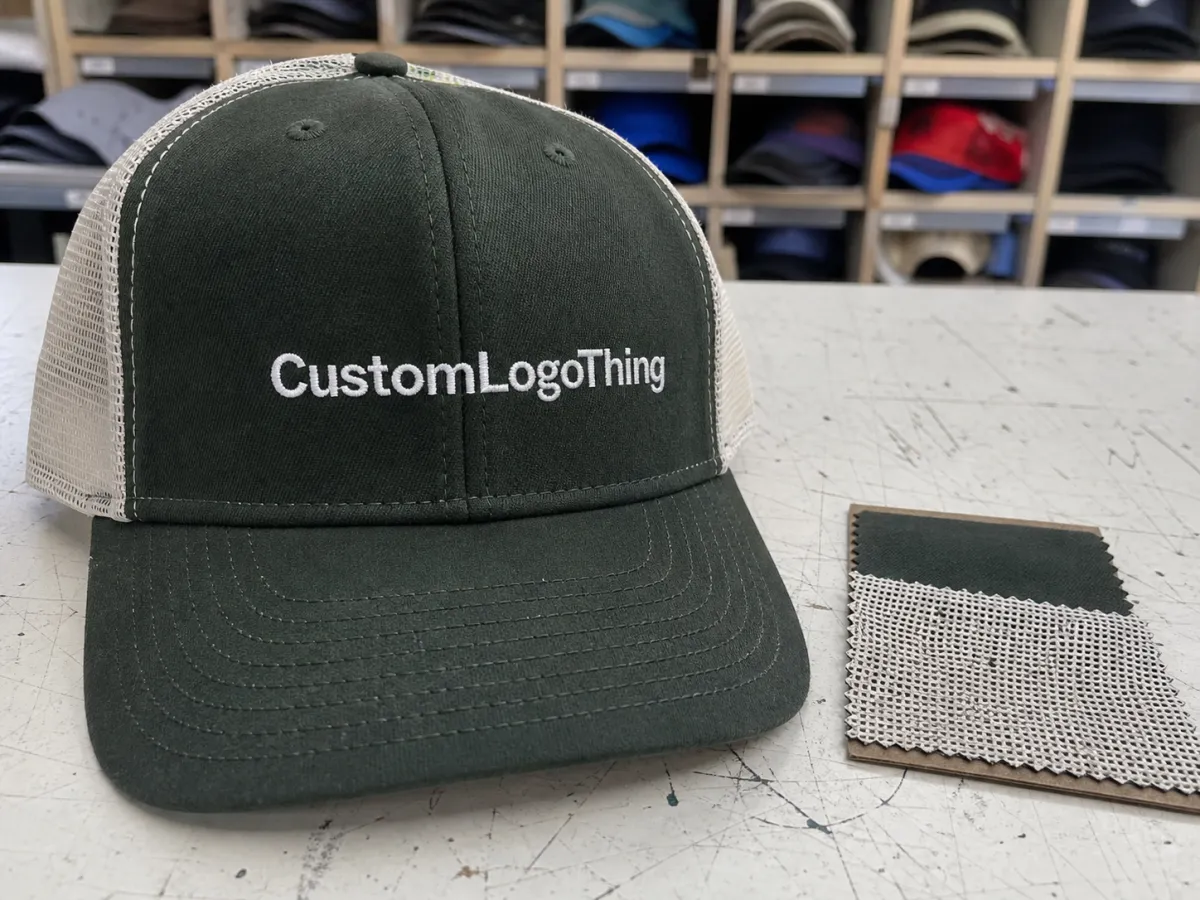
This book trucker Caps Material Sample guide exists for one reason: photos flatten the truth. A cap on a product page cannot show how rigid the front panel feels, how open the mesh actually is, or whether the sweatband scratches after an hour of wear. On screen, a foam-front trucker and a structured cotton twill trucker can look close enough to substitute. In hand, they rarely are.
The first thing a sample reveals is silhouette. A 5-panel cap with a tall crown creates a very different profile than a lower, 6-panel build. Then comes the front structure. A 3 mm foam front reads casual and light; a firmer front panel can hold embroidery better and look more premium, especially if the logo is centered and the bill keeps its curve. One weak material choice can push the whole cap toward giveaway territory, even if the artwork itself is strong.
Comfort is the other half of the story. Buyers often focus on color and forget that the cap sits on a head for hours, not on a shelf for display. Mesh openness, seam placement, and the inside sweatband determine whether the cap feels breathable or hot. That is why a sample review should always include a wear test, not just a visual inspection.
“If the sample only works in a photo, it is not a yes yet.”
That rule sounds blunt, but it saves money. The cap that passes a screen review can still fail the practical test if the crown sits too shallow, the closure looks cheap, or the mesh has too much bounce. In practice, the sample is not about proving perfection. It is about finding the limit before you place the order.
There is one more reason to treat the sample seriously: trucker caps are sensitive to small manufacturing changes. A slight shift in foam thickness, a different thread count, or a looser stitch line can change the way the cap sits on the head. For that reason, a sample is not only a product check. It is also a production reality check.
How the Sample Approval Process Works
The typical flow is simple, but the details matter. Start by identifying the cap style, the front panel construction, and the closure you want. Then ask whether the quote is based on stock components, custom-dyed fabric, or a fully built preproduction sample. Those three paths do not behave the same way on pricing or timing.
Stock materials are faster and usually cheaper, but they limit color control. Custom dyeing gives more precision, though it can extend lead time and raise the MOQ. A full preproduction sample is the closest version to the bulk order, but it takes longer because the supplier has to build the cap as it will actually be produced. That distinction matters more than many buyers realize.
Once the sample arrives, review it under real conditions. Daylight shows color shifts better than office light. Indoor lighting helps you judge sheen and print contrast. Then do a wear test: put it on, move around, and check whether the crown shape stays clean after a few minutes of motion. If the cap is for staff or outdoor use, make sure the sweatband feels smooth and the closure can be adjusted without snagging.
Feedback should be specific, not noisy. Mark the front panel, mesh, bill, logo placement, and closure separately. If the supplier needs a revision, request only the changes that are actually necessary. A clean approval loop is faster than a long chat thread, and it usually gets you closer to the final spec with fewer misunderstandings.
The best approval process ties every note to one version of the sample. That means one spec sheet, one marked-up photo set, and one final decision owner. Anything looser than that invites drift, and drift is expensive. A cap order can fall apart over a 5 mm logo shift, a swapped closure, or a color reference that was never locked.
Material, Mesh, and Structure Choices That Matter Most
Most buyers will see the same broad menu: foam fronts, cotton twill, polyester blends, and different mesh densities. The right choice depends on use, not just taste. Foam fronts are common for event merch because they are light and easy to decorate. Cotton twill feels more grounded and often reads more retail. Polyester blends can improve consistency and wear resistance, which matters if the caps will see repeated use.
Mesh is its own decision, and it is easy to underestimate. Tighter mesh can look cleaner and hold shape better, while looser mesh breathes more but may feel less refined. If the cap is meant for hot weather or outdoor work, breathability matters more than a perfectly polished rear panel. If the cap is going into a retail display, the finish and uniformity of the mesh may carry more weight.
Structure matters just as much. A low-profile crown sits closer to the head and can feel more modern, while a mid-profile crown gives the logo more room. Flat bills look sharper on some designs; slightly curved bills feel more familiar and often suit broader use cases. Front-panel stiffness also changes how embroidery lands. Too soft, and stitches can pucker. Too rigid, and the cap may feel promotional rather than premium.
There are practical durability checks too. Ask how the fabric handles colorfastness, seam wear, and sweat exposure. Ask whether the supplier expects direct embroidery, a woven patch, or heat-applied decoration. A patch can hide some material quirks; embroidery makes them more obvious. That is not always a problem, but it should be clear before production starts.
For a buyer, the use case should lead the decision:
- Event giveaways: prioritize light weight, lower unit cost, and fast production.
- Retail resale: prioritize structure, finish, color consistency, and front-panel shape.
- Staff uniforms: prioritize comfort, sweat control, and closure durability.
- Outdoor wear: prioritize breathability, UV-friendly colors, and stronger seam construction.
If the sample kit is shipped separately, the packaging can reveal as much as the cap. Buyers often notice whether the supplier uses recycled inserts, FSC certified mailers, or simple protective sleeves. That does not prove the cap quality, but it does signal whether the supplier treats presentation and transit as part of the product. Poor packaging can also hide damage, so it is worth checking before the sample is judged.
There is another practical detail worth watching: the inside finish. Cheap binding tape, scratchy labels, or uneven sweatbands often show up only when the cap is worn. Those items are easy to dismiss during a quick desk review, yet they are the same parts that influence repeat wear and customer satisfaction.
Cost, Pricing, MOQ, and Quote Drivers to Compare
Price is shaped by more than fabric choice, even though fabric is usually the first driver. Number of panels, mesh type, decoration method, closure, and whether the sample uses stock parts or custom-built components all move the quote. On a sample, shipping and revision cycles can matter almost as much as the unit price itself.
MOQ, or minimum order quantity, is the point where the economics start to work for the supplier. A lower per-unit price often comes with a higher commitment. That is the trade-off buyers miss most often: the cheapest line item can still require a larger order than the team planned for, especially if the cap needs custom dyeing, specialty patches, or a unique closure.
| Option | Typical unit price at 5,000 pcs | MOQ tendency | Sample complexity | Best fit |
|---|---|---|---|---|
| Stock foam-front trucker | $1.35-$2.10 | 100-300 | Lower | Giveaways, promo events, fast-turn campaigns |
| Cotton twill front with mesh back | $2.10-$3.75 | 300-500 | Medium | Staff wear, merch programs, balanced value |
| Premium structured retail cap | $3.75-$6.50 | 500-1,000+ | Higher | Retail resale, brand launches, premium kits |
Look beyond the unit price and ask about the hidden lines. Embroidery digitizing can add $25-$75. Patch tooling can run $50-$150 depending on complexity. Rush production often adds 15%-30%. Freight may look small on paper, but it can swing the landed cost more than the supplier quote does. Revisions after approval are another quiet cost center, especially if the artwork changes late.
That is why quote comparison needs a full landed-cost view. A slightly higher sample or unit price can still be the better deal if it reduces revision rounds, lowers defect risk, or shortens the time to approval. In practice, the least expensive quote is often only the cheapest before the real work begins.
For standards-minded buyers, this is also where packaging thinking helps. If a sample cap will travel through multiple hands before approval, think about transit the way packaging teams think about abuse in shipping. The sample is not fragile in the same way a carton is fragile, but the same discipline applies. The International Safe Transit Association has background on this kind of testing at ISTA.
Production Timeline, Lead Time, and Turnaround Checks
Lead time usually expands in the same places every time. The first delay is material confirmation. The second is sample making. The third is feedback. The fourth is revision. Then final production starts, and after that comes shipping. If any one of those steps is unclear, the schedule begins to stretch.
A realistic timeline often looks like this: 2-4 business days for stock swatches, 5-10 business days for a preproduction sample, 3-7 business days for a revision, and 12-25 business days for the bulk run after approval. Freight adds its own clock. Domestic delivery might be a few days; international transit can be much longer. Those ranges are not fixed, but they are useful enough to plan around.
The biggest lead-time killer is an unfrozen spec. If the supplier has to swap materials, rework the logo placement, or wait for three different people to sign off, the calendar gets longer fast. One organized round of feedback is far better than five scattered messages that reopen the same decision. Clear approval does more for turnaround than constant checking ever will.
Seasonal and event-driven orders need even more buffer. A product meant for a trade show, retail drop, or team launch should account for sample transit, a possible second round, and the final production queue. A week can disappear without warning. A month can disappear if the artwork is still moving. Buyers who plan for that variability usually avoid emergency freight, which is one of the fastest ways to erase margin.
There is also a practical scheduling trap: some factories can make samples quickly, but only by using substitute materials that are close rather than exact. That can be acceptable for fit and shape checks, but not for final sign-off. If the sample is only a placeholder, the buyer should know exactly which parts are temporary and which parts match the bulk order.
Step-by-Step: Review a Sample Kit Like a Buyer
If you want the sample review to be useful, make it repeatable. Same lighting, same people, same checklist. That sounds simple, but it is the difference between a team reaction and an actual decision.
- Unpack carefully. Confirm every piece that arrived, including swatches, closure options, inserts, and any revised artwork.
- Check the match. Compare the sample to the quote and the spec sheet. Make sure the colorway, panel count, and logo method line up.
- Inspect layer by layer. Look at the outer fabric, mesh, stitching, sweatband, label placement, and closure hardware one by one.
- Test the fit. Wear the cap for at least 15-30 minutes and note comfort, heat buildup, and whether the crown keeps its shape.
- Review from multiple angles. Front, side, and back views matter because trucker caps can look balanced from one angle and off from another.
- Record the verdict. Write pass-fail notes, name the required revision if there is one, and identify the final approval owner.
A simple scorecard helps. Rate comfort, structure, breathability, logo placement, and closure quality on the same 1-5 scale. That makes the comparison less emotional and more usable. If every sample gets judged against the same standard, the final choice gets a lot clearer.
One more point: do not approve the front and ignore the back. On trucker caps, the mesh and closure carry a surprising amount of the customer’s perception. If the front is strong but the back feels cheap, the whole cap reads cheaper than the logo suggests. The reverse is also true: a good closure and clean mesh can improve the overall impression even when the front artwork is fairly simple.
For teams handling multiple cap options, a marked-up comparison sheet is usually better than a loose comment thread. Notes stay connected to a physical sample, disagreements are easier to resolve, and production changes are less likely to be misunderstood. That kind of discipline does not take long, but it prevents a lot of avoidable rework.
Common Mistakes That Lead to the Wrong Cap Order
The biggest mistake is choosing by photo alone. Cap photography can hide crown depth, mesh softness, and how the bill actually sits. The second mistake is skipping a side-by-side comparison when multiple materials or closures are on the table. That is how teams end up approving the wrong feel because they liked the first sample they touched.
Another common error is approving the look but not the wear. A cap can photograph well and still fail in use if it is too hot, too stiff, or too shallow. That problem shows up most often on orders meant for employees or outdoor crews, where comfort matters as much as branding. If the cap feels tiring after half an hour, the logo will not rescue it.
Vague feedback causes trouble too. “Make it better” is not a production note. Neither is “looks off.” If the logo needs to move 5 mm, say so. If the closure should be switched from plastic snapback to metal buckle, say that before the order is locked. Missing measurements and no final sign-off record are what turn a correct product into the wrong product.
There is also a quieter mistake: underestimating the packaging around the sample itself. If the kit arrives bent, crushed, or poorly labeled, it can distort the team’s judgment before anyone even tries the cap on. Strong packaging habits do not guarantee a strong cap, but weak packaging often hides weak process. When sample presentation is sloppy, buyers should treat the rest of the order with caution.
Finally, some teams ask for too much customization too early. A custom patch, a custom color, a special closure, and a unique sweatband all added at once can make it hard to identify the real source of a problem. Sampling works best when the first pass isolates the major variables. Once the base cap is approved, the fine-tuning becomes much easier.
Expert Tips and Next Steps Before You Place the Order
The smartest move is to ask for one comparison sheet that puts material, closure, decoration method, MOQ, pricing, and lead time in the same view. That single page makes the trade-offs visible without forcing you to scroll through emails or chase scattered PDFs.
Rank the options by use case first and aesthetics second. The right cap for a trade-show crew is not always the right cap for retail resale, and the right cap for a summer event may not be right for year-round staff wear. That sounds obvious, but teams still get pulled toward the best-looking sample instead of the most functional one.
Before production starts, lock the logo placement, color references, and approval deadline. If those three items are still moving, the order will stall midstream. Also make sure the person approving the final sample has the authority to approve it. That saves everyone from the last-minute extra-review loop that often creates avoidable delays.
There is one more discipline worth keeping: separate preference from requirement. A buyer may prefer a flatter bill or a darker mesh, but if those are not part of the spec, they should not be treated as defects. Clear specs make sample review faster and reduce the chance of backtracking after production begins.
Collect the samples, score them against the same checklist, compare the quotes with full landed cost in mind, and choose the cap that fits the actual use case. That is the point of a book trucker Caps Material Sample guide: not to make the decision harder, but to make it clearer before a bulk run is committed.
FAQ
What should a book trucker caps material sample guide include?
It should show the main fabric options, mesh styles, closure types, and any decoration methods tied to the final order. A useful guide also explains how to compare fit, structure, breathability, and sample cost before approval.
How do I compare trucker cap materials for comfort and durability?
Check crown stiffness, mesh softness, sweatband feel, and how the cap holds shape after wearing it for several hours. Use the same lighting and the same wear test for every sample so the comparison stays consistent.
What affects trucker cap sample pricing the most?
Material choice, decoration method, setup work, and shipping usually drive the biggest price differences. Rush requests, revisions, and low-volume orders can also raise the effective sample cost.
How long does the trucker cap sample process usually take?
Timing depends on whether the supplier has stock materials, how many revisions are needed, and how quickly feedback is returned. Build extra time into the schedule for sample transit, approval loops, and final production queue placement.
Can a sample guide help me choose MOQ and production method?
Yes, because it shows which options are standard, which require tooling, and which likely need a higher minimum order quantity. It also helps you match the production method to the budget, timeline, and expected wear conditions.


