Wine Club Shipping Envelopes Cost: Buyer’s Order Guide
For most wine club programs, wine club shipping envelopes cost looks simple on the quote sheet and a lot more complicated everywhere else. The unit price matters, sure, but once you account for board weight, insert design, print coverage, freight, and damage risk, the cheapest line item is often not the lowest true cost. A well-built envelope has to protect glass in transit, pack quickly on the line, and stay consistent from one recurring shipment to the next, or those savings get swallowed by returns, replacements, and customer service headaches.
Smart buyers treat wine club shipping envelopes cost as a packaging decision, not a trend piece. The right structure supports order fulfillment, keeps ecommerce shipping predictable, and protects margins by reducing waste. If the club ships every month, the envelope also has to fit the production rhythm of the warehouse, because a packer who fights a tight closure or a flimsy panel slows the line and drives up the real unit cost. That part is kinda easy to miss until the first run is already underway.
Wine Club Shipping Envelopes Cost: What Buyers Miss First
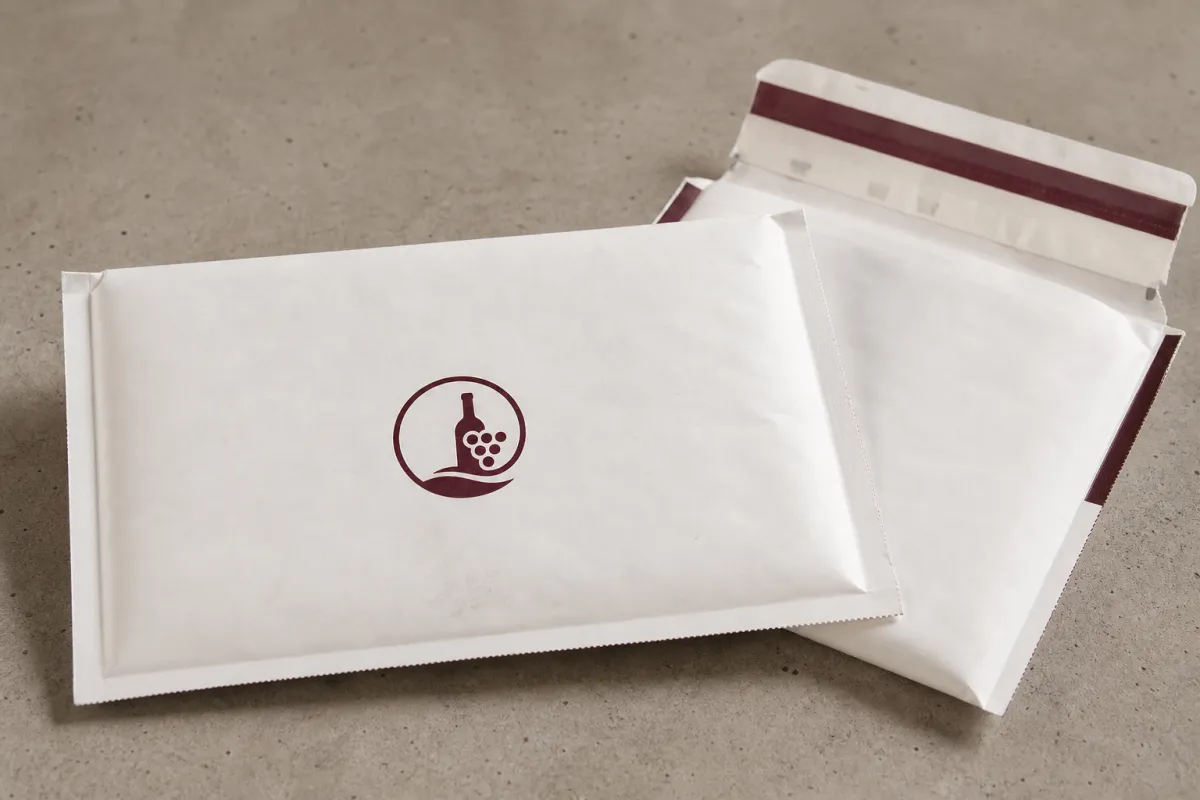
The first mistake I see is treating wine club shipping envelopes cost as a unit price question and nothing else. That misses how packaging behaves in the real world. The true cost sits at the intersection of material grade, structure, closure style, freight class, and how the package performs once bottles start moving through the carrier network. A lighter envelope may look attractive on paper, but if the panel flexes too easily or the insert does not hold the bottle steady, the club pays for that decision later in breakage, reshipments, and member recovery.
From a packaging buyer’s point of view, the right envelope has three jobs. It must protect the glass, pack fast, and look consistent across every club cycle. That sounds straightforward, yet each of those requirements pulls on the budget in a different way. A thicker board improves crush resistance, but it can raise the sell price. Better print coverage improves brand presentation, but it also adds ink, press time, and sometimes a higher MOQ. Stronger closures can reduce transit failures, but a more complex build may require more labor to assemble.
That is why wine club shipping envelopes cost cannot be judged from one quote alone. Buyers need to ask whether the package is designed for the actual bottle geometry, whether the shipping materials are efficient for the line, and whether the structure holds up after the parcel is stacked, dropped, and sorted. A package that looks inexpensive because it is underbuilt is not really inexpensive. It is deferred expense, and it usually shows up later in a less pleasant form.
Recurring shipment volume changes the economics more than many teams expect. A one-off promotional mailer can tolerate a little extra handwork. A club that ships every month cannot. If the envelope takes an extra five seconds to assemble, that labor cost multiplies quickly across thousands of units. The same is true for dimensional weight. A product that seems small may still trigger a higher shipping charge if the outer footprint is oversized for no good reason.
"If the envelope saves two cents but costs us one damaged bottle per case, it is not cheaper."
That is the practical lens. A smart buying team wants a package that protects the bottle, supports the fulfillment rhythm, and keeps the wine club shipping envelopes cost stable as volume grows. The rest of this guide breaks down the variables so you can quote with fewer surprises and a cleaner landed-cost picture.
Wine Club Shipping Envelopes Cost by Material and Build
Material choice is usually the biggest driver behind wine club shipping envelopes cost. Paperboard, corrugated mailers, and reinforced envelope-style packs all solve the same basic problem in different ways, and each one carries a different cost structure. The right answer depends on bottle count, brand positioning, shipping distance, and how much abuse the package is likely to see in transit packaging.
For lighter single-bottle shipments, rigid paperboard or reinforced board can work well if the bottle is supported correctly and the closure holds firm. For clubs that need more package protection, microflute or E-flute corrugated structures usually add stiffness without becoming too bulky. If the design needs premium shelf presence, higher caliper board with crisp print quality may be worth the added cost. If freight is a major concern, a lighter build can reduce dimensional weight and lower the total shipping bill.
| Build | Typical Unit Cost at 5,000 Units | Protection Level | Best Use | Main Tradeoff |
|---|---|---|---|---|
| Paperboard envelope with insert | $0.22-$0.38 | Moderate | Single-bottle club mailings with controlled handling | Lower crush resistance than corrugated |
| E-flute corrugated envelope | $0.32-$0.58 | Good | Recurring club shipments and broader carrier exposure | Slightly higher freight due to thickness |
| Reinforced premium envelope | $0.45-$0.85 | High | Upscale programs, stronger branding, tougher routes | Higher print and tooling cost |
| Multi-bottle envelope style pack | $0.60-$1.10 | High | Two-bottle or accessory-inclusive club sets | More board, more freight, more assembly time |
Those ranges are not fixed. They shift with quantity, artwork, and structural detail. Still, they give buyers a realistic starting point when comparing wine club shipping envelopes cost across vendors. A quoted unit price below the range is not automatically a better deal if the package arrives weak, warps under humidity, or needs extra tape to survive the route.
One of the biggest build decisions is whether the envelope is meant to function as primary transit packaging or as a secondary carrier inside a master carton. If the envelope is carrying the bottle on its own, the board and closure need to do more work. If it is nested inside a shipping box, the structure can sometimes be lighter. That distinction matters because it changes both material usage and labor. It also changes freight, since a heavier build can raise parcel rates while a larger outer box can increase dimensional weight even if the envelope itself is compact.
For wine clubs that want a more branded presentation, print and coating choices can make a noticeable difference. A matte aqueous finish reads clean and modern, while a semi-gloss surface often deepens color and protects the artwork. Full-coverage graphics usually increase wine club shipping envelopes cost more than a simple one-color mark, but they also strengthen shelf appeal and help the package feel intentional. The cost increase is usually easier to justify when the envelope is customer-facing and not just a hidden shipping vessel.
Recyclability also matters. Many buyers prefer fiber-based shipping materials that can be flattened and recycled after use, especially when they want to align with sustainable packaging goals. If fiber sourcing is part of your brief, it is worth checking whether the board carries FSC chain-of-custody certification or another verified sourcing claim. The FSC program is a useful reference point for that discussion, and it can help procurement teams separate a marketing claim from a documented paper supply.
For teams that are still deciding between envelope styles and other formats, it often helps to compare the structure against other packaging families. A lighter envelope may be the right answer for one bottle, while a more protective mailer or carton may be better for longer routes. If you are comparing formats, browse Custom Packaging Products, then look at Custom Shipping Boxes and Custom Poly Mailers to see how different shipping materials affect cost, branding, and package protection.
In practice, the best build is the one that matches the club’s real shipping pattern instead of a theoretical one. A high-end structure that is over-specified for short-zone delivery can waste money. A lighter build that saves a few cents but damages bottles on long lanes is even more expensive. That is the central tension behind wine club shipping envelopes cost: the material choice has to respect the route, the bottle, and the pace of the line.
Sizing, Protection, and Print Specifications
Size drives wine club shipping envelopes cost more than many first-time buyers expect. A bottle does not just need enough room to fit. It needs clearance for the neck, shoulder, and closure area, plus enough internal stability that the package does not crush the glass or allow movement during handling. If the bottle is larger than average, the footprint grows fast, and so does the material usage.
Start with the real bottle dimensions, not a rounded estimate from a catalog page. Measure the diameter at the widest point, the total height, and the shoulder profile. A tall Burgundy bottle behaves differently from a standard Bordeaux shape, and a heavier sparkling bottle can require a more durable closure and stronger panel support. If the wine club ships accessories such as tasting notes, corkscrews, or a membership insert, the envelope needs to account for that space too.
Package protection is the next variable. Buyers should verify how the bottle is restrained, whether there is cushioning at the end panels, and whether the design resists edge crush. If the envelope uses folds or locking tabs, the crease strength matters because repeated packout can wear down weak scores. Tamper resistance may also matter if the club wants the customer to receive a clean, intact presentation with a closure that stays shut through sorting and delivery.
For print specifications, decide early how much of the surface will carry branding. A simple logo mark is easier to produce than heavy ink coverage with photographic art, and that difference shows up in wine club shipping envelopes cost. CMYK graphics, spot colors, and flood coats all affect prepress time and ink usage. If the surface needs a matte look for a premium feel, that can change the coating selection and the dry time. Semi-gloss can be more forgiving for rich color, while matte can hide handling marks better on a club piece that sees frequent touch points.
Structural testing helps keep the quote honest. A sample that looks attractive on a desk may behave differently once a bottle is packed, the envelope is stacked, and the parcel is moved across conveyors. Many buyers ask for a dieline review and a physical prototype before they commit. That is good practice. It helps catch issues like loose fit, over-tight folds, weak glue areas, or a closure that opens under stress. If the wine club has recurring shipments, the sample stage is especially valuable because a small design change can echo through every future order.
For transit validation, many teams borrow methods from the broader packaging industry. The ISTA test families are a good reference if you want to talk about drop, vibration, and compression in a more disciplined way. That does not mean every order needs a full lab program, but it does mean the buyer should not approve a structure on appearance alone. A package that passes a simple drop test in-house gives you more confidence than one that only looks good on the render.
Print and structure are linked more tightly than people sometimes expect. Heavy coverage on a weak board can expose warp or show-through, while a stronger substrate can support more artwork without losing panel integrity. If the envelope needs a premium matte finish, the board surface and coating should be chosen together. If the branding is minimal, you may be able to keep wine club shipping envelopes cost under control without sacrificing presentation.
One practical rule keeps reorders out of trouble: do not let a bottle change slip into the project without rechecking the dieline. A slightly different neck height or diameter can turn an acceptable fit into a loose or overly tight packout. That is how a quote that looked right on Tuesday turns into a revised order on Friday. The fewer surprises at this stage, the more stable the final unit cost will be, and the calmer the production team will be too.
Wine Club Shipping Envelopes Cost, MOQ, and Quote Drivers
MOQ is one of the clearest ways to understand wine club shipping envelopes cost. Smaller quantities nearly always carry a higher per-piece price because setup, tooling, and press time are spread across fewer units. If the project requires custom sizing, a new die, or special finishing, the minimum order quantity can move up quickly. For a simple structure, a pilot order might start around 3,000 to 5,000 units. More customized builds often land closer to 7,500 or 10,000 units before the price per piece gets meaningfully efficient.
The main quote drivers are consistent across most programs:
- Material grade - board weight, flute type, recycled content, and coating.
- Print complexity - one color, two color, CMYK, flood coverage, or specialty ink.
- Tooling - custom die-cut shapes, scores, and folds.
- Quantity breaks - how the unit cost falls as the run grows.
- Freight destination - shipping zone, pallet count, and whether the order triggers dimensional weight pressure.
Buyers often compare quotes on headline unit cost alone, and that is where mistakes start. A vendor may show a lower per-piece price, but if the freight is higher, the samples are extra, or the lead time is longer, the landed cost can come out worse. A better way is to compare the total cost to receive, store, and use the envelopes. That includes packaging samples, proofs, any special finishing, and the labor tied to assembly. If one envelope packs faster, the difference may be more valuable than a small price gap on the invoice.
Think of it this way. wine club shipping envelopes cost has two parts: what you pay to buy them and what you pay to run them. A structure that saves two cents but takes more time to assemble is not free. In a busy order fulfillment environment, even a few seconds per unit can affect the day’s output. If the club ships in waves, that time savings can be worth more than the print upgrade that created it.
Some buyers ask whether a pilot order is worth the higher unit cost. Usually, yes, if the club is launching a new format or changing bottle profiles. A smaller first run lets you validate fit, closure strength, and customer presentation before you commit to a larger buy. The pilot also protects against over-ordering if the final design changes after the first mailing cycle. That is especially useful for ecommerce shipping programs where the team is still refining packout behavior.
Here is a useful way to request apples-to-apples pricing from vendors:
- Provide exact bottle dimensions and quantity count.
- State the target monthly or quarterly volume.
- Specify one color, CMYK, or full-coverage print.
- Ask whether tooling is included or billed separately.
- Request freight terms and sample costs on the same sheet.
- Ask for the price at two or three quantity levels so you can see the break points.
That kind of brief makes wine club shipping envelopes cost easier to compare fairly. It also reduces the back-and-forth that can slow down procurement. If the quote team knows the bottle shape, the closure style, the artwork area, and the launch date, they can usually give a cleaner answer the first time.
For most buyers, a useful comparison is not “Which quote is lowest?” It is “Which quote gives the right fit, the right protection, and the best landed cost for the club’s actual shipping pattern?” That is a better question because it reflects reality. The cheapest unit cost can still be expensive if it causes product loss, while a slightly higher unit cost can be the better business decision if it lowers returns and keeps club members happy.
Process, Timeline, and Production Steps
Once the specification is set, the production path for wine club shipping envelopes cost becomes much easier to manage. Most projects move through brief review, dieline development, proof approval, sampling, production, and shipment. Each stage matters because a delay in one step usually pushes the next. Buyers who understand that chain can plan launches more confidently and avoid rush charges that inflate the final cost.
The brief should include the bottle dimensions, the desired quantity, the print method, and any coating or finishing requirements. After that, the dieline should be checked carefully. This is where the package size, fold lines, closure area, and artwork placement get confirmed. If the wine club needs a prototype, that sample stage can surface issues before production starts. It is far cheaper to fix a fold or insert detail on a sample than on 10,000 finished units.
Lead time usually expands in a few predictable places. Custom sizing adds setup. Artwork revisions add proofing time. Color matching can add another round of review. If the plant is entering a busy season, available press slots can be tighter. Standard custom orders often move in about 12 to 18 business days after final approval, although more complex structures may take longer. Rush programs are possible in some cases, but they usually raise wine club shipping envelopes cost and reduce flexibility on finish or freight timing.
Good production control is mostly about checkpoints. A team that confirms the final quantity early, signs off on the proof without late changes, and approves the sample on time will usually keep the project on track. The opposite pattern creates delays: a late bottle change, a new logo file, a revised closure, or a shipping destination change. Each one can force a rework. That is why the cleanest projects are the ones where the internal stakeholders agree on the spec before purchasing starts.
For clubs with fixed mailing windows, timing discipline is especially important. If the first shipment date is locked, the packaging must land before the warehouse starts staging. Otherwise, the team may resort to temporary materials or a substitute carton, which often costs more and performs worse. In that case, the apparent savings from a lower quote disappear quickly. Planning for a small cushion in the schedule is usually the safer move.
The best teams connect packaging timing with operations, not just with procurement. If the order fulfillment calendar has peak weeks, the packaging must arrive early enough to be received, counted, and staged before the assembly crew needs it. That is how the envelope stops being a procurement line and becomes part of the shipping workflow. When that happens, wine club shipping envelopes cost is judged correctly, because the full business impact is visible.
For buyers who want a more formal standard reference, the packaging community at packaging.org is a useful place to cross-check terminology and industry context. It is not a substitute for a supplier quote, but it does help teams speak the same language when they discuss board, structure, and end-use performance.
Why Custom Logo Things Fits Wine Club Programs
Custom Logo Things is a practical partner for buyers who want packaging that fits the product instead of forcing the product to fit the package. For wine clubs, that matters. Repeating the same shipment every month or quarter leaves very little room for guesswork, so the packaging has to be repeatable, easy to spec, and dependable at scale. That is where a manufacturer with a factory-minded approach can help keep wine club shipping envelopes cost under control.
The value is not just in printing a logo. It is in Choosing the Right structure, the right board, and the right finish so the package packs cleanly and protects the bottle without excess material. A good packaging partner will look at the bottle dimensions, the shipment lane, and the brand goal, then recommend something that avoids overspending on an oversized or overbuilt envelope. That is a more useful conversation than just asking for the cheapest possible quote.
For wine club teams, consistency matters as much as price. A recurring mailing cycle cannot tolerate random shifts in fit, color, or closure strength. One batch that prints slightly differently can create complaints if the club relies on the package as part of the member experience. A stable spec reduces that risk and makes procurement easier the next time the order comes around. It also helps the warehouse team because they can pack faster when the envelope behaves the same way every time.
Clear communication around samples, proofing, and milestones is another reason buyers look for a supplier that understands recurring shipping. If the team needs to review a dieline, check a prototype, and lock the final spec before peak season, the supplier should be able to move through those steps without making the process feel opaque. That kind of clarity saves time, and time is part of the real unit cost.
If you are deciding between a bottle envelope and a different pack format, compare the use case. A club that needs high presentation value may want a custom envelope with print and a neat closure. A program that ships heavier assortments may be better served by a carton or a more protective structure. For lighter ecommerce shipping needs, a different format may even make more sense. That is why the product range matters: sometimes the right answer is not an envelope at all, but a better fit from the broader line of Custom Packaging Products.
Here is the honest version of the pitch: a good supplier should help you reduce waste, not just place an order. If the recommended design trims excess board, lowers freight, and packs faster, then wine club shipping envelopes cost comes down in a real business sense. The club protects the bottle, the warehouse stays efficient, and the customer receives a package that feels intentional rather than improvised.
Next Steps to Lock In Your Wine Club Shipping Envelopes Cost
If you want an accurate wine club shipping envelopes cost, the best next step is to gather the technical basics before you ask for a quote. Start with the bottle dimensions, target monthly volume, mailing zones, print artwork, and any special packout needs such as inserts or tasting notes. Once those details are in hand, a supplier can quote the right size and build instead of guessing around the edges.
Ask for a sample or prototype before final approval. That one step catches fit issues, closure problems, and appearance concerns early, while they are still cheap to fix. It also gives the warehouse team a chance to test how the envelope behaves on the packing line. If the structure is awkward to assemble, that will show up right away. If it holds the bottle securely and closes cleanly, you have a much better base for production.
It also helps to request pricing at more than one quantity level. A quote at 3,000 units and another at 10,000 units often shows how the MOQ changes the unit cost and freight picture. That comparison is especially useful if you are not sure whether to start with a pilot or go straight to a larger run. For many clubs, a pilot order is the safer path because it protects against late changes and limits inventory risk.
A simple decision path usually works best:
- Confirm the bottle size and packing format.
- Approve the build and print direction.
- Review the proof and sample together.
- Lock production timing with the mailing calendar.
- Place the order with enough cushion for launch.
That process keeps the buying cycle disciplined and helps keep wine club shipping envelopes cost from rising because of avoidable rush charges or late revisions. It also gives your team a clear reference point for future reorders, which is valuable in recurring club programs where the same package may come back quarter after quarter.
The most useful takeaway is simple: don’t buy the envelope first and think about the shipment later. Measure the bottle, define the lane, test the closure, and confirm the packout Before You Order. If you do that, the quote becomes far more trustworthy, and the final landed cost usually lands where you expected instead of drifting upward after the fact.
What affects wine club shipping envelopes cost the most?
Material grade, quantity, and print coverage usually move the price the most. Custom sizing, tooling, and special finishes can add setup cost or raise the unit price, while freight and packaging waste also affect the true landed cost.
How do I choose the right size for a wine club shipping envelope?
Start with the actual bottle diameter, height, and closure clearance. Decide whether the envelope needs to hold one bottle, multiple bottles, or an accessory insert, then ask for a sample or dieline so you can check fit before production.
What MOQ should I expect for custom wine club shipping envelopes?
MOQ depends on the build, print method, and whether tooling is required. Smaller runs usually cost more per unit, even when the design is simple, and a pilot quantity can reduce risk before a larger order if the club is still testing the format.
Are printed envelopes more expensive than plain versions?
Yes, but the price difference depends on print coverage and color count. A simple one-color mark is usually less expensive than full-coverage graphics, though print can add brand value without changing the structure when the envelope is customer-facing.
How long does production take after approval?
Timing depends on sampling, artwork approval, and current plant load. Standard orders move faster once the dieline and proof are signed off, while rush schedules are possible in some cases but often increase cost and reduce flexibility.


