Wine Club Recycled Poly Mailers Sample Guide for Buyers - this wine club Recycled Poly Mailers Material Sample guide helps teams compare recycled films before a subscription shipment hits condensation, pressure, and carrier scuffing.
Most buyers can spot a nice mailer on a screen. That part is easy. The real test starts when a chilled bottle sheds condensation, a packer moves fast, and a carrier adds friction, bend, and pressure for a few days straight.
Wine clubs live in that messy middle. They ship subscriptions, gift packs, seasonal releases, and replacement orders. A recycled poly mailer has to hold up across all of them, while still looking intentional. If the sample only looks good flat on a desk, it is not ready.
Wine Club Recycled Poly Mailers Material Sample Guide: What to Expect
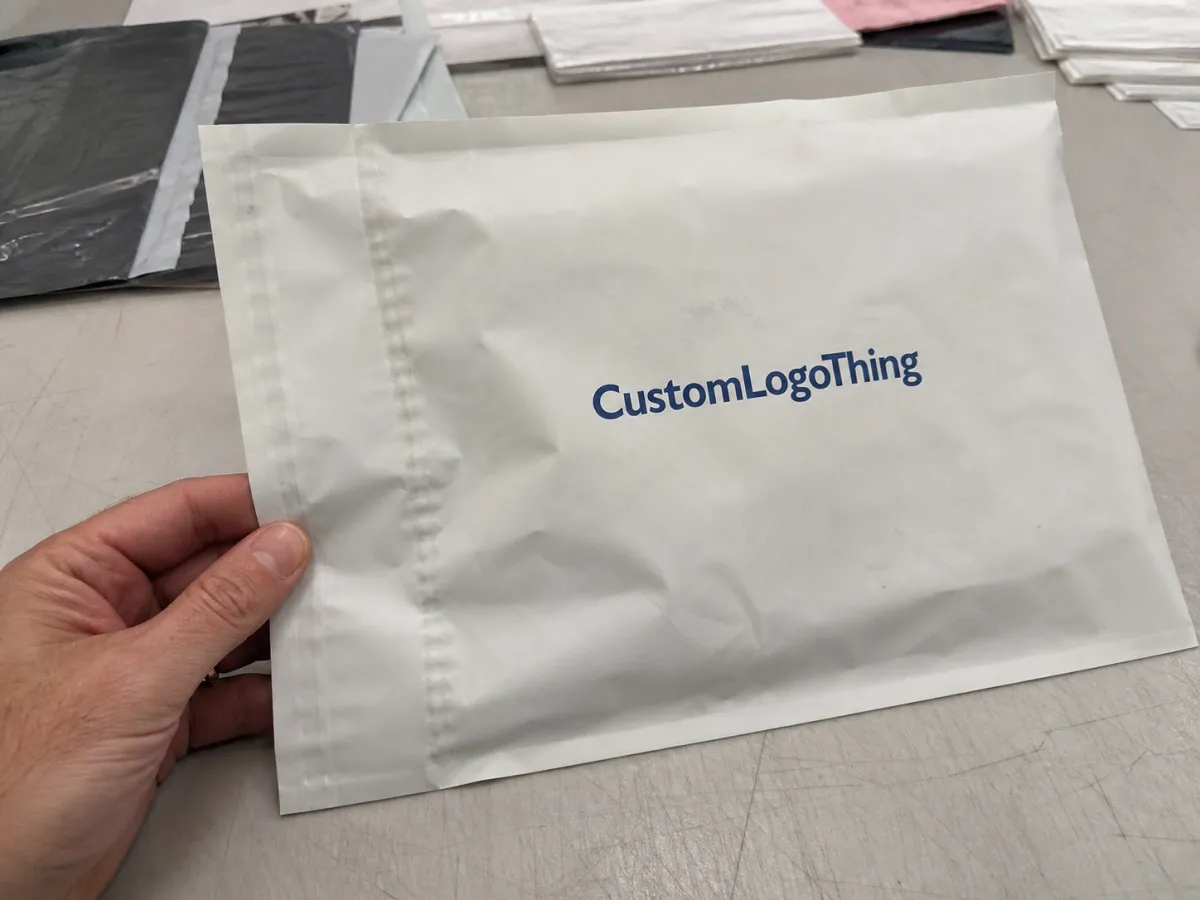
A material sample is not a souvenir. It is the shortest path to finding out whether the film, seal, print, and size actually work together. For wine clubs, that matters because packaging has to do two jobs at once: protect the shipment and reinforce the brand story without feeling overdesigned.
The sample should answer practical questions. Does the recycled film feel stiff or soft? Is the opacity high enough to hide the contents? Does the closure line grab cleanly? Does the print stay sharp after handling? If the club is using branded inserts, kraft paper, or corrugated secondary packaging, the mailer should sit comfortably beside those parts instead of fighting them visually.
"A mailer can look premium in a render and still fail once condensation and carrier handling show up."
That is why the sample should be reviewed as part of the full shipping system. A strong outer mailer cannot rescue a loose inner pack. A pretty finish cannot compensate for a weak seal. Buyers who treat the sample as a full-system check usually avoid the expensive surprises.
One more point that gets missed: recycled poly is not a generic green label. The actual material blend, surface texture, and print behavior vary by supplier and by source stream. Two samples can both claim recycled content and still behave differently on the line. That difference is not cosmetic. It changes packing speed, waste rate, and the number of do-overs.
How Recycled Poly Mailer Samples Are Tested
The cleanest review flow is straightforward. Request the sample, inspect it, load it with the real product, then compare it against the shipping conditions the wine club actually uses. An empty mailer is useful for one thing: checking basic film feel and print placement. It does not tell you much about seam behavior or how the pack settles once weight is added.
- Send exact specs: bottle dimensions, pack count, target recycled-content level, closure style, and print coverage.
- Check the sample in hand: thickness, surface feel, odor, opacity, and whether the recycled film shows haze or speckling.
- Load it with the real mix: the heaviest bottle configuration, a chilled insert, or the accessory kit the club ships most often.
- Run practical checks: shake it lightly, press the corners, check edge abrasion, and simulate a short carry or conveyor move.
- Compare samples side by side under the same light, then review them against the same packing process.
The loaded test matters more than the visual proof. Once the product is inside, weak seams, narrow seals, and awkward sizing show up quickly. A mailer that looks flat and smooth can wrinkle badly around a heavier bottle or a squared-off kit. That wrinkle is not just a style issue. It can slow pack-out and rub ink off in transit.
Print quality deserves the same attention. Recycled film can change ink laydown and color density. Some whites read softer. Some dark inks lose a little edge contrast. Buyers should ask for a proof on the actual film, not on paper or a generic mockup. A paper proof can hide dot gain, and dot gain is exactly the kind of small problem that turns into a fuzzy logo on the shelf.
There is also the smell check, which sounds minor until it is not. Good film should not carry a strong chemical odor. A faint plastic note is common. A sharp smell can signal storage issues, film inconsistency, or an additive problem that deserves a second look before production.
Key Factors That Change Protection and Print Quality
Three variables usually move the outcome first: film thickness, recycled-content ratio, and the structure of the closure. Buyers often focus on only one of them. That is how a decent-looking sample turns into a weak production run.
For lighter kits, a 60-80 micron film may be enough. Heavier packs or rougher carrier lanes usually need 90-120 micron. Thicker is not automatically better. Too much film can make the mailer harder to close cleanly and can add unnecessary cost. The right question is whether the gauge matches the weight, shape, and handling route.
Recycled-content ratio changes the surface more than many teams expect. A higher post-consumer blend can reduce gloss, shift opacity, or make certain inks read a little differently. That is not a defect by itself. It just means the artwork has to be tuned for the material instead of assuming virgin-film behavior. In some cases, the softer look actually fits the brand better because it feels more credible than a fake-polished finish.
Seal width and closure style are hidden failure points. A pressure-sensitive strip can work well, but only if the release liner peels cleanly and the adhesive band is wide enough for fast handling. Heat seals behave differently and need more process control. Zip closures give more flexibility, but they add cost and can create a bulkier edge. For most wine club shipments, a 10-15 mm seal gives a little more forgiveness than a narrow strip.
Print method matters too. Flexographic and digital printing do not behave the same way on recycled film. Flexo can be efficient for larger runs, but it needs stable ink density and a controlled plate setup. Digital is better for shorter, variable orders, but it can expose surface inconsistencies more clearly. If the club is comparing suppliers, ask each one to print on the same film spec. Otherwise the comparison is mostly noise.
Size fit sounds basic, then causes half the problems. A mailer that is too tight puts stress on seams and scuffs the print during insertion. A mailer that is too loose lets the contents slide, which creates abrasion and a sloppy unboxing. The right fit leaves enough room for efficient packing without turning the package into a bag of moving parts.
For chilled shipments, test after the package has had time to warm and cool again. Condensation changes friction. A surface that feels fine in a dry room can become slick or tacky after temperature swings. That is one of the more common reasons a sample passes at the desk and fails in a packing station.
Sample Process and Timeline From Request to Approval
The sample process is not complicated, but vague input slows everything down. Start by sending bottle dimensions, pack count, closure style, recycled-content goal, print coverage, and shipping method. If the supplier has to guess, the sample will be generic. Generic samples waste time.
Then the supplier decides whether the job can use stock film or needs a custom setup. Stock-film samples move faster and cost less. Custom sizing, special recycled blends, or a new artwork layout adds back-and-forth. That is normal. The mistake is pretending those steps can be compressed without tradeoffs.
- Digital proof: checks artwork placement, copy, barcode area, and overall layout before anything physical is made.
- Physical material sample: shows the real surface, color, opacity, and hand feel on the actual film.
- Loaded pack test: checks fit, closure strength, and movement under weight.
- Pre-production signoff: locks the spec sheet so the production run matches the approved sample.
Timelines depend on how much is already decided. If the artwork is final and the supplier has stock film on hand, a physical sample may ship in 3-5 business days. Add custom sizing or multiple print revisions and the window usually becomes 7-12 business days. If the team wants several finishes, gauges, or side-by-side supplier samples, two weeks is a more honest expectation.
Approval order matters. One sample with two finishes and two gauges is not one decision. It is four decisions, and each one can change cost or performance. Good teams separate the checks: first fit, then print, then closure, then shipping abuse. That keeps the conversation clear and cuts down on circular feedback.
The smartest question at this stage is simple: what exactly are we approving, and what happens if one variable changes later? A locked spec sheet is worth more than a nice-looking sample with no owner and no version control.
Cost, Pricing, and MOQ Tradeoffs for Wine Clubs
Unit cost is shaped by material gauge, recycled-content spec, print coverage, custom sizing, closure type, and order volume. MOQ matters because wine clubs do not always have predictable demand. A holiday-only program, a rotating membership base, or frequent label changes can make large inventories risky.
The cheapest sample is not always the cheapest program. A low-cost swatch can be enough to confirm color or hand feel, but it will not show pack-out speed or real shipping damage. I would rather see a structured sampling round than a rushed approval that leads to reprints or claims later.
| Option | Typical Cost | Lead Time | What It Shows |
|---|---|---|---|
| Stock-film swatch pack | $25-$60 | 2-5 business days | Color, hand feel, basic opacity |
| Custom material sample with print | $75-$180 | 7-12 business days | Logo sharpness, finish, closure look |
| Loaded pre-production sample | $120-$250 | 10-15 business days | Fit, seam strength, pack-out speed |
| Short-run pilot order | $0.18-$0.42/unit at 5,000 pcs | 12-20 business days | Real freight, labor, and damage risk |
Those ranges are typical, not fixed quotes. A 3,000-unit seasonal drop will price differently from a 20,000-unit renewal program. A single-color logo is not the same as high-coverage print. If the supplier can quote multiple volume tiers before final approval, that helps the buyer see the real cost curve instead of just the headline number.
For clubs comparing Custom Poly Mailers with other Custom Packaging Products, the right comparison includes the whole shipping stack. A stronger mailer paired with weak internal protection still creates damage. A slightly higher spec that reduces breakage, returns, or labor waste can be the cheaper choice over a full season.
Common Sample Mistakes That Lead to Reprints
The biggest mistake is judging the mailer empty. Recycled film can look crisp on a table and then wrinkle, stretch, or scuff once the product goes inside. That is why loaded testing is not optional if the package carries glass.
The second mistake is reviewing color under only one light source. Warehouse LEDs, daylight, and studio photography all change how a surface reads. A sample approved in cool light can look warmer in customer photos, and that difference can trigger complaints even when the print itself is fine.
The third mistake is skipping side-by-side comparisons. Without a direct comparison, small differences in finish, seal width, or print density are easy to miss. Line two samples up under the same light and with the same bottle load. The weaker one usually reveals itself fast.
The fourth mistake is ignoring the people who pack the orders. Operator feedback matters. If the mailer slows insertion by a few seconds per unit, that adds labor cost across the run. A sample that looks great but fights the pack line is a bad deal, even if the print is perfect.
There is also a category mistake that shows up a lot. Recycled poly is not biodegradable packaging. If the brand wants compostable claims, that is a different material and a different test plan. For this format, the conversation should stay centered on recycled-content film, post-consumer waste blend, and shipping performance. If the club’s outer cartons or inserts use corrugated cardboard or kraft paper, those parts can be FSC certified, but the film still needs to stand on its own.
Expert Tips for Final Approval and Next Steps
My preferred approval method is a scorecard. Rate durability, brand presentation, closure reliability, and pack-out speed on the same scale. It keeps the team focused on the actual decision instead of drifting into personal taste.
Then test the sample under the conditions most likely to break it: chilled bottles, condensation, tote-to-truck transfers, and the longest shipping lane the club expects to use. If it survives the gentle route but fails on the rough one, the gentle route is not the one that matters.
Borrowing discipline from ISTA packaging tests helps here. Even if the mailer is only one layer in the system, the same basic logic applies: pressure, vibration, drop, and abrasion all deserve attention before approval. If the outer shipper or paper components are FSC certified, keep that paperwork attached to the spec sheet so the whole program stays organized.
Document every approved detail. Film gauge, size, closure width, print placement, recycled-content target, and finish should all be written down. If the approved sample used a specific lot or finish, note that too. A lot of production issues start when a team assumes the supplier can recreate "the sample look" from memory. They cannot. Not reliably.
Finally, treat the sample as a working reference, not a trophy. A wine club package only performs well when the outer mailer fits the inserts, the bottle restraint works, and the branding stays consistent across the stack. Coordinated materials beat one standout component almost every time. That is the real purpose of a wine club Recycled Poly Mailers material sample guide: not to admire a sample, but to approve a spec that survives production and transit.
FAQs
What should I request in a wine club recycled poly mailers sample?
Ask for the exact size, closure style, recycled-content level, and print method you plan to order. Request a loaded test sample so you can check fit, seal strength, and scuff resistance with the real bottle weight or accessory pack you expect to ship.
How do I know if a recycled poly mailer is strong enough for wine shipments?
Test the mailer with the heaviest bottle configuration you expect to ship, not just a lightweight demo pack. Check seams, corners, and closure integrity after shaking, stacking, and short-distance carrier simulation.
Does recycled content change the look of the mailer?
Yes, recycled film can slightly affect color consistency, surface gloss, and print sharpness. A physical sample shows whether that variation supports your premium brand look or needs artwork adjustments.
What affects pricing the most for custom wine club mailers?
The biggest cost drivers are custom sizing, material thickness, print coverage, and order volume. MOQ and setup complexity also matter, especially when a club wants a short run or multiple seasonal versions.
How should I compare two material sample options?
Use the same bottle load, the same packing workflow, and the same lighting conditions for both samples. Score each one for protection, brand fit, packing speed, and total cost before choosing a final spec. If the scores are close, pick the version that is easier to pack and more consistent under warehouse light, then lock the spec sheet so the production run matches the approved sample.