Woven Labels for Retail Hats: Spec Fit, Cost, and Lead Time
On a retail hat, the label is often closer to the hand and eye than the logo. That makes woven labels for retail hats a small part with an outsized effect: they can raise perceived quality, or quietly drag it down before anyone checks the stitch count, the closure, or the fabric weight. The spec sheet usually looks simple. The shelf tells a more complicated story.
The best hat programs treat the label as a finishing component, not a leftover branding decision. The label has to follow the curve of the crown, survive handling, and look deliberate next to the patch, seam, or sweatband. If it looks tacked on, the hat reads as cheap even when the blank itself is decent.
Woven Labels for Retail Hats: What Buyers Notice First
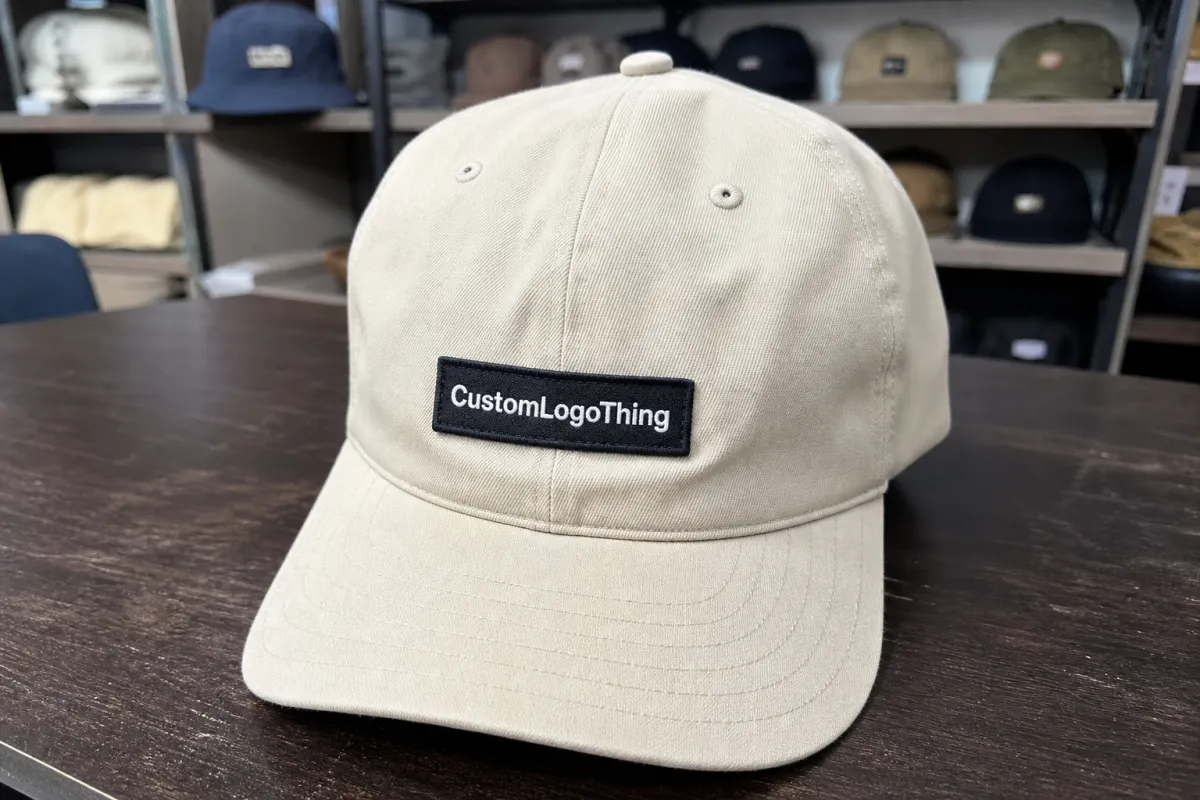
A woven label is built from threads rather than printed ink, so the design is formed into the fabric structure itself. That matters because the edge tends to stay cleaner, the color holds better under repeated handling, and the label feels more finished than a basic printed tag. For apparel tucked inside a seam, that difference can be subtle. For hats, it is visible.
Buyers usually notice texture first, then placement, then whether the label fits the style of the cap. A clean silhouette can still feel off if the label is too shiny, too wide, or stitched at a strange angle. I have seen a small woven label improve the perceived value of a hat more than a larger patch, mainly because it signaled control over the details. That signal matters in retail, where a customer may handle five nearly identical caps before deciding one is the safer buy.
The strongest labels do two jobs at once. They identify the brand, and they suggest that someone cared enough to specify the smallest visible component properly. That is not theater. It changes how the whole product is read. A folded cap on a shelf, a flat-brim style in a polybag, or a knit beanie clipped to a display hook all expose tiny finishing decisions. If the label looks consistent, the item feels more trustworthy.
The reverse is also true. A label that is technically legible but visually awkward can make the hat feel unfinished. On curved crowns, the eye catches small distortions fast. A label that is 2 or 3 mm off-center, or stitched with a thread color that competes with the art, may not look catastrophic in a mockup, but it will stand out on a rack.
A label that looks fine in artwork can fail once it meets a curved crown, a narrow seam allowance, or a rough handling pass in store.
If you are comparing formats, start with the hat itself. The right label for a structured cap is not automatically right for a soft dad hat or a knit cuff. For teams sorting through trim options, a broader reference point such as Custom Labels & Tags can help clarify which construction matches the product. The goal is not more branding. It is a cleaner product read.
How Woven Hat Labels Are Built and Attached
Construction drives most of the trade-offs. Woven labels can be made in different weave structures, and each one changes the crispness of the logo, the softness at the edge, and the amount of detail the artwork can hold. Damask is usually the go-to when the art has small lettering or thin linework. A looser weave may be fine for simpler marks, but it will not rescue a crowded design.
Satin tends to give a smoother surface and can look more polished in some applications, though the sheen may be less forgiving under bright retail lighting. That matters more than many buyers expect. Under warehouse light, almost anything can look acceptable. Under a store track light, the wrong finish can read glossy in a way that makes the label feel cheaper than it should.
Fold style matters just as much as weave. End fold, center fold, straight cut, and loop or hanger-style constructions all behave differently once they are sewn to a hat. A folded label usually sits cleaner against skin and is easier to install into a seam. A straight cut can work for exterior branding tabs, but it needs tighter stitch control so the edges do not flare. If the label will sit inside a sweatband, the fold and backing should be chosen with comfort in mind, not just with the artwork in view.
Attachment location should follow the hat structure, not the logo preference. Common placements include the center back, side seam, inside sweatband, and a small exterior tab near the closure. Curved panels often favor compact labels because wide pieces can pucker. Unstructured caps are less forgiving than they look; if the label is too stiff, the fabric can ripple around it. Knit cuffs and stretch materials need even more restraint because a label that holds shape too aggressively can fight the garment instead of sitting with it.
There is a practical rule here: if the hat silhouette is already doing a lot of the branding work, the label should stay quiet and precise. If the hat is competing in a crowded retail set, or the logo art is tiny, a tighter weave is worth the extra cost. That is especially true for woven labels for retail hats that carry fine lettering, multicolor fills, or icons that need to remain readable from arm’s length.
| Label Style | Best Use | Cost Pressure | Main Watchout |
|---|---|---|---|
| End fold | Seam insertion, exterior branding tabs | Moderate | Can flare if stitch line is loose |
| Center fold | Inside sweatband, hanging seam application | Moderate | Needs enough room to fold cleanly |
| Straight cut | Simple brand marks, trim-like tabs | Lower to moderate | Edge control and comfort matter more |
| Damask weave | Fine text, detailed logos, premium retail hats | Higher | Artwork must support the tighter construction |
It helps to think beyond the label alone. Packaging, hang tags, inserts, and folding style all influence how the hat reads at shelf. A good label can still get undermined by a rushed pack-out or a poorly controlled shipping process. That is where shipping-test discipline matters; the ISTA framework is useful when you want the finished product to survive transport without cosmetic damage. The label spec and the shipping spec are not the same thing, but they are linked.
Cost, Pricing, and MOQ: What Changes the Quote
Label pricing is usually a mix of setup, construction, and quantity. The biggest drivers are label size, color count, weave density, finishing style, and whether the design needs a standard shape or a custom cut. A small two-color mark is a simpler job than a dense multicolor logo with tiny type, and the difference shows up in both machine time and proofing.
Low minimums raise unit price because the setup cost is spread over fewer pieces. That is normal. On small runs, a simple woven label for hats may land around $0.18 to $0.35 per unit, while larger orders can fall closer to $0.05 to $0.12 before sewing, freight, and packaging are added. Those figures move with thread count, fold style, and the complexity of the artwork. If a quote comes in dramatically below that range, check what is being left out.
The trap is confusing unit price with landed cost. The label itself may be inexpensive, but sewing method, placement requirements, sorting by size, bagging, and freight can swing the budget. A label that arrives loose in cartons is not the same as a label sewn into every hat, folded to spec, and packed in retail-ready groups. Labor often costs more than the trim once the order enters production.
For quote comparison, a buyer should ask for the whole picture:
- Sample cost and whether it is credited back on bulk orders.
- Setup or programming charges for weave files and machine preparation.
- Unit price by quantity break, not one flat number.
- Sewing cost if the vendor applies labels to hats.
- Shipping, especially if comparing domestic and overseas fulfillment.
MOQ changes the math in a predictable way. A low-MOQ order gives more flexibility, but the per-piece cost tends to rise because the manufacturer cannot amortize setup over a large run. Larger programs get cheaper per unit, yet they come with more exposure if the artwork is wrong or the seasonal timing slips. That is why reorders often price differently from the first run: once the weave file and settings are locked, the production cost can fall, but the first run usually carries the sampling burden.
If the label is part of a broader trim package, source comparison becomes more useful than one-off pricing. Custom labels and tags are not just a design decision; they are a procurement decision. One vendor may look cheaper until sampling, sewing, and freight are added. Another may cost more at quote stage but save time by reducing handoffs and revision cycles.
Sourcing teams should also be careful with sustainability claims. If recycled content, responsible fiber sourcing, or paper-based packaging is part of the pitch, the documentation should support it. The FSC standard matters for paper-based components, and the same level of traceability should be expected anywhere a material claim influences the sale. Buyers are increasingly skeptical of vague green language, and for good reason.
Production Steps and Lead Time: From Artwork to Bulk Run
The production path is straightforward, but small mistakes at the start can add days or weeks later. It begins with vector artwork review. The manufacturer converts the design into a weave file, checks the color count, confirms the fold style, and prepares a proof or sample. Once approved, bulk weaving begins, followed by trimming, inspection, and final packing. If the labels are being sewn onto hats, that sewing step adds another scheduling layer.
Delays usually come from avoidable issues. Low-resolution art is a common one, especially when a logo has been enlarged from a small file. Tiny text that looked acceptable on a screen may fall apart in weave form. Missing Pantone references slow color matching. Revision churn is another classic. Once sampling starts, every change can mean another proof cycle, and the launch date starts slipping.
Lead time depends on order size, complexity, and how quickly approval moves. A simple order with clean artwork may take about 10 to 15 business days from proof approval to production completion. Larger or more complex orders often run closer to 15 to 25 business days, especially if the label spec includes special folds, multiple thread colors, or sewing onto finished hats. Rush production is possible, but it usually trades against price, revision tolerance, or packing flexibility.
A realistic schedule works backward from the launch date. If a trade show or seasonal ship window is fixed, allow time for artwork lock, sample review, production, freight, and inbound receiving. That is not pessimism; it is how hats actually move through the supply chain. A week lost during proofing is much easier to absorb than a week lost in transit.
For programs with strict launch timing, the label should be handled with the same discipline as the packaging schedule. Even if a formal test protocol is not required, many experienced buyers borrow from ASTM-style validation habits and ISTA shipping logic so the product survives the route to shelf without cosmetic damage. That approach is especially useful when woven labels for retail hats are tied to a release that cannot slip.
Placement, Sizing, and Stitching Mistakes That Hurt Sell-Through
The most common mistake is choosing a label that looks right in a flat mockup but behaves badly on a real hat. Curves change everything. So do fabric weight, seam structure, and crown depth. A wide label can bunch on a narrow seam. A dense label can feel stiff on an unstructured cap. A label that looks elegant in a render may curl once it is bent around a panel edge.
Size is a balance between visibility and comfort. Oversized labels can overwhelm the hat, scratch the skin, or interfere with the closure. Undersized labels can disappear in product photography and on shelf, which defeats the branding investment. A compact format often works best for retail hats, but the final call should follow the hat style rather than a generic template. A trucker cap, dad hat, and knit beanie all tolerate label footprint differently.
Stitching mistakes show up faster than many teams expect. Thread color that clashes with the label edge can make the whole piece look improvised. Uneven placement creates the impression of a rushed production line. Putting the label too close to a closure, seam, or existing brand patch creates visual competition, and then nothing feels clean. If the label lands near the forehead or another high-contact area, comfort complaints can follow, which is one reason lower-priced retail hats are returned more often than buyers anticipate.
Comfort is not separate from presentation. A hat that looks strong on a shelf but scratches after ten minutes will not stay strong for long. One scratchy seam can become a review. One crooked label can become a buyer complaint. That is why the finished sample matters more than the swatch. The swatch only proves the weave; the finished hat proves the fit.
Teams usually run into the same handful of errors:
- Choosing a label width that ignores the curve of the crown.
- Using too many colors for a tiny logo.
- Stitching through a section that should stay flexible.
- Ignoring how the label looks in retail photography.
- Skipping a wear test on the actual finished hat.
For woven labels for retail hats, the goal is simple: the label should support the product experience, not fight it. It should be noticed as quality, not as a problem.
Expert Tips and Next Steps for Your Hat Label Spec
Start with a short spec sheet. Finalize artwork, choose the fold style, define placement, set the label dimensions, and confirm quantity before requesting pricing. If those details are missing, quotes stop being comparable because each supplier is solving a different version of the same job. Two vendors can both say “woven label,” yet one may be quoting a 25 mm center fold and the other a 40 mm straight cut with sewing included. Those are not the same product.
Ask for a sewn sample or a realistic digital mockup if the hat fabric is textured, stretchy, or unusually structured. Knit, brushed twill, foam-front styles, and brushed cotton all behave differently. A sample shows whether the label sits flat, whether the edge is too stiff, and whether the stitch line supports the shape. That step catches problems that a screen file cannot show.
A useful comparison method looks like this:
- Compare total landed cost, not just unit price.
- Check whether sampling is credited or billed separately.
- Confirm whether sewing, packing, and freight are included.
- Ask for reorder pricing, because the second run is often different.
- Verify production lead time after proof approval, not before.
One more practical check: ask how the supplier handles fine text. If they cannot explain how weave density affects legibility at small sizes, the conversation is probably not deep enough. That answer tells you more than a polished pitch. It shows whether the supplier understands retail presentation, or whether they are simply moving a standard template through a catalog process. The better vendors talk in specifics: thread count, fold tolerance, stitch clearance, and how the label sits against the final hat construction.
My advice is straightforward. Treat the label as a visible finishing decision, not an afterthought. If you do that, woven labels for retail hats can improve perceived value, reduce rework, and help the program ship on schedule. A small component can carry a lot of weight when the rest of the hat is already doing the heavy lifting.
Our Custom Labels & Tags range is a useful starting point if you are tightening a spec, comparing finishes, or planning a reorder. Clean artwork, realistic placement, and honest lead times do more for a hat line than a bigger marketing claim ever will.
What size are woven labels for retail hats usually best?
Most retail hat labels work best when they stay small enough to avoid curling on curved seams. A compact label that fits the available seam or sweatband space is usually safer than a wide badge-style piece. The hat style should drive the size decision, because structured and unstructured caps behave differently.
Are woven labels better than printed labels on caps and hats?
Woven labels usually last longer and feel more premium because the design is built into the fabric structure. Printed labels can work for simple care details or lower-touch placements, but they tend to wear down faster. For retail hats, woven labels are generally the stronger choice when brand presentation matters.
How much do woven labels for retail hats cost at low MOQ?
Low minimum orders usually raise the unit cost because setup is spread across fewer pieces. Price moves most with label size, color count, weave detail, and finishing style. Ask for the total quote with sampling, sewing, and shipping so the comparison is realistic.
Where should woven labels be placed on a retail hat?
Common placements include the center back, side seam, inside sweatband, or an exterior tab. Choose the location based on visibility, comfort, and whether the label should be seen in-store or only when worn. Avoid spots that rub the forehead, interfere with closures, or distort the hat silhouette.
How long does a woven label order take for retail hats?
Lead time depends on artwork readiness, sampling, approval speed, and order size. Simple programs move faster; custom finishes or multiple revision rounds take longer. If a launch date matters, work backward from production and build in time for sample approval.


