Bakery Woven Label Beanies Bulk Order Planning for Buyers
Use bakery woven label Beanies Bulk Order Planning to lock in MOQ, Pricing, Specs, and Lead Times so your bakery gets branded beanies on schedule, with fewer surprises and fewer re-dos.
A bakery beanie looks simple until the logo is wrong. Then the whole piece feels cheap, even if the knit itself is solid. That is why buyers should treat the label as a production decision, not an afterthought.
Woven labels are useful because they hold up better than prints in repeated wear and washing. In a bakery, that matters: staff are moving fast, working near heat and steam, and wearing the same item through long shifts. The beanie has to look clean on day one and still read clearly after use.
Why the Label Determines Whether the Beanie Looks Branded or Random
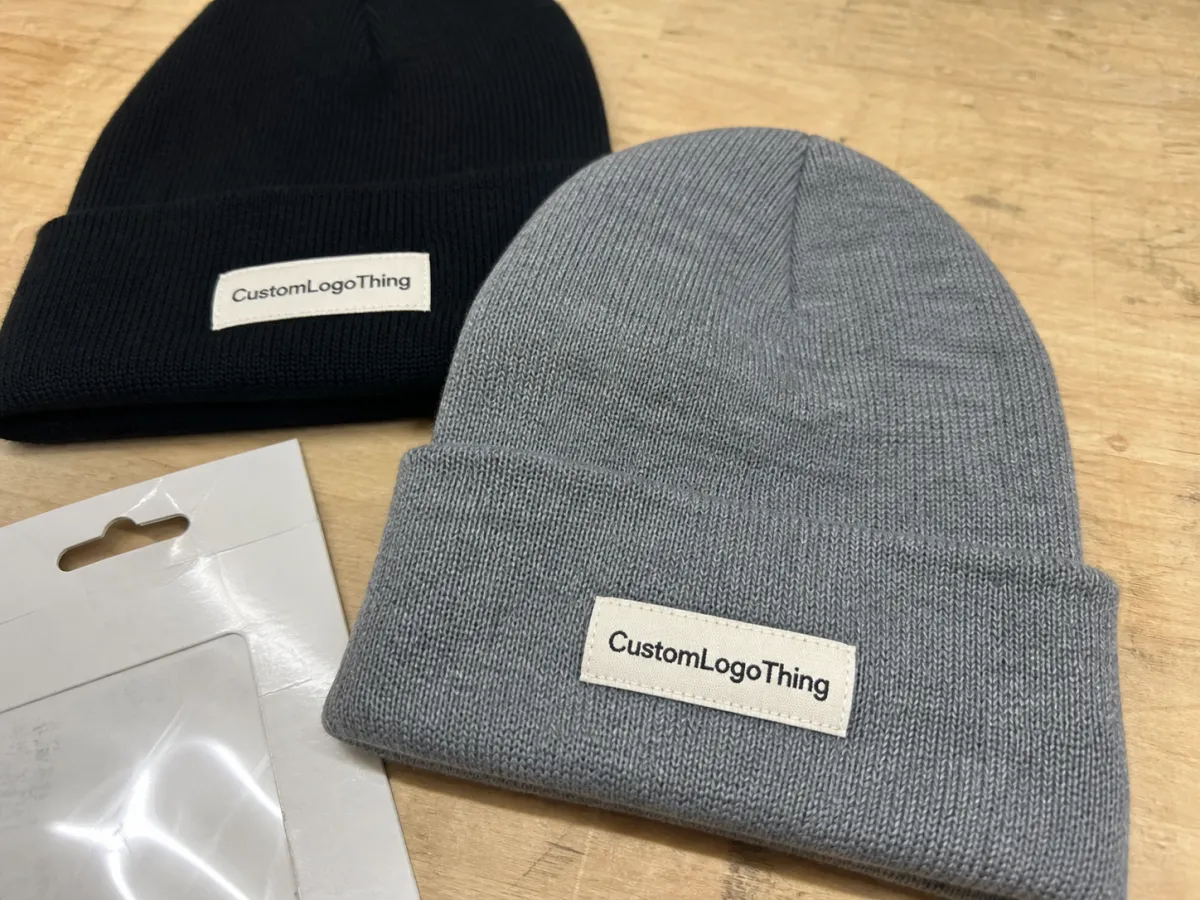
A bakery beanie has a short job description: keep hair contained, keep people warm, and help the team look like one operation instead of a pile of unrelated shifts. The woven label is what turns a basic knit cap into a branded item. If the label is too small, poorly placed, or hard to read, the hat stops feeling intentional.
That matters in bakeries because the audience is close. Customers see staff at the counter, in the kitchen pass, and during pickup, so the branding has to hold up at arm’s length. A clean label signals that the bakery paid attention. A fuzzy logo or crooked badge does the opposite.
Woven labels usually outperform prints for this kind of use. The image is built into the label structure, so it does not depend on a surface coating that can crack or peel. That gives you better wear resistance and more control over texture, edge finish, and contrast. It also means the artwork has to be simplified before production, not after.
One rule saves a lot of trouble: if the logo only works when enlarged on screen, it is too detailed for a woven label. Fine lines, stacked taglines, and tiny copy often collapse once the design is translated into thread. Bold shapes and clear type survive better.
If the logo needs a microscope, redraw it. Thread is not pixel art.
For buyers, the value of planning is consistency. The same spec can support staff uniforms, retail merchandise, seasonal drops, and gift bundles without rebuilding the artwork each time. That keeps the next order faster to quote and less likely to drift.
Beanie Styles and Placements That Work in Bakery Settings
The best beanie depends on who wears it and where they work. Front-of-house staff usually want a cleaner profile. Kitchen teams often need a warmer knit that stays in place through a long shift. Those are not the same use case, so treating them as one product usually creates a compromise.
Cuffed beanies are the safest all-around choice because they give a stable front panel for a woven label and enough structure to avoid looking flimsy. Ribbed beanies feel more substantial and hold shape well after repeated wear. Slouch beanies lean casual and can work for retail merch, but they may look too relaxed for counter staff. Heavyweight or fleece-lined styles are warm, though they can feel bulky near ovens or in busy prep areas.
Placement changes the tone of the piece. Center-front branding is the most visible and easiest to read for customers. Side placement is quieter and suits back-of-house uniforms. A cuff-edge label sits in the middle: visible, but not loud. If a run mixes placements, keep the split chart simple so cartons do not get crossed.
Color should support the bakery instead of fighting it. Black, charcoal, oatmeal, navy, deep green, and burgundy are common because they fit most interiors and packaging systems. If the bakery uses seasonal colors, the thread can echo signage or box accents without turning the hat into a costume.
- Front-of-house: cuffed or ribbed styles with center-front woven labels
- Kitchen use: tighter knit, darker colors, side or cuff-edge placement
- Retail merch: slouch or cuffed beanies with stronger contrast and simpler branding
Specs That Keep Woven Labels Readable After Real Wear
The difference between a good woven label and a disappointing one usually lives in the spec sheet. Buyers often start with size, but the real issues are weave density, fold style, edge finish, contrast, and artwork complexity. A label can be the correct dimensions and still fail if the text is too small or the color separation is too busy.
For bakery beanies, a practical label size often falls in the 40 x 20 mm to 50 x 25 mm range. That gives enough room for a logo without forcing the design into a blur. A damask weave or similar fine weave is usually the better choice for logos with cleaner detail. If the artwork includes thin strokes, keep the lines bolder than you would in print.
Two to four thread colors is usually the sweet spot. More can work, but the label needs space and the artwork needs discipline. Tiny text below about 5 pt is risky once the design is woven and folded. If a slogan does not read from arm’s length, cut it. Bakery buyers need a logo people can identify, not a message that disappears in the weave.
Beanie construction matters as much as the label. Acrylic and polyester blends are common because they hold shape, handle washing, and keep cost under control. Wool blends feel warmer and often look nicer, but they can be overkill for indoor staff and more sensitive on price. A stable rib knit or a medium-gauge cuff gives the label a flatter surface, which helps it sit clean instead of twisting over time.
QC details belong in the spec, not in a later complaint. Ask for stitch counts, label placement tolerances, and color references. If the order includes packaging, make carton marks and size stickers part of the approval. If the beanies ship in retail units, individual polybags may be worth the extra labor. If they go straight to staff, bulk cartons may be enough.
For buyers who also need matching tags for aprons, boxes, or add-on merch, the most useful first stop is a label program built around the same artwork standards. If you are comparing options, our Custom Labels & Tags page is the cleanest starting point.
Woven labels reward clear artwork and punish clutter. If the design depends on tiny detail, simplify it before production does.
It also helps to think about touch, not just appearance. Some beanies will be handled constantly by staff pulling them on and off between shifts. Others sit on a retail shelf and need to look clean under store lighting. A softer label back, a flatter fold, or a stitched edge can change how the piece feels in use.
Pricing, MOQ, and Unit Cost Ranges for Bulk Orders
MOQ drives cost more than most people expect. The factory has to set up the beanie style, prepare the woven label, and handle application and packing. Those fixed costs do not disappear just because the order is small. Smaller runs usually carry a higher unit price, while larger runs spread setup across more pieces.
These are practical working ranges, not promises. Materials, logo complexity, packaging, and freight all move the number.
| Order size | Typical finished unit cost | What is usually included | Best use |
|---|---|---|---|
| 200-499 pcs | $3.80-$6.00 each | Beanie blank, woven label application, basic packing | Small staff rollout or test merch |
| 500-1,000 pcs | $2.90-$4.20 each | Better setup efficiency, steadier pricing on labeling and packing | Single-store or small chain order |
| 1,500-3,000 pcs | $2.40-$3.60 each | Lower unit cost, more room for color or packaging upgrades | Multi-location rollout or retail program |
There is a trap on the low end. A quote can look cheap per piece and still be the wrong move if the bakery is ordering too much of one color, one size profile, or one seasonal design. Inventory that sits in storage is not a bargain.
The quote also shifts if the order gets complicated. Extra thread colors, custom yarn, special tags, woven side labels, split shipments, rush production, and multi-location packing all add cost. So does a request to divide the order across several branches.
If the bakery already buys uniforms, aprons, or branded merchandise at scale, bundle the order review instead of pricing every item separately. A broader order can improve the pricing structure because the factory sees the full scope instead of a tiny piece of it. That said, bundling only helps if the specs are actually clear.
Order Flow and Timeline from Proof to Delivery
A typical bulk order follows a predictable path: quote request, art review, digital proof, sample approval, production, quality check, packing, and shipping. The order only feels simple after the paperwork is already done. Before that, every missing detail becomes a delay.
For stocked beanie blanks, a straightforward woven label run often lands in about 12-15 business days after proof approval. Add another 5-7 business days if a physical sample is needed before production starts. If the order uses custom knitting, special yarn, or more complex placement, the schedule stretches. Freight also matters. Air shipping is faster, but it raises the landed cost.
Most delays happen before production starts. The usual causes are missing vector art, indecision around thread colors, and proof sign-off that sits too long. That is why planning needs to start before the launch date gets close. The earlier the art is locked, the fewer ugly decisions happen under pressure.
- Fastest path: clean vector logo, one beanie color, one label placement, no sample round
- Safer path: digital proof plus physical sample before the full run
- Rush order: fewer customization options and a narrower approval window
Rush production can be useful, but it is not a magic trick. It usually means less flexibility on packaging, fewer color options, and very little room for late artwork changes. If the delivery date matters enough to rush, it matters enough to approve quickly.
One thing worth checking early is color drift. Screen colors and thread colors rarely match perfectly, and the gap is usually more visible in person than on a phone screen. Ask for the closest practical thread match, not an imaginary perfect one. The best buyers work with the material they have.
How to Keep Reorders Consistent
The second order should be easier than the first. If it is not, the recordkeeping failed. Reorders need the exact label size, placement, color references, and artwork version from the first run. Otherwise the next batch starts drifting toward “close enough.”
That issue gets worse in multi-location bakery groups. Staff turnover, seasonal launches, and fast-moving retail calendars create pressure to reorder fast. A clean spec file saves time because the factory does not have to rebuild the order from memory. It also saves money because fewer questions mean fewer revisions.
Quality control should be practical and specific. Check label alignment, stitch tension, seam finish, packing counts, and carton marks before shipment leaves. Measure placement against the approved sample, not against a guess. Small errors show up fast on wearables because customers see them up close.
Wash performance matters too. Beanies that sit in a staff uniform rotation need to survive laundering without the label curling or the fabric stretching out of shape. Ask for care instructions that match the fiber blend. If the knit is acrylic-heavy, that is one thing. If it includes wool, the care and shrink behavior may be different.
The real value of bakery woven label Beanies Bulk Order Planning is not the first carton. It is the repeatable system behind it. Approve the first spec carefully and the next reorder moves faster, looks the same, and avoids the little changes that creep in when nobody is watching closely enough.
What to Send Before Requesting a Quote
Good quotes start with good inputs. If the request is vague, the pricing will be vague too. Send the logo file, target quantity, preferred beanie color, label placement, and delivery deadline in one message. If there is a hard budget range, include that as well.
Before asking for pricing, decide three things:
- Budget range: how much room exists for setup, labeling, packaging, and freight.
- MOQ tolerance: whether the order is a test run or a full rollout.
- Delivery date: the date the beanies must arrive, not the date the project feels like it should arrive.
If the label includes fine text or tight brand colors, ask for a digital proof. If the beanies will be worn across several locations, a physical sample is worth the extra time. That step is cheap compared with fixing a run that looked slightly too dark, too small, or too flat once it was already packed.
For broader uniform or merch planning, it helps to line up the beanie order with the rest of the branded goods calendar. If other pieces are in motion, our Wholesale Programs page is the most direct route for larger-scale planning. Keep the specs tight either way.
Good planning means the first order and the reorder use the same file, the same placement, and the same expectations. That is the part people overlook. The quote is not the hard part. Keeping the order repeatable is.
How early should I start bakery woven label beanies bulk order planning?
Start as soon as the logo and color direction are approved. Quote, proof, sample, production, and freight all take time. If the order has a fixed launch date, a winter deadline, or a split shipment, build in extra time before final sign-off.
What MOQ is typical for woven label beanies in bulk?
MOQ varies by factory, beanie style, and label setup. Smaller runs usually cost more per piece. Ask whether the minimum applies per color, per logo version, or for the whole order, because that detail changes the quote quickly.
Can I mix colors or label placements in one bakery beanie order?
Yes, but mixed runs need a clear split sheet before production begins. Color and placement changes can raise setup time and push unit cost higher if the order becomes too fragmented. Keep the variation count low if pricing matters.
What affects the unit cost most in bakery beanie orders?
Quantity is the biggest driver, followed by label complexity, yarn choice, packaging requirements, and freight. Rush production, extra thread colors, and split delivery can also move the price more than buyers expect.
What should I send for the fastest quote on custom bakery beanies?
Send the logo file, target quantity, preferred beanie color, label placement, and delivery deadline. Include any must-have notes on packaging, sample approval, or size distribution so the quote is accurate on the first pass.
What is the most common production mistake?
Usually it is artwork that looked fine on screen but fails at thread scale. Tiny text, thin lines, and crowded details are the usual culprits. The better fix is to simplify the design before production rather than hoping the factory can rescue it.


