What a Woven Labels Material Guide for Beauty Brands Should Clarify
A small facial oil pouch can look perfect beside frosted glass bottles and soft-touch cartons, then disappoint the minute its label curls, scratches the hand, or turns muddy under retail lighting. This Woven Labels Material guide for beauty brands is written for that exact gap: the space between a beautiful brand concept and a tiny textile component that has to survive real handling.
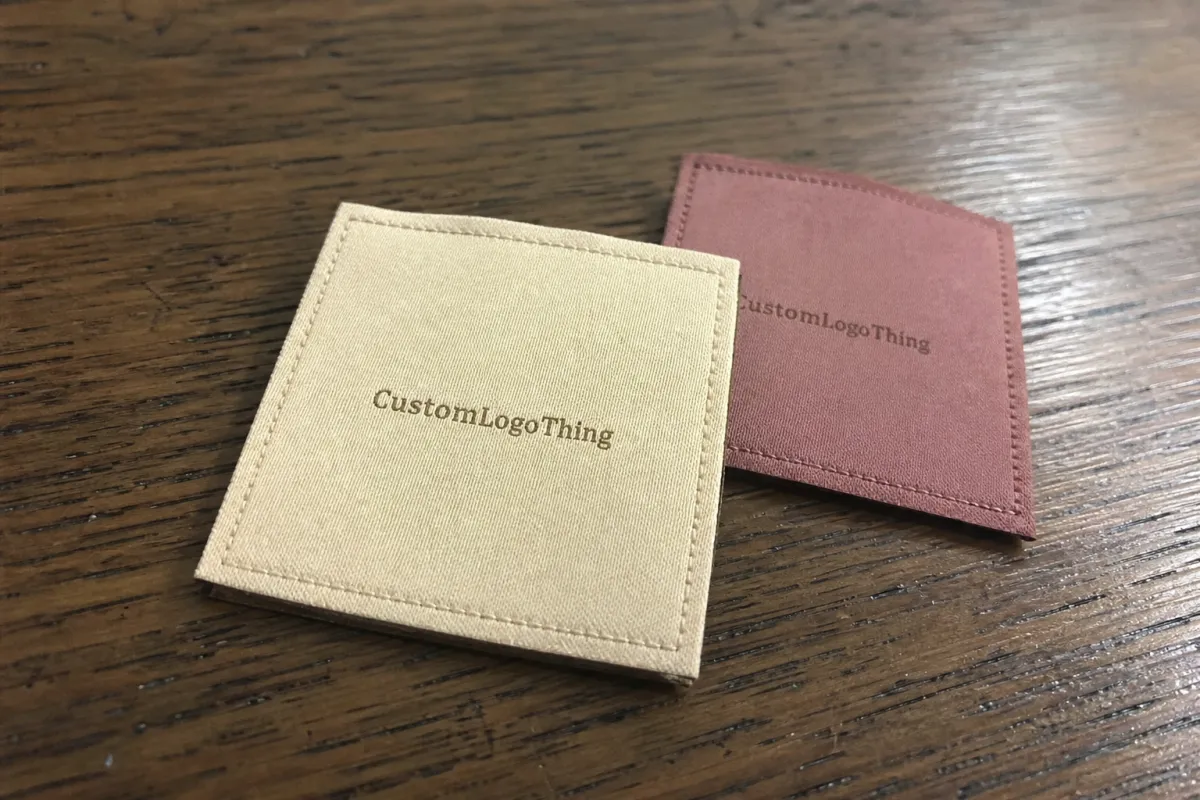
A woven label is made by interlacing colored yarns on a loom. The logo, background, border, and lettering are formed from thread, not printed ink. That construction gives woven labels their dimensional, textile-based look, which is why they often feel more premium than a basic printed care tag.
Beauty brands care about this more than outsiders expect. Even if the core revenue comes from skincare, fragrance, cosmetics, or haircare, the assortment often expands into spa headbands, silk-style wraps, scrunchies, robes, reusable cosmetic bags, applicator sleeves, sample pouches, gift sets, and travel kits. A label on those pieces becomes part of the product experience. It is touched, photographed, folded, washed, packed, and judged.
Material choice is not only about softness. It affects logo sharpness, color richness, wash durability, fray resistance, minimum order quantity, and unit cost. Polyester damask, satin woven labels, cotton-feel yarns, recycled materials, metallic threads, and specialty finishes each behave differently in production.
A useful guide should turn those options into buying decisions: which material fits a robe neckline, which works for a pouch front, which can hold delicate serif lettering, and which one should stay inside the seam as a care label. The right answer changes with the product, not just the brand mood board.
How Woven Label Materials Work on Beauty Soft Goods
A woven label starts with warp and weft yarns. On the loom, those yarns build the artwork one thread path at a time, so every letter, icon, border, and background field has to be translated into a weave structure. That is very different from printing a tiny full-color image onto ribbon.
Woven labels usually last longer and feel more substantial than printed labels, especially on items that get handled, folded, washed, or packed inside kits. Printed labels still have their place. They reproduce gradients, tiny type, ingredient-style microcopy, and photographic effects more easily than thread can.
This is a common early spec mistake: artwork designed for cartons, kraft bands, or web headers does not automatically translate into yarn. A botanical line drawing that looks elegant on an uncoated box may collapse into a fuzzy block at 18 mm wide. A thin monogram may need heavier strokes, a larger label, or a higher-density damask weave.
Yarn thickness and weave density drive detail. Fine yarns and tight damask construction can hold delicate serif type, narrow cosmetic monograms, and small icons better than coarse taffeta-style weaves. If a brand mark has hairline strokes, the finished label size matters as much as the artwork file.
Beauty soft goods also see rougher use than they suggest. A spa robe label may deal with laundering, steam, and skin contact. A cleansing cloth pouch may pick up oils, moisture, and zipper abrasion. A headband label sits close to the hairline, so a stiff edge can ruin an otherwise lovely product.
Edges deserve real attention. Heat-cut polyester edges resist fraying and work well for many pouch-front and patch-style applications. Folded edges often feel softer because the cut edge is tucked into the seam. Sew-on labels remain the most flexible and durable attachment option. Iron-on backing can help with positioning during assembly, while adhesive backing is usually better for temporary placement or light-duty use than permanent luxury textile applications.
Practical rule: if the label touches skin, hair, or a high-friction seam, ask about the edge and backing before you ask about price. Comfort problems are harder to fix after bulk production.
Compliance can enter the conversation too. Beauty-adjacent textile items may need fiber content, origin, or care instructions depending on the product category and sales region. For packaging transit and handling, buyers may also want to understand test standards from groups such as ISTA, especially if labeled soft goods ship inside larger retail or ecommerce kits.
Best Woven Label Materials for Beauty Brand Aesthetics
Polyester damask is the most common premium choice for a reason. It is smooth, durable, color-stable, and capable of high detail. For clinical skincare accessories, fragrance pouches, or refined cosmetic bags, high-density damask often gives the best balance of crisp lettering and polished handfeel.
It also performs well across repeat production. Thread shades still need approval, but polyester damask is generally more predictable than many natural-feel options. For brands with strict visual systems, that consistency matters.
Satin woven labels have a shinier face and a softer visual finish. They suit spa, haircare, fragrance, and giftable beauty lines where a little sheen supports the brand language. The tradeoff is detail. Satin can be elegant, but very small lettering may not read as sharply as it would on a dense damask label.
Taffeta-style labels are lighter and usually more economical. They are sensible for care labels, size tabs, interior pouch markers, or functional brand identifiers where the customer is less likely to judge the label as a luxury cue. They can be perfectly appropriate. They are just not always the first choice for a hero cosmetic bag or robe neckline.
Cotton and cotton-feel labels bring a warmer, more natural appearance. They pair well with organic, botanical, apothecary, or handmade-positioned brands, especially when the rest of the packaging uses kraft paper, uncoated cartons, or FSC certified paperboard. The texture can be beautiful, but buyers should expect softer color brilliance and less razor-sharp detail than polyester damask.
Recycled polyester yarns are worth considering for brands making sustainability claims. Ask what documentation is available before using strong marketing language. A label made with recycled materials may support the story, but claims still need to line up with the actual specification, supplier documentation, and the rest of the pack, including cartons, tissue, inserts, corrugated cardboard shippers, and any biodegradable packaging claims.
Metallic threads can add a premium flash for limited editions, holiday sets, or gift-with-purchase accessories. Use restraint. Too much metallic yarn can feel scratchy, reduce small-letter readability, and make the label look busier than the brand intended.
| Material option | Best fit | Typical feel | Buyer watchout |
|---|---|---|---|
| High-density polyester damask | Premium pouches, robes, refined logo labels | Smooth, crisp, durable | Costs more than basic taffeta |
| Satin woven | Spa, fragrance, haircare, gift sets | Soft sheen, polished surface | Tiny artwork may lose clarity |
| Taffeta-style | Care labels, interior labels, size tabs | Light, functional | Less premium for visible branding |
| Cotton-feel | Natural, botanical, apothecary brands | Matte, warm, textured | Color and detail may be softer |
| Metallic accent yarn | Limited editions and premium gift sets | Bright, decorative | Can feel scratchy if overused |
Color strategy should serve legibility first. Soft neutrals, tone-on-tone weaving, black-and-cream contrast, blush, sage, ivory, and small metallic accents can all work beautifully, but thread reflects light differently than ink on coated paper. Review the finished label at actual size under real lighting, not only as a magnified digital proof.
Key Specs to Decide Before You Request a Quote
Gather the basics before asking for pricing: finished label size, fold type, weave material, number of thread colors, edge finish, backing, order quantity, and intended application. A quote request with those details can usually be priced faster and with fewer assumptions.
Fold type changes both appearance and sewing method. A straight-cut label works well as a patch on a pouch front. End fold gives clean side seams for flat brand labels. Center fold is common for neck labels and side-seam labels. Manhattan fold creates a neat loop with folded ends. Book fold gives more structure for thicker seam insertions.
Small labels can look refined, but they may not hold complex logos. A 20 mm wide label with a full wordmark, icon, collection name, and care line is asking a lot from thread. Larger labels provide more room for brand marks and care details, but they cost more and may overpower a small pouch, scrunchie, or travel accessory.
Vector artwork is preferred because woven labels are interpreted into thread paths. Clean line art produces cleaner woven results than low-resolution screenshots, flattened JPEGs, or artwork pulled from a website header. If the logo uses gradients, watercolor texture, or fine botanical linework, simplify before sampling.
Color matching is close, not identical. Thread colors can be selected against brand palettes, including Pantone references, but yarn has texture, shadow, and light reflection that ink does not. A pale gray thread on ivory satin may look elegant in a proof and nearly invisible under a bathroom vanity light.
Placement changes the specification. A label sewn to the outside of a cosmetic pouch needs abrasion resistance and clean edge behavior. A label inside a robe needs comfort. A label along the seam of a reusable makeup remover pad bag may need folded edges and wash durability. If the product will be washed, steamed, rubbed by zippers, exposed to oils, or handled in humid bathrooms, choose the material and attachment method for that environment.
Quality-control criteria should be written down before production. Useful checks include finished size tolerance, fold accuracy, thread color approval, logo legibility, edge fray, backing alignment, loose threads, stains, and packaging count. For visible front labels, placement tolerance matters. A 3 mm shift may be acceptable inside a seam and glaring on the front of a structured cosmetic pouch.
Process, Timeline, and Production Steps for Custom Labels
The usual production path is straightforward: spec review, artwork cleanup, material and fold recommendation, digital proof or woven sample approval, bulk weaving, cutting, folding, inspection, packing, and shipping. Each step sounds small. Missed details early tend to multiply later.
Timeline depends on whether the buyer needs only a digital proof or a physical pre-production sample before bulk. A simple repeat order with approved artwork may move quickly. A new beauty launch with a satin option, metallic accent, and fold testing needs more breathing room, especially if the labels must arrive before cut-and-sew production, kit assembly, influencer mailers, or retail delivery.
For planning, many custom woven label projects require several business days for proofing and sampling, then additional time for bulk production and transit. Rush orders are possible in some cases, but they leave less room for testing handfeel, color, and sewing behavior. If the label is going into a premium item, sampling is usually cheaper than discovering a scratchy edge after thousands of units are sewn.
During artwork conversion, the manufacturer interprets the logo into woven construction. Thread colors are assigned. Weave direction is planned. Borders, backgrounds, and small letters are adjusted so the loom can reproduce the design cleanly. The proof should confirm size, fold, colors, layout, edge type, and backing, although a digital proof will not fully show the tactile difference between damask, satin, and cotton-feel material.
Common delays are easy to predict: late artwork changes, unclear color references, unapproved proofs, switching materials after sampling, and requesting complex fold or backing changes near production. If another facility will sew labels into finished goods, send approved samples and a placement guide with orientation, seam allowance, and acceptable tolerance.
Align label production with the rest of the packaging plan. Woven labels, pouches, cartons, tissue, inserts, corrugated cardboard shippers, and retail sleeves all have their own lead times. The smoother projects usually have one decision-maker for proof approval and one shared spec sheet that everyone follows.
Cost, MOQ, and Unit Cost Factors Beauty Brands Should Know
Woven label pricing is driven by quantity, label size, material type, weave density, thread color count, fold style, backing, sampling needs, and shipping method. Unit cost drops as quantity rises because loom setup, artwork programming, color preparation, and finishing labor are spread across more pieces.
For general planning, a small simple woven label might land around $0.08-$0.18 per piece at higher quantities, while a premium damask or satin label with folded edges may sit closer to $0.18-$0.35 per piece at moderate quantities. Very small runs can price higher because setup does not shrink just because the order does. Freight, duties, sampling, and rush charges can shift the landed cost more than buyers expect.
High-density damask, recycled yarns, metallic threads, and specialty finishes generally cost more than simple taffeta-style functional labels. Bigger labels use more material, but they also take more loom time, more cutting time, and more careful handling if folded or backed. Too many thread colors add complexity as well. Two to four colors often look more premium than a crowded multi-color label.
Minimum order quantities vary by supplier, weave type, and finishing method. A low MOQ may be helpful for launch testing, but the unit price can be sharply higher. For a planned retail rollout, it often makes sense to quote several tiers before deciding. The difference between 500 and 2,500 pieces can be large enough to change the trim budget.
Ask for pricing in tiers such as 500, 1,000, 2,500, and 5,000 pieces. The breakpoints make budget decisions clearer. If the team is unsure, request two options: one premium label for hero products or gift sets, and one efficient option for care labels, sample pouches, or entry-level accessories. Custom Logo Things also shows related label formats under Custom Labels & Tags, which can help buyers compare woven labels against hang tags, patches, and other brand trims.
Common Material Mistakes That Make Beauty Labels Feel Off
The first mistake is choosing from a screen image alone. Woven labels are tactile. A finish that looks soft online may feel stiff in the hand, and a shiny satin label may compete with glossy jars or coated cartons instead of supporting them.
Tiny typography causes trouble too. Beauty brands often love delicate type, fine serifs, and airy spacing, but ultra-small lettering can fill in when translated into thread. If the secondary copy is not essential, remove it. If it is essential, increase the label size or consider a printed care label for that information.
Poor contrast is another quiet problem. Blush on ivory, pale gray on white, and tone-on-tone neutrals can look tasteful, but they still need to read under bathroom lighting, retail lighting, and social media photography. Ask to see the artwork at final size, not enlarged on a monitor.
Skin contact deserves more respect than it gets. Labels on headbands, robes, sleep masks, and scrunchies need softer edges and careful placement. Avoid heavy metallic threads and stiff backings near the neck, face, wrist, or hairline. A beautiful label that irritates the customer is a failed component.
Overcomplicated artwork is common. Gradients, watercolor effects, thin botanical illustrations, and tiny ingredient-style lines may need simplification for weaving. A practical Woven Labels Material guide for beauty brands should not make that limitation feel discouraging. Clean lettering, good contrast, and the right material often look more expensive than a label trying to carry too much.
Claims can also drift away from the spec. If a brand markets itself as eco-conscious, it should be careful about calling labels sustainable unless the yarn choice and documentation support the claim. The same caution applies across the full packaging system, from post-consumer waste paperboard to FSC certified inserts and biodegradable packaging language. For broader guidance on environmental claims and materials, the EPA is a useful starting point.
Order overage matters. Buying exactly the needed quantity leaves no room for sewing loss, quality-control pulls, damage, replacement pieces, or future repairs. For many projects, 3%-10% extra labels is a practical buffer, depending on the sewing process and launch plan.
Next Steps: Build a Label Spec Sheet Before Sampling
Start with the product application. Then decide label placement, approximate size, preferred material, fold style, color count, backing, and quantity range. A one-page spec sheet should include logo artwork, brand color references, product photos or sketches, expected wash or handling conditions, and any comfort requirements.
Ask for material recommendations, not only the cheapest option. The best value usually comes from matching the label to the product touchpoint and lifespan. A premium robe label, an interior pouch tag, and a sample-bag marker do not need the same construction.
Swatches are worth reviewing when handfeel matters. Robes, towels, headbands, scrunchies, sleep masks, and anything touching skin or hair should be judged by touch as well as appearance. Approve the simplest design that still feels branded: clean lettering, strong contrast, and a material finish that supports the product story.
Set a decision deadline for proof approval so label production does not hold up sewing, kit assembly, retail packaging, or launch photography. For a faster quote, send size, quantity, artwork, fold preference, intended use, target feel, and whether a sample is needed before bulk production. Teams reviewing broader branded packaging examples may also find the Case Studies useful for thinking through how trims and packaging components work together.
A woven label may be small, but on a soft beauty product it carries a surprising amount of trust. The best version feels intentional before anyone reads it: comfortable where it touches skin, sharp enough to hold the logo, durable enough for the product’s actual use, and restrained enough to belong with the rest of the brand system.
FAQ
What is the best woven label material for beauty brands?
High-density polyester damask is often the best all-around choice because it gives crisp logo detail, strong durability, and a smooth premium feel. Satin works well for spa, haircare, and giftable beauty products when a soft sheen fits the brand look. Cotton-feel or recycled yarn options may suit natural or eco-positioned brands, but the final choice should be tested against comfort, durability, and claim requirements.
How should small logos be prepared for woven labels?
Small logos should be simplified before weaving, especially if they include thin lines, tiny serif type, gradients, or delicate botanical artwork. Use strong contrast between the background and thread colors so the mark stays readable. Ask for a proof or sample at the actual finished label size, because artwork that looks clear on a screen can close up when woven.
Are woven labels comfortable enough for beauty headbands, robes, and spa textiles?
They can be very comfortable if the right material, fold, edge finish, and placement are selected. For skin-contact items, consider softer woven materials, folded edges, and seam placements that keep the cut edge away from the skin. Avoid heavy metallic threads or stiff backings on areas that touch the neck, face, wrist, or hairline.
How much do custom woven labels cost for beauty packaging?
Cost depends on quantity, size, weave type, thread colors, fold style, backing, sample requirements, and freight. Larger quantities usually lower the unit cost because setup and loom preparation are spread across more labels. Ask for tiered pricing and compare a premium option with a simpler option if you are balancing launch budget and brand presentation.
How long does it take to produce woven labels for a beauty brand launch?
Timeline depends on artwork readiness, proof approval speed, whether a physical sample is needed, production complexity, and shipping method. Build in extra time if the labels must arrive before sewing, pouch assembly, gift set packing, or retail launch photography. The fastest projects usually start with clean vector artwork, complete specs, approved colors, and a clear decision-maker for proof approval.