Woven Labels Material Guide for Chocolate Brands
A small chocolate bar, bonbon box, or fabric gift pouch gets only a few seconds before someone decides whether it feels ordinary or special. A Woven Labels Material guide for chocolate brands helps buyers understand why one small textile detail can carry more quiet selling power than another printed panel, especially on premium assortments, seasonal releases, event favors, and corporate gifting programs.
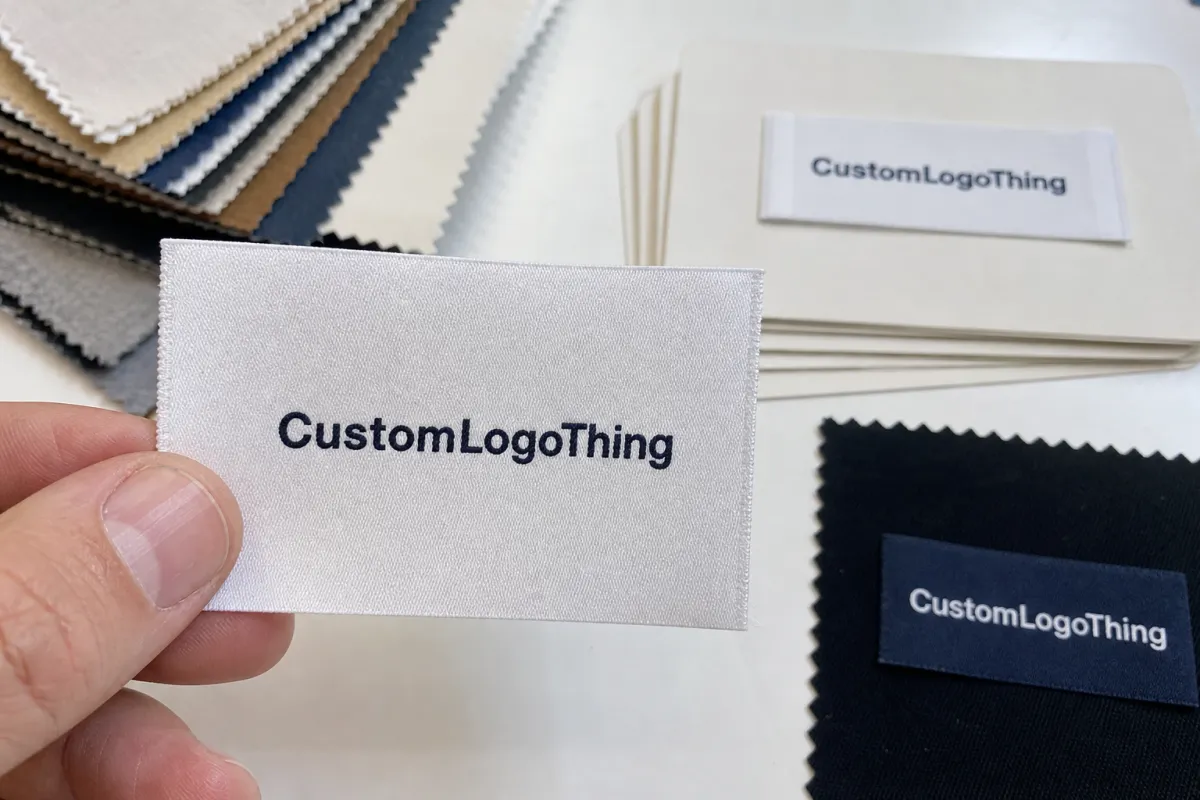
Woven labels are textile brand labels made by interlacing threads on a loom. The artwork is built into the fabric rather than printed on top of it. That construction creates dimension, colorfastness, and a hand feel that paper stickers and printed fabric labels rarely match. On chocolate packaging, touch matters. Customers often handle the ribbon, pouch, sleeve, or box before they taste anything.
Chocolate brands borrow from the clothing-labels category because the same materials work well on ribbon wraps, cotton drawstring bags, reusable pouches, rigid presentation boxes, sample kits, and limited-edition sleeves. A woven mark on a velvet pouch says something different from a paper seal on a carton. Neither choice is universally better. They speak in different packaging languages.
The common mistake is treating a woven label as decoration only. It has to resist fraying, hold the logo cleanly, attach securely, survive packing, and stay out of the way as the customer opens the package. Food-adjacent use adds another constraint. Unless a material system has been specified and reviewed for direct food contact, the woven label belongs on the outside of the wrapper, box, ribbon, sleeve, or pouch.
The practical buying decision comes down to thread, backing, fold style, size, quote details, and production timing. Pretty matters. Manufacturable matters more.
How Woven Label Materials Actually Work
Woven labels are built from yarn paths. Polyester, cotton, satin, damask, and blended yarns are interlaced so the design appears inside the textile itself. That single fact affects nearly everything: line thickness, color transitions, edge definition, surface sheen, stiffness, and durability.
Damask polyester is often the cleanest starting point for chocolate packaging. It can hold sharper logos and finer lettering than many lower-density weaves, and it tends to behave predictably during cutting and folding. Satin labels have a smoother shine and can look elegant on gift boxes or ribbon wraps, although glare can make small text harder to read under bright retail lighting.
Cotton feels softer and more natural. It can suit bean-to-bar, organic, handmade, or lower-gloss packaging stories, especially beside kraft paper, uncoated board, or muslin bags. The tradeoff is detail. Cotton is usually less crisp than high-density damask, so very small serif type, cacao pod illustrations, or delicate linework may soften.
Thread density is best understood as detail capacity. A higher-density weave can capture smaller shapes, but it may also feel firmer and cost more because the loom spends more time building each label. A lower-density label can feel warmer, softer, and more rustic. Push tiny copy into it, though, and the threads start filling in what the artwork meant to keep open.
Edges deserve more attention than they usually get. Heat-cut edges are common for straight labels and can work well on box wraps or flat pouches. Ultrasonic cutting can create a cleaner sealed edge on synthetic yarns. Woven edges look refined when both sides of the label remain visible. Merrowed edges create a raised border, but that border can feel bulky on small chocolate packaging. Folded ends hide cut edges and often look more finished on ribbon, textile wraps, and sewn applications.
Backing and attachment options include sew-on, iron-on, adhesive backing, loop fold, end fold, center fold, and straight cut. Adhesive labels can work on smooth rigid boxes, but textured kraft paper, coated board, cold storage, and curved surfaces should be tested before bulk production. Sew-on labels make sense for cotton bags, reusable pouches, and drawstring gift sacks.
For food packaging, keep standard textile labels away from direct contact with unwrapped chocolate unless the thread, dye, adhesive, backing, and compliance requirements have been reviewed for that exact use. Most brands avoid the issue by using woven labels as exterior branding on already wrapped or boxed products.
Key Material Factors for Chocolate Packaging
Start with brand feel. A dark damask label with metallic thread can suggest luxury, ceremony, and gifting. A cotton label or matte polyester label can feel calmer and more natural, which may fit small-batch bars, recycled paper sleeves, or a brand built around sourcing transparency. Gloss is not always premium. Sometimes a quieter finish looks more expensive because it sits comfortably with the rest of the package.
Color is where print thinking creates trouble. Woven color is selected from stocked yarn libraries or custom-dyed thread, not mixed like CMYK ink on paper. Pantone references help communication, but the final color will reflect light through thread texture. A red may look warmer on satin, deeper on damask, and softer beside brown kraft paper. Good suppliers can usually offer a close thread match. Perfect photographic reproduction is not the goal.
Legibility has limits. If a chocolate bar needs ingredient copy, nutrition panels, allergen statements, origin notes, lot codes, or regulatory language, those details belong on printed packaging. Use woven labels for the logo, collection name, flavor family, short gift message, or decorative cue. A 0.75-inch-high label can look refined with a simple mark. It can look crowded with six lines of copy.
Chocolate packaging also faces real handling conditions. Warm hands, condensation from refrigerated storage, abrasion during shipping, and repeated touch at a retail counter can all affect performance. Ask about abrasion resistance, colorfastness, adhesive strength, and fray control early. For transit testing, brands can review general package handling concepts through organizations such as ISTA, especially when a premium gift set must survive parcel shipping without scuffed labels or lifted corners.
The base package matters as much as the label. Smooth rigid boxes may accept adhesive well. Satin ribbon may need folded ends. Cotton bags usually favor sew-on labels. Organza pouches can pucker if the label is too stiff. Velvet sleeves need careful testing because nap direction and pressure can change how the label sits. Corrugated shippers are usually not the place for a premium woven label unless the shipper is designed as part of the unboxing presentation.
| Material or Construction | Best Packaging Fit | Typical Strength | Watch Point |
|---|---|---|---|
| Damask polyester | Rigid boxes, pouches, premium ribbons | Crisp logos and fine lettering | Can feel firmer at high density |
| Satin woven label | Gift boxes, holiday assortments, event favors | Smooth sheen and elevated finish | Glare can affect small type |
| Cotton woven label | Kraft styling, cotton bags, handmade collections | Natural texture and soft hand feel | Less crisp for tiny artwork |
| High-density weave | Small luxury marks and refined typography | Better detail retention | Higher cost and possible stiffness |
| Adhesive backing | Smooth boxes, belly bands, presentation sleeves | Fast hand application | Must be tested on textured, cold, or curved surfaces |
For chocolate brands, the best material is rarely chosen from a swatch card alone. It is chosen on the actual package, under the lighting and handling conditions the customer will experience.
Process, Timeline, and Production Steps to Expect
A practical woven label order follows a steady path: artwork review, finished size confirmation, material and fold selection, thread color selection, digital proof, woven sample or strike-off when needed, production approval, bulk weaving, cutting and folding, backing or adhesive application, quality check, and shipping. Skip one of those steps, and the problem often appears later during packing.
Before quoting, a supplier needs more than a logo. Send the finished label dimensions, quantity, vector artwork, preferred material, number of thread colors, backing type, edge finish, attachment method, package application, and target in-hands date. Photos of the actual box, ribbon, pouch, or sleeve help. So does a short note explaining how the label will be applied: by hand, by sewing contractor, by fulfillment team, or by another packaging partner.
Lead time depends on proof approval, sampling, thread availability, order quantity, finishing steps, and shipping method. A simple stocked-yarn damask label may move faster than a metallic-thread label with custom-dyed colors, adhesive backing, folded ends, and a required strike-off. High-density weaving can add time. Complicated folds add time. Peak chocolate periods, especially holiday and gifting seasons, can stretch production queues because packaging components tend to collide on the same calendar.
Plan backward from the packing date, not the public launch date. Wedding favors, retail resets, subscription boxes, corporate gifts, and seasonal assortments all have assembly windows. If the chocolate is ready and the rigid boxes are ready but labels are still waiting on proof approval, the whole program stalls. That is an expensive way to learn that a label is not a decorative afterthought.
Production note: A pre-production sample is worth the extra time when the label sits on premium packaging, uses tiny type, includes metallic thread, or will be attached to an expensive rigid box or reusable pouch.
Quality control should not stop at “does it look like the proof?” Check finished dimensions, fold placement, edge sealing, fray risk, thread color, logo orientation, backing coverage, adhesive release liner behavior, and carton count. For adhesive labels, test one on the package, leave it in realistic conditions, then try to lift a corner. For sewn labels, confirm seam allowance and needle placement before the contractor starts a full batch.
Some brands also review recycled content claims, disposal language, and material choices against guidance from the U.S. Environmental Protection Agency. A woven label may be small, but it still belongs inside the larger packaging system. A textile patch permanently attached to paperboard can complicate disposal messaging if the claim is written too broadly.
Cost, Pricing, and MOQ Drivers for Custom Labels
Pricing is driven by quantity, label size, weave density, number of thread colors, material type, edge finish, fold style, backing, sampling, custom colors, metallic yarns, and freight. A simple 1-inch by 2-inch straight-cut damask label in a larger run will not price like a small batch of metallic satin labels with adhesive backing and folded ends.
Larger labels are not priced only by length and width. Loom time matters. Thread usage matters. Cutting, folding, and backing labor matter. Setup work also matters, which is why very low quantities can feel expensive per piece. Higher-volume chocolate programs usually bring the unit cost down because the setup is spread across more labels.
As a rough planning frame, a straightforward woven label might land around $0.18-$0.45 per unit at several thousand pieces, depending on size, density, finishing, and backing. Small runs, metallic yarns, detailed high-density weaving, custom-dyed thread, special packaging, or expedited freight can move higher. Some suppliers quote below that range at volume; others price above it for domestic finishing or tighter service requirements. Treat any range as a planning number, not a promise.
Minimum order quantities vary by supplier and construction. A stocked-yarn woven label with standard finishing may have a more approachable MOQ than a custom-dyed, metallic, high-density label with adhesive backing. If a brand is testing a seasonal flavor, it may be smarter to use one versatile master label across several SKUs rather than produce short runs for every flavor.
Compare quotes carefully. Check whether proofing, sampling, backing, fold finishing, freight, duties if applicable, and packaging of the labels themselves are included. A low base label price can become less attractive if adhesive backing, strike-off fees, and shipping are separate. Also ask how labels will arrive: rolls, cut singles, bundles, or packed by quantity. That detail affects application speed at the packing table.
Budget control is not glamorous, but it works. Simplify the artwork. Keep the label to a useful size. Limit thread colors. Use stocked yarns when possible. Choose the attachment method early so the quote reflects the actual final product. If the label needs to coordinate with hang tags, patches, or other textile branding, reviewing the Custom Labels & Tags options from Custom Logo Things can help align the spec before pricing is finalized.
Step-by-Step Spec Guide Before You Request Samples
A material decision becomes useful only after it turns into a clear production spec. Start with the application. Will the label go on a ribbon, pouch, box lid, belly band, sleeve, hang loop, or gift set insert? The answer controls size, fold, backing, flexibility, and how much abrasion the label will see.
- Mock up the size on the real package. A 1-inch label can feel generous on a truffle pouch and nearly invisible on a large rigid gift box. Print a paper placeholder at actual size, tape it in place, and view it from arm’s length.
- Select the material by brand tone and use. Choose damask for crisp detail, satin for sheen, cotton for tactile warmth, and matte polyester when durability and clean weaving matter more than luster.
- Prepare artwork for thread. Vector files are best. Outline fonts, simplify thin lines, avoid gradients, and keep photographs or tiny ingredient text on printed packaging.
- Choose fold, edge, and backing after surface testing. Adhesive may suit a smooth rigid box. Sew-on may suit fabric pouches. Folded ends may create a cleaner finish on ribbon or textile wraps.
- Review the proof against a physical sample. Confirm actual dimensions, fold allowance, thread colors, logo orientation, and how the label will face the customer during opening.
Ask for two constructions if the label is central to the unboxing experience. Damask versus satin can feel very different in hand. Adhesive versus sew-on can change packing labor. Straight cut versus end fold can determine whether the label looks finished or exposed at the edge. A small comparison can prevent a large rework.
Artwork needs blunt editing. Thin script, small registered marks, delicate bean illustrations, and tonal shadows may look beautiful in a brand file but weak in thread. A supplier may need to thicken lines, enlarge small gaps, reduce colors, or convert details into simpler shapes. That is not a design failure. It is translation from print to textile.
Sustainability claims need the same discipline. If the outer packaging uses FSC certified paperboard, post-consumer waste content, or recycled materials, make sure the woven label does not create confusion in disposal instructions. A textile label attached permanently to paperboard may affect recyclability expectations, so the final packaging message should be accurate and restrained.
Common Mistakes Chocolate Brands Should Avoid
The first mistake is treating woven labels like miniature printed labels. Thread cannot reproduce every gradient, shadow, hairline, or tiny block of copy. Forcing too much detail into a small woven area can make a premium label look muddy. Shorten the copy. Strengthen the mark. Let the printed wrapper handle fine information.
The second mistake is choosing adhesive backing without testing the surface. Textured kraft paper, foil finishes, cold storage, curved tins, and coated boxes can reduce bond strength or create lifted corners. A label that looks perfect on a desk may behave differently after refrigeration, shipping vibration, or hand packing.
Color assumptions cause trouble too. Pantone references are useful, but woven thread has dimension and reflectivity. Metallic yarn can brighten under display lighting and darken in a shadowed gift box. Surrounding colors matter. A cream thread beside dark chocolate brown will read differently from the same cream thread beside white paperboard.
Size errors are common. Oversized labels can wrinkle on small pouches or fight the curve of a ribbon wrap. Undersized labels may disappear at retail distance. For boxes, check label size from three distances: hand distance, counter distance, and shelf distance. If the mark only works six inches from the eye, it may be too quiet for retail.
Food-contact boundaries should be handled plainly. Standard textile labels should not touch unwrapped chocolate unless the full system, including thread, dye, adhesive, and backing, has been reviewed for that requirement. For wrapped bars and boxed assortments, woven labels are usually safest and most practical as exterior branding or decorative package components.
Approving only a digital proof is another avoidable production error. The proof may show size and color direction, but it cannot show how a folded end lands on a ribbon, whether the label pulls at a pouch seam, or whether the logo orientation makes sense once the box is opened. Put a physical mockup in someone’s hands before bulk production.
One more quiet problem: application labor. A label that takes five extra seconds to place may not matter for 200 gift boxes. At 20,000 boxes, those seconds become hours. Ask how the labels will be presented to the packing team and whether the backing, fold, or orientation makes hand application faster or slower.
Next Steps for Choosing the Right Label Material
Before contacting a supplier, gather the package sample, measure the usable label area, choose two likely materials, decide the attachment method, simplify the artwork for weaving, and define the packing deadline. Those six details make the quote cleaner and the first proof more useful.
For premium gift boxes, event favors, corporate assortments, and high-value seasonal collections, order material swatches or a strike-off. The best choice often becomes obvious once the label is handled on the actual package. A satin label may look beautiful on screen and too shiny in person. A matte damask label may quietly outperform it. Sampling catches those differences before production money is committed.
Send a quote request with the vector logo, package photos, finished dimensions, quantity range, preferred yarn colors, fold or backing choice, shipping location, and deadline. If you have previous packaging work to compare against, examples from the Case Studies page can help clarify the visual target without overloading the spec with vague style words.
A good woven label turns a beautiful idea into a manufacturable detail: material, size, fold, backing, quantity, and timeline working together before production begins. Get those decisions aligned early, and the label can do its job: add texture, trust, and a memorable finishing touch without slowing down the packaging line.
Frequently Asked Questions
What is the best material in a woven label guide for chocolate brands?
Damask polyester is often the best starting point because it holds fine logos, resists fraying, and feels refined without adding too much bulk. Satin works well for luxury gift packaging when sheen is desired. Cotton or matte polyester may better suit organic, handmade, or rustic presentations. The right material depends on label size, artwork detail, package surface, and whether the label is sewn, adhered, folded, or wrapped around another component.
Can woven labels be used directly on chocolate packaging?
Woven labels are commonly used on outer packaging such as boxes, ribbons, pouches, sleeves, and gift bags. They should generally stay outside direct food-contact areas unless the full material system, including thread and adhesive, is reviewed for that specific food-contact requirement. For wrapped bars or boxed assortments, woven labels are usually safest and most practical as exterior branding or decorative packaging elements.
How much do custom woven labels cost for chocolate brands?
Cost depends on quantity, label size, weave density, number of thread colors, material, fold, edge finish, backing, sampling, and shipping. As a rough planning range, straightforward woven labels may cost about $0.18-$0.45 per unit at several thousand pieces, with small runs or specialty constructions moving higher. For an accurate quote, provide finished dimensions, artwork, material preference, backing or fold style, order quantity, and deadline.
How long is the lead time for woven labels on chocolate packaging?
Lead time depends on proof approval, sampling needs, thread availability, label complexity, finishing steps, order quantity, and shipping method. A strike-off or physical sample adds time but is recommended for premium packaging, tiny logos, metallic yarns, or new attachment methods. Chocolate brands should plan early for seasonal launches, gifting programs, and retail deadlines because packaging labels can affect final packing schedules.
What artwork works best for woven labels for chocolate packaging?
Simple vector logos, bold marks, clean typography, and limited color palettes usually weave best. Tiny ingredient copy, gradients, photographs, and very thin lines should stay on printed packaging rather than woven labels. Before production, request a proof that shows actual size, thread colors, fold allowance, and label orientation on the intended package.