Woven Labels Material Guide for Tea Brands: Buy Smart
Tea packaging gets touched more than most buyers plan for. Pouches, cartons, tins, sampler boxes, and gift bundles may sit through storage, freight vibration, shelf handling, humidity swings, and repeated customer contact before anyone opens the pack. A practical Woven Labels Material guide for tea brands has to account for that unglamorous middle stage, not just the launch mockup.
A flimsy printed tag can curl, scuff, or lose color at the corners long before the tea is sold. Woven labels solve a different problem. They add a physical brand mark that feels built into the package instead of added late in the process.
Why Woven Labels Matter on Tea Packaging
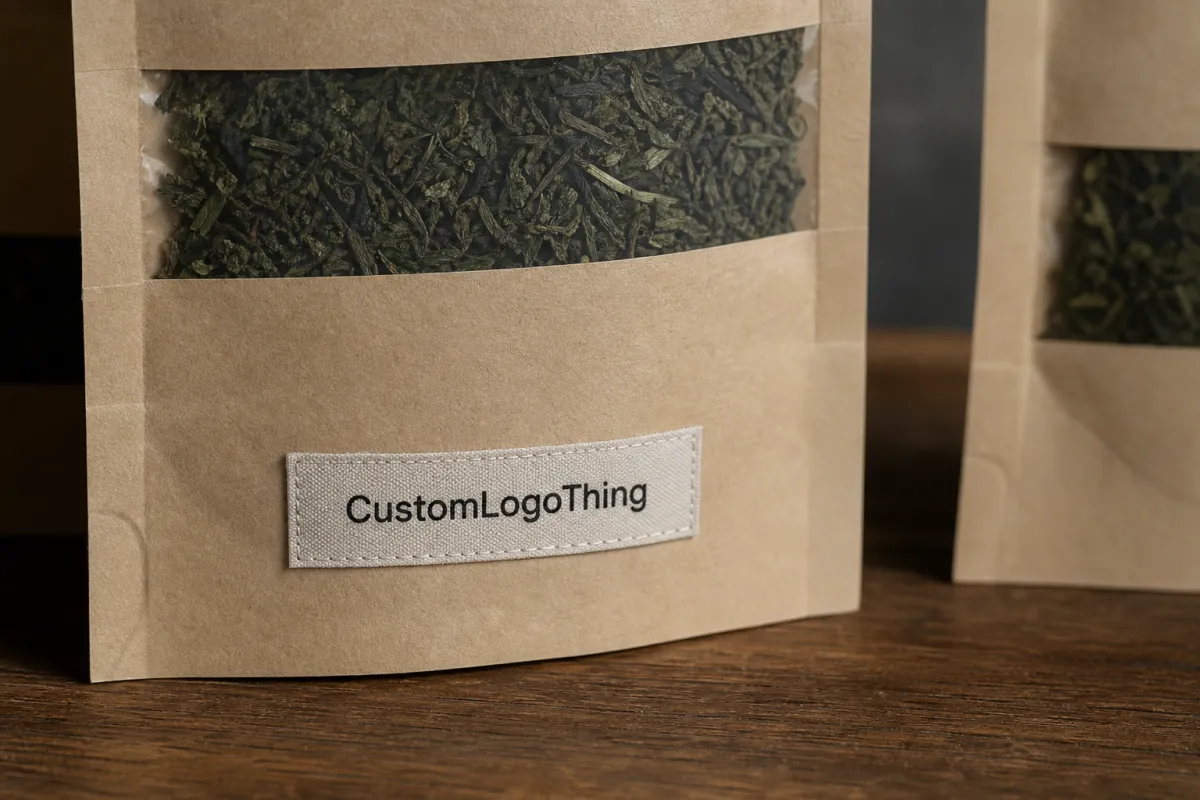
Tea is a sensory product, so buyers judge the package before they smell the leaves. A small woven label on a kraft pouch, drawstring cotton bag, rigid gift carton, or tin wrap can make the pack feel more finished than a flat sticker. Texture does a lot of work: raised thread, a clean edge, controlled sheen, and a slight thickness that the hand notices before the eye names it.
The size can be surprisingly modest. You do not need a billboard. A 25 mm by 50 mm label can carry a premium signal if the thread work is readable, the edge is firm, and the contrast holds up from 18 to 24 inches away on a retail shelf.
Tea labels usually face four stress points:
- Rubbing: packs slide against corrugated shippers, display trays, packing tissue, and neighboring units.
- Moisture variation: warehouses and retail spaces can move from dry air to higher humidity, especially near loading docks or café counters.
- Repeated handling: shoppers pick up tea tins and pouches, turn them around, then put them back.
- Edge wear: corners and cut ends fray first if the label is poorly specified or finished.
For a brand using recycled materials, FSC certified cartons, post-consumer waste paperboard, or biodegradable packaging, the woven accent also has to fit the visual system. A glossy satin label on a rustic kraft pouch can look refined. It can also look overdressed. The difference is usually contrast, scale, and whether the rest of the pack has enough polish to support the sheen.
Packaging floor rule: a label is not only decoration. It is a small component that has to survive packing, freight, display, and the customer’s hand without losing legibility.
That is the buyer question behind woven label selection: which material will still look intentional after the distribution chain has had its turn?
How Weave, Backing, and Edge Finish Affect Use
A woven label is built from thread, not ink sitting on a surface. The loom creates the artwork by interlacing yarns at a specified density, usually with polyester thread for commercial packaging labels. Higher density gives better detail, cleaner small type, and smoother curves. It also raises cost and exposes weak artwork faster.
Damask-style weaving is common for brand labels because it holds detail well. Satin weaves feel smoother and brighter, useful for premium tea lines, gift packs, and limited blends. Coarser weaves look natural and tactile, but they are unforgiving with tiny serif type, thin borders, and delicate botanical drawings.
Backing changes the application
The backing should match the way the tea package is assembled. A sew-in label works well on cloth tea sleeves, muslin bags, reusable drawstring pouches, and fabric gift wraps. An adhesive-backed woven label can work on cartons, tins, paper sleeves, and belly bands, but the adhesive must be tested on the actual surface. Matte varnished paperboard, soft-touch lamination, uncoated kraft, and powder-coated tins all behave differently.
Iron-on backing is less common for rigid tea packaging. It can be useful for fabric accessories, reusable gift bags, or sewn promotional items. The practical question is simple: will the label be applied during bag sewing, carton assembly, fulfillment, or final kitting? The answer determines the construction.
Edges and folds are not cosmetic details
Edge finish affects appearance and handling. Straight-cut labels are simple and clean, but the cut edge should be heat-sealed or otherwise finished to reduce fray. End-fold labels tuck the short ends under, making them better for sewn applications. Center-fold labels work well on seams, hems, and pouch edges. Mitre-fold labels create a neat angled finish, often used where the pack needs a tailored look.
Woven labels are strongest on fabric tea sleeves, drawstring pouches, premium carton accents, tin wraps, and gift bundles. They are usually a poor choice for dense legal copy. Keep ingredients, nutrition facts, net weight, lot codes, warnings, and regulatory language on printed packaging. Use the woven label for brand name, line name, symbol, origin cue, or a short phrase.
Material Choices for Tea Bags, Pouches, and Boxes
A useful material decision separates handfeel from performance. They overlap, but they are not the same. A soft label can still be durable. A rustic label can still be too coarse for your logo.
Polyester is the workhorse. It resists abrasion, holds color well, and supports fine detail at smaller sizes. For many tea brands, a polyester damask label is the safest first specification because it balances crisp artwork, wear resistance, and predictable production.
Satin labels are smoother and can read more upscale, especially on gift tins, rigid boxes, and premium sampler sets. They tend to show sheen, so contrast should be checked under retail lighting. A cream satin ground with champagne thread may look elegant on a screen and nearly invisible on a shelf.
Cotton blends fit organic, herbal, apothecary, or farm-style tea brands that want a warmer texture. The tradeoff is detail. Cotton-blend labels often feel less synthetic, but they may not hold micro type or fine line work as cleanly as polyester damask.
| Material or weave | Best use | Strengths | Watch-outs | Typical relative cost |
|---|---|---|---|---|
| Polyester damask | Small brand labels on pouches, cartons, tins, and sleeves | Crisp detail, strong color, good abrasion resistance | Can feel too polished for very rustic packs | Base to moderate |
| Satin woven | Premium teas, gift boxes, limited blends, seasonal sets | Smooth surface, refined sheen, upscale handfeel | Low-contrast colors can disappear under bright light | Moderate to higher |
| Cotton blend | Natural, organic, handmade-style, or herbal packaging | Warm texture, less synthetic feel | Less sharp for tiny typography and thin icons | Moderate |
| Coarser woven label | Rustic drawstring bags or simple logo marks | Tactile, visible texture, strong craft impression | Poor fit for detailed logos, long text, or fine borders | Base to moderate |
Packaging format should guide the decision. A label sewn into a soft pouch bends and flexes every time the pack is handled. A label adhered to a rigid carton faces less flex but more surface-adhesion risk. A label on a tin may need a stronger adhesive system or a paper belly band underneath, because metal surfaces can be slick and unforgiving.
Color matters more than many buyers expect. Two-thread contrast is often cleaner than four similar shades. Thread thickness affects how small letters fill in. Sheen changes shelf visibility. A refined Earl Grey tin and a loose-leaf chai kraft pouch may need different label textures even if the logo is identical.
If sustainability claims are part of the package story, keep them specific and documented. FSC certified paperboard and recycled materials can be verified through recognized systems such as the Forest Stewardship Council. A woven label does not make the whole package sustainable by itself, so avoid broad claims that cannot be supported by material data or certification.
Cost, MOQ, and What Actually Changes the Price
Cost is not random. The main drivers are finished size, weave density, color count, edge finish, folding style, backing, order quantity, and sample requirements. A 20 mm by 40 mm straight-cut damask label with two colors is a different job from a 45 mm by 70 mm satin label with six colors, end folds, and adhesive backing.
For planning, small woven labels often land around $0.08 to $0.35 per piece depending on size, finish, and quantity. Short runs may sit higher. Larger standardized orders can drop materially once setup and proofing are spread across more units. Actual quotes will vary, but that range helps buyers spot numbers that are unusually high or suspiciously low.
MOQ is a real issue for tea brands running multiple SKUs. If you have eight blends and want a different woven label for each, you may trigger eight separate minimums. That can strain a smaller brand testing seasonal flavors. A cleaner approach is often one shared woven brand label, with printed flavor information on the pouch, carton, belly band, or hang tag.
Ways to save without making the package look cheap:
- Use one standard label size across several tea varieties.
- Limit the thread palette to two or three high-contrast colors.
- Keep the logo bold enough for the selected weave density.
- Choose straight cut, end fold, or center fold based on the actual application rather than habit.
- Use woven labels for brand presence, not every piece of product information.
Hidden costs deserve attention. Design cleanup can add $25 to $100 or more if the file is not production-ready. Physical samples may carry fees, especially for custom colors or multiple materials. Rush production can raise cost by 15% to 40% depending on capacity and timing. Shipping is another real line item, particularly if a retail launch leaves no room for slower freight.
A fair comparison needs the same specification sheet. If one quote uses high-density damask with end folds and another uses a lower-density straight cut, the cheaper number is not really cheaper. It is a different product.
Production Steps and Typical Lead Times
A normal woven label order follows a steady sequence: artwork review, weave specification, digital proof, optional sample, approval, bulk weaving, cutting or folding, backing application, inspection, packing, and shipping. The fastest orders are usually the cleanest orders. Complete vector artwork, finished dimensions, Pantone or thread color targets, quantity by SKU, and attachment method can remove days of back-and-forth.
Artwork review and quoting can take 1 to 3 business days if the file is organized. Digital proofing often takes another 1 to 3 business days. A physical sample may add 5 to 10 business days, sometimes longer if a special thread, custom backing, or unusual fold is requested. Bulk production after approval commonly runs 7 to 15 business days for standard labels, with more time needed for complex finishes or larger quantities.
Shipping and approval time are not manufacturing time, but they still affect the launch. Packaging schedules often get tight not because the label took too long to weave, but because three people needed to approve a 2-inch sample and nobody had final authority on the color.
Tea brands should build a buffer around trade shows, retail resets, holiday gift sets, and seasonal blends. A practical calendar might allow 3 to 5 weeks from first quote to delivered labels if samples are needed. If the design is already proven and the supplier has run it before, reorder timing can be much shorter.
Quality checks should happen before bulk approval and again when labels arrive. Confirm finished size, fold placement, edge condition, thread colors, logo clarity, backing coverage, and carton count. For adhesive-backed labels, apply several to the real substrate, then rub, flex, stack, and leave them overnight. Immediate tack can look acceptable while edge lift appears later.
For transit testing on finished packs, standards from groups such as ISTA are useful reference points, especially if cartons, tins, and display shippers will move through parcel or retail distribution. A label that looks perfect on the desk still needs to survive compression, vibration, rubbing, and packing-line handling.
A Practical Selection Checklist for Tea Brands
Use this checklist before requesting pricing. It will save time and make the supplier’s quote more accurate. A strong woven label brief should end in a practical specification, not just a mood board.
- Define the packaging format. Is the label going on a stand-up pouch, tin, rigid box, paper sleeve, fabric bag, or sampler bundle?
- Choose the attachment method. Sew-in, adhesive, iron-on, or folded into a seam all require different construction.
- Set the finished size. Measure the real package, not only the render. A 30 mm label can look large on a small tea tin and tiny on a gift carton.
- Match texture to brand position. Damask for crisp and polished, satin for smooth and premium, cotton blend for natural and tactile.
- Check artwork at actual scale. Print it at final size. Thin borders, small serif type, and delicate icons often fail here.
- Decide color priorities. Choose the colors that affect recognition and readability first. Treat minor tonal variation as secondary.
- Request one sample round if risk is high. This is especially useful for multiple tea varieties, small typography, a new backing, or an unfamiliar substrate.
- Test on the real pack. Fold it, rub it, pack it, stack it, and view it under the lighting where it will sell.
For brands comparing related packaging components, the Custom Labels & Tags page is a useful place to review label formats beyond woven options. Printed tags, hang tags, and specialty labels can work alongside woven accents rather than compete with them.
Most selection mistakes start with artwork approved too large on a screen. A logo that looks beautiful at 6 inches wide may lose its fine leaf detail at 1.25 inches. Shrink it early. Judge it like a customer would: quickly, at arm’s length, next to competing packs.
Common Mistakes When Specifying Woven Labels
The first mistake is designing for a mockup instead of the actual package. Digital renders are helpful, but they do not show pouch bulge, carton corner radius, tin curvature, or the way a label sits after filling and sealing. Measure the finished pack with product inside if possible.
The second mistake is forcing too much detail into a tiny label. Fine botanical drawings, long slogans, micro serif type, and thin borders can blur when thread replaces ink. A woven label is not a high-resolution paper print. It has structure. Respect that structure and the result will look more expensive.
The third mistake is chasing too many colors. More colors do not automatically mean a better label. They can increase price, complicate approval, and still fail to improve shelf readability. A strong two-color woven mark can outperform a six-color version if the contrast is cleaner.
The fourth mistake is skipping samples on new materials. Tea brands often discover issues only after the first real application test: adhesive lifting from uncoated kraft paper, a center fold sitting awkwardly on a pouch seam, satin glare reducing contrast, or a label edge feeling scratchy on a fabric bag.
Another common problem is ignoring the rest of the packaging system. If the shipper is corrugated cardboard with tight inner dividers, labels may rub during transit. If the pouch uses a textured recycled paper laminate, adhesive choice becomes more sensitive. If a gift box uses soft-touch film, test adhesion before bulk production.
There is also a regulatory trap. Woven labels can make a package look finished, but they should not be used as a workaround for required food labeling. Tea packaging still needs clear printed space for required product information, and that information must remain readable through the product’s normal shelf life.
Brands can review finished packaging examples and material combinations on the Case Studies page, then use those observations to shape a more realistic woven label brief.
What to Prepare Before You Request Quotes
Before asking for pricing, gather the information a supplier needs to quote the same product every time: final artwork, finished label size, quantity by SKU, attachment method, desired material or handfeel, edge finish, backing type, and the exact packaging format the label will live on.
Good quote requests are specific. Instead of “small woven label for tea pouch,” use “polyester damask woven label, 30 mm by 45 mm, two colors, straight cut, adhesive back, applied to matte kraft stand-up pouch, 5,000 pieces.” That one sentence can cut out a long email chain.
Compare quotes on the same specification sheet. Check material, weave density, color count, MOQ, sample policy, lead time, and freight. If the label carries small type, multiple thread colors, or a premium satin finish, ask for a proof or sample before committing to a full run.
A simple action plan works best: confirm the package format, decide whether cost or presentation has priority, simplify artwork for the weave, request samples where the risk is real, and lock the production calendar against the launch date. A careful Woven Labels Material guide for tea brands should help buyers reduce surprises, speed approvals, and keep packaging sharp after storage, shipping, and shelf handling.
FAQ
What is the best woven label material for tea brands?
Polyester damask is often the strongest all-around choice because it gives crisp detail, good wear resistance, and reliable color. Satin can feel smoother and more premium, while cotton blends suit a natural or rustic package style but usually give up some sharpness. The right choice depends on label size, artwork detail, attachment method, and how much handling the package will see.
Are woven labels better than printed labels for tea packaging?
Woven labels usually feel more finished and hold up well on packages that are handled often or stored for longer periods. Printed labels can be better for gradients, photographic detail, dense regulatory copy, or lower-cost short runs. For tea brands, the choice usually comes down to durability, brand feel, and how much visual detail the design needs.
How many colors should I plan for in a woven tea label?
Most tea brands should start with two or three essential colors. A smaller color count can simplify pricing, proof approval, and production while improving legibility at small sizes. If the artwork is highly detailed, ask whether simplifying the palette will make the final weave cleaner.
What affects woven label cost the most?
Size, weave density, color count, edge finish, folding style, backing type, and order quantity all have a direct effect on cost. MOQ matters because smaller runs usually carry a higher unit cost than larger standardized orders. Rush timing, sample rounds, artwork cleanup, and shipping can also change the final total more than buyers expect.
How long does woven label production usually take?
Artwork review and proofing are often quick if the files are clean and the specs are complete. Sampling can add 5 to 10 business days or more, especially when texture, backing, or color accuracy must be checked in person. Bulk production commonly takes 7 to 15 business days after approval for standard labels, but shipping and revision time should always be built into the calendar.