Pet Treat Packaging Looks Premium or Cheap in About Three Seconds
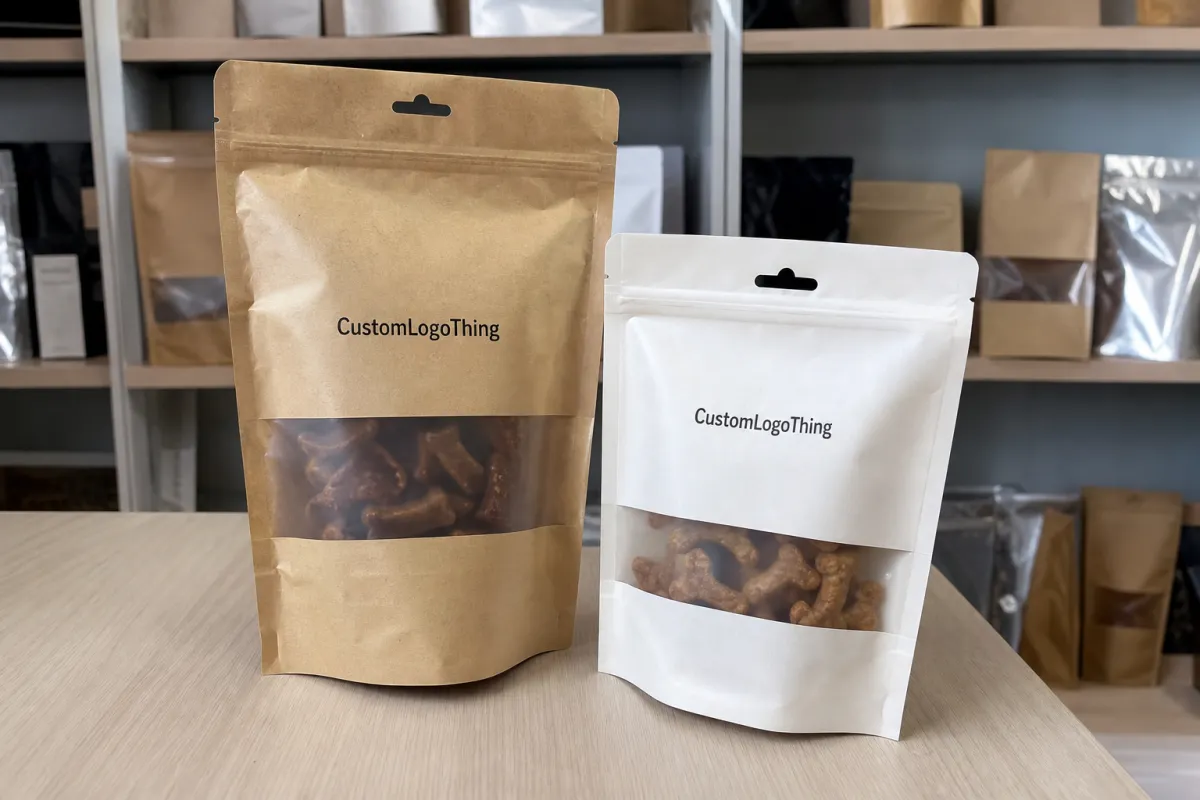
A $14 bag of freeze-dried liver treats sitting beside a cheaper competitor gets judged before anyone reads the protein percentage. Shoppers notice the finish of the pouch, the closure, the label placement, and whether the branding looks deliberate or improvised. That is why searches for woven labels unit cost for Pet Treat Brands are rarely about decoration alone. They are usually about whether a textile label can justify its cost against stickers, printed pouches, paper tags, or no secondary branding at all.
Woven labels add texture. They also signal durability, which matters more than many brands expect in premium pet categories. Natural treats, raw and freeze-dried lines, bakery-style biscuits, organic recipes, holiday bundles, subscription inserts, and giftable packs all benefit from packaging that feels handled rather than merely printed. The label does not make the product premium by itself. It acts as one of the early clues.
There is a margin reality hiding underneath the aesthetics. A woven label makes sense on reusable treat bags, drawstring pouches, fabric toppers, branded wraps, bandanas, sampler bundles, and refill-style programs. On a low-price disposable plastic pouch, it may be theatrical waste. Premium cues work only if the product, price point, and repeat-use value support them.
The useful questions are practical: what does each label cost, what minimum order quantity is realistic, how long does production take, and which specs change the quote? Pet treat packaging gets expensive fastest when brand teams fall in love with a look before they understand the manufacturing math.
What Woven Labels Actually Are for Pet Treat Packaging
Woven labels are small textile labels made by weaving colored threads into a logo, name, icon, or short line of text. They are not printed fabric patches. The artwork is built from thread, so the finished label has more dimension and usually better abrasion resistance than a printed cloth label.
The three common constructions are easy to separate. Damask woven labels are the sharpest option for fine detail, small lettering, and cleaner logo edges. Satin woven labels have a smoother, shinier face and can work well for boutique or gift-oriented packaging. Taffeta woven labels tend to be more economical and are suitable for simple marks, side tabs, and basic brand identifiers.
For Pet Treat Brands, these labels usually appear outside the primary food-contact area. Common placements include reusable pouches, canvas bags, fabric closures, ingredient reminder tags, bundle wraps, treat jar accessories, and premium multipack packaging. They also cross over from pet accessory packaging, where woven labels have long been used on collars, leashes, beds, toys, and apparel. That familiarity helps shoppers read the label as durable and intentional.
Woven labels beat printed fabric labels on texture and longevity. Printed labels win when the art includes gradients, photographic detail, color blends, tiny disclaimers, or frequent copy changes. A watercolor logo that looks beautiful on a website can become an expensive disappointment in thread. A bold mark with two colors and clean spacing usually performs better.
Use the woven piece for brand identity, product names, short claims, or a simple quality cue. Keep ingredients, guaranteed analysis, net weight, lot codes, barcodes, feeding guidance, and regulatory statements on compliant printed packaging, stickers, or inserts. A woven label is not the place to squeeze a nutrition panel into eight-point thread. It will be hard to read, harder to update, and risky if information changes.
Label Specifications That Move the Price Up or Down
Every woven label quote starts with a small set of variables: size, fold style, thread count, material, backing, edge finish, quantity, and packing requirements. Buyers often focus on the logo file and miss the mechanics. The mechanics are where a quote either stays reasonable or starts wandering.
Size is the obvious lever. Small side tabs often run around 0.75 x 1 inch. Standard logo labels commonly sit near 1 x 2 inches. Larger patches may reach 2 x 3 inches or more, especially on reusable bags and gift bundles. A bigger label uses more material, takes more weaving time, and may require more careful cutting and folding. Custom shapes are possible, but they often add setup or finishing cost because the label must be cut and inspected with tighter attention.
Fold style affects both price and application. A straight cut works for flat patches. End fold gives clean tucked edges for sewing onto a pouch or wrap. Center fold suits side seams and tabs. Loop fold is useful for small flags. Manhattan fold creates a more structured, apparel-style label with finished edges. The wrong fold can slow application or leave a raw-looking edge, which is a strange way to pay more and look cheaper.
Color count is another real price lever. Most pet treat packaging labels stay clean with 2 to 6 thread colors. More colors increase setup complexity and can reduce clarity if the design is crowded. Tiny paw prints, hairline script, shadows, gradients, and heavily textured illustrations are frequent offenders. On a 1-inch label, “charming detail” can become thread noise.
Backing changes the math too. Sew-in labels may need no backing. Some textile applications use iron-on backing, pressure-sensitive adhesive, or heat-seal backing. Adhesive can be convenient for prototypes, inserts, or non-wash applications, but it is not always the best choice for textured fabric or humid storage. Heat-cut edges can reduce fraying. Merrowed or embroidered-looking borders add presence but also add cost and bulk.
Material choice matters less dramatically than size and complexity, but it still affects hand feel. Polyester thread is common because it is durable, colorfast, and cost-effective. Cotton or recycled-content options may be available from some suppliers, though minimums, color availability, and lead times can change. If a sustainability claim will appear anywhere in the packaging system, confirm the material spec before artwork approval. Do not let a nice-sounding label claim outrun documentation.
The practical sweet spot is usually boring in the best way: a modest label, limited colors, readable art, standard fold, and no unnecessary backing. That combination can lower unit cost without making the package look stripped down.
Woven Labels Unit Cost for Pet Treat Brands: Real Quote Factors
Woven Labels Unit Cost for pet treat brands depends less on the pet category than on the physical build. A simple two-color tab and a multi-color damask patch may both carry the same logo, but they do not require the same production work. Same brand, different spec, different price.
For small custom woven labels, higher-quantity pricing often lands around $0.08 to $0.35 each. Smaller runs or complex constructions can land around $0.35 to $0.90+ each, depending on size, fold, backing, finishing, inspection requirements, and supplier model. If a quote comes in far below the market without a detailed spec, ask what is excluded. Setup, freight, sample cost, backing, and packing are the usual ghosts.
Most custom woven label programs also include a one-time setup charge, sometimes described as loom setup, digitizing, or artwork conversion. A common range is $30 to $100+, with higher charges for intricate designs, specialty threads, unusual shapes, or multiple versions. That charge is spread across the run, which is why the price per label drops quickly as quantity increases.
Minimum order quantities reflect the fixed labor behind production. Thread loading, loom setup, proofing, cutting, folding, counting, inspection, and packing all happen before the label reaches a pouch. Many orders start around 500 to 1,000 pieces. Better pricing usually appears at 2,500, 5,000, and 10,000 pieces. Tiny runs can be produced by some suppliers, but the unit cost will not behave like mass production.
Here is a realistic comparison for common label types:
| Label Type | Typical Use | Approx. Unit Cost | Best For |
|---|---|---|---|
| Simple woven tab | Small reusable pouch branding | $0.08-$0.20 | High-volume programs with clean logo art |
| Mid-detail damask label | Premium treat bag, wrap, or bundle | $0.18-$0.45 | Sharper artwork and stronger tactile presentation |
| Complex custom label | Special shape, multi-color patch, or specialty finish | $0.35-$0.90+ | Small premium runs where presentation carries more value |
The label quote is not the full landed cost. Add freight, duties if applicable, receiving labor, sewing or application labor, waste allowance, storage, and reorder timing. A label quoted at $0.18 can become less attractive if it requires slow manual alignment or expedited freight because the reorder was placed too late.
Application labor is especially easy to underestimate. Sewing a label into a pouch seam is different from applying a sticker to a flat film bag. If labels are attached by a contract packer, ask whether the placement adds a handling charge. If your own team applies them, time the process on a realistic batch. Thirty extra seconds per unit is not trivial at 5,000 units.
My blunt rule: if the label is mostly decorative, optimize for readability and controlled cost. If it is part of a reusable premium package, spend more on hand feel, edge quality, and durability. That is where the money shows up after the first impression.
“The cheapest woven label is the one that still looks right on the package, survives handling, and does not force a rushed reorder two months later.”
Supplier comparison works best when each quote uses the same construction. Review Custom Labels & Tags options by size, fold, material, and backing rather than asking for a general price. Packaging Case Studies can also help translate abstract unit costs into actual product builds.
Two outside references are useful if the broader packaging program has shipping or sustainability requirements. ISTA publishes transit testing standards used to evaluate shipping performance. FSC certification matters when paper components need chain-of-custody credibility. Neither organization is about woven labels specifically, but both affect the packaging system around them.
MOQ, Reorder Strategy, and How Many Labels to Buy First
MOQ is not a random supplier hurdle. It is tied to fixed production work. A loom still has to be set up whether the run is 300 pieces or 3,000. The sample still needs checking. Labels still need cutting, folding, counting, inspection, and packing.
For a first run, think in bands. 500 to 1,000 pieces can work for a new premium pouch, seasonal bundle, retail test, or ecommerce pilot. 2,500 to 5,000 pieces is a healthier zone for established farmers market brands, regional retail accounts, and brands with repeat velocity. 10,000+ pieces makes sense only when packaging is stable and demand is predictable.
Buying too few raises the unit cost and makes freight inefficient. It can also create a packaging gap exactly when sales improve. Buying too many creates a different problem: old labels sitting in storage after a brand refresh, recipe change, size update, retailer request, or compliance adjustment. Pet Treat Brands change flavors more often than they admit in early planning meetings.
A practical buffer is 5% to 10% above the exact packaging count. That covers sewing errors, damaged pieces, sales samples, photography samples, mockups, and normal production leftovers. For one master brand label used across multiple flavors, this buffer is usually sufficient. For flavor-specific labels, the inventory risk climbs. A chicken liver label cannot usually rescue a slow-moving salmon skin SKU.
Ask for price breaks at multiple quantities. Do not request one number and build a decision around it. Ask for 1,000, 2,500, and 5,000 pieces at the same spec. Sometimes the jump to the next tier is small enough to justify the extra inventory. Sometimes the savings are not worth tying up cash. The tiered quote makes that visible.
Master branding usually wins for early and mid-stage Pet Treat Brands. One clean woven label can work across beef, turkey, lamb, pumpkin, and training-treat formats while printed stickers or pouch artwork handle the variable product information. Flavor-specific woven labels should be reserved for stable SKUs with proven movement and low risk of reformulation.
Process and Timeline from Artwork to Finished Labels
The production path is straightforward: quote, artwork review, digital proof, sample or strike-off, approval, bulk weaving, cutting, folding, inspection, packing, and shipping. The machine is rarely the slowest part. The artwork file often is.
Quote turnaround is often 1 to 2 business days when the specs are complete. Digital proofing can take 1 to 3 business days. Sampling or strike-off production often takes 5 to 10 business days, depending on complexity and current capacity. Bulk production commonly runs 10 to 20 business days after approval. Shipping then adds its own clock. Domestic transit may take a few days. Overseas freight can add 5 to 15+ days, depending on service level, customs, port conditions, and season.
The common delays are painfully ordinary: low-resolution artwork, changing the label size after proofing, unclear thread colors, missing fold instructions, specialty materials, late sample approval, and rush-season capacity. A buyer may think the supplier is slow when the real issue is that nobody decided whether the label should be end-fold or straight-cut.
Before requesting a quote, send the useful information in one package: vector logo file, desired dimensions, target quantity, fold type, thread color references, backing requirement, application method, delivery deadline, and ship-to location. If the label will be sewn onto a pouch or fabric wrap, include a photo or sample of that item. A label that looks balanced on a white screen can look oversized, dull, or oddly placed on a dark textured bag.
Physical samples matter. They reveal thread texture, logo clarity, edge quality, color contrast, stiffness, and how the label behaves on the real material. Approve against the final packaging, not against optimism under office lighting. If the pouch is cream canvas, test on cream canvas. If it is black cotton, check contrast on black cotton. Thread behaves differently than ink, especially with small type and muted colors.
Quality control should not be mysterious. Check registration, loose threads, edge consistency, fold accuracy, color match against the approved sample, count accuracy, and backing adhesion if backing is used. For sewn applications, test pull strength and placement tolerance. For adhesive applications, test bonding on the actual substrate after a few hours and again after several days. Some adhesives look fine at first and then curl at the corners.
If the packaging system also includes printed pouches, cartons, or paper hang tags, align the woven label with those pieces before production. The label does not need to match everything exactly. It does need to feel like the same brand translated into thread.
Common Buying Mistakes That Make Woven Labels More Expensive
The first mistake is forcing too much detail into a woven format. Fine script, gradients, shaded icons, tiny taglines, and complicated illustrations can look perfect on a monitor and muddy on the loom. Simpler art often costs less and reads better. That is one of the rare places where restraint saves money and improves the result.
The second mistake is choosing size before testing it on the package. A 2-inch label may look premium on a large canvas pouch and ridiculous on a small sample bag. Print a paper mockup at actual size. Tape it to the pouch. Put it next to competing products. The exercise takes five minutes and prevents expensive confidence.
The third mistake is assuming more colors equal better branding. More thread colors can add cost, complicate production, and make the label look busier. Two or three well-chosen colors often look more refined than six. Contrast matters more than color count.
The fourth mistake is ordering flavor-specific labels too early. If the peanut butter pumpkin recipe changes, the retailer asks for a different pack size, or the product gets cut after a trial run, those labels become stranded inventory. A master brand label plus printed variable information is usually safer.
The fifth mistake is ignoring application labor. A cheap label that takes longer to sew, align, peel, press, or tie on can cost more in actual production than a cleaner label with a slightly higher unit price. Packaging math should include labor minutes, not just invoice lines.
The sixth mistake is forgetting reorder timing. If finished goods depend on labels, running out can delay product even when the treats are ready. Labels are small, which makes them easy to ignore until the bin is almost empty. Set a reorder point based on weekly usage and lead time, then add a safety buffer for shipping delays.
The seventh mistake is skipping the sample. Digital proofs are useful, but they cannot show texture, thread density, edge feel, or how small type resolves. A sample or strike-off costs time. A bad bulk run costs more.
The fix is not complicated. Simplify the art. Test the size. Quote multiple quantities. Approve a physical sample. Use master branding where possible. Include application labor and freight in the landed cost. Keep regulated product information off the woven label. None of that is glamorous. It works.
Next Steps to Get an Accurate Label Quote Without Guesswork
A clean quote starts with clean facts. Send the logo file, label dimensions, target quantity, intended use, fold preference, material preference, backing requirement, deadline, and shipping location. If any detail is undecided, say so. A supplier can usually recommend options, but vague requests produce vague pricing.
Ask for three quantity tiers, such as 1,000, 2,500, and 5,000 pieces. That makes unit cost visible and shows where bulk pricing begins to matter. The lowest per-piece price is not always the best buy. Inventory risk, cash flow, storage, packaging changes, and reorder timing all count.
Send a photo or physical sample of the actual pouch, topper, wrap, or bundle if available. Specify how the label will be attached: sewn, heat applied, adhered, tied on, or packed loose. Application method affects fold style, backing, durability, and labor. It can also decide whether the cheapest label is actually cheap.
Use woven labels for identity and presentation. Keep ingredients, net weight, compliance language, barcodes, feeding instructions, and lot codes on printed packaging or stickers that can be updated when needed. That split keeps the woven piece clean and keeps regulated information where it belongs.
Custom Logo Things can support artwork review, label construction recommendations, MOQ planning, sampling guidance, production quoting, and bulk manufacturing for pet treat packaging programs. For an accurate comparison of woven label pricing for pet treat brands, quote the same label at several quantities with final specs. Guesswork is expensive. Thread is not the place to discover that.
What is a typical woven label unit cost for pet treat brands?
Many custom woven labels fall around $0.08 to $0.35 each at higher quantities. Smaller runs or more complex labels can land around $0.35 to $0.90+ each. Final cost depends on size, thread colors, fold type, backing, order quantity, setup charges, application labor, and freight.
What MOQ should pet treat brands expect for custom woven labels?
Common MOQs start around 500 to 1,000 pieces, depending on the supplier and label construction. Better pricing usually appears at 2,500, 5,000, or 10,000 pieces. First runs should be quoted at several quantities before committing.
Are woven labels safe to use on pet treat packaging?
Woven labels are best used outside the food-contact area: on reusable pouches, fabric wraps, toppers, bundle accessories, or exterior packaging. They should not replace required food labeling such as ingredients, guaranteed analysis, lot codes, or regulatory information. If a label may touch food directly, confirm material and compliance requirements before production.
How long does production take for woven labels for pet treat packaging?
Digital proofs often take 1 to 3 business days after artwork review. Sampling can take about 5 to 10 business days. Bulk production commonly takes 10 to 20 business days after approval, plus shipping time.
How can pet treat brands lower woven label pricing without making packaging look cheap?
Use a standard size, fewer thread colors, readable artwork, and a simple fold style. Build one master brand label that works across multiple flavors instead of ordering separate labels for every SKU. Order enough volume to reach a useful price break, but avoid overbuying if branding, recipes, or packaging may change soon.