Farmers Market Branding Has Three Seconds to Work
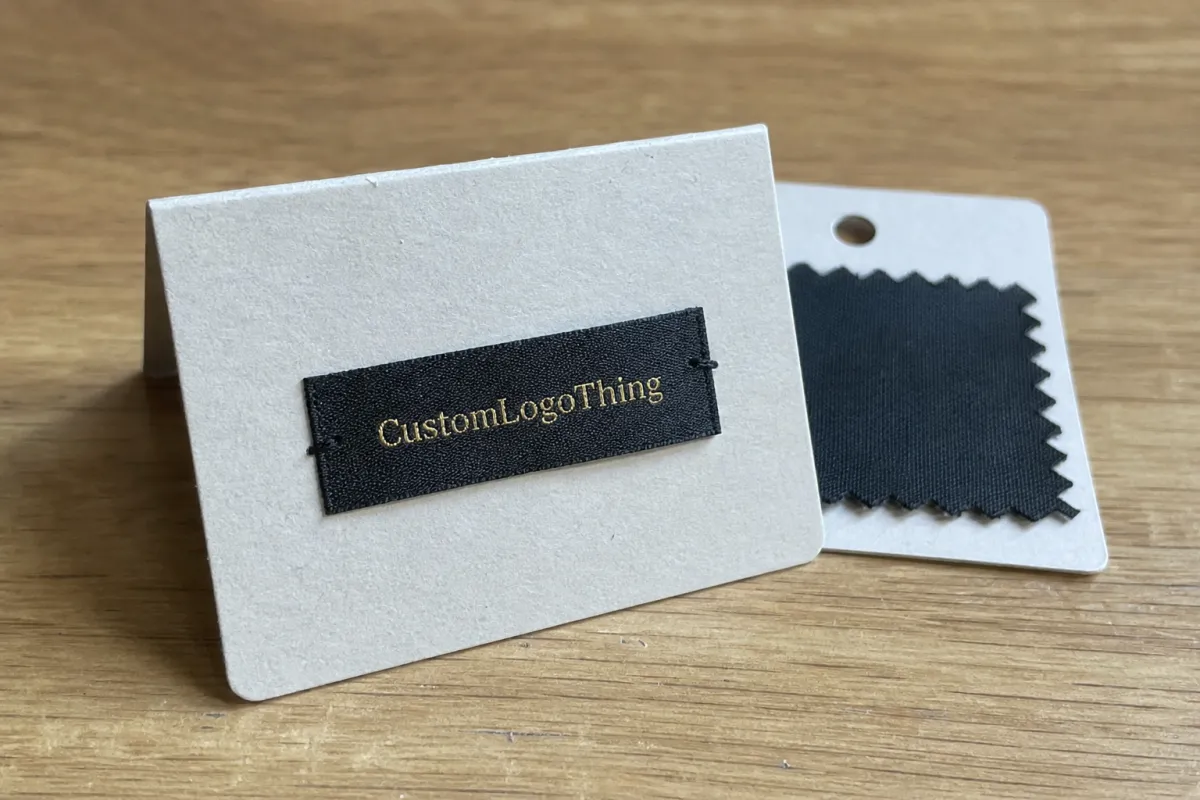
A shopper slows down. Their eyes hit the apron, the tote, the baby romper, the knitted hat. For sellers asking for a Woven Labels Supplier Quote for farmers market sellers, the purchase is rarely just decoration. It is proof of origin, a quality signal, and a small piece of resale readiness in a setting where buying decisions can happen almost instantly.
That sounds severe. It is also how booth shopping works. The customer is carrying produce, comparing prices, answering a child, talking to a friend, and deciding whether a handmade tea towel feels giftable or merely useful. A label helps answer that question without forcing the maker into a pitch every time.
At a farmers market, the woven label may be the only permanent branded asset that leaves with the buyer. The paper bag gets recycled. The price tag comes off. The conversation fades. A sewn-in label stays on the apron after dozens of washes, sits inside the tote on every grocery run, and reminds the recipient who made the product.
Hang tags still matter. Stickers still sell. They do different jobs. A hang tag can carry story, ingredients, care instructions, pricing, or a QR code. A sticker can close tissue paper or dress up a kraft bag. A custom woven label becomes part of the product itself: folded into a seam, sewn flat onto a patch area, stitched onto a hem, or attached inside a bag where it survives ordinary use.
The quote stage is where many sellers underestimate the number of variables. A half-inch change in height can affect readability. A center fold needs allowance. A patch-style label with finished edges prices differently from a straight-cut seam label. Thread colors, backing, artwork detail, and order quantity can move the final number more than first-time buyers expect.
Practical rule: do not quote labels from a logo alone. Quote from the product, the placement, the fold style, and the expected use.
Custom Logo Things works best with sellers who want labels that are durable and professional without forcing a premature inventory gamble. If your booth has ten towel designs, three apron sizes, and one tote that always sells out, the smartest first order may be one flexible brand label used across the whole range rather than ten separate designs.
Woven Labels Supplier Quote for Farmers Market Sellers: What Changes the Number
A quote is built from specifications, not vibes. The major price drivers are label dimensions, thread color count, fold style, backing choice, edge finish, artwork complexity, quantity, and delivery requirements.
Small labels with two or three thread colors usually price more efficiently than oversized labels with gradients, tiny lettering, or detailed farm illustrations. Woven labels are made by interlacing thread into the design. That gives them durability and texture, but it also means a watercolor tomato, fine script, shaded barn, or intricate crest may need simplification before production.
There is also a gap between low unit cost and low total spend. A higher quantity can reduce the cost per label because loom setup, proofing, finishing, and packing are spread across more units. But a seasonal seller may not want 5,000 labels tied to a logo, tagline, or product line that could change after two market cycles. Cash sitting in unused labels is still cash on a shelf.
Setup charges or digitizing work may apply depending on the artwork and production method. Clean vector artwork can reduce revision time. A logo file with outlined fonts, simplified colors, and exact dimensions helps avoid the slowest kind of delay: a proof that keeps coming back for preventable corrections.
Consider two common examples. A 1 inch by 2 inch center-fold label for cotton tote bags will not quote the same way as a 2.5 inch patch-style label for wool hats. The hat patch may need a denser weave, heavier hand, finished border, or iron-on backing. The tote label may need seam allowance and softer edges because it sits where hands rub against fabric.
Before requesting pricing, prepare the buying basics:
- Product type: apron, tote, beanie, quilt, baby garment, tea towel, scarf, or another textile.
- Label placement: neck, side seam, hem, exterior patch, inside bag, or packaging area.
- Wash exposure: no wash, occasional wash, frequent machine wash, or heat exposure.
- Color count: usually 1 to 4 thread colors for clean small-label branding.
- Quantity: test run, market batch, wholesale batch, or reorder volume.
- Finish: straight cut, center fold, end fold, Manhattan fold, book fold, or patch edge.
- Deadline: event date plus the date labels must be in hand for sewing or packing.
Custom Logo Things quotes from actual label specifications rather than vague package tiers. That matters. If two suppliers both quote “500 labels” but only one includes backing, finishing, fold allowance, and realistic shipping, the lower number may not be the lower cost per usable label.
Product Details That Matter on Handmade Apparel, Totes, and Textiles
Woven labels are made by weaving thread into the design instead of printing ink on top of fabric. That construction gives the label a more permanent, premium appearance. It also tends to resist fading better than many printed fabric labels, especially on products that are washed, gifted, handled, or displayed repeatedly.
Common farmers market uses include clothing neck labels, side seam labels, hem tabs, beanie patches, quilt labels, tea towel labels, tote bag brand tabs, children’s clothing care labels, and small maker marks on scarves or fabric baskets. The use case should drive the label format. Not the reverse.
Printed fabric labels still have a place. They can work well for dense care instructions, fiber content, batch codes, or very small text that would not weave cleanly. Woven labels usually feel more substantial and gift-ready, while printed labels may be better for regulatory or care information. Many sellers use both: one woven brand label and one printed care label.
Feel matters. A soft-touch woven label is a better fit for baby clothing, scarves, necklines, and items worn close to skin. A denser label can suit outerwear, canvas totes, market bags, and wool hats. For structured canvas goods, a sturdier label can look intentional; on a lightweight muslin baby garment, the same label may feel stiff.
Fold style is not a cosmetic detail. It changes how the label is attached, how it sits on the product, and how long application takes:
- Straight cut: useful for patches, exterior labels, quilt labels, and flat sewing.
- Center fold: common for side seams, hems, and tote seams where the label folds over an edge.
- End fold: clean for horizontal sewing because the raw ends are tucked under.
- Manhattan fold: often used for neck labels where a clean top edge and folded ends are needed.
- Book fold: compact, often used for small branding or care information in tight spaces.
The right label is not always the largest label. Oversized branding can make handmade goods feel corporate or uncomfortable, especially on soft garments. A 0.75 inch by 1.5 inch side tab can look more refined than a 3 inch exterior patch on delicate linen.
If the product is washable, sold as apparel, intended for children, or likely to be gifted, pair the brand label with a care label. Buyers may not remember verbal instructions about cold washing or line drying. A clear care label reduces confusion, protects the product, and signals that the item is made to be used, not just admired at the booth.
Specifications to Send Before You Ask for Pricing
A fast quote starts with finished specifications. “Small label with my logo” is not enough. “1 inch by 2 inches, center fold, black and cream thread, sew-on, 500 pieces, for cotton tote side seams” gives a supplier enough to evaluate size, construction, and price.
Finished size matters more than rough visual size. A quarter inch can change readability, sewing allowance, and how the label sits on a small product. On a baby garment, 0.25 inch of extra height can irritate the neckline. On a tote, it may disappear into the proportion of the bag. Context decides.
Send vector artwork if available, such as AI, EPS, or PDF with outlined fonts. If vector art is not ready, a high-resolution PNG or JPG may be usable for quoting, but expect artwork review before production. Low-resolution screenshots create risk because edges and letterforms are not reliable enough for weaving decisions.
Color needs a reality check. Woven thread cannot reproduce every screen color, shadow, gradient, or watercolor effect. Thread colors are physical materials. A supplier can approximate a brand palette, but a dusty sage on a monitor may not translate exactly to a stock thread. For small labels, fewer colors often look sharper.
Readability is where good labels are won or lost. Small serif text, thin script fonts, delicate vine drawings, and detailed farm illustrations may need adjustment. A goat, wheat stalk, tomato, or barn can weave beautifully at the right scale. At 0.4 inch tall, it may lose its shape.
Backing choices should be selected by use, not convenience alone. Sew-on labels are the durable standard for garments, quilts, tote bags, and products expected to wash. Iron-on backing can save application time, but it must match fabric type and heat tolerance. Adhesive backing is better for temporary placement, samples, or packaging use than for long-term laundering. No backing is common for seam insertion.
| Label use case | Recommended fold | Common size range | Best backing | Durability notes |
|---|---|---|---|---|
| Tote bag side seam | Center fold | 0.75 x 1.5 in to 1 x 2 in | No backing or sew-on | Good for repeated handling and moderate washing. |
| Beanie or wool hat patch | Straight cut | 1.5 x 2 in to 2.5 x 2.5 in | Sew-on or iron-on, fabric dependent | Check stretch, heat tolerance, and edge finish. |
| Baby clothing neck label | Manhattan fold or end fold | 0.5 x 1.25 in to 0.75 x 1.75 in | Sew-on | Soft feel and smooth edges matter more than size. |
| Tea towel hem label | End fold or center fold | 0.75 x 1.5 in to 1 x 2 in | Sew-on | Frequent washing favors simple, high-contrast artwork. |
| Quilt maker label | Straight cut | 2 x 3 in to 3 x 4 in | Sew-on | Allows more text, date, fiber notes, or maker location. |
For broader product presentation, sellers can review Custom Labels & Tags to match woven labels with hang tags, packaging labels, or care inserts. If sustainability claims appear on packaging, verify them carefully; the Forest Stewardship Council is a useful reference for paper and forest-based material sourcing claims, although woven label materials require their own review.
MOQ, Unit Cost, and Cash Flow for Seasonal Booth Sellers
MOQ means minimum order quantity. With woven labels, MOQ exists because loom setup, artwork preparation, proofing, weaving, cutting, folding, finishing, counting, and packing all happen before the first usable label reaches your worktable. Producing 50 labels can require nearly the same setup discipline as producing 500.
For farmers market sellers, MOQ is also a cash-flow question. A new apron line, children’s clothing capsule, quilted accessory collection, or seasonal textile product may not justify thousands of labels before demand is proven. The cheapest per-label number can still be the wrong purchase if 70 percent of the order never gets used.
Think in batches rather than annual ambition. Estimate labels for three market cycles, a holiday inventory push, possible wholesale inquiries, and replacement stock. If you sell 40 tote bags per weekend and attend two markets per month, 500 labels may cover a practical testing window. If you sell 8 baby rompers per month and may change sizing, colors, or branding, a smaller batch may protect cash.
The lowest label price can also become expensive if the backing or fold style adds labor. A label that saves $0.03 per unit but takes an extra two minutes to sew is not cheaper if you are applying 300 labels before a Saturday market. Application labor is part of the real cost.
Use this simple calculation:
Real cost per saleable item = label unit cost + application labor + packaging or garment waste risk.
If a label is difficult to align, curls under the presser foot, or requires rework, it can damage finished goods. On a $38 handmade tote or $64 linen apron, one ruined item can erase the savings from a bargain label order.
Ordering more makes sense for stable bestsellers, repeat wholesale orders, subscription boxes, standardized garments, or packaging formats that will use the same label for months. A higher-volume reorder can reduce unit cost and simplify planning.
A smaller test order is smarter for rebrands, seasonal artwork, untested product categories, experimental color palettes, or logos still being refined. A good woven label quote should make those tradeoffs visible: lower total spend now versus lower unit cost later.
Production Steps and Lead Time From Artwork to Delivery
Woven labels are manufactured components, not same-day print items. Plan around that. A typical order moves through quote request, artwork review, label specification confirmation, digital proof, approval, weaving, finishing, quality check, packing, and shipping.
The most common delays happen before production begins. Low-resolution artwork, uncertain dimensions, missing fold choices, unclear color direction, and late address changes can add days before a loom is scheduled. The production clock is not truly running until the specifications and proof are approved.
Proof approval is the control point. Check spelling. Check spacing. Check thread color approximation. Check fold direction. Check whether sewing allowance has been included. If the label says “Handmade in the Valley” and the finished woven proof compresses the lettering, fix it before approval, not after delivery.
Typical lead time depends on quantity, finishing, current production capacity, and shipping method. Many custom woven label orders are planned in business-day windows rather than overnight cycles. Sellers should count backward from the first market date, then add buffer for proof revisions, transit time, and home or studio assembly.
Ordering labels before final product assembly is especially important for seam labels. A center-fold tab inserted into a tote seam must be planned before the seam is closed. Adding that label later may mean ripping stitches, accepting a weaker attachment, or switching to an exterior patch. None of those options is attractive during market week.
Rush requests may be possible in some situations. They depend on artwork readiness, quantity, production capacity, finishing requirements, and shipping method. A simple two-color straight-cut label has a better rush profile than a detailed four-color patch with special backing and uncertain artwork.
For products shipped to wholesale buyers, think beyond the booth calendar. The International Safe Transit Association publishes transport testing resources at ista.org, and while a woven label is not a shipping carton, the broader lesson applies: products should be planned for handling, transit, storage, and display before the deadline becomes urgent.
Supplier Fit: What Custom Logo Things Controls Before You Commit
Supplier selection should be built around control points: clear quoting, specification review, production consistency, proofing, communication, and packing for shipment. Hype does not sew labels onto aprons. Good specifications do.
A custom packaging manufacturer mindset matters because labels are part of the product presentation system. The woven label, hang tag, sticker, bag, and box should not feel like five unrelated decisions. If the label uses cream and black, but the hang tag is bright white and the box label uses a different logo lockup, the product can look less finished than it is.
Custom Logo Things can help review placement, choose fold and backing, check artwork for weave limitations, and align labels with bags, stickers, hang tags, or boxes. Sellers can start with Contact Us if they already have artwork and a product photo ready for review.
A label that looks attractive in isolation can fail on the product. A patch may be too stiff for a baby hat. A center-fold label may be too short for a thick canvas seam. An iron-on backing may not perform well on a textured knit that sees heat and stretch. The product decides the specification.
Quality control should cover legibility, cut accuracy, color consistency within thread limitations, edge finish, backing performance, and count accuracy. For a 500-piece order, a short count of 20 labels is not a rounding error if those labels were allocated to finished holiday inventory.
Sellers can also request labels that support both direct booth sales and wholesale readiness. That may include brand labels, size markers, care labels, packaging labels, and hang tags with SKU or barcode space. Wholesale buyers often expect consistency. A clean label system makes a handmade line easier to reorder, display, and gift.
The value is practical: fewer production surprises, clearer specifications, and labels that arrive ready for real use. That is what a Woven Labels Supplier Quote for farmers market sellers should provide before money is committed.
Build a Quote Request That Gets a Fast, Accurate Answer
Start with the product. Choose the item the label will go on, measure the available label area, decide whether the label will be sewn into construction or applied after production, and gather the cleanest artwork file you have.
If placement is uncertain, send photos. This is especially useful for beanies, aprons, quilts, tote bags, children’s apparel, scarves, and textured handmade goods. A photo can reveal seam thickness, available flat space, fabric texture, and whether an exterior patch would look natural or forced.
Ask for one primary label first if you are new to custom woven labels. Quoting five unrelated ideas can slow the process and muddy the decision. A flexible brand label used across three or four products often gives a better first order than a complicated label family built before sales data supports it.
Use this structure for a faster quote:
- Business name:
- Product type: tote, apron, baby garment, hat, quilt, tea towel, or other item
- Finished label size: width x height in inches
- Fold style: straight cut, center fold, end fold, Manhattan fold, or unsure
- Backing: sew-on, iron-on, adhesive, no backing, or unsure
- Quantity: test batch, market batch, or reorder volume
- Thread colors: number of colors and preferred color direction
- Artwork: vector file preferred; high-resolution image if vector is unavailable
- Deadline: first market date and in-hand date for sewing or application
- Shipping location: city, state, and ZIP code or full shipping address if ready
Flag market deadlines early. There are two dates that matter: the event date and the date labels must be in your hands for sewing, ironing, or packing. Those are not the same. If 200 aprons need labels stitched before a Friday load-in, receiving labels Thursday afternoon is not success.
If you are comparing suppliers, compare the same specification across each quote. Same size. Same fold. Same backing. Same quantity. Same shipping assumption. Otherwise the numbers may look comparable while the products are not.
Ready to price a first batch or clean up a reorder? Send product details through Contact Us and include photos if placement is still undecided. The fastest path is complete specs, realistic quantity, and artwork ready for review.
FAQs
What should I include in a woven label quote request for farmers market products?
Send the finished label size, fold type, backing preference, quantity, artwork file, thread color goals, product type, deadline, and shipping location. If placement is uncertain, include a clear product photo so the supplier can recommend a practical label format.
What MOQ makes sense for handmade sellers ordering custom woven labels?
The right MOQ depends on sales volume, product consistency, and cash flow. For a new product line, order enough for several market cycles plus a small buffer. For established bestsellers or wholesale reorders, a higher quantity can reduce unit cost.
Are sew-on or iron-on woven labels better for farmers market clothing and bags?
Sew-on labels are usually best for washable apparel, tote bags, aprons, quilts, and items that need long-term durability. Iron-on labels can save application time, but they should be matched carefully to fabric type, heat tolerance, and expected washing conditions.
How long does it take to receive custom woven labels after approving the proof?
Lead time depends on artwork readiness, quantity, production capacity, finishing requirements, and shipping method. Plan backward from the market date and allow extra time for proof revisions, transit, and sewing labels onto finished goods.
Can I get a supplier quote for woven labels if my logo has tiny text or a detailed farm illustration?
Yes, but the artwork may need simplification so it weaves cleanly and remains readable at label size. Thin scripts, gradients, shadows, and highly detailed illustrations often need adjustment before production.


