Get a Woven Labels Supplier Quote for Book Merch Brands
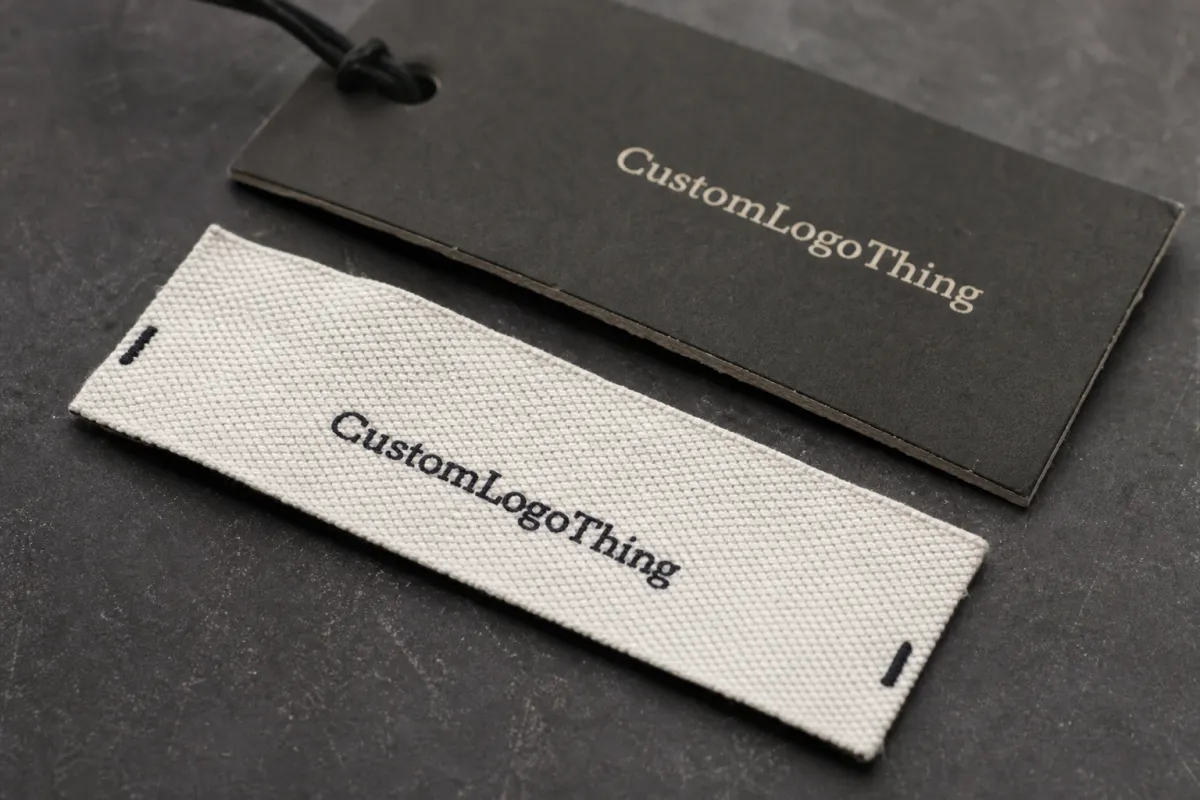
A hoodie, tote, cap, or scarf tied to a book universe can sell because the story already has gravity. The label is what makes the merch feel official instead of improvised. That is why a Woven Labels Supplier Quote for Book Merch Brands should be treated as a purchasing document, not a small decoration decision.
The quote tells you more than price. It shows whether the supplier understands scale, reorder consistency, artwork limits, garment use, and launch timing. For indie authors, publishing teams, literary subscription boxes, and convention sellers, those details matter because the calendar is usually tight and the run size is rarely forgiving.
Woven labels are also one of the lowest-cost visible assets in the product stack. On many orders, they add only a few cents per unit once the run is large enough. Yet they get touched every time the item is worn, folded, washed, photographed, packed, gifted, or resold. Book fans notice that kind of physical proof. They are not just buying apparel. They are buying a marker of belonging.
A useful quote should answer the practical questions early: material, weave type, label size, fold, backing, thread colors, quantity breaks, artwork requirements, sampling options, freight, and lead time. If those pieces are missing, the low number at the top of the page can become expensive later. The cost usually appears as revisions, delayed proofs, wrong construction, or a label that looks acceptable on screen but weak on the garment.
Custom Logo Things is built around that kind of production discipline. A serious quote should read like a spec sheet with pricing attached. Fewer assumptions. Fewer hidden costs. A label that supports the merch instead of fighting with it.
How Woven Labels Strengthen Book Merch Without Changing the Garment
Woven labels upgrade a product without changing the blank. That quiet advantage is useful in book merch, where the story often carries more perceived value than the fabric weight. A standard sweatshirt can feel more deliberate with a well-sized neck label. A tote can move from event giveaway to collectible object with a clean exterior tab.
The strongest use cases tend to fall into clear groups. Author branding needs a repeatable identifier. Series branding needs consistency across releases. Fictional schools, guilds, houses, archives, labs, or secret societies need visual recognition. Quote-based collections need a small brand mark that does not compete with the words. Signed-edition bundles and convention drops need something that makes the product look planned.
Printing a large graphic gets attention once. A neck label, sleeve label, hem tag, or bag tab keeps reinforcing origin every time the product is handled. That repeated signal is one reason woven labels are often preferred over printed satin labels for apparel branding. They usually tolerate washing better, feel more substantial in hand, and retain color more predictably over repeated wear.
There is a collector angle too. Limited merch tied to preorder campaigns, anniversary releases, character collections, or special editions can carry resale value. A strong label supports that behavior. A weak one makes even a decent garment feel generic. This is where brands can lose value quietly; the product sells, but it does not feel memorable enough to become part of the fan’s shelf, closet, or resale listing.
For book merch, the label is not a tiny afterthought. It is part of the product’s proof of origin.
A supplier familiar with apparel branding should ask where the label will go before recommending a construction. Hoodies, tees, totes, caps, scarves, beanies, and bundle inserts all behave differently. A center-fold neck label is not interchangeable with an end-fold seam label or a loop-fold hem tag. The quote should reflect the product, the audience, and the application method.
For a broader view of how branded trim fits into product programs, review the Custom Labels & Tags page or browse recent Case Studies for production examples.
Product Details That Matter: Weave, Fold, Backing, and Placement
Not all woven labels are built the same. The quote earns its keep by making those differences visible before production starts.
Damask woven labels are the workhorse for fine detail. They can hold cleaner lines in small logos, crests, character marks, and compact typography. For book brands with illustrated symbols or series emblems, damask is often the safest starting point. Satin woven labels have a smoother sheen and a softer visual finish, which can suit premium apparel or giftable bundles. Taffeta labels are usually more budget-minded and work best for simpler marks, internal branding, or less visible placements.
Fold style changes both appearance and function. A straight cut label works for patch-style or flat applications. End fold labels are common when the left and right edges need to tuck under stitching. Center fold labels are standard for neck branding. Loop fold labels suit hems, cuffs, and hanging applications. Manhattan fold labels create a more finished garment label, with the top folded down and the sides tucked under.
The buyer does not need to memorize every name. The supplier does need to match the fold to the product. Otherwise the label may pucker, twist, sit too stiffly, or expose edges that should have been hidden.
Backing deserves the same attention. Sew-on labels remain the default for most apparel and bags because they hold up best over time. Iron-on backing can work for small batches, samples, or quick application, but heat, fabric type, wash conditions, and operator consistency all affect results. Adhesive backing is better for temporary placement tests, packaging mockups, or non-wash uses. No backing is still normal when the decorator or cut-and-sew team will apply labels traditionally.
Placement should be chosen by product category, not habit. Neck labels work well on tees, sweatshirts, and hoodies. Hem tags fit streetwear-style drops and subtle author branding. Sleeve tabs can make a piece feel more designed without taking over the graphic. Beanie labels and tote labels are useful for winter releases, bookstore events, and reader conferences. Caps may require a stiffer or differently folded label depending on placement.
Book audiences often behave like collectors. They notice touch, edge finish, and scale. Scratchy trims, loose threads, bulky folds, or labels that wrinkle after the first wash can trigger complaints even when the blank garment is acceptable. A good quote accounts for those risks before anyone approves a proof.
Specifications to Send Before You Ask for a Label Quote
For an accurate Woven Labels Quote, send complete specs the first time. The strongest requests include label size, order quantity, artwork file, number of colors, fold type, backing, intended garment, placement, application method, delivery address, and required in-hand date.
Artwork quality is often the first bottleneck. Vector files such as AI, EPS, SVG, or high-resolution PDF give the supplier enough information to judge line weight, spacing, thread color needs, and legibility. A low-resolution PNG may still be useful as a visual reference, but it can require cleanup before a firm quote or proof is possible. That delay happens before production, which means it can be invisible until the schedule is already compressed.
Size is not an abstract design choice. A 1 x 2 inch hem tag reads differently from a 1.5 x 2.5 inch neck label. Larger labels may cost more, but they can also improve readability and reduce the need to simplify artwork. Thin serif fonts, tiny chapter icons, ornate borders, and detailed crest art often need adjustment to weave cleanly. Better to learn that during quoting than after proof approval.
Color needs discipline. Woven labels are built from thread, not ink, so they do not behave like digital art or screen printing. Buyers should identify brand-critical colors and ask how closely available threads can match them. If exact color is essential, provide Pantone references and expect the supplier to explain the closest thread options. Some variation is normal because thread, lighting, weave structure, and surrounding garment color all affect perception.
Compliance details should be separated from brand decoration. If the label must include fiber content, care instructions, size, country of origin, or other required information, say so at the start. A decorative woven label and a required garment label are not always the same product. Trying to force both jobs into one tiny label can make the result hard to read.
One practical habit saves surprising amounts of time: send a photo or mockup of the garment with the intended placement marked. That gives the supplier context for fold, scale, backing, and sew allowance. A small label can look perfect as a standalone proof and still sit awkwardly on the finished hoodie.
| Label Option | Typical Use | Relative Cost | Best For |
|---|---|---|---|
| Damask woven label | Fine-detail branding | Mid | Author logos, series crests, collector merch |
| Satin woven label | Softer premium finish | Mid to higher | Garments where hand feel matters |
| Taffeta label | Budget-sensitive branding | Lower | Internal labels, simpler marks, large runs |
| Center-fold sew-in label | Neck branding | Varies by size and quantity | Tees, hoodies, sweatshirts |
Cost, MOQ, and Unit Pricing for Custom Woven Labels
Price is shaped by quantity, size, weave complexity, color count, backing, fold type, sampling, and shipping speed. That is the cost stack. Lower quantities carry a higher unit cost because setup, artwork conversion, loom preparation, cutting, folding, packing, and handling are spread across fewer labels.
At higher quantities, unit pricing usually improves. The tradeoff is inventory risk. Short-run book merch often protects cash flow by ordering only what the campaign can sell. Established publisher stores, recurring author shops, and multi-title merch programs may benefit from larger label orders because the same label can support restocks, future drops, or several garment styles.
A useful quote should make that tradeoff visible. Ask for quantity breaks rather than a single price. Comparing 250, 500, 1,000, and 2,500 pieces can reveal whether a slightly larger order materially lowers the per-unit cost. Sometimes the jump is worth it. Sometimes the savings are too small to justify tying up cash in trim inventory.
Buyers should check these line items before approving:
- Sample fee
- Artwork or setup fee
- Production unit cost
- Backing surcharge, if any
- Rush charge, if requested
- Freight and duties where applicable
- Artwork cleanup or simplification cost
Typical unit pricing varies widely. As a practical range, custom woven labels may cost only a few cents each at higher volumes, while small test runs, detailed artwork, special backing, or rush production can move the unit cost much higher. The cheapest label is not automatically the best buy if it creates application problems or weakens the perceived value of the merch.
There are sensible ways to reduce cost without making the product look cheaper. Simplify tiny artwork. Limit thread colors to the ones that matter. Standardize one label size across several garments. Use the same author or imprint label across multiple title-specific graphics. Consolidate reorders when the schedule allows. None of that is glamorous. It is how a label program becomes repeatable.
Shipping deserves its own line of attention. A quote that looks competitive before freight can lose its advantage once rush delivery, duties, or split shipments are added. If labels are going directly to a decorator, fulfillment center, or cut-and-sew partner, confirm the shipping address and packing requirements before the quote is finalized.
For supply-chain buyers, documentation can matter even on small components. If packaging or trim programs involve certified materials, confirm what paperwork the supplier can provide and keep it aligned with the rest of the merch line. For shipment testing and transit durability, standards from ISTA are useful reference points, especially when labels move through multiple handling points before final packing.
Process and Timeline From Artwork Review to Finished Labels
The standard path is straightforward: inquiry, artwork review, specification confirmation, quote, digital proof, sample or pre-production approval, weaving, cutting and folding, quality check, packing, and shipping. The trouble usually starts when one of those steps is treated as optional.
The first 24 to 48 hours can determine whether the order stays on schedule. If the artwork is unclear, the size is undecided, the fold is unspecified, or the backing choice is still open, quoting slows before production begins. A tight brief is worth real money because it removes the unknowns that create revision loops.
Digital proofs are useful, but they have limits. They can show layout, dimensions, fold lines, color references, and expected simplification. They cannot fully show hand feel, edge behavior, thread sheen, or how tiny type reads after weaving. For a simple logo or repeat order, a digital proof may be enough. For detailed crests, premium collector releases, first-time author merch, or small serif typography, a physical sample is often the smarter control point.
Lead time depends on order volume, artwork readiness, sampling needs, production capacity, label complexity, approval speed, and shipping method. The buyer influences more of that timeline than many teams admit. A supplier cannot protect a release date if approval sits in an inbox for a week or if the garment placement changes after proofing.
Work backward from the real deadline, not the public announcement date. Book merch often has several clocks running at once: preorder launch, warehouse intake, decoration schedule, convention freight, subscription box packing, and customer ship date. Labels need to arrive early enough for application and inspection. A label that lands two days before fulfillment may technically be on time and still create a labor problem.
Good suppliers flag timing risk instead of hiding it. They explain what can be woven accurately, what should be simplified, and where sampling is worth the delay. That honesty can be more valuable than a low quote that turns into a late run.
Quality Checks That Separate Reliable Suppliers From Risky Ones
Reliable label suppliers do not quote from a logo file and hope the rest works out. They ask about placement, garment type, fold, backing, application method, and delivery timing. That questioning is a strong signal. Weak suppliers skip it and leave the consequences for production.
Before approval, inspect the proof for legibility, edge finish, fold accuracy, color match, thread density, backing notes, and final dimensions. Small type should be readable at actual size, not just on a zoomed-in screen. Fine lines should not close up. Borders should not crowd the sew allowance. If the label will fold, make sure no critical artwork lands directly on the fold line.
Physical samples should be checked with the garment in hand whenever possible. Hold the label against the fabric. Look at contrast under normal light. Bend it. Rub the edge. If it has iron-on backing, ask how the supplier expects it to be applied: temperature, pressure, dwell time, and fabric limitations all affect adhesion. If it will be sewn, confirm the label is not too stiff for the placement or too small for efficient handling.
Durability deserves attention. Labels on hoodies, tees, bags, and beanies should tolerate sewing, washing, folding, and repeated handling. A collectible item may sit on a shelf, but most apparel gets used. Wash behavior, edge fray, curl, and scratchiness can turn into customer complaints long after the launch excitement fades.
Consistency across units also matters. The sample is not the goal; the production run is. Ask how the supplier manages color consistency, count accuracy, sorting, and packing. Labels should arrive protected, counted, and grouped in a way that makes sense for the decorator or in-house team applying them. For larger apparel programs, clean packing can save real labor downstream.
Price is only one evaluation point. Proof quality, communication speed, sample accuracy, reorder consistency, and knowledge of apparel use cases all belong in the comparison. A supplier who understands that a book launch cannot simply move by two weeks is different from one selling generic trims by the thousand.
On sustainability, suppliers who can document fiber sources, recycled-content options, or packaging choices aligned with FSC standards reduce friction for brands with material traceability goals. Documentation does not make every order automatically better, but it makes internal review and compliance conversations less chaotic.
Next Steps Before You Approve Production
Before approving production, run the basics again. Confirm the label size. Choose the fold type. Verify the artwork file. Select backing. Note the garment fabric and placement. Confirm order quantity. Set the required in-hand date. These details prevent most avoidable mistakes.
Ask for quantity breaks so you can compare unit cost at several order levels. Request a proof that shows actual dimensions, fold lines, thread colors, and any simplification of fine artwork. If the merch is tied to a new series, premium bundle, special edition, or event deadline, consider a sample before the full run.
Alignment matters beyond the label itself. Label arrival should match the decorator’s schedule, the fulfillment window, and any packing requirements. A label that arrives in time for the announcement but not in time for application can still break the schedule. Keep approved specs on file so future releases or restocks maintain the same label feel, size, thread colors, and fold.
For buyers comparing options, Contact Us is the fastest way to request a quote with the right production details attached. Artwork, garment specs, and placement notes make the process cleaner from the first reply.
A strong Woven Labels Supplier Quote for book merch brands protects more than the trim budget. It protects margin, launch timing, collector appeal, and the small physical signals that tell fans the product belongs to the story they care about.
What should I include in a woven label quote request for book merch?
Include artwork, label size, quantity, fold type, backing, garment type, placement, delivery address, and target in-hand date. Photos or mockups of the garment help the supplier recommend the right construction.
How much do custom woven labels cost for author or publisher merch?
Cost depends on size, quantity, weave complexity, thread colors, backing, fold style, sampling, and shipping speed. Request quantity breaks because the unit cost often drops as order volume increases.
What is the MOQ for woven labels for book merch brands?
MOQ varies by supplier, label type, and production setup. Small test runs may be possible for launch boxes or indie author drops, while larger orders usually produce better unit pricing and easier restocks.
How long does woven label production take after proof approval?
Timeline depends on artwork readiness, sampling needs, production capacity, label complexity, approval speed, and shipping method. Clear specs and fast proof approval are the best ways to protect a release date or convention deadline.
Are woven labels better than printed labels for book merch apparel?
Woven labels are usually more durable, more premium in feel, and better suited for long-term apparel branding. Printed labels can work for care information or highly complex artwork, but woven labels often create a stronger collectible impression.