Fast Woven Labels Supplier Quote for Restaurant Groups
Woven Labels Supplier Quote for Restaurant Groups: Why Details Change the Price
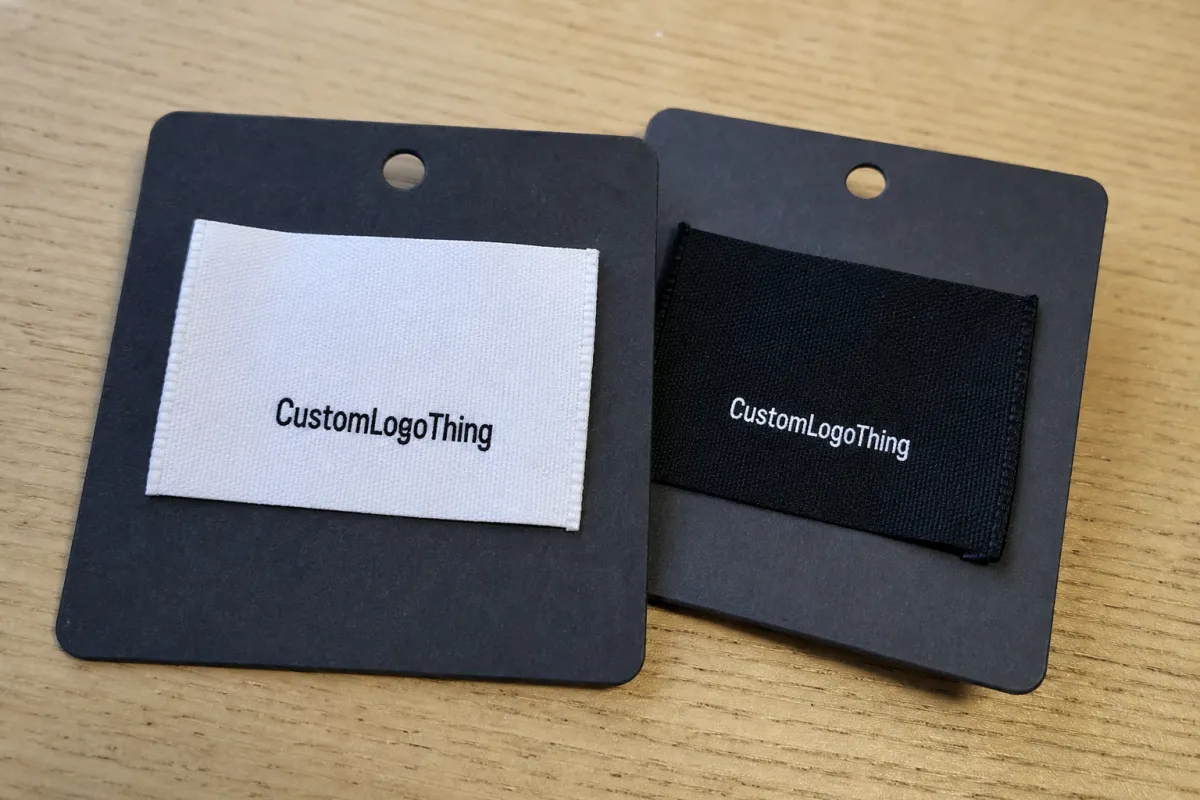
A restaurant group may need 800 aprons, 250 chef coats, 120 caps, and 60 retail totes, then learn that one label decision has quietly turned the order into four different production jobs. Buyers requesting a Woven Labels Supplier Quote for restaurant groups need more than a neat per-piece number. They need an estimate tied to specifications that can survive procurement review, brand approval, garment production, and a hard opening date.
Restaurant operators are rarely buying for one static location. They manage concepts with different uniforms, seasonal merchandise, front-of-house and back-of-house roles, franchise requirements, and reorders that appear without much warning. A 1.25-inch center-fold neck label for staff tees is not the same product as a 2.5-inch patch label sewn onto a canvas apron. Loom setup, thread count, fold style, backing, sewing method, and inspection criteria can all change.
Many label quotes start badly because the request is too thin: “500 woven labels, logo attached.” That sounds efficient. It usually is not. The supplier still has to determine whether the label will touch skin, survive industrial laundering, sit on a retail beanie, or act as a visible brand marker on a server apron.
Woven labels are operational identifiers as much as decorative trim. They separate uniform programs from retail merchandise, limited seasonal drops from staff-issued garments, and permanent brand assets from short-run promotions. Printed tags may be better for dense care instructions or temporary campaigns. Woven labels usually win on perceived value, texture, and wash durability.
Buyer rule: if a label must still look consistent after 25 to 50 wash cycles, confirm construction before chasing the lowest unit price.
A useful quote puts measurable inputs on the table: size, weave type, color count, fold, quantity tier, proofing method, production time, freight, and reorder control. “Premium quality” does not tell procurement much. A clear spec does.
Where Restaurant Groups Use Woven Labels Across Uniforms, Merch, and Packaging Touchpoints
Common applications include chef coats, aprons, server shirts, bar towels, caps, beanies, tote bags, staff jackets, retail tees, and event merchandise. Placement changes the job. A neck label identifies size and brand ownership. A hem tag gives a server shirt a small visible cue. A side-seam fold adds detail without shouting. A patch-style woven label can make a heavy apron or canvas tote look retail-ready instead of generic.
Stronger restaurant operators treat labels as part of a wider brand system. A group may want the same identity to appear across garment labels, takeout bags, retail product packaging, catering kits, and launch merchandise. That is why Custom Logo Things quotes labels in context rather than treating them as isolated trim. A label spec can connect to Custom Labels & Tags, branded bags, stickers, sleeves, tissue, boxes, and promotional materials.
Turnover adds pressure. The U.S. restaurant sector has historically carried higher employee churn than many office-based industries. Uniform programs, therefore, cannot be treated as one-time sourcing exercises. Reorders happen. Size gaps happen. A new location needing 90 staff kits in three weeks is not an edge case; for many groups, it is normal operating weather.
Use environment should drive the label choice. Hot kitchens expose garments to heat, steam, grease, abrasion, and frequent laundering. Guest-facing uniforms need comfort and a consistent appearance under dining room lighting. Retail merchandise needs shelf appeal. A bar towel may tolerate a simpler woven mark, while a chef coat neck label needs a softer hand, clean edges, and no scratchy reverse threads.
The practical question is not only “Can this logo be woven?” A better question: “Which construction fits each garment, quantity, and reorder pattern without creating avoidable delays?” That is the difference between buying trim and managing a controlled uniform standard.
Product Details Buyers Should Confirm Before Requesting a Label Estimate
A label estimate gets sharper when the product basics are confirmed early: label type, fold style, finished dimensions, thread count, color count, backing, edge finish, and attachment method. These are not cosmetic details. They decide machine setup, sampling needs, durability, and unit cost.
Damask woven labels are the usual choice for fine logo detail because the weave can handle smaller shapes and cleaner lettering. Satin woven labels have a smoother sheen and can feel more polished, though they may not suit every rugged uniform use. Taffeta woven labels are often more economical for simple marks, size tabs, or applications where fine detail is less critical.
- Straight cut: useful for patch labels applied flat to aprons, totes, caps, jackets, or retail accessories.
- End fold: practical for sewing onto flat garment surfaces while hiding raw edges.
- Center fold: common for neck labels, side seams, and size or brand tabs.
- Manhattan fold: structured option for apparel placements that need folded edges and a clean top line.
Logo complexity deserves a hard look. Tiny lettering below roughly 5 to 6 points, narrow outlines, illustrated mascots, distressed textures, and gradients may not weave cleanly. Thread is not ink. Woven labels approximate brand colors through available thread matches, often guided by Pantone references, but they do not reproduce CMYK artwork the way a printed label or hang tag might.
There is a physical limit to how much information can fit into a woven mark. A two-color wordmark may look sharp at 1.25 inches wide. Add a tagline, founding year, location name, and tiny icon, and the same label can become muddy. Scaling up may solve readability, but it may also make the label too large for the garment.
Tactile performance matters. A soft neck label should not scratch a server during a long shift. A thicker patch label may be exactly right for a 10 oz canvas apron or a retail tote. For compliance details such as garment care text, fiber content, country-of-origin wording, RN numbers, and dense size grids, a separate printed label may be more practical than forcing every line into a decorative woven label.
Before requesting a woven Labels Supplier Quote for restaurant groups, decide which labels carry brand identity and which labels carry required information. Combining both can work, but readability, comfort, and legal text requirements need protection.
Specifications That Prevent Costly Revisions Before Production
Incomplete specs are the hidden tax in label sourcing. A missing dimension can delay quoting. A low-resolution logo can delay proofing. An unclear fold request can create a sample that is technically correct but wrong for the garment.
Start with artwork. Vector files such as AI, EPS, or editable PDF are preferred because the supplier can scale and inspect the logo without guessing. A high-resolution PNG helps as a visual reference, but it should not be the only source. If the brand team has approved logo lockups, minimum clear space rules, franchisor restrictions, or color standards, send those with the first inquiry.
Measurements should be precise. Give width and height in inches or millimeters. Confirm finished size. State whether fold allowances are included. A 2-inch label with end folds is different from a 2-inch visible face plus fold allowance, and that difference affects both weaving and sewing.
Durability details matter as much as artwork. Will the garment be washed weekly, daily, or through an industrial laundry? Is the label exposed to heat, abrasion, bleach, or repeated pressing? ASTM textile testing standards can be useful reference points for laundering and colorfastness expectations, while broader packaging and transit planning may point buyers toward resources from groups such as ISTA for distribution testing logic.
Attachment planning should happen before production. Sewing, heat seal, adhesive backing, and customer-side application each require different assumptions. Adhesive backing may help position a label before stitching, but it is not always a substitute for sewing on laundered uniforms. Heat seal can fit some applications, yet fabric composition, wash exposure, and pressing temperature must be checked first.
Restaurant groups should also clarify inspection expectations. Are loose threads acceptable if they do not show from the front? How close must the woven thread color be to the brand reference? Will labels be counted in bulk, bundled by size, or packed by location? Small handling decisions can matter once the order moves from a sample desk to a production floor.
Do not over-specify blindly. Define the use case first, then let the supplier recommend construction that balances appearance, durability, and cost. A fact-based quote should challenge weak assumptions before money is spent on the wrong sample.
Pricing, MOQ, and Unit Cost Variables for Restaurant Label Orders
Woven label pricing is usually driven by order quantity, label size, thread colors, weave complexity, fold style, backing, sampling needs, freight, and split shipments. The same logo can price differently at 500 pieces, 2,500 pieces, and 10,000 pieces because setup, artwork conversion, loom time, and handling are spread across more units.
As a working range, small woven label orders can land around $0.18 to $0.45 per unit depending on size, detail, backing, and quantity. Larger consolidated runs may come in lower. Specialty threads, very small text, rush production, individual bagging, and multiple delivery points can push the total upward. Those are not arbitrary add-ons. They reflect labor, setup, and handling.
| Quote Scenario | Typical Quantity | Best Use | Common Unit Cost Behavior |
|---|---|---|---|
| Pilot run | 300-750 labels | Testing placement, fabric feel, or a new concept | Higher unit cost because setup is spread over fewer pieces |
| Uniform refresh | 1,500-5,000 labels | Aprons, chef coats, caps, and staff shirts across current locations | More efficient pricing with practical inventory control |
| Annual forecast | 7,500-25,000 labels | Multi-location replenishment and planned openings | Lower unit cost, but higher risk if branding changes |
MOQ should be handled strategically. Consolidate demand across locations, roles, and upcoming openings where it makes sense. Do not order 20,000 labels for a logo system that marketing may update next quarter. The cheapest unit price is not the lowest total cost if 6,000 pieces become obsolete or sit in a storeroom during a uniform change.
Ask for three quote tiers: a pilot quantity, a current uniform refresh quantity, and an annual forecast quantity. Procurement can then compare short-term cash control against long-term unit economics. Also ask for landed cost where possible: sample fees, production, freight, duties if applicable, and delivery timing.
A credible supplier quote should identify assumptions clearly. If the quote assumes one delivery location, say so. If split shipments to five regional managers add cost, say that too. Surprise freight is still surprise cost, even if the label price looked attractive.
Inventory strategy deserves a sober look. Labels are small and easy to overbuy. They also become useless quickly if a restaurant group changes a concept name, updates a logo, adds a new uniform color, or drops a retail line. A modest buffer for reorders is sensible. A year of labels for an unsettled brand system may not be.
Process and Timeline From Artwork Review to Delivered Labels
The typical process is straightforward: inquiry, spec review, artwork check, quote, digital proof, optional physical sample, approval, production, quality check, packing, and shipment. Speed depends heavily on the buyer’s starting information. A clean vector logo, confirmed 1.5 inch by 0.75 inch finished size, selected fold, and target quantity can shorten the first stage dramatically.
Proofing and production are different steps. A digital proof confirms layout, scale, fold direction, color references, and construction direction. A physical sample confirms texture, thread color, readability, edge feel, and how the label looks on the actual garment. For guest-facing uniforms or retail merchandise, sampling is often worth the extra days.
Typical production after approval may run 10 to 20 business days for many custom woven label orders, depending on quantity, complexity, and capacity. Sampling can add time. Freight can add more. Rush requests may be possible, but rush production works best when the label is simplified: fewer colors, clear artwork, standard fold, fast proof approval, and no unnecessary specialty finish.
Restaurant groups face deadline pressure from new-store openings, menu launches, franchise onboarding, and seasonal merchandise drops. A uniform vendor may need labels before sewing can begin. A retail capsule may need packaging and apparel ready for the same event. One late approval can push the entire chain.
Build in approval buffers. Operations may care about durability. Marketing may care about brand color. Procurement may care about landed cost. Franchise teams may care about consistency across markets. If four people must approve the label, a 24-hour proof cycle is possible only when those people are ready before the proof arrives.
Quality control should not be vague. Check that the approved size matches the finished label, folds face the right direction, edges are clean, color is within the approved range, text is readable, and backing matches the order. For larger runs, ask how labels are counted and packed. Mixed batches, loose bundles, or unlabeled cartons can slow down a uniform vendor that is trying to kit garments by location.
For a woven Labels Supplier Quote for restaurant groups, ask the supplier to call out bottlenecks before the purchase order is issued. The best timeline is not the most optimistic one. It is the one that protects the rollout date.
What Makes a Supplier Reliable for Multi-Location Restaurant Groups
Generic “quality” claims are weak evidence. Reliable suppliers show discipline through clear quoting, consistent proofing, documented specs, repeat-order control, and realistic lead time communication. Those habits matter more for a 12-location restaurant group than for a one-off merch drop.
Consistency is the test. A label produced for one market should match labels ordered months later for another location. That requires production records: approved dimensions, fold style, thread colors, logo files, backing, reorder notes, and any exceptions. Without that record, every reorder becomes a fresh interpretation.
Good suppliers also flag problems early. If artwork is too detailed for a 0.5-inch label, they should say so before sampling. If MOQ assumptions are driving the quote, they should explain the breakpoints. If the timeline depends on same-day proof approval, they should make that risk visible.
Procurement teams usually care about four things: predictable landed cost, reorder capability, brand consistency, and fewer approval cycles. The label itself is small. The operational drag from a bad label process is not.
Custom Logo Things brings a broader packaging perspective to this conversation. Restaurant groups often need coordinated branded goods beyond woven labels: bags, boxes, sleeves, tissue, stickers, menu inserts, launch kits, and promotional pieces. For groups trying to align uniform presentation with takeout, retail, and event materials, that context reduces friction. FSC guidance may also be relevant for paper-based branded packaging decisions; buyers can review certification basics at FSC.
A fact-based supplier relationship will not remove every variable. It can reduce mistakes, delayed approvals, inconsistent brand presentation, and reorders that start from scratch.
Next Steps to Prepare a Quote Request That Gets an Accurate Answer
Prepare the quote request like a production brief, not a casual price check. Gather the logo files, intended applications, estimated quantities by garment type, preferred label dimensions, shipment points, and deadline requirements. If you already have uniforms or sample labels, send photos with a ruler in the frame. Visual references can reveal placement, fold, and scale issues faster than a paragraph of description.
- Send vector artwork in AI, EPS, or editable PDF format.
- List garment types, such as aprons, chef coats, caps, tees, totes, or jackets.
- Estimate quantities by use, not just total labels.
- Confirm finished label size or ask for a recommended size range.
- Identify must-have brand colors, durability needs, and delivery dates.
- Separate one-location delivery from split shipments.
Separate requirements from preferences. Brand colors, logo lockup, durability, and comfort may be non-negotiable. Backing, fold style, and even exact label size may be better decided after the supplier reviews the garment use. Ask for two or three scenarios: economical, standard, and higher-detail construction. That gives procurement options without forcing marketing to accept a weak brand presentation.
If you are ready to price a restaurant uniform refresh, retail merchandise run, or new-location kit, send your artwork, label size, quantity range, use case, and target delivery date through Contact Us. The goal is a grounded estimate, not a vague per-piece guess.
The strongest results come from clear specs, realistic quantities, and a supplier that treats restaurant operations as a system, not a single apparel order. A small label can carry a surprising amount of operational risk. It can also do quiet, useful work: help uniforms look intentional, keep retail goods consistent, and make the next reorder less chaotic than the first.
FAQs
What information is needed for a woven labels quote for restaurant uniforms?
Provide vector artwork, finished label size, fold style if known, quantity, garment type, placement, color references, delivery location, and target in-hands date. If construction is undecided, share the use case and ask the supplier to recommend the most practical label type.
How does MOQ affect a woven labels supplier quote for restaurant groups?
MOQ affects unit cost because setup, artwork handling, and production time are spread across the full order quantity. Restaurant groups can often improve pricing by consolidating needs across locations, roles, upcoming openings, and planned replenishment cycles.
Can woven labels handle small restaurant logos and fine text?
Yes, within limits. Fine detail depends on label size, weave type, thread count, and artwork complexity. Very small lettering, gradients, distressed marks, and thin outlines may need adjustment so the label remains readable after weaving.
What is the typical lead time for custom woven labels for restaurant groups?
Lead time depends on proof approval, sampling needs, order quantity, construction complexity, and shipping method. Many custom woven label orders require 10 to 20 business days after approval, but fixed launch dates should be confirmed before the purchase order is approved.
Should restaurant groups choose woven labels or printed labels?
Woven labels are often better for durable branding, retail merchandise, aprons, outerwear, and premium uniform details. Printed labels may be better for dense care instructions, fiber content, sizing information, or lower-cost temporary apparel programs.