Why Soap Makers Need Textile Care Labels Before the Next Batch Sells Out
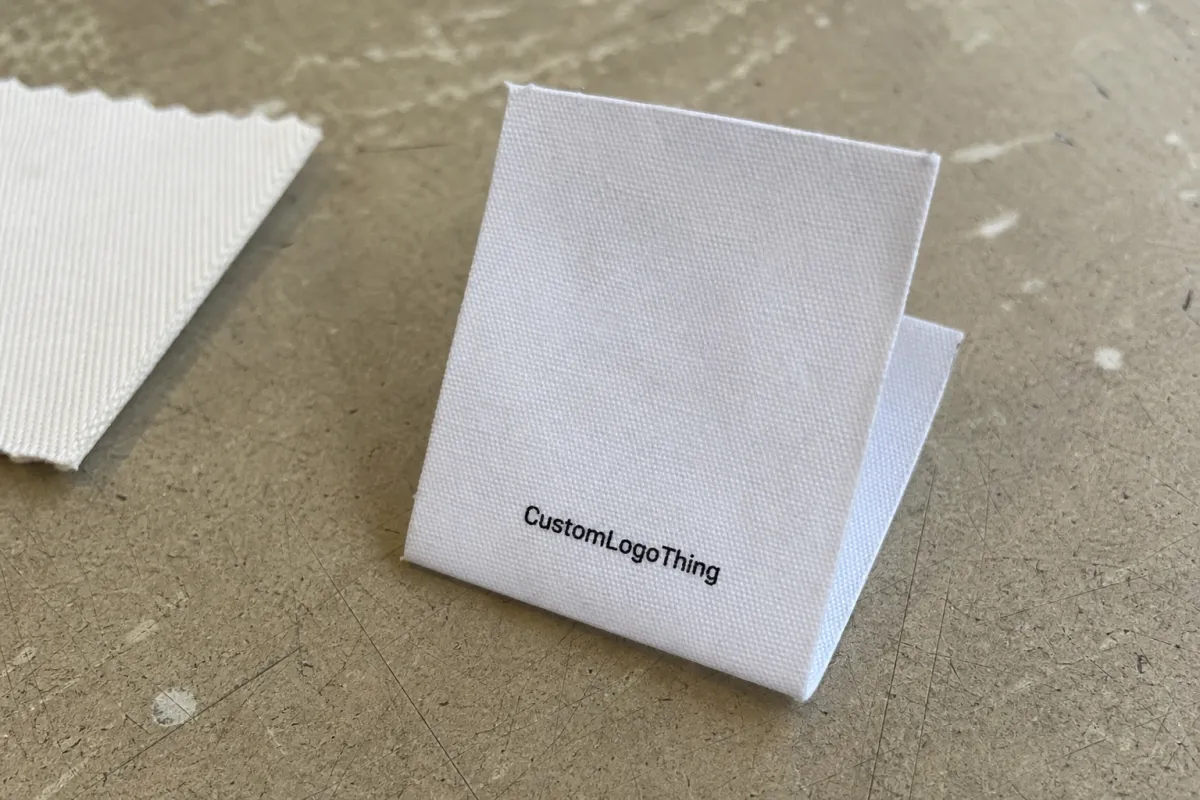
A soap gift set can be cured, boxed, photographed, and ready for a wholesale order, then stall over one small missing tag. Buyers searching for a care labels Supplier Quote for Soap Makers are rarely buying labels in isolation. They are trying to protect production timing, retailer confidence, and the margin built into a finished bundle.
The pattern is familiar. A cold-process soap maker adds a cotton washcloth, muslin pouch, exfoliating mitt, spa towel, bath glove, or drawstring travel bag to a best-selling bar set. The bundle looks more substantial. The average order value climbs. Then a retailer asks whether the textile item includes proper care and fiber information. Suddenly, the lowest-cost component in the kit controls the ship date.
Soap disappears after use. The textile piece stays in the customer’s bathroom, gym bag, linen drawer, or travel kit. That label keeps carrying the brand after the fragrance is gone.
A sewn-in care label can make a handmade soap bundle feel retail-ready rather than assembled at the last minute. That matters in spas, gift shops, subscription boxes, hospitality amenity programs, and private-label bath ranges where buyers compare packaging side by side. A well-specified label does quiet work: it explains washing instructions, drying guidance, fiber content, handling details, country-of-origin language where needed, and brand identity without forcing all of that information onto the soap box.
Not every soap bundle needs the same wording. Requirements depend on what is being sold, where it is sold, how the textile item is constructed, and whether that item falls under textile labeling rules in the target market. A supplier should help format and produce the label, but compliance responsibility generally stays with the seller. Guessing is expensive.
Best-fit buyers include cold-process soap makers, apothecary shops, candle-and-soap studios, private-label bath brands, spa kit sellers, wholesale gift set producers, and hospitality suppliers. If the order is moving beyond hobby quantities, the quote should give enough detail to approve artwork, calculate landed cost, and schedule assembly without rework.
Packaging reality: a five-cent assumption on a care label can create a five-day production delay if the size, fold, or text is wrong.
Care Label Product Options for Soap Gift Sets, Pouches, and Spa Textiles
Care labels belong to the clothing labels category, but soap makers use them differently from apparel brands. A T-shirt label is usually hidden. A pouch label may be visible at unboxing. A washcloth label may sit against skin. Those details change the material decision.
The common formats are satin printed labels, damask woven labels, cotton twill labels, polyester care tags, straight-cut labels, center-fold labels, end-fold labels, loop-fold labels, and Manhattan-fold labels. Each has a purpose.
Printed satin works well for dense care copy, fiber percentages, laundry symbols, and bilingual text because the surface allows sharper detail at small sizes. Woven damask feels more premium and dimensional, especially for logos, but it has limits. Very fine type and tiny icons can soften or fill in when translated into thread. Cotton twill suits natural, apothecary-style packaging where texture is part of the sales story. Polyester labels often win on wash durability, consistency, and cost control.
Soap-adjacent products create their own constraints. A muslin soap bag may look better with a natural cotton label that does not fight the base fabric. A washcloth label must survive repeated laundering. An exfoliating mitt may need a compact loop-fold tag that fits a side seam without scratching. Spa headbands, towel wraps, robes, and reusable cloth packaging all need the label to match the customer’s tactile expectations.
| Label Type | Best Use | Typical Strength | Watchpoint |
|---|---|---|---|
| Printed satin | Care symbols, fiber content, small text | Clean readability at compact sizes | May feel more synthetic than cotton |
| Damask woven | Visible logo labels for premium bundles | Dimensional branding and wash durability | Not ideal for tiny instruction text |
| Cotton twill | Muslin bags, apothecary pouches, natural kits | Soft, organic-looking presentation | Fine print may not be as sharp |
| Polyester care tag | Washcloths, towels, repeat-use spa textiles | Durability and efficient unit cost | Needs edge finishing to avoid scratchiness |
A practical label can carry the logo on one side and care instructions on the reverse. That reduces clutter on soap boxes, belly bands, or pouch hang tags while keeping textile information attached to the textile itself. High-contrast printing improves readability. Woven thread adds texture, but physics still applies: a 4 mm-tall icon may look crisp in print and muddy in weave.
Choose the label by its job first. Compliance. Branding. Wash durability. Softness. Low-cost volume tagging. Then request samples around that priority. A useful Care Labels Supplier Quote for soap makers should reflect the application, not just the cheapest square inch of material.
Specifications That Make a Care Label Quote Accurate
A vague request creates a vague quote. “Small care labels for soap bags” could mean a 20 mm x 40 mm printed satin label, a 25 mm center-fold woven logo tab, or a 50 mm cotton twill label with care text on the back. Those are different products with different setup, production, finishing, and packing costs.
At minimum, send these specifications:
- Label type: printed satin, woven, cotton twill, polyester, or undecided.
- Finished size: width and height after folding, preferably in millimeters or inches.
- Fold style: straight cut, center fold, end fold, loop fold, or Manhattan fold if needed.
- Material and color: white satin, natural cotton, black polyester, cream twill, or another base.
- Print or weave details: number of colors, front only or front and back, logo placement.
- Quantity: test run, reorder quantity, or annual usage estimate.
- Artwork: AI, EPS, editable PDF, SVG, or high-resolution PNG for simple printed labels.
- Text content: fiber composition, care instructions, care symbols, origin language, brand name, and website if required.
- Packing needs: loose packed, bundled, roll packed, carton labeling, or separated by SKU.
Small details change price. A one-color black printed satin care label is not the same as a multi-color woven logo label with content on both sides. Fold style affects labor and usability. Straight-cut labels sew flat. Center-fold labels tuck neatly into seams. End-fold labels hide raw edges. Loop-fold labels create a visible tab that can feel more refined on a pouch or towel.
Size planning deserves more attention than it gets. A label must be large enough for readable care symbols and fiber content, but not so large that it dominates a 4-inch muslin bag or looks awkward on a washcloth seam. For dense text, many buyers end up around 25 mm to 40 mm wide and 40 mm to 60 mm long before folding. That range is not a rule. It depends on copy length, stitch allowance, fold style, and whether the label is visible or hidden.
Material compatibility matters too. Natural cotton labels can support a handmade apothecary look. Polyester satin can carry sharper printed detail, especially for care icons and bilingual text. Woven labels may be best for a visible logo mark, while a separate printed care label handles compliance-heavy wording.
Artwork quality is another price-and-timing variable. Vector files are best. Screenshots, low-resolution marketplace logos, and flattened graphics pulled from a soap box design slow quoting because the supplier has to determine whether the mark can reproduce at label scale. If possible, send photos of the textile item or packaging mockup. A supplier quoting blind may give a number quickly, but not necessarily a label that fits.
Be careful with sustainability and sourcing claims. If FSC-certified paper hang tags are also part of the set, confirm claim rules with the Forest Stewardship Council at fsc.org. Textile labels and paper packaging are different components. A claim that is accurate for one material may not apply to another.
How to Read a Care Labels Supplier Quote for Soap Makers
A proper quote should be more than a total price and a polite promise. It should define the label construction, material, finished size, fold style, print or weave method, quantity, setup charges, sampling cost, freight, production lead time, and approval steps. If those elements are missing, you may be comparing two different products that happen to share the word “label.”
Common pricing variables include material, label size, order quantity, number of colors, print method, weaving complexity, fold style, edge finishing, packing requirements, and shipping destination. Printed labels often support lower minimum order quantities than woven labels because setup is simpler. Custom Woven Labels usually require higher minimums due to loom setup, thread preparation, and production changeover.
Unit cost behaves predictably, but not always conveniently. Larger runs usually reduce the per-label price because setup is spread across more pieces. Over-ordering, however, can trap cash if the product is seasonal, untested, or tied to a limited fragrance release. A small test order may be smarter for a first lavender gift kit. A larger order makes sense for a core spa bundle sold every month through wholesale, retail, or subscription channels.
| Order Scenario | Typical Buyer Goal | Quote Strategy | Risk to Watch |
|---|---|---|---|
| Small test run | Validate a new soap kit | Ask for lower-MOQ printed labels | Higher unit cost |
| Recurring retail set | Improve margin and reorder consistency | Compare mid-volume and larger-volume tiers | Inventory forecasting errors |
| Wholesale launch | Meet retailer shipment date | Confirm proofing, lead time, and freight | Late labels delaying finished kits |
| Premium spa bundle | Upgrade perceived value | Review woven or cotton twill samples | Tiny care text losing readability |
Do not compare quotes only by the lowest unit cost. A cheaper label that frays, bleeds, feels scratchy, or arrives late can cost more through returns, rework, missed retailer delivery windows, or repacking labor. Ask whether proofing, revisions, sample photos, carton labeling, and freight are included. Landed cost is the number that affects margin.
Typical quote review should answer four questions. What exactly will be made? What must the buyer approve before production? What cost is fixed and what could change? What date can the labels realistically arrive, including transit?
Price ranges vary by material, size, quantity, and finishing, so any online estimate should be treated as directional rather than final. Simple printed care labels generally cost less per piece than woven logo labels. Two-sided printing, specialty materials, short runs, separated packing by SKU, and rush freight can push the landed cost up quickly. The lowest line item is not always the lowest operating cost.
Process, Timeline, and Proofing Steps Before Production
The standard path is straightforward: inquiry, specification review, artwork check, formal quote, digital proof, buyer approval, sample or pre-production photo if needed, bulk production, quality check, packing, and shipping. The slow part is rarely the machine. It is usually missing information.
A quote request with final artwork, exact dimensions, quantity, material preference, and complete care text moves faster than a request that says, “I need little labels for soap bags.” The second request may require three or four clarification emails before pricing is accurate. Under a retailer deadline, those emails become lost production days.
Proofing is the control point. Review spelling, care symbols, fiber percentages, country-of-origin text, logo placement, color references, fold direction, stitch allowance, and finished size before approval. One incorrect laundering symbol can force a reprint. One fold direction error can place the logo upside down after sewing.
Sampling depends on risk. Digital proofs are efficient for straightforward printed satin or polyester labels. Physical samples or production photos are useful for premium woven labels, first-time spa textile sets, labels attached near skin, or projects using a new material. Turnaround varies with material availability, artwork complexity, approval speed, order quantity, finishing method, and shipping method. As a cautious planning assumption, allow several business days for proofing and production setup before bulk manufacturing begins, then add transit time.
Soap operations have their own clock. Cold-process soap may need weeks to cure. Pouches may be sewn by a separate vendor. Boxes, stickers, and inserts may arrive on another schedule. If labels arrive last, finished goods sit idle even though the expensive components are already paid for.
A better system is to align label production with cure time, pouch sewing, and final assembly. Build a reorder trigger after the label is approved. Reordering when label inventory hits two months of projected use is less dramatic than discovering an empty bin during wholesale packing week. It also prevents panic freight and rushed proof approvals.
Distribution testing sits outside label production, but it affects launch planning. For shipping performance, packaging buyers often reference ISTA procedures. The International Safe Transit Association provides testing resources at ista.org. Care labels will not solve transit damage, but a late or missing label can stop a shipment just as effectively.
Common Buying Mistakes That Raise Cost or Delay Delivery
The first mistake is requesting a quote without dimensions. A supplier can estimate, but that estimate often changes after proofing. Measure the available seam, flat pouch face, towel edge, or washcloth border. Even a rough photo with a ruler helps.
The second mistake is choosing woven labels for extremely small text. Woven construction is strong for logos and premium branding, but care symbols, fiber details, and washing instructions usually reproduce more cleanly on printed satin or polyester. If the label needs six lines of text, ask whether printing is the better route.
The third mistake is forgetting the sewing method. A label going into a side seam needs a different fold style than one stitched onto the face of a pouch. A loop-fold tab on a towel behaves differently from an end-fold patch label on a drawstring bag. The label must fit the sewing operation, not only the design file.
The fourth mistake is shrinking artwork designed for a soap box or jar label without simplifying it. A botanical illustration, fine serif type, and three-color badge may look elegant at two inches wide on paper. On a 25 mm textile label, the details may disappear. Reduce. Prioritize. Check readability at actual size.
The fifth mistake is ignoring feel. Rough edges or stiff materials can make washcloths, towels, spa wraps, and headbands feel cheaper than intended. That is a brand problem, not just a label problem. The customer touches the textile repeatedly.
The sixth mistake is ordering too few labels for wholesale programs. If a retailer reorders quickly, a second small custom run can cost more per unit and create downtime. Ask for two tiers in the quote: one test quantity and one reorder-friendly quantity.
The seventh mistake is approving proofs too fast. Soap brands often use botanical names, fragrance language, and ingredient-inspired product lines that spellcheck may not catch. One misspelled brand name or incorrect fiber line can require a full reprint.
The corrective move is simple: prepare a one-page label brief before contacting suppliers. Include product photos, target quantity, launch date, finished label size, fold style if known, required text, and must-have brand details.
Where Custom Logo Things Fits in the Quote Process
Custom Logo Things works best for buyers who need the specification translated into something buildable. Soap makers often know their fragrance line, ingredient positioning, retail price point, and unboxing style. They may not know the difference between a center-fold satin care label and an end-fold cotton twill logo tag. That gap is normal.
The useful supplier role is practical: confirm custom sizing, discuss material selection, review whether printed or woven construction fits the artwork, flag fold-style issues, check file quality, and make the quote clear enough for a production decision. A buyer should not need to memorize every label format before asking for pricing.
Care labels also connect to broader packaging coordination. A soap maker may need boxes, belly bands, hang tags, stickers, pouches, branded inserts, and textile labels in the same product family. Visual consistency matters. A cream cotton label, kraft belly band, and muted logo sticker can signal natural apothecary. A black satin label, matte box, and foil-accent hang tag can push a spa line toward premium retail. Neither direction is automatically better. The right choice depends on sales channel, price point, and customer expectation.
The margin logic is blunt. Reducing one avoidable production error can protect more profit than shaving a fraction of a cent from a label that is wrong for the application. If 500 gift sets are packed with labels that must be removed and replaced, the cost is not only the reprint. It is labor, delay, repacking material, and possibly a missed delivery appointment.
Quality checkpoints should include artwork review, proof approval, material matching, fold verification, and finished-label inspection before shipment. None of this is complicated. It is controlled process: fewer assumptions, better specifications, cleaner movement from quote to production.
Buyers who want catalog-generic tags may not need much guidance. Buyers who want labels that fit the finished product, support retail presentation, and avoid production surprises are better suited for a specification-led quote. For label options, review Custom Labels & Tags or send project details through Contact Us.
Next Steps: Prepare Your Files, Quantity, and Label Brief
Start with the textile item. Is it a muslin pouch, cotton washcloth, spa towel, exfoliating mitt, robe, headband, or reusable cloth wrap? Decide where the label will be attached. Measure the available seam or flat area. Then choose a preferred material: satin, polyester, cotton twill, or woven damask.
Gather the required content before asking for a Care Labels Supplier Quote for soap makers. That usually includes the logo file, brand name, care instructions, fiber content, country-of-origin text if applicable, website, batch information if used, and retailer-required wording. If the legal wording is unclear, say so. A supplier can help with layout, but market compliance should be checked by the seller.
Send reference photos. Show the full soap set, pouch, towel edge, washcloth seam, or spa accessory. A photo can reveal attachment problems before artwork is built. It also helps the supplier recommend whether a straight-cut, center-fold, end-fold, or loop-fold label makes more sense.
Define the business use. A launch sample needs different risk control than a recurring retail product. A market test may justify a smaller printed label order. A subscription box, hotel amenity kit, or private-label production run may justify a higher quantity and tighter carton labeling.
If uncertain, ask for two quote tiers: one test quantity and one reorder-friendly quantity. That gives a clear view of cash flow versus unit cost. It also helps determine whether to spend more per unit now or commit to a larger run for lower landed cost.
Your first email should include quantity, deadline, delivery location, label size, fold style if known, material preference, artwork file, and whether you need a digital proof, sample photo, or physical sample. Complete inputs create faster pricing, cleaner proofs, and fewer surprises between quote approval and finished gift set assembly.
FAQs
What should I include when requesting a care label quote for soap gift sets?
Include label size, quantity, fold style, material preference, logo file, care text, fiber content, delivery location, and deadline. Send photos of the washcloth, pouch, towel, or spa textile so the supplier can recommend the right attachment style. If material is undecided, ask for options such as printed satin, woven damask, polyester, or cotton twill.
What is the typical MOQ for custom care labels for soap makers?
MOQ depends on label type, material, and production method. Printed labels often support lower minimums than woven labels because setup is usually simpler. Ask for both a test-run quantity and a larger reorder quantity to compare unit cost and cash flow before committing.
Are woven or printed care labels better for soap pouches and washcloths?
Printed labels are usually better for small care instructions, laundry symbols, and detailed fiber content. Woven labels create a premium branded look but may not reproduce very small text as sharply. For many soap gift sets, a hybrid approach works: a woven logo label plus a printed care label when space allows.
How long does custom care label production take after quote approval?
Turnaround depends on artwork readiness, proof approval speed, label type, order quantity, finishing method, and shipping method. The fastest projects usually start with final artwork, exact dimensions, and complete care text. Plan label production alongside soap curing, pouch sewing, and final kit assembly to avoid bottlenecks.
Can a care labels supplier help if I do not know the right label size?
Yes. A supplier can recommend size and fold style if you provide product photos and the attachment location. Measure the available seam or flat area before requesting a quote. The supplier may suggest a smaller printed label for dense instructions or a larger woven label for visible branding.


